North Dakota
North Dakota Nursing Home Camera Laws: Electronic Monitoring Rights
Independently fact-checked against primary sources (last audited August 14, 2026). · 4 primary sources cited on this page. How we verify our legal content
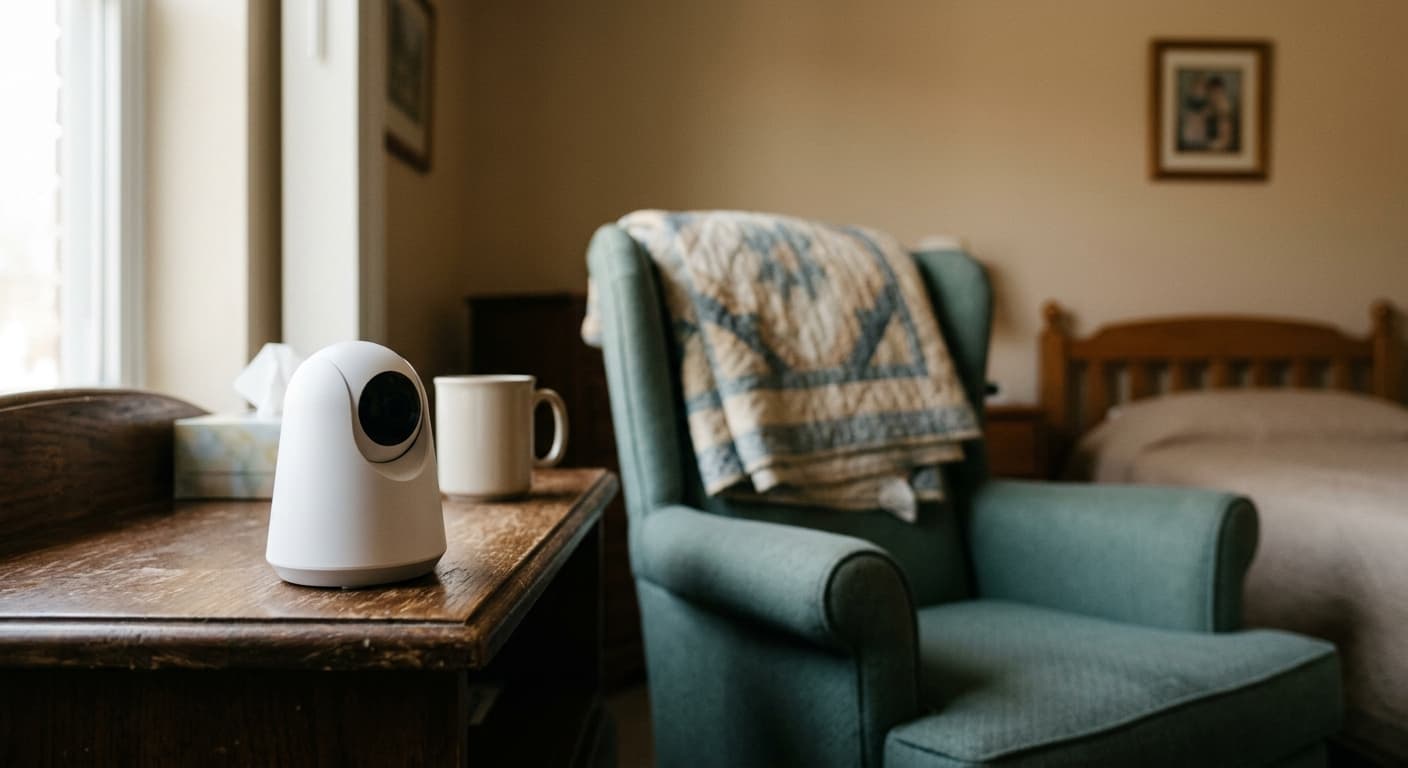
North Dakota lets a resident of a skilled nursing, basic care, assisted living, or swing-bed hospital facility install an electronic recording or virtual monitoring device in their own room under N.D. Cent. Code chapter 50-10.2, with roommate consent, mandatory signage and criminal tampering penalties.
Information last verified on 2026-08-14.
This page covers North Dakota's Rights of Health Care Facility Residents chapter as it applies to electronic recording and virtual monitoring, including a distinction North Dakota draws that most peer states do not: a device that only allows live viewing is regulated more lightly than one that records. For the state's general recording-consent law, see North Dakota Recording Laws. See the Nursing Home Camera Laws by State hub for how every state approaches this issue, and the existing 50-state statute comparison table for a side-by-side look at every enacted law.
Does North Dakota Law Allow Cameras in Nursing Home Rooms?
Yes. Under N.D. Cent. Code section 50-10.2-02.1(1), a resident or representative may treat the resident's living quarters as their home and purchase or use a technology device, including one for virtual monitoring or visitation, subject to the chapter's privacy and safety rules. The full consent, notice and cost regime in subsections 3 through 12 applies specifically when a device is used to record, video or audio, rather than to non-recording live monitoring alone. The statute does not carry that line through cleanly, though, and a resident in a shared room should read the caveat below before relying on it.
Which Facilities Are Covered
North Dakota's coverage is broad. Section 50-10.2-01(5) defines "facility" as "a skilled nursing care facility, basic care facility, assisted living facility, or swing-bed hospital approved to furnish long-term care services." Unlike states that limit their camera law to a nursing facility alone, North Dakota's chapter reaches assisted living and basic care residents on the same terms.
Three Kinds of Device, Three Levels of Regulation
The statute's definitions section distinguishes three device concepts. An "authorized electronic recording device" is installed in the room and records or transmits video or audio; it is subject to the full consent regime described below. A "virtual monitoring device" is owned and operated by the resident and allows live monitoring without recording; subsection 1 places it outside the full consent regime unless it is used to record. A "technology device," meaning a communication-only tool like a tablet or cell phone, is excluded from the monitoring regime entirely unless it is also used for virtual monitoring or recording.
The statute is not consistent on this point, and the gap matters most in a shared room. Subsection 1 says "Subsections 3 through 12 apply if a technology device or a virtual monitoring device is used to record," which reads as excusing a live-view-only device from the roommate-authorization steps. But subsection 5, inside that same block, says "Before placing and using the authorized electronic recording device or virtual monitoring device, a resident or resident representative shall obtain the signed authorization of any other resident residing in the room in accordance with subsection 3." Subsection 5 names the virtual monitoring device expressly. The better reading is that subsection 1's gate controls, so a genuine live-view-only device is not swept into the full regime. The safe course is different from the better reading: if the resident shares a room, obtain the roommate's signed authorization before placing any camera, live-view or not, because subsection 5's own words appear to require it and no North Dakota court has resolved the conflict. Subsection 11's tampering penalty and subsection 12's ban on intercepting a communication both name the virtual monitoring device by its own terms, so those apply regardless.

Installing a Recording Device: Placement, Notice and Roommate Consent
A recording device must be in a fixed, stationary position, must record only the area occupied by the resident, not a roommate's area, must be placed only after the facility receives written notice including an installation plan that complies with facility standards, and must produce a timestamped recording. Every resident occupying the room, including a roommate, must sign a HIPAA-compliant disclosure and consent authorization before placement.
An authorizing roommate may limit the device to audio-only or video-only, and may limit its time of operation, direction and focus, a more granular customization right than most peer states describe. A non-requesting roommate may withdraw authorization in writing at any time, after which the requesting resident is responsible for having the device disabled per facility standards. If a new resident moves into a room where recording is already occurring, the original resident's device must be disabled unless the new roommate authorizes it under the same process.
The facility must cooperate to accommodate placement of the device unless doing so would place an undue burden on the facility, and if a roommate refuses to authorize the device, the facility must make a reasonable attempt to accommodate the requesting resident. The statute does not spell out a guaranteed room-transfer right the way some other states' laws do.
Who Pays for the Camera
The resident or representative bears all costs, installation, operation, removal, repairs, room damage and maintenance, except for electricity, which the facility provides.
Signage
North Dakota requires the facility to "clearly and conspicuously post a sign where authorized electronic recording is being conducted to alert and inform visitors." The statute's text describes a room-level posting requirement; it does not separately require a facility-entrance sign the way some other states' two-tier signage rules do.
Retaliation, Facility Access and Tampering
A facility may not refuse to admit an individual and may not remove a resident because of authorized electronic recording of the resident's room. A person may not intentionally retaliate or discriminate against a resident for authorizing recording. The facility and its staff may not access any recording without the resident's or representative's written consent or a court order.
Tampering carries a real criminal penalty: intentionally hampering, obstructing, tampering with or destroying a recording or a device without the resident's or representative's express written consent is a class B misdemeanor. A person who improperly places a device in a resident's room, or who uses or discloses an unlawfully obtained recording, may face a criminal charge or civil liability for violating another person's privacy rights.
North Dakota also bars intercepting a communication the device captures, or disclosing or using an intercepted communication, without the resident's or representative's express written consent, an audio-privacy layer on top of the general tampering ban.
Using Recordings as Evidence
North Dakota's chapter is written as an exclusionary rule rather than an affirmative admissibility grant. Material obtained through a compliant device may not be excluded on that basis, but material is barred from a civil proceeding, administrative proceeding or survey process if an individual intentionally tampered with it, or if it came from a device that was not compliant with the chapter. Compliant footage that appears to document abuse or neglect can support a report to the state's long-term care ombudsman program or a civil claim, though footage alone rarely resolves a case; it is typically reviewed alongside medical, staffing and care-plan records.
Harmed by a product or exposure? Speak with an attorney about your options
If you or a loved one may have been harmed, you can speak with an attorney about your legal options at no cost. Whether you have a claim depends on the specific facts. This is attorney advertising, not a guarantee that you qualify or of any particular outcome.
Audio Recording: A Separate Legal Question
North Dakota's chapter builds its own consent-based audio-interception rule directly into the statute (see above). That is separate from North Dakota's general recording-consent law, which governs anyone recording a conversation outside this chapter's framework, staff speaking to each other in a hallway, for example. See North Dakota Recording Laws for the state's general consent framework.

Enforcement and Getting Help
A facility that violates the chapter can be enjoined by a district court, and the attorney general or a state's attorney may prosecute the injunction action. The Department of Health and Human Services may adopt implementing rules, in coordination with the ombudsman program under chapter 50-10.1, which is also the practical first stop for a family with a monitoring dispute, a retaliation concern, or a suspected abuse or neglect situation.
Related Resources
- Nursing Home Camera Laws by State is the hub page for this cluster, covering every state's regime at a glance.
- The 50-State Nursing Home Camera Law Comparison covers the full 18-state comparison and how North Dakota's approach compares.
- North Dakota Recording Laws covers the state's general one-party consent framework for recordings made outside chapter 50-10.2.
- North Dakota Power of Attorney Laws covers how a representative gets authority to request monitoring on a resident's behalf.
- Nursing Home Abuse & Neglect covers how an abuse or neglect claim works once evidence, including camera footage, is in hand.
- Surveillance Camera Laws by State covers the general legal framework for security cameras outside a nursing home setting.
Last updated: 2026-08-14.
Frequently Asked Questions
Does North Dakota's nursing home camera law cover assisted living?
Yes. N.D. Cent. Code section 50-10.2-01(5) defines a covered "facility" as a skilled nursing care facility, basic care facility, assisted living facility, or swing-bed hospital approved to furnish long-term care services, so assisted living residents are covered on the same terms as nursing home residents.
Can I just watch a live video feed without recording it in a North Dakota facility?
North Dakota's law treats a non-recording "virtual monitoring device," one that allows live viewing only, differently from a recording device. Subsection 1 applies the full consent regime only when a device is used to record. The statute contradicts itself here, though: subsection 5 requires the signed authorization of any other resident in the room before placing "the authorized electronic recording device or virtual monitoring device," naming the live-view device expressly. If you share a room, obtain the roommate's signed authorization before placing any camera. The tampering penalty and the ban on intercepting communications apply to a virtual monitoring device either way.
What happens if my roommate refuses to authorize a recording device?
Section 50-10.2-02.1(6) requires the facility to "make a reasonable attempt to accommodate" the resident seeking the device. The statute does not guarantee a room transfer the way some other states do, so the specific accommodation offered can vary by facility.
Is it a crime to tamper with a nursing home monitoring device in North Dakota?
Yes. Section 50-10.2-02.1(11) makes it a class B misdemeanor to intentionally hamper, obstruct, tamper with, or destroy a recording, an authorized electronic recording device, or a virtual monitoring device without the resident's or representative's express written consent.
Who pays for a monitoring device in a North Dakota nursing home?
The resident or representative pays for installation, operation, removal, repairs, room damage and maintenance, except for electricity, which the facility provides.
Can North Dakota nursing home footage be used in court?
The statute is written as an exclusion rule rather than an affirmative grant: it bars using material in a civil, administrative or survey proceeding if it was tampered with or the device was not compliant with the chapter. It does not contain a separate clause affirmatively declaring compliant footage admissible.
Updates
Added a caveat that North Dakota's statute conflicts over whether a live-view-only virtual monitoring device needs a roommate's signed authorization, and advised obtaining that authorization in a shared room.
Independently fact-checked against the cited primary sources
The Law Behind This Article
This article rests on the statutory provisions below, held in our own legal record and retrieved from the official source. Tap a section to read the operative text.
North Dakota Century Code
§ 50-10.2-02.1Authorized virtual monitoring, virtual visitation, and electronic recording - PenaltyIn force
A resident and the resident representative may treat the resident's living quarters as the resident's home and, subject to rules to protect the privacy and safety of another resident, may purchase and use a technology device of the resident's choice, including a technology device that may facilitate virtual monitoring or virtual visitation with family and other persons, provided operation and use of the technology device does not violate an individual's right to privacy under state or federal law. Subsections 3 through 12 apply if a technology device or a virtual monitoring device is used to record. A resident may use a device of the resident's choice that facilitates virtual monitoring, provided: The purchase, activation, installation, maintenance, repair, deactivation, and removal of such device is at the expense of the resident; and The device and images obtained from the device are used by the resident and any person communicating with the resident in a manner that does not violate an individual's right to privacy under state or federal law.
Official text (excerpt) · last checked 2026-08-31 · Read the full text in our law library · Verify at ndlegis.gov
§ 50-10.2-01DefinitionsIn forcecited in 2 of our articles
In this chapter, unless the context or subject matter otherwise requires: "Authorized electronic recording" means the placement and use of an authorized electronic recording device, by a resident or resident representative, in the resident's room. "Authorized electronic recording device" means a device that is installed in the room of a resident which is intended to record or is recording and transmitting video, communications, or other sounds occurring in the room. "Conflict of interest" means any type of ownership in a facility or membership on the governing body of a facility by a provider of goods or services to that facility or by a member of that individual's immediate family. "Department" means the department of health and human services. "Facility" means a skilled nursing care facility, basic care facility, assisted living facility, or swing-bed hospital approved to furnish long-term care services. "Immediate family" means husband, wife, father, mother, brother, sister, son, daughter, father-in-law, mother-in-law, brother-in-law, sister-in-law, son-in-law, daughter-in-law, stepchild, uncle, aunt, niece, nephew, or grandchild.
Official text (excerpt) · last checked 2026-07-30 · Read the full text in our law library · Verify at ndlegis.gov
Also relied on in: North Dakota Surveillance Camera Laws (2026 Guide)
§ 50-10.2-04Enforcement - InjunctionIn force
Any facility that violates this chapter may be enjoined by a district court. Actions for injunction under this section may be prosecuted by the attorney general or any state's attorney in the name of the state. Actions for injunction under this section must be prosecuted in the county where the case arises.
Official text (excerpt) · last checked 2026-07-30 · Read the full text in our law library · Verify at ndlegis.gov
§ 50-10.2-03Rulemaking authority of departmentIn force
The department may adopt rules in accordance with chapter 28-32, consistent with and necessary for the implementation and enforcement of this chapter through the ombudsman program under chapter 50-10.1.
Official text (excerpt) · last checked 2026-07-30 · Read the full text in our law library · Verify at ndlegis.gov
Search our full record of US law — 2.1 million sections, every state + federal →
Sources and References
- N.D. Cent. Code chapter 50-10.2, section 50-10.2-01, Definitions (facility, authorized electronic recording device, virtual monitoring device)(ndlegis.gov).gov
- N.D. Cent. Code section 50-10.2-02.1, Authorized virtual monitoring, virtual visitation, and electronic recording, Penalty(ndlegis.gov).gov
- N.D. Cent. Code section 50-10.2-03, Rulemaking authority of the Department of Health and Human Services(ndlegis.gov).gov
- N.D. Cent. Code section 50-10.2-04, Enforcement, injunctive relief(ndlegis.gov).gov