
Delaware
Are Brass Knuckles Legal in Delaware? (2026 Law)
Independently fact-checked against primary sources (last audited October 10, 2026). · 11 primary sources cited on this page. How we verify our legal content
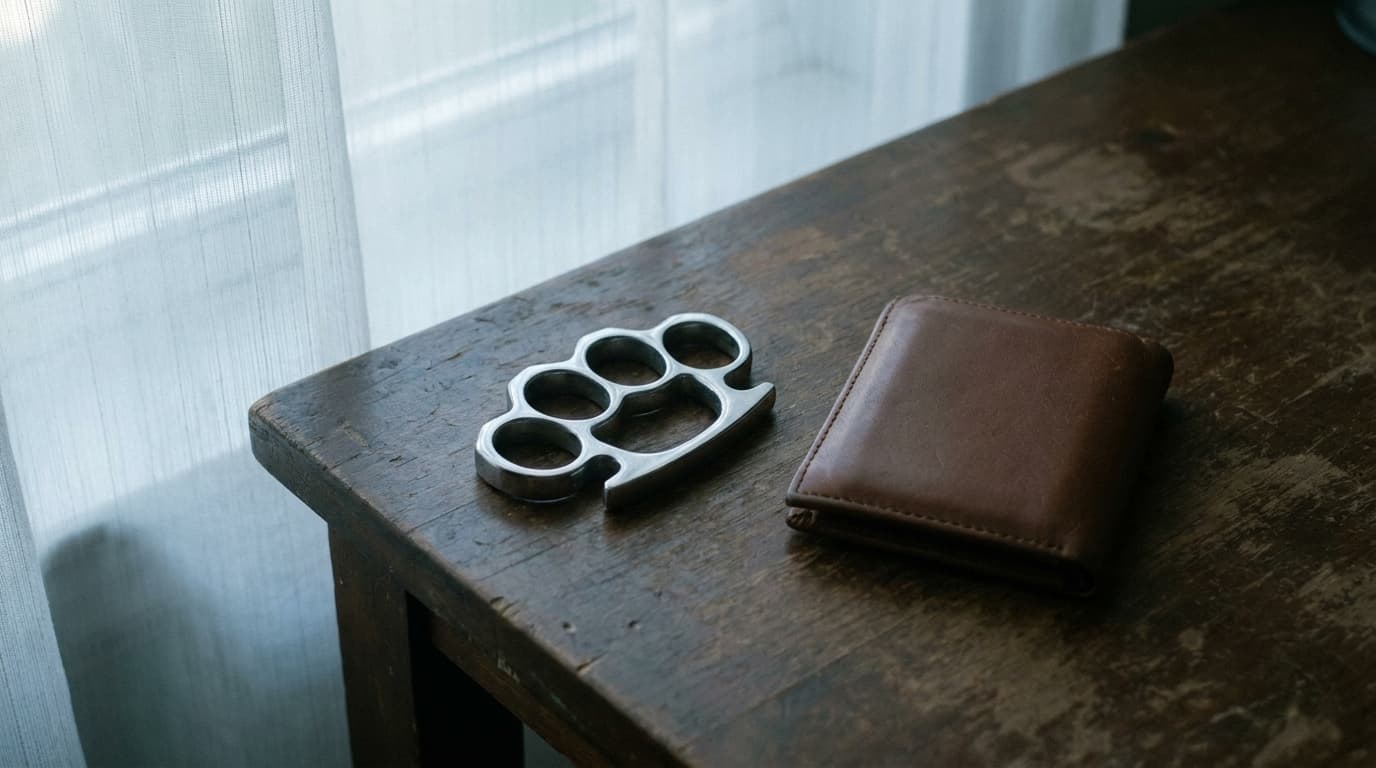
Delaware does not ban owning brass knuckles outright, but it treats them as a deadly weapon and makes carrying them concealed without a license a felony. The Criminal Code lists "Metal knuckles" in the definition of deadly weapon (11 Del. C. 222(6)a.8), and carrying a concealed deadly weapon without a license is a class G felony under 11 Del. C. 1442. A knife with a knuckle ring grip handle is banned outright under 11 Del. C. 1452. To compare other states, see our guide to brass knuckles laws by state.
Information last verified on 2026-10-08. This article has not been reviewed by a licensed lawyer.
Jurisdiction scope: This article covers the Delaware Criminal Code definitions of deadly weapon and dangerous instrument (11 Del. C. 222), the offenses involving deadly weapons and dangerous instruments in Title 11, chapter 5, subchapter VII (sections 1441 to 1457), the sentencing ranges in 11 Del. C. 4205 and 4206, the deadly weapons dealer license (24 Del. C. 901) and the municipal preemption statute (22 Del. C. 111). It does not cover school discipline rules under Title 14, county or city ordinances, federal law or federal property, or the law of other states.
How Delaware classifies brass knuckles
Delaware handles knuckles through its definition of deadly weapon rather than through a stand-alone ban. The definition lists them by name:
"(6) a. 'Deadly weapon' includes any of the following: 1. A firearm. 2. A bomb. 3. A knife of any sort, other than an ordinary pocketknife carried in a closed position. 4. A switchblade knife. 5. A billy. 6. A blackjack. 7. A bludgeon. 8. Metal knuckles. 9. A slingshot. 10. A razor. 11. A bicycle chain. 12. An ice pick. 13. A dangerous instrument, which is used, or attempted to be used, to cause death or serious physical injury. 14. A projectile weapon." 11 Del. C. 222(6)a.
Because knuckles are a deadly weapon, every Delaware offense built on that term reaches them: concealed carry (section 1442), possession by a prohibited person (section 1448) and possession during a felony (section 1447).
Owning and buying brass knuckles
Subchapter VII of Title 11, chapter 5, contains no section that bans an ordinary adult from possessing metal knuckles. The section on destructive weapons, 11 Del. C. 1444, lists items such as bombs, silencers, sawed-off shotguns, machine guns and bump stocks, and section 1445 covers air guns and transfers to children under 16; neither names knuckles. The one knuckles-specific possession ban in the subchapter is for knuckles-combination knives, covered below.

Two groups face limits on ownership:
- Persons prohibited. Section 1448(a) bars listed persons, including anyone "convicted in this State or other jurisdiction of a felony or a crime of violence involving physical injury to another person," from "purchasing, owning, possessing, or controlling a deadly weapon." For a deadly weapon other than a firearm, the offense is a class F felony (11 Del. C. 1448(c)).
- People under 21. Section 1448(a)(5) lists "Any person under the age of 21" as a prohibited person, then states that the paragraph does not apply to "Deadly weapons, including projectile weapons other than firearms if the person is 18 years of age or older." Read literally, that leaves 18 to 20 year olds outside the prohibition for non-firearm deadly weapons such as knuckles, while people under 18 remain within it. The wording is awkward, and this article does not address any court decision applying it. Separately, 24 Del. C. 903 bars any person from selling steel or brass knuckles to anyone under 21.
Carrying brass knuckles concealed: a felony without a license
Concealed carry is where Delaware's law bites hardest:
"(a) A person is guilty of carrying a concealed deadly weapon when the person carries concealed a deadly weapon upon or about the person without a license to do so as provided by § 1441 of this title. (b) Carrying a concealed deadly weapon is a class G felony, unless the deadly weapon is a firearm or a projectile weapon, in which case it is a class D felony." 11 Del. C. 1442(a)-(b)
Metal knuckles are not a firearm or projectile weapon, so concealed carry of knuckles without a license is a class G felony, punishable by "up to 2 years to be served at Level V" (11 Del. C. 4205(b)(7)).
The license in section 1441 is written for deadly weapons generally, not only handguns. It allows "A person of full age and good moral character" to apply "to be licensed to carry a concealed deadly weapon for personal protection or the protection of the person's property." This article does not address whether licenses are issued for knuckles in practice.
The words of section 1442 cover a weapon carried concealed "upon or about the person," and that phrase can reach a weapon in a vehicle. In Dubin v. State, 397 A.2d 132 (Del. 1979), a case about a pistol in a glove compartment, the Delaware Supreme Court held that whether a concealed weapon is "about" the person turns on "the immediate availability and accessibility of the weapon to the person," a question of fact. The factors include whether the person would have to change position appreciably to reach the weapon, whether it could be reached while driving and how long reaching it would take if provoked.
In Gallman v. State, 14 A.3d 502 (Del. 2011), police found a handgun in the glove compartment and a sawed-off shotgun under a sweatshirt on the floorboard where the defendant, a rear passenger, was seated. The court approved a jury instruction built on those factors and affirmed her conviction on one of two concealed deadly weapon counts. Knuckles hidden in a glove box, console or under a seat can therefore fall within section 1442 when they are immediately available and accessible to the person.
Open carry
Both concealed-carry offenses, section 1442 (deadly weapons) and section 1443 (dangerous instruments), require that the item be carried concealed. Carrying knuckles openly falls outside their words. This article does not cover disorderly conduct, school rules or other laws that could apply to open carry in a particular situation.
Plastic and non-metal knuckles
The deadly weapon list names "Metal knuckles" and nothing broader. Plastic, wood or polymer knuckles are not named in section 222(6).
A non-metal item can still be reached through the dangerous instrument definition, which turns on how the item is used:
"(5) 'Dangerous instrument' means all of the following: a. Any instrument, article, or substance which, under the circumstances in which it is used, attempted to be used, or threatened to be used, is readily capable of causing death or serious physical injury." 11 Del. C. 222(5)a.
Carrying a concealed dangerous instrument is a separate offense under 11 Del. C. 1443, classed as a class A misdemeanor (up to 1 year at Level V and a fine of up to $2,300 under 11 Del. C. 4206(a)). Section 1443(b) provides a defense: "It shall be a defense that the defendant was carrying the concealed dangerous instrument for a specific lawful purpose and that the defendant had no intention of causing any physical injury or threatening the same." This article does not address any court decision on whether non-metal knuckles are a dangerous instrument.
Knuckle knives are banned outright
Delaware does flatly ban one knuckles item: the knuckles-combination knife.
"A person is guilty of unlawfully dealing with a knuckles-combination knife when the person sells, offers for sale or has in possession a knife, the blade of which is supported by a knuckle ring grip handle. Unlawfully dealing with a knuckles-combination knife is a class B misdemeanor." 11 Del. C. 1452
The offense requires no concealment and no intent to use the knife. Plain possession is enough. For other knife rules, see Delaware knife laws.
Selling brass knuckles as a business
Delaware requires a dealer license for businesses that sell knuckles:
"No person shall engage in the business of selling any pistol or revolver, or stiletto, steel or brass knuckles, or other deadly weapon made especially for the defense of one's person without first having obtained a license therefor, which license shall be known as 'special license to sell deadly weapons' or a state license under Chapter 9B of this title." 24 Del. C. 901
The section reaches businesses engaged in selling. Separately, 24 Del. C. 903 provides that no person shall sell any of the articles listed in section 901, which include steel or brass knuckles, to a person under 21 or to an intoxicated person. Violating section 901 or 903 is punishable by a fine of up to $500, up to 6 months in prison, or both (24 Del. C. 906).
Recreation areas and felonies
Section 1457, possession of a weapon in a Safe Recreation Zone, lists both section 1442 (carrying a concealed deadly weapon) and section 1452 (unlawfully dealing with a knuckles-combination knife) among its underlying offenses (11 Del. C. 1457(b)(1), (b)(5)). A Safe Recreation Zone is a building or structure owned, operated, leased or rented by the State, a county or municipality, or a private organization that is used as a recreation center, athletic field or sports stadium (11 Del. C. 1457(c)(4)). In such a zone, carrying concealed knuckles without a license is raised one grade, to a class F felony, and a knuckles-combination knife offense becomes a class A misdemeanor (11 Del. C. 1457(j)). Not knowing the place was a zone is no defense (11 Del. C. 1457(e)).

Separately, possessing any deadly weapon, knuckles included, during the commission of a felony is a class B felony under 11 Del. C. 1447(a).
Penalties
| Conduct | Statute | Classification | Maximum penalty |
|---|---|---|---|
| Carrying metal knuckles concealed without a license | 11 Del. C. 1442 | Class G felony | Up to 2 years at Level V (11 Del. C. 4205(b)(7)) |
| Carrying a concealed dangerous instrument | 11 Del. C. 1443 | Class A misdemeanor | Up to 1 year at Level V; fine up to $2,300 (11 Del. C. 4206(a)) |
| Selling, offering for sale or possessing a knuckles-combination knife | 11 Del. C. 1452 | Class B misdemeanor | Up to 6 months at Level V; fine up to $1,150 (11 Del. C. 4206(b)) |
| Selling knuckles as a business without a license, or selling them to a person under 21 or an intoxicated person | 24 Del. C. 901, 903, 906 | Not classed | Fine up to $500, up to 6 months, or both (24 Del. C. 906) |
| Carrying metal knuckles concealed without a license in a Safe Recreation Zone | 11 Del. C. 1457(b)(1), (j)(3) | Class F felony | Class only shown here |
| Knuckles-combination knife offense in a Safe Recreation Zone | 11 Del. C. 1457(b)(5), (j)(1) | Class A misdemeanor | Up to 1 year at Level V; fine up to $2,300 (11 Del. C. 4206(a)) |
| Prohibited person owning or possessing knuckles | 11 Del. C. 1448(c) | Class F felony | Class only shown here |
| Possessing a deadly weapon during a felony | 11 Del. C. 1447(a) | Class B felony | Class only shown here |
Local rules
Delaware's municipal preemption statute is limited to firearms. It bars municipal governments from regulating "the ownership, transfer, possession or transportation of firearms or components of firearms or ammunition" (22 Del. C. 111(a)), and it does not name knuckles or other weapons. This article does not cover county rules. For a local ordinance, check your city or town code or call your local police department's non-emergency line.
Other self-defense options
Readers weighing knuckles often compare other options. Sprays and stun devices are covered in Delaware pepper spray and stun gun laws, and when force may be used at all is covered in Delaware self-defense laws.
Related pages
- Brass knuckles laws by state
- Delaware knife laws
- Delaware pepper spray and stun gun laws
- Delaware self-defense laws
- Maryland brass knuckles laws
- Pennsylvania brass knuckles laws
This article provides general legal information about Delaware law, not legal advice. Weapons laws change and local rules vary. For advice about a specific situation, contact a lawyer licensed in Delaware or your local law enforcement agency.
Last updated: 2026-10-08.
Frequently Asked Questions
Are brass knuckles legal in Delaware?
Delaware has no statute that bans an ordinary adult from owning metal knuckles, but they are a deadly weapon under 11 Del. C. 222(6). Carrying them concealed without a license is a class G felony under 11 Del. C. 1442, and a knuckles-combination knife is banned outright under 11 Del. C. 1452.
Is carrying brass knuckles a felony in Delaware?
Carrying metal knuckles concealed without a license under section 1441 is carrying a concealed deadly weapon, a class G felony under 11 Del. C. 1442(b). A class G felony carries up to 2 years at Level V under 11 Del. C. 4205(b)(7).
Can I carry brass knuckles openly in Delaware?
Sections 1442 and 1443 both cover weapons carried concealed, so open carry falls outside their words. This article does not cover school rules, local ordinances or other laws that could apply in a particular situation.
Are knuckle knives legal in Delaware?
No. Under 11 Del. C. 1452, selling, offering for sale or possessing a knife whose blade is supported by a knuckle ring grip handle is a class B misdemeanor, punishable by up to 6 months and a fine of up to $1,150 under 11 Del. C. 4206(b).
Are plastic brass knuckles legal in Delaware?
The deadly weapon list in 11 Del. C. 222(6) names metal knuckles and does not mention other materials. A non-metal item can still be a dangerous instrument under 222(5) depending on how it is used, attempted to be used or threatened to be used.
Can I keep brass knuckles in my car in Delaware?
Knuckles hidden in a vehicle can count as carried concealed about the person under 11 Del. C. 1442 if they are immediately available and accessible. In Dubin v. State (Del. 1979) the Delaware Supreme Court made that a question of fact, looking at whether the person would have to change position appreciably to reach the weapon, whether it could be reached while driving and how long reaching it would take.
Can a store sell brass knuckles in Delaware?
Under 24 Del. C. 901, no person may engage in the business of selling steel or brass knuckles without first obtaining a special license to sell deadly weapons or a state license under Chapter 9B of Title 24. Under 24 Del. C. 903, no person may sell them to anyone under 21 or to an intoxicated person, and 24 Del. C. 906 sets a fine of up to $500, up to 6 months, or both.
Updates
Independently fact-checked against the cited primary sources
The Law Behind This Article
This article rests on the statutory provisions below, held in our own legal record and retrieved from the official source. Tap a section to read the operative text.
Delaware Code, Title 11 (Crimes and Criminal Procedure), Chapter 005 (SPECIFIC OFFENSES)
§ 1442Carrying a concealed deadly weapon; class G felony; class D felony.In forcecited in 3 of our articles
(a) A person is guilty of carrying a concealed deadly weapon when the person carries concealed a deadly weapon upon or about the person without a license to do so as provided by § 1441 of this title. (b) Carrying a concealed deadly weapon is a class G felony, unless the deadly weapon is a firearm or a projectile weapon, in which case it is a class D felony. (c) It shall be a defense that the defendant has been issued an otherwise valid license to carry a concealed deadly weapon pursuant to terms of § 1441 of this title, where: (1) The license has expired, (2) The person had applied for renewal of said license within the allotted time frame prior to expiration of the license, and (3) The offense is alleged to have occurred while the application for renewal of said license was pending before the court. (d) It shall be a defense that the defendant complied with § 1456(b) of this title.
Official text (excerpt) · last checked 2026-09-23 · Read the full text in our law library · Verify at delcode.delaware.gov
Cited in 58 court opinions in our collectionLatest citing opinion in our collection: 2025
Opinions citing this section in our collection:
- State v. Murray (Supreme Court of Delaware 2019, 213 A.3d 571)“…statute that prohibits carrying a concealed deadly weapon, 11 Del. C. § 1442, provides that: A person…”
- Buchanan v. State (Supreme Court of Delaware 2009, 981 A.2d 1098)“…ly attack against another by surprise.” 34 11 Del. C. § 1442 provides that “[a] person is guilty of…”
- Mullens v. Kilborne (Supreme Court of Delaware 2018)“…guilty in 1999 to carrying a concealed deadly weapon under 11 Del. C. § 1442, which was designated a class G felony…”
Identified automatically from the court opinions citing this section — not a ranking of which case controls.
Also relied on in: Delaware Knife Laws (2026): Carry, Switchblades, and Bans, Delaware Pepper Spray and Stun Gun Laws (2026)
§ 1452Unlawfully dealing with knuckles-combination knife; class B misdemeanor.In forcecited in 2 of our articles
A person is guilty of unlawfully dealing with a knuckles-combination knife when the person sells, offers for sale or has in possession a knife, the blade of which is supported by a knuckle ring grip handle. Unlawfully dealing with a knuckles-combination knife is a class B misdemeanor.
Official text (excerpt) · last checked 2026-07-29 · Read the full text in our law library · Verify at delcode.delaware.gov
Delaware Code, Title 11 (Crimes and Criminal Procedure), Chapter 002 (GENERAL PROVISIONS CONCERNING OFFENSES)
§ 222General definitions.In forcecited in 4 of our articles
When used in this Criminal Code: (1) “Building,” in addition to its ordinary meaning, includes any structure, vehicle or watercraft. Where a building consists of 2 or more units separately secured or occupied, each unit shall be deemed a separate building. (2) “Controlled substance” or “counterfeit substance” shall have the same meaning as used in Chapter 47 of Title 16. (3) “Conviction” means a verdict of guilty by the trier of fact, whether judge or jury, or a plea of guilty or a plea of nolo contendere accepted by the court. (4) “Covert firearm” means any firearm that is constructed in a shape or configuration such that it does not resemble a firearm. (5) “Dangerous instrument” means all of the following: a. Any instrument, article, or substance which, under the circumstances in which it is used, attempted to be used, or threatened to be used, is readily capable of causing death or serious physical injury. b. Any disabling chemical spray. c. Any electronic control device, including a neuromuscular incapacitation device designed to incapacitate a person. (6) a. “Deadly weapon” includes any of the following: 1. A firearm. 2. A bomb. 3.
Official text (excerpt) · last checked 2026-07-29 · Read the full text in our law library · Verify at delcode.delaware.gov
Cited in 84 court opinions in our collectionLatest citing opinion in our collection: 2025
Opinions citing this section in our collection:
- Williamson v. State (Supreme Court of Delaware 2015, 113 A.3d 155)“…acts of the case. This Court has held that 11 Del. C. § 222(23) does not require the victim to see…”
- Key v. State (Supreme Court of Delaware 1983, 463 A.2d 633)“…pra. 5 . “Conviction” is defined by 11 Del.C. § 222(3) as “a verdict of guilty by the trier…”
- Zimmerman v. State (Supreme Court of Delaware 1997, 693 A.2d 311)“…ure could have utilized the term ‘conviction’ as defined in 11 DelC. § 222(4), 25 rather than the sta…”
Identified automatically from the court opinions citing this section — not a ranking of which case controls.
Also relied on in: Pepper Spray and Stun Gun Laws by State (2026)
Search our full record of US law — 2.1 million sections, every state + federal →
Sources and References
- 11 Del. C. 222, General definitions (deadly weapon, dangerous instrument)(delcode.delaware.gov).gov
- 11 Del. C. 1442, Carrying a concealed deadly weapon(delcode.delaware.gov).gov
- 11 Del. C. 1452, Unlawfully dealing with knuckles-combination knife(delcode.delaware.gov).gov
- 11 Del. C. 1448, Possession and purchase of deadly weapons by persons prohibited(delcode.delaware.gov).gov
- 11 Del. C. 4205 and 4206, Sentencing ranges(delcode.delaware.gov).gov
- 11 Del. C. 1441, License to carry concealed deadly weapons(delcode.delaware.gov).gov
- 11 Del. C. 1443, Carrying a concealed dangerous instrument(delcode.delaware.gov).gov
- 24 Del. C. 901, 903 and 906, Special license to sell deadly weapons, sales to persons under 21, penalties(delcode.delaware.gov).gov
- 11 Del. C. 1457, Possession of a weapon in a Safe Recreation Zone(delcode.delaware.gov).gov
- 11 Del. C. 1447, Possession of a deadly weapon during commission of a felony(delcode.delaware.gov).gov
- 22 Del. C. 111, Municipal firearms preemption(delcode.delaware.gov).gov
- Dubin v. State, 397 A.2d 132 (Del. 1979)(courtlistener.com)
- Gallman v. State, 14 A.3d 502 (Del. 2011)(courtlistener.com)