
Pennsylvania
Are Brass Knuckles Legal in Pennsylvania? (18 Pa.C.S. 908)
Independently fact-checked against primary sources (last audited October 8, 2026). · 7 primary sources cited on this page. How we verify our legal content
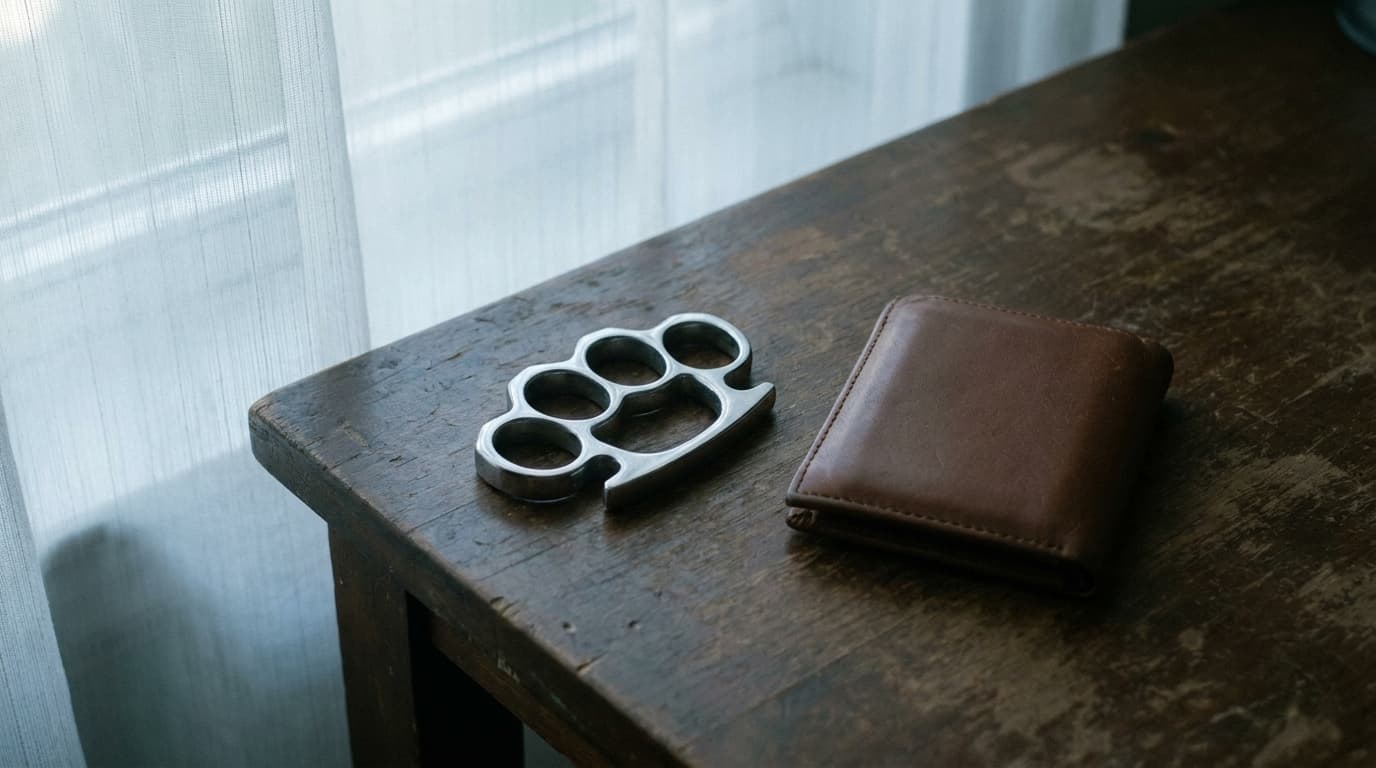
Brass knuckles are illegal in Pennsylvania. Under 18 Pa.C.S. 908, metal knuckles are a prohibited "offensive weapon," and making, repairing, selling, dealing in, using or possessing one, except as authorized by law, is a misdemeanor of the first degree, punishable by up to five years in prison and a fine of up to $10,000. For how other states treat the same item, see our guide to brass knuckles laws by state.
Information last verified on 2026-10-08. This article has not been reviewed by a licensed lawyer.
Jurisdiction scope: This article covers Pennsylvania's Consolidated Statutes as they apply to brass and metal knuckles: the offensive-weapons ban in 18 Pa.C.S. 908, possessing instruments of crime in 907, weapons on school property in 912, weapons in court facilities in 913, prison contraband in 18 Pa.C.S. 5122 and 61 Pa.C.S. 5902, the firearms disability in 6105, firearms preemption in 6120, the sentence and fine limits in 1101 and 1104, and weapons expulsions under section 1317.2 of the Public School Code. It does not cover forfeiture of seized items, city or county ordinances, federal law or property (apart from the federal firearms consequence of a conviction), or the law of other states.
What Pennsylvania law says about brass knuckles
Pennsylvania treats metal knuckles as a prohibited offensive weapon. Section 908(a) defines the offense this way:
"A person commits a misdemeanor of the first degree if, except as authorized by law, he makes repairs, sells, or otherwise deals in, uses, or possesses any offensive weapon." 18 Pa.C.S. 908(a)
Section 908(c) then defines the term:
"Offensive weapons." Any bomb, grenade, machine gun, sawed-off shotgun with a barrel less than 18 inches, firearm specially made or specially adapted for concealment or silent discharge, any blackjack, sandbag, metal knuckles, any stun gun, stun baton, taser or other electronic or electric weapon or other implement for the infliction of serious bodily injury which serves no common lawful purpose. 18 Pa.C.S. 908(c)
The offense covers the whole life of the item: making it, repairing it, selling or otherwise dealing in it, using it and possessing it. That makes Pennsylvania a possession-and-sale state, not a state that only regulates how a weapon is carried.
What counts as brass knuckles
The statute uses the term "metal knuckles." "Brass knuckles" is not a statutory term, and section 908 does not define "metal knuckles" any further. A brass, steel or other metal set falls within the plain words.
The "no common lawful purpose" clause
The definition ends with "or other implement for the infliction of serious bodily injury which serves no common lawful purpose." That clause is the last item in a single list, and the text does not say whether "which serves no common lawful purpose" limits only the catch-all "other implement" or every item named before it, metal knuckles included. No appellate decision applying 908 to metal knuckles is discussed on this page, so neither reading should be treated as settled. Readers should not assume that keeping knuckles for a lawful reason takes them outside the ban.
Plastic knuckles and knuckle knives
Section 908 names metal knuckles only. A plastic or polymer set is not listed by name, so whether it is an offensive weapon turns on the closing catch-all: an "implement for the infliction of serious bodily injury which serves no common lawful purpose." Knuckle knives are not named either. Before Act 119 of 2022 (approved November 3, 2022, effective in 60 days), the 908 list also named any "dagger, knife, razor or cutting instrument, the blade of which is exposed in an automatic way"; that act deleted those words and left "metal knuckles" unchanged, so older summaries describing automatic knives as offensive weapons are out of date. Section 913 still names automatic-opening knives as dangerous weapons in court facilities. Outside 908 and 913, Titles 18 and 42 of the Consolidated Statutes do not use the word "knuckles." For blades generally, see our guide to Pennsylvania knife laws.
Owning, carrying and keeping knuckles in a car
Because 908(a) reaches possession itself, the statute does not depend on where the knuckles are or how they are carried. Its text contains no place element, no home or vehicle exception, and no distinction between concealed and open carry. A set kept in a drawer, carried in a pocket or stored in a glove box is possessed in each case.
Pennsylvania's License to Carry Firearms is a firearms licence. It does not authorize carrying knuckles, and section 908 contains no exception for licence holders.
No self-defense exception
Section 908 contains no exception for carrying knuckles for self-defense. The rules on when force may be used at all are in our guide to Pennsylvania self-defense laws, and the rules for sprays and stun devices, which 908 also lists, are in Pennsylvania pepper spray and stun gun laws.
Defenses and exemptions under section 908
Section 908(b)(1) sets out a defense, and the burden is on the defendant to prove it:
"It is a defense under this section for the defendant to prove by a preponderance of evidence that he possessed or dealt with the weapon solely as a curio or in a dramatic performance, or that, with the exception of a bomb, grenade or incendiary device, he complied with the National Firearms Act (26 U.S.C. § 5801 et seq.), or that he possessed it briefly in consequence of having found it or taken it from an aggressor, or under circumstances similarly negativing any intent or likelihood that the weapon would be used unlawfully." 18 Pa.C.S. 908(b)(1)
Three points matter for knuckles:
- It is a defense, not an exemption. The defendant carries the burden of proving it by a preponderance of the evidence.
- "Solely" limits the curio and performance grounds. The text covers possession or dealing "solely as a curio or in a dramatic performance."
- Brief possession. Holding knuckles briefly after finding them or taking them from an aggressor, or under circumstances similarly negativing any intent or likelihood of unlawful use, falls within the defense.
Subsection (b) also exempts forensic firearms experts and laboratories, and any person who makes, repairs, sells or otherwise deals in, uses or possesses any firearm for purposes not prohibited by Pennsylvania law. Both provisions concern firearms, not knuckles. The exemptions in 908(d) cover "the use and possession of blackjacks" by listed officers, such as police officers who meet the Municipal Police Education and Training Law, in the course of their duties. That list does not mention metal knuckles.
Penalties for brass knuckles in Pennsylvania
A violation of 908 is a misdemeanor of the first degree. Under 18 Pa.C.S. 1104(1), a court may impose a definite prison term of "not more than" five years for that grade, and under 1101(4) a fine "not exceeding" $10,000. These are statutory maximums; the actual sentence is set by the court.
| Conduct involving knuckles | Statute | Grade and maximum stated in Title 18 |
|---|---|---|
| Making, repairing, selling, dealing in, using or possessing metal knuckles | 18 Pa.C.S. 908(a) | Misdemeanor of the first degree: up to 5 years (1104(1)); fine up to $10,000 (1101(4)) |
| Possessing a weapon on elementary or secondary school grounds, in a school building or on a school bus | 18 Pa.C.S. 912(b) | Misdemeanor of the first degree: up to 5 years; fine up to $10,000 |
| Knowingly possessing metal knuckles in a court facility | 18 Pa.C.S. 913(a)(1), (b)(1) | Misdemeanor of the third degree: up to 1 year (1104(3)); fine up to $2,500 (1101(6)) |
| Possessing a weapon concealed on the person with intent to employ it criminally | 18 Pa.C.S. 907(b) | Misdemeanor of the first degree: up to 5 years; fine up to $10,000 |
| Unlawfully introducing into a detention facility, correctional institution or mental hospital a weapon or other thing which may be used for escape | 18 Pa.C.S. 5122(a)(1) | Misdemeanor of the first degree: up to 5 years; fine up to $10,000 |
| Violating 61 Pa.C.S. 5902 (state correctional institutions) | 61 Pa.C.S. 5902(g) | Felony: fine of not more than $1,000, imprisonment for not more than 5 years, or both |
Schools and school buses
Section 912 makes it a misdemeanor of the first degree to possess a weapon "in the buildings of, on the grounds of, or in any conveyance providing transportation to or from any elementary or secondary publicly-funded educational institution, any elementary or secondary private school licensed by the Department of Education or any elementary or secondary parochial school." For this section, "weapon" is defined broadly:
"'weapon' for purposes of this section shall include but not be limited to any knife, cutting instrument, cutting tool, nun-chuck stick, firearm, shotgun, rifle and any other tool, instrument or implement capable of inflicting serious bodily injury." 18 Pa.C.S. 912(a)
Knuckles are not named, but the list is open-ended and reaches "any other tool, instrument or implement capable of inflicting serious bodily injury." Section 912(c) gives a defense where "the weapon is possessed and used in conjunction with a lawful supervised school activity or course or is possessed for other lawful purpose."
Section 912 covers elementary and secondary schools only; colleges and universities are not in its list. Section 908 has no place limit, so possessing metal knuckles on a college campus remains the same first-degree misdemeanor as anywhere else. Separately, section 1317.2 of the Public School Code (24 P.S. 13-1317.2) requires a school district or area career and technical school to expel, for not less than one year, any student who is determined to have brought onto or is in possession of a weapon on any school property, at any school-sponsored activity or on any public conveyance providing transportation to a school or school-sponsored activity. Its definition of "weapon" does not name knuckles but includes "any other tool, instrument or implement capable of inflicting serious bodily injury."
The superintendent may recommend modifications of the expulsion requirement for a student on a case-by-case basis. The school superintendent or chief administrator must also report the discovery of any weapon prohibited by section 1317.2 to local law enforcement officials.
Courthouses and court facilities
Section 913 is the one place outside 908 where Pennsylvania names knuckles. Its definition of "dangerous weapon" lists "grenade, blackjack, sandbag, metal knuckles, dagger, knife (the blade of which is exposed in an automatic way by switch, push-button, spring mechanism or otherwise) or other implement for the infliction of serious bodily injury which serves no common lawful purpose." Section 913 does not cover a whole courthouse. A "court facility" means courtrooms, judge's chambers, witness rooms, jury deliberation rooms, attorney conference rooms, prisoner holding cells, the offices of court clerks, the district attorney, the sheriff and probation and parole officers, and any adjoining corridors. A person commits an offense under 913(a)(1) if he "knowingly possesses a firearm or other dangerous weapon in a court facility or knowingly causes a firearm or other dangerous weapon to be present in a court facility."
Under 913(b)(1), "Except as otherwise provided in paragraph (3), an offense under subsection (a)(1) is a misdemeanor of the third degree," which carries up to one year (1104(3)) and a fine of up to $2,500 (1101(6)). Under 913(b)(2), the separate offense in subsection (a)(2) is a misdemeanor of the first degree. Under 913(d), no one may be convicted under (a)(1) if the required notice was not posted at each public entrance to the building and at the court facility, unless the person had actual notice. A firearms licence does not cover knuckles here either, and section 908 applies everywhere in the building regardless of 913.
Prisons and jails
Section 5122 makes it a misdemeanor of the first degree if a person "unlawfully introduces within a detention facility, correctional institution or mental hospital, or unlawfully provides an inmate thereof with any weapon, tool, implement, or other thing which may be used for escape," subject to an exception cross-referenced to 61 Pa.C.S. 5902(e.1). For that section, "weapon" means "any implement readily capable of lethal use" and includes "any firearm, ammunition, knife, dagger, razor, other cutting or stabbing implement or club." Knuckles are not named, so whether a set qualifies turns on those words.
For state correctional institutions, 61 Pa.C.S. 5902(e) bars bringing in, or giving an inmate, a "weapon or other implement which may be used to injure an inmate or person or in assisting an inmate to escape." Section 5902(g) provides that a person who violates any provision of section 5902 "commits a felony and shall, upon conviction, be sentenced to pay a fine of not more than $1,000 or to imprisonment for not more than five years, or both."
Concealed knuckles and criminal intent
Section 907(b) separately makes it a misdemeanor of the first degree to possess "a firearm or other weapon concealed upon his person with intent to employ it criminally." "Weapon" there means "Anything readily capable of lethal use and possessed under circumstances not manifestly appropriate for lawful uses which it may have." This is an intent offense, not a carry ban: it requires proof of intent to use the weapon criminally.

Offenses in Article B of Title 18 (offenses involving danger to the person, such as aggravated assault) that turn on a "deadly weapon" use the definition in 18 Pa.C.S. 2301, which covers "any device designed as a weapon and capable of producing death or serious bodily injury, or any other device or instrumentality which, in the manner in which it is used or intended to be used, is calculated or likely to produce death or serious bodily injury." Knuckles are not named there, so whether a set qualifies depends on that test and the facts of the case.
Prior convictions and gun rights
Pennsylvania has no statute that bars people with prior convictions from possessing knuckles specifically; 908 already applies to everyone. A less obvious consequence runs the other way. A conviction under 908 or 912 is listed in 18 Pa.C.S. 6105(b), and 6105(a)(1) provides that such a person:
"shall not possess, use, control, sell, transfer or manufacture or obtain a license to possess, use, control, sell, transfer or manufacture a firearm in this Commonwealth." 18 Pa.C.S. 6105(a)(1)
That disability applies "regardless of the length of sentence," so a misdemeanor knuckles conviction can cost the right to have a firearm in Pennsylvania.
The consequence is not limited to Pennsylvania. Federal law, 18 U.S.C. 922(g)(1), makes it unlawful for a person convicted of "a crime punishable by imprisonment for a term exceeding one year" to possess a firearm or ammunition in or affecting commerce. Under 18 U.S.C. 921(a)(20)(B), that term excludes a state misdemeanor only if it is "punishable by a term of imprisonment of two years or less." A first-degree misdemeanor under 908 or 912 is punishable by up to five years, so it does not fall within that exclusion. Whether and how that disability can be lifted is outside this page.
Minors
Section 908 has no age element, so it applies to minors and adults alike. Pennsylvania's statutes on minors and weapons address firearms, and none of them names knuckles. At school, 912 also applies.
Local rules
Pennsylvania's preemption statute, 18 Pa.C.S. 6120(a), bars counties, municipalities and townships from regulating "the lawful ownership, possession, transfer or transportation of firearms, ammunition or ammunition components." It does not mention knuckles or other weapons. Section 908 already bans metal knuckles statewide; this page does not cover any city or county ordinance. Check your local code or call your police department's non-emergency line.
Related pages
- Brass knuckles laws by state
- Pennsylvania knife laws
- Pennsylvania pepper spray and stun gun laws
- Pennsylvania self-defense laws
- Ohio brass knuckles laws
- New York brass knuckles laws
This article provides general legal information about Pennsylvania law, not legal advice. Weapons laws change and local rules vary. For advice about a specific situation, contact a lawyer licensed in Pennsylvania or your local law enforcement agency.
Last updated: 2026-10-08.
Frequently Asked Questions
Are brass knuckles legal in Pennsylvania?
No. 18 Pa.C.S. 908 lists metal knuckles among prohibited offensive weapons, and making, repairing, selling, dealing in, using or possessing one, except as authorized by law, is a misdemeanor of the first degree, punishable by up to five years and a fine of up to $10,000.
Can I keep brass knuckles at home in Pennsylvania?
Section 908 reaches possession and its text has no exception for the home. The statute gives only a defense the defendant must prove, such as possession solely as a curio or brief possession under circumstances negativing any intent or likelihood of unlawful use.
Can I carry brass knuckles for self-defense in Pennsylvania?
Section 908 contains no self-defense exception, and Pennsylvania's License to Carry Firearms covers firearms, not knuckles. Carrying knuckles is possession under 908, whether the set is concealed or in plain view.
Is it legal to sell brass knuckles in Pennsylvania?
Section 908(a) makes it a first-degree misdemeanor to make, repair, sell or otherwise deal in an offensive weapon, and metal knuckles are on the list, so the sale side is covered as well as possession.
Are plastic knuckles illegal in Pennsylvania?
Section 908 names metal knuckles, not plastic ones. Whether a plastic set falls within the closing words, any other implement for the infliction of serious bodily injury which serves no common lawful purpose, is a question the statute leaves to the facts of each case.
What happens if I bring brass knuckles to a Pennsylvania courthouse?
Section 913 lists metal knuckles as a dangerous weapon, and knowingly possessing one in a court facility (courtrooms, judge's chambers, court offices and adjoining corridors, among other listed areas) is a misdemeanor of the third degree under 913(b)(1), punishable by up to one year and a fine of up to $2,500. Possession anywhere in the building also remains an offense under section 908.
Can a brass knuckles conviction affect gun rights in Pennsylvania?
Yes. A conviction under 908, or under the school-property statute 912, is listed in 18 Pa.C.S. 6105(b), and 6105(a)(1) then bars possessing, using, controlling, selling, transferring or manufacturing a firearm in Pennsylvania regardless of the length of sentence. Because a first-degree misdemeanor is punishable by up to five years, the conviction also triggers the federal firearms ban in 18 U.S.C. 922(g)(1), which excludes only state misdemeanors punishable by two years or less.
Updates
Independently fact-checked against the cited primary sources
The Law Behind This Article
This article rests on the statutory provisions below, held in our own legal record and retrieved from the official source. Tap a section to read the operative text.
Pennsylvania Consolidated Statutes Title 18 (Crimes and Offenses)
§ 908Prohibited offensive weaponsIn forcecited in 2 of our articles
(a) Offense defined.--A person commits a misdemeanor of the first degree if, except as authorized by law, he makes repairs, sells, or otherwise deals in, uses, or possesses any offensive weapon. (b) Exceptions.-- (1) It is a defense under this section for the defendant to prove by a preponderance of evidence that he possessed or dealt with the weapon solely as a curio or in a dramatic performance, or that, with the exception of a bomb, grenade or incendiary device, he complied with the National Firearms Act (26 U.S.C. § 5801 et seq.), or that he possessed it briefly in consequence of having found it or taken it from an aggressor, or under circumstances similarly negativing any intent or likelihood that the weapon would be used unlawfully. (2) This section does not apply to police forensic firearms experts or police forensic firearms laboratories.
Official text (excerpt) · last checked 2026-07-29 · Read the full text in our law library · Verify at palegis.us
Cited in 120 court opinions in our collectionLatest citing opinion in our collection: 2026
Opinions citing this section in our collection:
- Commonwealth v. Stanley (Superior Court of Pennsylvania 1979, 265 Pa. Super. 194)“…[2] 18 Pa.C.S. § 5122. [3] 18 Pa.C.S. § 907(a). [4] 18 Pa.C.S. § 908. [5] 18 Pa.C.S. § 907(b). [6] 18…”
- Commonwealth v. Williams (Supreme Court of Pennsylvania 1985, 344 Pa. Super. 108)“…The firearms offenses appellant committed are defined at 18 Pa.C.S. § 908 (“Prohibited offensive weapons”) and i…”
- Commonwealth v. Ponds (Superior Court of Pennsylvania 1975, 236 Pa. Super. 107)“…ed. NOTES [1] Act of December 6, 1972, P.L. 1482, § 1, 18 Pa.C.S. § 908. [2] At trial the Commonwealth stipu…”
Identified automatically from the court opinions citing this section — not a ranking of which case controls.
Also relied on in: Pennsylvania Knife Laws (2026): Schools, Courts, No General Ban
§ 913Possession of firearm or other dangerous weapon in court facilityIn forcecited in 2 of our articles
(a) Offense defined.--A person commits an offense if he: (1) knowingly possesses a firearm or other dangerous weapon in a court facility or knowingly causes a firearm or other dangerous weapon to be present in a court facility; or (2) knowingly possesses a firearm or other dangerous weapon in a court facility with the intent that the firearm or other dangerous weapon be used in the commission of a crime or knowingly causes a firearm or other dangerous weapon to be present in a court facility with the intent that the firearm or other dangerous weapon be used in the commission of a crime. (b) Grading.-- (1) Except as otherwise provided in paragraph (3), an offense under subsection (a)(1) is a misdemeanor of the third degree. (2) An offense under subsection (a)(2) is a misdemeanor of the first degree. (3) An offense under subsection (a)(1) is a summary offense if the person was carrying a firearm under section 6106(b) (relating to firearms not to be carried without a license) or 6109 (relating to licenses) and failed to check the firearm under subsection (e) prior to entering the court facility.
Official text (excerpt) · last checked 2026-07-29 · Read the full text in our law library · Verify at palegis.us
Cited in 40 court opinions in our collectionLatest citing opinion in our collection: 2025
Opinions citing this section in our collection:
- Commonwealth v. Pennix (Superior Court of Pennsylvania 2017, 176 A.3d 340)“…mer Justice specially assigned to the Superior Court. 1 18 Pa.C.S. §§ 913(a)(1)and 5503(a)(3). J-S43022-17…”
- Commonwealth, Aplt. v. Smith, J. (Supreme Court of Pennsylvania 2018, 186 A.3d 397)“…or (ii) Any dangerous weapon (as defined in 18 Pa.C.S. §913), or (iii) Any device, implement, or…”
- Minich v. County of Jefferson (Commonwealth Court of Pennsylvania 2007, 919 A.2d 356)“…See *360 Section 913 of the Crimes Code, 18 Pa.C.S. § 913. B.Nature of the Intrusion…”
Identified automatically from the court opinions citing this section — not a ranking of which case controls.
Search our full record of US law — 2.1 million sections, every state + federal →
Sources and References
- 18 Pa.C.S. 908, Prohibited offensive weapons(legis.state.pa.us).gov
- Pennsylvania Consolidated Statutes, Title 18 (Crimes and Offenses), incl. sections 907, 912, 913, 1101, 1104, 2301, 5122, 6105 and 6120(legis.state.pa.us).gov
- Pennsylvania General Assembly, Consolidated Statutes(palegis.us).gov
- Public School Code of 1949, section 1317.2, Possession of weapons prohibited (24 P.S. 13-1317.2)(legis.state.pa.us).gov
- Act 119 of 2022 (HB 1929), amending the definition of offensive weapons in 18 Pa.C.S. 908(c)(legis.state.pa.us).gov
- 18 U.S.C. 921, Definitions (including 921(a)(20))(govinfo.gov).gov
- 18 U.S.C. 922, Unlawful acts (including 922(g)(1))(govinfo.gov).gov