
Pennsylvania
Pennsylvania Pepper Spray and Stun Gun Laws (2026)
Independently fact-checked against primary sources (last audited September 23, 2026). · 16 primary sources cited on this page. How we verify our legal content

Pennsylvania treats pepper spray and stun guns differently, but neither is an open question. Ordinary civilian possession or self-defense carry of pepper spray is not a crime under Pennsylvania law. Two statutes reach its use: one bans directing it at a person in a labor dispute, and a separate one makes using it, or a stun gun, against a police officer or other named official a second-degree felony. A stun gun has its own possession statute, 18 Pa.C.S. Section 908.1, added in 2002: a person may possess and use one in self-defense if the device is labeled with or comes with clearly written instructions on its use, and anyone barred from possessing a firearm is barred from a stun gun too.
Jurisdiction scope: This page covers Pennsylvania state law and the City of Philadelphia's local ordinance, principally 18 Pa.C.S. Sections 907, 908, 908.1, 912, 913, 2702, 2708, and 6120, and Philadelphia Code Section 10-825. It does not cover Pennsylvania's separate firearms-licensing statutes (18 Pa.C.S. Chapter 61) except where Section 913's court-facility exceptions reference a licensed carrier, and it does not survey any other Pennsylvania municipality's ordinances.
Is pepper spray legal to carry in Pennsylvania?
Yes, in the sense that no Pennsylvania statute restricts ordinary civilian purchase, possession, or self-defense carry of pepper spray. Pennsylvania's prohibited-offensive-weapons statute, 18 Pa.C.S. Section 908(c), lists "any bomb, grenade, machine gun, sawed-off shotgun with a barrel less than 18 inches, firearm specially made or specially adapted for concealment or silent discharge, any blackjack, sandbag, metal knuckles, any stun gun, stun baton, taser or other electronic or electric weapon or other implement for the infliction of serious bodily injury which serves no common lawful purpose" as "offensive weapons." Pepper spray, tear gas, mace, and oleoresin capsicum spray are not named anywhere in that list.

One Pennsylvania statute that names pepper spray specifically, 18 Pa.C.S. Section 2708, has nothing to do with ordinary self-defense possession. It makes it a misdemeanor of the first degree for a person other than a law enforcement officer to "use or direct the use of tear or noxious gas against any person involved in a labor dispute," and defines "tear or noxious gas" as any substance that "blinds the eyes with tears or irritates or injures other organs and tissues of the human body or causes nausea, including, but not limited to, red pepper spray." That offense is scoped to labor-dispute contexts specifically; it does not restrict buying, carrying, or using pepper spray for ordinary self-defense outside that setting.
A second statute reaches pepper spray's use against a specific class of victim. 18 Pa.C.S. Section 2702(a)(7) makes a person guilty of aggravated assault if he "uses tear or noxious gas as defined in section 2708(b) (relating to use of tear or noxious gas in labor disputes) ... against any officer, employee or other person enumerated in subsection (c) while acting in the scope of his employment." Section 2702(c) enumerates police officers, firefighters, probation and parole officers, sheriffs and deputy sheriffs, liquor control enforcement agents, judges, prosecutors, and a long further list. That offense is graded under Section 2702(b) as a felony of the second degree. So Section 2708's labor-dispute misdemeanor is not the only pepper-spray offense in Pennsylvania; using pepper spray against an on-duty officer or another enumerated official is a felony.
No Pennsylvania statute sets a dedicated age minimum, capacity or formula cap, or licensed-dealer requirement specifically for buying or carrying pepper spray. 18 Pa.C.S. Section 6302(a) makes it a misdemeanor of the first degree to sell or lease "any deadly weapon, cartridge, gunpowder, or other similar dangerous explosive substance" to a person under 18, but Section 6302 sits in Chapter 63 and does not itself define "deadly weapon." Section 2301, in Chapter 23, defines "deadly weapon" to include "any other device or instrumentality which, in the manner in which it is used or intended to be used, is calculated or likely to produce death or serious bodily injury," but Section 2301 scopes that definition to words "used in this article," meaning Article B (Chapters 23 through 32) of Title 18, which Chapter 63 is outside of; the official cross-reference note under Section 2301 points its borrowing provisions to a different Section 6302, in Title 42, not to the Chapter 63 provision here. Whether Section 6302's "deadly weapon" reaches a canister of pepper spray sold for ordinary self-defense is therefore undecided on the statutes' own text.
Are stun guns legal to carry in Pennsylvania?
Yes, with conditions. Pennsylvania's stun-gun statute is 18 Pa.C.S. Section 908.1, "Use or possession of electric or electronic incapacitation device," added November 6, 2002 by Act 132 of that year and unchanged in the current Code. Section 908.1(b), captioned "Self defense," states: "A person may possess and use an electric or electronic incapacitation device in the exercise of reasonable force in defense of the person or the person's property pursuant to Chapter 5 (relating to general principles of justification) if the electric or electronic incapacitation device is labeled with or accompanied by clearly written instructions as to its use and the damages involved in its use." An ordinary civilian may carry a stun gun or taser for self-defense in Pennsylvania as long as the device is labeled with, or comes with, those instructions.

Section 908.1(c), "Prohibited possession," cuts that authorization off for one group: "No person prohibited from possessing a firearm pursuant to section 6105 (relating to persons not to possess, use, manufacture, control, sell or transfer firearms) may possess or use an electric or electronic incapacitation device." Section 6105 bars people convicted of certain enumerated offenses, people subject to specified protection-from-abuse orders, and other disqualified categories from possessing a firearm; the same people are barred from a stun gun under Section 908.1(c) regardless of labeling or self-defense intent. The Pennsylvania Superior Court affirmed a Section 908.1(c) conviction in Commonwealth v. Tyack, 128 A.3d 254 (Pa. Super. 2015): a defendant previously convicted of a domestic-violence offense was found carrying a stun gun and convicted of "possession of an electric or electronic incapacitation device by a prohibited person." The court held that whether the device was operable, meaning whether it actually contained working batteries, is not an element of the offense, because Section 908.1(f) defines the device by what it is "designed or intended" to do rather than by proof that it worked at the moment of possession.
Separately, Section 908.1(a) makes it an offense to use a stun gun on another person for an unlawful purpose, or to possess one with intent to do so. Grading under Section 908.1(d) makes that offense "a felony of the second degree if the actor acted with the intent to commit a felony," and "any offense under this section" other than that is "graded as a misdemeanor of the first degree," which covers an ordinary Section 908.1(c) prohibited-person violation too. Section 908.1(e) exempts law enforcement agencies and officers, employees of correctional institutions, county jails, prisons, or detention centers, and the National Guard or reserves acting in their official duties. Section 908.1(f) defines the covered device as "a portable device which is designed or intended by the manufacturer to be used, offensively or defensively, to temporarily immobilize or incapacitate persons by means of electric pulse or current, including devices operating by means of carbon dioxide propellant," and specifically excludes "cattle prods, electric fences or other electric devices when used in agricultural, animal husbandry or food production activities." Separately again, 18 Pa.C.S. Section 2702(a)(7) makes using an electric or electronic incapacitation device against a police officer, firefighter, probation or parole officer, sheriff, or another person enumerated in Section 2702(c), while that person is acting in the scope of employment, aggravated assault, a felony of the second degree under Section 2702(b).
Pennsylvania's prohibited-offensive-weapons statute, 18 Pa.C.S. Section 908(c), separately names "any stun gun, stun baton, taser or other electronic or electric weapon" among the items it calls "offensive weapons," alongside bombs, machine guns, sawed-off shotguns, blackjacks, and metal knuckles, and Section 908(a) makes possessing an offensive weapon, without authorization by law, a misdemeanor of the first degree. That stun-gun clause and Section 908.1 both date from the same act: Act 132 of 2002 (HB 227), approved November 6, 2002, whose Section 1 added the stun-gun language to Section 908(c)'s offensive-weapons definition and whose Section 2, in the same act, added Section 908.1 with its self-defense authorization in subsection (b). No Pennsylvania appellate decision has addressed how Section 908.1(b)'s labeling condition and Section 908(a)'s "authorization by law" phrase apply to each other; the Superior Court has separately described Section 908 as intended "to establish a prohibition very nearly absolute aimed at the implements or weapons themselves, whether enumerated or falling within the general definition which are offensive by nature" (Commonwealth v. Hitchon, 379 Pa.Super. 136, 549 A.2d 943, 946 (1988)). A reader relying on Section 908.1(b) should know Section 908(c) still separately lists "any stun gun" as an offensive weapon.
In the Interest of R.A.F., a Minor, 149 A.3d 63 (Pa. Super. 2016), decided about 13 years and 8 months after Section 908.1 took effect, paraphrases Section 908(c)'s list and describes several of the items on it, "bombs, machine guns, daggers, stun guns, and metal knuckles," as "offensive weapons per se," while quoting Hitchon's "very nearly absolute" language. R.A.F. was in fact prosecuted for possessing a firearm specially adapted for purposes of concealment under Section 908(c); the court expressly rejected the appellant's own characterization of the case as one about possessing a sawed-off shotgun, since the shotgun's barrel did not meet that clause's eighteen-inch threshold. "Dagger" was still part of Section 908(c)'s list when R.A.F. was decided in 2016; Act 119 of 2022 later removed "dagger, knife, razor or cutting instrument, the blade of which is exposed in an automatic way by switch, push-button, spring mechanism, or otherwise" from the definition, six years after this opinion. The opinion does not cite or discuss Section 908.1 anywhere in its text, so it does not weigh in on how the two sections apply to an ordinary self-defense stun gun. The statute a Pennsylvania appellate court has actually applied to a stun-gun defendant is Section 908.1, in Tyack.
Section 908.1 conditions self-defense possession on labeling and the Section 6105 prohibited-person bar, not on age, and no other section of Chapter 9 or Chapter 63 sets a stun-gun age minimum statewide. Philadelphia's local ordinance does set an age floor for stun guns within the city (see "Local ordinances and state preemption" below).
Where you can't carry either device
Pennsylvania's school-property weapons statute, 18 Pa.C.S. Section 912, uses its own definition, broader in one sense than Section 908's. It states that "weapon," for that section, "shall include but not be limited to any knife, cutting instrument, cutting tool, nun-chuck stick, firearm, shotgun, rifle and any other tool, instrument or implement capable of inflicting serious bodily injury." Possessing a weapon in the buildings of, on the grounds of, or in any conveyance providing transportation to or from an elementary or secondary public, private, or parochial school is a misdemeanor of the first degree under Section 912(b). Section 912(c) provides a defense: "It shall be a defense that the weapon is possessed and used in conjunction with a lawful supervised school activity or course or is possessed for other lawful purpose." Neither pepper spray nor a stun gun is named specifically in Section 912's list, but its "capable of inflicting serious bodily injury" catchall does not carry Section 908's "common lawful purpose" qualifier, a different and, on its face, broader test than either of the tests discussed elsewhere on this page. Section 912(a) itself operates "notwithstanding the definition of 'weapon' in section 907," Pennsylvania's separate possessing-instruments-of-crime statute; Section 907(b) makes it a misdemeanor of the first degree to possess "a firearm or other weapon concealed upon his person with intent to employ it criminally," with "weapon" defined there as "anything readily capable of lethal use and possessed under circumstances not manifestly appropriate for lawful uses which it may have." Section 907 applies wherever a person is, not just on school property, and turns on criminal intent rather than the item itself.
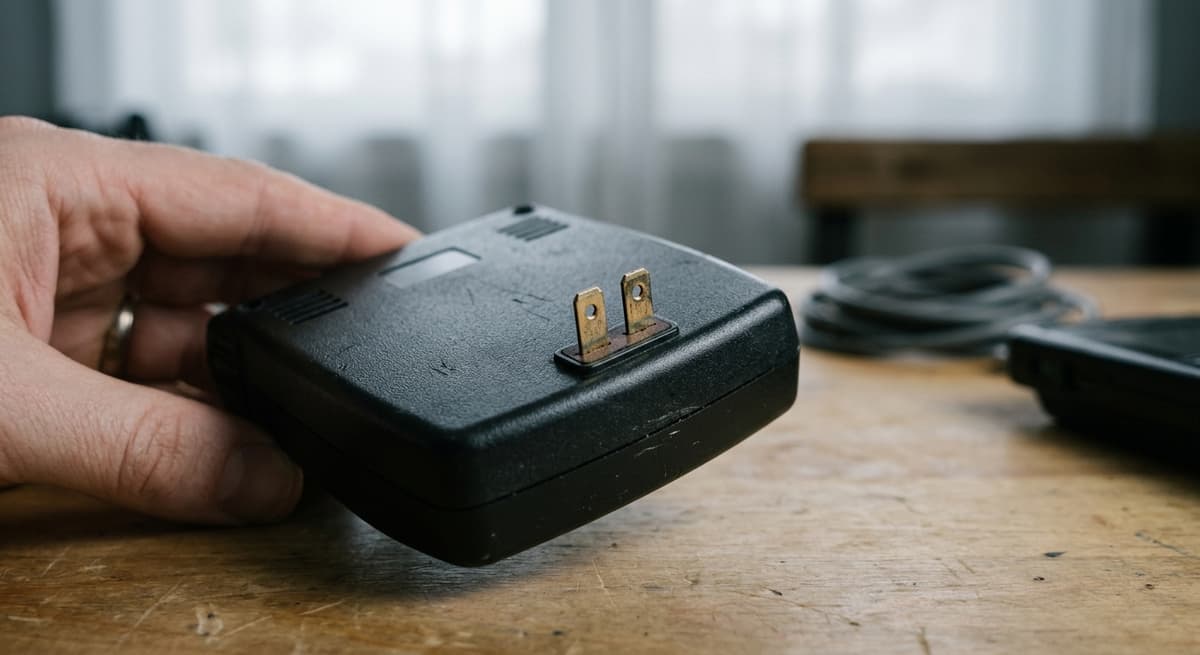
Pennsylvania's court-facility statute, 18 Pa.C.S. Section 913, defines "dangerous weapon" on its own terms too, and its list does not name a stun gun the way Sections 908(c) and 908.1 do: "a bomb, any explosive or incendiary device or material ... grenade, blackjack, sandbag, metal knuckles, dagger, knife (the blade of which is exposed in an automatic way by switch, push-button, spring mechanism or otherwise) or other implement for the infliction of serious bodily injury which serves no common lawful purpose." Knowingly possessing a firearm or other dangerous weapon in a court facility, defined to cover courtrooms, judge's chambers, jury rooms, and related offices, is a misdemeanor of the third degree, rising to a misdemeanor of the first degree if possessed with intent to use it in a crime, with a summary-offense exception for a licensed carrier who failed to check a firearm at the door. Because Section 913's "dangerous weapon" list does not enumerate a stun gun by name, whether a stun gun counts as a court-facility "dangerous weapon" depends entirely on the unresolved "common lawful purpose" catchall, a different and less settled question than the one Section 908.1 answers for stun-gun possession generally; Section 908.1's self-defense authorization is not written to reach court facilities. Two provisions favor a visitor, though. Section 913(d) bars a conviction under subsection (a)(1) unless notice of the ban was posted at each public entrance to the courthouse or building, or the person had actual notice. And Section 913(e) requires each county to make lockers or similar facilities available, at no charge, for temporarily checking a firearm or other dangerous weapon "that is not otherwise prohibited by law" before entering, with a receipt issued for anything checked.
Local ordinances and state preemption
Pennsylvania's firearms preemption statute, 18 Pa.C.S. Section 6120(a), states that "no county, municipality or township may in any manner regulate the lawful ownership, possession, transfer or transportation of firearms, ammunition or ammunition components when carried or transported for purposes not prohibited by the laws of this Commonwealth." That preemption is scoped to firearms and ammunition; it does not mention pepper spray or stun guns anywhere in its text or its definitions subsection. A Pennsylvania municipality is therefore not state-blocked from adopting its own ordinance regulating pepper spray or stun guns, unlike the firearms and ammunition Section 6120 reserves to the state.
Philadelphia has used that room. Philadelphia Code Section 10-825, "Stun Guns," added by 1977 Ordinances p. 349 and amended by Bill No. 170674-A (approved November 13, 2017), defines a stun gun as "any device designed or intended by the manufacturer to be used to temporarily immobilize or incapacitate a person by means of electric pulse or current, including devices operating by means of carbon dioxide propellant," and then bars anyone under 18 from owning, using, possessing, selling, or otherwise transferring one. A parent, legal guardian, or other legally responsible adult of a minor who violates that ban is separately in violation and responsible for the minor's fine. Selling, transferring, or otherwise providing a stun gun to a person under 18 is also barred. Violating the under-18 possession ban carries a fine of up to $500; violating the under-18 sale ban carries a fine of up to $2,000. The ordinance states it is not intended to weaken any stricter state-law restriction. Pennsylvania state law sets no statewide age floor for stun guns, so Philadelphia's ordinance is a real, additional local rule for anyone in the city. Two other Philadelphia weapons sections, covering educational institutions and city recreation facilities, were each enacted subject to a condition that they take effect only on authorizing state legislation that has not been enacted, so neither is currently in force.
Federal law: what it does and does not reach
No federal statute regulates a civilian's purchase or possession of pepper spray or a stun gun. Federal law matters in three places.
Federal buildings. Under 18 U.S.C. § 930(a), whoever knowingly possesses or causes to be present "a firearm or other dangerous weapon in a Federal facility (other than a Federal court facility)" faces a fine, imprisonment of up to 1 year, or both. Subsection (e) sets up to 2 years for a federal court facility, and subsection (b) up to 5 years where the weapon is intended to be used in a crime. Section 930(g)(2) defines the term:
The term "dangerous weapon" means a weapon, device, instrument, material, or substance, animate or inanimate, that is used for, or is readily capable of, causing death or serious bodily injury, except that such term does not include a pocket knife with a blade of less than 2½ inches in length.
The definition names neither device. Whether a particular spray or stun gun is "readily capable of" causing serious bodily injury is a question of fact the statute does not answer. Subsection (d)(3) exempts "the lawful carrying of firearms or other dangerous weapons in a Federal facility incident to hunting or other lawful purposes," and subsection (h) requires notice of the ban to be posted at each public entrance. A "Federal facility" is "a building or part thereof owned or leased by the Federal Government, where Federal employees are regularly present for the purpose of performing their official duties."
Air travel. The Transportation Security Administration's screening rules, which are agency policy rather than statute, bar both devices from carry-on bags. One 4 fl. oz. (118 ml) container of mace or pepper spray is permitted in checked baggage if it has a safety mechanism to prevent accidental discharge, and sprays containing more than 2 percent by mass of tear gas (CS or CN) are prohibited in checked baggage. Tasers, stun guns and other electro-shock weapons may travel in checked baggage only if transported so the device cannot discharge accidentally. Airlines may set stricter rules.
National parks. National Park Service regulations prohibit possessing, carrying or using a "weapon" in a park area except as the regulations provide (36 CFR 2.4(b)(1)). 36 CFR 1.4 defines "weapon" to include an "irritant gas device" and any "weapon the possession of which is prohibited under the laws of the State in which the park area or portion thereof is located."
Disclaimer: This article provides general legal information about Pennsylvania's pepper spray and stun gun laws as of September 2026. It is not legal advice. Consult a lawyer licensed in Pennsylvania for advice about a specific situation.
For a state-by-state comparison, see pepper spray and stun gun laws by state. Pennsylvania's self-defense statutes are covered separately on the Pennsylvania self-defense laws page.
Statutes cited reflect their in-force version as of 2026-09-22. Last updated: 2026-09-22.
Frequently Asked Questions
Is pepper spray legal in Pennsylvania?
Yes. No Pennsylvania statute restricts ordinary possession or self-defense carry of pepper spray. 18 Pa.C.S. Section 2708 bans using tear or noxious gas, including red pepper spray, against a person in a labor dispute, a different context entirely from self-defense carry. Using pepper spray against a police officer or other enumerated official is a separate, more serious offense: 18 Pa.C.S. Section 2702(a)(7) makes it aggravated assault, a felony of the second degree.
Are stun guns legal in Pennsylvania?
Yes, with conditions. 18 Pa.C.S. Section 908.1(b) allows a person to possess and use a stun gun in self-defense as long as the device is labeled with, or accompanied by, clearly written instructions on its use and the damages involved. Section 908.1(c) bars anyone prohibited from possessing a firearm under Section 6105 from possessing or using one at all, regardless of labeling. Section 908(c) also lists 'any stun gun' among 'offensive weapons'; that clause and Section 908.1 were both added by the same 2002 act, Act 132 (HB 227), and no Pennsylvania appellate decision has addressed how Section 908.1(b)'s labeling condition and Section 908(a)'s 'authorization by law' phrase apply to each other.
What is the penalty for possessing a stun gun in Pennsylvania?
It depends on the offense. Using a stun gun on another person for an unlawful purpose, or possessing one with intent to do that, is a felony of the second degree under 18 Pa.C.S. Section 908.1(d) if the actor intended to commit a felony; any other offense under Section 908.1, including possession by a person barred under Section 6105, is a misdemeanor of the first degree. Using a stun gun against a police officer or other Section 2702(c) official is aggravated assault, also a felony of the second degree, under Section 2702(a)(7). Ordinary self-defense possession that meets Section 908.1(b)'s labeling condition is not an offense at all.
Can you bring pepper spray or a stun gun into a Pennsylvania courthouse?
It depends on the item. 18 Pa.C.S. Section 913's 'dangerous weapon' definition for court facilities does not name a stun gun specifically, so whether one counts turns on its 'implement for the infliction of serious bodily injury which serves no common lawful purpose' catchall, a question separate from Section 908.1, which governs stun-gun possession generally but is not written to reach court facilities. Pepper spray is not named in Section 913 either. Knowing possession of a covered dangerous weapon is a misdemeanor of the third degree (first degree with intent to use it in a crime), but Section 913(d) bars a conviction unless the ban was posted at the building's public entrances, and Section 913(e) requires each county to provide free lockers for checking a weapon before entering.
Is pepper spray or a stun gun banned on Pennsylvania school property?
Neither is named specifically. 18 Pa.C.S. Section 912 defines 'weapon' for school-property purposes as any tool, instrument, or implement 'capable of inflicting serious bodily injury,' a broader test than Section 908's 'common lawful purpose' standard, and applies it without naming pepper spray or a stun gun directly. Possessing a covered weapon on school property is a misdemeanor of the first degree, but Section 912(c) provides a defense where the item is possessed and used with a lawful supervised school activity or for another lawful purpose.
Can Pennsylvania cities regulate pepper spray or stun guns?
Yes. Pennsylvania's firearms preemption statute, 18 Pa.C.S. Section 6120, is scoped to 'firearms, ammunition or ammunition components' only. It does not mention pepper spray or stun guns, so a municipality is not state-blocked from adopting its own ordinance for either device. Philadelphia has done so: Philadelphia Code Section 10-825 bars anyone under 18 from owning, using, or possessing a stun gun, with fines up to $500, and fines a seller who provides one to a minor up to $2,000.
Updates
Independently fact-checked against the cited primary sources
Sources and References
- 18 Pa.C.S. § 908.1 - Use or possession of electric or electronic incapacitation device(palegis.us).gov
- Act of Nov. 6, 2002, P.L. 1096, No. 132 (HB 227) - enrolled act adding 18 Pa.C.S. § 908.1 and amending § 908(c)(palegis.us).gov
- Act of Nov. 3, 2022, P.L. 1782, No. 119 (HB 1929) - enrolled act removing the dagger/knife/razor clause from 18 Pa.C.S. § 908(c)(palegis.us).gov
- 18 Pa.C.S. Section 908(a)-(c) - Prohibited offensive weapons(palegis.us).gov
- 18 Pa.C.S. Section 912 - Possession of weapon on school property(palegis.us).gov
- 18 Pa.C.S. Section 913 - Possession of firearm or other dangerous weapon in court facility(palegis.us).gov
- 18 Pa.C.S. Section 2708 - Use of tear or noxious gas in labor disputes(palegis.us).gov
- 18 Pa.C.S. Section 2702(a)(7) - Aggravated assault (tear or noxious gas or electric incapacitation device against enumerated officer)(palegis.us).gov
- 18 Pa.C.S. Section 907 - Possessing instruments of crime(palegis.us).gov
- 18 Pa.C.S. Section 6302 - Sale or lease of weapons and explosives(palegis.us).gov
- Philadelphia Code Section 10-825 - Stun Guns(codelibrary.amlegal.com).gov
- 18 Pa.C.S. Section 6120 - Limitation on the regulation of firearms and ammunition(palegis.us).gov
- Commonwealth v. Tyack, 128 A.3d 254 (Pa. Super. 2015)(courtlistener.com)
- In the Interest of R.A.F., a Minor, 149 A.3d 63 (Pa. Super. 2016)(courtlistener.com)
- 18 U.S.C. § 930 - Possession of firearms and dangerous weapons in Federal facilities(law.cornell.edu)
- Transportation Security Administration - What Can I Bring? Pepper Spray(tsa.gov).gov
- Transportation Security Administration - What Can I Bring? Stun Guns/Shocking Devices(tsa.gov).gov
- 36 CFR 1.4 - National Park Service definitions (weapon)(ecfr.gov).gov
- 36 CFR 2.4 - Weapons, traps and nets(ecfr.gov).gov