
New York
Are Brass Knuckles Legal in New York? (2026 Penal Law 265.01)
Independently fact-checked against primary sources (last audited October 8, 2026). · 18 primary sources cited on this page. How we verify our legal content
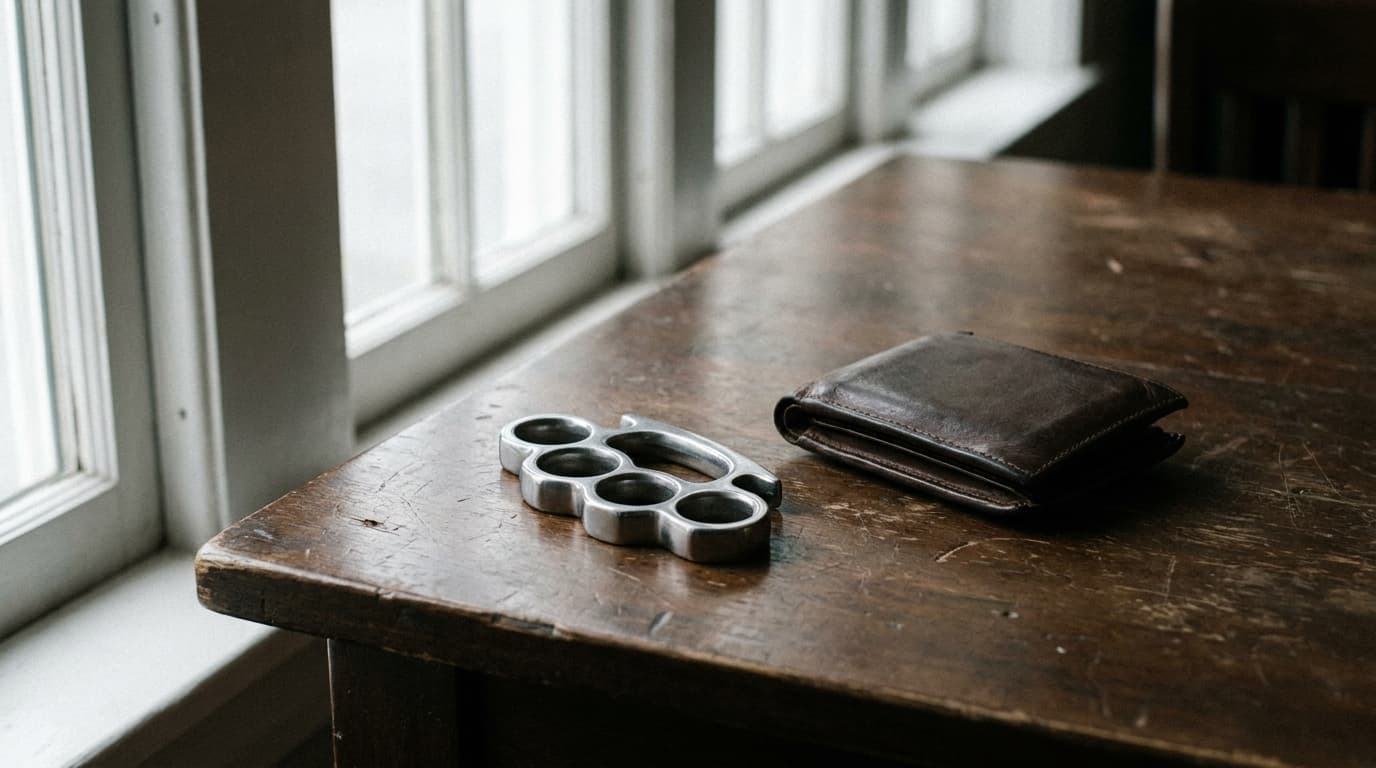
Brass knuckles are illegal to possess in New York. Penal Law 265.01(1) makes it criminal possession of a weapon in the fourth degree, a class A misdemeanor, to possess "plastic knuckles" or "metal knuckles," and a prior conviction of any crime turns the same possession into a class D felony under 265.02(1). For how other states treat the same item, see our guide to brass knuckles laws by state.
Information last verified on 2026-10-08. This article has not been reviewed by a licensed lawyer.
Jurisdiction scope: This article covers New York State Penal Law: the weapon definitions in 265.00 and 10.00, criminal possession of a weapon in 265.01 and 265.02, the under-16 rule in 265.05, the school-grounds offenses in 265.01-a and 265.06, manufacture, transport and disposition in 265.10, the vehicle presumption in 265.15, the exemptions in 265.20, stalking in the second degree in 120.55, prison contraband in 205.00, 205.20 and 205.25, and the sentence and fine limits in 70.00, 70.15, 80.00 and 80.05. It does not cover New York City or other local laws, school discipline under the Education Law beyond the evidence rule in Education Law 3214(3)(c)(1), court or corrections facility rules, federal law or property, or the law of other states.
What New York law says about brass knuckles
New York lists knuckles among the items a person may not possess at all. Penal Law 265.01 provides:
"A person is guilty of criminal possession of a weapon in the fourth degree when: (1) He or she possesses any firearm, electronic dart gun, electronic stun gun, switchblade knife, pilum ballistic knife, metal knuckle knife, cane sword, billy, blackjack, bludgeon, plastic knuckles, metal knuckles, chuka stick, sand bag, sandclub, wrist-brace type slingshot or slungshot, shuriken, or throwing star; ... Criminal possession of a weapon in the fourth degree is a class A misdemeanor." N.Y. Penal Law 265.01(1)
Subdivision (1) has no intent element, no requirement that the knuckles be concealed, and no place element. Possessing them is the offense, wherever that happens.
What counts as knuckles under New York law
The statute uses the terms "metal knuckles" and "plastic knuckles." "Brass knuckles" is not the statutory term, and the definitions section of article 265, Penal Law 265.00, does not define either "metal knuckles" or "plastic knuckles." Because both are listed, a set does not need to be metal to fall within 265.01(1).

Knuckle knives
Section 265.00 does define the combination item:
"5-b. "Metal knuckle knife" means a weapon that, when closed, cannot function as a set of plastic knuckles or metal knuckles, nor as a knife and when open, can function as both a set of plastic knuckles or metal knuckles as well as a knife. 5-c. "Automatic knife" includes a stiletto, a switchblade knife, a cane sword, a pilum ballistic knife, and a metal knuckle knife." N.Y. Penal Law 265.00(5-b), (5-c)
A metal knuckle knife is listed in 265.01(1) by name, so possessing one is the same class A misdemeanor. The definition is specific to items that fold: one that cannot work as knuckles or a knife when closed and works as both when open. How the statute treats a fixed blade with a knuckle guard is not addressed by that definition. For the knife rules generally, see our guide to New York knife laws.
Owning, carrying and keeping brass knuckles
Because 265.01(1) reaches possession itself, owning a set at home, carrying it concealed or openly, and keeping it in a bag or a car are all possession. The text of 265.01 contains no home or business exception for knuckles, and it does not distinguish concealed carry from open carry.
Brass knuckles in a car
New York has a specific rule on who is presumed to possess a weapon found in a vehicle. Penal Law 265.15(3) provides:
"3. The presence in an automobile, other than a stolen one or a public omnibus, of any firearm, ... switchblade knife, pilum ballistic knife, metal knuckle knife, dagger, dirk, stiletto, billy, blackjack, plastic knuckles, metal knuckles, chuka stick, sandbag, sandclub or slungshot is presumptive evidence of its possession by all persons occupying such automobile at the time such weapon, instrument or appliance is found, except under the following circumstances: (a) if such weapon, instrument or appliance is found upon the person of one of the occupants therein; (b) if such weapon, instrument or appliance is found in an automobile which is being operated for hire by a duly licensed driver in the due, lawful and proper pursuit of his or her trade, then such presumption shall not apply to the driver; or (c) if the weapon so found is a pistol or revolver and one of the occupants, not present under duress, has in his or her possession a valid license to have and carry concealed the same." N.Y. Penal Law 265.15(3)
For knuckles, exceptions (a) and (b) are the relevant ones: the presumption does not reach everyone in the car if the set is found on one occupant's person, and it does not apply to a licensed for-hire driver working in the trade. Exception (c) applies only to a pistol or revolver.
A stolen vehicle is left out of 265.15(3) because 265.15(2) covers it separately: the presence in any stolen vehicle of an item listed in 265.01, knuckles included, is presumptive evidence of possession by all persons occupying the vehicle, and that subdivision lists no exceptions.
Making, selling, shipping and giving away knuckles
Section 265.10 reaches the supply side as well as possession:
"1. ... Any person who manufactures or causes to be manufactured any switchblade knife, pilum ballistic knife, metal knuckle knife, undetectable knife, billy, blackjack, bludgeon, plastic knuckles, metal knuckles, throwing star, chuka stick, sandbag, sandclub or slungshot is guilty of a class A misdemeanor. 2. ... Any person who transports or ships as merchandise any firearm, other than an assault weapon, switchblade knife, pilum ballistic knife, undetectable knife, billy, blackjack, bludgeon, plastic knuckles, metal knuckles, throwing star, chuka stick, sandbag or slungshot is guilty of a class A misdemeanor. ... 4. Any person who disposes of any of the weapons, instruments or appliances specified in subdivision one of section 265.01, except a firearm, is guilty of a class A misdemeanor, and he is guilty of a class D felony if he has previously been convicted of any crime." N.Y. Penal Law 265.10(1), (2), (4)
Three points stand out:
- Manufacturing knuckles, plastic knuckles or a metal knuckle knife is a class A misdemeanor under 265.10(1).
- Transporting or shipping as merchandise plastic or metal knuckles is a class A misdemeanor under 265.10(2). That subdivision lists knuckles but does not list the metal knuckle knife.
- Disposing of knuckles is a class A misdemeanor under 265.10(4), and a class D felony if the person has previously been convicted of any crime. Section 265.00(6) defines "dispose of" broadly: "to dispose of, give, give away, lease, loan, keep for sale, offer, offer for sale, sell, transfer and otherwise dispose of." Selling a set, lending one to a friend and giving one as a gift all fall within it.
A buyer who orders knuckles online and receives them in New York possesses them under 265.01(1) once they arrive.
Prior convictions: when knuckles become a felony
New York has no separate felon-in-possession statute for knuckles. Instead, an earlier conviction of any crime raises the grade of the ordinary possession offense. Penal Law 10.00(6) defines a "crime" as a misdemeanor or a felony, so a prior conviction only for a violation or a traffic infraction does not trigger 265.02(1). Penal Law 265.02 provides:
"A person is guilty of criminal possession of a weapon in the third degree when: (1) Such person commits the crime of criminal possession of a weapon in the fourth degree as defined in subdivision one, two, three or five of section 265.01, and has been previously convicted of any crime; ... Criminal possession of a weapon in the third degree is a class D felony." N.Y. Penal Law 265.02(1)
The trigger is a previous conviction of "any crime," not only a felony. Section 265.01(4), which deals with rifles, shotguns and antique firearms after certain convictions, names firearms only and does not reach knuckles.
Who is exempt
Section 265.20 lists who the weapons prohibitions do not reach. Its first paragraph provides that sections 265.01, 265.02, 265.10 and 265.15, among others, "shall not apply to":
"1. Possession of any of the weapons, instruments, appliances or substances specified in sections 265.01, 265.01-c, 265.02, 265.03, 265.04, 265.05, 265.50, 265.55 and 270.05 by the following: (a) Persons in the military service of the state of New York when duly authorized by regulations issued by the adjutant general to possess the same. (b) Police officers ... (c) Peace officers ... (d) Persons in the military or other service of the United States ... (e) Persons employed in fulfilling defense contracts ... (f) A person voluntarily surrendering such weapon, instrument, appliance or substance ..." N.Y. Penal Law 265.20(a)(1)
Each listed category carries conditions set out in the full statute. None of the categories in 265.20(a)(1) covers an ordinary owner, a collector or a person carrying knuckles for self-defense. Section 265.20 also contains carve-outs for billies and blackjacks that do not name knuckles. Its automatic-knife carve-out, 265.20(d), can reach a metal knuckle knife, because 265.00(5-c) counts that item as an automatic knife, but it covers only a cutlery and knife museum established under Education Law 216-c and the museum's directors, officers, employees or agents while acting in furtherance of its business. It does not cover private collectors or plain metal or plastic knuckles.
The voluntary-surrender paragraph, 265.20(a)(1)(f), also lets an executor, administrator or other lawful possessor of a decedent's property keep such an item for a period not over fifteen days. If it is not lawfully disposed of within that period, it must be delivered to an official described in that paragraph or to the superintendent of state police.
Schools and college campuses
New York's school-grounds weapon felony, Penal Law 265.01-a, covers "a rifle, shotgun, or firearm" only, and the separate school-grounds offense in 265.06 covers air and spring guns. Neither names knuckles. That does not make knuckles lawful at school: 265.01(1) has no place element, so possessing them on school grounds, on a school bus or on a college campus is the same class A misdemeanor (or class D felony after a prior conviction) as anywhere else. Students can also face school discipline. Under Education Law 3214(3)(c)(1), when a suspension is based on a student's possession on school grounds or school property of an item listed in Penal Law 265.01(1), knuckles included, the hearing officer or superintendent is not barred from considering whether the item is admissible as evidence, even if a court in a criminal or juvenile delinquency proceeding determined that it was recovered through an unlawful search or seizure. Other school discipline rules are outside this page.
Minors
Section 265.01 has no age element. New York's under-16 weapons statute, Penal Law 265.05, reads:
"It shall be unlawful for any person under the age of sixteen to possess any air-gun, spring-gun or other instrument or weapon in which the propelling force is a spring or air, or any gun or any instrument or weapon in or upon which any loaded or blank cartridges may be used, or any loaded or blank cartridges or ammunition therefor, or any dangerous knife; ... A person who violates the provisions of this section shall be adjudged a juvenile delinquent." N.Y. Penal Law 265.05
Section 265.05 does not name knuckles. Adults who sell, give or lend knuckles to anyone, a minor included, fall under the disposition offense in 265.10(4).
Jails and prisons
Bringing knuckles into a jail or prison can be charged as promoting prison contraband in the first degree, a class D felony. Penal Law 205.25 provides:

"A person is guilty of promoting prison contraband in the first degree when: 1. He knowingly and unlawfully introduces any dangerous contraband into a detention facility; or 2. Being a person confined in a detention facility, he knowingly and unlawfully makes, obtains or possesses any dangerous contraband. Promoting prison contraband in the first degree is a class D felony." N.Y. Penal Law 205.25
Section 205.00(4) defines "dangerous contraband" as "contraband which is capable of such use as may endanger the safety or security of a detention facility or any person therein." Knuckles are not named in either section, so whether a given set qualifies turns on that capability test.
Section 205.00(3) defines "contraband" as "any article or thing which a person confined in a detention facility is prohibited from obtaining or possessing by statute, rule, regulation or order." Knowingly and unlawfully introducing any contraband into a detention facility, or making, obtaining or possessing it while confined there, is promoting prison contraband in the second degree under Penal Law 205.20, a class A misdemeanor.
Knuckles as a deadly weapon and in other crimes
The Penal Law's general definition of deadly weapon names knuckles expressly:
"12. "Deadly weapon" means any loaded weapon from which a shot, readily capable of producing death or other serious physical injury, may be discharged, or a switchblade knife, pilum ballistic knife, metal knuckle knife, dagger, billy, blackjack, plastic knuckles, or metal knuckles." N.Y. Penal Law 10.00(12)
That definition matters in offenses that turn on the use of a "deadly weapon," where knuckles count without any need to show how dangerous a particular set was.
Knuckles are also named in the stalking statute. Under Penal Law 120.55(1), a person commits stalking in the second degree when he or she commits stalking in the third degree as defined in 120.50(3) "and in the course of and in furtherance of the commission of such offense: (i) displays, or possesses and threatens the use of," a list of weapons that includes "plastic knuckles, metal knuckles." Stalking in the second degree is a class E felony, and under 70.00(2)(e) the term for a class E felony may not exceed four years.
Penalties
| Offense | Statute | Class and range stated in the Penal Law |
|---|---|---|
| Possessing metal knuckles, plastic knuckles or a metal knuckle knife | 265.01(1) | Class A misdemeanor: up to 364 days (70.15(1)); fine up to $1,000 (80.05(1)) |
| Possessing them after a previous conviction of any crime | 265.02(1) | Class D felony: term of up to seven years (70.00) |
| Manufacturing knuckles or a metal knuckle knife | 265.10(1) | Class A misdemeanor |
| Transporting or shipping knuckles as merchandise | 265.10(2) | Class A misdemeanor |
| Disposing of knuckles (selling, giving, lending, offering) | 265.10(4) | Class A misdemeanor; class D felony after a prior conviction of any crime |
| Introducing dangerous contraband into a detention facility, or possessing it while confined | 205.25 | Class D felony: term of up to seven years (70.00) |
| Introducing any contraband into a detention facility, or possessing it while confined | 205.20 | Class A misdemeanor: up to 364 days (70.15(1)); fine up to $1,000 (80.05(1)) |
| Displaying, or possessing and threatening use of, knuckles in furtherance of third-degree stalking | 120.55(1) | Stalking in the second degree, a class E felony: term of up to four years (70.00) |
Under Penal Law 70.15(1), a class A misdemeanor sentence "shall be a definite sentence" that "shall not exceed three hundred sixty-four days." Under 80.05(1), the fine for a class A misdemeanor may not exceed one thousand dollars. Under 70.00, the term for a class D felony "shall be fixed by the court, and shall not exceed seven years." Under 80.00(1), the fine for a felony may not exceed the higher of $5,000 or double the amount of the defendant's gain from the commission of the crime.
City and local rules
Local governments in New York, including New York City, have their own codes. This page covers only state law. Check your city or county code, or call your local police department's non-emergency line, about any local rule.
Self-defense alternatives under New York law
Because knuckles are off-limits to private citizens, readers often compare other options. The rules for sprays and stun devices are in our guide to New York pepper spray and stun gun laws, and the rules on when force may be used at all are in New York self-defense laws.
Related pages
- Brass knuckles laws by state
- New York knife laws
- New York pepper spray and stun gun laws
- New York self-defense laws
This article provides general legal information about New York State law, not legal advice. Weapons laws change and local rules vary. For advice about a specific situation, contact a lawyer licensed in New York or your local law enforcement agency.
Last updated: 2026-10-08.
Frequently Asked Questions
Are brass knuckles legal in New York?
No. Penal Law 265.01(1) makes possessing metal knuckles or plastic knuckles criminal possession of a weapon in the fourth degree, a class A misdemeanor, and 265.02(1) raises it to a class D felony for anyone previously convicted of any crime.
Can I keep brass knuckles at home in New York?
Section 265.01(1) makes possession itself the offense, and its text has no exception for the home. The exemptions in 265.20(a)(1) cover the military, police, peace officers, federal service, defense contractors and voluntary surrender, not private owners.
Are plastic brass knuckles legal in New York?
No. Penal Law 265.01(1) lists plastic knuckles by name alongside metal knuckles, so possessing a plastic set is the same class A misdemeanor.
Are knuckle knives legal in New York?
A metal knuckle knife, defined in 265.00(5-b) as a weapon that works as neither knuckles nor a knife when closed and as both when open, is listed in 265.01(1), so possessing one is a class A misdemeanor. Section 265.00(5-c) also counts it as an automatic knife.
What is the penalty for brass knuckles in New York?
Possession is a class A misdemeanor under 265.01(1), punishable by up to 364 days (70.15(1)) and a fine of up to $1,000 (80.05(1)). With a prior conviction of any crime it is a class D felony under 265.02(1), with a maximum term of up to seven years under 70.00.
Can I keep brass knuckles in my car in New York?
Keeping them in a car is still possession under 265.01(1). Under 265.15(3), knuckles found in a car other than a stolen one or a public omnibus are presumptive evidence of possession by every occupant, unless they are found on one person or the for-hire driver exception applies. In a stolen vehicle, 265.15(2) makes them presumptive evidence of possession by all occupants, with no listed exceptions.
Is it legal to sell brass knuckles in New York?
No. Section 265.10(4) makes disposing of knuckles, which 265.00(6) defines to include selling, giving, lending and offering for sale, a class A misdemeanor, or a class D felony if the seller was previously convicted of any crime.
Are brass knuckles a deadly weapon in New York?
Yes. The Penal Law's general definition of deadly weapon in 10.00(12) expressly includes plastic knuckles, metal knuckles and metal knuckle knives.
Updates
Independently fact-checked against the cited primary sources
The Law Behind This Article
This article rests on the statutory provisions below, held in our own legal record and retrieved from the official source. Tap a section to read the operative text.
New York Penal Law
§ 265.01Criminal possession of a weapon in the fourth degreeIn forcecited in 4 of our articles
Criminal possession of a weapon in the fourth degree. A person is guilty of criminal possession of a weapon in the fourth degree when: (1) He or she possesses any firearm, electronic dart gun, electronic stun gun, switchblade knife, pilum ballistic knife, metal knuckle knife, cane sword, billy, blackjack, bludgeon, plastic knuckles, metal knuckles, chuka stick, sand bag, sandclub, wrist-brace type slingshot or slungshot, shuriken, or throwing star; (2) He or she possesses any dagger, dangerous knife, dirk, machete, razor, stiletto, imitation pistol, undetectable knife or any other dangerous or deadly instrument or weapon with intent to use the same unlawfully against another; or (3); or (4) He possesses a rifle, shotgun, antique firearm, black powder rifle, black powder shotgun, or any muzzle-loading firearm, and has been convicted of a felony or serious offense; or (5) He possesses any dangerous or deadly weapon and is not a citizen of the United States; or (6) He is a person who has been certified not suitable to possess a rifle or shotgun, as defined in subdivision sixteen of section 265.00, and refuses to yield possession of such rifle or shotgun upon the demand of a…
Official text (excerpt) · last checked 2026-09-24 · Read the full text in our law library · Verify at legislation.nysenate.gov
Cited in 835 court opinions in our collectionLatest citing opinion in our collection: 2026
Opinions citing this section in our collection:
- The People v. Alexis Ocasio (New York Court of Appeals 2016, 28 N.Y.3d 178)“…criminal possession of a weapon in the fourth degree (see Penal Law § 265.01 [1]). The accusatory instrument alleged…”
- People v. Cahill (New York Court of Appeals 2003, 2 N.Y.3d 14)“…and criminal possession of a weapon in the fourth degree (Penal Law § 265.01). As a result of the arrest and indictm…”
- People v. Longshore (New York Court of Appeals 1995, 86 N.Y.2d 851)“…ts of criminal possession of a weapon in the fourth degree (Penal Law § 265.01 [4] [possession of a rifle or shotgun b…”
Identified automatically from the court opinions citing this section — not a ranking of which case controls.
Also relied on in: New York Knife Laws (2026): Switchblade Ban After the Gravity Knife Repeal, Knife Laws by State (2026): Carry Rules, Blade Limits, Penalties, New York Pepper Spray and Stun Gun Laws (2026)
§ 265.02Criminal possession of a weapon in the third degreeIn forcecited in 2 of our articles
Criminal possession of a weapon in the third degree. A person is guilty of criminal possession of a weapon in the third degree when: (1) Such person commits the crime of criminal possession of a weapon in the fourth degree as defined in subdivision one, two, three or five of section 265.01, and has been previously convicted of any crime; or (2) Such person possesses any explosive or incendiary bomb, bombshell, firearm silencer, machine-gun or any other firearm or weapon simulating a machine-gun and which is adaptable for such use; or (3) Such person knowingly possesses a machine-gun, firearm, rifle or shotgun which has been defaced for the purpose of concealment or prevention of the detection of a crime or misrepresenting the identity of such machine-gun, firearm, rifle or shotgun; or (5) (i) Such person possesses three or more firearms; or (ii) such person possesses a firearm and has been previously convicted of a felony or a class A misdemeanor defined in this chapter within the five years immediately preceding the commission of the offense and such possession did not take place in the person's home or place of business; or (6) Such person knowingly possesses any disguised…
Official text (excerpt) · last checked 2026-07-29 · Read the full text in our law library · Verify at legislation.nysenate.gov
Cited in 1,146 court opinions in our collectionLatest citing opinion in our collection: 2026
Opinions citing this section in our collection:
- People v. Sinistaj (New York Court of Appeals 1986, 67 N.Y.2d 236)“…2 criminal possession of a weapon in the third degree under Penal Law § 265.02 (4) (possession of a loaded firearm out…”
- People v. Muhammad (New York Court of Appeals 2011, 17 N.Y.3d 532)“…that the defendant possessed a loaded firearm (see former Penal Law § 265.02 [4]). 1 On appeal in Tucker , t…”
- People v. Bryant (New York Court of Appeals 1998, 92 N.Y.2d 216)“…crime, or misrepresentation of the identity of the weapon (Penal Law § 265.02 [3]). 2 Each of the de…”
Identified automatically from the court opinions citing this section — not a ranking of which case controls.
§ 265.10Manufacture, transport, disposition and defacement of weapons and dangerous instruments and appliancesIn forcecited in 2 of our articles
Manufacture, transport, disposition and defacement of weapons and dangerous instruments and appliances. * 1. Any person who manufactures or causes to be manufactured any machine-gun, assault weapon, large capacity ammunition feeding device or disguised gun is guilty of a class D felony. Any person who manufactures or causes to be manufactured any rapid-fire modification device is guilty of a class E felony. Any person who manufactures or causes to be manufactured any switchblade knife, pilum ballistic knife, metal knuckle knife, undetectable knife, billy, blackjack, bludgeon, plastic knuckles, metal knuckles, throwing star, chuka stick, sandbag, sandclub or slungshot is guilty of a class A misdemeanor. * NB Effective until August 25, 2026 * 1. Any person who manufactures or causes to be manufactured any machine-gun, ghost gun, unfinished frame or receiver, firearm silencer, major component of a firearm, assault weapon, large capacity ammunition feeding device or disguised gun is guilty of a class D felony. Any person who manufactures or causes to be manufactured any rapid-fire modification device is guilty of a class E felony.
Official text (excerpt) · last checked 2026-07-29 · Read the full text in our law library · Verify at legislation.nysenate.gov
Cited in 16 court opinions in our collectionLatest citing opinion in our collection: 2026
Opinions citing this section in our collection:
- Earsing v. Nelson (Appellate Division of the Supreme Court of the State of New York 1995, 212 A.D.2d 66)“…ument, a private cause of action may fairly be implied from Penal Law § 265.10 (5), which prohibits *71 the sale of a…”
- Herdzik v. Chojnacki (Appellate Division of the Supreme Court of the State of New York 2009, 68 A.D.3d 1639)“…injuries. Plaintiff alleged that defendant parents violated Penal Law § 265.10 (5) and that their son violated Penal L…”
- People v. Widger (Appellate Division of the Supreme Court of the State of New York 1987, 126 A.D.2d 962)“…t’s house as they constituted evidence of uncharged crimes (Penal Law § 265.10 [6]; § 265.15 [5]). The People contend…”
Identified automatically from the court opinions citing this section — not a ranking of which case controls.
§ 265.00DefinitionsIn forcecited in 4 of our articles
Definitions. As used in this article and in article four hundred, the following terms shall mean and include: * 1. "Machine-gun" means a weapon of any description, irrespective of size, by whatever name known, loaded or unloaded, from which a number of shots or bullets may be rapidly or automatically discharged from a magazine with one continuous pull of the trigger and includes a sub-machine gun. * NB Effective until August 25, 2026 * 1. "Machine-gun" means a weapon of any description, irrespective of size, by whatever name known, loaded or unloaded, from which a number of shots or bullets may be rapidly or automatically discharged from a magazine with one continuous pull of the trigger and includes a sub-machine gun, and also includes any convertible pistol that is equipped with a pistol converter. * NB Effective August 25, 2026 2. "Firearm silencer" means any instrument, attachment, weapon or appliance for causing the firing of any gun, revolver, pistol or other firearms to be silent, or intended to lessen or muffle the noise of the firing of any gun, revolver, pistol or other firearms. 3.
Official text (excerpt) · last checked 2026-07-29 · Read the full text in our law library · Verify at legislation.nysenate.gov
Cited in 298 court opinions in our collectionLatest citing opinion in our collection: 2026
Opinions citing this section in our collection:
- People v. Brannon (New York Court of Appeals 2011, 16 N.Y.3d 596)“…y dissent in People v Fernandez, for the reasons below. Penal Law § 265.00 (5) defines a gravity knife as: “any kn…”
- Maio v. Kralik (Appellate Division of the Supreme Court of the State of New York 2009, 70 A.D.3d 1)“…uns do not qualify as “firearms” as that term is defined in Penal Law § 265.00 (3). Therefore, according to the plaint…”
- People v. Wilson (Appellate Division of the Supreme Court of the State of New York 1998, 252 A.D.2d 241)“…more expansive definition of “loaded firearm” set forth in Penal Law § 265.00 (15), i.e., “any firearm loaded with am…”
Identified automatically from the court opinions citing this section — not a ranking of which case controls.
Also relied on in: Pepper Spray and Stun Gun Laws by State (2026)
§ 265.15Presumptions of possession, unlawful intent and defacementIn forcecited in 2 of our articles
Presumptions of possession, unlawful intent and defacement. 1. The presence in any room, dwelling, structure or vehicle of any machine-gun is presumptive evidence of its unlawful possession by all persons occupying the place where such machine-gun is found. 2. The presence in any stolen vehicle of any weapon, instrument, appliance or substance specified in sections 265.01, 265.02, 265.03, 265.04 and 265.05 is presumptive evidence of its possession by all persons occupying such vehicle at the time such weapon, instrument, appliance or substance is found. 3.
Official text (excerpt) · last checked 2026-07-29 · Read the full text in our law library · Verify at legislation.nysenate.gov
Cited in 358 court opinions in our collectionLatest citing opinion in our collection: 2026
Opinions citing this section in our collection:
- People v. Wesley (New York Court of Appeals 1989, 73 N.Y.2d 351)“…enal Law § 10.00 [8]) was aided by a statutory presumption (Penal Law § 265.15 [3]) while, in this case, constructive…”
- People v. Millan (New York Court of Appeals 1987, 69 N.Y.2d 514)“…ly on the basis of the statutory presumption of possession (Penal Law § 265.15 [3]) 1 arising from the fact that the…”
- In re Darnell C. (Appellate Division of the Supreme Court of the State of New York 2009, 66 A.D.3d 771)“…perly applied the so-called “automobile presumption” (see Penal Law § 265.15 [3]; Matter of Jonathan V., 55 AD3d…”
Identified automatically from the court opinions citing this section — not a ranking of which case controls.
Search our full record of US law — 2.1 million sections, every state + federal →
Sources and References
- N.Y. Penal Law 265.01, Criminal possession of a weapon in the fourth degree(nysenate.gov).gov
- N.Y. Penal Law 265.00, Definitions(nysenate.gov).gov
- N.Y. Penal Law 70.15, class A misdemeanor sentence(nysenate.gov).gov
- N.Y. Penal Law 80.05, class A misdemeanor fine(nysenate.gov).gov
- N.Y. Penal Law 265.02, Criminal possession of a weapon in the third degree(nysenate.gov).gov
- N.Y. Penal Law 265.10, Manufacture, transport, disposition and defacement of weapons and dangerous instruments and appliances(nysenate.gov).gov
- N.Y. Penal Law 265.15, Presumptions of possession, unlawful intent and defacement(nysenate.gov).gov
- N.Y. Penal Law 265.20, exemptions from the weapons offenses(nysenate.gov).gov
- N.Y. Penal Law 265.01-a, weapon on school grounds(nysenate.gov).gov
- N.Y. Penal Law 265.05, possession of weapons by persons under sixteen(nysenate.gov).gov
- N.Y. Penal Law 205.25, Promoting prison contraband in the first degree(nysenate.gov).gov
- N.Y. Penal Law 205.00, definition of dangerous contraband(nysenate.gov).gov
- N.Y. Penal Law 10.00, Definitions of terms of general use in this chapter(nysenate.gov).gov
- N.Y. Penal Law 120.55, Stalking in the second degree(nysenate.gov).gov
- N.Y. Penal Law 70.00, class D felony term(nysenate.gov).gov
- N.Y. Penal Law 80.00, Fine for felony(nysenate.gov).gov
- N.Y. Penal Law 205.20, Promoting prison contraband in the second degree(nysenate.gov).gov
- N.Y. Education Law 3214, Student placement, suspensions and transfers(nysenate.gov).gov