
Delaware
Delaware Knife Laws (2026): Carry, Switchblades, and Bans
Independently fact-checked against primary sources (last audited September 18, 2026). · 10 primary sources cited on this page. How we verify our legal content
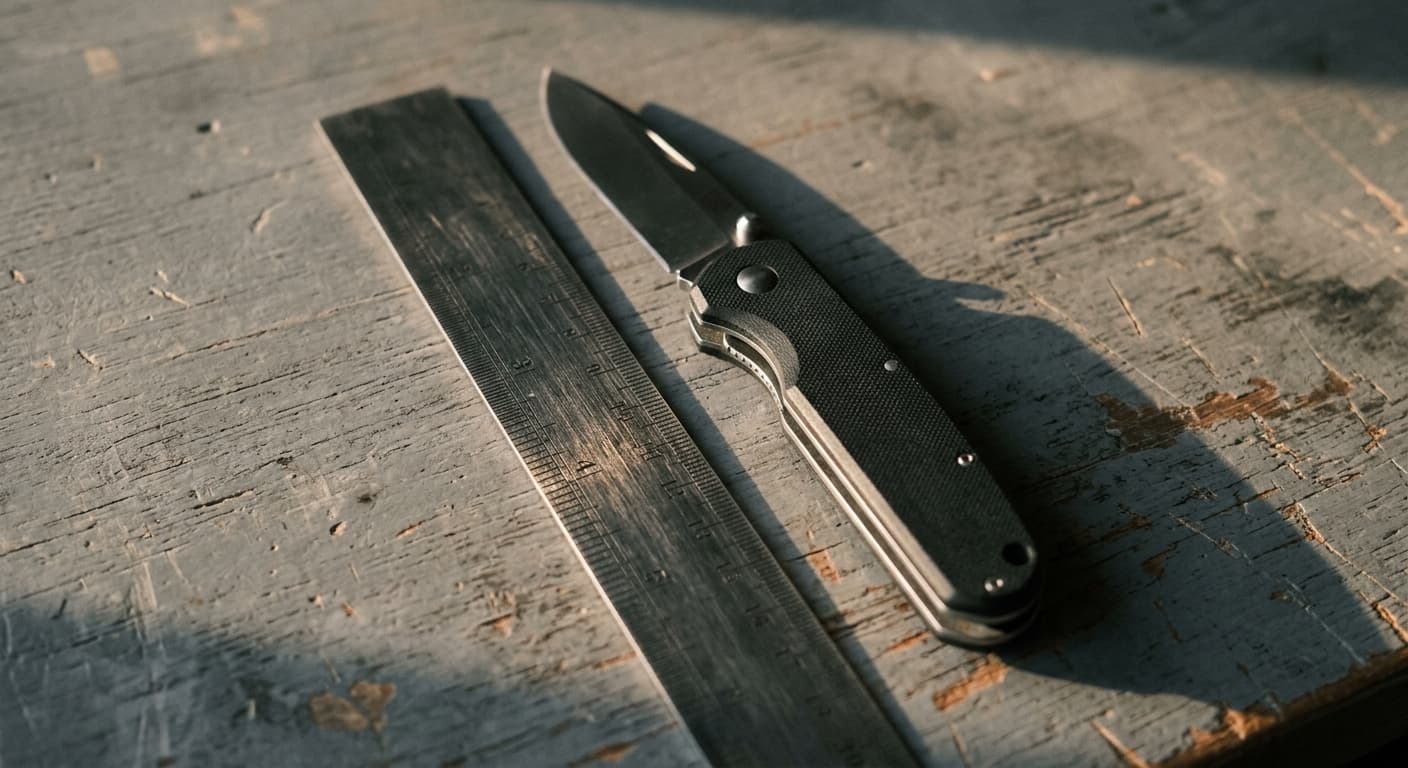
Delaware regulates knives through a patchwork of overlapping statutes rather than one general blade-length law. The state's core "deadly weapon" definition folds in most knives, a separate title bans switchblades outright regardless of how they are carried, and a repealed statute still shows up in cross-references even though it no longer does anything. Getting the current rule right means reading past the repeal notice, not stopping at it.
Jurisdiction scope: This page covers Delaware state law only, principally 11 Del. C. §§ 222, 1441, 1442, 1446A, 1452, 1453, 1457, 1457A, and 24 Del. C. § 901. It does not cover Delaware's assault or robbery statutes, which apply to a knife used as a weapon regardless of how it was carried or owned.
Can you own a knife in Delaware?
Most knives are legal to own. Delaware's general definitions section, 11 Del. C. § 222(6), lists the items that count as a "deadly weapon" throughout the Criminal Code:
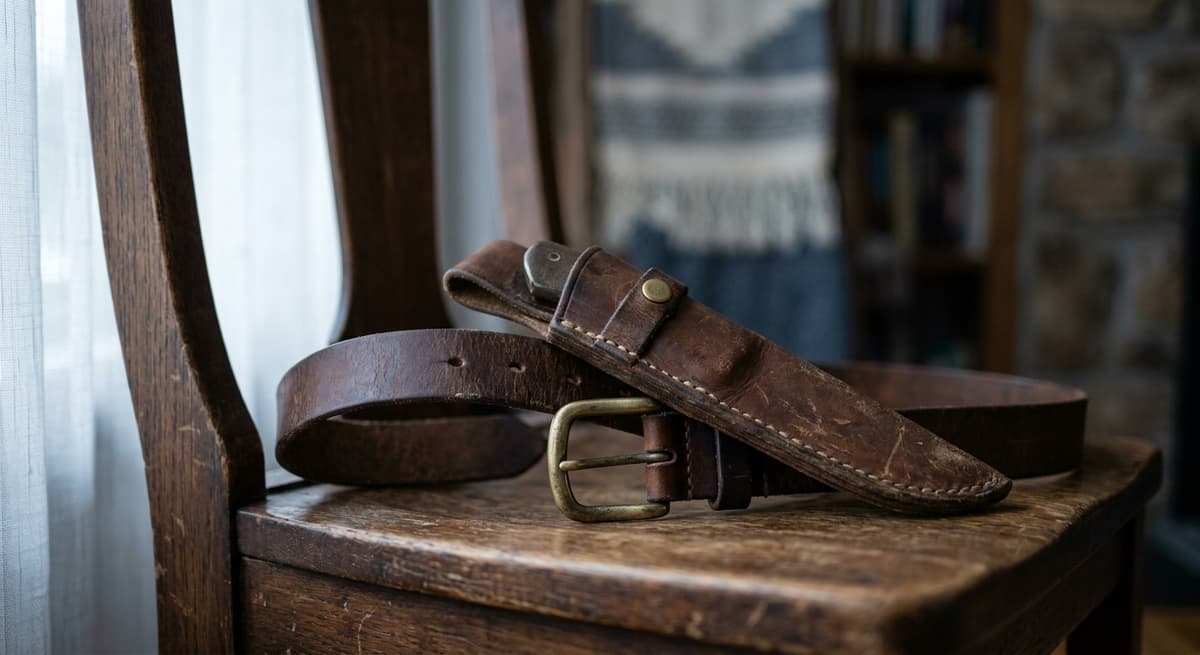
"Deadly weapon" includes any of the following: 1. A firearm. 2. A bomb. 3. A knife of any sort, other than an ordinary pocketknife carried in a closed position. 4. A switchblade knife. 5. A billy. 6. A blackjack. 7. A bludgeon. 8. Metal knuckles. 9. A slingshot. 10. A razor. 11. A bicycle chain. 12. An ice pick. 13. A dangerous instrument, which is used, or attempted to be used, to cause death or serious physical injury. 14. A projectile weapon.
The definition's own carve-out matters: "'ordinary pocketknife' means a knife having a blade not more than 3.75 inches in length." A folding pocketknife with a blade of 3.75 inches or less, carried closed, falls outside the "deadly weapon" definition entirely. A switchblade knife is named on the list separately from the general knife entry, so it counts as a deadly weapon regardless of its blade length or whether it is closed.
Two categories are banned to own or sell outright, not just to carry: a switchblade knife, under 24 Del. C. § 901 (discussed below), and an "undetectable knife," one commercially manufactured, without a permanently affixed detectable component, to evade a metal detector or magnetometer, under 11 Del. C. § 1446A, a class G felony to commercially manufacture, import for commercial sale, or possess. Section 1446A carries exceptions for sales to law enforcement, the military, and historical societies, museums, and institutional collections that keep the knives properly secured. A knuckles-combination knife, a knife blade mounted on a knuckle-ring grip handle, is a class B misdemeanor to sell, offer for sale, or possess under 11 Del. C. § 1452. A martial arts throwing star (a sharp metal throwing star) is a class B misdemeanor to sell, offer for sale, or possess under 11 Del. C. § 1453.
Open carry
Delaware's weapons chapter contains no standalone open-carry knife statute. The practical restrictions on carrying a knife openly in Delaware come from the outright possession bans above (a switchblade may not be possessed at all, openly or concealed) and from the general "deadly weapon" and dangerous-instrument offenses that apply if a knife is actually used or brandished as a weapon.
Concealed carry
Carrying a covered knife concealed on or about the person, without a license, is a crime under 11 Del. C. § 1442:
A person is guilty of carrying a concealed deadly weapon when the person carries concealed a deadly weapon upon or about the person without a license to do so as provided by § 1441 of this title.
Carrying a concealed deadly weapon is a class G felony, "unless the deadly weapon is a firearm or a projectile weapon, in which case it is a class D felony." Because the deadly-weapon definition excludes an ordinary pocketknife carried closed (3.75 inches or less) but includes a switchblade regardless of length, a folding knife at or under that length carried closed is not a "deadly weapon" for this purpose, while a switchblade of any blade length is.
The offense requires the absence of a license: § 1442(a) applies only when the person carries the deadly weapon "without a license to do so as provided by § 1441 of this title," so a valid § 1441 license negates the offense rather than excusing it after the fact. Section 1441 sets out a demanding application process through the Superior Court: a written application, a certificate from five respectable citizens of the applicant's county, a criminal history background check, a completed firearms training course, a $65 fee, and court approval, with an initial license valid for three years and renewable for five-year terms after that. The training course requirement is written entirely around firearms, including live-fire range exercises, so a knife-only applicant must still complete it to be licensed. Section 1442 also sets out two narrow defenses for someone who already held a license: an expired license with a renewal application pending before the court, under § 1442(c), and compliance with § 1456(b), under § 1442(d). Because a switchblade is independently banned to possess under 24 Del. C. § 901 (see below), a § 1441 license to carry concealed does not override that separate possession ban for a switchblade specifically.
Where you can't carry at all: restricted places
11 Del. C. § 1457 raises the penalty grade for several weapons offenses, including carrying a concealed deadly weapon (§ 1442), the knuckles-combination-knife offense (§ 1452), and the martial arts throwing star offense (§ 1453), when committed in a "Safe Recreation Zone." The statute defines that term as "any building or structure owned, operated, leased or rented by any county or municipality, or by the State... or by any private organization, which is utilized as a recreation center, athletic field or sports stadium." A class B misdemeanor underlying offense becomes a class A misdemeanor in a Safe Recreation Zone; an unclassified misdemeanor becomes a class B misdemeanor; and a class E, F, or G felony is elevated one grade higher.
A separate statute, 11 Del. C. § 1457A, creates a "Safe School Zone" offense, but its own text scopes it to a "firearm or projectile weapon" only, defining a Safe School Zone as school buildings, grounds, athletic fields, and vehicles. Because the statute's possession offense in subsection (b) is written as "knowingly possesses a firearm or projectile weapon," it does not reach a knife. Carrying a knife onto Delaware school property is not itself a Safe School Zone offense; the general concealed-carry and outright-possession rules above still apply anywhere in the state, including on school grounds.
Does Delaware preempt local knife ordinances?
Delaware's weapons chapter contains no statewide knife preemption statute. A preemption provision in the same chapter, 11 Del. C. § 1127, sits in a different subchapter covering offenses relating to children and vulnerable adults and does not reach weapons or knives generally. Title 11 sets no minimum age for purchasing or possessing a knife.

The Delaware switchblade trap: one statute is repealed, the other is not
Delaware's code shows two switchblade statutes, and only one is still in force. 11 Del. C. § 1446, titled "Unlawfully dealing with a switchblade knife," was repealed effective July 30, 2025, by 85 Del. Laws, c. 119, § 2. Older cross-references to § 1446 still appear elsewhere in the code, including in the Safe Recreation Zone statute's list of underlying offenses, but the section itself no longer states an offense.
That repeal did not legalize switchblades in Delaware. A separate, independently operative statute, 24 Del. C. § 901, titled "License requirement" and located in the title governing deadly-weapons dealers, still bans switchblade possession and sale outright:
No person licensed or unlicensed shall possess, sell or offer for sale any switchblade knife. This section shall not apply to toy pistols, pocket knives or knives used for sporting purposes and in the domestic household, or surgical instruments or tools of any kind.
The section's own second sentence carves out "pocket knives or knives used for sporting purposes and in the domestic household." Nothing in the statute or the surrounding chapter defines how that carve-out interacts with the switchblade sentence that precedes it, whether it reaches a switchblade used for those purposes, or means something narrower. That leaves the practical reach of the carve-out unresolved on the face of the text; the switchblade ban itself, outside whatever the carve-out covers, remains in force under § 901, separate from and unaffected by § 1446's repeal.
Federal law: what it does and does not reach
Federal law does not ban an individual from owning or carrying a switchblade. The Federal Switchblade Act, 15 U.S.C. §§ 1241 to 1245, instead regulates interstate commerce in switchblade knives, barring their manufacture, sale, transport, or introduction into interstate commerce, and, in 15 U.S.C. § 1245, makes it a federal offense to knowingly possess, manufacture, sell, or import a ballistic knife in or affecting interstate commerce or within federal territorial jurisdiction. 15 U.S.C. § 1244, captioned "Exceptions," provides that §§ 1242 and 1243 "shall not apply to" a list of specific knives; it is an exemption from those two interstate-commerce and importation offenses, not a change to the switchblade definition itself, which sits in § 1241(b) and was not amended. A 2009 addition, § 1244(5), exempts from §§ 1242 and 1243 any knife with a spring, detent, or other closure-bias mechanism that requires hand, wrist, or arm exertion to overcome the bias and assist opening, the exception that keeps modern assisted-opening folding knives legal in interstate commerce. A separate exception, § 1244(4), exempts a person with only one arm from those same two offenses when possessing or carrying a switchblade with a blade three inches or less. None of this changes Delaware's own, independently operative switchblade possession ban under 24 Del. C. § 901.
Disclaimer: This article provides general legal information about Delaware's knife laws as of September 2026. It is not legal advice. Consult a lawyer licensed in Delaware for advice about a specific situation. Local police retain discretion in how these statutes are enforced, and a knife legal to carry under state law can still lead to a stop or questioning depending on the circumstances.
For a state-by-state comparison, see knife laws by state. Delaware's self-defense statutes are covered separately on the Delaware self-defense laws page.
Statutes cited reflect their in-force version as of 2026-09-18. Last updated: 2026-09-18.
Frequently Asked Questions
Are switchblades illegal in Delaware?
Generally yes. Possessing, selling, or offering to sell a switchblade knife is banned, licensed or not, under 24 Del. C. 901. The same sentence carves out 'pocket knives or knives used for sporting purposes and in the domestic household,' and the statute does not spell out how far that carve-out cuts against the switchblade ban. A separate switchblade statute, 11 Del. C. 1446, was repealed in 2025, but that repeal did not affect section 901.
What size knife is legal to carry in Delaware?
Delaware's deadly-weapon definition excludes an 'ordinary pocketknife,' defined as a knife with a blade of 3.75 inches or less, carried in a closed position. A switchblade is treated as a deadly weapon regardless of blade length. A knife at or under 3.75 inches, other than a switchblade, carried closed, falls outside the concealed-deadly-weapon offense.
Can I carry a knife openly in Delaware?
Delaware has no standalone statute banning open carry of a knife. The outright bans on switchblades, undetectable knives, knuckles-combination knives, and throwing stars apply regardless of how they are carried, and Delaware's concealed-carry felony applies only to concealed carry of a covered deadly weapon without a license.
Can I carry a knife at school in Delaware?
Delaware's Safe School Zone statute, 11 Del. C. 1457A, is written to cover only a firearm or projectile weapon, not a knife. A knife carried on school grounds is instead governed by the general concealed-carry and possession rules that apply statewide.
Does a concealed-carry license let you carry a switchblade in Delaware?
No. The 11 Del. C. 1441 license only concerns the concealed-deadly-weapon offense in 11 Del. C. 1442, part of Title 11. The switchblade possession and sale ban is a separate statute, 24 Del. C. 901, sitting outside Title 11 entirely, and it applies to a switchblade regardless of any license. A 1441 license does not authorize possessing a switchblade.
Updates
Independently fact-checked against the cited primary sources
Sources and References
- 11 Del. C. 222(6) - General definitions: 'deadly weapon' includes any knife other than an ordinary pocketknife (blade 3.75 inches or less) carried closed, plus a switchblade knife named separately(delcode.delaware.gov).gov
- 11 Del. C. 1442 - Carrying a concealed deadly weapon; class G felony (class D if firearm/projectile weapon)(delcode.delaware.gov).gov
- 11 Del. C. 1441 - License to carry concealed deadly weapons: application, training, fee, and term requirements(delcode.delaware.gov).gov
- 24 Del. C. 901 - License requirement (deadly weapons dealers): switchblade possession/sale banned outright, verbatim carve-out for pocket knives and sporting/domestic-household knives(delcode.delaware.gov).gov
- 11 Del. C. 1446 - Unlawfully dealing with a switchblade knife (repealed effective July 30, 2025, by 85 Del. Laws c. 119 section 2)(delcode.delaware.gov).gov
- 11 Del. C. 1446A - Undetectable knives; commercial manufacture, import, or possession; class G felony(delcode.delaware.gov).gov
- 11 Del. C. 1452 - Unlawfully dealing with knuckles-combination knife; class B misdemeanor(delcode.delaware.gov).gov
- 11 Del. C. 1453 - Unlawfully dealing with martial arts throwing star; class B misdemeanor(delcode.delaware.gov).gov
- 11 Del. C. 1457 - Possession of a weapon in a Safe Recreation Zone; grade-elevation of concealed-carry, knuckles-knife, and throwing-star offenses(delcode.delaware.gov).gov
- 11 Del. C. 1457A - Possession of a firearm or projectile weapon in a Safe School Zone; class E felony (scoped to firearm/projectile weapon only, not knives)(delcode.delaware.gov).gov
- 15 U.S.C. 1241-1245 - Federal Switchblade Act, interstate commerce and importation scope(law.cornell.edu)
- 15 U.S.C. 1244 - exceptions, including the 2009 assisted-opening carve-out and the one-arm exception(law.cornell.edu)