
Wisconsin
Are Brass Knuckles Legal in Wisconsin? (2026 Law)
Independently fact-checked against primary sources (last audited October 10, 2026). · 14 primary sources cited on this page. How we verify our legal content
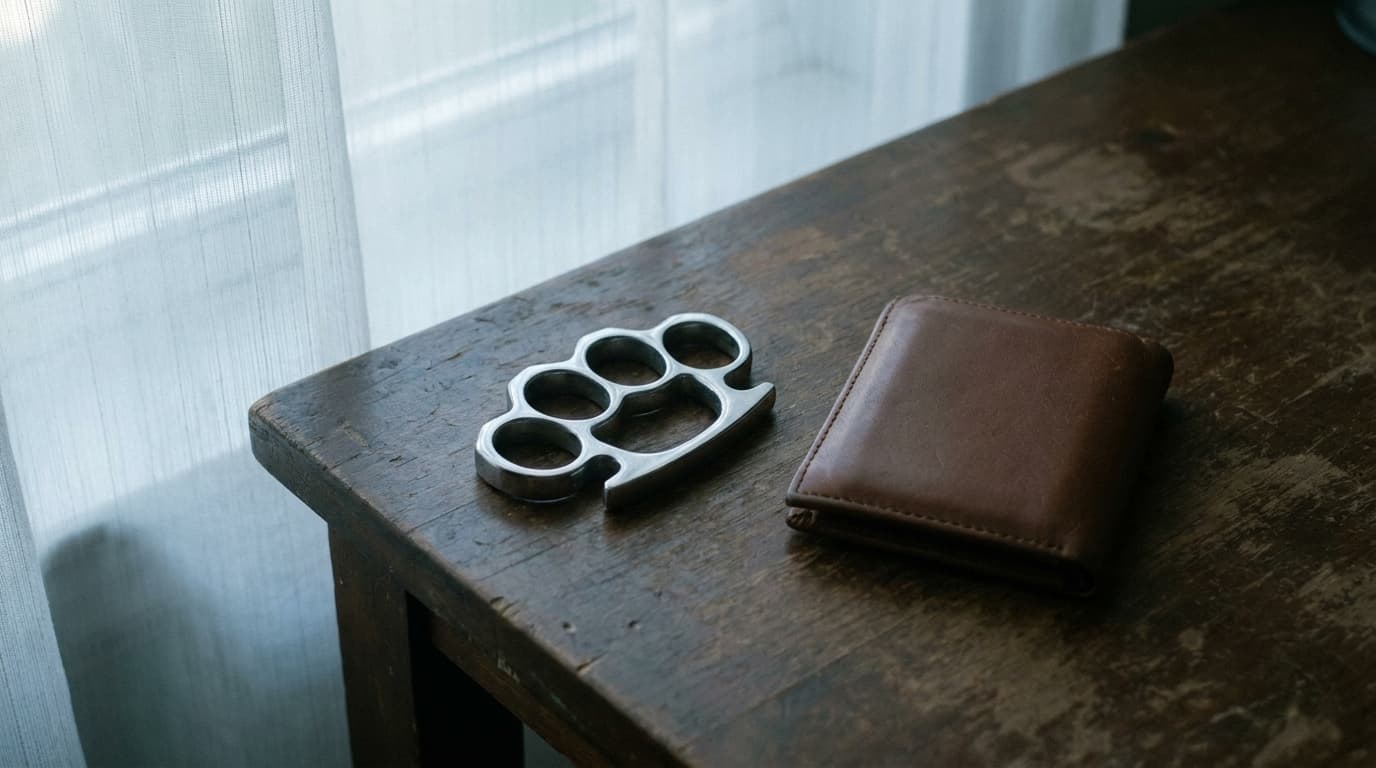
Brass knuckles are legal for adults to own, buy, sell and openly carry in Wisconsin; no statute bans them, and the only one that names them is the law on minors, Wis. Stat. 948.60. Carrying them hidden is the main risk for adults: concealed carry of a "dangerous weapon" is a Class A misdemeanor under 941.23, a concealed carry license does not cover knuckles, and possessing them is a crime for anyone under 18 and on school premises.
For other states, see our guide to brass knuckles laws by state.
Information last verified on 2026-10-08. This article has not been reviewed by a licensed lawyer.
Jurisdiction scope: This article covers Wisconsin state statutes: the criminal-code definition in 939.22(10), the concealed-weapon statutes 941.23 and 941.231, the concealed carry license definitions in 175.60, the minors and school statutes 948.60, 948.605 and 948.61, the penalty and enhancer sections 939.50, 939.51 and 939.63, the local preemption statute 66.0409 and the jail and prison contraband statute 302.095. It does not cover city, village, town or county ordinances, Wisconsin court decisions other than those noted below, administrative rules, tribal law, federal law or federal property, or the law of other states.
How Wisconsin law treats brass knuckles
Wisconsin names knuckles in only one statute, the one on minors. Its definition of "dangerous weapon" for that section expressly includes:
metallic knuckles or knuckles of any substance which could be put to the same use with the same or similar effect as metallic knuckles; ... a cestus or similar material weighted with metal or other substance and worn on the hand; Wis. Stat. 948.60(1)
That definition opens with "In this section," so it governs 948.60 only. For every other offense, including the adult concealed-carry crime, the controlling definition is the general one in 939.22(10), which does not name knuckles:
"Dangerous weapon" means any firearm, whether loaded or unloaded; any device designed as a weapon and capable of producing death or great bodily harm; ... or any other device or instrumentality which, in the manner it is used or intended to be used, is calculated or likely to produce death or great bodily harm. Wis. Stat. 939.22(10)
So for adults, whether a particular set of knuckles is a dangerous weapon depends on whether it fits that description: a device designed as a weapon and capable of producing death or great bodily harm, or one used or intended to be used in a way likely to produce it. Knuckles are made to be worn as a striking weapon, which makes it risky to assume they fall outside the definition. In State v. Frey (1993), a case about bare hands that construed 939.22(10), the Wisconsin Court of Appeals noted that the judiciary committee's note to the definition gives brass knuckles as an example of a dangerous weapon per se.
Is it legal to own or sell brass knuckles in Wisconsin?
Yes, for adults dealing with adults. No Wisconsin statute prohibits an adult from possessing, owning, making, buying or selling knuckles. The restriction on sales concerns minors: "any person who intentionally sells, loans or gives a dangerous weapon to a person under 18 years of age is guilty of a Class I felony" (948.60(2)(b)), and for that section knuckles are expressly a dangerous weapon. A Class I felony carries a fine of up to $10,000, up to 3 years and 6 months in prison, or both (939.50(3)(i)).
Carrying brass knuckles concealed in Wisconsin
Wisconsin's concealed-carry offense applies to any dangerous weapon:
(2) Any person, other than one of the following, who carries a concealed and dangerous weapon is guilty of a Class A misdemeanor: Wis. Stat. 941.23(2)
For this section, "dangerous weapon" carries the 939.22(10) meaning, except that it "does not include a knife" (941.23(1)(ap)). Knuckles get no similar carve-out. A Class A misdemeanor carries a fine of up to $10,000, up to 9 months in jail, or both (939.51(3)(a)).
Open carry is a different matter. The 941.23 offense requires that the weapon be concealed, and no Wisconsin statute bans an adult from carrying knuckles openly outside the restricted places described below.
A concealed carry license does not cover knuckles
The licensee exception in 941.23(2)(d) applies to a licensee or out-of-state licensee only "if the dangerous weapon is a weapon, as defined under s. 175.60 (1) (j)." That definition is narrow:
"Weapon" means a handgun, an electric weapon, as defined in s. 941.295 (1c) (a), or a billy club. Wis. Stat. 175.60(1)(j)
Knuckles are not on that list, so a license holder who carries knuckles concealed has no license defense.
Carrying at home, at work or on your own land
Section 941.23(2)(e) exempts "An individual who carries a concealed and dangerous weapon, as defined in s. 175.60 (1) (j), in his or her own dwelling or place of business or on land that he or she owns, leases, or legally occupies." Because the exception refers to the 175.60(1)(j) definition (handgun, electric weapon or billy club), its text does not clearly extend to knuckles, and the safer reading is that the home and business exception may not cover them.
Brass knuckles in a car
Section 941.23 has no exception for vehicles that would cover knuckles: the exceptions for licensees and for a person's own property both depend on the 175.60(1)(j) list, which does not include them. Knuckles hidden in a vehicle can therefore raise the same concealed-carry question as knuckles hidden on the body.
Schools have a specific vehicle exception. The school-premises ban does not apply to a person who "Drives a motor vehicle in which a dangerous weapon is located onto school premises for school-sanctioned purposes or for the purpose of delivering or picking up passengers or property. The weapon may not be removed from the vehicle or be used in any manner" (948.61(3)(e)).
Brass knuckles and minors
Wisconsin's clearest knuckles rule targets people under 18:
(2)(a) Any person under 18 years of age who possesses or goes armed with a dangerous weapon is guilty of a Class A misdemeanor. Wis. Stat. 948.60(2)(a)
Because 948.60(1) names "metallic knuckles or knuckles of any substance" with the same or similar effect, this ban covers plastic, polymer and other non-metal knuckles as well as brass. It does not apply to a minor using the weapon "in target practice under the supervision of an adult or in a course of instruction in the traditional and proper use of the dangerous weapon under the supervision of an adult" (948.60(3)(a)).
A violator under 17 is handled under the juvenile justice code, chapter 938, unless juvenile court jurisdiction is waived or the case falls under 938.183; a 17-year-old is prosecuted in adult criminal court (948.60(2)(d)).
An adult who intentionally sells, loans or gives knuckles to a person under 18 commits the Class I felony in 948.60(2)(b).
Brass knuckles at school
Wisconsin bans dangerous weapons other than firearms on school premises:
(2) Any person who knowingly possesses or goes armed with a dangerous weapon on school premises is guilty of: (a) A Class A misdemeanor. (b) A Class I felony, if the violation is the person's 2nd or subsequent violation of this section within a 5-year period, as measured from the dates the violations occurred. Wis. Stat. 948.61(2)
For this section, "dangerous weapon" has the 939.22(10) meaning, excluding firearms and including any BB or pellet gun and any starter pistol (948.61(1)(a)). The section covers public, parochial, private and tribal schools, and "school premises" reaches school buildings, grounds, recreation areas, athletic fields and other property used for school administration. Exceptions include uses the school sanctions and the vehicle drop-off rule above. A violator under 17 is handled under chapter 938, the juvenile justice code, unless jurisdiction is waived or the case falls under 938.183 (948.61(4)).
The 1,000-foot school zone in 948.605 applies to firearms, not to knuckles.
Jails and prisons
Wisconsin's contraband statute is written broadly. An officer or other person who, contrary to the rules and without the knowledge or permission of the keeper of the jail or the warden or superintendent of the prison, delivers or possesses with intent to deliver to an inmate "any article or thing whatever" commits a Class I felony (302.095(2)(a)). Leaving or hiding an article in or about a jail or prison, or in a vehicle going into its premises, for an inmate to get (302.095(2)(a)2.), and possessing any article contrary to the jail's or prison's rules, without the keeper's knowledge or permission, with intent to keep it for oneself (302.095(2)(b)), are also Class I felonies. Knuckles fall within that wording without being named.
Other places and prohibited persons
Several Wisconsin weapons rules that people often ask about do not reach knuckles. The ban on going armed in state and local government buildings, 941.235, is written for firearms, and the rule for premises licensed to sell alcohol, 941.237, is written for handguns. The added concealed-weapon crime for people barred from possessing firearms, 941.231, covers a "concealed knife that is a dangerous weapon," not knuckles. A prohibited person who carries knuckles concealed is still subject to the general offense in 941.23, the same as anyone else.
Using brass knuckles in a crime
Wisconsin's armed-crime enhancer applies when "a person commits a crime while possessing, using or threatening to use a dangerous weapon." For a misdemeanor, the maximum prison term "may be increased by not more than 6 months," and a felony's maximum may be increased by up to 3, 4 or 5 years depending on its base maximum (939.63(1)(b)-(d)). The enhancer does not apply "if possessing, using or threatening to use a dangerous weapon is an essential element of the crime charged" (939.63(1)-(2)). The enhancer applies only to crimes in chapters 939 to 951 and 961 (939.63(3)), and the official annotation to the section, citing State v. Peete (1994), states that the state must prove the defendant possessed the weapon to facilitate the underlying crime. Knuckles possessed to facilitate such a crime, or used or threatened during it, can trigger the enhancer if they meet the 939.22(10) definition.
When force itself is lawful is a separate question, covered in our guide to Wisconsin self-defense laws.
Can Wisconsin cities ban brass knuckles?
Wisconsin's preemption statute stops local governments from regulating "any knife or any firearm or part of a firearm, including ammunition and reloader components," unless the local rule is the same as or similar to, and no more stringent than, a state statute (66.0409(2)). Knuckles are neither a knife nor a firearm, so that statute does not stop a city, village, town or county from regulating them. Check your local code, or call your local police department's non-emergency line, before carrying knuckles in a new place.
Because knives are treated very differently under both the concealed-carry statute and the preemption statute, see our guide to Wisconsin knife laws for blades.
Wisconsin penalties at a glance
| Conduct | Statute | Classification |
|---|---|---|
| Carrying knuckles concealed (if a dangerous weapon) | 941.23(2) | Class A misdemeanor (up to 9 months, up to $10,000, or both) |
| Person under 18 possessing or going armed with knuckles | 948.60(2)(a) | Class A misdemeanor |
| Intentionally selling, loaning or giving knuckles to a person under 18 | 948.60(2)(b) | Class I felony (up to 3 years 6 months, up to $10,000, or both) |
| Dangerous weapon on school premises, first violation | 948.61(2)(a) | Class A misdemeanor |
| Second violation on school premises within 5 years | 948.61(2)(b) | Class I felony |
| Delivering any article to a jail or prison inmate contrary to the rules | 302.095(2)(a) | Class I felony |
| Possessing any article in a jail or prison contrary to the rules, intending to keep it | 302.095(2)(b) | Class I felony |
| Committing a misdemeanor while possessing or using a dangerous weapon | 939.63(1)(a) | Maximum term may increase by up to 6 months |
Related pages
- Brass knuckles laws by state
- Wisconsin knife laws
- Wisconsin self-defense laws
- Wisconsin pepper spray and stun gun laws
- Minnesota brass knuckles laws
- Illinois brass knuckles laws
This article provides general legal information about Wisconsin state law, not legal advice. Weapons laws change and local rules vary. For advice about a specific situation, contact a lawyer licensed in Wisconsin or your local law enforcement agency.
Last updated: 2026-10-08.
Frequently Asked Questions
Are brass knuckles legal in Wisconsin?
No Wisconsin statute bans adults from owning, buying or selling brass knuckles. Carrying them concealed is a Class A misdemeanor under Wis. Stat. 941.23 if they qualify as a dangerous weapon, and possession by anyone under 18 is a Class A misdemeanor under 948.60.
Can I carry brass knuckles with a Wisconsin concealed carry license?
No. The licensee exception in 941.23(2)(d) applies only if the dangerous weapon is a "weapon" as defined in 175.60(1)(j), which means a handgun, an electric weapon or a billy club.
Are plastic brass knuckles legal in Wisconsin?
For minors, the ban in 948.60 covers knuckles of any substance that could be put to the same use with the same or similar effect as metallic knuckles. For adults, plastic knuckles are judged under the general dangerous-weapon definition in 939.22(10), the same as metal ones.
Can you keep brass knuckles in your car in Wisconsin?
Wisconsin's concealed-carry statute, 941.23, has no vehicle exception that covers knuckles, so knuckles hidden in a car can raise the same question as knuckles hidden on the body. Driving onto school premises to drop off or pick up passengers with a dangerous weapon in the vehicle is allowed under 948.61(3)(e) if the weapon is not removed or used.
What happens if a minor is caught with brass knuckles in Wisconsin?
A person under 18 who possesses or goes armed with knuckles violates 948.60(2)(a), a Class A misdemeanor punishable by up to 9 months, a fine of up to $10,000, or both (939.51(3)(a)). A violator under 17 is handled under the juvenile justice code, chapter 938, unless jurisdiction is waived; a 17-year-old faces adult criminal court (948.60(2)(d)). An exception covers target practice or instruction under adult supervision (948.60(3)(a)).
Is it illegal to sell brass knuckles to a minor in Wisconsin?
Yes. Intentionally selling, loaning or giving a dangerous weapon, which in 948.60 includes metallic knuckles, to a person under 18 is a Class I felony, punishable by up to 3 years and 6 months, a fine of up to $10,000, or both (939.50(3)(i)).
Updates
Independently fact-checked against the cited primary sources
The Law Behind This Article
This article rests on the statutory provisions below, held in our own legal record and retrieved from the official source. Tap a section to read the operative text.
Wisconsin Statutes, Chapter 941: Crimes Against Public Health And Safety
§ 941.23Carrying concealed weapon.In forcecited in 4 of our articles
(1) In this section: (ag) “Carry” has the meaning given in s. 175.60 (1) (ag). (ap) Notwithstanding s. 939.22 (10), “dangerous weapon” does not include a knife. (ar) “Destructive device” has the meaning given in 18 USC 921 (a) (4). (b) “Firearm silencer” has the meaning given in s. 941.298 (1). (c) “Former officer” means a person who served as a law enforcement officer with a law enforcement agency before separating from law enforcement service. (d) “Law enforcement agency” has the meaning given in s. 175.49 (1) (f). (e) “Law enforcement officer” has the meaning given in s. 175.49 (1) (g). (f) “Machine gun” has the meaning given in s. 941.25 (1). (g) “Qualified out-of-state law enforcement officer” means a law enforcement officer to whom all of the following apply: 1. The person is employed by a state or local government agency in another state. 2. The agency has authorized the person to carry a firearm. 3. The person is not the subject of any disciplinary action by the agency that could result in the suspension or loss of the person’s law enforcement authority. 4.
Official text (excerpt) · last checked 2026-09-24 · Read the full text in our law library · Verify at docs.legis.wisconsin.gov
Cited in 34 court opinions in our collectionLatest citing opinion in our collection: 2022
Opinions citing this section in our collection:
- State v. Cole (Wisconsin Supreme Court 2003, 264 Wis. 2d 520)“…COX, J. This case involves a constitutional challenge to Wis. Stat. § 941.23 (1999-2000), [1] the state law prohib…”
- State v. Hamdan (Wisconsin Supreme Court 2003, 264 Wis. 2d 433)“…charged with carrying a concealed weapon, in violation of Wis. Stat. § 941.23 (1999-2000), [1] and convicted at a j…”
- State v. Dundon (Wisconsin Supreme Court 1999, 226 Wis. 2d 654)“…in John V. Dundon, Jr.'s appeal from his conviction under Wis. Stat. § 941.23 (1995-96) 1 and from the…”
Identified automatically from the court opinions citing this section — not a ranking of which case controls.
Also relied on in: Wisconsin Knife Laws (2026): Concealed Carry, Schools, Preemption, Knife Laws by State (2026): Carry Rules, Blade Limits, Penalties, Wisconsin Pepper Spray and Stun Gun Laws (2026)
Wisconsin Statutes, Chapter 948: Crimes Against Children
§ 948.60Possession of a dangerous weapon by a person under 18.In forcecited in 3 of our articles
(1) In this section, “dangerous weapon” means any firearm, loaded or unloaded; any electric weapon, as defined in s. 941.295 (1c) (a); metallic knuckles or knuckles of any substance which could be put to the same use with the same or similar effect as metallic knuckles; a nunchaku or any similar weapon consisting of 2 sticks of wood, plastic or metal connected at one end by a length of rope, chain, wire or leather; a cestus or similar material weighted with metal or other substance and worn on the hand; a shuriken or any similar pointed star-like object intended to injure a person when thrown; or a manrikigusari or similar length of chain having weighted ends. (2) (a) Any person under 18 years of age who possesses or goes armed with a dangerous weapon is guilty of a Class A misdemeanor. (b) Except as provided in par. (c), any person who intentionally sells, loans or gives a dangerous weapon to a person under 18 years of age is guilty of a Class I felony. (c) Whoever violates par. (b) is guilty of a Class H felony if the person under 18 years of age under par. (b) discharges the firearm and the discharge causes death to himself, herself or another.
Official text (excerpt) · last checked 2026-07-29 · Read the full text in our law library · Verify at docs.legis.wisconsin.gov
Cited in 7 court opinions in our collectionLatest citing opinion in our collection: 2024
Opinions citing this section in our collection:
- State v. Kelsey C.R. (Wisconsin Supreme Court 2001, 243 Wis. 2d 422)“…f a dangerous weapon by a person under 18, in violation of Wis. Stat. § 948.60 (1997-98). [3] Kelsey moved to suppre…”
- State v. X.S. (Wisconsin Supreme Court 2022, 402 Wis. 2d 481)“…rous weapon by a person under 18 years of age, contrary to Wis. Stat. § 948.60(2)(a). The State sought to have X…”
- State v. Michael S. (Wisconsin Supreme Court 2005, 282 Wis. 2d 1)“…Michael was found delinquent for a weapons violation under Wis. Stat. § 948.60 (2)(a) (2001-02). All further statutory…”
Identified automatically from the court opinions citing this section — not a ranking of which case controls.
§ 948.61Dangerous weapons other than firearms on school premises.In forcecited in 3 of our articles
(1) In this section: (a) “Dangerous weapon” has the meaning specified in s. 939.22 (10), except “dangerous weapon” does not include any firearm and does include any beebee or pellet-firing gun that expels a projectile through the force of air pressure or any starter pistol. (b) “School” means a public school, parochial or private school, or tribal school, as defined in s. 115.001 (15m), which provides an educational program for one or more grades between grades 1 and 12 and which is commonly known as an elementary school, middle school, junior high school, senior high school, or high school. (c) “School premises” means any school building, grounds, recreation area or athletic field or any other property owned, used or operated for school administration. (2) Any person who knowingly possesses or goes armed with a dangerous weapon on school premises is guilty of: (a) A Class A misdemeanor. (b) A Class I felony, if the violation is the person’s 2nd or subsequent violation of this section within a 5-year period, as measured from the dates the violations occurred. (3) This section does not apply to any person who: (a) Uses a weapon solely for school-sanctioned purposes.
Official text (excerpt) · last checked 2026-07-29 · Read the full text in our law library · Verify at docs.legis.wisconsin.gov
Cited in 2 court opinions in our collectionLatest citing opinion in our collection: 2024
Opinions citing this section in our collection:
- State v. C. G. (Wisconsin Supreme Court 2022, 2022 WI 60)“…senior high school, or high school." Wis. Stat. § 948.61(1)(b). Ella is now…”
- Evangelista, Wayne v. Flanagan, Krista (District Court, W.D. Wisconsin 2024)“…a stun gun on school grounds. T.L.O., 469 U.S. at 341-42; Wis. Stat. § 948.61 (prohibiting unauthorized possession of…”
Identified automatically from the court opinions citing this section — not a ranking of which case controls.
Wisconsin Statutes, Chapter 175: Miscellaneous Police Provisions
§ 175.60License to carry a concealed weapon.In forcecited in 2 of our articles
(1) Definitions. In this section: (ac) “Background check” means the searches the department conducts under sub. (9g) to determine a person’s eligibility for a license to carry a concealed weapon. (ag) “Carry” means to go armed with. (b) “Department” means the department of justice. (bm) “Handgun” means any weapon designed or redesigned, or made or remade, and intended to be fired while held in one hand and to use the energy of an explosive to expel a projectile through a smooth or rifled bore. “Handgun” does not include a machine gun, as defined in s. 941.25 (1), a short-barreled rifle, as defined in s. 941.28 (1) (b), or a short-barreled shotgun, as defined in s. 941.28 (1) (c). (bv) “Law enforcement agency” does not include the department. (c) “Law enforcement officer” has the meaning given in s. 165.85 (2) (c). (d) “Licensee” means an individual holding a valid license to carry a concealed weapon issued under this section. (dm) “Military resident” means an individual who is in active service in the U.S. armed forces and is stationed in this state for a term that is scheduled to be at least one year in duration. (e) “Motor vehicle” has the meaning given in s.
Official text (excerpt) · last checked 2026-07-29 · Read the full text in our law library · Verify at docs.legis.wisconsin.gov
Cited in 14 court opinions in our collectionLatest citing opinion in our collection: 2025
Opinions citing this section in our collection:
- Wisconsin Carry, Inc. v. City of Madison (Wisconsin Supreme Court 2017)“…nity was Act 35, now codified (in part) as Wis. Stat. § 175.60. Upon obtain…”
- State v. Brian Grandberry (Wisconsin Supreme Court 2018, 380 Wis. 2d 541)“…No. 2016AP173-CR concealed weapon pursuant to Wis. Stat. § 175.60 (hereinafter "concealed carry license"…”
- Daniel Doubek v. Joshua Kaul (Wisconsin Supreme Court 2022, 401 Wis. 2d 575)“…Doubek petitioned for judicial review pursuant to Wis. Stat. § 175.60(14m). The…”
Identified automatically from the court opinions citing this section — not a ranking of which case controls.
Search our full record of US law — 2.1 million sections, every state + federal →
Sources and References
- Wis. Stat. 948.60: possession of a dangerous weapon by a person under 18(docs.legis.wisconsin.gov).gov
- Wis. Stat. 941.23: carrying concealed weapon(docs.legis.wisconsin.gov).gov
- Wis. Stat. 939.22: words and phrases defined (dangerous weapon)(docs.legis.wisconsin.gov).gov
- Wis. Stat. 175.60: license to carry a concealed weapon(docs.legis.wisconsin.gov).gov
- Wis. Stat. 948.61: dangerous weapons other than firearms on school premises(docs.legis.wisconsin.gov).gov
- Wis. Stat. 66.0409: local regulation of firearms and knives(docs.legis.wisconsin.gov).gov
- Wis. Stat. 939.50: classification of felonies(docs.legis.wisconsin.gov).gov
- Wis. Stat. 939.51: classification of misdemeanors(docs.legis.wisconsin.gov).gov
- Wis. Stat. 948.605: gun-free school zones(docs.legis.wisconsin.gov).gov
- Wis. Stat. 302.095: delivering articles to inmates(docs.legis.wisconsin.gov).gov
- Wis. Stat. 941.235: carrying firearm in public building(docs.legis.wisconsin.gov).gov
- Wis. Stat. 941.237: carrying handgun where alcohol beverages may be sold and consumed(docs.legis.wisconsin.gov).gov
- Wis. Stat. 941.231: carrying a concealed knife(docs.legis.wisconsin.gov).gov
- Wis. Stat. 939.63: penalties; use of a dangerous weapon(docs.legis.wisconsin.gov).gov
- State v. Frey (Wis. Ct. App. 1993): construing the dangerous-weapon definition in 939.22(10)(courtlistener.com)