
Wisconsin
Wisconsin Pepper Spray and Stun Gun Laws (2026)
Independently fact-checked against primary sources (last audited September 23, 2026). · 14 primary sources cited on this page. How we verify our legal content

Wisconsin regulates pepper spray and stun guns very differently. Pepper spray is legal for an adult to buy and carry as long as the product meets a chemical-formula test, not a size limit, a common point of confusion in outside summaries; a device that fails that test, or careless use of one that passes it, carries its own separate penalties. Stun guns are a separate story: Wisconsin makes possessing an "electric weapon" a felony by default, with the exemption built around where you are and whether you hold a concealed-carry license, not simply whether you own one, and a licensee's right to carry one concealed is shielded from municipal restriction by the same court decision that protects a licensed handgun.
Jurisdiction scope: This page covers Wisconsin state law only, principally Wis. Stat. Sections 941.21, 941.23, 941.26, 941.295, 948.60, 948.61, 939.22, 175.60, and 66.0409. It does not cover the concealed-carry licensing process in detail or any municipal ordinance beyond Milwaukee's, which is discussed only as it bears on preemption.
Is pepper spray legal in Wisconsin?
Yes, provided the product meets a formula requirement rather than a size limit. Wis. Stat. Section 941.26(1g)(b) generally bans possessing, using, selling, or transporting "any tear gas bomb, hand grenade, projectile or shell or any other container of any kind or character into which tear gas or any similar substance is used or placed for use to cause bodily discomfort, panic, or damage to property." Section 941.26(4)(a) then exempts ordinary self-defense spray from that ban: "Subsections (1g) to (3) do not apply to any device or container that contains a combination of oleoresin of capsicum or CS gel and inert ingredients but does not contain any other gas or substance that will cause bodily discomfort." That is a composition test, not a volume cap. Several retailer roundups list a specific ounce limit for Wisconsin pepper spray; the statute itself sets none. The formula test is narrower than it sounds, though: Section 941.26(1c)(a) defines "CS gel" as "nonatomizing, gel-form chlorobenzalmalononitrile." An aerosolized or atomizing CS spray is not "nonatomizing, gel-form" and so does not meet that definition, which puts it back under the general ban rather than the exemption.
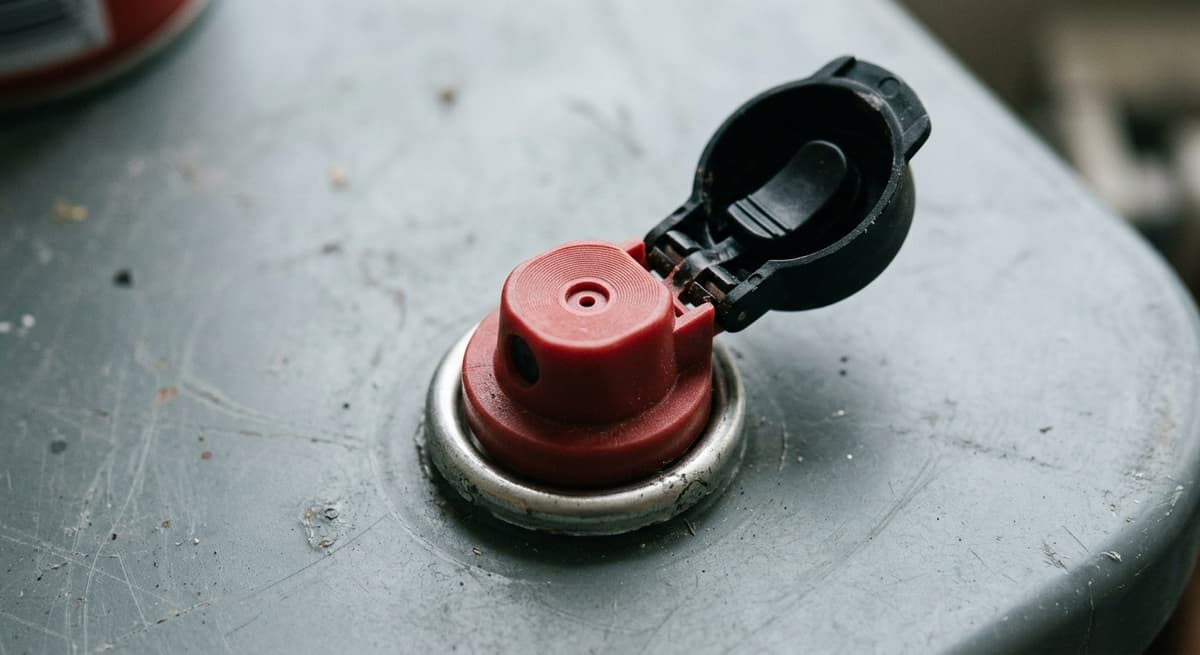
A device that falls outside the exemption, because it fails the formula test or is a true tear-gas weapon, is regulated as a criminal offense rather than a lawful self-defense product. Section 941.26(2)(c) makes possession, noncommercial transportation, or use of such a device a Class A misdemeanor. Section 941.26(2)(d) reduces that to a Class D forfeiture if the use was "in self-defense or defense of another, as allowed under s. 939.48." Selling or commercially transporting it is a Class H felony (Section 941.26(2)(e)), and using or threatening to use it against someone the actor knows, or has reason to know, is a peace officer acting officially, or during the commission of another crime, is also a Class H felony (Section 941.26(2)(f)-(g)).
The exemption itself carries its own conditions. Intentionally using a qualifying OC or CS-gel device to cause bodily harm or discomfort to someone is a Class A misdemeanor under Section 941.26(4)(b), unless the person is acting in self-defense or defense of another, is a peace officer acting in an official capacity, or is armed forces or national guard personnel acting in the line of duty (Section 941.26(4)(c)). Using the device against someone the actor knows, or has reason to know, is a peace officer acting officially, or using or threatening to use it while committing another crime, raises the offense to a Class H felony (Section 941.26(4)(d)-(e)).
Age and criminal-history limits apply on both the seller's and the possessor's side. Selling or distributing a qualifying device to a person under 18 is a Class C forfeiture (Section 941.26(4)(g)1.). The parent, guardian, or legal custodian exception is narrower than a blanket family carve-out: Section 941.26(4)(g)1m. applies only "if the actor gives the person the device or container," so a parent who sells rather than gives the device to their own minor child is not within the exception. A seller has a separate good-faith defense if the buyer produced identification that falsely showed they had turned 18 (Section 941.26(4)(g)2.). Separately, a person under 18 who possesses a qualifying device is subject to a Class E forfeiture, unless a parent, guardian, or legal custodian purchased or gave it to them (Section 941.26(4)(k)). A person previously convicted of a felony in Wisconsin, or of an out-of-state or federal crime that would be a felony in Wisconsin, who possesses a qualifying device is guilty of a Class A misdemeanor, unless the person has received a pardon for that felony (Section 941.26(4)(L)). Sellers must also provide a proper label and written safety instructions with every device; failing to do so is a separate Class A misdemeanor (Section 941.26(4)(j)). Section 941.26(4)(m) additionally bars the Wisconsin Department of Justice from promulgating or enforcing any rule that regulates a qualifying device, so the statute itself is the entire regulatory scheme for the product.
One offense reaches a lawfully possessed device regardless of whether it otherwise complies with the formula test: Section 941.21(2) makes it a Class H felony to "intentionally disarm a peace officer who is acting in his or her official capacity by taking a dangerous weapon or a device or container described under s. 941.26 (1g) (b) or (4) (a) from the officer without his or her consent," and subsection (3) applies the same Class H felony to disarming a correctional officer of the same items or of issued equipment. The offense reaches the item whether the officer is carrying it or it is within the officer's immediate presence.
Are stun guns legal in Wisconsin?
Only with real restrictions, and Wisconsin regulates stun guns far more heavily than pepper spray. Wis. Stat. Section 941.295(1c)(a) defines an "electric weapon" as "any device which is designed, redesigned, used or intended to be used, offensively or defensively, to immobilize or incapacitate persons by the use of electric current," language broad enough to cover a stun gun or a Taser-style device. Section 941.295(1m) states plainly: "Whoever sells, transports, manufactures, possesses or goes armed with any electric weapon is guilty of a Class H felony."
Two sets of exemptions narrow that default felony. Section 941.295(2) exempts peace officers, armed forces or national guard personnel on official duty, corrections personnel on official duty, most manufacturers and sellers, and common carriers transporting the devices. For an ordinary civilian, the exemption that matters is Section 941.295(2g): the prohibition on possessing or going armed with an electric weapon "does not apply to" a licensee holding a Wisconsin concealed-carry license under Section 175.60, or an out-of-state licensee holding a qualifying out-of-state license under that same section, an individual who goes armed with an electric weapon "in his or her own dwelling or place of business or on land that he or she owns, leases, or legally occupies," or a private-security license holder under Section 440.26 who is on official duty. Outside a person's home, business, or owned, leased, or occupied land, an ordinary adult needs a Wisconsin concealed-carry license, or a qualifying out-of-state license, to lawfully possess or carry an electric weapon at all. An "out-of-state licensee" is not simply someone who holds a reciprocal permit: Section 175.60(1)(g) defines the term as an individual "who is 21 years of age or over, who is not a Wisconsin resident, and who has been issued an out-of-state license," and Section 175.60(1)(f) defines a qualifying "out-of-state license" as a permit for carrying a concealed weapon issued by a state that the Department of Justice has listed by rule, where, if that state itself requires no background search for its permit, the permit indicates the holder chose to submit to one anyway. Section 175.60(1)(j) makes clear that the concealed-carry license itself covers this device: "'Weapon' means a handgun, an electric weapon, as defined in s. 941.295 (1c) (a), or a billy club." Transporting, as opposed to possessing or carrying, an electric weapon is treated separately and more leniently: Section 941.295(2r) exempts a licensee, and also exempts anyone transporting the device "enclosed within a carrying case."
A minor cannot possess an electric weapon in Wisconsin under any of those location exemptions. Section 948.60(1) separately defines "dangerous weapon" for its own purposes to include "any electric weapon, as defined in s. 941.295 (1c) (a)," and Section 948.60(2)(a) makes it a Class A misdemeanor for a person under 18 to possess or go armed with one, regardless of location. Selling, loaning, or giving an electric weapon to a minor is a Class I felony under Section 948.60(2)(b). Section 948.60(3)(a) carves out target practice or a course of instruction conducted under adult supervision, and the transfer of a device for that same supervised purpose. Section 948.60(3)(b) adds a second, narrower carve-out: it does not apply to a person under 18 who is a member of the armed forces or national guard and who possesses or is armed with a dangerous weapon in the line of duty, or to an adult member of the armed forces or national guard who transfers one to such a minor in the line of duty.
The disarming felony described above reaches an electric weapon on the same terms as a pepper-spray device: Section 941.21(2)-(3) applies to "a dangerous weapon or a device or container described under s. 941.26 (1g) (b) or (4) (a)," and "dangerous weapon" carries the Section 939.22(10) meaning, which names an electric weapon explicitly.
Where you can't carry either device
Section 941.23(2) makes it a Class A misdemeanor for anyone other than a listed exception to carry "a concealed and dangerous weapon," with "dangerous weapon" carrying the Section 939.22(10) meaning that names an electric weapon; whether a pepper-spray device meets that definition is the same open question described above. The listed exceptions are chiefly a peace officer, a qualified out-of-state law enforcement officer, or a former officer meeting specific conditions. Section 941.23(2)(d) exempts a Section 175.60 licensee or out-of-state licensee, but only "if the dangerous weapon is a weapon, as defined under s. 175.60 (1) (j)," a handgun, an electric weapon, or a billy club, which reaches a stun gun but not a pepper-spray canister. Section 941.23(2)(e) exempts an individual who carries a concealed and dangerous weapon, again "as defined in s. 175.60 (1) (j)," in their own dwelling or place of business or on land they own, lease, or legally occupy, the same stun-gun-only scope. Because Section 175.60(1)(j) does not include pepper spray, neither exemption reaches it even if it is otherwise a "dangerous weapon" under Section 939.22(10); a stun gun, which is a Section 175.60(1)(j) weapon, is covered by both.
A licensee's carry right is broad but not unconditional. Section 175.60(2g)(a) lets a licensee or out-of-state licensee "carry a concealed weapon anywhere in this state except as provided under subs. (15m) and (16) and ss. 943.13 (1m) (c) and 948.605 (2) (b) 1r." Section 175.60(16)(a) bars a licensee or out-of-state licensee from knowingly carrying a concealed weapon, an unconcealed weapon, or a non-weapon firearm into: a building that is a police station, sheriff's office, state patrol station, or the office of a Division of Criminal Investigation special agent; a prison, jail, house of correction, or secured correctional facility; specified state care and treatment facilities; a secured unit or portion of a mental health institute, including the Maximum Security Facility at Mendota Mental Health Institute; a county, state, or federal courthouse, or a municipal courtroom while court is in session (a judge who is a licensee, or someone a judge has permitted in writing, may still carry there); and any place beyond an airport security checkpoint. Because Section 175.60(1)(j) defines "weapon" to include an electric weapon, every one of those places applies to a stun gun carried by a licensee, not only to a handgun. Section 175.60(15m) separately lets an employer bar a licensee or out-of-state licensee from carrying a concealed weapon, or a particular type of one, during the course of their employment, though an employer may not condition employment on not carrying, or not storing a weapon, in the employee's own vehicle. Section 175.60(2g)(a) also cross-references two further statutes limiting where a licensee may carry, though both are keyed to firearms specifically rather than to an electric weapon: Section 943.13(1m)(c) (posted private and certain public property that restricts carrying a firearm) and Section 948.605(2)(b)1r. (Wisconsin's gun-free school zone law, which otherwise exempts a licensee from its firearm ban everywhere except in or on school grounds).
Wisconsin's public-school weapons statute, Section 948.61, separately bars knowingly possessing or going armed with a "dangerous weapon" on school premises, defined there as any grade-1-through-12 public, parochial, private, or tribal school building, grounds, recreation area, athletic field, or other property owned, used, or operated for school administration. Section 948.61(1)(a) defines "dangerous weapon" by cross-reference to the general Chapter 939 definition, except that it excludes firearms and adds BB, pellet, and starter guns. That general definition, Section 939.22(10), reads in full: "'Dangerous weapon' means any firearm, whether loaded or unloaded; any device designed as a weapon and capable of producing death or great bodily harm; any ligature or other instrumentality used on the throat, neck, nose, or mouth of another person to impede, partially or completely, breathing or circulation of blood; any electric weapon, as defined in s. 941.295 (1c) (a); or any other device or instrumentality which, in the manner it is used or intended to be used, is calculated or likely to produce death or great bodily harm." An electric weapon is named explicitly, so a stun gun is a "dangerous weapon" for purposes of the school-grounds ban without question. Pepper spray is not named by device anywhere in that definition, but it is not necessarily outside it either: the second clause, "any device designed as a weapon and capable of producing death or great bodily harm," is itself open-ended, and whether an OC or CS-gel spray device falls under it, or under the closing "calculated or likely to produce death or great bodily harm" clause, is not addressed by either section's text. Violating Section 948.61 is a Class A misdemeanor, rising to a Class I felony for a second or subsequent violation within five years, with exceptions for school-sanctioned use, official military or law-enforcement duty, an authorized collectors' convocation, and a weapon left inside a vehicle solely to drop off or pick up passengers or property on school grounds.
Local regulation: a licensee's carry right is protected, a nonlicensee's is not
Wisconsin's statewide weapons-preemption statute, Section 66.0409, bars a city, village, town, or county from enacting or enforcing an ordinance that regulates "the sale, purchase, purchase delay, transfer, ownership, use, keeping, possession, bearing, transportation, licensing, permitting, registration, or taxation of any knife or any firearm or part of a firearm" more strictly than state law. Read on its own, that preemption is scoped to knives and firearms and does not mention an electric weapon or a pepper-spray device anywhere in its text. But it is not the only statute that preempts local regulation of an electric weapon. In Wisconsin Carry, Inc. v. City of Madison, 2017 WI 19, the Wisconsin Supreme Court held that the state's concealed-carry statute does the same work for the weapons Section 66.0409 does not reach: "there are other types of weapons, and other statutes that speak to their regulation. Amongst these is the Concealed-Carry Statute, which covers not just handguns but electric weapons and billy clubs as well" (¶60). The court concluded that "the Concealed-Carry Statute, Wis. Stat. § 175.60, preempts the City's authority to restrict a licensee's right to carry concealed weapons on the City's buses so long as the licensee complies with the statute's requirements," and that no city, sub-unit, or employee may enforce a local rule that prohibits "carrying any knife or firearm (as defined by the Local Regulation Statute) or weapon (as defined by the Concealed-Carry Statute)" consistent with state law (¶69). Because Section 175.60(1)(j) defines "weapon" to include an electric weapon, that holding protects a Section 175.60 licensee's or out-of-state licensee's carry of a stun gun from a municipal restriction, on the same terms as their carry of a handgun.
That protection runs to a licensee, not to everyone. Milwaukee has its own ordinance on point, and it names the device: Milwaukee Code of Ordinances Section 105-34-1-a makes it unlawful for anyone other than a peace officer to "go armed with a concealed and dangerous weapon within the city of Milwaukee," and Section 105-34-2-b defines "dangerous weapon" to mean "any device designed as a weapon and capable of producing death or great bodily harm, any electric weapon as defined in s. 941.295(1c), Wis. Stats., and any similar electronic control device, or any other device or instrumentality which, in the manner it is used or intended to be used, is calculated or likely to produce death or great bodily harm." A first violation carries a forfeiture of $200 to $500 (Section 105-34-3-a-1), rising to $300 to $500 during certain nighttime hours on a designated cruising-area street (Section 105-34-3-c). Under the Wisconsin Carry holding, that ordinance cannot be enforced against a Section 175.60 licensee or out-of-state licensee carrying an electric weapon in compliance with state law, but it applies in full to someone who does not hold that license, alongside the state concealed-carry offense described above. The ordinance's definition, like the state definition in Section 939.22(10), does not name pepper spray but closes with the same open clauses, so whether it reaches a non-licensee's pepper-spray canister is the same unresolved question as under state law, not a settled exclusion.
Federal law: what it does and does not reach
No federal statute regulates a civilian's purchase or possession of pepper spray or a stun gun. Federal law matters in three places.
Federal buildings. Under 18 U.S.C. § 930(a), whoever knowingly possesses or causes to be present "a firearm or other dangerous weapon in a Federal facility (other than a Federal court facility)" faces a fine, imprisonment of up to 1 year, or both. Subsection (e) sets up to 2 years for a federal court facility, and subsection (b) up to 5 years where the weapon is intended to be used in a crime. Section 930(g)(2) defines the term:
The term "dangerous weapon" means a weapon, device, instrument, material, or substance, animate or inanimate, that is used for, or is readily capable of, causing death or serious bodily injury, except that such term does not include a pocket knife with a blade of less than 2½ inches in length.
The definition names neither device. Whether a particular spray or stun gun is "readily capable of" causing serious bodily injury is a question of fact the statute does not answer. Subsection (d)(3) exempts "the lawful carrying of firearms or other dangerous weapons in a Federal facility incident to hunting or other lawful purposes," and subsection (h) requires notice of the ban to be posted at each public entrance. A "Federal facility" is "a building or part thereof owned or leased by the Federal Government, where Federal employees are regularly present for the purpose of performing their official duties."
Air travel. The Transportation Security Administration's screening rules, which are agency policy rather than statute, bar both devices from carry-on bags. One 4 fl. oz. (118 ml) container of mace or pepper spray is permitted in checked baggage if it has a safety mechanism to prevent accidental discharge, and sprays containing more than 2 percent by mass of tear gas (CS or CN) are prohibited in checked baggage. Tasers, stun guns and other electro-shock weapons may travel in checked baggage only if transported so the device cannot discharge accidentally. Airlines may set stricter rules.
National parks. National Park Service regulations prohibit possessing, carrying or using a "weapon" in a park area except as the regulations provide (36 CFR 2.4(b)(1)). 36 CFR 1.4 defines "weapon" to include an "irritant gas device" and any "weapon the possession of which is prohibited under the laws of the State in which the park area or portion thereof is located."
Disclaimer: This article provides general legal information about Wisconsin's pepper spray and stun gun laws as of September 2026. It is not legal advice. Consult a lawyer licensed in Wisconsin for advice about a specific situation.
For a state-by-state comparison, see pepper spray and stun gun laws by state. Wisconsin's self-defense statutes are covered separately on the Wisconsin self-defense laws page.
Statutes cited reflect their in-force version as of 2026-09-23. Last updated: 2026-09-23.
Frequently Asked Questions
Does Wisconsin limit pepper spray to a specific size, like 2 ounces?
No. Wis. Stat. Section 941.26(4)(a) exempts a qualifying device by its chemical formula, oleoresin capsicum or nonatomizing, gel-form CS plus inert ingredients only, and states no ounce, milliliter, or volume limit. A specific size cap sometimes repeated online does not appear in the statute.
What happens if a pepper-spray device does not meet Wisconsin's formula exemption?
It is regulated as tear gas rather than as an exempt self-defense product. Possessing, using, or noncommercially transporting it is generally a Class A misdemeanor under Section 941.26(2)(c), reduced to a Class D forfeiture if the use was self-defense or defense of another under Section 941.26(2)(d). Selling or commercially transporting it is instead a Class H felony under Section 941.26(2)(e), as is using it against a known peace officer or during another crime.
Do I need a permit to own a stun gun in Wisconsin?
Not to keep one in your own dwelling, place of business, or land you own, lease, or legally occupy; Section 941.295(2g)(b) exempts that location. Anywhere else, Wisconsin's default rule under Section 941.295(1m) makes possession a Class H felony unless you hold a Wisconsin concealed-carry license, or a qualifying out-of-state license, under Section 175.60.
Can a felon possess pepper spray in Wisconsin?
No. Section 941.26(4)(L) makes it a Class A misdemeanor for a person previously convicted of a felony, in Wisconsin or elsewhere, to possess a qualifying pepper-spray device, unless the person has been pardoned for that felony.
Can a minor possess a stun gun in Wisconsin?
No. Section 948.60(2)(a) makes it a Class A misdemeanor for anyone under 18 to possess or go armed with an electric weapon anywhere, regardless of the home, business, or land exemption that applies to adults, with narrow exceptions for supervised target practice or instruction and for a minor serving in the armed forces or national guard in the line of duty.
Are stun guns banned on Wisconsin school grounds?
Yes. Section 948.61's school weapons ban defines dangerous weapon by cross-reference to Section 939.22(10), which names an electric weapon specifically. Pepper spray is not named by device in that same definition, but the definition's separate 'device designed as a weapon and capable of producing death or great bodily harm' clause is open-ended, and whether it reaches a spray device is not addressed in the statute's text.
Where can't a licensee carry a stun gun even with a Wisconsin concealed-carry license?
Section 175.60(16) bars a licensee or out-of-state licensee from carrying any weapon, including an electric weapon, into a police station, a prison or jail, a secured mental-health unit, a courthouse or an in-session municipal courtroom (absent judicial permission), or past an airport security checkpoint. An employer may separately bar carrying one during work under Section 175.60(15m).
Can a Wisconsin city or county ban pepper spray or stun guns even though state law allows them?
It depends on who is carrying. Section 66.0409's local-preemption statute covers only ordinances regulating a knife or a firearm, but the Wisconsin Supreme Court held in Wisconsin Carry, Inc. v. City of Madison, 2017 WI 19, that Section 175.60 separately preempts a municipality from restricting a licensee's or out-of-state licensee's carry of an electric weapon. Milwaukee's own ordinance banning a concealed dangerous weapon, which names an electric weapon, still applies to someone who does not hold that license. Neither Section 66.0409 nor Milwaukee's ordinance names pepper spray, but both close on the same open, device-neutral clauses as the state 'dangerous weapon' definition, so whether either reaches a non-licensee's pepper-spray canister is unresolved rather than settled.
Updates
Independently fact-checked against the cited primary sources
Sources and References
- Wis. Stat. 941.21 - Disarming an officer (Class H felony for taking a pepper-spray device or electric weapon from a peace or correctional officer)(docs.legis.wisconsin.gov).gov
- Wis. Stat. 941.23 - Carrying concealed weapon (general concealed-carry offense and its licensee/location exceptions)(docs.legis.wisconsin.gov).gov
- Wis. Stat. 941.26 - Machine guns and other weapons; use in certain cases; penalty (pepper spray formula exemption, CS gel definition, penalties, sale/possession age rules, felon bar)(docs.legis.wisconsin.gov).gov
- Wis. Stat. 941.295 - Possession of electric weapon (default felony, licensee, out-of-state-licensee, and location exemptions)(docs.legis.wisconsin.gov).gov
- Wis. Stat. 939.22(10) - Words and phrases defined ('dangerous weapon' full definition, including an electric weapon and the open device/instrumentality clause)(docs.legis.wisconsin.gov).gov
- Wis. Stat. 948.60 - Possession of a dangerous weapon by a person under 18 (minor electric-weapon ban and its exceptions)(docs.legis.wisconsin.gov).gov
- Wis. Stat. 948.61 - Dangerous weapons other than firearms on school premises(docs.legis.wisconsin.gov).gov
- Wis. Stat. 175.60 - License to carry a concealed weapon (definitions, carry scope, prohibited places, employer restrictions, out-of-state license test)(docs.legis.wisconsin.gov).gov
- Wis. Stat. 66.0409 - Local regulation of weapons (preemption scoped to knives and firearms only)(docs.legis.wisconsin.gov).gov
- Wisconsin Carry, Inc. v. City of Madison, 2017 WI 19, 373 Wis. 2d 543 (Section 175.60 preempts municipal restriction of a licensee's carry of an electric weapon)(static.case.law)
- Milwaukee Code of Ordinances, Chapter 105, Section 105-34 - Carrying Dangerous Weapons(city.milwaukee.gov).gov
- 18 U.S.C. § 930 - Possession of firearms and dangerous weapons in Federal facilities(law.cornell.edu)
- Transportation Security Administration - What Can I Bring? Pepper Spray(tsa.gov).gov
- Transportation Security Administration - What Can I Bring? Stun Guns/Shocking Devices(tsa.gov).gov
- 36 CFR 1.4 - National Park Service definitions (weapon)(ecfr.gov).gov
- 36 CFR 2.4 - Weapons, traps and nets(ecfr.gov).gov