
Wisconsin
Wisconsin Knife Laws (2026): Concealed Carry, Schools, Preemption
Independently fact-checked against primary sources (last audited September 18, 2026). · 11 primary sources cited on this page. How we verify our legal content
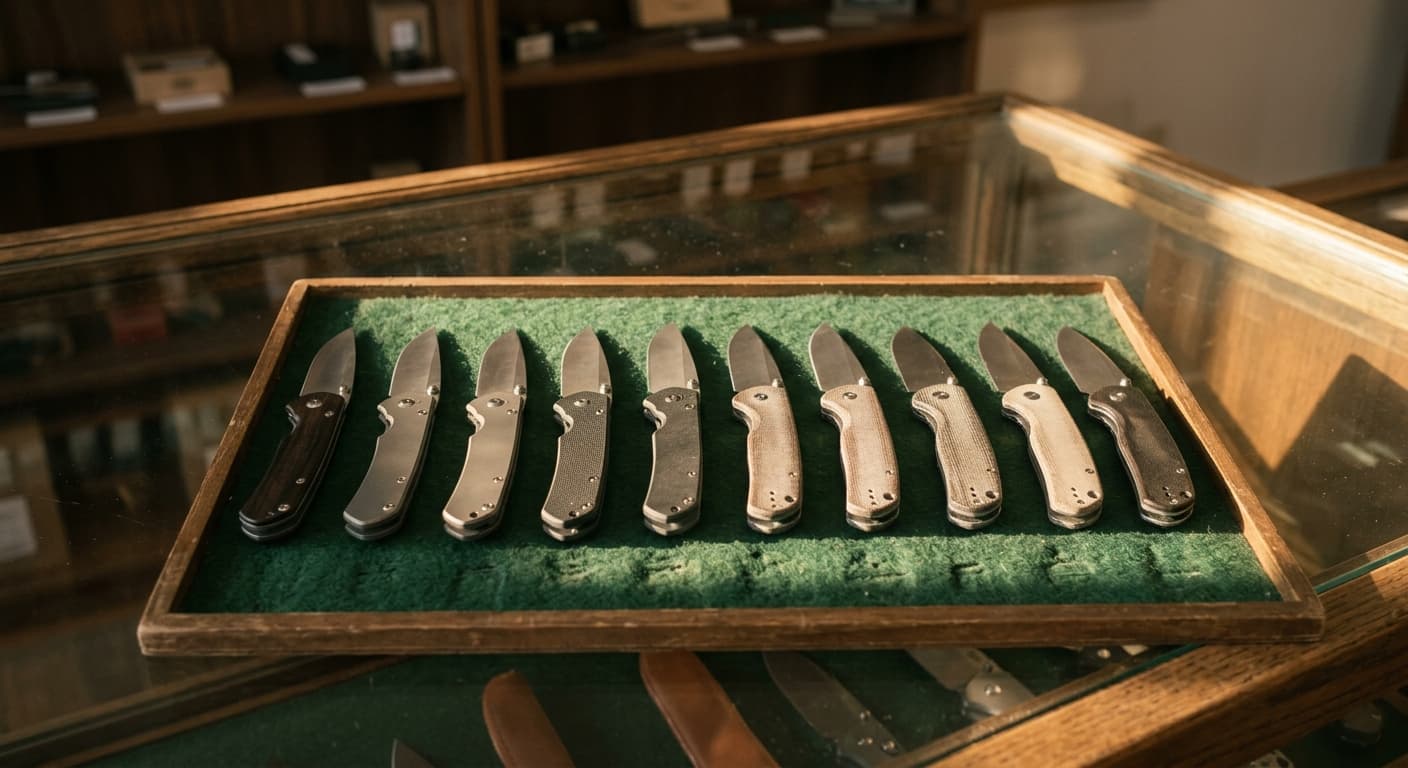
Wisconsin's core concealed-weapons statute, Wis. Stat. § 941.23, expressly excludes a knife from the "dangerous weapon" definition it uses, so ordinary concealed carry of a knife by the general public is not an offense under that statute at all, and a companion safe harbor keeps disorderly conduct from reaching ordinary knife carry either. A separate, narrower statute, § 941.231, bans a person already prohibited from possessing a firearm from going armed with a concealed knife that qualifies as a dangerous weapon. Chapter 941 of the Wisconsin Statutes sets no separate open-carry restriction on a knife or blade-length limit, though negligent handling of a knife that endangers someone is a separate offense. The sharper limits sit elsewhere: school premises, a preemption statute that carves out an exception letting a city, village, or county ban knife possession inside its own buildings, and a felon-specific offense.
Jurisdiction scope: This article addresses Wisconsin state law only, primarily Wis. Stat. §§ 941.23, 941.231, 939.22, 948.61, and 66.0409. It does not cover Wisconsin's concealed-carry-license statute, § 175.60, which governs handguns rather than knives, in detail.
Can you carry a knife openly or concealed in Wisconsin?
Yes to both, for the general public. Wisconsin's general concealed-weapons statute is § 941.23, which provides at subsection (2): "Any person, other than one of the following, who carries a concealed and dangerous weapon is guilty of a Class A misdemeanor." That offense turns on the term "dangerous weapon," and § 941.23(1)(ap) supplies a definition specific to this section: "Notwithstanding s. 939.22 (10), 'dangerous weapon' does not include a knife." Because a knife is excluded from the term the offense is built on, an ordinary person carrying a knife concealed, of any blade length or type, does not violate § 941.23. Chapter 941 contains no separate offense restricting open carry of a knife either; § 941.23 by its own terms reaches only concealed carry, and no other general statewide provision in chapter 941 regulates open carry of a knife.
A related safe harbor closes off the most obvious substitute charge. § 947.01(2), Wisconsin's disorderly conduct statute, provides: "Unless other facts and circumstances that indicate a criminal or malicious intent on the part of the person apply, a person is not in violation of, and may not be charged with a violation of, this section for loading a firearm, or for carrying or going armed with a firearm or a knife, without regard to whether the firearm is loaded or the firearm or the knife is concealed or openly carried." § 66.0409(6) extends the identical protection against a local ordinance addressing disorderly conduct or similar inappropriate behavior, and voids any local ordinance that conflicts with it. Both provisions carry the same limit built into their opening clause: once other facts show criminal or malicious intent, ordinary disorderly conduct under § 947.01(1), a Class B misdemeanor for conduct that "tends to cause or provoke a disturbance," remains available against a person carrying a knife.
Separately, Subchapter III of chapter 941, headed WEAPONS, opens with a general conduct offense that reaches how a knife is handled rather than whether it is carried. § 941.20(1)(a) makes it a Class A misdemeanor to "endanger another's safety by the negligent operation or handling of a dangerous weapon," and "dangerous weapon" here carries the § 939.22(10) functional definition, with no knife exclusion. Negligently handling a knife in a way that endangers someone is a separate matter from simply carrying one.
The narrower felon-specific concealed-knife offense
A second statute reaches concealed knife carry, but only for a specific class of people. Wis. Stat. § 941.231, titled "Carrying a concealed knife," provides in full: "Any person who is prohibited from possessing a firearm under s. 941.29 who goes armed with a concealed knife that is a dangerous weapon is guilty of a Class A misdemeanor." Unlike § 941.23, this section does not exclude a knife from "dangerous weapon." Because § 941.231 supplies no definition of its own, the term carries its general meaning from § 939.22(10): "any firearm, whether loaded or unloaded; any device designed as a weapon and capable of producing death or great bodily harm; any ligature or other instrumentality used on the throat, neck, nose, or mouth of another person to impede, partially or completely, breathing or circulation of blood; any electric weapon, as defined in s. 941.295 (1c) (a); or any other device or instrumentality which, in the manner it is used or intended to be used, is calculated or likely to produce death or great bodily harm." A knife carried or intended to be used in a manner likely to produce death or great bodily harm can meet that functional test. The offense applies only to a person who is already prohibited from possessing a firearm under § 941.29, which covers convicted felons and other specified categories; it does not reach the general public.
Knives on school premises
Wisconsin regulates weapons on school grounds through a separate statute with its own definitions, and this one does not carry § 941.23's knife exclusion. Wis. Stat. § 948.61(1)(a) defines "dangerous weapon," for purposes of this section only, as having "the meaning specified in s. 939.22 (10), except 'dangerous weapon' does not include any firearm and does include any beebee or pellet-firing gun that expels a projectile through the force of air pressure or any starter pistol." Because this definition excludes only a firearm and does not exclude a knife, a knife meeting the general § 939.22(10) functional test remains a "dangerous weapon" for school-premises purposes.
Section 948.61(2) provides: "Any person who knowingly possesses or goes armed with a dangerous weapon on school premises is guilty of: (a) A Class A misdemeanor. (b) A Class I felony, if the violation is the person's 2nd or subsequent violation of this section within a 5-year period." "School premises" is defined broadly at § 948.61(1)(c) to include "any school building, grounds, recreation area or athletic field or any other property owned, used or operated for school administration," and "school" at § 948.61(1)(b) covers public, parochial, private, and tribal schools serving grades 1 through 12.
Subsection (3) lists exceptions, including use for school-sanctioned purposes, military activities, law enforcement officers acting in their official duties, an authorized convocation where collectors' or instructors' weapons are displayed, and transporting a weapon through school property by vehicle for a sanctioned purpose or to drop off or pick up passengers without removing it from the vehicle. The clearest confirmation that a knife falls within this statute's reach is § 948.61(3)(f), which exempts a person who "possesses or uses a bow and arrow or knife while legally hunting in a school forest if the school board has decided that hunting may be allowed in the school forest." A specific carve-out for hunting with a knife would serve no purpose if a knife were not otherwise covered by the section's dangerous-weapon definition.
Public buildings: a gap the school statute does not share
Wisconsin has no statewide statute banning knife possession in a government building generally. Wis. Stat. § 941.235(1) provides: "Any person who goes armed with a firearm in any building owned or leased by the state or any political subdivision of the state is guilty of a Class A misdemeanor." That offense is written around "firearm" specifically, not the broader "dangerous weapon" term, and does not mention or reach a knife. The only route by which a knife can be restricted inside a specific public building is a local ordinance adopted under the preemption statute's carve-out, discussed below, not a standing statewide ban.
Statewide preemption, with a knife-specific carve-out for local buildings
Wisconsin preempts most local knife regulation, but the preemption statute itself preserves one category of local control. Wis. Stat. § 66.0409(2) provides: "Except as provided in subs. (3) and (4), no political subdivision may enact or enforce an ordinance or adopt a resolution that regulates the sale, purchase, purchase delay, transfer, ownership, use, keeping, possession, bearing, transportation, licensing, permitting, registration, or taxation of any knife or any firearm or part of a firearm, including ammunition and reloader components, unless the ordinance or resolution is the same as or similar to, and no more stringent than, a state statute." Unlike some states' preemption statutes, this one names "knife" directly rather than leaving the scope to an undefined term.
Subsection (3)(c) then carves back a specific local authority: "Nothing in this section prohibits a political subdivision from enacting or enforcing an ordinance or adopting a resolution that prohibits the possession of a knife in a building, or part of a building, that is owned, occupied, or controlled by the political subdivision." So a city, village, town, or county cannot regulate knife sale, transfer, or general carry more strictly than state law, but it can ban knife possession inside its own government buildings, giving a local ordinance the exact narrow reach that § 941.235's firearm-only statewide ban does not extend to knives.
No knife-specific minor-possession statute
Wisconsin's statute aimed at weapon possession by minors, § 948.60, defines "dangerous weapon" for its own purposes at subsection (1) as "any firearm, loaded or unloaded; any electric weapon, as defined in s. 941.295 (1c) (a); metallic knuckles or knuckles of any substance which could be put to the same use with the same or similar effect as metallic knuckles; a nunchaku or any similar weapon consisting of 2 sticks of wood, plastic or metal connected at one end by a length of rope, chain, wire or leather; a cestus or similar material weighted with metal or other substance and worn on the hand; a shuriken or any similar pointed star-like object intended to injure a person when thrown; or a manrikigusari or similar length of chain having weighted ends." A knife does not appear on this list. This means § 948.60, which makes it a Class A misdemeanor for a person under 18 to possess a listed dangerous weapon and a felony to sell or give one to a minor, does not create a knife-specific offense, and chapter 948 contains no other dedicated minor knife-possession or knife-sale statute.
Where this structure came from: 2015 Wisconsin Act 149
The current framework is not the product of piecemeal amendments; it was enacted as a single, self-described act. 2015 Wisconsin Act 149's own relating clause states its scope precisely: "An Act to repeal 941.24; to amend 66.0409 (title), 66.0409 (2), 66.0409 (3) (a), 66.0409 (6), 175.60 (1) (j), 938.78 (3), 939.632 (1) (e) 3., 947.01 (2) and 968.255 (1) (a) 2.; and to create 66.0409 (3) (c), 941.23 (1) (ap) and 941.231 of the statutes; relating to: knives and preemption of regulation of knives and providing a criminal penalty." It repealed § 941.24 (Wisconsin's former switchblade statute) outright; created § 941.23(1)(ap) (the knife exclusion from that section's dangerous-weapon definition), § 941.231 (the felon-specific concealed-knife offense), and § 66.0409(3)(c) (the building carve-out described above); and amended § 66.0409(2) to add knives to the statewide preemption and § 947.01(2) and § 66.0409(6), the disorderly-conduct safe harbors described in the carry section above, which already existed as firearm-only provisions from 2011 Wisconsin Act 35, to insert "or a knife." Because § 941.24 was repealed rather than merely amended, it no longer appears anywhere in the current Wisconsin Statutes, and no switchblade-specific, blade-length, or named-type restriction (dirk, dagger, stiletto, gravity knife) exists anywhere in current Wisconsin law for the general public.
Federal law: what it does and does not reach
Federal law does not ban an individual from owning or carrying a switchblade. The Federal Switchblade Act, 15 U.S.C. §§ 1241 to 1245, restricts interstate commerce in switchblade knives, barring their manufacture for, or introduction, transport, and sale in, interstate commerce, and, in 15 U.S.C. § 1245, makes it a federal offense to knowingly possess, manufacture, sell, or import a ballistic knife in or affecting interstate commerce or within federal territorial jurisdiction. Sections 1242 and 1243, the two operative offense provisions, do not apply to certain knives and people listed as exceptions in § 1244. A 2009 amendment, § 1244(5), exempts any knife with a spring, detent, or other closure-bias mechanism that requires hand, wrist, or arm exertion on the blade itself to overcome the bias and assist opening, the carve-out that keeps modern assisted-opening folding knives legal in interstate commerce. A separate exemption, § 1244(4), covers a person with only one arm possessing or carrying a switchblade with a blade three inches or less.
Disclaimer: This article provides general legal information about Wisconsin's knife laws as of September 2026. It is not legal advice. Consult a lawyer licensed in Wisconsin for advice about a specific situation.
For a state-by-state comparison, see knife laws by state. Wisconsin's self-defense statutes are covered separately on the Wisconsin self-defense laws page.
Statutes cited reflect their in-force version as of 2026-09-18. Last updated: 2026-09-18.
Frequently Asked Questions
Is it legal to carry a concealed knife in Wisconsin?
For the general public, yes. Wis. Stat. § 941.23(1)(ap) excludes a knife from the 'dangerous weapon' definition that section's concealed-carry offense uses, and § 947.01(2) separately bars charging ordinary knife carry as disorderly conduct absent facts showing criminal or malicious intent. A separate statute, § 941.231, bans concealed knife carry only for a person already prohibited from possessing a firearm.
Can carrying a knife in Wisconsin be charged as disorderly conduct?
Not on its own. § 947.01(2), amended by the same 2015 act that excluded knives from the concealed-weapons statute to insert 'or a knife' into a safe harbor that already existed for firearms, says a person may not be charged with disorderly conduct for carrying or going armed with a knife, loaded, concealed, or open, 'unless other facts and circumstances that indicate a criminal or malicious intent' apply. § 66.0409(6) extends the same protection against a local ordinance. Once those aggravating facts are present, ordinary disorderly conduct under § 947.01(1) can still apply.
Does Wisconsin have a blade-length limit for knives?
No. Wisconsin has no statute setting a blade-length limit for general public possession or carry of a knife. Wisconsin's former switchblade statute, § 941.24, was repealed outright by 2015 Wisconsin Act 149 and no longer exists in the current code.
Can you carry a knife on school grounds in Wisconsin?
No, generally. Unlike § 941.23, the school-premises statute, § 948.61, does not exclude a knife from its 'dangerous weapon' definition, and § 948.61(3)(f)'s narrow hunting exemption confirms a knife otherwise falls within the ban. Violating § 948.61 is a Class A misdemeanor, a Class I felony for a second violation within 5 years.
Do Wisconsin cities and counties set their own knife rules?
Mostly no. Wis. Stat. § 66.0409(2) preempts local knife regulation statewide, but § 66.0409(3)(c) specifically allows a political subdivision to ban knife possession inside a building it owns, occupies, or controls.
Updates
Independently fact-checked against the cited primary sources
Sources and References
- Wis. Stat. § 941.23 - Carrying concealed weapon(docs.legis.wisconsin.gov).gov
- Wis. Stat. § 941.231 - Carrying a concealed knife(docs.legis.wisconsin.gov).gov
- Wis. Stat. § 939.22 - Words and phrases defined (dangerous weapon)(docs.legis.wisconsin.gov).gov
- Wis. Stat. § 948.61 - Dangerous weapons other than firearms on school premises(docs.legis.wisconsin.gov).gov
- Wis. Stat. § 66.0409 - Local regulation of weapons(docs.legis.wisconsin.gov).gov
- Wis. Stat. § 941.235 - Carrying firearm in public building(docs.legis.wisconsin.gov).gov
- Wis. Stat. § 941.20 - Endangering safety by use of dangerous weapon(docs.legis.wisconsin.gov).gov
- Wis. Stat. § 947.01 - Disorderly conduct(docs.legis.wisconsin.gov).gov
- Wis. Stat. § 948.60 - Possession of a dangerous weapon by a person under 18(docs.legis.wisconsin.gov).gov
- 2015 Wisconsin Act 149 - knives and preemption of regulation of knives(docs.legis.wisconsin.gov).gov
- 2011 Wisconsin Act 35 - prior firearm-only version of the Sec. 947.01(2) and Sec. 66.0409(6) safe harbors, amended by 2015 Act 149 to add knives(docs.legis.wisconsin.gov).gov
- 15 U.S.C. 1241-1245 - Federal Switchblade Act, interstate commerce and ballistic-knife scope(law.cornell.edu)
- 15 U.S.C. 1244 - exceptions, including the 2009 assisted-opening carve-out and the one-arm exception(law.cornell.edu)