
Wisconsin
Wisconsin Marriage and Divorce Records: Rules, Fees, and Custody
Independently fact-checked against primary sources (last audited August 4, 2026). · Law checked current as of August 8, 2026. · 5 primary sources cited on this page. How we verify our legal content

Wisconsin runs a dual-custody system: the state Vital Records Office and any county Register of Deeds can issue the same statewide records. The access rule splits by document type. A certified copy requires a direct and tangible interest in the record under Wis. Stat. § 69.21, but an uncertified copy carries no such requirement.
Information last verified on 2026-08-04. This article has not yet been reviewed by a licensed lawyer.
This page covers Wisconsin records. For grounds, the waiting period, and property division, see Wisconsin divorce laws.
The Certified Versus Uncertified Split
Most descriptions of Wisconsin's rules stop at "you need a direct and tangible interest," which is accurate but incomplete, and the missing half is the useful half.
Section 69.21(1)(a) tells the state registrar and local registrars to issue a certified copy on a written request for a named registrant's record, with the fee attached, but bars issuance of a certified copy of a vital record for an event occurring after September 30, 1907 unless the requester is a person with a direct and tangible interest in the record, or unless the registrar has received a court order directing issuance.
Section 69.21(2)(a) then says the registrar shall issue an uncertified copy of a vital record if the event occurred after September 30, 1907, subject to the separate disclosure restrictions in § 69.20. There is no direct-and-tangible-interest condition attached to that subsection.
The trade-off is what the document can do. An uncertified copy is stamped to show it is uncertified, which limits its value for identification and for most official filings. It is still perfectly good for confirming a date, checking a spelling, or doing family-history work.
So the practical question is not only "am I eligible" but "what do I actually need this for." If a government agency demands a certified copy, the eligibility test applies. If you only need the information, it may not.
Who Has a Direct and Tangible Interest
Section 69.20(1) supplies the definition that § 69.21 relies on. It reaches:

- the registrant, meaning the person the record is about;
- immediate family members;
- parents, with statutory exceptions;
- legal custodians and guardians;
- authorized representatives; and
- any other person who demonstrates a direct and tangible interest when the information is necessary for the determination or protection of a personal or property right.
That last category is the one people misread. It is not a general curiosity clause. It asks you to point at a specific personal or property right that the record bears on, such as an insurance claim, an estate matter, or a benefits determination.
Section 69.21 also gives a court route, and it is narrower than it sounds. If the registrar withholds a record because it determined the record was registered through misrepresentation or fraud, § 69.21(4)(b) lets a person with a direct and tangible interest petition the circuit court of the county where the event occurred. That is a fraud-determination remedy, not a general appeal from an eligibility denial.
Watch out: Do not use the personal-or-property-right clause as boilerplate. Registrars read it, and a request that recites the phrase without a real underlying right is the kind that gets denied and costs you the fee.
Fees and Where to Order
Fees come straight from § 69.22:
- $20.00 for the first certified copy of a record.
- $3.00 for each additional certified copy of the same record issued at the same time.
- $20.00 for an uncertified copy of a post-1907 event.
- $7.00 to verify information from a vital record without issuing a copy.
- $7.00 for a search of vital records when the registrar finds no record, under § 69.22(2). A registrar may add a further fee to cover search costs if you supply no identifying information, or information that is imprecise or inadequate.
That $7.00 verification is worth remembering. It is the cheapest official way to confirm that a record exists and matches the details you have. The mirror image is the $7.00 no-record search, so a request built on a guessed name or date is cheap to run but not free.
Where to order. Wisconsin gives you three routes:
- Any county Register of Deeds office, in person. This is the part people miss: a Register of Deeds can issue Wisconsin records statewide, not just events that happened in that county.
- The state Vital Records Office, by mail, at P.O. Box 309, Madison.
- VitalChek, which the Department of Health Services names as the office's ordering partner, online or by phone at 877-885-2981.
Years. Wisconsin birth, death, marriage, and divorce records run from October 1907 to the present, with a limited number of pre-October-1907 records also on file at the state level. Anything earlier normally means county and historical-society research.
The 2016 Divorce Cutoff at the Register of Deeds
Dual custody is not symmetric across record types, and the asymmetry is specific.
Dane County's Register of Deeds, which issues statewide like every other Wisconsin Register of Deeds, publishes the date ranges it can serve: birth from October 1, 1907, death from September 1, 2013, marriage from October 1, 1907, and divorce from January 1, 2016.
So for a divorce granted in 2016 or later, a Register of Deeds counter is a fast walk-in option anywhere in the state. For a divorce before 2016, that counter cannot help, and the state Vital Records Office or the Clerk of Circuit Court in the county where the divorce was granted is the source.
Certificate Versus Judgment of Divorce
As everywhere, the vital record and the court record answer different questions.
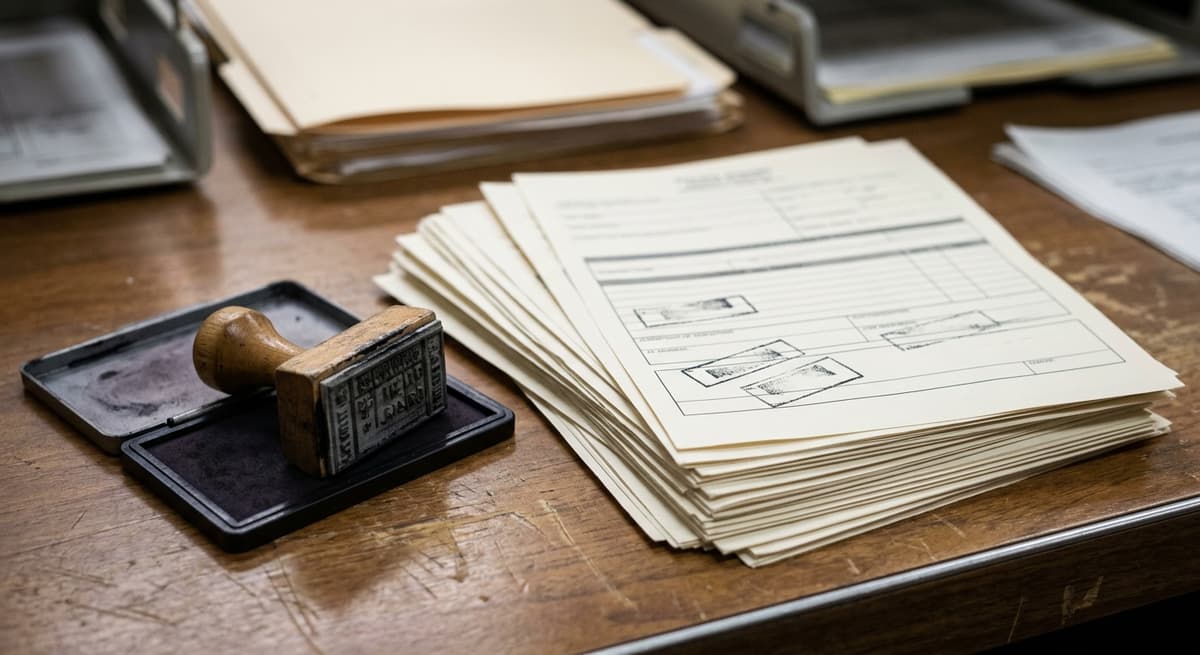
The divorce certificate confirms that a divorce occurred, with the basic facts. It is the document that proves the event.
The judgment of divorce and the case file live with the Clerk of Circuit Court in the county where the case was heard. That file holds the property division, maintenance, the parenting plan, and any support order. Wisconsin also publishes a statewide public docket search, Wisconsin Circuit Court Access, which is useful for confirming a case exists, the county, and the case number before you contact the clerk. Treat it as a docket lookup, not as a source of the documents themselves.
If your interest in a court or agency file is as an outside requester rather than a party, Wisconsin public records laws explains the general access framework.
Confidential Fields and Court-Ordered Disclosure
Three provisions of § 69.20 shape what a Wisconsin record shows.
First, the statistical block is closed. Section 69.20(2)(a) provides that information in the part of a record of birth, divorce or annulment, termination of domestic partnership, marriage, or a declaration of domestic partnership that is designated on the record as collected for statistical, or medical and statistical, use only may not be disclosed except to the subject and other specified persons. That is a field-level restriction inside an otherwise obtainable record, not a bar on the record itself.
Second, a court can override it. Section 69.20(3)(a) provides that the state registrar or a local registrar may effect a disclosure of information prohibited under sub. (2) if a court of competent jurisdiction orders the disclosure and specifies the vital record to be disclosed. Note how narrow that is: the order must identify the specific record. A general demand for records will not satisfy it.
Third, the index timing rule. Under § 69.20(3)(e)2, indexes of death, marriage, divorce, domestic partnership, termination of domestic partnership, or annulment records may be copied or reproduced for the public after 24 months have elapsed from the year in which the event occurred. That is a real constraint on very recent index research, and it applies to reproducing the index rather than to ordering an individual record.
Pro tip: If someone tells you a Wisconsin record is unavailable because of a confidentiality rule, ask which rule. The statistical-use restriction in § 69.20(2)(a), the certified-copy gate in § 69.21(1)(a), and the 24-month index rule in § 69.20(3)(e)2 are three different limits with three different workarounds.
Related Wisconsin Records
Wisconsin does not recognize common-law marriage, so no certificate exists for a relationship that was never licensed; see Wisconsin common-law marriage. For the parallel rules on death certificates, which share the same direct-and-tangible-interest standard, see Wisconsin death records.
To compare states, use the marriage and divorce records by state hub, the how to get a copy of your marriage certificate guide, or how to find out if someone is married or divorced.
Disclaimer
This article provides general legal information about Wisconsin marriage and divorce records, verified against official sources on 2026-08-04. It is not legal advice and does not create an attorney-client relationship. Fees, date ranges, and office practices change; confirm current details with the Wisconsin Vital Records Office, a county Register of Deeds, or the relevant Clerk of Circuit Court. For advice about a specific situation, consult a lawyer licensed in Wisconsin.

Last updated: 2026-08-04.
Frequently Asked Questions
Who can get a Wisconsin marriage or divorce certificate?
For a certified copy, a person with a direct and tangible interest in the record, or anyone holding a court order directing issuance. Section 69.20(1) defines that interest to include the registrant, immediate family, parents, legal custodians and guardians, authorized representatives, and any other person who demonstrates the information is necessary to determine or protect a personal or property right.
Can I get a Wisconsin vital record if I do not have a direct and tangible interest?
You can generally get an uncertified copy. Section 69.21(2)(a) directs the registrar to issue an uncertified copy for events after September 30, 1907, subject to the disclosure limits in § 69.20. It is stamped uncertified, so it will not work as a legal identity document, but it carries the information.
How much does a Wisconsin marriage or divorce record cost?
Under § 69.22, $20.00 for the first certified copy and $3.00 for each additional copy of the same record issued at the same time. An uncertified copy of a post-1907 event is $20.00, and verifying information without issuing a copy is $7.00.
Can any Register of Deeds issue my Wisconsin marriage record?
Yes, for marriages from October 1, 1907 forward. Wisconsin Registers of Deeds issue statewide, so you do not have to travel to the county where the marriage took place.
Why can a Register of Deeds only issue divorce records from 2016?
That is the statewide issuance range for divorce certificates at the Register of Deeds level, beginning January 1, 2016. For an earlier divorce, use the state Vital Records Office or the Clerk of Circuit Court in the county where the divorce was granted.
How do I get the actual Wisconsin judgment of divorce?
From the Clerk of Circuit Court in the county where the case was heard. The divorce certificate proves the event; the judgment and case file contain the property division, maintenance, and any parenting or support terms. Wisconsin Circuit Court Access can help you confirm the county and case number first.
What years of records does Wisconsin hold?
October 1907 to the present, with a limited number of pre-October-1907 records also on file at the state level.
Why can I not copy a recent Wisconsin marriage index?
Section 69.20(3)(e)2 allows indexes of marriage, divorce, domestic partnership, termination of domestic partnership, and annulment records to be copied or reproduced for the public only after 24 months have elapsed from the year in which the event occurred.
Updates
Governing law re-checked for recent changes
Independently fact-checked against the cited primary sources
The Law Behind This Article
This article rests on the statutory provisions below, held in our own legal record and retrieved from the official source. Tap a section to read the operative text.
Wisconsin Statutes, Chapter 69: Collection Of Statistics
§ 69.21Copies of vital records.In forcecited in 3 of our articles
(1) Certified copies. (a) 1. Except as provided under subd. 2., the state registrar and any local registrar shall issue a certified copy of a vital record to any person if the person submits a request for a certified copy of a vital record of a specified registrant in writing, if the vital record is enabled for statewide issuance in the state registrar’s electronic system of vital records, to the extent permitted under par. (b) 3., and if the request is accompanied by the fee required under s. 69.22. If a vital record is not enabled for statewide issuance in the state registrar’s electronic system of vital records, the registrar responsible for filing or registration of the vital record may issue a certified copy under this section. 2. The state registrar and any local registrar may not issue any certified copy under subd. 1. of any of the following: a. A vital record, if the event which is the subject of the vital record occurred after September 30, 1907, unless the requester is a person with a direct and tangible interest in the record or unless the registrar has received a court order directing issuance of the vital record. b.
Official text (excerpt) · last checked 2026-09-04 · Read the full text in our law library · Verify at docs.legis.wisconsin.gov
Also relied on in: Wisconsin Death Records: Are They Public + How to Get One, How to Get a Wisconsin Death Certificate (2026)
§ 69.20Disclosure of information from vital records.In forcecited in 6 of our articles
(1) A person with a direct and tangible interest in a vital record is any of the following: (a) The registrant of the vital record. (b) A member of the registrant’s immediate family. (c) The parent of a registrant, unless the parent is a birth parent whose parental rights to the registrant have been terminated under ch. 48. (d) The registrant’s legal custodians or guardians. (e) A representative authorized by any person under pars. (a) to (d), including an attorney. (f) Any other person who demonstrates a direct and tangible interest when information is necessary for the determination or protection of a personal or property right. (2) (a) Except as provided under sub. (3), information in the part of a record of birth, divorce or annulment, termination of domestic partnership, marriage, or a declaration of domestic partnership that is designated on the record as being collected for statistical or medical and statistical use only and information in the part of a death record that is designated on the record as being collected as statistical-use-only information under s. 69.18 (1m) (c) may not be disclosed to any person except the following: 1.
Official text (excerpt) · last checked 2026-09-04 · Read the full text in our law library · Verify at docs.legis.wisconsin.gov
Also relied on in: Are Cause of Death Records Public? How to Find One, Free or Paid, Marriage & Divorce Records by State: Who Holds Them and How to Get a Copy, How to Find a Cause of Death in Wisconsin (2026)
Search our full record of US law — 2.1 million sections, every state + federal →
Sources and References
- Wisconsin Statutes § 69.21, Copies of vital records (certified copies, direct and tangible interest, uncertified copies)(docs.legis.wisconsin.gov).gov
- Wisconsin Statutes § 69.20, Disclosure of information from vital records (statistical-use restriction, court-order override, 24-month index rule)(docs.legis.wisconsin.gov).gov
- Wisconsin Department of Health Services, Vital Records ordering (fees, years, VitalChek, Register of Deeds)(dhs.wisconsin.gov).gov
- Dane County Register of Deeds, Vital Records (statewide issuance date ranges, including divorce from January 1, 2016)(danecounty.gov).gov
- Wisconsin Court System, Wisconsin Circuit Court Access(wicourts.gov).gov