
Washington
Are Brass Knuckles Legal in Washington? (2026 RCW 9.41.250)
Independently fact-checked against primary sources (last audited October 8, 2026). · 20 primary sources cited on this page. How we verify our legal content
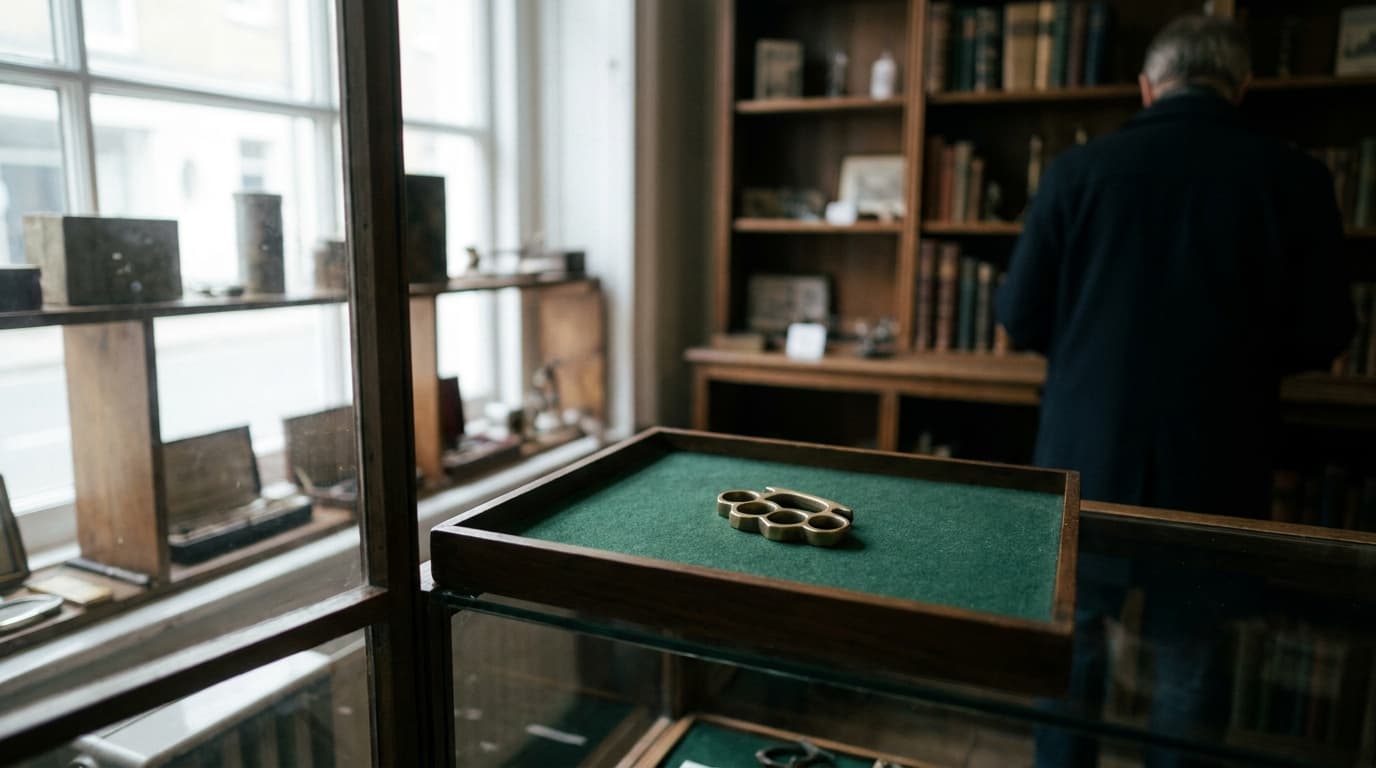
Brass knuckles are illegal in Washington. RCW 9.41.250(1)(a) makes it a gross misdemeanor to manufacture, sell, dispose of or possess "metal knuckles," so simply owning a set is an offense, and the same weapons are also barred from schools, courts, bars, libraries, transit stations and other listed places. To compare other states, see our guide to brass knuckles laws by state.
Information last verified on 2026-10-08. This article has not been reviewed by a licensed lawyer.
Jurisdiction scope: This article covers the Revised Code of Washington: the dangerous weapons ban in RCW 9.41.250 and its exemption section 9.41.251, the restricted-places statute 9.41.300, schools in 9.41.280 and 28A.600.420, child care centers in 9.41.282, voting facilities in 9.41.284, displaying weapons in 9.41.270, firearm preemption in 9.41.290, the firearm possession statute 9.41.040, the deadly weapon definitions in 9.94A.825, 9.95.040 and 9A.04.110, the deadly weapon sentence enhancement in 9.94A.533(4), introducing contraband in 9A.76.140, 9A.76.150 and 9A.76.160, weapons possessed by prisoners in 9.94.040, and the gross misdemeanor penalty in 9A.20.021. It does not cover city or county ordinances, federal law or federal property, or the law of other states.
What Washington law says about brass knuckles
Washington treats metal knuckles as a banned weapon, not a carry-restricted one. RCW 9.41.250(1) provides:
"Every person who: (a) Manufactures, sells, or disposes of or possesses any instrument or weapon of the kind usually known as slungshot, sand club, or metal knuckles, or spring blade knife; (b) Furtively carries with intent to conceal any dagger, dirk, pistol, or other dangerous weapon; or (c) Uses any contrivance or device for suppressing the noise of any firearm unless the suppressor is legally registered and possessed in accordance with federal law, is guilty of a gross misdemeanor punishable under chapter 9A.20 RCW." RCW 9.41.250(1)
Subsection (1)(a) has no intent element and no place element. Making, selling, disposing of or possessing metal knuckles is the offense, wherever it happens. Subsection (1)(b) is a separate offense aimed at furtively carrying, with intent to conceal, "any dagger, dirk, pistol, or other dangerous weapon."
Owning, carrying and keeping knuckles in a car
Because 9.41.250(1)(a) reaches possession, it does not matter whether the knuckles are kept at home, carried openly, carried concealed or stored in a vehicle. The section contains no exception for the home, for collectors, for a vehicle or for holders of a concealed pistol license.
The one exemption statute tied to 9.41.250 does not help an owner of knuckles. RCW 9.41.251(1) provides that "RCW 9.41.250 does not apply to: (a) The possession or use of a spring blade knife by a general authority law enforcement officer, firefighter or rescue member, Washington state patrol officer, or military member," under conditions the section lists. It addresses spring blade knives only.
What counts as metal knuckles
RCW 9.41.250 covers any instrument or weapon "of the kind usually known as" metal knuckles, but it does not define the term; subsection (2) defines only "spring blade knife." The statute's text does not say whether plastic, polymer or other non-metal knuckles are covered. For knife rules, including spring blade knives, see our guide to Washington knife laws.
Penalty for metal knuckles
A violation of 9.41.250 is a gross misdemeanor "punishable under chapter 9A.20 RCW." That chapter's gross misdemeanor provision, RCW 9A.20.021(2), reads:
"Every person convicted of a gross misdemeanor defined in Title 9A RCW shall be punished by imprisonment in the county jail for a maximum term fixed by the court of up to three hundred sixty-four days, or by a fine in an amount fixed by the court of not more than five thousand dollars, or by both such imprisonment and fine." RCW 9A.20.021(2)
| Conduct | Statute | Classification |
|---|---|---|
| Manufacturing, selling, disposing of or possessing metal knuckles | 9.41.250(1)(a) | Gross misdemeanor, punishable under chapter 9A.20 RCW |
| Entering a restricted place listed in 9.41.300(1) while knowingly possessing metal knuckles | 9.41.300(1), (16) | Gross misdemeanor |
| Possessing them on elementary or secondary school premises or school transportation | 9.41.280(1)(b), (2) | Misdemeanor; gross misdemeanor on a second or later violation |
| Possessing them at a licensed child care center | 9.41.282(1)(b), (2) | Gross misdemeanor |
| Possessing them in a ballot counting center, voting center, student engagement hub or county elections office | 9.41.284(1)(b), (2) | Misdemeanor; gross misdemeanor on a second or later violation |
| Displaying a weapon in a manner that manifests intent to intimidate or warrants alarm | 9.41.270(1), (2) | Gross misdemeanor |
| Providing any deadly weapon to a person confined in a detention facility | 9A.76.140 | Class B felony |
| Providing contraband to a confined person with intent that it assist an escape or a crime | 9A.76.150 | Class C felony |
| Knowingly and unlawfully providing contraband to a confined person | 9A.76.160 | Misdemeanor |
| An inmate knowingly possessing any weapon, or an instrument that could produce serious bodily injury, in a state correctional institution | 9.94.040(1) | Class B felony |
| The same conduct by a person confined in a county or local correctional institution | 9.94.040(2) | Class C felony |
Courts, jails, bars and other restricted places
RCW 9.41.300(17) defines "weapon" for that section to include any "instrument or weapon listed in RCW 9.41.250," which brings in metal knuckles. Subsection (1) makes it unlawful to enter listed places "when he or she knowingly possesses or knowingly has under his or her control a weapon," and subsection (16) makes a violation a gross misdemeanor. The places include:
- Restricted access areas of jails, law enforcement facilities and places of confinement.
- Areas used in connection with court proceedings, such as courtrooms, jury rooms, judges' chambers, waiting areas and adjacent corridors. For this category, 9.41.300(1)(b) names metal knuckles directly: "weapon" there "means any firearm, explosive as defined in RCW 70.74.010, or any weapon of the kind usually known as slungshot, sand club, or metal knuckles, or any knife, dagger, dirk, or other similar weapon that is capable of causing death or bodily injury and is commonly used with the intent to cause death or bodily injury."
- Restricted areas of public mental health inpatient facilities and state mental institutions.
- Areas of establishments licensed to sell liquor that are off-limits to persons under 21. Subsection (11) exempts the proprietor and employees.
- Restricted access areas of commercial service airports, such as screening checkpoints.
- Library premises, accredited zoo or aquarium premises, and transit stations and facilities.
Subsection (14) exempts persons licensed under RCW 9.41.070 to carry a concealed pistol from the library, zoo and transit restrictions in (1)(f), (g) and (h). That exemption does not affect 9.41.250 itself, which bans possessing metal knuckles anywhere.
Subsection (2) separately makes it unlawful to openly carry a firearm or other weapon at a permitted demonstration, or within 250 feet of its perimeter after a law enforcement officer directs the person to leave; a violation is also a gross misdemeanor under subsection (16).
Schools and school buses
Washington's school weapons statute covers metal knuckles by cross-reference to 9.41.250. RCW 9.41.280(1) makes it unlawful "to knowingly carry onto, or to possess on, public or private elementary or secondary school premises, school-provided transportation, areas of facilities while being used exclusively by public or private schools, or areas of facilities while being used for official meetings of a school district board of directors: (a) Any firearm; (b) Any other dangerous weapon as defined in RCW 9.41.250." A first violation is a misdemeanor, and "Second and subsequent violations of subsection (1) of this section are a gross misdemeanor."
The statute names elementary and secondary schools, not colleges or universities. Subsection (3) lists exemptions, including for law enforcement and military personnel and "Any nonstudent at least eighteen years of age legally in possession of a firearm or dangerous weapon that is secured within an attended vehicle or concealed from view within a locked unattended vehicle while conducting legitimate business at the school." The martial arts exemption in subsection (4) applies by its terms to subsections (1)(c) and (d), not to the (1)(b) category that covers metal knuckles.
Student discipline
Under 9.41.280, a student's violation is grounds for expulsion under RCW 28A.600.010. The mandatory expulsion of "not less than one year" in RCW 28A.600.420(1) applies to a student who "carried a firearm onto, or to have possessed a firearm on" school premises, school transportation or school-exclusive facilities. It names firearms, not knuckles.
Child care centers and voting facilities
Two other statutes use the same cross-reference to "any other dangerous weapon as described in RCW 9.41.250":
- Child care centers. RCW 9.41.282 makes it a gross misdemeanor to carry onto or possess metal knuckles on licensed child care center premises, child care center-provided transportation, or areas of facilities while being used exclusively by a child care center. It applies to licensed centers, not family day care homes.
- Voting facilities. RCW 9.41.284 makes it a misdemeanor, and a gross misdemeanor on a second or later violation, to knowingly carry onto or possess them in a ballot counting center, a voting center, a student engagement hub, or the county elections and voter registration office.
Displaying a weapon
RCW 9.41.270(1) makes it unlawful "to carry, exhibit, display, or draw any firearm, dagger, sword, knife or other cutting or stabbing instrument, club, or any other weapon apparently capable of producing bodily harm, in a manner, under circumstances, and at a time and place that either manifests an intent to intimidate another or that warrants alarm for the safety of other persons." A violation is a gross misdemeanor. The section does not name knuckles. Its exceptions include a person in his or her own place of abode or fixed place of business and a person acting in self-defense against presently threatened unlawful force. An amended version of 9.41.270 takes effect May 1, 2027 (2025 c 370 s 15).
Knuckles as a deadly weapon in sentencing
Metal knuckles are named in the definition used for the deadly weapon special verdict. RCW 9.94A.825 provides:
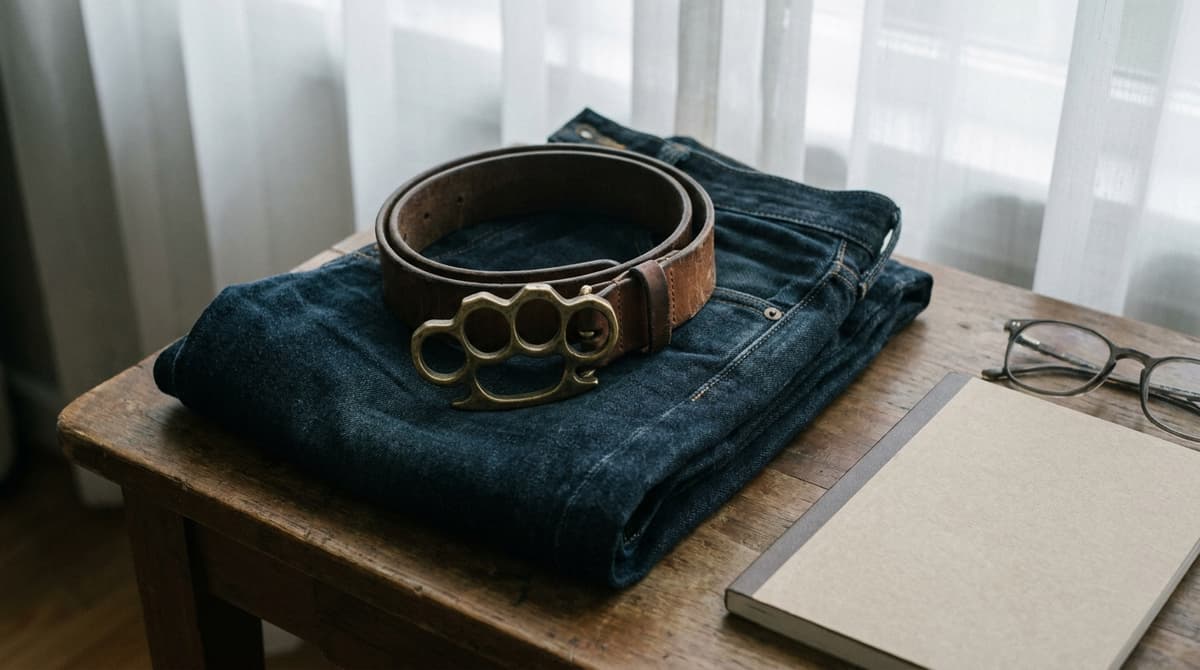
"For purposes of this section, a deadly weapon is an implement or instrument which has the capacity to inflict death and from the manner in which it is used, is likely to produce or may easily and readily produce death. The following instruments are included in the term deadly weapon: Blackjack, sling shot, billy, sand club, sandbag, metal knuckles, any dirk, dagger, pistol, revolver, or any other firearm, any knife having a blade longer than three inches, ..." RCW 9.94A.825
That definition applies "for purposes of this section" only. Under RCW 9.94A.533(4), when the offender or an accomplice was armed with a deadly weapon other than a firearm during an eligible felony committed after July 23, 1995, the standard range is increased by two years for a class A felony, one year for a class B felony or six months for a class C felony. Those amounts double if the offender was previously sentenced for a deadly weapon enhancement after July 23, 1995, and the added time is mandatory, served in total confinement and consecutive to other sentencing provisions. RCW 9.95.040 repeats metal knuckles in a deadly weapon list, but that section applies to crimes committed before July 1, 1984.
The criminal code's general definition, RCW 9A.04.110(6), does not name knuckles. It defines "deadly weapon" to include "any other weapon, device, instrument, article, or substance ... which, under the circumstances in which it is used, attempted to be used, or threatened to be used, is readily capable of causing death or substantial bodily harm."
Jails and detention facilities
No Washington contraband statute names knuckles. Under RCW 9A.76.140, "A person is guilty of introducing contraband in the first degree if he or she knowingly provides any deadly weapon to any person confined in a detention facility or secure facility under chapter 71.09 RCW," and that offense "is a class B felony." Under RCW 9A.76.160, knowingly and unlawfully providing "contraband" to a confined person is introducing contraband in the third degree, a misdemeanor; under 9A.76.150 it is a class C felony when the contraband is meant to assist an escape or the commission of a crime. RCW 9A.76.010(1) defines contraband as any article or thing a confined person "is prohibited from obtaining or possessing by statute, rule, regulation, or order of a court." Bringing knuckles into a restricted access area of a jail is also covered by 9.41.300(1), described above.
The inmate side has its own statute. Under RCW 9.94.040, a person serving a sentence in a state correctional institution who, without legal authorization, knowingly possesses "any weapon, firearm, or any instrument which, if used, could produce serious bodily injury to the person of another" commits a class B felony, and a person confined in a county or local correctional institution commits a class C felony. The sentence "shall be in addition to any sentence being served."
Prior convictions and firearm rules
Washington's unlawful possession statute, RCW 9.41.040, is written for firearms; it applies to a person who "owns, accesses, has in the person's custody, control, or possession, or receives any firearm" after certain convictions. Its text does not name knuckles. Because 9.41.250 already bans metal knuckles for everyone, a prior record is not needed for that charge.
Local rules
RCW 9.41.290 preempts "the entire field of firearms regulation" and limits cities, towns and counties to firearm laws "specifically authorized by state law." Its text addresses firearms and does not mention knuckles or other weapons. Check your city or county code, or call your local police department's non-emergency line, about any local rule.
Self-defense under Washington law
Because knuckles are banned, readers often compare other options. The rules for sprays and stun devices are in our guide to Washington pepper spray and stun gun laws, and the rules on when force may be used at all are in Washington self-defense laws.
Related pages
- Brass knuckles laws by state
- Washington knife laws
- Washington pepper spray and stun gun laws
- Washington self-defense laws
This article provides general legal information about Washington State law, not legal advice. Weapons laws change and local rules vary. For advice about a specific situation, contact a lawyer licensed in Washington or your local law enforcement agency.
Last updated: 2026-10-08.
Frequently Asked Questions
Are brass knuckles legal in Washington?
No. RCW 9.41.250(1)(a) makes it a gross misdemeanor to manufacture, sell, dispose of or possess metal knuckles, punishable under chapter 9A.20 RCW (up to 364 days in jail and a fine of up to $5,000 under 9A.20.021(2)).
Can I keep brass knuckles at home in Washington?
RCW 9.41.250(1)(a) makes possession itself the offense and contains no exception for the home. The only exemption section, RCW 9.41.251, applies to spring blade knives, not metal knuckles.
Can I carry brass knuckles in my car in Washington?
Keeping metal knuckles in a car is still possession under RCW 9.41.250, which says nothing about vehicles and has no vehicle exception.
Does a concealed pistol license allow brass knuckles in Washington?
No. RCW 9.41.250 does not mention a concealed pistol license, and its exemption section, 9.41.251, covers only spring blade knives carried by certain officers and military members.
Are plastic brass knuckles legal in Washington?
RCW 9.41.250 bans weapons "of the kind usually known as" metal knuckles but does not define that term, and its text does not address plastic or composite knuckles.
Is it legal to sell brass knuckles in Washington?
No. RCW 9.41.250(1)(a) makes manufacturing, selling or disposing of metal knuckles a gross misdemeanor, the same as possessing them.
What happens if a student brings brass knuckles to school in Washington?
Possessing a dangerous weapon as defined in RCW 9.41.250 on elementary or secondary school premises or school transportation is a misdemeanor under RCW 9.41.280, a gross misdemeanor on a second violation, and a student violation is grounds for expulsion. The mandatory one-year expulsion in RCW 28A.600.420 applies to firearms.
Are brass knuckles a deadly weapon in Washington?
For the deadly weapon special verdict, RCW 9.94A.825 lists metal knuckles among the instruments included in the term deadly weapon. The general definition in RCW 9A.04.110(6) does not name knuckles and turns on how an item is used, attempted to be used or threatened to be used.
Updates
Independently fact-checked against the cited primary sources
The Law Behind This Article
This article rests on the statutory provisions below, held in our own legal record and retrieved from the official source. Tap a section to read the operative text.
Revised Code of Washington
§ 9.41.250Dangerous weapons—Penalty.In forcecited in 4 of our articles
(1) Every person who: (a) Manufactures, sells, or disposes of or possesses any instrument or weapon of the kind usually known as slungshot, sand club, or metal knuckles, or spring blade knife; (b) Furtively carries with intent to conceal any dagger, dirk, pistol, or other dangerous weapon; or (c) Uses any contrivance or device for suppressing the noise of any firearm unless the suppressor is legally registered and possessed in accordance with federal law, is guilty of a gross misdemeanor punishable under chapter 9A.20 RCW. (2) "Spring blade knife" means any knife, including a prototype, model, or other sample, with a blade that is automatically released by a spring mechanism or other mechanical device, or any knife having a blade which opens, or falls, or is ejected into position by the force of gravity, or by an outward, downward, or centrifugal thrust or movement. A knife that contains a spring, detent, or other mechanism designed to create a bias toward closure of the blade and that requires physical exertion applied to the blade by hand, wrist, or arm to overcome the bias toward closure to assist in opening the knife is not a spring blade knife.
Official text (excerpt) · last checked 2026-09-24 · Read the full text in our law library · Verify at app.leg.wa.gov
Cited in 24 court opinions in our collectionLatest citing opinion in our collection: 2026
Opinions citing this section in our collection:
- State v. Echeverria (Court of Appeals of Washington 1997, 85 Wash. App. 777)“…count two, possession of a dangerous weapon in violation of RCW 9.41.250, in that he, "with intent to conceal su…”
- State v. Myles (Washington Supreme Court 1995, 127 Wash. 2d 807)“…f unlawful possession of a dangerous weapon in violation of RCW 9.41.250. At issue is the constitutionality of t…”
- State v. Wadsworth (Washington Supreme Court 2000, 139 Wash. 2d 724)“…ovided Respondent an opportunity to review RCW 9.41.300 and RCW 9.41.250. 25 After reviewing the statutes, Resp…”
Identified automatically from the court opinions citing this section — not a ranking of which case controls.
Also relied on in: Washington Knife Laws (2026): Spring Blade, Intimidation Rule, Knife Laws by State (2026): Carry Rules, Blade Limits, Penalties, Washington Pepper Spray and Stun Gun Laws (2026)
§ 9.41.300Weapons prohibited in certain places—Local laws and ordinances—Exceptions—Penalty.In forcecited in 3 of our articles
(1) It is unlawful for any person to enter the following places when he or she knowingly possesses or knowingly has under his or her control a weapon: (a) The restricted access areas of a jail, or of a law enforcement facility, or any place used for the confinement of a person (i) arrested for, charged with, or convicted of an offense, (ii) held for extradition or as a material witness, or (iii) otherwise confined pursuant to an order of a court, except an order under chapter 13.32A or 13.34 RCW. Restricted access areas do not include common areas of egress or ingress open to the general public; (b) Those areas in any building which are used in connection with court proceedings, including courtrooms, jury rooms, judge's chambers, offices and areas used to conduct court business, waiting areas, and corridors adjacent to areas used in connection with court proceedings. The restricted areas do not include common areas of ingress and egress to the building that is used in connection with court proceedings, when it is possible to protect court areas without restricting ingress and egress to the building.
Official text (excerpt) · last checked 2026-07-29 · Read the full text in our law library · Verify at app.leg.wa.gov
Cited in 14 court opinions in our collectionLatest citing opinion in our collection: 2022
Opinions citing this section in our collection:
- Pacific Northwest Shooting Park Ass'n v. City of Sequim (Washington Supreme Court 2006, 158 Wash. 2d 342)“…0, failed because there is no private cause of action under RCW 9.41.300 and neither statute was violated. In it…”
- State v. Anderson (Washington Supreme Court 2000, 141 Wash. 2d 357)“…n of the fact that in a similar weapons possession statute, RCW 9.41.300, the Legislature explicitly included a…”
- State v. Wadsworth (Washington Supreme Court 2000, 139 Wash. 2d 724)“…th court proceedings in which weapons are prohibited. See RCW 9.41.300(l)(b). The problematic aspects of the s…”
Identified automatically from the court opinions citing this section — not a ranking of which case controls.
Search our full record of US law — 2.1 million sections, every state + federal →
Sources and References
- RCW 9.41.250, Dangerous weapons, penalty(app.leg.wa.gov).gov
- RCW 9.41.300, Weapons prohibited in certain places(app.leg.wa.gov).gov
- RCW 9.41.280 (weapons on school premises)(app.leg.wa.gov).gov
- RCW 9.41.251 (spring blade knife exemptions)(app.leg.wa.gov).gov
- RCW 9.94A.825 (deadly weapon special verdict)(app.leg.wa.gov).gov
- RCW 9A.20.021 (maximum sentences for crimes)(app.leg.wa.gov).gov
- RCW 9.41.282 (weapons at child care centers)(app.leg.wa.gov).gov
- RCW 9.41.284 (weapons at voting facilities)(app.leg.wa.gov).gov
- RCW 9.41.270 (displaying weapons)(app.leg.wa.gov).gov
- RCW 9A.76.140 (introducing contraband in the first degree)(app.leg.wa.gov).gov
- RCW 28A.600.420 (firearms on school premises, expulsion)(app.leg.wa.gov).gov
- RCW 9.95.040 (deadly weapon minimum terms, pre-1984 crimes)(app.leg.wa.gov).gov
- RCW 9A.04.110 (definitions, deadly weapon)(app.leg.wa.gov).gov
- RCW 9.41.040 (unlawful possession of firearms)(app.leg.wa.gov).gov
- RCW 9.41.290 (state preemption of firearms regulation)(app.leg.wa.gov).gov
- RCW 9A.76.150 (introducing contraband in the second degree)(app.leg.wa.gov).gov
- RCW 9A.76.160 (introducing contraband in the third degree)(app.leg.wa.gov).gov
- RCW 9A.76.010 (definitions, contraband)(app.leg.wa.gov).gov
- RCW 9.94.040 (weapons possessed by prisoners)(app.leg.wa.gov).gov
- RCW 9.94A.533 (adjustments to standard sentences)(app.leg.wa.gov).gov