
West Virginia
Are Brass Knuckles Legal in West Virginia? (2026 Law)
Independently fact-checked against primary sources (last audited October 10, 2026). · 16 primary sources cited on this page. How we verify our legal content
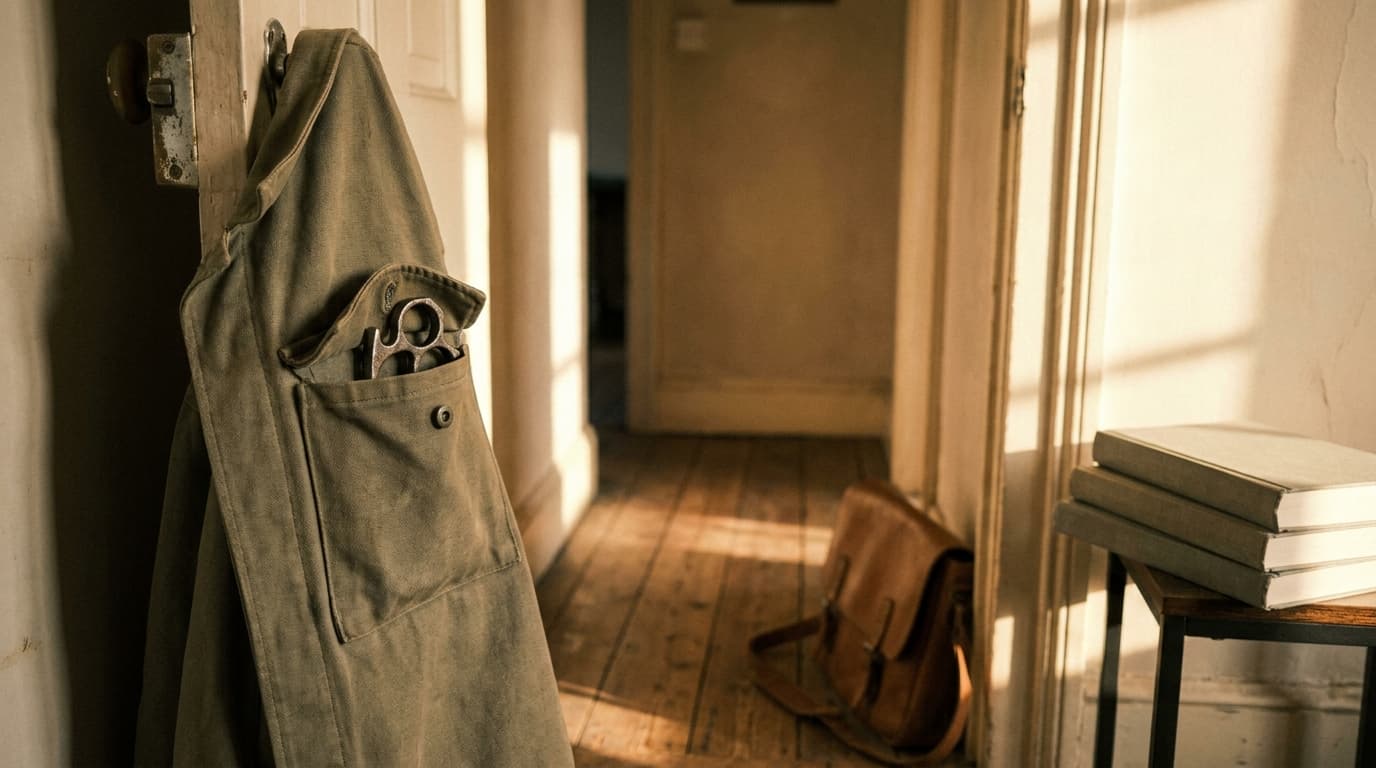
Brass knuckles are legal for most adults to own and carry in West Virginia. The state code defines "metallic or false knuckles" and counts them as a "deadly weapon" (W. Va. Code 61-7-2(5), (10)), and any person 18 or older who is a U.S. citizen or legal resident and not prohibited from possessing a firearm may carry a concealed deadly weapon without a license (61-7-7(c)). The limits fall on minors and on places: possession by unmarried, unemancipated minors under 18, on school property and in courts is prohibited.
For other states, see our guide to brass knuckles laws by state.
Information last verified on 2026-10-08. This article has not been reviewed by a licensed lawyer.
Jurisdiction scope: This article covers West Virginia state statutes in article 7 of chapter 61 of the West Virginia Code (dangerous weapons), together with 8-12-5 and 8-12-5a (municipal powers), 61-5-8 (correctional facility contraband), 61-2-12 (robbery), 62-10-5 (recognizance) and the school expulsion statute 18A-5-1a. It does not cover county or city ordinances, West Virginia court decisions, county school board discipline policies, federal law or federal property, or the law of other states.
How West Virginia defines brass knuckles
West Virginia calls them "metallic or false knuckles," and its definition turns on shape and purpose rather than what they are made of:
"Metallic or false knuckles" means a set of finger rings attached to a transverse piece to be worn over the front of the hand for use as a weapon and constructed in such a manner that, when striking another person with the fist or closed hand, considerable physical damage may be inflicted upon the person who was struck. The terms "metallic or false knuckles" includes any such instrument without reference to the metal or other substance or substances from which the metallic or false knuckles are made. W. Va. Code 61-7-2(10)
Plastic, polymer or wooden knuckles that fit this description are therefore treated the same as brass ones.
The same section defines "deadly weapon" as "an instrument which is designed to be used to produce serious bodily injury or death or is readily adaptable to such use," and says the term includes the instruments defined in a list of subdivisions that includes subdivision (10) (61-7-2(5)). Knuckles are therefore a deadly weapon for every rule in article 7 that uses that term.
Is it legal to own, buy or sell brass knuckles in West Virginia?
Yes, for adults. Article 7 of chapter 61, the state's dangerous-weapons article, contains no provision that bans owning, buying, selling or making metallic or false knuckles. The sale rule that does exist protects minors: no one may knowingly sell, rent, give or lend "any deadly weapon other than a firearm to a person prohibited from possessing a deadly weapon other than a firearm by any provision of this article" (61-7-10(b)). The main group that article 7 bars from possessing deadly weapons is people under 18 (61-7-8, below).
A violation of 61-7-10(b) is a misdemeanor punishable by a fine of up to $5,000, up to one year in jail, or both; a business or other entity that is not a natural person faces a fine of up to $10,000 (61-7-10(a)).
Carrying brass knuckles openly or concealed
West Virginia allows permitless concealed carry of any deadly weapon, not only guns:
(c) Any person may carry a concealed deadly weapon without a license therefor who is: (1) At least 18 years of age; (2) A United States citizen or legal resident thereof; (3) Not prohibited from possessing a firearm under the provisions of this section; and (4) Not prohibited from possessing a firearm under the provisions of 18 U. S. C. §922(g) or (n). W. Va. Code 61-7-7(c)
The state's concealed weapons license is not the route for knuckles: under 61-7-4, "A concealed weapons license may only be issued for pistols and revolvers." Article 7 contains no separate rule against carrying knuckles openly.
The former section 61-7-3, which dealt with carrying a deadly weapon by persons under 21 without a provisional license, is now listed in the code as repealed. House Bill 4106 of the 2026 regular session (Chapter 75, Acts 2026) repealed it effective June 12, 2026, so the 18-and-older rule in 61-7-7(c) is now the age line for permitless carry.
Lawful carry still has limits on how the weapon is handled. It is a misdemeanor for any person armed with a deadly weapon, "whether licensed to carry the same or not, to carry, brandish or use such weapon in a way or manner to cause, or threaten, a breach of the peace," punishable by a fine of $50 to $1,000, 90 days to one year in county jail, or both (61-7-11).
Brass knuckles in a car
For an adult who meets 61-7-7(c), article 7 contains no separate rule about keeping knuckles in a vehicle. The vehicle question matters most at schools, where the ban in 61-7-11a(b) does not apply to:
(G) A person who, as otherwise permitted by the provisions of this article, possesses an unloaded firearm or deadly weapon in a motor vehicle or leaves an unloaded firearm or deadly weapon in a locked motor vehicle; W. Va. Code 61-7-11a(b)(2)(G)
The phrase "as otherwise permitted by the provisions of this article" means the exception helps only someone who may lawfully possess the weapon in the first place, so it does not cover a minor barred by 61-7-8. Separately, the parking-lot protection in 61-7-14(d) applies to lawfully owned firearms locked in a vehicle, not to other deadly weapons.
Places where brass knuckles are restricted
Schools. It is unlawful to possess "a firearm or other deadly weapon" on a school bus, "in or on the grounds of any primary or secondary educational facility of any type," or at a school-sponsored function on school-controlled property (61-7-11a(b)(1)). A private primary or secondary school may allow weapons by adopting a written policy. A violation is a felony punishable by "not less than two years nor more than 10 years" in a state correctional facility, a fine of up to $5,000, or both (61-7-11a(b)(3)). A person 18 or older convicted of this offense also has his or her driver's license revoked for one year (for a secondary-school student, one year or until age 20, whichever is longer), and a court that adjudicates a person 14 or older delinquent for it may suspend or deny a license until age 19 (61-7-11a(d), (e)).
Courts. It is unlawful "to possess a firearm or other deadly weapon on the premises of a court of law, including family courts" (61-7-11a(g)(1)). The exceptions are law-enforcement officers acting in their official capacity and people exempted by an order of record entered by a court with jurisdiction over the premises. A violation is a misdemeanor punishable by a fine of up to $1,000, up to one year in jail, or both (61-7-11a(g)(3)). Possessing a deadly weapon on court premises with the intent to commit a crime is a felony punishable by 2 to 10 years in a state correctional facility, a fine of up to $5,000, or both (61-7-11a(h)).
Private property. Any owner, lessee or person in control of real property "may prohibit the carrying openly or concealing of any firearm or deadly weapon on property under his or her domain" (61-7-14(b)). A person who refuses a request to temporarily give up the weapon or to leave commits a misdemeanor punishable by a fine of up to $1,000, up to six months in jail, or both (61-7-14(c)).
Jails and prisons. A person who, without authorization, transports or causes to be transported any "weapon" onto the grounds of a jail, state correctional facility, juvenile facility, juvenile detention center or federal correctional facility in the state commits a felony, punishable by a fine of $1,000 to $5,000, two to 10 years in a state correctional facility, or both (61-5-8(c)). Delivering a weapon to a person in custody (61-5-8(d)) and an inmate's possession of a weapon (61-5-8(g)(1)) carry the same felony penalty. Those subsections do not name knuckles or say what counts as a "weapon."
Brass knuckles and minors
Minors face a flat possession ban:
(a) Notwithstanding any other provision of this article to the contrary, a person under the age of 18 years who is not married or otherwise emancipated shall not possess or carry concealed or openly any deadly weapon: Provided, That a minor may possess a firearm upon premises owned by the minor or his or her family or on the premises of another with the permission of his or her parent or guardian ... W. Va. Code 61-7-8(a)
The proviso and the other exceptions in that subsection concern firearms, so they do not let a minor keep knuckles at home. A minor who violates 61-7-8 comes under the jurisdiction of the circuit court and "may be adjudicated delinquent" (61-7-8(b)). An adult who sells, rents, gives or lends knuckles to such a minor commits the misdemeanor in 61-7-10.
A public-school student found to have brought knuckles onto school grounds or a school bus must be suspended and, after a county board hearing, expelled for at least twelve consecutive months, a period the county superintendent may shorten (18A-5-1a(a), (i)). A parent, guardian or custodian who knows a minor is violating the school ban, or has reasonable cause to believe a violation is imminent, and fails to report it immediately to school or law-enforcement officials commits a misdemeanor (61-7-11a(f)).
Felons and prohibited persons
West Virginia's prohibited-person rules in 61-7-7(a) are written for firearms: "no person shall possess a firearm, as such is defined in §61-7-2 of this code," who falls into one of the listed categories, such as a person convicted of a crime punishable by more than one year in prison. The added felony in 61-7-7(d) for a prohibited person who carries a concealed weapon is likewise limited to a "concealed firearm." None of these provisions names knuckles.

The permitless-carry right in 61-7-7(c), though, extends only to people who are not prohibited from possessing a firearm under state or federal law. A prohibited person who carries knuckles concealed is therefore outside that safe harbor, and anyone in that position should get advice from a lawyer licensed in West Virginia before carrying them.
Using brass knuckles in a crime
Because knuckles are a deadly weapon, they can raise the level of a robbery. A person who commits or attempts robbery by using "the threat of deadly force by the presenting of a firearm or other deadly weapon" is guilty of first-degree robbery and faces imprisonment of "not less than ten years" (61-2-12(a)(2)).
A court may also require a person who goes armed with a deadly, dangerous or prohibited weapon in violation of article 7 to give a recognizance, a court-ordered bond to keep the peace (62-10-5).
When force itself is lawful is a separate question, covered in our guide to West Virginia self-defense laws.
Can West Virginia cities regulate brass knuckles?
Two municipal statutes point in different directions. Section 8-12-5(15) gives municipalities the power "To arrest, convict and punish any individual for carrying about his or her person any revolver or other pistol, dirk, bowie knife, razor, slingshot, billy, metallic or other false knuckles or any other dangerous or other deadly weapon of like kind or character," with a proviso limiting municipal enforcement as to firearms.
Section 8-12-5a(a), however, provides that a municipality may not "limit the right of any person to purchase, possess, transfer, own, carry, transport, sell, or store any deadly weapon, firearm, or pepper spray ... in any manner inconsistent with or in conflict with state law." Subsection (c)(1) lets a municipality "prohibit or regulate the carrying or possessing of a deadly weapon, firearm, or pepper spray in municipally owned or operated buildings."
Section 8-12-5a does not authorize a city to restrict otherwise lawfully possessed deadly weapons on public streets and sidewalks (8-12-5a(h)(1)). On city property, it allows city rules only in municipally owned or operated buildings and, for open or not lawfully concealed carry, municipally owned recreation facilities, and the rule must be posted at each entrance (8-12-5a(c), (e)). A lawfully possessed deadly weapon may be kept out of view in a locked vehicle in a municipal public parking facility (8-12-5a(c)(3)), and a person who, but for the ordinance, was lawfully in possession of the weapon and who leaves with it or temporarily gives it up when told it violates the ordinance has an absolute defense (8-12-5a(d)). The code text does not expressly say how 8-12-5(15) fits with these limits. Check the posted rules at any city building and your city's code, or call your local police department's non-emergency line, before carrying knuckles in a new place.
The same deadly-weapon rules cover many knives; see our guide to West Virginia knife laws.
West Virginia penalties at a glance
| Conduct | Statute | Penalty |
|---|---|---|
| Deadly weapon on a school bus, school grounds or at a school function | 61-7-11a(b) | Felony: 2 to 10 years, up to $5,000, or both |
| Deadly weapon on court premises | 61-7-11a(g) | Misdemeanor: up to $1,000, up to 1 year, or both |
| Deadly weapon on court premises with intent to commit a crime | 61-7-11a(h) | Felony: 2 to 10 years, up to $5,000, or both |
| Selling, renting, giving or lending a non-firearm deadly weapon to a prohibited person (such as a minor) | 61-7-10 | Misdemeanor: up to $5,000, up to 1 year, or both (up to $10,000 for an entity) |
| Minor under 18 possessing a deadly weapon | 61-7-8 | Circuit court jurisdiction; may be adjudicated delinquent |
| Refusing an owner's request to give up the weapon or leave | 61-7-14(c) | Misdemeanor: up to $1,000, up to 6 months, or both |
| Brandishing to cause or threaten a breach of the peace | 61-7-11 | Misdemeanor: $50 to $1,000, 90 days to 1 year, or both |
| Unauthorized weapon taken onto jail or prison grounds | 61-5-8(c) | Felony: $1,000 to $5,000, 2 to 10 years, or both |
| Delivering a weapon to a person in custody, or an inmate possessing one | 61-5-8(d), (g)(1) | Felony: $1,000 to $5,000, 2 to 10 years, or both |
| Robbery by presenting a deadly weapon | 61-2-12(a)(2) | First-degree robbery: not less than 10 years |
Related pages
- Brass knuckles laws by state
- West Virginia knife laws
- West Virginia self-defense laws
- West Virginia pepper spray and stun gun laws
- Virginia brass knuckles laws
- Pennsylvania brass knuckles laws
This article provides general legal information about West Virginia state law, not legal advice. Weapons laws change and local rules vary. For advice about a specific situation, contact a lawyer licensed in West Virginia or your local law enforcement agency.
Last updated: 2026-10-08.
Frequently Asked Questions
Are brass knuckles legal in West Virginia?
West Virginia classifies metallic or false knuckles as a deadly weapon (W. Va. Code 61-7-2(5), (10)) but has no statute banning adults who are not prohibited persons from owning or carrying them. Possession is restricted for people under 18 and at schools, courts and private property where the owner bars weapons.
Can you carry brass knuckles concealed in West Virginia?
Yes, if you are at least 18, a U.S. citizen or legal resident, and not prohibited from possessing a firearm under state or federal law. W. Va. Code 61-7-7(c) lets such a person carry a concealed deadly weapon without a license.
Are plastic brass knuckles legal in West Virginia?
They are treated the same as metal ones. The definition in 61-7-2(10) includes any such instrument without reference to the metal or other substance it is made from.
Can I keep brass knuckles in my car at a West Virginia school?
The school weapons ban in 61-7-11a(b) does not apply to a person who, as otherwise permitted by article 7, possesses an unloaded deadly weapon in a motor vehicle or leaves one in a locked motor vehicle. Carrying them onto school grounds outside the vehicle is a felony.
Can a 17-year-old have brass knuckles in West Virginia?
No. A person under 18 who is not married or otherwise emancipated may not possess or carry any deadly weapon, openly or concealed (61-7-8), and the minor may be adjudicated delinquent in circuit court.
What is the penalty for brass knuckles at a West Virginia school?
Possessing a deadly weapon on a school bus, on primary or secondary school grounds, or at a school-sponsored function is a felony under 61-7-11a(b)(3), punishable by 2 to 10 years in a state correctional facility, a fine of up to $5,000, or both.
Updates
Independently fact-checked against the cited primary sources
The Law Behind This Article
This article rests on the statutory provisions below, held in our own legal record and retrieved from the official source. Tap a section to read the operative text.
West Virginia Code
§ 61-7-2Definitions.In forcecited in 4 of our articles
As used in this article, unless the context otherwise requires: (1) "Antique firearm" means: (A) Any firearm, including, but not limited to, a firearm with a match lock, flintlock, percussion cap, or similar type of ignition system which was manufactured on or before 1898; (B) Any replica of any firearm described in paragraph (A) of this subdivision if such replica is not designed or redesigned to use rimfire or conventional centerfire fixed ammunition which is no longer manufactured in the United States and which is not readily available in the ordinary channels of commercial trade; and (C) Any muzzle-loading rifle, muzzle-loading shotgun, or muzzle-loading pistol, which is designed to use black powder, or black powder substitute, and which cannot use fixed ammunition. For purposes of this subdivision, the term "antique firearm" shall not include any weapon which includes a firearm frame or receiver, any firearm which is converted into a muzzle-loading weapon, or any muzzle-loading weapon which can be readily converted to fire fixed ammunition by replacing the barrel, bolt, breechblock, or any combination thereof.
Official text (excerpt) · last checked 2026-07-30 · Read the full text in our law library · Verify at code.wvlegislature.gov
Cited in 2 court opinions in our collectionLatest citing opinion in our collection: 2018
Opinions citing this section in our collection:
- Wilkerson v. Target Corp. (District Court, S.D. West Virginia 2008, 578 F. Supp. 2d 835)“…and therefore her claim is without merit. See W. Va.Code §§ 61-7-2(3) and 61-7-3(a). (# 35 at 5.) T…”
- Bernard Greer v. State of West Virginia (Court of Appeals for the Fourth Circuit 2018, 710 F. App'x 131)“…W. Va. Code Ann. § 61-7-7(a)(1) (LexisNexis Supp. 2017); W. Va. Code Ann. § 61-7-2(11) (LexisNexis 2014). We have reviewed…”
Identified automatically from the court opinions citing this section — not a ranking of which case controls.
Also relied on in: West Virginia Knife Laws (2026): Pocketknife Rule, Carry, Pepper Spray and Stun Gun Laws by State (2026), West Virginia Pepper Spray and Stun Gun Laws (2026)
§ 61-7-7Persons prohibited from possessing firearms; classifications; right of nonprohibited persons over 18 years of age to carry concealed deadly weapons; offenses and penalties; reinstatement of rights to possess; offenses; penalties.In forcecited in 5 of our articles
(a) Except as provided in this section, no person shall possess a firearm, as such is defined in §61-7-2 of this code, who: (1) Has been convicted in any court of a crime punishable by imprisonment for a term exceeding one year; (2) Is habitually addicted to alcohol; (3) Is an unlawful user of or habitually addicted to any controlled substance; (4) Has been adjudicated to be mentally incompetent or who has been involuntarily committed to a mental institution pursuant to the provisions of §27-1-1 et seq.
Official text (excerpt) · last checked 2026-09-24 · Read the full text in our law library · Verify at code.wvlegislature.gov
Cited in 6 court opinions in our collectionLatest citing opinion in our collection: 2025
Opinions citing this section in our collection:
- United States v. Smith (District Court, S.D. West Virginia 2010, 742 F. Supp. 2d 855)“…Va. Code § 61-7-3 , and carrying a firearm in violation of W. Va. Code § 61-7-7 . (Docket 20 at 20-21.) Count Tw…”
- United States v. Juan Castillo-Rivera (Court of Appeals for the Fifth Circuit 2017, 853 F.3d 218)“…es the crime domestic battery, which is 37 West Virginia W. Va. Code § 61-7-7 section twenty-eight,…”
- Mach v. Garland (District Court, E.D. Kentucky 2025)“…18 U.S.C. § 925A ‘Remedy for erroneous denial of firearm’; W. Va. Code § 61-7-7(f); W. Va. Code § 61-7A-5.” Id. Howev…”
Identified automatically from the court opinions citing this section — not a ranking of which case controls.
Also relied on in: Knife Laws by State (2026): Carry Rules, Blade Limits, Penalties, West Virginia Restraining Order Laws (2026): How to Get a Protective Order
§ 61-7-8Possession of deadly weapons by minors; prohibitions.In forcecited in 3 of our articles
(a) Notwithstanding any other provision of this article to the contrary, a person under the age of 18 years who is not married or otherwise emancipated shall not possess or carry concealed or openly any deadly weapon: Provided, That a minor may possess a firearm upon premises owned by the minor or his or her family or on the premises of another with the permission of his or her parent or guardian and in the case of property other than his or her own or that of his or her family, with the permission of the owner or lessee of the property: Provided, however, That nothing in this section shall prohibit a minor from possessing a firearm while hunting in a lawful manner or while traveling from a place where he or she may lawfully possess a deadly weapon, to a hunting site, and returning to a place where he or she may lawfully possess the weapon.
Official text (excerpt) · last checked 2026-07-30 · Read the full text in our law library · Verify at code.wvlegislature.gov
Cited in 2 court opinions in our collectionLatest citing opinion in our collection: 2024
Opinions citing this section in our collection:
- Rocky Mountain Gun Owners v. Polis (Court of Appeals for the Tenth Circuit 2024, 121 F.4th 96)“…h Dakota (S.D. Codified Laws § 23-7-44); and West Virginia (W. Va. Code § 61-7-8). Lastly, this jurisdiction curr…”
- Michael Walker v. B. Donahoe (Court of Appeals for the Fourth Circuit 2021, 3 F.4th 676)“…or carry[ing] concealed or openly any deadly weapon.” See W. Va. Code § 61-7-8 (providing exceptions for minors posse…”
Identified automatically from the court opinions citing this section — not a ranking of which case controls.
§ 8-12-5General powers of every municipality and the governing body thereof.In force
In addition to the powers and authority granted by: (i) The Constitution of this state; (ii) other provisions of this chapter; (iii) other general law; and (iv) any charter, and to the extent not inconsistent or in conflict with any of the foregoing except special legislative charters, every municipality and the governing body thereof shall have plenary power and authority therein by ordinance or resolution, as the case may require, and by appropriate action based thereon: (1) To lay off, establish, construct, open, alter, curb, recurb, pave or repave and keep in good repair, or vacate, discontinue and close, streets, avenues, roads, alleys, ways, sidewalks, drains and gutters, for the use of the public, and to improve and light the same, and have them kept free from obstructions on or over them which have not been authorized pursuant to the succeeding provisions of this subdivision; and, subject to such terms and conditions as the governing body shall prescribe, to permit, without in any way limiting the power and authority granted by the provisions of article sixteen of this chapter, any person to construct and maintain a passageway, building or other structure overhanging or…
Official text (excerpt) · last checked 2026-07-30 · Read the full text in our law library · Verify at code.wvlegislature.gov
Search our full record of US law — 2.1 million sections, every state + federal →
Sources and References
- W. Va. Code 61-7-2: definitions (deadly weapon; metallic or false knuckles)(code.wvlegislature.gov).gov
- W. Va. Code 61-7-7: persons prohibited; concealed deadly weapons without a license(code.wvlegislature.gov).gov
- W. Va. Code 61-7-8: possession of deadly weapons by minors(code.wvlegislature.gov).gov
- W. Va. Code 61-7-10: sale of deadly weapons to prohibited persons(code.wvlegislature.gov).gov
- W. Va. Code 61-7-11a: weapons in schools and courts(code.wvlegislature.gov).gov
- W. Va. Code 61-7-14: right of property owners to prohibit weapons(code.wvlegislature.gov).gov
- W. Va. Code 61-7-11: brandishing deadly weapons(code.wvlegislature.gov).gov
- W. Va. Code 61-7-4: concealed weapons license(code.wvlegislature.gov).gov
- W. Va. Code 61-7-3: repealed(code.wvlegislature.gov).gov
- West Virginia Legislature: House Bill 4106 (2026 regular session) bill status(wvlegislature.gov).gov
- W. Va. Code 61-5-8: contraband at correctional facilities(code.wvlegislature.gov).gov
- W. Va. Code 61-2-12: robbery(code.wvlegislature.gov).gov
- W. Va. Code 62-10-5: recognizance for going armed(code.wvlegislature.gov).gov
- W. Va. Code 8-12-5: general powers of municipalities(code.wvlegislature.gov).gov
- W. Va. Code 8-12-5a: limitations on municipal weapons rules(code.wvlegislature.gov).gov
- W. Va. Code 18A-5-1a: school safety, suspension and expulsion(code.wvlegislature.gov).gov