
West Virginia
West Virginia Knife Laws (2026): Pocketknife Rule, Carry
Independently fact-checked against primary sources (last audited September 18, 2026). · 12 primary sources cited on this page. How we verify our legal content

West Virginia defines a regulated "knife" by a functional test for use as a weapon, not by a blade-length rule, and separately excludes from that definition a pocket knife with a blade of 3.5 inches or less, along with a genuine hunting, fishing, sport, or tool knife. An adult 18 or older who is not otherwise prohibited from possessing a firearm may generally carry a qualifying knife, concealed or open, without a license, subject to a ban on brandishing any weapon in a way that threatens a breach of the peace and to a property owner's right to demand it be relinquished or that the carrier leave. At a school and at a courthouse, that pocketknife exclusion does not apply: § 61-7-2(5) adds back, for those two settings, any knife-definition instrument with a blade of three and one-half inches or less, and since a blade over 3.5 inches already counts as a knife under the base definition, every knife length ends up covered there. Simple possession at school is a felony; simple possession at a courthouse is a misdemeanor and becomes a felony only with intent to commit a crime there. Cities cannot pass their own stricter knife ordinances, except inside municipally owned buildings and municipally owned recreation facilities.
Jurisdiction scope: This page covers West Virginia state law only, principally W. Va. Code §§ 61-7-2, 61-7-4, 61-7-4A, 61-7-7, 61-7-8, 61-7-11, 61-7-11a, 61-7-14, 18A-5-1a, and 8-12-5A. §§ 61-7-4 and 61-7-4A, the formal and provisional concealed-weapon license statutes, are noted only to the extent that they issue solely for pistols and revolvers, never for a knife.
What counts as a regulated "knife" in West Virginia?
West Virginia's carry rules turn on a specific statutory definition rather than a blanket rule for every bladed object. W. Va. Code § 61-7-2(9) opens with a functional test: "knife" "means an instrument, intended to be used or readily adaptable to be used as a weapon, consisting of a sharp-edged or sharp-pointed blade, usually made of steel, attached to a handle which is capable of inflicting cutting, stabbing, or tearing wounds." It then illustrates that test: "The term 'knife' includes, but is not limited to, any dagger, dirk, poniard, or stiletto, with a blade over three and one-half inches in length, any switchblade knife or gravity knife, and any other instrument capable of inflicting cutting, stabbing, or tearing wounds." The same subsection excludes from the term "a pocket knife with a blade three and one-half inches or less in length, a hunting or fishing knife carried for hunting, fishing, sports, or other recreational uses, or a knife designed for use as a tool or household implement," unless the knife "is knowingly used or intended to be used to produce serious bodily injury or death." A short folding pocketknife, or a knife genuinely carried for hunting, fishing, sport, or as a tool, falls outside the regulated category for the general carry rules below, subject to the school and courthouse expansion described next, while a dagger, dirk, poniard, stiletto, switchblade, or gravity knife, or any comparably long fixed or folding blade over 3.5 inches, falls inside it.
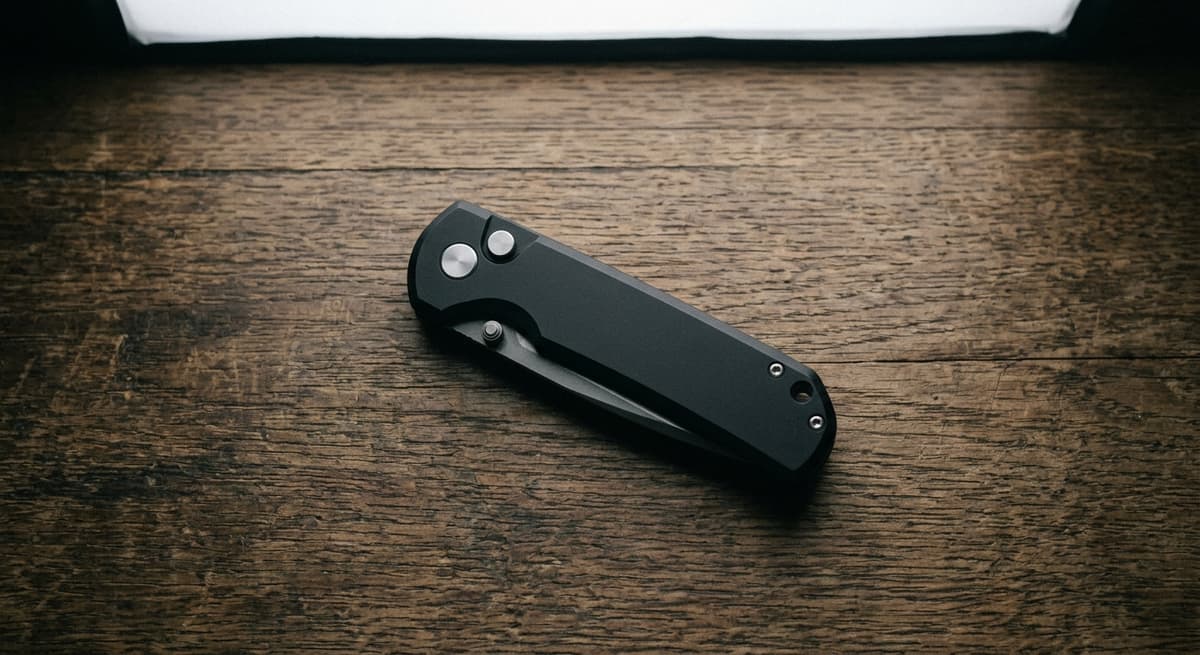
This defined "knife" is one of the instrument types that make up West Virginia's broader "deadly weapon" definition, the term that actually drives the carry rules below, under § 61-7-2(5): "'Deadly weapon' means an instrument which is designed to be used to produce serious bodily injury or death or is readily adaptable to such use," including the knife definition above along with several other named instrument types. That same subsection then narrows the pocketknife exclusion for two specific offenses: "For the purposes of §18A-5-1a of this code and §61-7-11a of this code, in addition to the definition of 'knife' set forth in subdivision (9) of this subsection, the term 'deadly weapon' also includes any instrument included within the definition of 'knife' with a blade of three and one-half inches or less in length." § 61-7-11a covers school and courthouse possession, and § 18A-5-1a is the companion school-discipline statute. Inside those two settings, that expansion adds back only an instrument within the knife definition with a blade of three and one-half inches or less, the same range the pocketknife exclusion above carves out; because a blade over 3.5 inches already counts as a knife under the base definition, the practical effect is that every knife length is a "deadly weapon" there.
Can you carry a knife openly or concealed in West Virginia?
Generally yes, for an eligible adult, without a license, but three other statutes qualify that answer, and the position for an ineligible adult is genuinely unclear. West Virginia's former age-based restriction on carrying a concealed deadly weapon, § 61-7-3, titled "Carrying a deadly weapon without provisional license or other authorization by persons under twenty-one years of age," is repealed by 2026 Regular Session HB 4106, the same act that rewrote § 61-7-7. The operative rule today is § 61-7-7(c): "Any person may carry a concealed deadly weapon without a license therefor who is: (1) At least 18 years of age; (2) A United States citizen or legal resident thereof; (3) Not prohibited from possessing a firearm under the provisions of this section; and (4) Not prohibited from possessing a firearm under the provisions of 18 U.S.C. § 922(g) or (n)." The eligibility age in the current statute is 18, not 21.
A separate statute reaches the manner of carrying regardless of eligibility or licensing. § 61-7-11 provides: "It shall be unlawful for any person armed with a firearm or other deadly weapon, whether licensed to carry the same or not, to carry, brandish or use such weapon in a way or manner to cause, or threaten, a breach of the peace." A violation is a misdemeanor, fined $50 to $1,000 or jailed 90 days to one year, or both. The "whether licensed to carry the same or not" language means this offense sits on top of, not instead of, the permitless-carry rule above: an otherwise-eligible adult carrying a qualifying knife openly or concealed can still violate § 61-7-11 by the way they carry it.
A property owner can cut off that carry right on their own premises. § 61-7-14(b) lets "any owner, lessee, or other person charged with the care, custody, and control of real property" prohibit carrying or concealing a firearm or deadly weapon on property under their domain. § 61-7-14(c) backs that with a criminal penalty reaching a knife the same as a firearm: "Any natural person carrying or possessing a firearm or other deadly weapon on the property of another who refuses to temporarily relinquish possession of the firearm or other deadly weapon, upon being requested to do so, or to leave the premises, while in possession of the firearm or other deadly weapon, is guilty of a misdemeanor and, upon conviction thereof, shall be fined not more than $1,000 or confined in jail not more than six months, or both." The same subsection separately reinforces the school ban described below: except for the law-enforcement and school-authorization exemptions listed at § 61-7-11a(b)(2)(A) through (K), no one may possess or carry a firearm or other deadly weapon on the premises of a primary or secondary educational facility without being a law-enforcement officer or having the county school superintendent's express written permission.
A person under 18 faces a flat ban, not a licensing question. § 61-7-8(a) provides that "a person under the age of 18 years who is not married or otherwise emancipated shall not possess or carry concealed or openly any deadly weapon," subject to two provisos, for possessing a firearm on family or permitted premises and for lawfully hunting, that are both written for firearms specifically and do not, on their text, clearly extend to a knife. A violation routes the minor into juvenile jurisdiction under §§ 49-4-701 through 49-4-725. § 61-7-10(b) separately makes it a misdemeanor, fined not more than $5,000 or jailed up to one year, for a person to knowingly sell, rent, give, or lend a deadly weapon other than a firearm to anyone barred from possessing one under the article, including a minor barred by § 61-7-8.
For an adult who does not meet the § 61-7-7(c) test, most commonly because they fall within § 61-7-7(a)'s list of firearm-prohibited categories (a felony conviction, certain domestic-violence findings, involuntary commitment, and similar disqualifications), the position on a covered knife is unsettled rather than a simple "needs a license." A formal state resident concealed-weapon license remains available under § 61-7-4, and a provisional license for a person 18 to 20 remains available under § 61-7-4A, but § 61-7-4(a)(1) provides that "a concealed weapons license may only be issued for pistols and revolvers," and § 61-7-4A(a) says the same of a provisional license: "Provisional licenses may only be issued for pistols or revolvers." Neither license can authorize concealed knife carry. And the concealed-carry offenses tied to a firearm-prohibited person, § 61-7-7(d) and (e), are both written for a person who "carries a concealed firearm," not a deadly weapon generally. Article 7 contains no offense of carrying a concealed deadly weapon other than a firearm without a license, and no license that covers a knife, so a firearm-prohibited adult's concealed knife carry is neither squarely banned nor licensed; § 61-7-11's breach-of-the-peace offense remains available regardless. No West Virginia statute restricts open carry of an eligible adult's knife by blade type or length.
Schools
Section 61-7-11a(b)(1) makes it unlawful to possess a firearm or other deadly weapon on a school bus, on or in the grounds of any primary or secondary educational facility, or at a school-sponsored function taking place in a specific area owned, rented, or leased by the state Department of Education, the Secondary Schools Activities Commission, a county school board, or a local public school. Ordinarily, "deadly weapon" incorporates the § 61-7-2(9) "knife" definition, which excludes a pocketknife with a blade of 3.5 inches or less and a genuine hunting, fishing, sport, or tool knife. That exclusion does not carry over to this offense. § 61-7-2(5) states that "for the purposes of §18A-5-1a of this code and §61-7-11a of this code, in addition to the definition of 'knife' set forth in subdivision (9) of this subsection, the term 'deadly weapon' also includes any instrument included within the definition of 'knife' with a blade of three and one-half inches or less in length." A short pocketknife is a "deadly weapon" for this offense even though the general definition would otherwise exclude it, and because a blade over 3.5 inches already counts as a knife under the base definition, every knife length ends up covered here. The only carve-out that survives here is separate: "the term 'deadly weapon' does not include any item or material owned by the school or county board, intended for curricular use, and used by the student at the time of the alleged offense solely for curricular purposes."

Subsection (b)(2) exempts several categories, including a currently employed law enforcement officer on or off duty, certain probation and parole officers in the performance of their duties, a qualified retired law enforcement officer under federal law, and a person specifically authorized by the board of education to conduct programs with a valid educational purpose, among others; a private school may also adopt a written policy allowing possession. The exemption most likely to matter for an adult who is not a student, employee, or officer is subsection (b)(2)(G): "A person who, as otherwise permitted by the provisions of this article, possesses an unloaded firearm or deadly weapon in a motor vehicle or leaves an unloaded firearm or deadly weapon in a locked motor vehicle." A violation of subsection (b) is a felony under subsection (b)(3), punishable by a state correctional term of not less than two nor more than 10 years, or a fine of not more than $5,000, or both. § 18A-5-1a, the companion school-discipline statute, requires a principal to suspend and a county board to expel a student who violates § 61-7-11a(b).
Courthouses and family courts
Section 61-7-11a also restricts weapons at courts. The same § 61-7-2(5) expansion that reaches school property applies here too: it adds back, for the § 61-7-11a offense generally and not only its school subsection, any knife-definition instrument with a blade of three and one-half inches or less, so a pocket knife with a blade of 3.5 inches or less counts as a "deadly weapon" on court premises the same as it does at a school, and, because a blade over 3.5 inches already counts as a knife under the base definition, every knife length ends up covered here too. Subsection (g) makes it unlawful to possess a firearm or other deadly weapon on the premises of a court of law, including a family court, exempting a law enforcement officer acting in an official capacity and a person exempted by an order of record from a court with jurisdiction over the premises; a violation is a misdemeanor, punishable by a fine of not more than $1,000, confinement in jail for not more than one year, or both. Subsection (h) creates a separate, more serious offense for possessing a firearm or other deadly weapon on court premises "with the intent to commit a crime," a felony punishable by a state correctional term of not less than two nor more than 10 years, or a fine, or both.
Statewide preemption reaches knives, with limited local exceptions
West Virginia's local-government preemption statute, § 8-12-5A, provides that "neither a municipality nor the governing body of any municipality may, by ordinance or otherwise, limit the right of any person to purchase, possess, transfer, own, carry, transport, sell, or store any deadly weapon, firearm, or pepper spray, or any ammunition or ammunition components to be used therewith." Subsection (b) defines "deadly weapon" for this section by cross-reference to § 61-7-2, so the preemption reaches a knife meeting that section's definition the same as it reaches a firearm. The statute carves out two limited categories of local authority: subsection (c)(1) lets a municipality prohibit or regulate carrying or possessing a deadly weapon, firearm, or pepper spray inside a municipally owned or operated building, and subsection (c)(2) lets a municipality prohibit open carry, or carry that is not lawfully concealed, of a deadly weapon, firearm, or pepper spray in a municipally owned recreation facility, though it may not prohibit a valid concealed handgun license holder from securely storing a lawfully possessed firearm out of view while at such a facility. Outside these two carve-outs, a West Virginia municipality cannot adopt a knife ordinance stricter than state law.
Federal law: what it does and does not reach
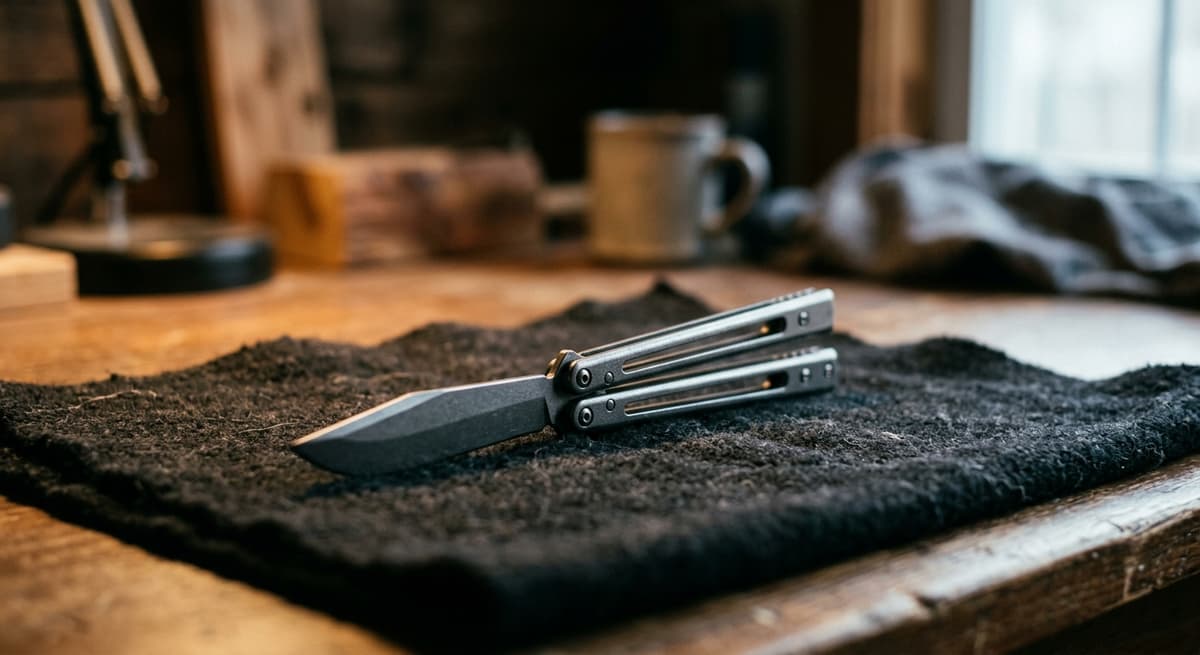
Federal law does not ban an individual from owning or carrying a switchblade. The Federal Switchblade Act, 15 U.S.C. §§ 1241 to 1245, restricts interstate commerce in switchblade knives and, in 15 U.S.C. § 1245, makes it a federal offense to knowingly possess, manufacture, sell, or import a ballistic knife in or affecting interstate commerce or within federal territorial jurisdiction; the operative offense sections, §§ 1242 and 1243, do not apply to certain knives and people, listed as exemptions in 15 U.S.C. § 1244. A 2009 amendment, § 1244(5), exempts a knife with a spring, detent, or other closure-bias mechanism that requires hand, wrist, or arm exertion on the blade itself to overcome the bias and assist opening, the carve-out that keeps modern assisted-opening folding knives legal in interstate commerce. A separate exemption, § 1244(4), covers a person with only one arm possessing or carrying a switchblade with a blade three inches or less.
Disclaimer: This article provides general legal information about West Virginia knife law as of September 2026. It is not legal advice. Consult a lawyer licensed in West Virginia for advice about a specific situation.
For a state-by-state comparison, see knife laws by state. West Virginia's self-defense statutes are covered separately on the West Virginia self-defense laws page.
Statutes cited reflect their in-force version as of 2026-09-18. Last updated: 2026-09-18.
Frequently Asked Questions
Is it legal to carry a switchblade in West Virginia?
Generally yes, for an eligible adult. A switchblade knife falls within W. Va. Code § 61-7-2(9)'s 'knife' definition, part of the broader 'deadly weapon' category, and § 61-7-7(c) allows a person at least 18 years old who is not prohibited from possessing a firearm to carry a concealed deadly weapon, including a switchblade, without a license. Carrying, brandishing, or using it in a way that causes or threatens a breach of the peace is a separate misdemeanor under § 61-7-11 regardless of eligibility, and a switchblade is never permitted on school property or on the premises of a court of law.
What is West Virginia's blade-length limit for knives?
3.5 inches is the key figure outside schools and courthouses, but it is not a hard ceiling. § 61-7-2(9) defines 'knife' first by a functional test for an instrument used or adaptable as a weapon, then illustrates it with a dagger, dirk, poniard, or stiletto with a blade over 3.5 inches, so that figure is an example, not a cap, and a shorter fixed blade meant for use as a weapon can still be reached by the definition's opening test. Separately, a pocket knife with a blade of 3.5 inches or less is excluded from the definition, along with a hunting, fishing, sport, or tool knife, unless knowingly used or intended for serious bodily injury or death. That pocketknife exclusion does not apply on school property, at a school-sponsored function, or on the premises of a court of law: § 61-7-2(5) adds back, for the § 61-7-11a offense covering both settings, any knife-definition instrument with a blade of three and one-half inches or less, so a pocketknife under 3.5 inches is still banned in both places, and because a blade over 3.5 inches already counts as a knife under the base definition, every knife length ends up covered there.
Do you need a permit to carry a knife concealed in West Virginia?
No, for an eligible adult. § 61-7-7(c) allows permitless concealed carry of a deadly weapon, including a qualifying knife, for a person at least 18 years old who is a U.S. citizen or legal resident and not otherwise prohibited from possessing a firearm. The former under-21 license requirement in § 61-7-3 is repealed. West Virginia's concealed-weapon licenses, formal and provisional, issue only for pistols and revolvers, never for a knife, so an adult who is prohibited from possessing a firearm under § 61-7-7(a) has no clear licensing path to carry a knife concealed; article 7 contains no offense of carrying a concealed deadly weapon other than a firearm without a license either, leaving that person's position unsettled. A person under 18 may not carry a deadly weapon concealed or openly at all, under § 61-7-8.
Can a knife be brought onto West Virginia school property?
No, and the state's usual 3.5-inch pocketknife exclusion does not help here. § 61-7-2(5) expands 'deadly weapon' for the § 61-7-11a offense, which governs both school and courthouse possession, to add back any knife-definition instrument with a blade of three and one-half inches or less, so an ordinary pocketknife is banned on school grounds the same as a switchblade; because a blade over 3.5 inches already counts as a knife under the base definition, every knife length ends up banned there, and the same expansion bans it on court premises too. A school-grounds violation is a felony under § 61-7-11a(b)(3), punishable by two to 10 years in a state correctional facility. The exemptions are narrow: law enforcement, certain probation and parole officers, a person authorized by the board of education, and a person who keeps an unloaded firearm or deadly weapon in a motor vehicle or a locked motor vehicle, among a short list of others.
Does West Virginia preempt local knife ordinances?
Mostly yes. § 8-12-5A bars a municipality from limiting the right to purchase, possess, carry, transport, sell, or store a deadly weapon, a term that includes a qualifying knife by cross-reference to § 61-7-2, except that a municipality may still regulate deadly weapons inside municipally owned buildings and restrict open carry in a municipally owned recreation facility.
Updates
Independently fact-checked against the cited primary sources
Sources and References
- W. Va. Code § 61-7-2 - Definitions(code.wvlegislature.gov).gov
- W. Va. Code § 61-7-3 - Carrying a deadly weapon without provisional license or other authorization by persons under twenty-one years of age (repealed)(code.wvlegislature.gov).gov
- W. Va. Code § 61-7-4 - License to carry deadly weapons; how obtained(code.wvlegislature.gov).gov
- W. Va. Code § 61-7-4A - Provisional license to carry deadly weapons; how obtained(code.wvlegislature.gov).gov
- W. Va. Code § 61-7-7 - Persons prohibited from possessing firearms; right of nonprohibited persons over 18 years of age to carry concealed deadly weapons(code.wvlegislature.gov).gov
- W. Va. Code § 61-7-8 - Possession of deadly weapons by minors; prohibitions(code.wvlegislature.gov).gov
- W. Va. Code § 61-7-10 - Sale, rental, gift or loan of deadly weapons other than firearms to prohibited persons(code.wvlegislature.gov).gov
- W. Va. Code § 61-7-11 - Brandishing deadly weapons; threatening or causing breach of the peace(code.wvlegislature.gov).gov
- W. Va. Code § 61-7-11a - Possessing deadly weapons on premises of educational facilities and courts of law(code.wvlegislature.gov).gov
- W. Va. Code § 61-7-14 - Right of certain persons to limit possession of firearms on premises(code.wvlegislature.gov).gov
- W. Va. Code § 18A-5-1a - Possessing deadly weapons on premises of educational facilities; suspension and expulsion(code.wvlegislature.gov).gov
- W. Va. Code § 8-12-5A - Limitations upon municipalities' power to restrict certain weapons and ammunition(code.wvlegislature.gov).gov
- 15 U.S.C. §§ 1241-1245 - Federal Switchblade Act, interstate commerce and ballistic-knife scope(law.cornell.edu)
- 15 U.S.C. § 1244 - exceptions, including the 2009 assisted-opening carve-out and the one-arm exception(law.cornell.edu)