
Alaska
Are Brass Knuckles Legal in Alaska? (2026 Law)
Independently fact-checked against primary sources (last audited October 10, 2026). · 7 primary sources cited on this page. How we verify our legal content
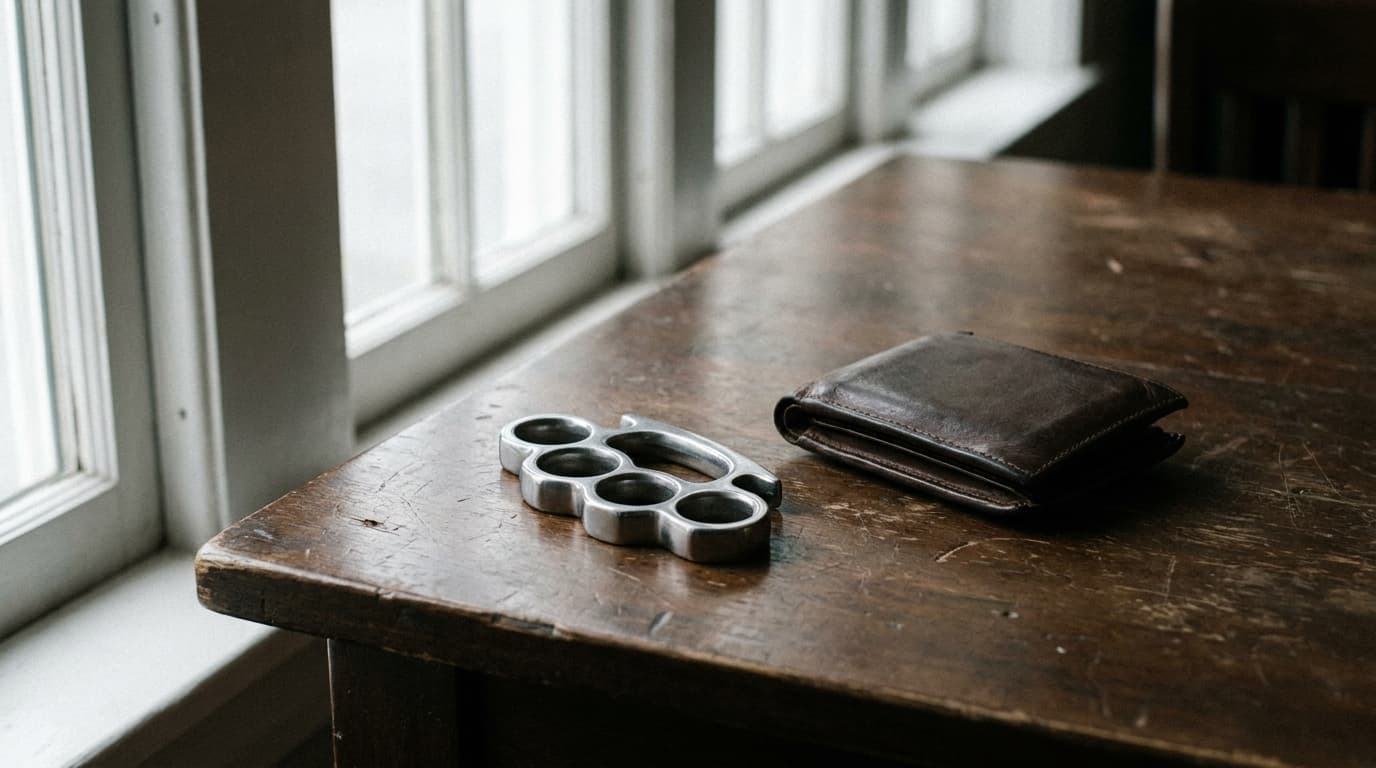
Brass knuckles are illegal in Alaska. Under AS 11.61.210(a)(4), a person commits misconduct involving weapons in the fourth degree if the person "manufactures, possesses, transports, sells, or transfers metal knuckles," and AS 11.61.210(d) makes that offense a class A misdemeanor. Alaska is one of the stricter states on this question; to compare, see our guide to brass knuckles laws by state.
Information last verified on 2026-10-08. This article has not been reviewed by a licensed lawyer.
Jurisdiction scope: This article covers the Alaska statutes on misconduct involving weapons in the fourth and fifth degrees (AS 11.61.210 and 11.61.220), the definitions of deadly weapon and metal knuckles (AS 11.81.900), the class A misdemeanor sentencing limits (AS 12.55.135 and 12.55.035), and the local preemption statute (AS 29.35.145). It does not cover borough or city ordinances, federal law or federal property, or the law of other states.
What Alaska law says about metal knuckles
Alaska bans metal knuckles outright. The fourth-degree weapons statute lists the conduct:
"(4) manufactures, possesses, transports, sells, or transfers metal knuckles; ... (d) Misconduct involving weapons in the fourth degree is a class A misdemeanor." AS 11.61.210(a)(4), (d)
The statute does not require any intent to use the knuckles, and it does not require that they be concealed. Owning, making, buying, selling, giving away and moving metal knuckles are each covered by its words.
Knuckles also appear in Alaska's definition of a deadly weapon, which applies across the criminal code "unless the context requires otherwise":
"(18) 'deadly weapon' means any firearm, or anything designed for and capable of causing death or serious physical injury, including a knife, an axe, a club, metal knuckles, or an explosive;" AS 11.81.900(a)(18)
Owning, buying and selling
Because possession is itself the offense, Alaska draws no line between knuckles kept at home and knuckles carried in public. The same subsection covers buying (which results in possession), selling, transferring and manufacturing.

Sections 11.61.210 and 11.61.220 contain no exception to the metal knuckles ban for collectors, antiques, home possession or law enforcement. A peace-officer exemption does appear in AS 11.61.210(c), but it applies only to the school-grounds provision in subsection (a)(7), not to the knuckles ban in (a)(4).
Carrying knuckles: concealed, open and in a vehicle
The carry questions that matter in many states do not change the answer in Alaska. Carrying metal knuckles openly, carrying them concealed and keeping them in a car all involve possessing them, and the statute also names "transports."
Alaska's separate concealed-carry rules in AS 11.61.220 apply to deadly weapons generally, which include metal knuckles. For example, a person 21 or older who carries a concealed deadly weapon must immediately inform a peace officer on contact, and a person under 21 commits an offense by knowingly possessing a concealed deadly weapon other than an ordinary pocket knife or a defensive weapon (AS 11.61.220(a)(1), (a)(6)). Those rules add duties for deadly weapons that are otherwise lawful to have. They do not make metal knuckles lawful, because AS 11.61.210(a)(4) already bans possessing them.
Plastic knuckles and other materials
The ban names "metal knuckles," but Alaska's definitions section shows that the material does not have to be metal:
"(39) 'metal knuckles' means a device that consists of finger rings or guards made of a hard substance and designed, made, or adapted for inflicting serious physical injury or death by striking a person;" AS 11.81.900(a)(39)
Under that wording, plastic, polymer, wood or other knuckles count if they are made of a hard substance and designed, made or adapted for striking a person to cause serious injury. A soft or purely decorative item that is not designed or adapted for striking may fall outside the definition.
Schools and minors
AS 11.61.210(a)(7) makes it a fourth-degree offense for anyone other than a preschool through secondary school student to knowingly possess a deadly weapon in school buildings, on school grounds or the school parking lot, on a school bus, or at a school-sponsored event without the permission of the chief administrative officer of the school or district or a designee; AS 11.61.210(a)(8) covers students. The provision lets a person 21 or older keep a deadly weapon other than a loaded firearm in the trunk of a vehicle or encased in a closed container in a vehicle, but that allowance does not help with metal knuckles, which are banned everywhere under (a)(4).
The ban on metal knuckles has no age element and applies to adults and minors alike. The minor-sale rules in the same section, AS 11.61.210(a)(5) and (a)(6), address switchblades, gravity knives, firearms and defensive weapons, not knuckles.
Penalties
| Conduct | Statute | Classification | Maximum penalty |
|---|---|---|---|
| Manufacturing, possessing, transporting, selling or transferring metal knuckles | AS 11.61.210(a)(4), (d) | Class A misdemeanor | Up to 1 year in jail (AS 12.55.135(a)); fine up to $25,000 (AS 12.55.035(b)(5)) |
AS 12.55.135(a) provides that "A defendant convicted of a class A misdemeanor may be sentenced to a definite term of imprisonment of not more than one year." The fine schedule in AS 12.55.035(b)(5) lists "$25,000 for a class A misdemeanor." These are maximums; the sentence in a particular case is set by the court.

Because metal knuckles are a deadly weapon, having them on the person while unlawfully entering or remaining on premises or in a vehicle in violation of a domestic violence protective order is misconduct involving weapons in the third degree, a class C felony (AS 11.61.200(a)(8), (i)).
Local rules
AS 29.35.145(a) reserves "The authority to regulate firearms and knives" to the state. Knuckles are not named in that preemption statute. Subsection (b) also lets municipalities enact ordinances "that are identical to state law and that have the same penalty as provided for by state law." Because the state ban already applies statewide, a local rule cannot make metal knuckles lawful in any Alaska community. For a local ordinance, check your borough or city code or call the local police department's non-emergency line.
Other self-defense options
Readers weighing knuckles often look at other options. The rules for knives are in Alaska knife laws, stun guns and sprays (which Alaska classes as defensive weapons) are covered in Alaska pepper spray and stun gun laws, and when force may be used at all is covered in Alaska self-defense laws.
Related pages
- Brass knuckles laws by state
- Alaska knife laws
- Alaska pepper spray and stun gun laws
- Alaska self-defense laws
This article provides general legal information about Alaska law, not legal advice. Weapons laws change and local rules vary. For advice about a specific situation, contact a lawyer licensed in Alaska or your local law enforcement agency.
Last updated: 2026-10-08.
Frequently Asked Questions
Are brass knuckles legal in Alaska?
No. AS 11.61.210(a)(4) makes it a crime to manufacture, possess, transport, sell, or transfer metal knuckles. It is misconduct involving weapons in the fourth degree, a class A misdemeanor.
Can I keep brass knuckles at home in Alaska?
The ban in AS 11.61.210(a)(4) covers possession itself and contains no exception for home possession, so keeping metal knuckles at home falls within it.
What is the penalty for having brass knuckles in Alaska?
Possessing metal knuckles is a class A misdemeanor under AS 11.61.210(d). A class A misdemeanor carries up to one year in jail under AS 12.55.135(a), and AS 12.55.035(b)(5) lists a fine of up to $25,000.
Are plastic brass knuckles legal in Alaska?
Very likely not. AS 11.81.900(a)(39) defines metal knuckles as finger rings or guards made of a hard substance and designed, made, or adapted for inflicting serious physical injury or death by striking a person, so the material does not have to be metal. Hard plastic or polymer knuckles made for striking fit that definition.
Can I buy brass knuckles online and ship them to Alaska?
The ban in AS 11.61.210(a)(4) reaches possessing, transporting, selling and transferring metal knuckles, so receiving and keeping them in Alaska falls within its words.
Can I carry brass knuckles in my car in Alaska?
The ban covers possessing and transporting metal knuckles, so having them in a vehicle falls within its words. The vehicle allowances in the school-grounds provision do not make knuckles lawful, because the possession ban applies everywhere.
Updates
Independently fact-checked against the cited primary sources
The Law Behind This Article
This article rests on the statutory provisions below, held in our own legal record and retrieved from the official source. Tap a section to read the operative text.
Alaska Statutes, Title 11. Criminal Law, Chapter 61. Offenses Against Public Order
§ 11.61.210Misconduct involving weapons in the fourth degreeIn forcecited in 3 of our articles
(a) A person commits the crime of misconduct involving weapons in the fourth degree if the person (1) possesses on the person, or in the interior of a vehicle in which the person is present, a firearm when the person's physical or mental condition is impaired as a result of the introduction of an intoxicating liquor or a controlled substance into the person's body in circumstances other than described in AS 11.61.200(a)(7); (2) discharges a firearm from, on, or across a highway; (3) discharges a firearm with reckless disregard for a risk of damage to property or a risk of physical injury to a person under circumstances other than those described in AS 11.61.195(a)(3)(A); (4) manufactures, possesses, transports, sells, or transfers metal knuckles; (5) sells or transfers a switchblade or a gravity knife to a person under 18 years of age without the prior written consent of the person's parent or guardian; (6) knowingly sells a firearm or a defensive weapon to a person under 18 years of age; (7) other than a preschool, elementary, junior high, or secondary school student, knowingly possesses a deadly weapon or a defensive weapon, without the permission of the chief administrative…
Official text (excerpt) · last checked 2026-07-31 · Read the full text in our law library · Verify at akleg.gov
Cited in 22 court opinions in our collectionLatest citing opinion in our collection: 2024
Opinions citing this section in our collection:
- Dyer v. State (Court of Appeals of Alaska 1983, 666 P.2d 438)“…ncident, Seimears was charged with two criminal violations: AS 11.61.210(a)(1) (class A misdemeanor; misconduct…”
- Pedersen v. Blythe (Alaska Supreme Court 2012, 292 P.3d 182)“…ce, not participating. . AS 11.61.195(a)(3)(B). . AS 11.61.210(a)(2). . AS 11.41.220(a)(1)(A).…”
- Alfred v. State (Court of Appeals of Alaska 1988, 758 P.2d 130)“…in the second degree for recklessly discharging a firearm. AS 11.61.210(a)(1), (3). Wassillie L. Gregory pled n…”
Identified automatically from the court opinions citing this section — not a ranking of which case controls.
Also relied on in: Alaska Pepper Spray and Stun Gun Laws (2026), Alaska Knife Laws (2026): Concealed Carry Rules Explained
Alaska Statutes, Title 11. Criminal Law, Chapter 81. General Provisions
§ 11.81.900DefinitionsIn forcecited in 3 of our articles
(a) For purposes of this title, unless the context requires otherwise, (1) a person acts intentionally with respect to a result described by a provision of law defining an offense when the person's conscious objective is to cause that result; when intentionally causing a particular result is an element of an offense, that intent need not be the person's only objective; (2) a person acts knowingly with respect to conduct or to a circumstance described by a provision of law defining an offense when the person is aware that the conduct is of that nature or that the circumstance exists; when knowledge of the existence of a particular fact is an element of an offense, that knowledge is established if a person is aware of a substantial probability of its existence, unless the person actually believes it does not exist; a person who is unaware of conduct or a circumstance of which the person would have been aware had that person not been intoxicated acts knowingly with respect to that conduct or circumstance; (3) a person acts recklessly with respect to a result or to a circumstance described by a provision of law defining an offense when the person is aware of and consciously disregards…
Official text (excerpt) · last checked 2026-07-31 · Read the full text in our law library · Verify at akleg.gov
Cited in 377 court opinions in our collectionLatest citing opinion in our collection: 2026
Opinions citing this section in our collection:
- Juneby v. State (Court of Appeals of Alaska 1982, 641 P.2d 823)“…ition of “serious physical injury” under the provisions of. AS 11.81.900. 29 In the present cas…”
- Neitzel v. State (Court of Appeals of Alaska 1982, 655 P.2d 325)“…ally” perform an act, such as intentionally shooting a gun. AS 11.81.900 provides in relevant part: (a) f…”
- In the Disciplinary Matter Involving Buckalew (Alaska Supreme Court 1987, 731 P.2d 48)“…t." ABA Standards, Definitions, ABA/BNA at 01:807. Accord AS 11.81.900(a)(1) (defining criminal intent as a co…”
Identified automatically from the court opinions citing this section — not a ranking of which case controls.
Search our full record of US law — 2.1 million sections, every state + federal →
Sources and References
- AS 11.61.210, Misconduct involving weapons in the fourth degree(akleg.gov).gov
- AS 11.61.200, Misconduct involving weapons in the third degree(akleg.gov).gov
- AS 11.81.900, Definitions (deadly weapon, defensive weapon, metal knuckles)(akleg.gov).gov
- AS 11.61.220, Misconduct involving weapons in the fifth degree(akleg.gov).gov
- AS 12.55.135, Sentences of imprisonment for misdemeanors(akleg.gov).gov
- AS 12.55.035, Fines(akleg.gov).gov
- AS 29.35.145, Regulation of firearms and knives(akleg.gov).gov