
Alaska
Alaska Pepper Spray and Stun Gun Laws (2026)
Independently fact-checked against primary sources (last audited September 23, 2026). · 11 primary sources cited on this page. How we verify our legal content
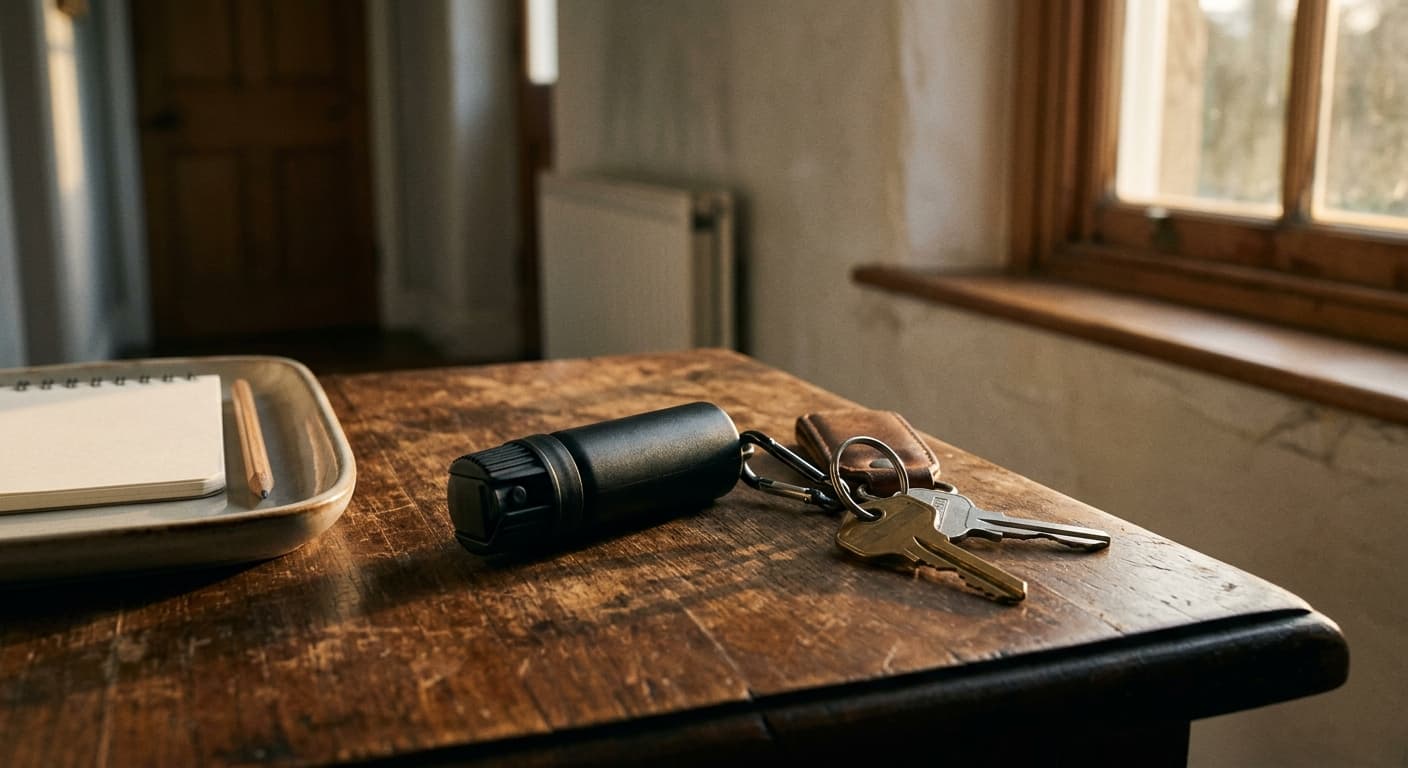
Pepper spray and stun guns are both legal in Alaska for adults, and the state groups them under a single defined term, "defensive weapon," that gets more favorable treatment than an ordinary knife or firearm under Alaska's concealed-weapon statute. Alaska Statutes § 11.81.900(b)(21) defines a defensive weapon as "an electric stun gun, or a device to dispense mace or a similar chemical agent, that is not designed to cause death or serious physical injury." Alaska requires no permit to carry any weapon concealed, including a firearm; its concealed-weapon statute instead punishes narrower conduct, and a defensive weapon is exempt from it entirely at any age. Selling one to a person under 18 is a crime, and both devices are restricted on school grounds for anyone under 21.
Jurisdiction scope: This page covers Alaska state law only, principally Alaska Statutes §§ 11.81.900, 11.61.200, 11.61.210, 11.61.220, 11.56.375, 11.56.380, 33.16.150, and 29.35.145. It does not cover Alaska's concealed handgun permit statutes in detail.
Is pepper spray legal in Alaska?
Yes. Alaska Statutes § 11.81.900(b)(21) defines "defensive weapon" as "an electric stun gun, or a device to dispense mace or a similar chemical agent, that is not designed to cause death or serious physical injury," and that single term covers pepper spray, mace, and a stun gun together throughout Title 11. Alaska has no capacity or formula limit, no licensed-dealer requirement, and no adult permit for buying or carrying an ordinary chemical defensive spray.

A device that is designed to cause serious physical injury or death falls outside that definition entirely. AS 11.61.200(h)(1)(A)(i) defines "prohibited weapon" to include an "explosive, incendiary, or noxious gas... mine or device that is designed, made, or adapted for the purpose of inflicting serious physical injury or death," and manufacturing, possessing, transporting, selling, or transferring one is misconduct involving weapons in the third degree, a class C felony, under § 11.61.200(a)(3). An ordinary personal-defense spray is a "defensive weapon," not a "prohibited weapon," but the boundary exists in the statute.
The one purchase-side restriction is age-based: AS 11.61.210(a)(6) makes it a class A misdemeanor to knowingly sell a defensive weapon (or a firearm) to a person under 18 years of age. That is a restriction on the seller, not on a minor's own possession; the statute does not separately criminalize a minor carrying pepper spray.
Is a stun gun legal in Alaska?
Yes, on the same terms as pepper spray, because Alaska's "defensive weapon" definition already covers both under one statutory phrase. An electric stun gun is legal for an adult to buy and carry, with no state permit and no age floor for possession, only the same under-18 sale restriction described above.

Alaska requires no permit to carry any weapon concealed, including a firearm; there is no general concealed-carry offense for an adult to be exempt from in the first place. AS 11.61.220, Alaska's concealed-weapons statute, punishes narrower conduct instead. For a person 21 or older, subsection (a)(1) applies only if the person is carrying a concealed deadly weapon, other than an ordinary pocket knife or a defensive weapon, and, when contacted by a peace officer, fails to immediately disclose it or allow the officer to secure it, or carries one concealed into another person's residence without first obtaining permission from an adult who lives there. For a person under 21, subsection (a)(6) more directly punishes knowingly possessing a concealed deadly weapon, other than an ordinary pocket knife or a defensive weapon. A defensive weapon, and an ordinary pocket knife, are carved out of both subsections on the same terms, so a stun gun or pepper spray carried concealed does not trigger this statute at any age, but neither does an adult's concealed firearm; Alaska simply has no general permit-to-conceal requirement for anyone.
Restricted places and penalties
Alaska's clearest place restriction on a defensive weapon is school property. AS 11.61.210(a)(7) makes it a class A misdemeanor (misconduct involving weapons in the fourth degree) for someone who is not a student to knowingly possess a defensive weapon within the buildings, grounds, or parking lot of a public or private preschool, elementary, junior high, or secondary school, on a school bus, or at a school-sponsored event, without the permission of the school's or district's chief administrative officer, unless that person is 21 years of age or older, in which case the statute expressly permits carrying a defensive weapon on school property without needing that permission. AS 11.61.210(a)(8) applies the same possession restriction to a student of any age, who needs the administrator's prior permission regardless of age. Subsection (c) exempts a peace officer acting within the scope of employment from (a)(7). A defensive weapon is not restricted by Alaska's other place statute, AS 11.61.220(a)(4), which bars only a firearm from a licensed child care facility, a courtroom or office of the Alaska Court System, a courthouse occupied only by the Alaska Court System and other justice-related agencies, and a state-funded domestic violence or sexual assault shelter.

A defensive weapon is barred from a different kind of place entirely, and the restriction sits outside Alaska's weapons chapter, which is why enumerating AS 11.61 alone would miss it. AS 11.56.380(a) makes it promoting contraband in the second degree, a class A misdemeanor, to introduce, take, or convey contraband into a correctional facility, or to make, obtain, or possess contraband while under official detention there. AS 11.56.375(a)(1) elevates that offense to promoting contraband in the first degree, a class C felony, when the contraband is "a deadly weapon or a defensive weapon." Separately, a prisoner on parole can be barred from possessing a defensive weapon by the terms of release itself: AS 33.16.150(b)(1) lets the parole board impose, as a discretionary condition of special medical, discretionary, or mandatory parole, that the prisoner not possess or control a defensive weapon, even though no statute bars that possession by conviction alone.
Alaska also restricts a defensive weapon in one narrower, status-based setting: AS 11.61.200(a)(8) and (9) make it misconduct involving weapons in the third degree, a class C felony, to possess a defensive weapon on the person while unlawfully entering or remaining on premises in violation of a domestic-violence or similar protective order, or while communicating with someone in violation of a no-contact order tied to conditions of release. That restriction is tied to the underlying order violation; it is not a general felon-in-possession ban. Alaska's felon-weapons statute, AS 11.61.200(a)(1), bars a convicted felon from possessing a concealable firearm, but does not name a defensive weapon.
Using a defensive weapon to injure someone falls outside Alaska's weapons chapter and into its assault statutes instead. AS 11.81.900(b)(16) defines "dangerous instrument" as "any deadly weapon or anything that, under the circumstances in which it is used, attempted to be used, or threatened to be used, is capable of causing death or serious physical injury," a definition broad enough to reach pepper spray or a stun gun actually used against a person, which is how Alaska's assault statutes reach misuse of either device, independent of the weapons-chapter penalties above.
Alaska's statewide preemption statute, AS 29.35.145, reserves regulation only of "firearms and knives" to the state and bars a municipality from enacting an ordinance regulating those two categories, "except as specifically provided by statute." A defensive weapon is not a firearm or a knife, so nothing in AS 29.35.145 stops an Alaska municipality from adopting its own ordinance regulating pepper spray or a stun gun, even though the state itself imposes no permit or age floor on adult possession.
Federal law: what it does and does not reach
No federal statute regulates a civilian's purchase or possession of pepper spray or a stun gun. Federal law matters in three places.
Federal buildings. Under 18 U.S.C. § 930(a), whoever knowingly possesses or causes to be present "a firearm or other dangerous weapon in a Federal facility (other than a Federal court facility)" faces a fine, imprisonment of up to 1 year, or both. Subsection (e) sets up to 2 years for a federal court facility, and subsection (b) up to 5 years where the weapon is intended to be used in a crime. Section 930(g)(2) defines the term:
The term "dangerous weapon" means a weapon, device, instrument, material, or substance, animate or inanimate, that is used for, or is readily capable of, causing death or serious bodily injury, except that such term does not include a pocket knife with a blade of less than 2½ inches in length.
The definition names neither device. Whether a particular spray or stun gun is "readily capable of" causing serious bodily injury is a question of fact the statute does not answer. Subsection (d)(3) exempts "the lawful carrying of firearms or other dangerous weapons in a Federal facility incident to hunting or other lawful purposes," and subsection (h) requires notice of the ban to be posted at each public entrance. A "Federal facility" is "a building or part thereof owned or leased by the Federal Government, where Federal employees are regularly present for the purpose of performing their official duties."
Air travel. The Transportation Security Administration's screening rules, which are agency policy rather than statute, bar both devices from carry-on bags. One 4 fl. oz. (118 ml) container of mace or pepper spray is permitted in checked baggage if it has a safety mechanism to prevent accidental discharge, and sprays containing more than 2 percent by mass of tear gas (CS or CN) are prohibited in checked baggage. Tasers, stun guns and other electro-shock weapons may travel in checked baggage only if transported so the device cannot discharge accidentally. Airlines may set stricter rules.
National parks. National Park Service regulations prohibit possessing, carrying or using a "weapon" in a park area except as the regulations provide (36 CFR 2.4(b)(1)). 36 CFR 1.4 defines "weapon" to include an "irritant gas device" and any "weapon the possession of which is prohibited under the laws of the State in which the park area or portion thereof is located."
Disclaimer: This article provides general legal information about Alaska's pepper spray and stun gun laws as of September 2026. It is not legal advice. Consult a lawyer licensed in Alaska for advice about a specific situation.
For a state-by-state comparison, see pepper spray and stun gun laws by state. Alaska's self-defense statutes are covered separately on the Alaska self-defense laws page.
Statutes cited reflect their in-force version as of 2026-09-19. Last updated: 2026-09-19.
Frequently Asked Questions
Is pepper spray legal to carry in Alaska?
Yes. Alaska Statutes 11.81.900(b)(21) defines pepper spray, mace, and similar chemical sprays as a 'defensive weapon,' and no state statute restricts an adult from buying, owning, or carrying one, including concealed. Knowingly selling a defensive weapon to a person under 18 is a class A misdemeanor, and a device designed to cause serious injury or death falls outside the defensive-weapon definition into a separate felony category.
Is a stun gun legal in Alaska?
Yes. An electric stun gun is a 'defensive weapon' under the same Alaska Statutes 11.81.900(b)(21) definition as pepper spray, and it is legal for an adult to buy, own, and carry, including concealed, with no state permit required.
Can you carry pepper spray or a stun gun concealed in Alaska without a permit?
Yes, but that is because Alaska requires no permit to carry any weapon concealed, including a firearm. AS 11.61.220, Alaska's concealed-weapons statute, punishes only narrow conduct, mainly failing to disclose a concealed deadly weapon to a contacting peace officer if you are 21 or older, or concealed carry by someone under 21, and a defensive weapon is exempt from that statute at any age.
Can pepper spray or a stun gun be carried on Alaska school grounds?
Only with restrictions. AS 11.61.210(a)(7)-(8) bars a non-student under 21, or a student of any age, from possessing a defensive weapon on preschool through secondary school property without the school administration's permission. A person 21 or older who is not a student may possess one on school grounds without that permission. Taking a defensive weapon into an Alaska correctional facility is a separate class C felony, promoting contraband in the first degree under AS 11.56.375(a)(1).
Can an Alaska city or town ban pepper spray or stun guns?
Yes, in principle. AS 29.35.145 reserves regulation only of firearms and knives to the state; it does not mention a defensive weapon, so nothing in state law stops an Alaska municipality from adopting its own ordinance regulating pepper spray or a stun gun.
Updates
Independently fact-checked against the cited primary sources
Sources and References
- Alaska Statutes 11.81.900 - Definitions ((b)(16) dangerous instrument; (b)(21) defensive weapon)(akleg.gov).gov
- Alaska Statutes 11.61.210 - Misconduct involving weapons in the fourth degree (sale to a minor, school-grounds possession, class A misdemeanor)(akleg.gov).gov
- Alaska Statutes 11.61.220 - Misconduct involving weapons in the fifth degree (concealed-weapon offense; defensive weapon and pocket knife excluded)(akleg.gov).gov
- Alaska Statutes 11.61.200 - Misconduct involving weapons in the third degree (prohibited weapon; defensive weapon possessed during a protective-order violation, class C felony)(akleg.gov).gov
- Alaska Statutes 29.35.145 - Regulation of firearms and knives (municipal preemption limited to firearms and knives)(akleg.gov).gov
- Alaska Statutes 11.56.375 and 11.56.380 - Promoting contraband in the first and second degree (defensive weapon in a correctional facility, class C felony)(akleg.gov).gov
- Alaska Statutes 33.16.150 - Special conditions of parole (defensive weapon possession as a discretionary parole condition)(akleg.gov).gov
- 18 U.S.C. § 930 - Possession of firearms and dangerous weapons in Federal facilities(law.cornell.edu)
- Transportation Security Administration - What Can I Bring? Pepper Spray(tsa.gov).gov
- Transportation Security Administration - What Can I Bring? Stun Guns/Shocking Devices(tsa.gov).gov
- 36 CFR 1.4 - National Park Service definitions (weapon)(ecfr.gov).gov
- 36 CFR 2.4 - Weapons, traps and nets(ecfr.gov).gov