
Alaska
Alaska Knife Laws (2026): Concealed Carry Rules Explained
Independently fact-checked against primary sources (last audited September 18, 2026). · 4 primary sources cited on this page. How we verify our legal content
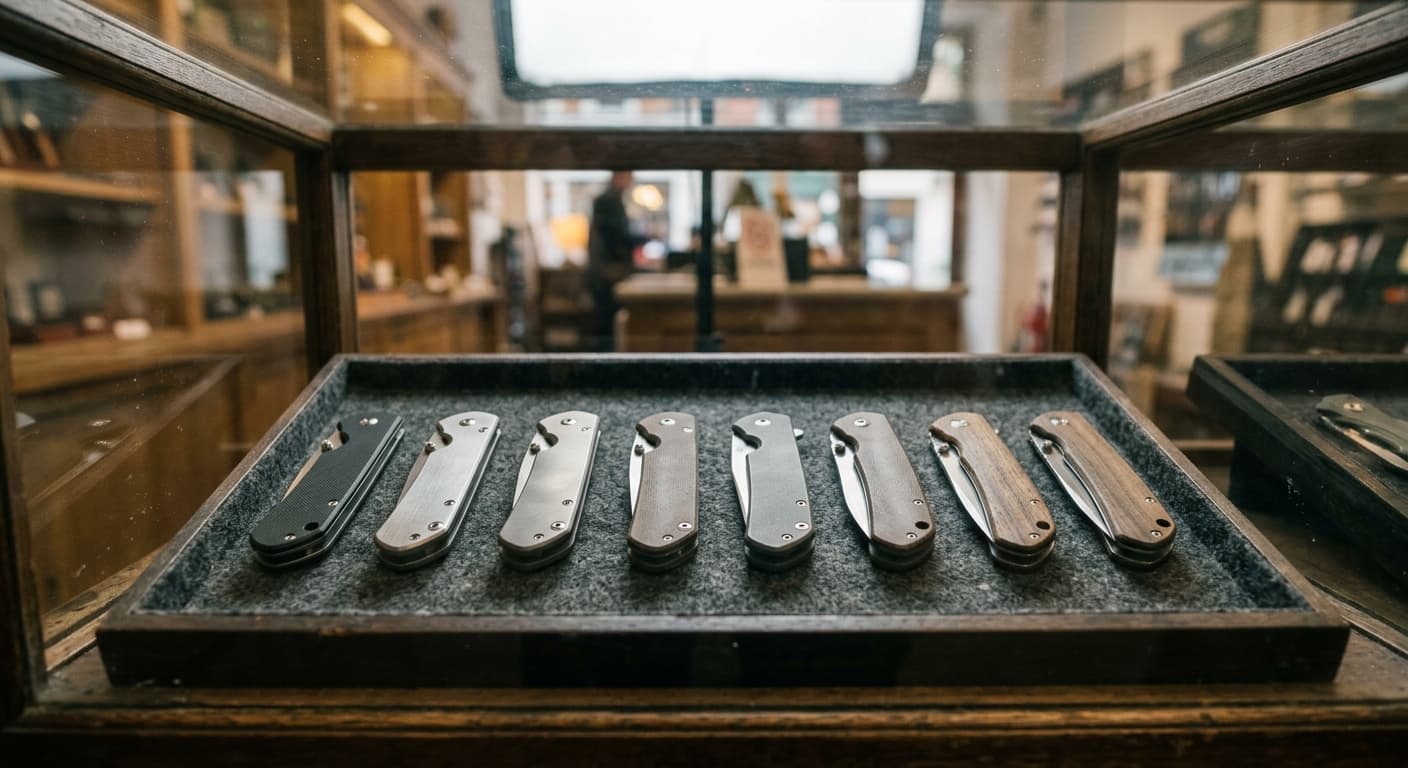
Open carry of a knife is generally lawful in Alaska, subject to place-based restrictions such as the school-property rule discussed below, and its concealed-carry rule for most adults turns on disclosure and location rather than a flat ban. Alaska Stat. § 11.61.220 exempts an "ordinary pocket knife" from its concealed deadly weapon offense entirely, and for other deadly weapons, an adult 21 or older commits an offense by concealing one either by failing to disclose it (or refusing to let an officer secure it) when a peace officer makes contact, or by carrying it concealed inside another person's residence without that resident's express permission. Adults under 21 face a flatter rule: concealed carry of any deadly weapon other than an ordinary pocket knife is an offense outright, with no disclosure element. Alaska also has express statewide knife preemption: municipalities cannot regulate knife possession, sale, or carrying except within four narrow carve-outs.
Jurisdiction scope: This page covers Alaska state law only, principally Alaska Stat. §§ 11.61.210, 11.61.220, 11.81.900, and 29.35.145. It does not cover the details of the four AS 29.35.145(b) municipal carve-outs beyond a summary, or Alaska's parole-conditions statute (AS 33.16.150), which sets a separate 3-inch pocketknife definition that applies only to people on parole.
Is it legal to carry a knife openly in Alaska?
Yes, outside the restricted places discussed below. Alaska Stat. Title 11's general weapons-misconduct offenses for carrying a knife are all framed around concealment, so open carry is not itself an offense. That is not true of the chapter's place-based restrictions: AS 11.61.210(a)(7) bars possessing a deadly weapon, including a knife, on school property and at school-sponsored events regardless of whether it is concealed. That restriction is covered in full below.
Concealed carry: disclosure and residence duties for adults, a flat ban under 21
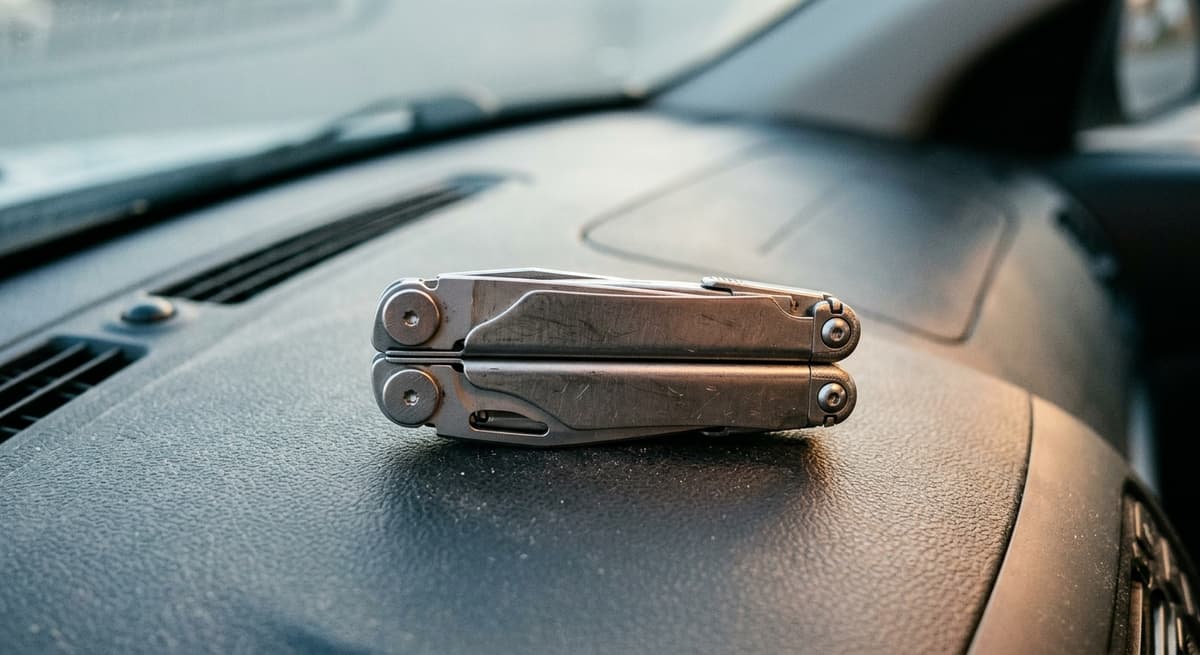
Alaska Stat. § 11.61.220(a)(1) makes it misconduct involving weapons in the fifth degree, a class B misdemeanor, for a person 21 or older to knowingly possess a deadly weapon, "other than an ordinary pocket knife or a defensive weapon," concealed on the person, under either of two branches. Branch (A) applies if, when contacted by a peace officer, the person fails to immediately disclose that possession or fails to let the officer secure the weapon. Branch (B) applies independently of any police contact: it covers a weapon concealed on the person within the residence of another person, unless the person has first obtained the express permission of an adult residing there to bring a concealed deadly weapon into the residence. An ordinary pocket knife is exempt from this offense entirely, but a non-exempt deadly weapon, such as a fixed-blade knife, can become an offense to conceal through either branch.
Alaska Stat. § 11.81.900 defines "deadly weapon" broadly, as "any firearm, or anything designed for and capable of causing death or serious physical injury, including a knife, an axe, a club, metal knuckles, or an explosive." That definition is what pulls ordinary knives into § 11.61.220's coverage, subject to the pocket-knife exemption.
For a person under 21, § 11.61.220(a)(6) removes the disclosure element: concealed carry of any deadly weapon other than an ordinary pocket knife is an offense outright. Two affirmative defenses apply: being in the person's own dwelling or on land the person owns or leases that is appurtenant to the dwelling, or being actually engaged in lawful hunting, fishing, trapping, or another lawful outdoor activity that necessarily involves carrying a weapon for personal protection.
Switchblades, gravity knives, and minors
Alaska's weapons-misconduct chapter does not ban adult possession of a switchblade or gravity knife outright. Instead, two statutes target minors specifically. Alaska Stat. § 11.61.220(a)(3) makes it misconduct involving weapons in the fifth degree for an unemancipated minor under 16 to possess a firearm, switchblade, or gravity knife without a parent's or guardian's consent. Alaska Stat. § 11.61.210(a)(5) separately makes it misconduct involving weapons in the fourth degree, a class A misdemeanor, to sell or transfer a switchblade or gravity knife to a person under 18 without the prior written consent of that person's parent or guardian.
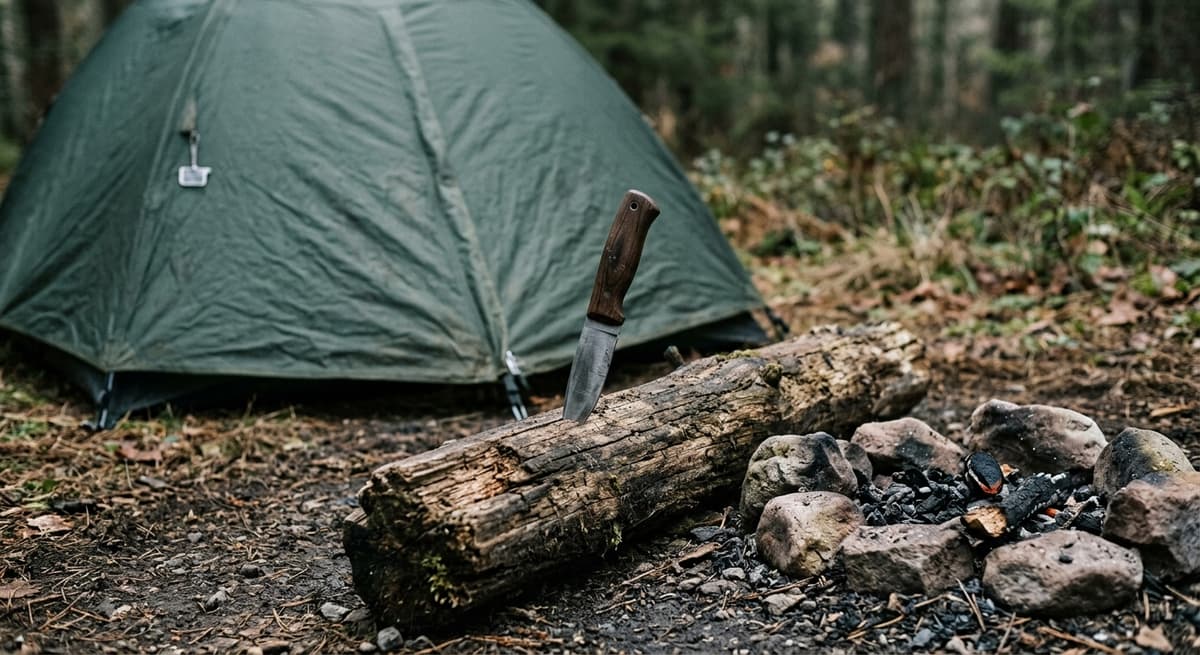
Alaska's own definitions of these terms, in § 11.81.900, carry the same carve-out Congress added to the federal switchblade definition in 2009: a "switchblade" is a knife with a blade that opens automatically by pressure on a button or device in the handle, but the definition expressly does not include a knife with a spring, detent, or other mechanism that requires hand, wrist, or arm exertion on the blade to overcome a closure bias. "Gravity knife" carries the same exclusion for a blade that opens by gravity or centrifugal force.
Restricted places
Alaska Stat. § 11.61.210(a)(7) bars a person other than a student from possessing a deadly weapon, which includes a knife, within the buildings, grounds, or parking lot of a public or private preschool, elementary, junior high, or secondary school, on a school bus, or at a school-sponsored event, without the permission of the school's chief administrative officer. That paragraph carries its own exceptions: a person 21 or older may still keep a deadly weapon other than a loaded firearm in the trunk of a vehicle, or encased in a closed container in the vehicle, on school property; a defensive weapon is exempt; and an unloaded firearm may be carried while merely traversing school premises to reach other property. Paragraph (a)(8) sets the parallel rule for students, where the administrative officer's permission cannot extend to a firearm at all. Section 11.61.220(a)(4) separately bars a firearm specifically (not a knife) within certain child care facilities, court facilities, and state-funded domestic violence or sexual assault shelters.
Does Alaska preempt local knife ordinances?
Yes. Alaska Stat. § 29.35.145, "Regulation of firearms and knives," reserves the authority to regulate firearms and knives to the state: except as specifically provided by statute, a municipality may not enact or enforce an ordinance regulating the possession, ownership, sale, transfer, use, carrying, transportation, licensing, taxation, or registration of firearms or knives. The section sits in Title 29's municipal-government provisions rather than Title 11's weapons-misconduct chapter, and it applies to both home rule and general law municipalities.
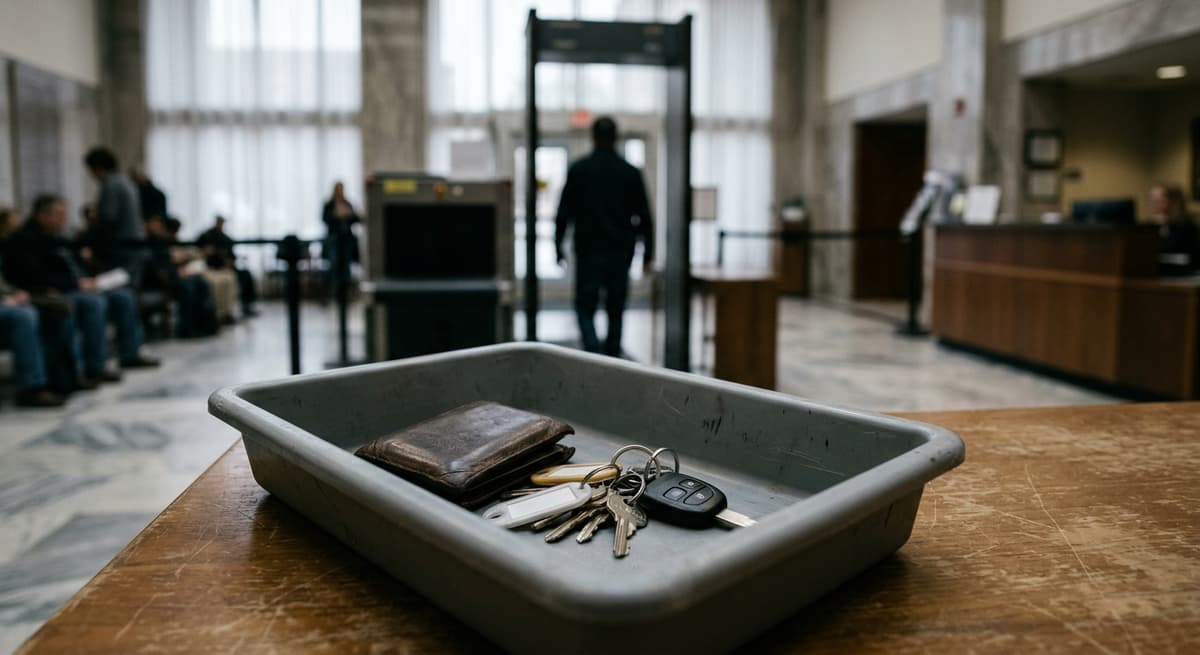
Subsection (b) leaves municipalities four narrow carve-outs: an ordinance that duplicates state law and carries the same penalty; restrictions on discharging a firearm; zoning that governs where firearms or knives may be sold, so long as a knife seller is not treated more restrictively than other businesses in the same zone; and a ban on carrying firearms or knives into the restricted access area of a municipal government building, provided the municipality posts notice of the prohibition at each entrance.
Federal law: what it does and does not reach
Federal law does not ban an individual from owning or carrying a switchblade. The Federal Switchblade Act, 15 U.S.C. §§ 1241 to 1245, instead regulates interstate commerce in switchblade knives, barring their manufacture, sale, transport, or introduction into interstate commerce, and, in 15 U.S.C. § 1245, makes it a federal offense to knowingly possess, manufacture, sell, or import a ballistic knife in or affecting interstate commerce or within federal territorial jurisdiction. Sections 1242 and 1243, the two federal offenses, do not apply to certain knives and people under 15 U.S.C. § 1244. A 2009 amendment, § 1244(5), exempts from those prohibitions any knife with a spring, detent, or other closure-bias mechanism requiring hand, wrist, or arm exertion on the blade itself to assist opening, the same carve-out Alaska's own switchblade and gravity-knife definitions use. A separate exemption, § 1244(4), covers a person with only one arm possessing or carrying a switchblade with a blade three inches or less. None of this changes what Alaska allows for ordinary carry; state law governs that question within Alaska.
Disclaimer: This article provides general legal information about Alaska's knife laws as of September 2026. It is not legal advice. Consult a lawyer licensed in Alaska for advice about a specific situation. Even where a knife is lawful to carry under the statutes discussed here, a peace officer's on-the-spot judgment and local circumstances can still affect an encounter.
For a state-by-state comparison, see knife laws by state. Alaska's self-defense statutes are covered separately on the Alaska self-defense laws page.
Statutes cited reflect their in-force version as of 2026-09-18. Last updated: 2026-09-18.
Frequently Asked Questions
Is it legal to carry a knife in Alaska?
Open carry of a knife is generally lawful; Alaska's weapons-misconduct chapter frames its carry offenses around concealment, though place-based restrictions such as the school-property rule apply regardless of concealment. Concealed carry of an ordinary pocket knife is exempt from the state's concealed deadly weapon offense entirely. Concealing any other deadly weapon is an offense for an adult 21 or older if the person fails to disclose it, or refuses to let an officer secure it, when contacted by a peace officer, or if it is concealed inside another person's residence without that resident's express permission; for someone under 21, concealed carry of a non-exempt deadly weapon is an offense outright.
Are switchblades legal in Alaska?
Alaska has no statute banning adult possession of a switchblade outright. The restrictions that exist target minors: an unemancipated minor under 16 cannot possess a switchblade or gravity knife without parental consent, and selling or transferring one to a person under 18 without written parental consent is a class A misdemeanor.
Can a minor carry a pocket knife in Alaska?
Alaska's minor-specific restriction names only firearms, switchblades, and gravity knives. An ordinary pocket knife is not on that list, and it is also exempted from the general adult concealed-weapon offense.
Does Alaska have statewide knife preemption?
Yes. AS 29.35.145 reserves the regulation of firearms and knives to the state, so a municipality generally cannot enact or enforce an ordinance regulating knife possession, sale, carrying, or registration. Municipalities keep four narrow carve-outs: ordinances that duplicate state law with the same penalty, firearm-discharge restrictions, sale-location zoning that does not single out knife dealers, and posted restricted-access areas of municipal government buildings.
Updates
Independently fact-checked against the cited primary sources
Sources and References
- Alaska Stat. 11.61.220 - Misconduct involving weapons in the fifth degree (concealed deadly weapon, ordinary pocket knife exempt)(akleg.gov).gov
- Alaska Stat. 11.61.210 - Misconduct involving weapons in the fourth degree (switchblade/gravity knife sale to a minor, school-grounds possession)(akleg.gov).gov
- Alaska Stat. 11.81.900 - Definitions (deadly weapon, switchblade, gravity knife)(akleg.gov).gov
- Alaska Stat. 29.35.145 - Regulation of firearms and knives (statewide knife preemption, four municipal carve-outs at (b))(akleg.gov).gov
- 15 U.S.C. 1241-1245 - Federal Switchblade Act, interstate commerce and importation scope(law.cornell.edu)
- 15 U.S.C. 1244 - exceptions, including the 2009 assisted-opening carve-out and the one-arm exception(law.cornell.edu)