
Massachusetts
Are Brass Knuckles Legal in Massachusetts? (2026 Law)
Independently fact-checked against primary sources (last audited October 8, 2026). · 8 primary sources cited on this page. How we verify our legal content
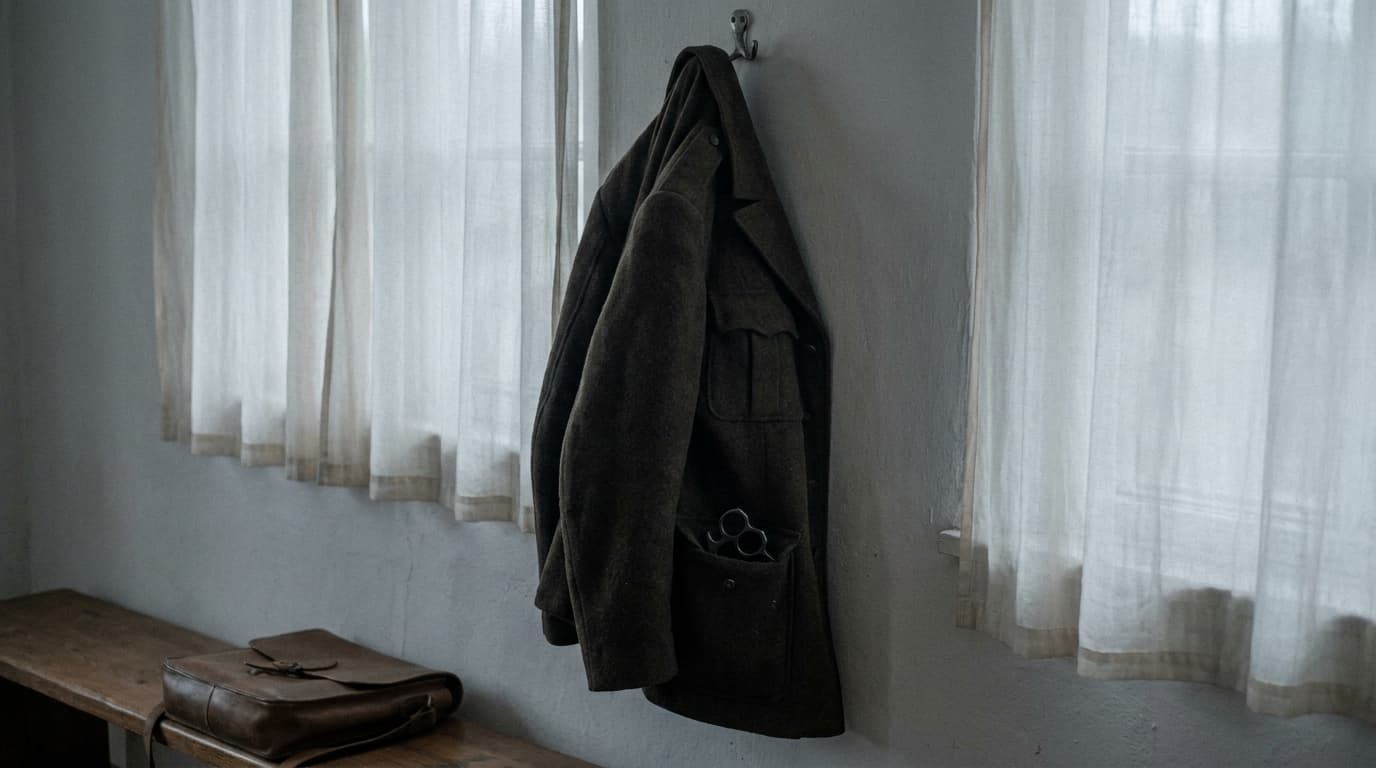
Carrying brass knuckles is a crime in Massachusetts. Under G.L. c. 269, § 10(b), anyone who carries "metallic knuckles or knuckles of any substance which could be put to the same use with the same or similar effect as metallic knuckles" on their person, or on their person or under their control in a vehicle, faces 2.5 to 5 years in state prison or 6 months to 2.5 years in a jail or house of correction, and G.L. c. 269, § 12 separately punishes making and selling them. To compare other states, see our guide to brass knuckles laws by state.
Information last verified on 2026-10-08. This article has not been reviewed by a licensed lawyer.
Jurisdiction scope: This article covers the Massachusetts General Laws on knuckles: the carry offense, repeat-offender penalties, forfeiture, school weapons rule, firearms-only prohibited areas and juvenile provision in G.L. c. 269, § 10(b), (d), (e), (j), (k) and (l), the manufacture and sale offense in G.L. c. 269, § 12, assault and battery by means of a dangerous weapon in G.L. c. 265, § 15A(b), felony status under G.L. c. 274, § 1 and firearm licence eligibility under G.L. c. 140, § 121F(j), student expulsion under G.L. c. 71, § 37H(a), and delivering articles to prisoners under G.L. c. 268, § 28. It does not cover city or town ordinances, federal law or federal property, or the law of other states.
What Massachusetts law says about brass knuckles
Massachusetts does not use the words "brass knuckles." Its carry statute names "metallic knuckles" in a long list of weapons. G.L. c. 269, § 10(b) provides in part:
"(b) Whoever, except as provided by law, carries on his person, or carries on his person or under his control in a vehicle, any stiletto, dagger or a device or case which enables a knife with a locking blade to be drawn at a locked position, ... or a slung shot, blowgun, blackjack, metallic knuckles or knuckles of any substance which could be put to the same use with the same or similar effect as metallic knuckles, nunchaku, zoobow, ... shall be punished by imprisonment for not less than two and one-half years nor more than five years in the state prison, or for not less than six months nor more than two and one-half years in a jail or house of correction, except that, if the court finds that the defendant has not been previously convicted of a felony, he may be punished by a fine of not more than fifty dollars or by imprisonment for not more than two and one-half years in a jail or house of correction." G.L. c. 269, § 10(b)
The offense is defined by carrying: on the person, or on the person or under the person's control in a vehicle. Section 10(b) contains no exception for firearm licence holders, self-defense, collectors or theatrical use. Its only qualifier is the opening phrase "except as provided by law," which points to other statutes.
Plastic and other non-metal knuckles
The statute does not stop at metal. Section 10(b) reaches "knuckles of any substance which could be put to the same use with the same or similar effect as metallic knuckles," and the sale statute, § 12, uses nearly the same words: "knuckles of any other substance which could be put to the same use and with the same or similar effect as metallic knuckles." Plastic, polymer or composite knuckles therefore fall within both sections when they could be put to the same use with the same or similar effect.

The knives listed in § 10(b), such as stilettos, daggers and devices that let a locking-blade knife be drawn at a locked position, are covered in our guide to Massachusetts knife laws.
Carrying knuckles on you or in a car
Section 10(b) covers knuckles carried on the person and knuckles "on his person or under his control in a vehicle." The text of the carry offense does not turn on whether the knuckles are concealed, so it reaches knuckles carried openly as well as hidden in a pocket, and knuckles in a vehicle that are under the person's control.
The text of § 10(b) does not address knuckles kept at home, and this article does not draw a conclusion about it.
Penalties for brass knuckles in Massachusetts
| Conduct | Statute | Penalty |
|---|---|---|
| Carrying knuckles on the person or under your control in a vehicle (first offense) | § 10(b) | 2.5 to 5 years in state prison, or 6 months to 2.5 years in a jail or house of correction |
| Same, where the court finds no prior felony conviction | § 10(b) | The court may instead impose a fine of up to $50 or up to 2.5 years in a jail or house of correction |
| Second offense after a conviction under § 10(a), (b) or (c) | § 10(d) | 5 to 7 years in state prison |
| Third offense | § 10(d) | 7 to 10 years in state prison |
| Fourth offense | § 10(d) | 10 to 15 years in state prison |
| Manufacturing, selling or exposing knuckles for sale | § 12 | Fine of $50 to $1,000, or up to 6 months in prison |
| Carrying a firearm or other dangerous weapon at a school, college or university without written authorization | § 10(j) | Fine up to $1,000, up to 2 years, or both |
| Assault and battery by means of a dangerous weapon | G.L. c. 265, § 15A(b) | Up to 10 years in state prison or 2.5 years in the house of correction, a fine up to $5,000, or both |
| Giving any article to a prisoner without permission | G.L. c. 268, § 28 | Up to 5 years in state prison, up to 2 years in a jail or house of correction, or a fine up to $1,000 |
Felony status and firearm licences
Under G.L. c. 274, § 1, "A crime punishable by death or imprisonment in the state prison is a felony." Because § 10(b) is punishable by state prison, it is a felony even when the court imposes the lighter sentence. A person ever convicted of a felony is a "prohibited person" under G.L. c. 140, § 121F(j), and the licensing authority "shall deny" that person's application for a Massachusetts firearm licence, card or permit, or its renewal.
Prior felony convictions
A prior record changes the § 10(b) sentence. The lighter option of a fine of up to $50 or up to 2.5 years in a jail or house of correction is available only "if the court finds that the defendant has not been previously convicted of a felony," and even then the statute says the defendant "may" be punished that way, leaving it to the court.
Repeat offenses
Section 10(d) sets higher state prison ranges for a person who, "after having been convicted of any of the offenses set forth in paragraph (a), (b) or (c) commits a like offense or any other of the said offenses." A prior conviction under § 10(a) or § 10(c) counts, not only an earlier knuckles charge. The section adds:
"The sentence imposed upon a person, who after a conviction of an offense under paragraph (a), (b) or (c) commits the same or a like offense, shall not be suspended, nor shall any person so sentenced be eligible for probation or receive any deduction from his sentence for good conduct." G.L. c. 269, § 10(d)
Forfeiture
Section 10(e) provides: "Upon conviction of a violation of this section, the firearm or other article shall, unless otherwise ordered by the court, be confiscated by the commonwealth."
Buying and selling brass knuckles
Sale is its own offense. G.L. c. 269, § 12 provides in part:
"Whoever manufactures or causes to be manufactured, or sells or exposes for sale, an instrument or weapon of the kind usually known as a dirk knife, ... or metallic knuckles or knuckles of any other substance which could be put to the same use and with the same or similar effect as metallic knuckles, shall be punished by a fine of not less than fifty nor more than one thousand dollars or by imprisonment for not more than six months; provided, however, that sling shots may be manufactured and sold to clubs or associations conducting sporting events where such sling shots are used." G.L. c. 269, § 12
The only exception in § 12 covers sling shots sold to clubs or associations for sporting events. It does not cover knuckles. A buyer who then carries the knuckles on the person or in a vehicle falls under § 10(b).
Schools, colleges and student transport
Section 10(j), as amended by 2025 Mass. Acts c. 14, § 51 (effective August 5, 2025), addresses weapons on school and campus property:
"Whoever, not being a qualified law enforcement officer, a qualified retired law enforcement officer, as defined in the Law Enforcement Officers Safety Act of 2004, 18 U.S.C. sections 926B and 926C, respectively, as amended, or a law enforcement officer as defined in section 1 of chapter 6E who is currently certified pursuant to section 4 of said chapter 6E and notwithstanding any license obtained by the person pursuant to chapter 140, carries on their person a firearm, loaded or unloaded, or other dangerous weapon in any building or on the grounds of any elementary or secondary school, college or university, including transport used for students of said institution without the written authorization of the board or officer in charge of the elementary or secondary school, college or university shall be punished by a fine of not more than $1,000 or by imprisonment for not more than 2 years or both." G.L. c. 269, § 10(j)
The section reaches colleges and universities as well as elementary and secondary schools, and transport used for their students. A chapter 140 licence is no defense. Section 10(j) does not define "dangerous weapon" and does not name knuckles. In Commonwealth v. Appleby, 380 Mass. 296 (1980), a case about "dangerous weapon" in the assault and battery statute, G.L. c. 265, § 15A, the Supreme Judicial Court said that "firearms, daggers, stilettos and brass knuckles are usually classified as dangerous per se, because they are designed for the purpose of bodily assault or defense." That case did not construe § 10(j), but a person carrying knuckles onto school or campus property should not assume § 10(j) leaves them out. Section 10(j) does not displace the § 10(b) carry offense, which applies to knuckles by name.
School discipline is separate from any criminal charge. Under G.L. c. 71, § 37H(a), a student "found on school premises or at school-sponsored or school-related events, including athletic games, in possession of a dangerous weapon, including, but not limited to, a gun or a knife" may be subject to expulsion by the principal.
Courthouses, government buildings and polling places
The "prohibited area" offense added as § 10(k) is written for firearms. Section 10(k)(1) punishes "Whoever possesses a firearm, loaded or unloaded, as defined in section 121 of chapter 140, in a prohibited area, and knows or reasonably should know such location is a prohibited area," with a fine of up to $1,000, up to 2.5 years in the house of correction, or both. It does not reach knuckles.
Using knuckles in an assault
Striking someone with knuckles can be charged as assault and battery by means of a dangerous weapon. G.L. c. 265, § 15A(b) punishes that offense with up to 10 years in state prison or up to 2.5 years in the house of correction, a fine of up to $5,000, or both. Appleby, quoted above, construed this statute and listed brass knuckles among weapons "usually classified as dangerous per se."
Jails and prisons
G.L. c. 268, § 28 punishes whoever gives or delivers "any drug or article whatever" to a prisoner in a correctional institution, jail or house of correction, or possesses such an article within the precincts of the prison intending to deliver it to a prisoner, without the permission of the superintendent or keeper. The penalty is up to 5 years in state prison, up to 2 years in a jail or house of correction, or a fine of up to $1,000.
Arrested while armed
The second clause of § 10(b) applies to a person who, "when arrested upon a warrant for an alleged crime, or when arrested while committing a breach or disturbance of the public peace," is armed with "a billy or other dangerous weapon other than those herein mentioned and those mentioned in paragraph (a)," and carries the same 2.5 to 5 year state prison range. Knuckles are mentioned in the first clause of § 10(b), so carrying them is charged under that first clause.
Minors and brass knuckles
Neither § 10(b) nor § 12 contains an age element; both apply to any person. Section 10(l) adds that § 10 is "fully applicable to any person proceeded against under section seventy-five of chapter one hundred and nineteen and convicted under section eighty-three of chapter one hundred and nineteen," and that nothing in § 10 impairs a court's chapter 119 power "to adjudicate a person a delinquent child."
Local rules
This article covers state statutes only. Cities and towns may have their own ordinances. Check your city or town code, or call your local police department's non-emergency line, about any local rule.
Self-defense alternatives in Massachusetts
Because carrying knuckles exposes a person to a state prison range, readers often compare other options. The rules for sprays and stun devices are in our guide to Massachusetts pepper spray and stun gun laws, and the rules on when force may be used at all are in Massachusetts self-defense laws.
Related pages
- Brass knuckles laws by state
- Massachusetts knife laws
- Massachusetts pepper spray and stun gun laws
- Massachusetts self-defense laws
This article provides general legal information about Massachusetts law, not legal advice. Weapons laws change and local rules vary. For advice about a specific situation, contact a lawyer licensed in Massachusetts or your local law enforcement agency.
Last updated: 2026-10-08.
Frequently Asked Questions
Are brass knuckles legal in Massachusetts?
Carrying them is not. G.L. c. 269, § 10(b) makes it an offense to carry metallic knuckles, or knuckles of any substance with the same use and effect, on the person or under your control in a vehicle, punishable by 2.5 to 5 years in state prison or 6 months to 2.5 years in a jail or house of correction. Making or selling them is a separate offense under § 12.
Can I keep brass knuckles in my car in Massachusetts?
Section 10(b) expressly covers carrying knuckles "on his person or under his control in a vehicle," so knuckles under your control in a car fall within the carry offense and its 2.5 to 5 year state prison range.
Can I keep brass knuckles at home in Massachusetts?
Section 10(b) is written in terms of carrying on the person or under your control in a vehicle, and its text does not address knuckles kept at home. Section 12 punishes manufacturing, selling and exposing them for sale.
Are plastic brass knuckles legal in Massachusetts?
Section 10(b) covers "knuckles of any substance which could be put to the same use with the same or similar effect as metallic knuckles," and § 12 uses similar words, so plastic or composite knuckles fall within both sections when they could be used to the same or similar effect.
Is it legal to sell brass knuckles in Massachusetts?
No. G.L. c. 269, § 12 punishes whoever manufactures, causes to be manufactured, sells or exposes for sale metallic knuckles or knuckles of any other substance with the same use and effect, with a fine of $50 to $1,000 or up to 6 months in prison.
Does a firearms licence let me carry brass knuckles in Massachusetts?
No. Section 10(b) contains no licence exception, and nothing in it treats a chapter 140 firearms licence as permission to carry knuckles. The only qualifier in § 10(b) is "except as provided by law." A § 10(b) conviction is a felony, and a felony conviction makes a person ineligible for a Massachusetts firearm licence under G.L. c. 140, § 121F(j).
What is the penalty for a second brass knuckles offense in Massachusetts?
Under § 10(d), a person previously convicted under § 10(a), (b) or (c) who commits a like offense faces 5 to 7 years in state prison, 7 to 10 years for a third and 10 to 15 years for a fourth, and the sentence cannot be suspended or reduced for good conduct and the person is not eligible for probation.
Can a teenager be charged for carrying brass knuckles in Massachusetts?
Sections 10(b) and 12 contain no age element, and § 10(l) makes § 10 fully applicable to juveniles proceeded against under chapter 119, while preserving the court's power to adjudicate a person a delinquent child.
Updates
Independently fact-checked against the cited primary sources
The Law Behind This Article
This article rests on the statutory provisions below, held in our own legal record and retrieved from the official source. Tap a section to read the operative text.
Massachusetts General Laws, Chapter 269
§ 10Carrying dangerous weapons; possession of machine gun or sawed-off shotguns; possession of large capacity weapon or large capacity feeding device; punishmentIn forcecited in 2 of our articles
Section 10. (a) Whoever, except as provided or exempted by statute, knowingly has in his possession; or knowingly has under his control in a vehicle; a firearm, loaded or unloaded, as defined in section one hundred and twenty-one of chapter one hundred and forty without either: (1) being present in or on his residence or place of business; or (2) having in effect a license to carry firearms issued under section one hundred and thirty-one of chapter one hundred and forty; or (3) having in effect a license to carry firearms issued under section one hundred and thirty-one F of chapter one hundred and forty; or (4) having complied with the provisions of sections one hundred and twenty-nine C and one hundred and thirty-one G of chapter one hundred and forty; or (5) having complied as to possession of an air rifle or BB gun with the requirements imposed by section twelve B; and whoever knowingly has in his possession; or knowingly has under control in a vehicle; a rifle or shotgun, loaded or unloaded, without either: (1) being present in or on his residence or place of business; or (2) having in effect a license to carry firearms issued under section one hundred and thirty-one of…
Official text (excerpt) · last checked 2026-09-24 · Read the full text in our law library · Verify at malegislature.gov
Also relied on in: Massachusetts Knife Laws (2026): Section 10(b) and the Canjura Ruling
§ 12Manufacturing and selling knives, slung shots, swords, bludgeons and similar weaponsIn forcecited in 2 of our articles
Section 12. Whoever manufactures or causes to be manufactured, or sells or exposes for sale, an instrument or weapon of the kind usually known as a dirk knife, a switch knife or any knife having an automatic spring release device by which the blade is released from the handle, having a blade of over one and one-half inches or a device or case which enables a knife with a locking blade to be drawn at a locked position, any ballistic knife, or any knife with a detachable blade capable of being propelled by any mechanism, slung shot, sling shot, bean blower, sword cane, pistol cane, bludgeon, blackjack, nunchaku, zoobow, also known as klackers or kung fu sticks, or any similar weapon consisting of two sticks of wood, plastic or metal connected at one end by a length of rope, chain, wire or leather, a shuriken or any similar pointed starlike object intended to injure a person when thrown, or a manrikigusari or similar length of chain having weighted ends; or metallic knuckles or knuckles of any other substance which could be put to the same use and with the same or similar effect as metallic knuckles, shall be punished by a fine of not less than fifty nor more than one thousand…
Official text (excerpt) · last checked 2026-07-29 · Read the full text in our law library · Verify at malegislature.gov
Cited in 4 court opinions in our collectionLatest citing opinion in our collection: 2015
Opinions citing this section in our collection:
- Killeen v. Harmon Grain Products, Inc. (Massachusetts Appeals Court 1980, 11 Mass. App. Ct. 20)“…unlawful, by statute, to sell slingshots or fireworks. See G. L. c. 269, § 12; c. 148, § 39. It is also illegal to se…”
- Commonwealth v. Rosario (Massachusetts Supreme Judicial Court 2011, 460 Mass. 181)“…a firearm within 500 feet of a dwelling or other building, G. L. c. 269, § 12 (e). He was sentenced to concurrent ter…”
- Mavilia v. Stoeger Industries (District Court, D. Massachusetts 1983, 574 F. Supp. 107)“…d this list, but has not seen fit to include handguns. Mass.G.L. c. 269, § 12. Thus the clear inference is that the m…”
Identified automatically from the court opinions citing this section — not a ranking of which case controls.
Search our full record of US law — 2.1 million sections, every state + federal →
Sources and References
- G.L. c. 269, § 10, Carrying dangerous weapons; punishment(malegislature.gov).gov
- G.L. c. 269, § 12, Manufacturing and selling knives, slung shots, swords, bludgeons and similar weapons(malegislature.gov).gov
- 2025 Mass. Acts c. 14 (amending G.L. c. 269, § 10(j) and (k))(malegislature.gov).gov
- G.L. c. 265, § 15A, Assault and battery by means of a dangerous weapon(malegislature.gov).gov
- G.L. c. 274, § 1, Felony and misdemeanor distinguished(malegislature.gov).gov
- G.L. c. 140, § 121F, Firearm licensing; prohibited persons(malegislature.gov).gov
- G.L. c. 71, § 37H, Student discipline; dangerous weapons(malegislature.gov).gov
- G.L. c. 268, § 28, Delivering articles to prisoners(malegislature.gov).gov