
Massachusetts
Massachusetts Knife Laws (2026): Section 10(b) and the Canjura Ruling
Independently fact-checked against primary sources (last audited September 18, 2026). · 6 primary sources cited on this page. How we verify our legal content
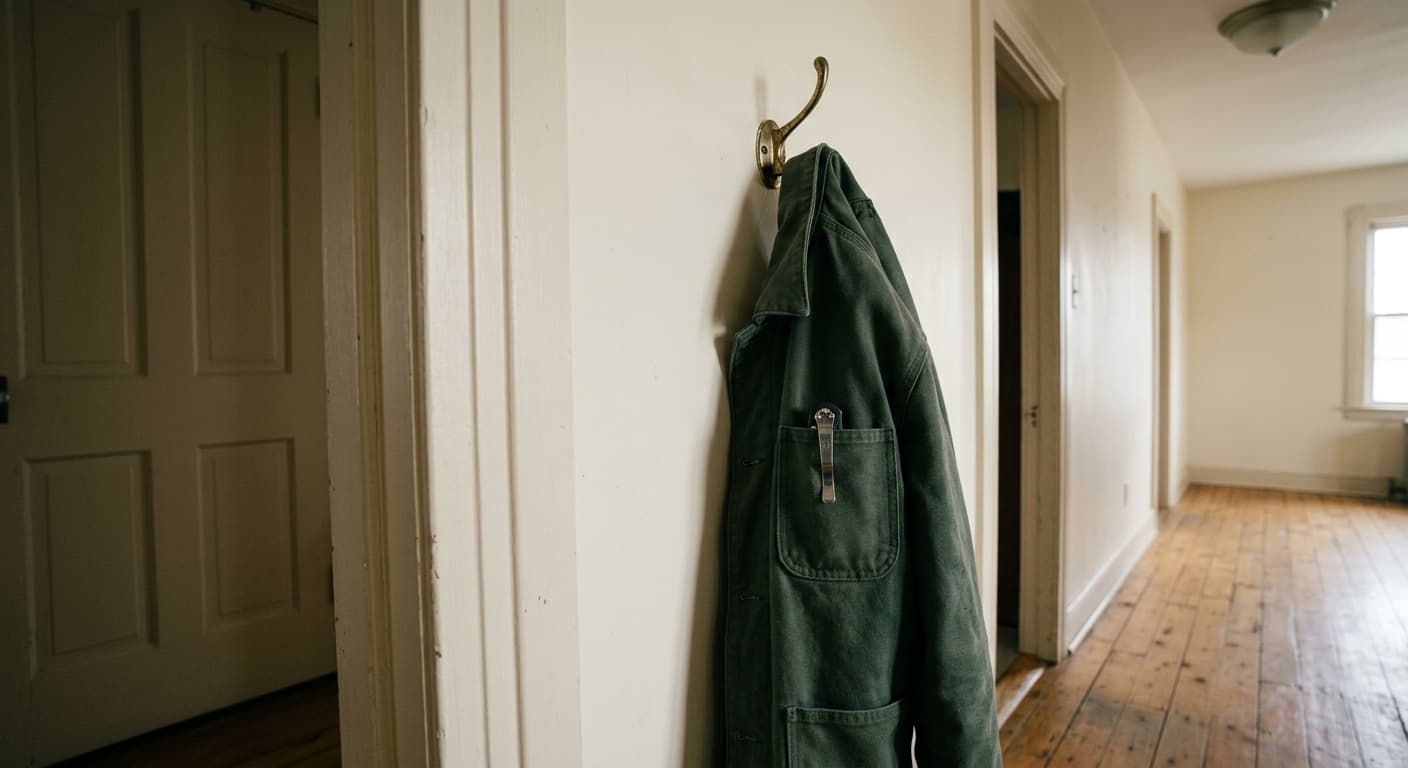
Massachusetts bans carrying certain named knife types, on the person or under control in a vehicle, open or concealed alike, under Mass. Gen. Laws c.269, § 10(b). The offense does not turn on blade length for most of the list; it turns on the type of knife. A 2024 decision of the Supreme Judicial Court, Commonwealth v. Canjura, held the switchblade prohibition in that list unconstitutional and unenforceable, while the statute's text and the rest of its list remain fully enforceable. A separate, lighter offense covers manufacturing or selling most of the same knife types, and separate statutes cover school grounds and airport secure areas.
Jurisdiction scope: This page covers Massachusetts state law only, principally Mass. Gen. Laws c.269, §§ 10(b), 10(j), 12, and 12F. It does not cover Massachusetts's firearms-licensing statutes in chapter 140 in detail, or local municipal ordinances.
Can you carry a knife openly in Massachusetts?
For the specific knife types listed in section 10(b), no. The statute does not separate open carry from concealed carry: it bans carrying a listed knife "on his person, or ... on his person or under his control in a vehicle," language that reaches a knife worn openly on a belt exactly as it reaches one hidden in a pocket. For an ordinary knife that is not on the list at all (see below), Massachusetts has no general open-carry restriction.
What Massachusetts actually bans: a type list, not a blade-length rule
Mass. Gen. Laws c.269, § 10(b) provides, in relevant part:
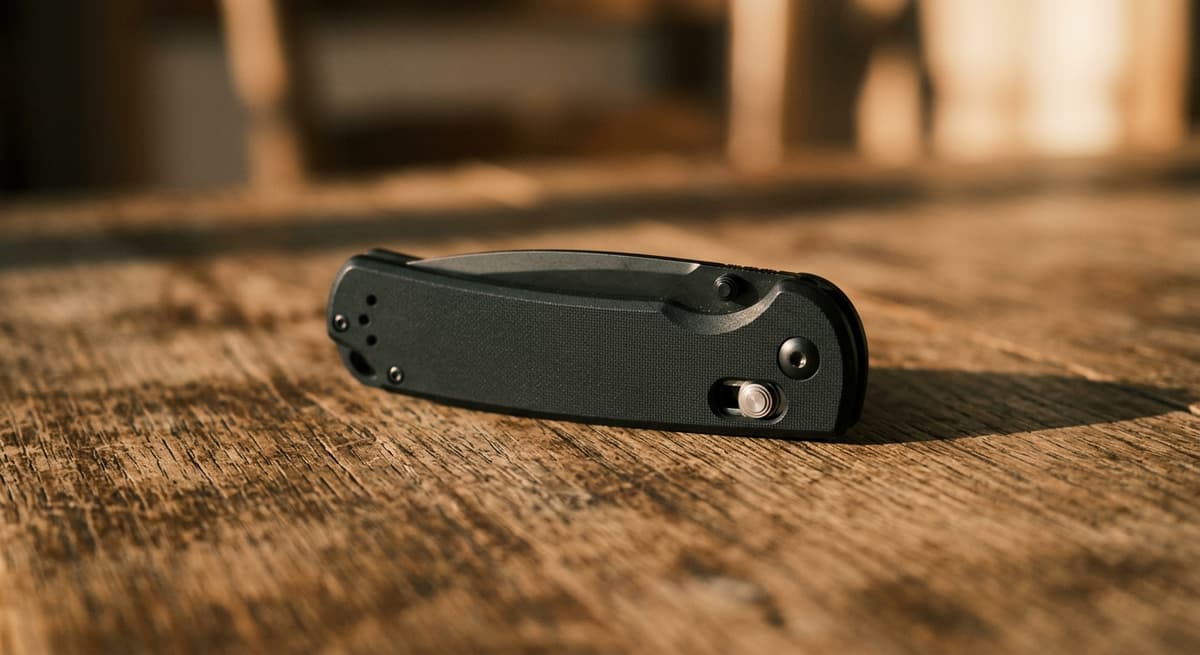
"Whoever, except as provided by law, carries on his person, or carries on his person or under his control in a vehicle, any stiletto, dagger or a device or case which enables a knife with a locking blade to be drawn at a locked position, any ballistic knife, or any knife with a detachable blade capable of being propelled by any mechanism, dirk knife, any knife having a double-edged blade, or a switch knife, or any knife having an automatic spring release device by which the blade is released from the handle, having a blade of over one and one-half inches ... shall be punished by imprisonment for not less than two and one-half years nor more than five years in the state prison, or for not less than six months nor more than two and one-half years in a jail or house of correction, except that, if the court finds that the defendant has not been previously convicted of a felony, he may be punished by a fine of not more than fifty dollars or by imprisonment for not more than two and one-half years in a jail or house of correction."
Reading that list carefully matters, because only one branch of it carries a length threshold. The "over one and one-half inches" qualifier grammatically attaches to "any knife having an automatic spring release device by which the blade is released from the handle" (the switch-knife/automatic-knife clause), not to the stiletto, dagger, locking-blade device, ballistic knife, detachable-blade knife, dirk knife, or double-edged-blade knife categories that precede it. Those earlier categories carry no stated length threshold at all, meaning a stiletto, dagger, dirk knife, or double-edged-blade knife of any size falls within the ban. An ordinary single-edge folding or fixed-blade pocketknife that does not open by an automatic spring-release device, is not double-edged, and does not fit the dirk, dagger, or stiletto description is not on this list, whatever its length, and section 10(b) does not reach it.
The statute opens with "except as provided by law," signaling that other statutes can create exceptions or licensing schemes for otherwise-listed items; this page does not attempt to enumerate every such cross-reference beyond what is discussed here.
Commonwealth v. Canjura: what the SJC actually held
In Commonwealth v. Canjura, SJC-13432 (decided August 27, 2024), the Supreme Judicial Court analyzed the section 10(b) switchblade ban under the Second Amendment framework set by the U.S. Supreme Court in New York State Rifle & Pistol Ass'n v. Bruen. The court found that a switchblade qualifies as an Amendment "arm," that switchblades are in common use today, and that the Commonwealth failed to identify a historical analogue from the founding era or Reconstruction that would justify a categorical carry ban on that basis. The court held the switchblade-carry prohibition in section 10(b) unconstitutional and vacated the defendant's conviction on that charge. Footnote 14 of the decision addresses severability: citing Ramirez v. Commonwealth, 479 Mass. 331, 338 (2018), it explains that a court confronting a constitutional flaw in a statute severs only the problematic portion while leaving the remainder intact, and states that "§ 10(b) is invalidated only with respect to the prohibitions regarding switchblade knives." The footnote establishes that the rest of section 10(b) survives.
The decision did not touch any other item on the section 10(b) list. The dagger, dirk knife, stiletto, ballistic knife, detachable-blade knife, locking-blade device, and double-edged-blade knife prohibitions were not before the court and remain in force exactly as written. Paragraph (b)'s knife list has not been amended or repealed since the decision; the printed code still lists switch knives among the banned items, even though that particular clause is no longer enforceable under Canjura. Two other paragraphs of the same section, (j) and (k)(5), were amended by 2025 Mass. Acts c.14, §§ 51 to 52, effective August 5, 2025; neither amendment touches paragraph (b)'s knife list or the Canjura holding.
Manufacturing or selling banned knives: a separate, lighter offense
Mass. Gen. Laws c.269, § 12 makes it a separate crime to manufacture or sell, or expose for sale, a narrower list of the same items named in section 10(b): a dirk knife, switch knife, any knife with an automatic spring-release device with a blade over one and one-half inches, a locking-blade device, a ballistic knife, or a knife with a mechanically propelled detachable blade, along with items like slung shots, sword canes, and metallic knuckles. Section 12's list omits stiletto, dagger, and double-edged-blade knives entirely, so manufacturing or selling one of those three types is not an offense under this section, even though carrying one is a felony under section 10(b). Conviction is punished by a fine of not less than $50 nor more than $1,000, or by imprisonment for not more than six months, considerably lighter than the carrying offense in section 10(b). The statute carves out an exception allowing slingshots to be manufactured and sold to clubs or associations that use them in sporting events.
Schools, colleges, and universities
A separate provision within section 10, paragraph (j), makes it an offense to carry, without written authorization from the school's board or officer in charge, "a firearm, loaded or unloaded, or other dangerous weapon" in any building or on the grounds of an elementary or secondary school, college, or university, including transport used for that institution's students. "Other dangerous weapon" is not itself defined in this paragraph, but its plain text reaches items beyond firearms, which functionally includes a knife capable of use as a weapon. This offense is punished by a fine of not more than $1,000 or imprisonment of not more than two years, or both, considerably lighter than the section 10(b) felony, and it applies on school property regardless of whether the specific knife carried would independently qualify under section 10(b)'s type list.
Airport secure areas and airplane cabins
Mass. Gen. Laws c.269, § 12F separately bans knowingly possessing and concealing a "cutting device" or "prohibited weapon" in a secure area of an airport or the cabin of an airplane while in Massachusetts. The statute defines "cutting device" broadly as "any knife, cutlery, straight razor, box cutter or other device containing a fixed, folding or retractable blade, which is not included in the list of weapons set forth in paragraph (b) of section 10," meaning it reaches ordinary pocketknives that section 10(b) itself does not cover, specifically because they are being carried into a secured airport or airplane area. A basic violation is punished by up to two and one-half years in a house of correction, up to five years in state prison, or a fine of up to $5,000, or both; carrying with intent to commit a felony, or placing a device with intent to commit a felony, carries substantially higher maximum penalties, up to 20 years if the offense is committed with willful or reckless disregard for human life. The statute exempts law enforcement and military personnel acting in an official capacity, licensed individuals transporting an unloaded weapon in inaccessible checked baggage with the air carrier notified, and a cutting device that is otherwise lawfully possessed and ordinarily used in the holder's employment, trade, or occupation while conducting that work within the secure area.
Does Massachusetts preempt local knife ordinances?
No. Unlike Arizona or Texas, Massachusetts has no statewide statute preempting local knife regulation. None of the 45 sections of Mass. Gen. Laws c.269 (the chapter that includes sections 10(b), 10(j), 12, and 12F) preempts local weapons regulation, and Massachusetts's local-government statutes affirmatively grant the opposite power: Mass. Gen. Laws c.40, § 21(1) authorizes a town to adopt by-laws "for directing and managing their prudential affairs, preserving peace and good order, and maintaining their internal police," and c.43B, § 13 lets a city or town exercise, by ordinance or by-law, any power not inconsistent with the state constitution or with laws the Legislature has enacted. A city or town may therefore impose its own, additional knife restriction; readers in a specific municipality should check local ordinances separately.
Federal law: what it does and does not reach
Federal law does not ban an individual from owning or carrying a switchblade. The Federal Switchblade Act, 15 U.S.C. §§ 1241 to 1245, instead restricts interstate commerce in switchblade knives, barring their manufacture for, or introduction, transport, and sale in, interstate commerce, and, in 15 U.S.C. § 1245, makes it a federal offense to knowingly possess, manufacture, sell, or import a ballistic knife in or affecting interstate commerce or within federal territorial jurisdiction, a category Massachusetts also independently bans under both sections 10(b) and 12. Sections 1242 and 1243 do not apply to certain knives and people, listed as exemptions in 15 U.S.C. § 1244. A 2009 amendment, § 1244(5), exempts any knife with a spring, detent, or other closure-bias mechanism that requires hand, wrist, or arm exertion on the blade itself to overcome the bias and assist opening, the carve-out that keeps modern assisted-opening folding knives legal in interstate commerce. A separate exemption, § 1244(4), covers a person with only one arm possessing or carrying a switchblade with a blade three inches or less. Neither exemption changes what Massachusetts's own statute independently bans or, after Canjura, no longer enforces for switchblades specifically; state law governs carry within Massachusetts on its own terms.
Disclaimer: This article provides general legal information about Massachusetts's knife laws as of September 2026. It is not legal advice. Consult a lawyer licensed in Massachusetts for advice about a specific situation. Because paragraph (b)'s knife list has not been amended since Canjura, and because a city or town may impose its own restrictions under its by-law and home-rule powers, local practice and enforcement can still vary; check current local rules before relying on this page for a specific decision.
For a state-by-state comparison, see knife laws by state. Massachusetts's self-defense statutes are covered separately on the Massachusetts self-defense laws page.
Statutes cited reflect their in-force version as of 2026-09-18. Last updated: 2026-09-18.
Frequently Asked Questions
Are switchblades legal in Massachusetts?
The Supreme Judicial Court held in Commonwealth v. Canjura (SJC-13432, decided August 27, 2024) that the switchblade-carry ban in Mass. Gen. Laws c.269, section 10(b) is unconstitutional under the Second Amendment. A footnote in the decision applies ordinary severability principles to limit the invalidation to the switchblade prohibition, leaving the rest of section 10(b) intact. The printed statute still lists switch knives, because paragraph (b)'s knife list has not been amended since the decision, but that specific clause is not enforceable as binding SJC precedent. Every other item on the section 10(b) list, including dirk knives, daggers, stilettos, ballistic knives, and double-edged-blade knives, was not addressed by Canjura and remains fully banned.
Is there a blade-length limit for knives in Massachusetts?
Only for one category. Section 10(b)'s 'over one and one-half inches' length threshold attaches specifically to knives with an automatic spring-release opening device (switch knives). Stilettos, daggers, dirk knives, double-edged-blade knives, ballistic knives, and the locking-blade device category carry no stated length threshold at all under that statute, so they are banned at any size. An ordinary knife that does not fit any of these categories has no blade-length restriction under section 10(b).
Can you carry a pocketknife openly in Massachusetts?
An ordinary single-edge folding or fixed-blade pocketknife that is not double-edged, does not open by an automatic spring-release device, and does not fit the stiletto, dagger, or dirk description is not on the section 10(b) list, so it is not restricted by that statute regardless of whether it is carried openly or concealed.
Is it a bigger offense to sell a banned knife in Massachusetts than to carry one?
No, it is smaller. Manufacturing or selling the listed knife types under section 12 is punished by a fine of $50 to $1,000 or up to six months in jail. Carrying those same knife types under section 10(b) is punished by two and one-half to five years in state prison, or six months to two and one-half years in a jail or house of correction; if the court finds the defendant has not been previously convicted of a felony, it may instead impose a lighter alternative of a $50 fine or up to two and one-half years in jail or house of correction. Note that section 12's list is narrower than section 10(b)'s: it does not cover stiletto, dagger, or double-edged-blade knives, so selling one of those three types is not an offense under section 12 even though carrying one is a felony.
Can you bring a knife to a Massachusetts school?
Carrying a firearm or other dangerous weapon, a category that reaches knives, on the grounds of an elementary or secondary school, college, or university without written authorization from the institution's board or officer in charge is a separate offense under section 10(j), punished by a fine of up to $1,000 and up to two years' imprisonment, or both.
Does Massachusetts have a statewide knife preemption law?
No. Massachusetts has no statewide statute preempting local knife regulation. Mass. Gen. Laws c.40, section 21(1) and c.43B, section 13 affirmatively grant a city or town by-law and home-rule power, so it may adopt its own, additional knife ordinance.
Are pocketknives banned at Massachusetts airports?
Within a secure area of an airport or an airplane cabin, yes, if knowingly possessed and concealed: section 12F defines 'cutting device' broadly to include any knife with a fixed, folding, or retractable blade that is not already on the section 10(b) list, and bans knowingly concealing one in that setting regardless of any license. A basic violation carries up to 5 years in state prison; violating with intent to commit a felony raises the ceiling to 10 years, and a willful violation or one committed with reckless disregard for human life raises it to 20 years.
Updates
Independently fact-checked against the cited primary sources
Sources and References
- Mass. Gen. Laws c.269, section 10(b) - carrying listed dangerous weapons including specific knife types, felony carry offense, exceptions and penalties(malegislature.gov).gov
- Mass. Gen. Laws c.269, section 10(j) - carrying a firearm or other dangerous weapon on school, college, or university grounds without authorization(malegislature.gov).gov
- Mass. Gen. Laws c.269, section 12 - manufacturing or selling dirk knives, switch knives, ballistic knives, and similar listed weapons(malegislature.gov).gov
- Mass. Gen. Laws c.269, section 12F - cutting devices and prohibited weapons in airport secure areas and airplane cabins(malegislature.gov).gov
- Commonwealth v. Canjura, SJC-13432 (decided August 27, 2024) - switchblade-carry ban in section 10(b) held unconstitutional under the Second Amendment; footnote 14 severs the invalidation to that prohibition only(courtlistener.com)
- Mass. Gen. Laws c.40, section 21(1) - town by-law power to make ordinances for directing and managing prudential affairs, preserving peace and good order, and maintaining internal police(malegislature.gov).gov
- Mass. Gen. Laws c.43B, section 13 - home-rule exercise of any power not inconsistent with the state constitution or with laws the general court has enacted(malegislature.gov).gov
- 15 U.S.C. 1241-1245 - Federal Switchblade Act, interstate commerce and ballistic-knife scope(law.cornell.edu)
- 15 U.S.C. 1244 - exceptions, including the 2009 assisted-opening carve-out and the one-arm exception(law.cornell.edu)