
South Carolina
Are Brass Knuckles Legal in South Carolina? (2026 Law)
Independently fact-checked against primary sources (last audited October 10, 2026). · 8 primary sources cited on this page. How we verify our legal content
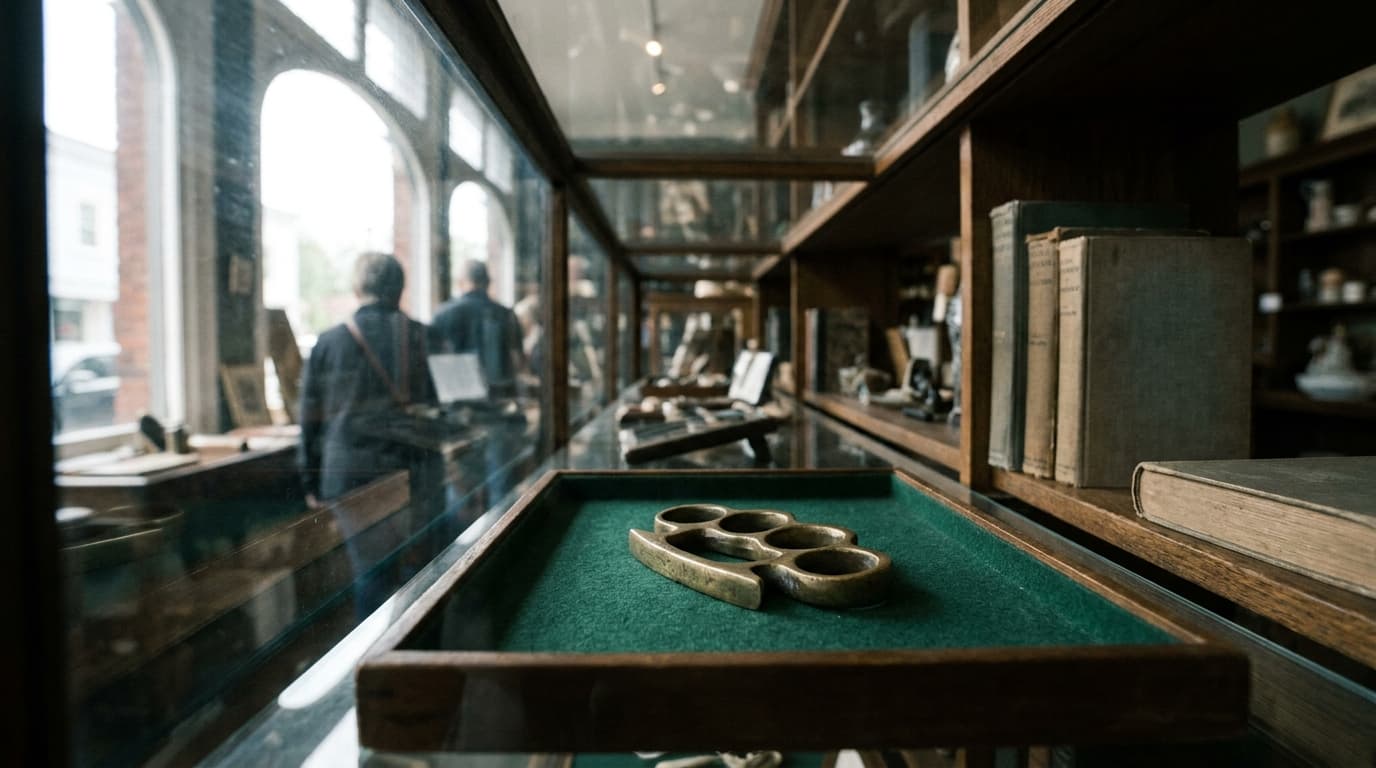
South Carolina does not have a general law against owning or carrying brass knuckles. The state's weapons-offense chapter (S.C. Code Title 16, Chapter 23) contains no provision that bans an adult from owning, buying, selling or carrying metal knuckles, and its former concealed-weapons section, 16-23-460, was repealed in 2024. Knuckles are restricted in specific settings: carrying one on elementary or secondary school property is a felony under 16-23-430, inmates may not have them (24-13-440), and robbery while armed with them is armed robbery (16-11-330).
For other states, see our guide to brass knuckles laws by state.
Information last verified on 2026-10-08. This article has not been reviewed by a licensed lawyer.
Jurisdiction scope: This article covers South Carolina state statutes in Title 16, Chapter 23 (Offenses Involving Weapons), the armed-robbery statutes 16-11-330 and 16-11-370, the resisting-arrest and weapon-enhancement statutes 16-3-610 and 16-3-625, the domestic violence statutes 16-25-10 and 16-25-65, the corrections statutes 24-3-950 and 24-13-440, the firearm preemption statute 23-31-510, and the school-discipline statutes 59-63-210, 59-63-235 and 59-63-370. It does not cover county or city ordinances, South Carolina court decisions, courthouse or government-building security rules, college and university policies, the Department of Corrections' published contraband list, federal law or federal property, or the law of other states.
Is it legal to own or carry brass knuckles in South Carolina?
For an adult outside a school, prison or jail, South Carolina's weapons chapter has no rule against owning, buying, selling or carrying metal knuckles. Title 16, Chapter 23 contains the state's weapons offenses, and its remaining carry offenses are tied either to handguns and other firearms or to specific places.
The chapter's former general section on concealed weapons no longer exists. The official code lists 16-23-460, formerly titled "Carrying concealed weapons; forfeiture of weapons," as "Repealed by 2024 Act No. 111, SECTION 15, eff March 7, 2024." Act No. 111 is the "South Carolina Constitutional Carry/Second Amendment Preservation Act of 2024."
None of this means knuckles are unregulated. They are covered by the school-property felony, they are named in the inmate-weapons felony and the armed-robbery statute, using one can raise a domestic violence or resisting-arrest charge to a felony, and a weapon used in a crime is confiscated on conviction, as explained below.
How South Carolina defines a weapon
South Carolina's weapons chapter does not name knuckles in its general definition. It defines "weapon" broadly:
"(A) Except for the provisions relating to rifles and shotguns in Section 16-23-460, as used in this chapter, "weapon" means firearm (rifle, shotgun, pistol, or similar device that propels a projectile through the energy of an explosive), a blackjack, a metal pipe or pole, or any other type of device, or object which may be used to inflict bodily injury or death." S.C. Code 16-23-405(A)
The lead-in still refers to 16-23-460, and the official code's editor's note records that section's 2024 repeal. Subsection (B) of 16-23-405 provides that a person convicted of a crime "shall have a weapon used in the commission or in furtherance of the crime confiscated," in addition to any penalty.
Other parts of the code name metal knuckles directly. The domestic violence article defines "deadly weapon" as "any pistol, dirk, slingshot, metal knuckles, razor, or other instrument which can be used to inflict deadly force" (16-25-10(1)), a definition that applies within that article. In that article, using a deadly weapon is one of the listed circumstances manifesting extreme indifference to the value of human life. If the offense is committed under such circumstances and great bodily injury results, or the act would reasonably cause a person to fear imminent great bodily injury or death, it is domestic violence of a high and aggravated nature, a felony punishable by up to 20 years (16-25-65(A), (B), (D)(1)). None of these statutes says whether plastic or other non-metal knuckle devices count as "metal knuckles."
Brass knuckles on school property
Section 16-23-430 is the rule most likely to affect an ordinary person:
"(A) It shall be unlawful for any person, except state, county, or municipal law enforcement officers or personnel authorized by school officials, to carry on his person, while on any elementary or secondary school property, a knife, with a blade over two inches long, a blackjack, a metal pipe or pole, firearms, or any other type of weapon, device, or object which may be used to inflict bodily injury or death." S.C. Code 16-23-430(A)
Knuckles are not named. The section's reach to them rests on its catch-all wording, "any other type of weapon, device, or object which may be used to inflict bodily injury or death."
A violation is a felony punishable by a fine of up to $1,000, up to five years in prison, or both, and the item "may be confiscated by the law enforcement division making the arrest" (16-23-430(C)).
The school statute is limited to elementary and secondary school property. A separate statute, 16-23-420, covers colleges, universities and publicly owned buildings, but it applies only to "a firearm of any kind."
Knuckles in a car on school property
South Carolina's vehicle exception appears in the school statute:
"(B) This section does not apply when the weapon remains inside an attended or locked motor vehicle and is secured in a closed glove compartment, closed console, closed trunk, or in a closed container secured by an integral fastener and transported in the luggage compartment of the vehicle." S.C. Code 16-23-430(B)
Both conditions must be met: the vehicle must be attended or locked, and the item must be secured in one of the listed closed spaces. Knuckles lying loose on a seat in a school parking lot do not fit the exception. Away from school property, Chapter 23 has no general carry offense for knuckles and so no separate vehicle rule for them.
Students and school discipline
South Carolina's mandatory one-year expulsion applies to a student "determined to have brought a firearm to a school" (59-63-235). Other discipline is left to district boards, which may expel, suspend or transfer a pupil for "the commission of any crime, gross immorality, gross misbehavior, persistent disobedience, or for violation of written rules and promulgated regulations" (59-63-210(A)).
Knuckles are named in the school-notification statute. When a student is convicted or adjudicated delinquent for an offense in which a weapon was used, the school is notified, and "weapon" there includes "metal knuckles" (59-63-370). That statute governs notification and records, not expulsion.
Minors and brass knuckles
Title 16, Chapter 23 contains no provision on selling metal knuckles to minors or on possession of knuckles by minors. For students, the school-property felony in 16-23-430 and the discipline statutes above are the rules that apply.
Prisons and jails
South Carolina names metal knuckles in its inmate-weapons statute:
"It is unlawful for an inmate of a state correctional facility or of a local detention facility to carry on his person or to have in his possession a dirk, slingshot, metal knuckles, razor, firearm, or an object, homemade or otherwise, that may be used for the infliction of personal injury upon another person, or to wilfully conceal any weapon within any Department of Corrections facility or other place of confinement." S.C. Code 24-13-440
A violation is a felony punishable by up to ten years in prison, and the sentence "must be served consecutively to any other sentence the inmate is serving."
For people outside, 24-3-950 makes it a felony to furnish a prisoner under the Department of Corrections with anything the director has declared contraband and published at each institution. The penalty is a fine of $1,000 to $10,000, one to ten years in prison, or both. The statute does not list items itself; the contraband list is set by the director.
Armed robbery with brass knuckles
Metal knuckles are one of the weapons named in South Carolina's armed-robbery statute:
"(A) A person who commits robbery while armed with a pistol, dirk, slingshot, metal knuckles, razor, or other deadly weapon, or while alleging, either by action or words, he was armed while using a representation of a deadly weapon or any object which a person present during the commission of the robbery reasonably believed to be a deadly weapon, is guilty of a felony and, upon conviction, must be imprisoned for a mandatory minimum term of not less than ten years or more than thirty years, no part of which may be suspended or probation granted." S.C. Code 16-11-330(A)
A person convicted under that subsection is not eligible for parole until serving at least seven years. Attempted armed robbery with metal knuckles is a felony punishable by up to 20 years (16-11-330(B)). Section 16-11-370 repeats the same list for robbery of operators of motor vehicles for hire.
When the use of force is lawful at all is covered in our guide to South Carolina self-defense laws.
Felons and weapon enhancements
South Carolina's felon-in-possession statute covers firearms and ammunition: it is unlawful for a person convicted of a crime punishable by more than one year "to possess a firearm or ammunition within this State" (16-23-500(A)). It does not name knuckles.
The five-year enhancement in 16-23-490 applies when a person possesses a firearm, visibly displays what appears to be a firearm, or "visibly displays a knife" during a violent crime. It does not name knuckles either.
Resisting a lawful arrest with the use or threat of use of a deadly weapon, defined for that offense as "any instrument which can be used to inflict deadly force," is a felony punishable by 2 to 10 years (16-3-625). Section 16-3-610, which adds 3 to 12 months in jail, a fine of at least $200, or both when an assault, attempted murder or manslaughter is committed with a carried or concealed deadly weapon, still refers to the repealed 16-23-460, so how it applies after 2024 is unsettled.
Can South Carolina cities or counties regulate knuckles?
South Carolina's preemption statute bars local governments from regulating "the transfer, ownership, possession, carrying, or transportation of firearms, ammunition, components of firearms, or any combination of these things" (23-31-510(1)). It does not mention other weapons. If you have a question about a local rule, check your county or city code or call the local police department's non-emergency line.
South Carolina's school statute treats knives with blades over two inches in the same sentence as other weapons; see our guide to South Carolina knife laws.
South Carolina penalties at a glance
| Conduct | Statute | Penalty |
|---|---|---|
| Carrying a weapon, device or object that may inflict bodily injury or death on elementary or secondary school property | 16-23-430 | Felony: up to $1,000, up to 5 years, or both |
| Inmate carrying or possessing metal knuckles | 24-13-440 | Felony: up to 10 years, consecutive |
| Furnishing a prisoner with an item the director has declared contraband | 24-3-950 | Felony: $1,000 to $10,000, 1 to 10 years, or both |
| Robbery while armed with metal knuckles | 16-11-330(A) | Felony: 10 to 30 years, mandatory minimum; parole after 7 years at the earliest |
| Attempted robbery while armed with metal knuckles | 16-11-330(B) | Felony: up to 20 years |
| Domestic violence using a deadly weapon where great bodily injury results or the act would reasonably cause fear of imminent great bodily injury or death | 16-25-65 | Felony: up to 20 years |
| Resisting a lawful arrest with the use or threat of use of a deadly weapon | 16-3-625 | Felony: 2 to 10 years |
| Weapon used in the commission or furtherance of a crime | 16-23-405(B) | Confiscated on conviction |
Related pages
- Brass knuckles laws by state
- South Carolina knife laws
- South Carolina self-defense laws
- South Carolina pepper spray and stun gun laws
- North Carolina brass knuckles laws
- Georgia brass knuckles laws
This article provides general legal information about South Carolina state law, not legal advice. Weapons laws change and local rules vary. For advice about a specific situation, contact a lawyer licensed in South Carolina or your local law enforcement agency.
Last updated: 2026-10-08.
Frequently Asked Questions
Are brass knuckles legal in South Carolina?
South Carolina's weapons-offense chapter (Title 16, Chapter 23) contains no general ban on adults owning, buying, selling or carrying metal knuckles. Knuckles are restricted in specific settings: K-12 school property (16-23-430), prisons and jails (24-13-440), and armed robbery (16-11-330).
Can I carry brass knuckles concealed in South Carolina?
The general concealed-weapons section, 16-23-460, was repealed by 2024 Act No. 111, effective March 7, 2024, and Chapter 23 contains no other general carry offense covering knuckles. Carrying them on elementary or secondary school property is a felony under 16-23-430.
Can I keep brass knuckles in my car at a South Carolina school?
Section 16-23-430(B) says the school ban does not apply when the weapon remains inside an attended or locked motor vehicle and is secured in a closed glove compartment, closed console, closed trunk, or a closed container secured by an integral fastener in the luggage compartment.
What is the penalty for brass knuckles at a South Carolina school?
Carrying a weapon, device or object that may be used to inflict bodily injury or death on elementary or secondary school property is a felony punishable by a fine of up to $1,000, up to 5 years in prison, or both, and the item may be confiscated (16-23-430(C)).
Is armed robbery with brass knuckles a serious crime in South Carolina?
Yes. Section 16-11-330(A) names metal knuckles among the weapons that make a robbery armed robbery, a felony with a mandatory minimum of 10 years and a maximum of 30, no suspension or probation, and no parole eligibility until 7 years are served.
Can a felon have brass knuckles in South Carolina?
South Carolina's felon-in-possession statute, 16-23-500, covers a firearm or ammunition, not knuckles. The place-specific rules still apply, and an inmate who possesses metal knuckles commits a felony under 24-13-440.
Updates
Independently fact-checked against the cited primary sources
The Law Behind This Article
This article rests on the statutory provisions below, held in our own legal record and retrieved from the official source. Tap a section to read the operative text.
South Carolina Code of Laws, Title 16: CRIMES AND OFFENSES
§ 16-23-430Carrying weapon on school propertyIn forcecited in 3 of our articles
(A) It shall be unlawful for any person, except state, county, or municipal law enforcement officers or personnel authorized by school officials, to carry on his person, while on any elementary or secondary school property, a knife, with a blade over two inches long, a blackjack, a metal pipe or pole, firearms, or any other type of weapon, device, or object which may be used to inflict bodily injury or death. (B) This section does not apply when the weapon remains inside an attended or locked motor vehicle and is secured in a closed glove compartment, closed console, closed trunk, or in a closed container secured by an integral fastener and transported in the luggage compartment of the vehicle. (C) A person who violates the provisions of this section is guilty of a felony and, upon conviction, must be fined not more than one thousand dollars or imprisoned not more than five years, or both. Any weapon or object used in violation of this section may be confiscated by the law enforcement division making the arrest.
Official text (excerpt) · last checked 2026-09-24 · Read the full text in our law library · Verify at scstatehouse.gov
Cited in 1 court opinions in our collectionLatest citing opinion in our collection: 2014
Opinions citing this section in our collection:
- In the Interest of Kevin R. (Supreme Court of South Carolina 2014, 409 S.C. 297)“…indeterminate period of time not to exceed his twenty- 1 S.C. Code Ann. § 16-23-430(A) (Supp. 2013) ("It shall be unlawful…”
Identified automatically from the court opinions citing this section — not a ranking of which case controls.
Also relied on in: South Carolina Knife Laws (2026): Carry, Schools, Penalty, South Carolina Pepper Spray and Stun Gun Laws (2026)
§ 16-23-405Definition of "weapon"; confiscation and disposition of weapons used in commission or in furtherance of crimeIn forcecited in 3 of our articles
(A) Except for the provisions relating to rifles and shotguns in Section 16-23-460, as used in this chapter, "weapon" means firearm (rifle, shotgun, pistol, or similar device that propels a projectile through the energy of an explosive), a blackjack, a metal pipe or pole, or any other type of device, or object which may be used to inflict bodily injury or death. (B) A person convicted of a crime, in addition to a penalty, shall have a weapon used in the commission or in furtherance of the crime confiscated. Each weapon must be delivered to the chief of police of the municipality or to the sheriff of the county if the violation occurred outside the corporate limits of a municipality. The law enforcement agency that receives the confiscated weapon may use it within the agency, transfer it to another law enforcement agency for the lawful use of that agency, trade it with a retail dealer licensed to sell pistols in this State for a pistol or other equipment approved by the agency, or destroy it. A weapon may not be disposed of until the results of all legal proceedings in which it may be involved are finally determined.
Official text (excerpt) · last checked 2026-07-29 · Read the full text in our law library · Verify at scstatehouse.gov
§ 16-11-330Robbery and attempted robbery while armed with deadly weaponIn force
(A) A person who commits robbery while armed with a pistol, dirk, slingshot, metal knuckles, razor, or other deadly weapon, or while alleging, either by action or words, he was armed while using a representation of a deadly weapon or any object which a person present during the commission of the robbery reasonably believed to be a deadly weapon, is guilty of a felony and, upon conviction, must be imprisoned for a mandatory minimum term of not less than ten years or more than thirty years, no part of which may be suspended or probation granted. A person convicted under this subsection is not eligible for parole until the person has served at least seven years of the sentence. (B) A person who commits attempted robbery while armed with a pistol, dirk, slingshot, metal knuckles, razor, or other deadly weapon, or while alleging, either by action or words, he was armed while using a representation of a deadly weapon or any object which a person present during the commission of the robbery reasonably believed to be a deadly weapon, is guilty of a felony and, upon conviction, must be imprisoned not more than twenty years.
Official text (excerpt) · last checked 2026-07-29 · Read the full text in our law library · Verify at scstatehouse.gov
§ 16-25-10DefinitionsIn forcecited in 2 of our articles
As used in this article, the term: (1) "Deadly weapon" means any pistol, dirk, slingshot, metal knuckles, razor, or other instrument which can be used to inflict deadly force. (2) "Great bodily injury" means bodily injury which causes a substantial risk of death or which causes serious, permanent disfigurement or protracted loss or impairment of the function of a bodily member or organ. For validity of (3), see Editors' Notes below. (3) "Household member" means: (a) a spouse; (b) a former spouse; (c) persons who have a child in common; or (d) a male and female who are cohabiting or formerly have cohabited. (4) "Moderate bodily injury" means physical injury that involves prolonged loss of consciousness or that causes temporary or moderate disfigurement or temporary loss of the function of a bodily member or organ or injury that requires medical treatment when the treatment requires the use of regional or general anesthesia or injury that results in a fracture or dislocation.
Official text (excerpt) · last checked 2026-07-29 · Read the full text in our law library · Verify at scstatehouse.gov
Cited in 14 court opinions in our collectionLatest citing opinion in our collection: 2024
Opinions citing this section in our collection:
- State v. Olandio R. Workman (Court of Appeals of South Carolina 2022)“…or impairment of the function of a bodily member or organ." S.C. Code Ann. § 16-25-10(2) (Supp. 2021). A defendant is guilty…”
- State v. Jones (Supreme Court of South Carolina 2016, 416 S.C. 283)“…e and female who are cohabiting or formerly have cohabited. S.C. Code Ann. § 16-25-10(3) (Supp. 2015). crime against a cohab…”
- Doe v. State (Supreme Court of South Carolina 2017)“…and the second was identified as "assault- intimidation." S.C. Code Ann. § 16-25-10(3) (Supp. 2017) (emphasis added); id. §…”
Identified automatically from the court opinions citing this section — not a ranking of which case controls.
Also relied on in: South Carolina Restraining Order Laws (2026): How to Get a Protective Order
South Carolina Code of Laws, Title 24: CORRECTIONS, JAILS, PROBATIONS, PAROLES AND PARDONS
§ 24-13-440Carrying or concealing weapon; penaltyIn force
It is unlawful for an inmate of a state correctional facility or of a local detention facility to carry on his person or to have in his possession a dirk, slingshot, metal knuckles, razor, firearm, or an object, homemade or otherwise, that may be used for the infliction of personal injury upon another person, or to wilfully conceal any weapon within any Department of Corrections facility or other place of confinement. A person violating this section is guilty of a felony and, upon conviction, must be imprisoned not more than ten years. A sentence imposed under this section must be served consecutively to any other sentence the inmate is serving.
Official text (excerpt) · last checked 2026-07-29 · Read the full text in our law library · Verify at scstatehouse.gov
Search our full record of US law — 2.1 million sections, every state + federal →
Sources and References
- S.C. Code Title 16, Chapter 23: Offenses Involving Weapons (16-23-405, 16-23-420, 16-23-430, 16-23-460 repealed, 16-23-490, 16-23-500)(scstatehouse.gov).gov
- S.C. Code 16-25-10 and 16-25-65: domestic violence definitions and high and aggravated domestic violence(scstatehouse.gov).gov
- S.C. Code 24-13-440: inmate possession of weapons(scstatehouse.gov).gov
- S.C. Code 59-63-210, 59-63-235 and 59-63-370: student expulsion and weapon notification(scstatehouse.gov).gov
- S.C. Code 24-3-950: furnishing contraband to prisoners(scstatehouse.gov).gov
- S.C. Code 16-11-330 and 16-11-370: armed robbery(scstatehouse.gov).gov
- S.C. Code 23-31-510: local regulation of firearms(scstatehouse.gov).gov
- S.C. Code 16-3-610 and 16-3-625: offenses with a carried or concealed deadly weapon; resisting arrest with a deadly weapon(scstatehouse.gov).gov