
South Carolina
South Carolina Knife Laws (2026): Carry, Schools, Penalty
Independently fact-checked against primary sources (last audited September 18, 2026). · 6 primary sources cited on this page. How we verify our legal content

South Carolina has no general statewide carry restriction or blade-length limit on carrying a knife, openly or concealed, for adults off school property. That was already true before the state's former concealed-weapons statute, which was not a knife statute in substance, was repealed in 2024: it had excluded an ordinary knife from its own reach unless carried with intent to commit a crime. That is not the same as no knife law at all: a separate sentencing-enhancement statute adds a mandatory five years to any violent-crime sentence where the offender visibly displayed a knife, and the state's only surviving carry blade-length limit applies to elementary and secondary school property, where carrying a knife with a blade over two inches is a felony.
Jurisdiction scope: This page covers South Carolina state law only, principally S.C. Code §§ 16-23-405, 16-23-420, 16-23-430, 16-23-490, and 23-31-510. It does not cover South Carolina's concealed weapon permit statutes for firearms in detail, since those govern handguns rather than knives.
No general statewide knife-carry restriction, but a violent-crime enhancement
For an adult carrying an ordinary knife off school property, South Carolina currently imposes no general statewide carry restriction or blade-length limit. The state's former concealed-weapons statute, S.C. Code § 16-23-460, titled "Carrying concealed weapons; forfeiture of weapons" before its repeal, was eliminated effective March 7, 2024 by 2024 Act No. 111 (H.3594), § 15, cited by its short title as the South Carolina Constitutional Carry/Second Amendment Preservation Act of 2024. The current official state code text for that section reads simply: "SECTION 16-23-460. Repealed." The code's own history block for the repealed section records its full lineage: "Former Section, titled Carrying concealed weapons; forfeiture of weapons, had the following history: 1962 Code SECTION 16-145; ... 2008 Act No. 337, SECTION 2, eff June 25, 2008. Repealed by 2024 Act No. 111, SECTION 15, eff March 7, 2024." Before its repeal, § 16-23-460 was not a general concealed-knife statute in substance: subsection (C) provided that "the provisions of this section also do not apply to rifles, shotguns, dirks, slingshots, metal knuckles, knives, or razors unless they are used with the intent to commit a crime or in furtherance of a crime," so an ordinary concealed knife fell outside the offense before 2024 the same way it does now. The 2024 repeal removed that intent-conditioned hook, not a general restriction on ordinary knife carry. Chapter 16-23 contains no replacement statute imposing a general concealed-carry restriction or blade-length limit on ordinary knife carry for the public.
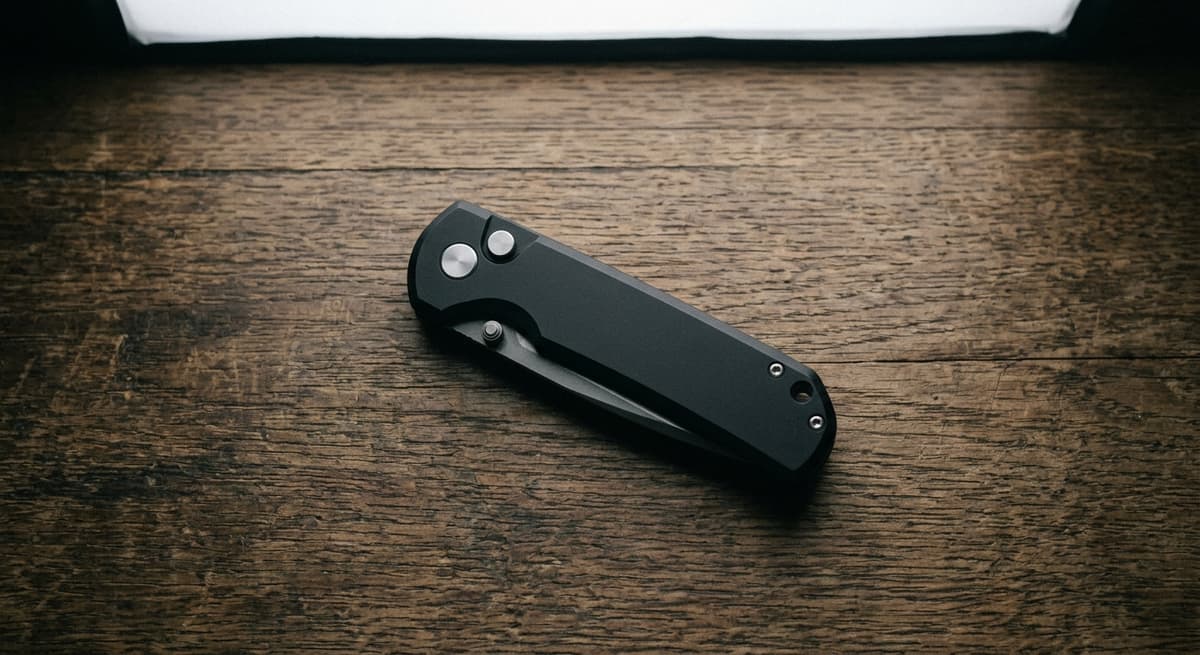
That does not mean South Carolina has no knife-specific statute left. § 16-23-490 adds a mandatory five years' imprisonment, on top of the sentence for the underlying crime, where a person "is in possession of a firearm or visibly displays what appears to be a firearm or visibly displays a knife during the commission of a violent crime" as defined in § 16-1-60, and is convicted of committing or attempting that violent crime; the statute adds that "this five-year sentence does not apply in cases where the death penalty or a life sentence without parole is imposed for the violent crime." The add-on is also not automatic on conviction of the underlying crime alone: under § 16-23-490(E), "the additional punishment may not be imposed unless the indictment alleged as a separate count that the person was in possession of a firearm or visibly displayed what appeared to be a firearm or visibly displays a knife during the commission of the violent crime and conviction was had upon this count in the indictment," and the person must have been indicted and convicted of the underlying violent crime at the same time. This is a sentencing enhancement, not a carry restriction, so it does not contradict the statement above that South Carolina has no general knife-carry statute; it does mean displaying a knife during a violent crime carries its own mandatory, non-suspendable five-year add-on once those conditions are met. § 16-23-490(D) supplies the only definition of "knife" anywhere in the South Carolina Code: "an instrument or tool consisting of a sharp cutting blade whether or not fastened to a handle which is capable of being used to inflict a cut, slash, or wound."
School property: a two-inch limit, a felony, and a broader catch-all
The one statewide carry blade-length rule that survives applies only to elementary and secondary school property. S.C. Code § 16-23-430(A) provides: "It shall be unlawful for any person, except state, county, or municipal law enforcement officers or personnel authorized by school officials, to carry on his person, while on any elementary or secondary school property, a knife, with a blade over two inches long, a blackjack, a metal pipe or pole, firearms, or any other type of weapon, device, or object which may be used to inflict bodily injury or death." Unlike the school-property rules in many other states, this is a felony, not a misdemeanor: § 16-23-430(C) provides that "a person who violates the provisions of this section is guilty of a felony and, upon conviction, must be fined not more than one thousand dollars or imprisoned not more than five years, or both," with the weapon subject to confiscation by the arresting law enforcement agency. The two-inch clause is not the end of the sentence, and it is not the end of the analysis: Chapter 16-23's definitions section, § 16-23-405(A), defines "weapon" for the chapter as including "firearm ..., a blackjack, a metal pipe or pole, or any other type of device, or object which may be used to inflict bodily injury or death." A knife with a blade of two inches or less is still an "object which may be used to inflict bodily injury or death" on the face of that catch-all, so treating a shorter blade as automatically outside § 16-23-430 reads only the named clause and not the "or any other type of weapon" language that follows it.

§ 16-23-430(B) exempts a weapon that "remains inside an attended or locked motor vehicle and is secured in a closed glove compartment, closed console, closed trunk, or in a closed container secured by an integral fastener and transported in the luggage compartment of the vehicle." This exception protects a person driving onto or near school property with a knife properly stored in their vehicle; it does not extend to a knife carried on the person while on school grounds. Before 2024, this exception applied only to a person authorized to carry a concealed weapon under Article 4, Chapter 31, Title 23. § 16-23-430's own Effect of Amendment note shows what changed: "2024 Act No. 111, SECTION 7, in (B), deleted 'to a person who is authorized to carry a concealed weapon pursuant to Article 4, Chapter 31, Title 23' following 'does not apply'." Deleting that limiting clause did not remove an exemption; it removed the condition that had confined the exemption to permit holders, so the vehicle exception now covers any person with a knife properly secured in the vehicle, not only a concealed-weapon permit holder. § 6 of the same act made the identical edit to the parallel vehicle exception in § 16-23-420.
A separate statute, § 16-23-420(A), covers what § 16-23-430 does not: "It is unlawful for a person to possess a firearm of any kind on any premises or property owned, operated, or controlled by a private or public school, college, university, technical college, other post-secondary institution, or in any publicly owned building, without the express permission of the authorities in charge of the premises or property." That statute is firearm-only and does not name a knife. Because § 16-23-430's two-inch rule reaches only elementary and secondary school property, South Carolina has no statewide knife-specific restriction on a college or university campus or in a publicly owned building.
No statewide knife preemption
South Carolina's local-regulation preemption statute, § 23-31-510, is limited by its own terms to firearms. It provides that "no governing body of any county, municipality, or other political subdivision in the State may enact or promulgate any regulation or ordinance that regulates or attempts to regulate ... the transfer, ownership, possession, carrying, or transportation of firearms, ammunition, components of firearms, or any combination of these things." A knife is not named anywhere in this statute's text, so it does not preempt a South Carolina city or county ordinance that separately regulates knives.
Federal law: what it does and does not reach
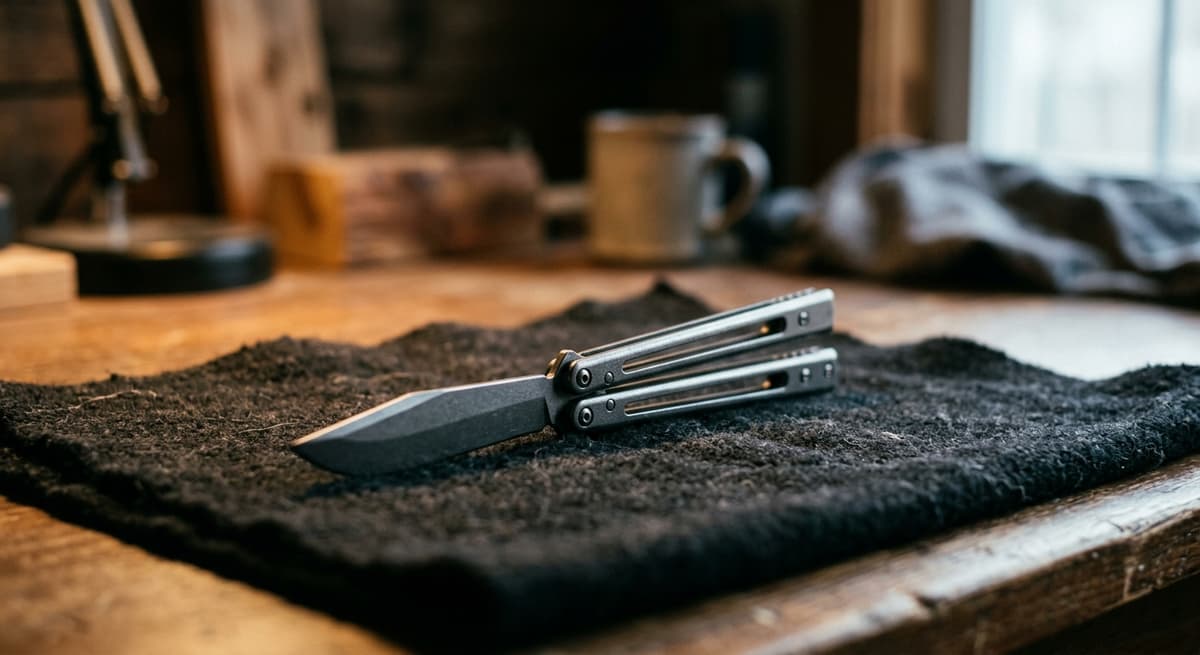
Federal law does not ban an individual from owning or carrying a switchblade. The Federal Switchblade Act, 15 U.S.C. §§ 1241 to 1245, restricts interstate commerce in switchblade knives, barring their manufacture for, or introduction, transport, and sale in, interstate commerce, and, in 15 U.S.C. § 1245, makes it a federal offense to knowingly possess, manufacture, sell, or import a ballistic knife in or affecting interstate commerce or within federal territorial jurisdiction. The two switchblade offense sections, §§ 1242 and 1243, do not apply to certain knives and people, listed as exemptions in 15 U.S.C. § 1244. A 2009 amendment, § 1244(5), exempts any knife with a spring, detent, or other closure-bias mechanism that requires hand, wrist, or arm exertion on the blade itself to overcome the bias and assist opening, the carve-out that keeps modern assisted-opening folding knives legal in interstate commerce. A separate exemption, § 1244(4), covers a person with only one arm possessing or carrying a switchblade with a blade three inches or less.
Disclaimer: This article provides general legal information about South Carolina's knife laws as of September 2026. It is not legal advice. Consult a lawyer licensed in South Carolina for advice about a specific situation.
For a state-by-state comparison, see knife laws by state. South Carolina's self-defense statutes are covered separately on the South Carolina self-defense laws page.
Statutes cited reflect their in-force version as of 2026-09-18. Last updated: 2026-09-18.
Frequently Asked Questions
Is it legal to carry a knife in South Carolina?
For an adult off school property, generally yes. South Carolina's former concealed-weapons statute, S.C. Code 16-23-460, was repealed effective March 7, 2024, and Chapter 16-23 contains no statute imposing a general blade-length or concealed-carry restriction on ordinary knife carry for the public. A separate statute, 16-23-490, still adds a mandatory five years to a sentence where a knife is visibly displayed during a violent crime, and it carries the Code's only definition of 'knife.'
What is the blade-length limit for a knife in South Carolina?
There is no statewide blade-length limit for general public carry off school property. The only surviving statutory limit is on elementary and secondary school property, where S.C. Code 16-23-430 names a knife with a blade over two inches, a felony punishable by up to five years in prison; the same statute's broader catch-all for 'any other type of weapon, device, or object which may be used to inflict bodily injury or death' can still reach a shorter blade there.
Can you carry a knife on school property in South Carolina?
S.C. Code 16-23-430 makes it a felony for anyone other than law enforcement or school-authorized personnel to carry a knife with a blade over two inches on elementary or secondary school property, with an exception for a weapon properly secured in a vehicle. A knife with a blade of two inches or less is not the item specifically named, but the chapter's own definition of 'weapon' includes any object that may be used to inflict bodily injury or death, so a shorter blade is not automatically exempt. This two-inch statute does not reach a college, university, or publicly owned building; a separate statute restricts only firearms there.
Does South Carolina preempt local knife ordinances?
No. South Carolina's local-regulation preemption statute, 23-31-510, is limited to firearms, ammunition, and firearm components and does not mention knives, so a city or county ordinance regulating knives is not preempted by this statute.
Does South Carolina add extra punishment for using a knife in a crime?
Yes. S.C. Code 16-23-490 adds five years' imprisonment, on top of the sentence for the underlying offense, where a person visibly displays a knife or firearm during a violent crime as defined in 16-1-60 and is convicted of committing or attempting it, provided the State charged it as a separate count in the indictment and does not apply if the death penalty or life without parole is imposed for the violent crime. Where it applies, the five years must be served, cannot be suspended, and generally bars parole or work release during that period.
Updates
Independently fact-checked against the cited primary sources
Sources and References
- S.C. Code 16-23-460 - Carrying Concealed Weapons (repealed 2024) (chapter 16-23 text)(scstatehouse.gov).gov
- S.C. Code 16-23-405 - Definitions (chapter 16-23 text)(scstatehouse.gov).gov
- S.C. Code 16-23-420 - Possession of Firearms on Certain Campuses and Premises (chapter 16-23 text)(scstatehouse.gov).gov
- S.C. Code 16-23-430 - Carrying Weapon on School Property (chapter 16-23 text)(scstatehouse.gov).gov
- S.C. Code 16-23-490 - Additional Punishment for Possession of Firearm or Knife During Violent Crime (chapter 16-23 text)(scstatehouse.gov).gov
- S.C. Code 23-31-510 - Firearm or Ammunition, Local Regulation Prohibited (chapter 23-31 text)(scstatehouse.gov).gov
- 15 U.S.C. 1241-1245 - Federal Switchblade Act, interstate commerce and ballistic-knife scope(law.cornell.edu)
- 15 U.S.C. 1244 - exceptions, including the 2009 assisted-opening carve-out and the one-arm exception(law.cornell.edu)