
New Mexico
Are Brass Knuckles Legal in New Mexico? (2026 Law)
Independently fact-checked against primary sources (last audited October 10, 2026). · 3 primary sources cited on this page. How we verify our legal content
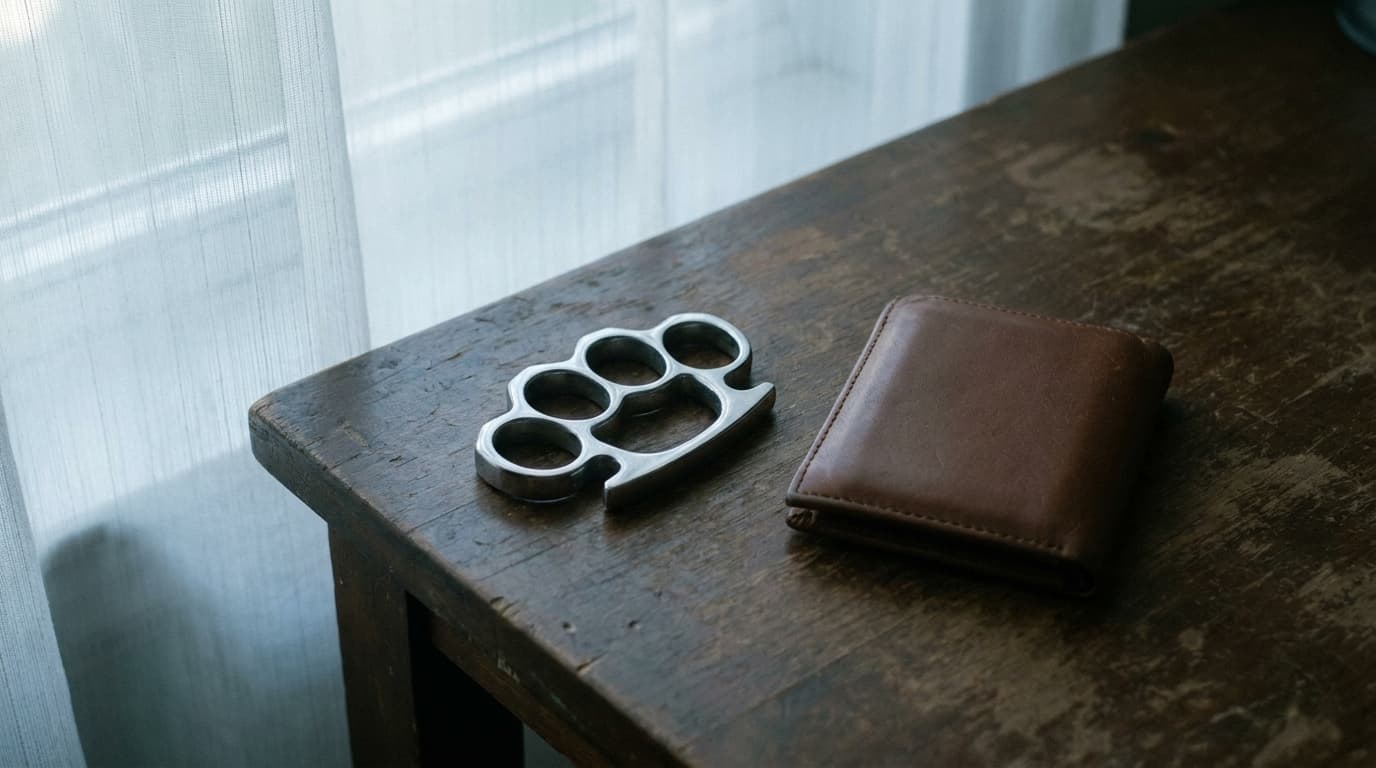
New Mexico does not have a statute that bans owning, buying or selling brass knuckles, but it does treat them as a deadly weapon. The Criminal Code's definition of "deadly weapon" names brass knuckles (NMSA 1978, section 30-1-12(B)), and section 30-7-2 makes it a petty misdemeanor to carry any concealed deadly weapon outside a short list of exceptions, such as your own home or a private vehicle for lawful protection.
Carrying knuckles onto school premises, openly or concealed, is a fourth degree felony under section 30-7-2.1, and bringing them into a jail or prison is a felony too. For other states, see our guide to brass knuckles laws by state.
Information last verified on 2026-10-09. This article has not been reviewed by a licensed lawyer.
Jurisdiction scope: This article covers New Mexico state statutes: the Criminal Code definitions in NMSA 1978, sections 30-1-12 and 30-7-1; the assault and battery sections 30-3-2 and 30-3-5; the weapons offenses in sections 30-7-2, 30-7-2.1, 30-7-4, 30-7-13, 30-7-15 and 30-7-16; the jail and prison sections 30-22-14 and 30-22-16; the school discipline section 22-5-4.7; and the sentencing sections 31-18-15, 31-18-16 and 31-19-1. It does not cover city or county ordinances, court rules for courthouses, tribal law, federal law or federal property, or the law of other states.
Are brass knuckles legal in New Mexico?
New Mexico's statutes mention brass knuckles in one place: the Criminal Code definition of a deadly weapon. Section 30-1-12 applies across the whole Criminal Code and reads, in part:
"B. 'deadly weapon' means any firearm, whether loaded or unloaded; or any weapon which is capable of producing death or great bodily harm, including but not restricted to any types of daggers, brass knuckles, switchblade knives, bowie knives, poniards, butcher knives, dirk knives and all such weapons with which dangerous cuts can be given, or with which dangerous thrusts can be inflicted, including swordcanes, and any kind of sharp pointed canes, also slingshots, slung shots, bludgeons; or any other weapons with which dangerous wounds can be inflicted;" NMSA 1978, section 30-1-12(B)
The weapons offenses in Article 7 of Chapter 30 that are relevant here regulate how and where a deadly weapon is carried. None of them makes it a crime for an adult to own, buy, sell or carry brass knuckles in plain view. Section 30-7-8, which bans switchblades, does not cover knuckles. Section 30-7-4(A)(3) separately makes it a petty misdemeanor to endanger the safety of another by handling or using a firearm or other deadly weapon in a negligent manner.
So the practical rules for knuckles in New Mexico are about concealment and place:
| Situation | New Mexico rule | Statute |
|---|---|---|
| Owning or keeping knuckles at home | No statute prohibits it | 30-1-12, Chapter 30, Article 7 |
| Carrying knuckles concealed in public | Petty misdemeanor unless an exception applies | 30-7-2 |
| Concealed in a private vehicle | Exception applies only "for lawful protection" of a person or property | 30-7-2(A)(2) |
| On school premises, open or concealed | Fourth degree felony, with limited exceptions | 30-7-2.1 |
| Boarding a bus with knuckles readily accessible | Misdemeanor without the company's prior approval | 30-7-13 |
| Bringing knuckles into a jail | Fourth degree felony | 30-22-14(B) |
| Bringing knuckles onto prison grounds | Third degree felony | 30-22-14 |
| An inmate possessing knuckles | Second degree felony | 30-22-16 |
Carrying brass knuckles concealed
Concealed carry is where most New Mexico knuckles cases would start. Section 30-7-2 reads:
"A. Unlawful carrying of a deadly weapon consists of carrying a concealed loaded firearm or any other type of deadly weapon anywhere, except in the following cases: (1) in the person's residence or on real property belonging to him as owner, lessee, tenant or licensee; (2) in a private automobile or other private means of conveyance, for lawful protection of the person's or another's person or property; (3) by a peace officer in accordance with the policies of his law enforcement agency who is certified pursuant to the Law Enforcement Training Act ...; (4) by a peace officer ... employed on a temporary basis ...; or (5) by a person in possession of a valid concealed handgun license issued to him by the department of public safety pursuant to the provisions of the Concealed Handgun Carry Act ..." NMSA 1978, section 30-7-2(A)
Because section 30-1-12(B) lists brass knuckles as a deadly weapon, knuckles in a pocket or bag in public fall under "any other type of deadly weapon." The statute's prohibition covers concealed carry; its text does not prohibit carrying a non-firearm deadly weapon openly.
"Carrying" is broader than having the item on your body. Section 30-7-1 defines carrying a deadly weapon as "being armed with a deadly weapon by having it on the person, or in close proximity thereto, so that the weapon is readily accessible for use." Knuckles within easy reach, such as in a bag at your side, can count.
The penalty is set by the class. Section 30-7-2(C) makes unlawful carrying of a deadly weapon a petty misdemeanor, and under section 31-19-1(B) a petty misdemeanor is punishable by up to six months in the county jail, a fine of up to $500, or both.
Keeping brass knuckles in a car
Section 30-7-2(A)(2) excepts concealed carry "in a private automobile or other private means of conveyance, for lawful protection of the person's or another's person or property." The exception has two parts: the vehicle must be a private one, and the weapon must be there for lawful protection of a person or property. A bus or other public conveyance is outside the exception's words.
Buses have their own rule. Under section 30-7-13(A), it is a misdemeanor to board or attempt to board a bus "without prior approval from the company ... while in possession of a firearm or other deadly weapon upon his person or effects and readily accessible to him while on the bus." Section 30-7-15 provides for transporting such weapons in a compartment that passengers cannot reach.
Brass knuckles at New Mexico schools
The school statute is the most serious rule an ordinary person is likely to meet, because it does not depend on concealment:
"A. Unlawful carrying of a deadly weapon on school premises consists of carrying a deadly weapon on school premises except by: (1) a peace officer; (2) school security personnel; (3) a student, instructor or other school-authorized personnel engaged in army, navy, marine corps or air force reserve officer training corps programs or state-authorized hunter safety training instruction; (4) a person conducting or participating in a school-approved program, class or other activity involving the carrying of a deadly weapon; or (5) a person older than nineteen years of age on school premises in a private automobile or other private means of conveyance, for lawful protection of the person's or another's person or property." NMSA 1978, section 30-7-2.1(A)
School premises under the section are the buildings, grounds, playing fields, parking areas and school buses of a public elementary, secondary, junior high or high school where school activities operate under the supervision of a local school board, plus other public buildings or grounds where public school-related and sanctioned activities are being performed (section 30-7-2.1(B)). Unlawful carrying of a deadly weapon on school premises is a fourth degree felony (section 30-7-2.1(C)). Under section 31-18-15, a fourth degree felony carries a basic sentence of 18 months' imprisonment and a fine of up to $5,000.
Note the age limit in the vehicle exception: it covers only a person older than nineteen, and only in a private vehicle for lawful protection.
New Mexico's school expulsion statute, section 22-5-4.7, is a separate rule. For that section, "weapon" means firearms and certain destructive devices only, so it is not the statute that applies to knuckles. Section 30-7-2.1 is.
Minors and brass knuckles
New Mexico's Criminal Code names brass knuckles only in the deadly-weapon definition, so it contains no knuckles-specific rule on selling them to minors or on minors possessing them. The general rules still apply to a young person: concealed carry under section 30-7-2 and the school-premises felony in section 30-7-2.1, whose private-vehicle exception is limited to a person older than nineteen.
Jails, prisons and people in custody
New Mexico treats a deadly weapon, as defined in section 30-1-12, as contraband in jails and prisons. Section 30-22-14 makes bringing contraband onto the grounds of a prison a third degree felony, and section 30-22-14(B) provides:

"B. Bringing contraband into a jail consists of knowingly and voluntarily carrying contraband into the confines of a county or municipal jail. Whoever commits bringing contraband into a jail is guilty of a fourth degree felony." NMSA 1978, section 30-22-14(B)
The contraband definition in section 30-22-14(C)(1) excludes "a weapon carried by a peace officer in the lawful discharge of duties."
An inmate who has knuckles faces a heavier charge. Section 30-22-16 makes it a second degree felony for "any inmate of a penal institution, reformatory, jail or prison farm or ranch" to possess "any deadly weapon or explosive substance." Under section 31-18-15, the basic sentence is three years' imprisonment for a third degree felony and nine years for a second degree felony, and the fine is up to $5,000 for a third degree felony and up to $10,000 for a second degree felony.
Plastic knuckles and knuckle knives
Section 30-1-12(B) names "brass knuckles" only. Knuckles of plastic, polymer or another metal are not listed by name, so whether a given item is a deadly weapon depends on the general clause of the definition: "any weapon which is capable of producing death or great bodily harm" or "any other weapons with which dangerous wounds can be inflicted." The same definition lists daggers, switchblade knives and "all such weapons with which dangerous cuts can be given," so a knuckle knife is measured against that language too, and section 30-7-8 separately bans switchblades. For knife rules, see our guide to New Mexico knife laws.
Felons and sentence enhancements
New Mexico's prohibited-person statute does not reach knuckles. Section 30-7-16(A) makes it unlawful for a felon, a person subject to certain orders of protection, or a person convicted of listed crimes to "receive, transport or possess a firearm or destructive device." Brass knuckles are neither.
The general sentence increases in section 31-18-16 are also firearm-based. They apply "when a separate finding of fact by the court or jury shows that a firearm was used in relation to a drug transaction or during the commission of aggravated burglary ... or a serious violent offense." Using knuckles against someone is charged more heavily because they are a listed deadly weapon: unlawfully assaulting or striking at another with a deadly weapon is aggravated assault, a fourth degree felony (section 30-3-2(A)), and an unlawful touching or application of force to another with intent to injure, done with a deadly weapon, is aggravated battery, a third degree felony (section 30-3-5(A), (C)). When force is lawful at all is covered in our guide to New Mexico self-defense laws.
Related pages
- Brass knuckles laws by state
- New Mexico knife laws
- New Mexico self-defense laws
- New Mexico pepper spray and stun gun laws
- Arizona brass knuckles laws
This article provides general legal information about New Mexico state law, not legal advice. Weapons laws change, and city, county and courthouse rules vary. For advice about a specific situation, contact a lawyer licensed in New Mexico or your local law enforcement agency.
Last updated: 2026-10-09.
Frequently Asked Questions
Are brass knuckles legal in New Mexico?
No New Mexico statute bans adults from owning, buying, selling or openly carrying brass knuckles. They are a listed deadly weapon under NMSA 1978, section 30-1-12(B), so carrying them concealed is a petty misdemeanor under section 30-7-2 unless an exception applies, and carrying them on school premises is a fourth degree felony under section 30-7-2.1.
Can I carry brass knuckles in my pocket in New Mexico?
Carrying a concealed deadly weapon, which includes brass knuckles, is unlawful carrying of a deadly weapon under section 30-7-2 unless you are in your residence or on your own real property, or another listed exception applies. It is a petty misdemeanor, punishable by up to 6 months in the county jail, a fine of up to $500, or both under section 31-19-1(B).
Can I keep brass knuckles in my car in New Mexico?
Section 30-7-2(A)(2) allows a concealed deadly weapon in a private automobile or other private means of conveyance for lawful protection of a person or property. On school premises, the private-vehicle exception in section 30-7-2.1 applies only to a person older than nineteen.
What happens if you bring brass knuckles to a school in New Mexico?
Carrying a deadly weapon on school premises is a fourth degree felony under section 30-7-2.1, whether or not the weapon is concealed. Section 31-18-15 sets a basic sentence of 18 months' imprisonment and a fine of up to $5,000 for a fourth degree felony.
Can a felon own brass knuckles in New Mexico?
New Mexico's prohibited-person statute, section 30-7-16, bars felons and certain other people from possessing a firearm or destructive device; it does not name knuckles. The concealed-carry, school and jail rules apply to everyone.
Updates
Independently fact-checked against the cited primary sources
The Law Behind This Article
This article rests on the statutory provisions below, held in our own legal record and retrieved from the official source. Tap a section to read the operative text.
New Mexico Statutes Annotated 1978, Chapter 30
§ 30-7-2Unlawful carrying of a deadly weaponIn forcecited in 4 of our articles
A. Unlawful carrying of a deadly weapon consists of carrying a concealed loaded firearm or any other type of deadly weapon anywhere, except in the following cases: (1) in the person's residence or on real property belonging to him as owner, lessee, tenant or licensee; (2) in a private automobile or other private means of conveyance, for lawful protection of the person's or another's person or property; (3) by a peace officer in accordance with the policies of his law enforcement agency who is certified pursuant to the Law Enforcement Training Act [Chapter 29, Article 7 NMSA 1978]; (4) by a peace officer in accordance with the policies of his law enforcement agency who is employed on a temporary basis by that agency and who has successfully completed a course of firearms instruction prescribed by the New Mexico law enforcement academy or provided by a certified firearms instructor who is employed on a permanent basis by a law enforcement agency; or (5) by a person in possession of a valid concealed handgun license issued to him by the department of public safety pursuant to the provisions of the Concealed Handgun Carry Act [Chapter 29, Article 19 NMSA 1978]. B.
Official text (excerpt) · last checked 2026-07-30 · Read the full text in our law library · Verify at nmonesource.com
Cited in 20 court opinions in our collectionLatest citing opinion in our collection: 2021
Opinions citing this section in our collection:
- State v. Riddall (New Mexico Court of Appeals 1991, 112 N.M. 78)“…efendant of unlawfully carrying a deadly knife, pursuant to NMSA 1978, Section 30-7-2 (Repl.Pamp. 1984). On the court's own m…”
- State v. Garcia (New Mexico Supreme Court 2005, 138 N.M. 1)“…e or other private means of conveyance.’ ” Id. (quoting NMSA 1978, § 30-7-2(A)(2) (2001)); see also N.M. Const, art…”
- State v. Traeger (New Mexico Supreme Court 2001, 130 N.M. 618)“…ample, by altering Section 30-1-12(B), we would be altering NMSA 1978, § 30-7-2 (1985), that prohibits the carrying of…”
Identified automatically from the court opinions citing this section — not a ranking of which case controls.
Also relied on in: New Mexico Knife Laws (2026): Switchblade Ban and Concealed Carry, Pepper Spray and Stun Gun Laws by State (2026), New Mexico Pepper Spray and Stun Gun Laws (2026)
§ 30-1-12DefinitionsIn forcecited in 6 of our articles
As used in the Criminal Code: A. "great bodily harm" means an injury to the person which creates a high probability of death; or which causes serious disfigurement; or which results in permanent or protracted loss or impairment of the function of any member or organ of the body; B. "deadly weapon" means any firearm, whether loaded or unloaded; or any weapon which is capable of producing death or great bodily harm, including but not restricted to any types of daggers, brass knuckles, switchblade knives, bowie knives, poniards, butcher knives, dirk knives and all such weapons with which dangerous cuts can be given, or with which dangerous thrusts can be inflicted, including swordcanes, and any kind of sharp pointed canes, also slingshots, slung shots, bludgeons; or any other weapons with which dangerous wounds can be inflicted; C. "peace officer" means any public official or public officer vested by law with a duty to maintain public order or to make arrests for crime, whether that duty extends to all crimes or is limited to specific crimes; D.
Official text (excerpt) · last checked 2026-07-30 · Read the full text in our law library · Verify at nmonesource.com
Cited in 79 court opinions in our collectionLatest citing opinion in our collection: 2025
Opinions citing this section in our collection:
- State v. Ogden (New Mexico Supreme Court 1994, 118 N.M. 234)“…extends to all crimes or is limited to specific crimes[.]” NMSA 1978, § 30-1-12(0 (Repl.Pamp.1984). It is noteworthy th…”
- State v. NICK R. (New Mexico Supreme Court 2009, 147 N.M. 182)“…tknife or define the term “deadly weapon” in any other way, NMSA 1978, Section 30-1-12(B) (1963) provides that, “[a]s used in…”
- State v. Maestas (New Mexico Supreme Court 2006, 140 N.M. 836)“…influenced, and contains no exceptions for judges. See also NMSA 1978, § 30-1-12(1) to (J) (defining public officers and…”
Identified automatically from the court opinions citing this section — not a ranking of which case controls.
Also relied on in: New Mexico Hit and Run Laws: Statutes, Penalties, and Legal Duties
§ 30-7-2.1Unlawful carrying of a deadly weapon on school premisesIn forcecited in 3 of our articles
A. Unlawful carrying of a deadly weapon on school premises consists of carrying a deadly weapon on school premises except by: (1) a peace officer; (2) school security personnel; (3) a student, instructor or other school-authorized personnel engaged in army, navy, marine corps or air force reserve officer training corps programs or state- authorized hunter safety training instruction; (4) a person conducting or participating in a school-approved program, class or other activity involving the carrying of a deadly weapon; or (5) a person older than nineteen years of age on school premises in a private automobile or other private means of conveyance, for lawful protection of the person's or another's person or property. B.
Official text (excerpt) · last checked 2026-07-30 · Read the full text in our law library · Verify at nmonesource.com
Cited in 20 court opinions in our collectionLatest citing opinion in our collection: 2025
Opinions citing this section in our collection:
- State v. ELI L. (New Mexico Court of Appeals 1997, 124 N.M. 205)“…rying of a Deadly Weapon on School Premises in violation of NMSA 1978, Section 30-7-2.1 (Repl.Pamp.1994) and adjudging the Chil…”
- State v. NICK R. (New Mexico Supreme Court 2009, 147 N.M. 182)“…sessing a deadly weapon on school premises, in violation of NMSA 1978, Section 30-7-2.1 (1994). The issue before us is whether…”
- State v. Rowell (New Mexico Supreme Court 2008, 144 N.M. 371)“…ssession of a deadly weapon on school premises, contrary to NMSA 1978, Section 30-7-2.1 (1994). See State v. Rowell, 2007-NMC…”
Identified automatically from the court opinions citing this section — not a ranking of which case controls.
Search our full record of US law — 2.1 million sections, every state + federal →
Sources and References
- NMSA 1978 Chapter 30, Criminal Offenses (sections 30-1-12, 30-3-2, 30-3-5, 30-7-1, 30-7-2, 30-7-2.1, 30-7-4, 30-7-8, 30-7-13, 30-7-15, 30-7-16, 30-22-14, 30-22-16)(nmonesource.com).gov
- NMSA 1978 Chapter 31, Criminal Procedure (sections 31-18-15, 31-18-16, 31-19-1)(nmonesource.com).gov
- NMSA 1978 Chapter 22, Public Schools (section 22-5-4.7)(nmonesource.com).gov