
New Mexico
New Mexico Knife Laws (2026): Switchblade Ban and Concealed Carry
Independently fact-checked against primary sources (last audited September 18, 2026). How we verify our legal content
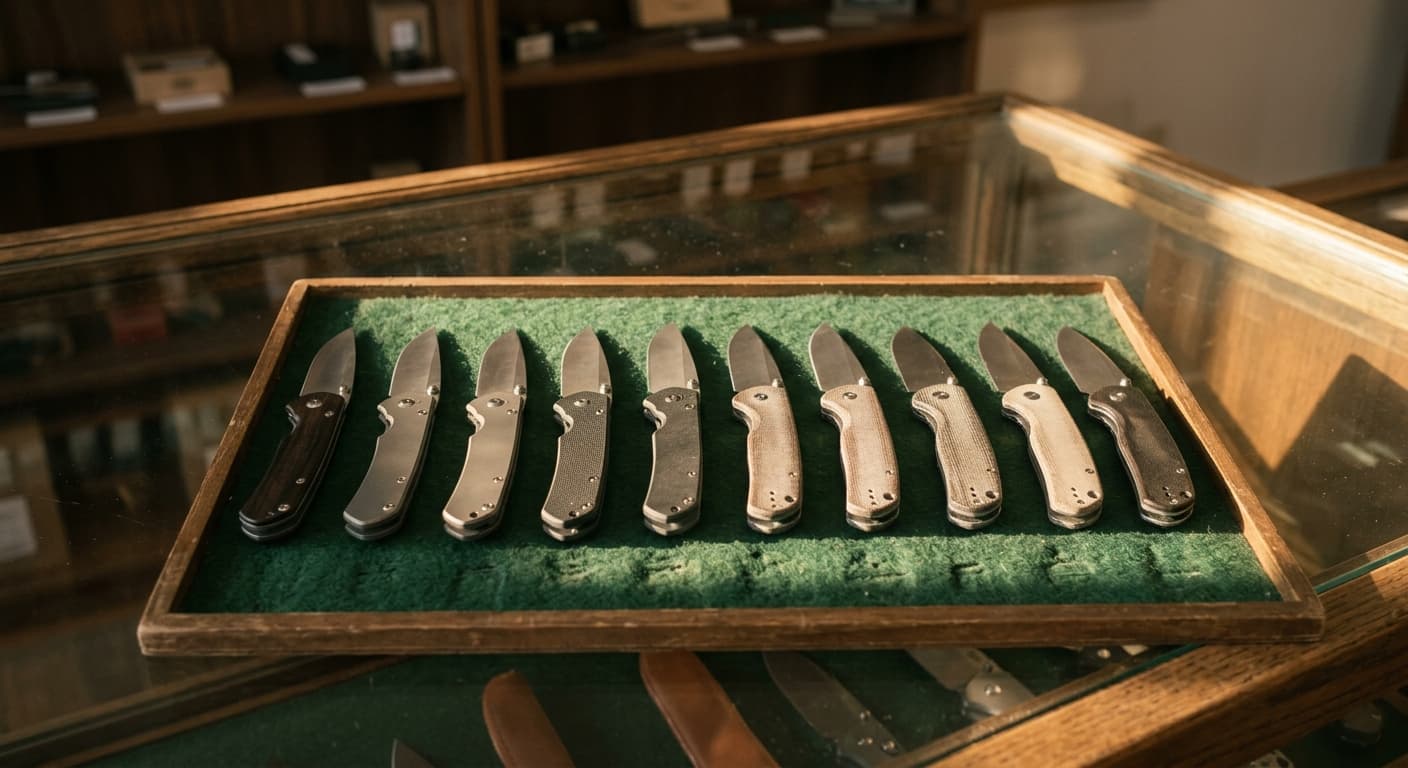
New Mexico bans possessing a switchblade outright and separately bans carrying a deadly weapon, a term that by statute names several knife types directly and adds a catch-all for other dangerous items. New Mexico's courts have held that an ordinary knife not on that named list, a common pocketknife above all, is not a deadly weapon just because it could cut or stab; a jury decides that from the circumstances. School premises carry a felony-level restriction that a nearly identical university statute does not, and the state's constitution, not a statute, is what keeps a city or county from regulating knives on its own.
Jurisdiction scope: This page covers New Mexico state law only, principally NMSA 30-1-12, 30-7-1, 30-7-2, 30-7-2.1, 30-7-2.4, 30-7-3, 30-7-4, 30-7-8, and 30-7-13, plus N.M. Const. art. II, § 6. It does not cover the New Mexico Concealed Handgun Carry Act in detail, since it governs handguns rather than knives.
Can you own or carry a knife in New Mexico?
Owning an ordinary knife is legal in New Mexico; owning a switchblade is not. NMSA § 30-7-8 provides: "Unlawful possession of switchblades consists of any person, either manufacturing, causing to be manufactured, possessing, displaying, offering, selling, lending, giving away or purchasing any knife which has a blade which opens automatically by hand pressure applied to a button, spring or other device in the handle of the knife, or any knife having a blade which opens or falls or is ejected into position by the force of gravity or by any outward or centrifugal thrust or movement. Whoever commits unlawful possession of switchblades is guilty of a petty misdemeanor." This is a possession ban, not merely a carry restriction; it reaches manufacturing, displaying, offering, and purchasing a switchblade, not only carrying one. New Mexico's Court of Appeals has held that a butterfly knife (balisong) falls within this definition despite requiring a combination of gravity and centrifugal force to open, because the statute's phrase "any outward or centrifugal thrust or movement" was written broadly enough to reach it, and the switchblade ban has separately survived a constitutional right-to-bear-arms challenge under intermediate scrutiny. The statute does not carry an "explainable lawful purpose" or similar exception.
For a non-switchblade knife, ownership itself is not restricted. Whether carrying one is restricted depends on whether it counts as a "deadly weapon," described next, and, if so, whether it is carried concealed, described below.
The "deadly weapon" definition, and why an ordinary knife usually is not one
NMSA § 30-1-12(B) defines "deadly weapon" broadly: "any firearm, whether loaded or unloaded; or any weapon which is capable of producing death or great bodily harm, including but not restricted to any types of daggers, brass knuckles, switchblade knives, bowie knives, poniards, butcher knives, dirk knives and all such weapons with which dangerous cuts can be given, or with which dangerous thrusts can be inflicted, including swordcanes, and any kind of sharp pointed canes, also slingshots, slung shots, bludgeons; or any other weapons with which dangerous wounds can be inflicted." This is the operative definition for every concealed-carry and restricted-place statute described below, and it names several knife types directly: dagger, switchblade, bowie knife, poniard, butcher knife, dirk, swordcane, and sharp-pointed cane.
For anything not on that named list, New Mexico's Supreme Court has held the catch-all does not sweep in an ordinary knife automatically. In State v. Nick R., 2009-NMSC-050, a student was found with an unopened pocketknife on school property and charged as if he had carried a deadly weapon per se. The Court reversed, holding that "our Legislature has not chosen to define an ordinary pocketknife as a per se deadly weapon, without regard to either its actual or its intended use," and warned that the opposite rule "would mean a person who carried one at work, on a fishing trip, or virtually anywhere else would commit the criminal offense of carrying a deadly weapon." Following its earlier decision in State v. Traeger, 2001-NMSC-022, the Court held that when an item is not specifically listed in Section 30-1-12(B), a jury must decide whether it is a deadly weapon by considering "the character of the instrument and the manner of its use." A common pocketknife carried for an ordinary purpose is not, on that basis alone, a "deadly weapon" under New Mexico law; a switchblade, bowie knife, dirk, dagger, poniard, butcher knife, swordcane, or sharp-pointed cane is, because those items are named directly in the statute.
What "carrying" means
NMSA § 30-7-1 supplies the definition of "carrying" that applies to every deadly-weapon offense described on this page: "'Carrying a deadly weapon' means being armed with a deadly weapon by having it on the person, or in close proximity thereto, so that the weapon is readily accessible for use." New Mexico's Court of Appeals has held that this same definition governs the school-premises statute below, not a broader one, and that whether an item was "readily accessible" (for example, in a bag or a vehicle rather than on the body) is itself a factual question for a jury.
Concealed carry: unlawful anywhere but home, land, and vehicle, for a "deadly weapon"
NMSA § 30-7-2(A) provides: "Unlawful carrying of a deadly weapon consists of carrying a concealed loaded firearm or any other type of deadly weapon anywhere, except in the following cases: (1) in the person's residence or on real property belonging to him as owner, lessee, tenant or licensee; (2) in a private automobile or other private means of conveyance, for lawful protection of the person's or another's person or property; (3) by a peace officer in accordance with the policies of his law enforcement agency who is certified pursuant to the Law Enforcement Training Act; (4) by a peace officer... employed on a temporary basis... who has successfully completed a course of firearms instruction...; or (5) by a person in possession of a valid concealed handgun license issued to him by the department of public safety pursuant to the... Concealed Handgun Carry Act." Violation is a petty misdemeanor under subsection C. The fifth exception, the concealed handgun license, is written for firearms specifically and does not extend to a knife. This statute addresses concealment only; it does not by its own text restrict openly carrying a knife.
Because this offense turns on the item being a "deadly weapon" under NMSA 30-1-12(B), and because New Mexico's Supreme Court has held that an unlisted item like an ordinary pocketknife is not automatically one, concealing a common pocketknife is not, by itself, a violation of this statute the way concealing a named item (a switchblade, bowie knife, dirk, dagger, poniard, butcher knife, swordcane, or sharp-pointed cane) is. Whether an unlisted knife counts turns on the circumstances and manner of its carry.
School premises: a felony, with a different rule than universities
NMSA § 30-7-2.1(A) provides: "Unlawful carrying of a deadly weapon on school premises consists of carrying a deadly weapon on school premises except by: (1) a peace officer; (2) school security personnel; (3) a student, instructor or other school-authorized personnel engaged in army, navy, marine corps or air force reserve officer training corps programs or state-authorized hunter safety training instruction; (4) a person conducting or participating in a school-approved program, class or other activity involving the carrying of a deadly weapon; or (5) a person older than nineteen years of age on school premises in a private automobile or other private means of conveyance, for lawful protection of the person's or another's person or property." "School premises" is defined in subsection B to include the buildings and grounds, playgrounds, playing fields, parking areas, and school buses of a public elementary, secondary, junior high, or high school, and any other public buildings or grounds where school-related and sanctioned activities occur. Violation is a fourth degree felony under subsection C.
State v. Nick R. was decided under this exact statute, and the New Mexico Supreme Court's ruling applies here with particular force: because a felony conviction is at stake, the Court warned that treating an unopened pocketknife as a per se deadly weapon would mean a parent picking up a child from school, or attending a parent-teacher conference, with an ordinary work knife in a pocket could be convicted of a school-grounds felony. The same jury-question standard from NMSA 30-1-12(B) applies: a switchblade, bowie knife, dirk, dagger, poniard, butcher knife, swordcane, or sharp-pointed cane on school premises is a deadly weapon by name, but an unlisted, ordinary knife is only a deadly weapon if a jury finds it was carried or intended as one.
New Mexico's parallel statute for university premises, NMSA § 30-7-2.4, is written differently and does not reach knives at all. It bans carrying a firearm, not a deadly weapon generally, on university premises, with a similar set of exceptions for peace officers, security personnel, ROTC or hunter-safety programs, university-approved activities, and a person over 19 in a private vehicle. Violation is only a petty misdemeanor under subsection D, and subsection B requires a university to post conspicuous notice that carrying a firearm on its premises is unlawful. Because this statute's text is scoped to "firearm" throughout rather than "deadly weapon," a knife carried on a New Mexico university or community college campus is not restricted by this particular statute the way it is restricted on K-12 school premises by 30-7-2.1.
Liquor establishments: also firearm-only
NMSA § 30-7-3 similarly restricts only a firearm, not a deadly weapon generally, on premises licensed to dispense alcoholic beverages, a fourth degree felony, with exceptions for law enforcement, the establishment's own staff and agents, certain concealed-handgun licensees, hotel or motel sleeping areas, parking areas, and a temporarily displayed, inoperative firearm under the licensee's control. A knife is not restricted in such an establishment by this statute.
Boarding a bus: the Bus Passenger Safety Act
A separate statute reaches a deadly weapon carried onto a bus, and carries a heavier penalty than ordinary concealed carry. NMSA § 30-7-13(A) provides: "It is unlawful for any person without prior approval from the company to board or attempt to board a bus while in possession of a firearm or other deadly weapon upon his person or effects and readily accessible to him while on the bus. Any person who violates the provisions of this subsection is guilty of a misdemeanor." Subsection B exempts law enforcement officers and commercial security personnel in the lawful discharge of their duties. "Bus," under NMSA § 30-7-11(B), means "any passenger bus, coach or other motor vehicle having a seating capacity of not less than fifteen passengers operated by a bus transportation company when used for the purpose of carrying passengers or cargo for hire," a term that itself includes buses "owned or operated by or for local public bodies, school districts, municipalities." That for-hire condition applies to the whole definition, including the school-district and municipal vehicles subsection A folds into "bus transportation company." Because this is a misdemeanor rather than a petty misdemeanor, boarding a bus with a deadly weapon carries a heavier potential penalty than carrying the same item elsewhere under NMSA 30-7-2. NMSA § 30-7-15 further requires that a deadly weapon transported on a bus, if permitted by the company's own regulations, be kept in a compartment inaccessible to passengers while the bus is moving.
Negligent or reckless use of a deadly weapon
Separately from possession and carrying, NMSA § 30-7-4(A)(3) makes it a petty misdemeanor to endanger "the safety of another by handling or using a firearm or other deadly weapon in a negligent manner." This is the provision that reaches brandishing or careless handling of a knife that meets the deadly-weapon definition, as distinct from simply possessing or carrying one.
New Mexico's constitution, not a statute, keeps knife regulation with the state
New Mexico has no statute that says, in terms, that local ordinances regulating knives are preempted. It does not need one, because the state constitution does the same work. N.M. Const. art. II, § 6 provides: "No law shall abridge the right of the citizen to keep and bear arms for security and defense, for lawful hunting and recreational use and for other lawful purposes, but nothing herein shall be held to permit the carrying of concealed weapons. No municipality or county shall regulate, in any way, an incident of the right to keep and bear arms." New Mexico's Supreme Court has enforced the second sentence directly: in Baca v. New Mexico Department of Public Safety, 2002-NMSC-017, the Court struck a version of the state's concealed handgun carry law because it unconstitutionally let municipalities and counties, rather than the state, regulate an incident of the right to bear arms. New Mexico's Court of Appeals has analyzed the switchblade possession ban itself, NMSA 30-7-8, as a right-to-bear-arms question under this same constitutional provision, upholding it under intermediate scrutiny. Whether a specific local ordinance regulating knives would survive this constitutional provision is a fact-specific question turning on whether it regulates "an incident of the right to keep and bear arms," not a question a preemption statute would answer either way.
Federal law: what it does and does not reach
Federal law does not ban an individual from owning or carrying a switchblade nationwide; it restricts interstate commerce in them. The Federal Switchblade Act, 15 U.S.C. §§ 1241 to 1245, bars manufacturing for, or introducing, transporting, or distributing in, interstate commerce, and, in 15 U.S.C. § 1245, makes it a federal offense to knowingly possess, manufacture, sell, or import a ballistic knife in or affecting interstate commerce or within federal territorial jurisdiction. The two switchblade offense sections, §§ 1242 and 1243, do not apply to certain knives and people; § 1244, captioned "Exceptions," lists them. A 2009 amendment, § 1244(5), exempts any knife with a spring, detent, or other closure-bias mechanism that requires hand, wrist, or arm exertion on the blade itself to overcome the bias and assist opening, the carve-out that keeps modern assisted-opening folding knives legal in interstate commerce. A separate exemption, § 1244(4), covers a person with only one arm possessing or carrying a switchblade with a blade three inches or less. New Mexico's own switchblade possession ban, NMSA 30-7-8, is a state offense that operates independently of these federal interstate-commerce exemptions; neither federal carve-out changes New Mexico's own switchblade ban.
Disclaimer: This article provides general legal information about New Mexico's knife laws as of September 2026. It is not legal advice. Consult a lawyer licensed in New Mexico for advice about a specific situation. A local ordinance may still affect knife carry in specific circumstances not addressed here.
For a state-by-state comparison, see knife laws by state. New Mexico's self-defense statutes are covered separately on the New Mexico self-defense laws page.
Statutes cited reflect their in-force version as of 2026-09-18. Last updated: 2026-09-18.
Frequently Asked Questions
Are switchblades illegal in New Mexico?
Yes. NMSA 30-7-8 bans manufacturing, possessing, displaying, offering, selling, lending, giving away, or purchasing a switchblade, a knife whose blade opens automatically by a button, spring, or similar device, or by gravity or centrifugal force. It is a petty misdemeanor, and this is a possession ban, not only a carry restriction. New Mexico courts have held a butterfly (balisong) knife falls within this definition.
Is an ordinary pocketknife a deadly weapon in New Mexico?
Not automatically. New Mexico's Supreme Court held in State v. Nick R. (2009) that the legislature has not defined an ordinary pocketknife as a per se deadly weapon, regardless of its actual or intended use. Whether an unlisted knife like a common pocketknife counts as a 'deadly weapon' under NMSA 30-1-12(B) is a question for a jury, based on the character of the instrument and the manner and intent of its use, not an automatic classification.
Can you carry a knife concealed in New Mexico?
A switchblade, bowie knife, dirk, dagger, poniard, butcher knife, swordcane, or sharp-pointed cane, all named directly in NMSA 30-1-12(B), may not be carried concealed outside your home, land you own or lease, or a private vehicle for lawful protection, under NMSA 30-7-2, a petty misdemeanor. An ordinary knife not on that list is not automatically covered; whether concealing it is unlawful depends on whether a jury would find it was carried as a deadly weapon given the circumstances.
Can you carry a knife on a New Mexico school campus?
A named deadly weapon (switchblade, bowie knife, dirk, dagger, poniard, butcher knife, swordcane, or sharp-pointed cane) may not be carried on K-12 school premises under NMSA 30-7-2.1, a fourth degree felony. New Mexico's Supreme Court held in State v. Nick R. that an ordinary pocketknife is not automatically a deadly weapon under this statute either; a jury must find it was carried or intended as one. New Mexico's separate university-premises statute, NMSA 30-7-2.4, restricts only firearms, not knives.
Can you bring a knife on a bus in New Mexico?
Boarding or attempting to board a bus with a firearm or other deadly weapon on your person or in your effects, readily accessible, without the bus company's prior approval, is a misdemeanor under the Bus Passenger Safety Act, NMSA 30-7-13, a heavier penalty than the petty misdemeanor for carrying the same item elsewhere in New Mexico.
Does New Mexico preempt local knife ordinances?
There is no statute on the subject, but the New Mexico Constitution does the same work: N.M. Const. art. II, § 6 provides that no municipality or county shall regulate, in any way, an incident of the right to keep and bear arms. New Mexico's Supreme Court has struck a law that let local governments regulate concealed handgun carry on this basis, and its Court of Appeals has analyzed the switchblade ban itself as a right-to-bear-arms question, so a local knife ordinance's validity turns on this constitutional provision, not on a preemption statute.
Is a bowie knife legal in New Mexico?
Owning a bowie knife is legal. NMSA 30-1-12(B) names a bowie knife as a 'deadly weapon,' so carrying one concealed outside your home, your own land, or a private vehicle for lawful protection is restricted the same way as the other named knife types under NMSA 30-7-2.
Updates
Independently fact-checked against the cited primary sources
Sources and References
- NMSA 30-7-8 - Unlawful possession of switchblades(law.justia.com)
- NMSA 30-1-12 - Definitions ("deadly weapon")(law.justia.com)
- NMSA 30-7-1 - "Carrying a deadly weapon" defined(law.justia.com)
- NMSA 30-7-2 - Unlawful carrying of a deadly weapon(law.justia.com)
- NMSA 30-7-2.1 - Unlawful carrying of a deadly weapon on school premises(law.justia.com)
- NMSA 30-7-2.4 - Unlawful carrying of a firearm on university premises; notice; penalty(law.justia.com)
- NMSA 30-7-3 - Unlawful carrying of a firearm in licensed liquor establishments(law.justia.com)
- NMSA 30-7-4 - Negligent use of a deadly weapon(law.justia.com)
- NMSA 30-7-13 - Bus Passenger Safety Act: carrying weapons prohibited(law.justia.com)
- N.M. Const. art. II, sec. 6 - right to keep and bear arms; local governments may not regulate an incident of that right(courtlistener.com)
- State v. Nick R., 2009-NMSC-050 - an ordinary pocketknife is not a per se deadly weapon(courtlistener.com)
- State v. Riddall, 1991-NMCA-033 - a butterfly knife is a switchblade under NMSA 30-7-8(courtlistener.com)
- State v. Murillo, 2015-NMCA-046 - the switchblade ban survives a right-to-bear-arms challenge under intermediate scrutiny(courtlistener.com)
- 15 U.S.C. 1241-1245 - Federal Switchblade Act, interstate commerce and ballistic-knife scope(law.cornell.edu)
- 15 U.S.C. 1244 - exceptions, including the 2009 assisted-opening carve-out and the one-arm exception(law.cornell.edu)