
New Mexico
New Mexico Hit and Run Laws: Statutes, Penalties, and Legal Duties
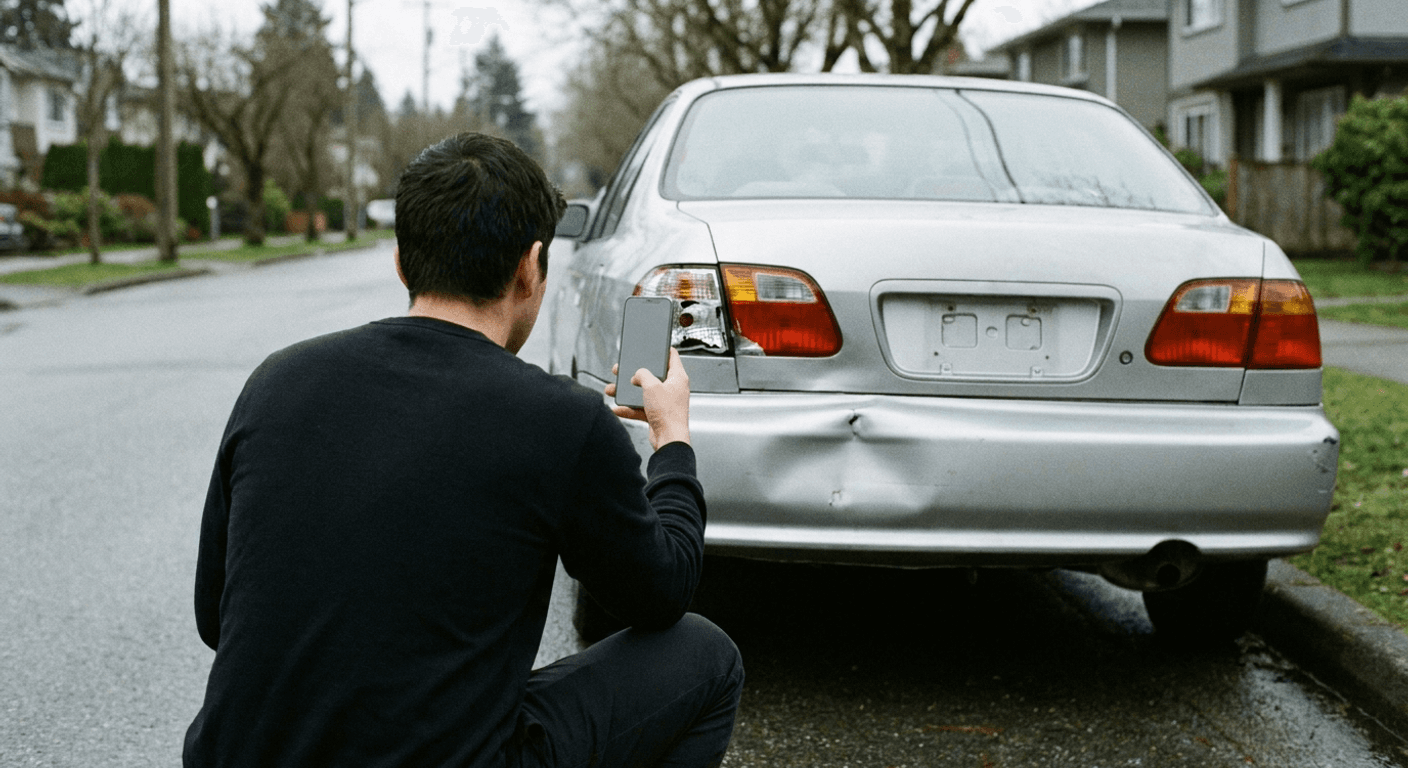
New Mexico criminalizes leaving the scene of an accident under NMSA 66-7-201, with penalties ranging from a misdemeanor for property damage to a third-degree felony carrying up to 3 years in prison for knowingly leaving when great bodily harm or death results. A driver who kills someone while impaired can also face a separate second-degree felony charge for homicide by vehicle under NMSA 66-8-101, on top of any hit and run charge.
Hurt in a hit-and-run? If the driver who hit you fled or had no insurance, your own uninsured/underinsured-motorist (UM/UIM) coverage may pay your injury claim. Estimate what it could be worth with our free New Mexico Car Accident Settlement Calculator.
Quick Summary: New Mexico Hit and Run Penalties
Under NMSA 66-7-201 through 66-7-207, New Mexico drivers who leave the scene of an accident face criminal penalties ranging from misdemeanor to felony depending on the severity of harm and whether they "knowingly" left.
- Damage to an attended vehicle only (NMSA 66-7-202): Misdemeanor, a jail term of less than 1 year and a fine up to $1,000
- Injury without great bodily harm or death (NMSA 66-7-201(D)): Misdemeanor, same penalty range
- Great bodily harm or death, failing to stop (NMSA 66-7-201(B)): Fourth-degree felony, up to 18 months in prison and $5,000 fine
- Great bodily harm or death, knowingly leaving (NMSA 66-7-201(C)): Third-degree felony, up to 3 years in prison and $5,000 fine
- Impaired driving that kills or seriously injures someone: Separate charges under NMSA 66-8-101: homicide by vehicle while impaired is a second-degree felony; great bodily harm by vehicle while impaired is a third-degree felony
- Report requirement: Notify police immediately (NMSA 66-7-206); accidents involving death, injury, or damage of $500 or more also need a written report within 5 days (NMSA 66-7-207)
- Fault rule: New Mexico follows a pure comparative fault rule
- License revocation: Mandatory upon a conviction under NMSA 66-7-201
Your Legal Obligations at the Scene of an Accident
NMSA 66-7-203, "Duty to Give Information and Render Aid," establishes your legal requirements after any accident. You must:
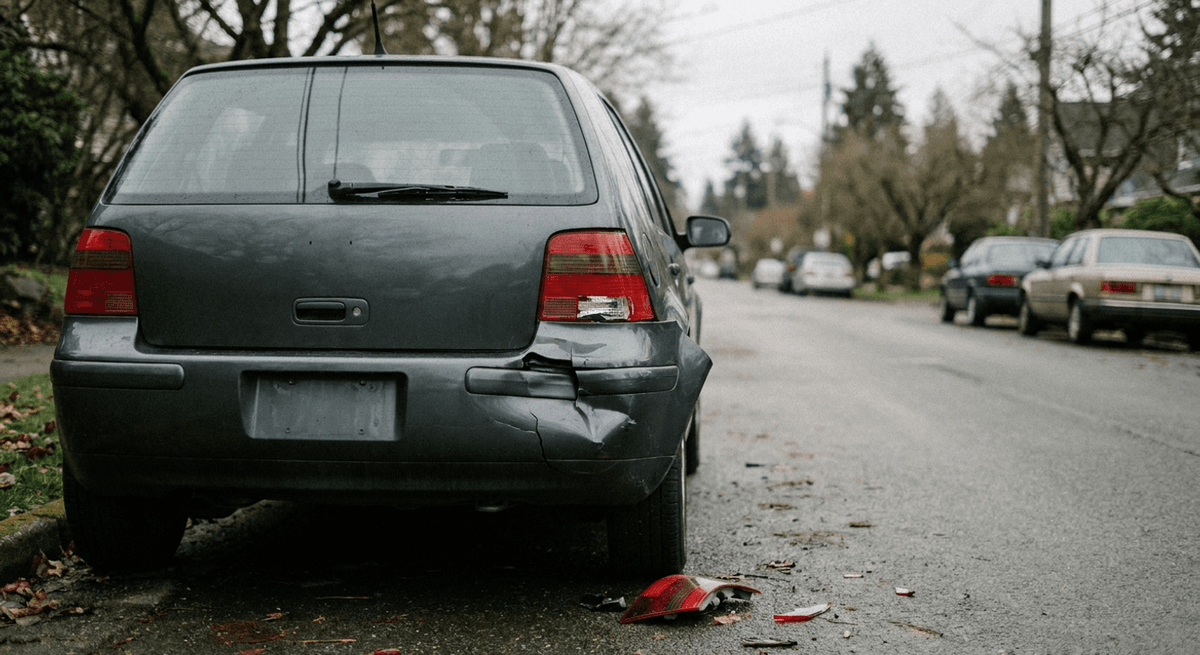
- Stop immediately: Stop your vehicle at the scene without interfering with traffic more than necessary
- Provide information: Give your name, address, and vehicle registration to the other driver, property owner, victim, or occupant of the struck vehicle
- Show your license: Upon request, exhibit your driver's license to the other party or law enforcement
- Render assistance: Provide reasonable help to anyone injured in the accident
Note: NMSA 66-7-201(A) and 66-7-202 require you to stop at the scene or as close to it as possible, and to make the stop without obstructing traffic more than is necessary. If you stop short of the scene, you must immediately return and remain there until you have met your duties under NMSA 66-7-203.
Misdemeanor Hit and Run in New Mexico
Under NMSA 66-7-202, leaving the scene of an accident that results only in damage to a vehicle that is driven or attended by someone is a misdemeanor. Under NMSA 66-7-201(D), failing to stop or meet your NMSA 66-7-203 duties after an accident that injures someone but does not cause great bodily harm or death is also a misdemeanor.
Penalties include:
- A definite jail term of less than 1 year (NMSA 31-19-1(A))
- Maximum fine of $1,000
- License revocation for a conviction under NMSA 66-7-201 (NMSA 66-7-201(E))
Hitting an Unattended Vehicle
If you strike an unattended vehicle (NMSA 66-7-204) or fixtures or other property on or next to a highway (NMSA 66-7-205):
- Stop and make a reasonable effort to locate and notify the owner
- If you hit an unattended vehicle and cannot find the owner, leave a written notice in a conspicuous place in the vehicle with the name and address of the driver and of the vehicle's owner, plus a statement of what happened
- Report the accident when NMSA 66-7-206 and 66-7-207 require it (for example, damage of $500 or more)
Failing to take these steps is a misdemeanor.
Reportable Accidents in New Mexico
NMSA 66-7-206 requires you to report any accident resulting in:
- Death or bodily injury to any person
- Property damage of $500 or more
You must notify police "by the quickest means of communication" at the scene. Within a municipality, report to the police department. Otherwise, report to the county sheriff or nearest New Mexico State Police office.
Under NMSA 66-7-207(A), you have 5 days to submit a written report to the New Mexico Department of Transportation.
Failure to report can result in misdemeanor charges. Your insurance company may also deny compensation if you fail to report the accident properly.
Felony Hit and Run in New Mexico
New Mexico's hit and run law draws an important distinction between simply "failing" to stop and "knowingly failing" to stop. The knowledge element affects the felony classification.
Fourth-Degree Felony: Failing to Stop (Great Bodily Harm or Death)
Under NMSA 66-7-201(B), failing to stop or comply with statutory requirements when an accident results in great bodily harm or death is a fourth-degree felony. This subsection does not require proof that the failure was knowing. If the injury does not rise to great bodily harm, the offense is the misdemeanor in NMSA 66-7-201(D) instead.
- Up to 18 months in prison
- Maximum fine of $5,000
- License revocation (NMSA 66-7-201(E))
Third-Degree Felony: Knowingly Failing to Stop (Great Bodily Harm or Death)
Under NMSA 66-7-201(C), knowingly failing to stop or comply with statutory requirements when an accident results in great bodily harm or death is a third-degree felony.
- Up to 3 years in prison
- Maximum fine of $5,000
- License revocation (NMSA 66-7-201(E))
If the failure to stop was not "knowing" (for example, you did not realize the severity of the accident), the charge may be reduced to a fourth-degree felony.
What Constitutes "Great Bodily Harm"?
NMSA 30-1-12 defines great bodily harm as:
"An injury to the person which creates a high probability of death; or which causes serious disfigurement; or which results in permanent or protracted loss or impairment of the function of any member or organ of the body."
Examples include limb loss, organ damage, facial disfigurement, and paralysis.
Vehicular Homicide and DUI
NMSA 66-8-101 defines vehicular homicide as "the killing of a human being in the unlawful operation of a motor vehicle."
- Reckless driving causing death: Third-degree felony (NMSA 66-8-101(D))
- DUI causing death: Second-degree felony (NMSA 66-8-101(C))
- DUI causing great bodily harm: Third-degree felony (NMSA 66-8-101(E))
A single incident can lead to multiple charges, including DUI, leaving the scene, vehicular assault, reckless driving, and vehicular homicide.
Implied Consent
New Mexico has "implied consent" laws. By operating a vehicle, you automatically consent to alcohol and drug testing. If you refuse testing:
- Your refusal can be used against you in court
- Your license will be suspended for up to one year
- Enhanced penalties may apply upon conviction
New Mexico Hit and Run Penalties Summary
- Damage to an attended vehicle only: Misdemeanor, jail term of less than 1 year, $1,000 fine
- Injury without great bodily harm or death: Misdemeanor, jail term of less than 1 year, $1,000 fine
- Great bodily harm or death (failing to stop): Fourth-degree felony, up to 18 months prison, $5,000 fine
- Great bodily harm or death (knowingly): Third-degree felony, up to 3 years prison, $5,000 fine
- Reckless driving causing death (vehicular homicide): Third-degree felony
- DUI causing death: Second-degree felony (homicide by vehicle)
- DUI causing great bodily harm: Third-degree felony
- Failure to report: Misdemeanor, additional penalties possible
Upon a conviction for leaving the scene under NMSA 66-7-201, the state must revoke your driver's license (NMSA 66-7-201(E)).
New Mexico Crash Statistics
New Mexico has one of the highest traffic fatality rates in the nation:
- 2024 traffic fatalities: 401 deaths statewide (preliminary data)
- 2023 traffic fatalities: 436 deaths
- 2024 pedestrian fatalities: 94 pedestrians killed, a decline from previous years
- National ranking: New Mexico's 2024 traffic fatality rate was the 10th highest in the United States
- Alcohol involvement: Approximately 40% of New Mexico traffic crash fatalities involve alcohol
Despite fatalities dropping each of the last three years, the state continues to implement safety initiatives through the New Mexico Department of Transportation.
Notable New Mexico Hit and Run Cases
State v. Habermehl Case Defendants (2024-2025)
In May 2024, 63-year-old physicist Scott Dwight Habermehl was killed while cycling to work at Sandia National Laboratories in Albuquerque. Investigators later discovered that three juveniles deliberately struck him with a stolen vehicle while recording the incident on video.
In March 2025, police charged a 13-year-old (believed to be the driver) with murder, took an 11-year-old into custody, and arrested a 15-year-old. The case drew national attention and demonstrates that prosecutors will pursue murder charges when evidence shows intentional conduct rather than negligence.
Civil Liability and How Fault Is Determined
New Mexico follows a pure comparative fault rule. This means you can recover compensation even if you were primarily responsible for the accident. However, your recovery is reduced by your percentage of fault.
For example, if you are 70% at fault and damages total $100,000, you can still recover $30,000 (the other party's 30% share of responsibility). If a driver who fled hurt you in a serious crash, ask a New Mexico car accident lawyer in a free claim review how fault will be split before you contact your insurer (attorney advertising).
Statute of Limitations:
- Personal injury claims: 3 years from the date of accident
- Property damage claims: 4 years
- Wrongful death claims: 3 years from the date of death
What to Do After an Accident
To protect your legal rights:
- Never admit fault or use phrases like "I'm sorry" or "It was my fault"
- Fulfill all statutory requirements before leaving the scene
- Seek medical attention and do not comment on your health until examined by a professional
- Document everything that might help police find the other driver
- Stay at the scene unless you have a valid reason to leave (such as personal safety)
- Notify law enforcement immediately and file a written report within 5 days
- Contact your insurer; for serious accidents, speak with an attorney first
Possible Defenses to Hit and Run Charges
Defenses depend on the specific facts of your case:
- Safety concerns: You felt threatened or believed remaining at the scene would result in more harm
- Compliance: You fulfilled your statutory requirements
- Involuntary departure: Leaving the scene was not voluntary
- No damage or injury: The victim suffered no injuries and there was no property damage
- Lack of knowledge: You were unaware an accident occurred
Important: Once you leave the scene, an accident becomes a crime. If you must leave for safety reasons, contact law enforcement immediately.
Other New Mexico Laws
- New Mexico Recording Laws
- New Mexico Car Seat Laws
- New Mexico Statute of Limitations
- New Mexico Whistleblower Laws
- New Mexico Lemon Law
- New Mexico Child Support Laws
- New Mexico Sexting Laws
More New Mexico Laws
Frequently Asked Questions
How long do I have to report an accident in New Mexico?
You must notify police immediately using the quickest means available. You then have 5 days to submit a written report to the New Mexico Department of Transportation for accidents involving death, injury, or property damage over $500.
What is the difference between failing to stop and knowingly failing to stop?
New Mexico distinguishes between these two levels of intent. Simply failing to stop at an accident with great bodily harm or death is a fourth-degree felony (up to 18 months). Knowingly failing to stop is a more serious third-degree felony (up to 3 years). The knowledge element means you were aware of the accident and chose not to stop.
Can I be charged with both hit and run and vehicular homicide?
Yes. A single set of facts can lead to multiple charges, including hit and run, vehicular homicide, DUI, and reckless driving depending on the circumstances.
Will refusing a breathalyzer affect my case?
Yes. Under New Mexico's implied consent law, refusing testing results in automatic license suspension for up to one year. Your refusal can also be used as evidence against you in court, and enhanced penalties may apply upon conviction.
What if the victim was partially at fault?
New Mexico's pure comparative fault rule allows victims to recover damages even if they were primarily responsible for the accident. Your recovery is reduced by your percentage of fault. However, this does not excuse leaving the scene. You must fulfill your legal obligations regardless of who caused the accident.
Updates
Corrected the hit-and-run penalty tiers to match NMSA 66-7-201 and 66-7-202 (the felony tiers apply only when great bodily harm or death results), fixed the DUI and report-deadline citations, and replaced non-official statute links with the official New Mexico code.
The Law Behind This Article
This article rests on the statutory provisions below, held in our own legal record and retrieved from the official source. Tap a section to read the operative text.
New Mexico Statutes Annotated 1978, Chapter 66
§ 66-7-201Accidents involving death or personal injuriesIn forcecited in 2 of our articles
A. The driver of any vehicle involved in an accident resulting in injury to or death of any person shall immediately stop the vehicle at the scene of the accident or as close thereto as possible, but shall then immediately return to and in every event shall remain at the scene of the accident until he has fulfilled the requirements of Section 66-7-203 NMSA 1978. Every such stop shall be made without obstructing traffic more than is necessary. B. Any person failing to stop or to comply with the requirements of Section 66-7-203 NMSA 1978 where the accident results in great bodily harm or death is guilty of a fourth degree felony and shall be sentenced pursuant to the provisions of Section 31-18-15 NMSA 1978. C. Any person who knowingly fails to stop or to comply with the requirements of Section 66-7-203 NMSA 1978 where the accident results in great bodily harm or death is guilty of a third degree felony and shall be sentenced pursuant to the provisions of Section 31-18-15 NMSA 1978. D.
Official text (excerpt) · last checked 2026-07-30 · Read the full text in our law library · Verify at nmonesource.com
Cross-referenced in the statute itself: § 31-18-15, § 31-19-1, § 66-7-203
Cited in 27 court opinions in our collectionLatest citing opinion in our collection: 2026
Opinions citing this section in our collection:
- State v. Dowling (New Mexico Supreme Court 2011, 150 N.M. 110)“…an accident not resulting in great bodily harm, contrary to NMSA 1978, Section 66-7-201(D) (1989); knowingly leaving the scene…”
- State v. Manzanares (New Mexico Supreme Court 1983, 100 N.M. 621)“…failure to remain at an accident involving death or injury, NMSA 1978, Section 66-7-201(A); and failure to have a driver’s lice…”
- State v. Cumpton (New Mexico Court of Appeals 2000, 129 N.M. 47)“…f his sentence, he appeals. Defendant also appeals claiming NMSA 1978, § 66-7-201 (1989) is vague, as there is no way to…”
Identified automatically from the court opinions citing this section — not a ranking of which case controls.
§ 66-7-202Accidents involving damage to vehicleIn forcecited in 2 of our articles
The driver of any vehicle involved in an accident resulting only in damage to a vehicle which is driven or attended by any person shall immediately stop such vehicle at the scene of such accident or as close thereto as possible but shall forthwith return to and in every event shall remain at the scene of such accident until he has fulfilled the requirements of Section 66-7-203 NMSA 1978. Every such stop shall be made without obstructing traffic more than is necessary. Any person failing to stop or comply with said requirements under such circumstances shall be guilty of a misdemeanor.
Official text (excerpt) · last checked 2026-07-30 · Read the full text in our law library · Verify at nmonesource.com
Cited in 10 court opinions in our collectionLatest citing opinion in our collection: 2023
Opinions citing this section in our collection:
- State v. Gonzales (New Mexico Supreme Court 2013, 4 N.M. 91)“…10), and one count of leaving the scene of an accident, see NMSA 1978, §§ 66-7-202 (1978), -203 (1989). Curiously, the Sta…”
- State v. Anthony L. (New Mexico Court of Appeals 2018, 2019 NMCA 3)“…the 12 scene of an accident (property damage), contrary to NMSA 1978, Section 66-7-202 13 (1978); (2) driving without a valid…”
- State v. Esparza (New Mexico Court of Appeals 2020, 475 P.3d 815)“…an accident involving damage to a vehicle, in violation of NMSA 1978, Section 66-7-202 (1978); and failure to give information…”
Identified automatically from the court opinions citing this section — not a ranking of which case controls.
§ 66-7-203Duty to give information and render aidIn forcecited in 4 of our articles
The driver of any vehicle involved in an accident resulting in injury to or death of any person or damage to any vehicle which is driven or attended by any person shall give his name, address and the registration number of the vehicle he is driving and shall upon request exhibit his driver's license to the person struck or the driver or occupant of or person attending any vehicle collided with and shall render to any person injured in such accident reasonable assistance, including the carrying, or the making of arrangements for the carrying, of such person to a physician, surgeon or hospital for medical or surgical treatment if it is apparent that such treatment is necessary or if such carrying is requested by the injured person.
Official text (excerpt) · last checked 2026-07-30 · Read the full text in our law library · Verify at nmonesource.com
Cited in 11 court opinions in our collectionLatest citing opinion in our collection: 2024
Opinions citing this section in our collection:
- State v. Cumpton (New Mexico Court of Appeals 2000, 129 N.M. 47)“…erson failing to stop or to comply with the requirements of Section 66-7-203 NMSA 1978 where the accident results in great bod…”
- Benavidez v. Shutiva (New Mexico Court of Appeals 2015, 8 N.M. Ct. App. 95)“…and failure to comply with the requirements set 19 out in NMSA 1978, 66-7-203 (1978). Immediately after the accident,…”
- State v. Esparza (New Mexico Court of Appeals 2020, 475 P.3d 815)“…failure to give information and render aid, in violation of NMSA 1978, Section 66-7-203 (1978). Following trial, a jury acquitt…”
Identified automatically from the court opinions citing this section — not a ranking of which case controls.
Also relied on in: New Mexico Car Accident Laws: Fault, Insurance, and Your Claim
§ 66-7-206Immediate notice of accidentsIn forcecited in 2 of our articles
The driver of a vehicle, the autonomous motor vehicle operator or the autonomous commercial motor vehicle operator, if applicable, involved in an accident resulting in bodily injury to or death of any person or property damage to an apparent extent of five hundred dollars ($500) or more shall immediately, by the quickest means of communication, give notice of the accident to the police department if the accident occurs within a municipality; otherwise to the office of the county sheriff or the nearest office of the New Mexico state police. In the case of an autonomous motor vehicle or autonomous commercial motor vehicle operating without a human driver, the owner of that motor vehicle or person working on behalf of the vehicle owner shall be responsible for providing the notice required by this section.
Official text (excerpt) · last checked 2026-07-30 · Read the full text in our law library · Verify at nmonesource.com
Cited in 4 court opinions in our collectionLatest citing opinion in our collection: 2021
Opinions citing this section in our collection:
- State v. Ortiz (New Mexico Court of Appeals 2016, 2017 NMCA 6)“…nd failure to give immediate notice of accident contrary to NMSA 1978, Section 66-7-206 (1991). Those charges, however, were re…”
- State v. Pruitt (New Mexico Court of Appeals 2021)“…202 (1978), and failure to give notice of an accident under NMSA 1978, Section 66-7-206 (1991, amended 2021). A jury convicted…”
- State v. Box (New Mexico Court of Appeals 2015)“…ilure to give immediate notice of accident, contrary to 4 NMSA 1978, Section 66-7-206 (1991). [DS 1, 3; RP 21, 33, 46, 107] T…”
Identified automatically from the court opinions citing this section — not a ranking of which case controls.
§ 66-8-101Homicide by vehicle; great bodily harm by vehicleIn forcecited in 6 of our articles
A. Homicide by vehicle is the killing of a human being in the unlawful operation of a motor vehicle. B. Great bodily harm by vehicle is the injuring of a human being, to the extent defined in Section 30-1-12 NMSA 1978, in the unlawful operation of a motor vehicle. C. A person who commits homicide by vehicle while under the influence of intoxicating liquor or while under the influence of any drug is guilty of a second degree felony and shall be sentenced pursuant to the provisions of Section 31-18-15 NMSA 1978. D. A person who commits homicide by vehicle while violating Section 66-8-113 NMSA 1978 is guilty of a third degree felony and shall be sentenced pursuant to the provisions of Section 31-18-15 NMSA 1978, provided that violation of speeding laws as set forth in the Motor Vehicle Code [Chapter 66, Articles 1 to 8 NMSA 1978] shall not per se be a basis for violation of Section 66-8-113 NMSA 1978. E.
Official text (excerpt) · last checked 2026-07-30 · Read the full text in our law library · Verify at nmonesource.com
Cross-referenced in the statute itself: § 30-1-12, § 31-18-15
Cited in 107 court opinions in our collectionLatest citing opinion in our collection: 2026
Opinions citing this section in our collection:
- State v. Santillanes (New Mexico Supreme Court 2001, 130 N.M. 464)“…s was convicted of five counts of vehicular homicide, see NMSA 1978, § 66-8-101(C) (1991), four counts of child abuse r…”
- State v. Yarborough (New Mexico Supreme Court 1996, 122 N.M. 596)“…h was charged with homicide by vehicle by reckless driving. NMSA 1978, § 66-8-101 (Repl.Pamp.1994) (homicide by vehicle);…”
- State v. Montano (New Mexico Supreme Court 2024, 557 P.3d 86)“…micide by vehicle while under the influence (DWI homicide), NMSA 1978, Section 66-8-101(C) (2016)⸺from a nonviolent offense to…”
Identified automatically from the court opinions citing this section — not a ranking of which case controls.
Also relied on in: New Mexico DWI Laws: Penalties, BAC & License (2026), New Mexico Manslaughter Laws: Voluntary, Involuntary and DWI Deaths, Is Reckless Driving a Misdemeanor in New Mexico? Penalties and Points
§ 66-7-204Duty upon striking unattended vehicleIn forcecited in 2 of our articles
The driver of any vehicle which collides with any vehicle which is unattended shall immediately stop and shall then and there either locate and notify the operator or owner of such vehicle of the name and address of the driver and owner of the vehicle striking the unattended vehicle or shall leave in a conspicuous place in the vehicle struck a written notice giving the name and address of the driver and of the owner of the vehicle doing the striking and a statement of the circumstances thereof.
Official text (excerpt) · last checked 2026-07-30 · Read the full text in our law library · Verify at nmonesource.com
§ 66-7-205Duty upon striking fixtures or other property upon a highway.In forcecited in 2 of our articles
The driver of any vehicle involved in an accident resulting only in damage to fixtures or other property legally upon or adjacent to a highway shall take reasonable steps to locate and notify the owner or person in charge of such property of such fact and of his name and address and of the registration number of the vehicle he is driving and shall upon request exhibit his driver's license and shall make report of such accident when and as required in Section 66-7-207 NMSA 1978.
Official text (excerpt) · last checked 2026-07-30 · Read the full text in our law library · Verify at nmonesource.com
§ 66-7-207Written reports of accidentsIn forcecited in 2 of our articles
A. The driver of a vehicle involved in an accident resulting in bodily injury to or death of any person or total property damage to an apparent extent of five hundred dollars ($500) or more shall, within five days after the accident, forward a written report of the accident to the department of transportation. B. The department of transportation may require any driver of a vehicle involved in an accident of which report must be made as provided in this section to file supplemental reports whenever the original report is insufficient in the opinion of the department of transportation and may require witnesses of accidents to render reports concerning the accidents to the department of transportation. C. Every law enforcement officer who, in the regular course of duty, investigates a motor vehicle accident of which report must be made as required in this section, either at the time of and at the scene of the accident or thereafter by interviewing participants or witnesses, shall, within twenty-four hours after completing the investigation, forward a written report of the accident to the department of transportation.
Official text (excerpt) · last checked 2026-07-30 · Read the full text in our law library · Verify at nmonesource.com
Cited in 1 court opinions in our collectionLatest citing opinion in our collection: 2013
Opinions citing this section in our collection:
- Martinez v. New Mexico Department of Transportation (New Mexico Supreme Court 2013, 3 N.M. 448)“…t is undisputed that DOT knew of these previous collisions. NMSA 1978, Section 66-7-207(C) (2007) requires law enforcement offi…”
Identified automatically from the court opinions citing this section — not a ranking of which case controls.
New Mexico Statutes Annotated 1978, Chapter 30
§ 30-1-12DefinitionsIn forcecited in 6 of our articles
As used in the Criminal Code: A. "great bodily harm" means an injury to the person which creates a high probability of death; or which causes serious disfigurement; or which results in permanent or protracted loss or impairment of the function of any member or organ of the body; B. "deadly weapon" means any firearm, whether loaded or unloaded; or any weapon which is capable of producing death or great bodily harm, including but not restricted to any types of daggers, brass knuckles, switchblade knives, bowie knives, poniards, butcher knives, dirk knives and all such weapons with which dangerous cuts can be given, or with which dangerous thrusts can be inflicted, including swordcanes, and any kind of sharp pointed canes, also slingshots, slung shots, bludgeons; or any other weapons with which dangerous wounds can be inflicted; C. "peace officer" means any public official or public officer vested by law with a duty to maintain public order or to make arrests for crime, whether that duty extends to all crimes or is limited to specific crimes; D.
Official text (excerpt) · last checked 2026-07-30 · Read the full text in our law library · Verify at nmonesource.com
Cited in 79 court opinions in our collectionLatest citing opinion in our collection: 2025
Opinions citing this section in our collection:
- State v. Ogden (New Mexico Supreme Court 1994, 118 N.M. 234)“…extends to all crimes or is limited to specific crimes[.]” NMSA 1978, § 30-1-12(0 (Repl.Pamp.1984). It is noteworthy th…”
- State v. NICK R. (New Mexico Supreme Court 2009, 147 N.M. 182)“…tknife or define the term “deadly weapon” in any other way, NMSA 1978, Section 30-1-12(B) (1963) provides that, “[a]s used in…”
- State v. Maestas (New Mexico Supreme Court 2006, 140 N.M. 836)“…influenced, and contains no exceptions for judges. See also NMSA 1978, § 30-1-12(1) to (J) (defining public officers and…”
Identified automatically from the court opinions citing this section — not a ranking of which case controls.
Also relied on in: Are Brass Knuckles Legal in New Mexico? (2026 Law), New Mexico Knife Laws (2026): Switchblade Ban and Concealed Carry, Pepper Spray and Stun Gun Laws by State (2026)
New Mexico Statutes Annotated 1978, Chapter 31
§ 31-18-15Sentencing authority; noncapital felonies; basic sentences and fines; parole authority; meritorious deductions.In forcecited in 21 of our articles
A. As used in a statute that establishes a noncapital felony, the following defined felony classifications and associated basic sentences of imprisonment are as follows: FELONY CLASSIFICATION BASIC SENTENCE first degree felony resulting in the death of a child life imprisonment first degree felony for aggravated criminal sexual penetration life imprisonment first degree felony eighteen years imprisonment second degree felony resulting in the death of a human being eighteen years imprisonment second degree felony for a sexual offense against a child fifteen years imprisonment second degree felony for sexual exploitation of children twelve years imprisonment second degree felony nine years imprisonment third degree felony resulting in the death of a human being six years imprisonment third degree felony for a sexual offense against a child six years imprisonment third degree felony for sexual exploitation of children eleven…
Official text (excerpt) · last checked 2026-07-30 · Read the full text in our law library · Verify at nmonesource.com
Cited in 242 court opinions in our collectionLatest citing opinion in our collection: 2026
Opinions citing this section in our collection:
- State v. Montoya (New Mexico Court of Appeals 2015, 7 N.M. 445)“…e death of the child is guilty of a first degree felony.”); NMSA 1978, § 31-18-15(A)(3) (2003) (stating that the basic se…”
- State v. Smith (New Mexico Supreme Court 2004, 136 N.M. 372)“…ffender is guilty of a fourth degree felony, as provided in Section 31-18-15 NMSA 1978, and shall be sentenced to a jail term…”
- State v. Frawley (New Mexico Supreme Court 2007, 143 N.M. 7)“…e for a third-degree felony is three years of imprisonment, NMSA 1978, § 31-18-15(A)(5) (1999, prior to amendments throug…”
Identified automatically from the court opinions citing this section — not a ranking of which case controls.
Also relied on in: How Long Is a Life Sentence in New Mexico? (2026 Guide), How Many Years for Second Degree Murder? Sentences by State (2026), New Mexico Recording Laws (2026): One-Party Consent Rules
§ 31-19-1Sentencing authority[;] misdemeanors; imprisonment and fines; probation.In forcecited in 17 of our articles
A. Where the defendant has been convicted of a crime constituting a misdemeanor, the judge shall sentence the person to be imprisoned in the county jail for a definite term less than one year or to the payment of a fine of not more than one thousand dollars ($1,000) or to both such imprisonment and fine in the discretion of the judge. B. Where the defendant has been convicted of a crime constituting a petty misdemeanor, the judge shall sentence the person to be imprisoned in the county jail for a definite term not to exceed six months or to the payment of a fine of not more than five hundred dollars ($500) or to both such imprisonment and fine in the discretion of the judge. C. When the court has deferred or suspended sentence, it shall order the defendant placed on supervised or unsupervised probation for all or some portion of the period of deferment or suspension.
Official text (excerpt) · last checked 2026-07-30 · Read the full text in our law library · Verify at nmonesource.com
Cited in 27 court opinions in our collectionLatest citing opinion in our collection: 2026
Opinions citing this section in our collection:
- State v. Ramos (New Mexico Supreme Court 2013, 2013 NMSC 31)“…year, or payment of a fine of not more than $1000, or both. NMSA 1978, § 31-19-1(A) (1984). {13} The statute does not s…”
- State v. Johnson (New Mexico Court of Appeals 1988, 107 N.M. 356)“…robation were within the authority of the magistrate court. NMSA 1978, § 31-19-1 (Repl.Pamp.1987). If the only re…”
- State v. NICK R. (New Mexico Supreme Court 2009, 147 N.M. 182)“…sdemeanor criminal penalty of up to six months in jail, and NMSA 1978, § 31-19-1(B) (1984), for carrying “a concealed lo…”
Identified automatically from the court opinions citing this section — not a ranking of which case controls.
Also relied on in: New Mexico AI Meeting Recording Laws (2026), New Mexico Deepfake Laws: AI Images, Voice Cloning & Penalties (2026), New Mexico Disorderly Conduct and Trespass Laws (2026)
New Mexico Statutes Annotated 1978, Chapter 67
§ 67-7-1[Obstructing roads; penalties.]In forcecited in 2 of our articles
It shall hereafter be unlawful for any person or persons to in any manner obstruct any public road in this state, by putting therein or thereon any obstruction whatsoever, and all persons convicted of a violation of this section shall upon conviction before any court of competent jurisdiction be fined in any sum not to exceed fifty dollars ($50.00) or be imprisoned in the county jail for a period not to exceed thirty days, and pay all the costs of prosecution, or both such fine and imprisonment at the discretion of the court trying the cause.
Official text (excerpt) · last checked 2026-07-30 · Read the full text in our law library · Verify at nmonesource.com
Cited in 2 court opinions in our collectionLatest citing opinion in our collection: 2022
Opinions citing this section in our collection:
- State v. Mooney (New Mexico Court of Appeals 2022)“…1963), and a single count of obstructing roads, contrary to NMSA 1978, 67-7-1 (1905), for conduct alleged to have occ…”
- Vargas v. Cruz (New Mexico Court of Appeals 2012)“…not obstructions that obstruct a view of the road. 8 See NMSA 1978, § 67-7-1 (1915) (prohibiting the obstruction of…”
Identified automatically from the court opinions citing this section — not a ranking of which case controls.
Explore the law
The laws cited above reference these related sections in their own text:
- New Mexico Statutes Annotated 1978, Chapter 66 § 66-8-102 — Driving under the influence of intoxicating liquor or drugs; aggravated driving under the influence of intoxicating liquor or drugs; penalties. view in our statute record · read at the official source
Related law for further reading — not part of this article’s citations.
Sources and References
- NMSA 66-7-201: Accidents Involving Death or Personal Injuries (2024)(law.justia.com)
- NMSA 66-7-203: Duty to Give Information and Render Aid(codes.findlaw.com)
- NMSA 66-7-206: Reports of Accidents(codes.findlaw.com)
- NMSA 31-18-15: Sentencing Authority for Noncapital Felonies(law.justia.com)
- New Mexico Department of Transportation(dot.nm.gov).gov
- New Mexico Legislature(nmlegis.gov).gov
- NMSA Chapter 66 (Motor Vehicles), incl. 66-7-201 to 66-7-207 and 66-8-101, NMOneSource (official)(nmonesource.com)
- NMSA 31-19-1: Sentencing authority for misdemeanors, NMOneSource (official)(nmonesource.com)
- NMSA 30-1-12: Definitions (great bodily harm), NMOneSource (official)(nmonesource.com)
Paid attorney referral. RecordingLaw may receive compensation when you use an attorney-help link. RecordingLaw is not a law firm. Submitting a request does not guarantee that an attorney will accept your case and does not create an attorney-client relationship.