
New Mexico
New Mexico Pepper Spray and Stun Gun Laws (2026)
Independently fact-checked against primary sources (last audited September 23, 2026). · 5 primary sources cited on this page. How we verify our legal content
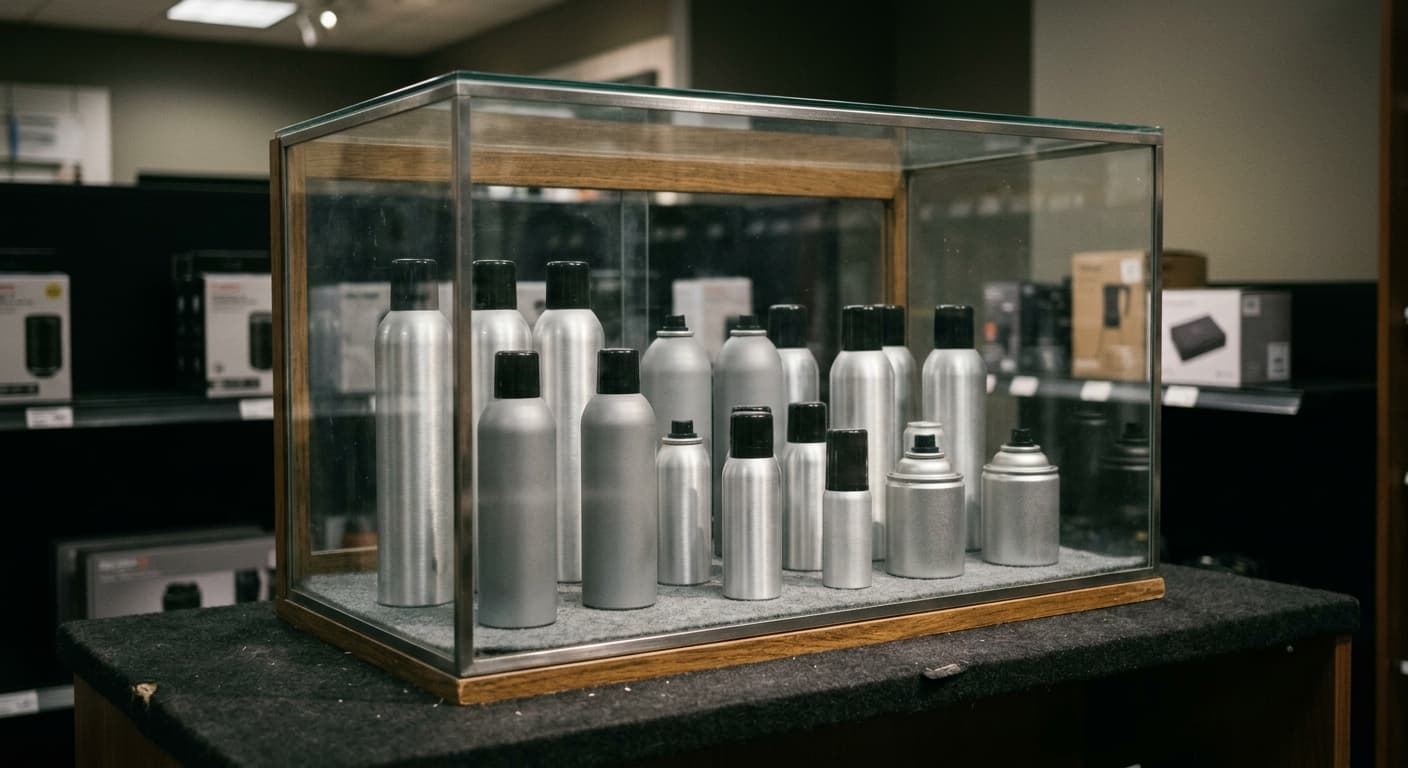
New Mexico has no statute that names pepper spray, tear gas, chemical spray, a stun gun, or an electronic weapon anywhere in its Criminal Code. That does not mean either device falls outside the law, but it also does not mean New Mexico's general weapons-carrying statute reaches every way of carrying one. NMSA 30-7-2, the state's unlawful-carrying offense, is a concealed-carry offense on its own text, and the New Mexico Supreme Court has read it that way, calling it in State ex rel. New Mexico Voices for Children, Inc. v. Denko (2004) "the general prohibition against carrying concealed weapons": carried openly, neither device is reached by that section at all, whatever it turns out to be. Carried concealed outside a residence, one's own real property or a private vehicle, both devices turn on whether the item meets the statutory definition of a "deadly weapon," and the New Mexico Supreme Court has already decided how that definition applies to an item the statute does not name: the question goes to a jury, and it turns on two things together, not one, whether the carrier possessed the item with intent to use it as a weapon, and whether the item was capable of causing the kind of wounds the statute describes.
Jurisdiction scope: This page covers New Mexico state law, principally NMSA 1978 Sections 30-1-12, 30-7-2, 30-7-2.1, 30-7-4, 30-7-11, 30-7-13, 30-7-15, 30-22-14, and N.M. Const. art. II, Section 6. It does not cover any specific municipal ordinance. The state constitutional provision described below bars a municipality or county from regulating an incident of the right to keep and bear arms, which is a reason to expect little local variation, but a particular city or county code is a separate question from what is described here.
Is pepper spray legal to carry in New Mexico?
New Mexico's weapons chapter, Chapter 30, Article 7, does not contain a section addressing pepper spray, tear gas, or any other chemical self-defense spray, and the term does not appear in the Criminal Code's general definitions section, NMSA Section 30-1-12, either. There is no dedicated pepper-spray statute, but that does not mean pepper spray is unregulated. The provision that governs weapon carrying generally, NMSA Section 30-7-2, is captioned "Unlawful carrying of a deadly weapon" and its text reaches only carrying that is concealed: "Unlawful carrying of a deadly weapon consists of carrying a concealed loaded firearm or any other type of deadly weapon anywhere," except in one's residence or on one's own real property, in a private vehicle for lawful protection of a person or property, or by specified license holders and law enforcement. A can of pepper spray carried openly, in a hand or a clipped holster visible to others, is not reached by this section at all, whatever the device turns out to be under the deadly-weapon definition. Carried concealed, such as in a pocket or bag, the offense, a petty misdemeanor under subsection (C), applies only to a "deadly weapon" as Section 30-1-12(B) defines that term, and pepper spray is not on that definition's enumerated list, so whether the offense reaches a concealed can of pepper spray depends on the catchall analysis below, not on a flat yes or no.
Are stun guns legal to carry in New Mexico?
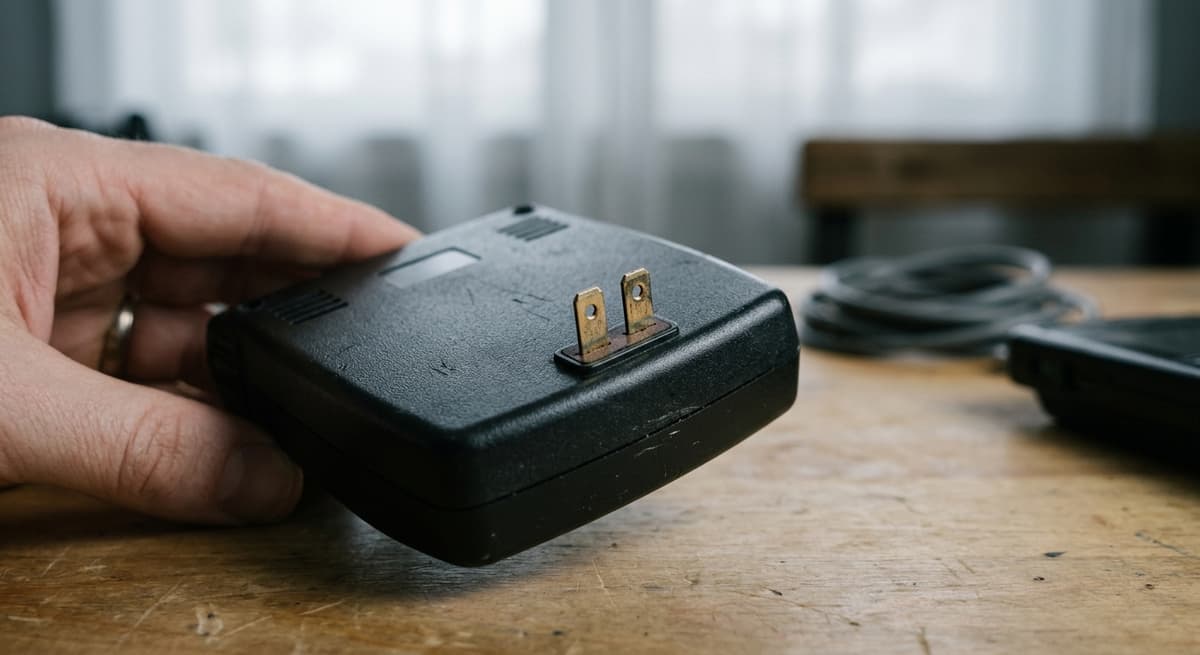
The same analysis applies, by the same reasoning. No section of Chapter 30, Article 7 names a stun gun, an electronic weapon, a taser, or any similar device, and none of those terms appears in Section 30-1-12's definitions either. Like pepper spray, NMSA 30-7-2 reaches a stun gun only when it is carried concealed outside a residence, one's own real property or a private vehicle carried for lawful protection, which are express exceptions under subsection (A)(1) and (A)(2); carried openly, this section does not apply regardless of how the deadly-weapon question below would come out. Carried concealed, or carried in a setting Section 30-7-2.1 governs (discussed below, which is not limited to concealed carrying), a stun gun's legal status depends on whether it counts as a "deadly weapon" under Section 30-1-12(B)'s catchall clauses, addressed next.

Does the "deadly weapon" definition reach either device?
It can, and the controlling case runs against treating either device as automatically outside the statute, though the case's own two-part test cuts in different directions for the two devices. Section 30-1-12(B) reads: "'deadly weapon' means any firearm, whether loaded or unloaded; or any weapon which is capable of producing death or great bodily harm, including but not restricted to any types of daggers, brass knuckles, switchblade knives, bowie knives, poniards, butcher knives, dirk knives and all such weapons with which dangerous cuts can be given, or with which dangerous thrusts can be inflicted, including swordcanes, and any kind of sharp pointed canes, also slingshots, slung shots, bludgeons; or any other weapons with which dangerous wounds can be inflicted." The governing language is "including but not restricted to," not a closed list. In State v. Nick R., 2009-NMSC-050, the New Mexico Supreme Court identified three separate general catchall clauses inside that definition: "(1) 'any weapon which is capable of producing death or great bodily harm,' (2) 'and all such weapons with which dangerous cuts can be given, or with which dangerous thrusts can be inflicted,' and (3) 'or any other weapons with which dangerous wounds can be inflicted.'" The first of those has no cutting, thrusting, or striking language in it at all; it asks only whether the item is capable of producing death or great bodily harm, which Section 30-1-12(A) defines as "an injury to the person which creates a high probability of death; or which causes serious disfigurement; or which results in permanent or protracted loss or impairment of the function of any member or organ of the body."

Nick R. was itself a prosecution under NMSA 30-7-2.1, the school-premises statute discussed below, over an unlisted item, an ordinary pocketknife a father had given his teenage son for opening boxes at the family's furniture store. The Children's Court ruled as a matter of law that the pocketknife was a deadly weapon and refused to let a jury consider the boy's purpose for carrying it. The New Mexico Supreme Court reversed. It held that "we follow a long and consistent interpretation of legislative intent in reaffirming that our Legislature has not chosen to define an ordinary pocketknife as a per se deadly weapon, without regard to either its actual or its intended use," and that the genus shared by the specifically named items is not their sharpness but their purpose: "inherently dangerous items that either are carried for use or are actually used to inflict injuries on people." The court underscored the point by parsing the word "such" in the second catchall: "the generic catchall is directed to the same kind of things specifically named, instruments carried for use, or actually used, to injure or kill people." Applying that framework, the court set a two-part test for a simple possession case: "the jury must find that the object was possessed with intent to carry it as a weapon and that it was capable of causing the wounds described in the statute." The court reached the same conclusion the Court of Appeals had reached earlier in State v. Blea, involving a voltage tester carried concealed: "A voltage tester, or other utilitarian tool or object is not per se a weapon; it may, however, become a weapon by its actual use... or by the purpose for which it is carried."
The two parts of that test point in different directions for pepper spray and a stun gun, and neither is settled. On the intent element, pepper spray and a stun gun differ sharply from Nick R.'s pocketknife. A pocketknife supplied by an employer for opening boxes is carried for a utilitarian purpose unrelated to using it against a person; that is precisely why the Court found the intent element missing. Pepper spray and a stun gun are designed, marketed, and, for most buyers, carried for the opposite reason: specifically to use against another person in self-defense. That is the attribute Nick R. and Blea identify as the one that can turn an unlisted object into a "deadly weapon" question for the jury, not a per se exclusion, so a self-defense carrier is less likely to clear the intent element than Nick R.'s son was.
The capability element runs the other way, at least for pepper spray, and the statute's own definition of great bodily harm shows why. Section 30-1-12(A) defines "great bodily harm" as an injury creating "a high probability of death," "serious disfigurement," or "permanent or protracted loss or impairment" of a bodily function. Pepper spray sold for civilian self-defense is formulated specifically to produce temporary incapacitation, not permanent injury or a high probability of death. Whether an ordinary canister of pepper spray is "capable of producing death or great bodily harm" as the statute defines that phrase is a real question a jury would have to answer, not an assumption the intent element can substitute for. A stun gun, which delivers an electrical shock rather than a chemical, presents a closer capability question than pepper spray does, but neither device has been tested against Section 30-1-12(A)'s definition in a published New Mexico appellate opinion, so no case holds either device to be a deadly weapon as a matter of law, and none holds the opposite either. A reader who carries pepper spray or a stun gun concealed, or carries either into a setting like a school where concealment does not matter, should not assume the item falls outside NMSA 30-7-2 or 30-7-2.1 simply because neither device is named on Section 30-1-12(B)'s list, and should not assume the opposite either: the statute requires both the intent and the capability elements, and under Section 30-1-12(A) the capability element is the harder one for pepper spray specifically.
NMSA Section 30-7-2.1, which makes carrying a deadly weapon on school premises a fourth-degree felony, applies to whatever qualifies as a "deadly weapon" under this same two-part analysis, so the same uncertainty carries over to school property, where the penalty is far higher than the petty misdemeanor under Section 30-7-2, and where, unlike Section 30-7-2, concealment is not an element at all. Subsection (A) lists exceptions for a peace officer, school security personnel, a student or instructor in an authorized ROTC or hunter-safety program, a person in a school-approved program involving the weapon, and, in subsection (A)(5), "a person older than nineteen years of age on school premises in a private automobile or other private means of conveyance, for lawful protection of the person's or another's person or property." That exception covers a parent who drives onto school grounds with pepper spray or a stun gun secured in the vehicle; it does not cover carrying either device on foot onto campus. Subsection (B) defines "school premises" broadly: it covers a public school's own buildings, grounds, playing fields, parking areas, and school buses, and separately "any other public buildings or grounds... in or on which public school-related and sanctioned activities are being performed," which reaches a school-sanctioned event held off campus, such as at a city park. Violating Section 30-7-2.1 is a fourth-degree felony under subsection (C).
Two more carrying rules sit in the same article, plus one outside it. NMSA Section 30-7-4 makes negligent use of a deadly weapon, including endangering the safety of another by handling or using one negligently, a petty misdemeanor, though most of its paragraphs are written around firearms specifically. NMSA Sections 30-7-10 through 30-7-15, the Bus Passenger Safety Act, make it a misdemeanor under Section 30-7-13(A) to board a bus "while in possession of a firearm or other deadly weapon upon his person or effects and readily accessible to him while on the bus" without the bus company's prior approval, and Section 30-7-15 permits transporting a firearm or other deadly weapon on a bus only in a compartment inaccessible to passengers while the bus is moving. Section 30-7-11 defines the terms the Act uses: subsection (A) defines "bus transportation company" or "company" to mean any person, group, or corporation providing for-hire bus transportation, "the term also includes buses owned or operated by or for local public bodies, school districts, municipalities and by public corporations, boards and commissions"; subsection (B) separately defines "bus" itself as "any passenger bus, coach or other motor vehicle having a seating capacity of not less than fifteen passengers operated by a bus transportation company when used for the purpose of carrying passengers or cargo for hire." A twelve-passenger school van, for example, is not a "bus" under this Act, even though the entity operating it can be a "bus transportation company." Neither the boarding rule nor the "bus" definition depends on concealment.
Outside Chapter 30, Article 7 entirely, NMSA Section 30-22-14 makes it a crime to bring a "deadly weapon, as defined in Section 30-1-12 NMSA 1978," onto the grounds of a state prison (a third-degree felony) or into a county or municipal jail (a fourth-degree felony). The section defines "contraband" to include such a weapon, along with currency, alcohol, controlled substances, and certain electronic devices intended for a prisoner, and it exempts a weapon carried by a peace officer in the lawful discharge of duties. A visitor who walks into a county jail with pepper spray or a stun gun in a purse or pocket is in the same deadly-weapon position this page describes throughout, but at a felony grade well above Section 30-7-2's petty misdemeanor.
New Mexico's constitutional right to bear arms and local preemption
New Mexico's weapons law does not start with the Criminal Code. N.M. Const. art. II, Section 6 provides: "No law shall abridge the right of the citizen to keep and bear arms for security and defense, for lawful hunting and recreational use and for other lawful purposes, but nothing herein shall be held to permit the carrying of concealed weapons. No municipality or county shall regulate, in any way, an incident of the right to keep and bear arms." The first sentence speaks of "arms" generally, not firearms specifically, and expressly withholds its protection from concealed carry, which is the backdrop against which NMSA 30-7-2's concealed-carry rule operates. The second sentence is New Mexico's actual local-government preemption rule for weapons, and it is why a reader would not find it by reading only Chapter 30: it bars a city or county from regulating "an incident of the right to keep and bear arms" in any way. Whether pepper spray or a stun gun counts as an "arm" within the meaning of this provision has not been settled by a published New Mexico appellate decision, but to the extent either device qualifies, this constitutional clause, not any statute, is what would bar a municipality or county from adopting its own separate restriction.
Federal law: what it does and does not reach
No federal statute regulates a civilian's purchase or possession of pepper spray or a stun gun. Federal law matters in three places.
Federal buildings. Under 18 U.S.C. § 930(a), whoever knowingly possesses or causes to be present "a firearm or other dangerous weapon in a Federal facility (other than a Federal court facility)" faces a fine, imprisonment of up to 1 year, or both. Subsection (e) sets up to 2 years for a federal court facility, and subsection (b) up to 5 years where the weapon is intended to be used in a crime. Section 930(g)(2) defines the term:
The term "dangerous weapon" means a weapon, device, instrument, material, or substance, animate or inanimate, that is used for, or is readily capable of, causing death or serious bodily injury, except that such term does not include a pocket knife with a blade of less than 2½ inches in length.
The definition names neither device. Whether a particular spray or stun gun is "readily capable of" causing serious bodily injury is a question of fact the statute does not answer. Subsection (d)(3) exempts "the lawful carrying of firearms or other dangerous weapons in a Federal facility incident to hunting or other lawful purposes," and subsection (h) requires notice of the ban to be posted at each public entrance. A "Federal facility" is "a building or part thereof owned or leased by the Federal Government, where Federal employees are regularly present for the purpose of performing their official duties."
Air travel. The Transportation Security Administration's screening rules, which are agency policy rather than statute, bar both devices from carry-on bags. One 4 fl. oz. (118 ml) container of mace or pepper spray is permitted in checked baggage if it has a safety mechanism to prevent accidental discharge, and sprays containing more than 2 percent by mass of tear gas (CS or CN) are prohibited in checked baggage. Tasers, stun guns and other electro-shock weapons may travel in checked baggage only if transported so the device cannot discharge accidentally. Airlines may set stricter rules.
National parks. National Park Service regulations prohibit possessing, carrying or using a "weapon" in a park area except as the regulations provide (36 CFR 2.4(b)(1)). 36 CFR 1.4 defines "weapon" to include an "irritant gas device" and any "weapon the possession of which is prohibited under the laws of the State in which the park area or portion thereof is located."
Disclaimer: This article provides general legal information about New Mexico's pepper spray and stun gun laws as of September 2026. It is not legal advice. Consult a lawyer licensed in New Mexico for advice about a specific situation.
For a state-by-state comparison, see pepper spray and stun gun laws by state. New Mexico's self-defense statutes are covered separately on the New Mexico self-defense laws page.
Statutes cited reflect their in-force version as of 2026-09-20. Last updated: 2026-09-22.
Frequently Asked Questions
Does New Mexico have a law specifically about pepper spray or stun guns?
No. New Mexico's Criminal Code, including the weapons article (Chapter 30, Article 7) and the Article 1 definitions section, contains no provision that names pepper spray, tear gas, chemical spray, a stun gun, or an electronic weapon. Both devices are instead governed by the general 'deadly weapon' definition, which reaches unlisted items through a catchall the New Mexico Supreme Court has interpreted, and by NMSA 30-7-2's concealed-carry rule specifically.
Is it illegal to carry pepper spray or a stun gun openly in New Mexico?
NMSA 30-7-2, New Mexico's general carrying statute, is captioned 'Unlawful carrying of a deadly weapon' and its text reaches only carrying that is concealed. A device carried openly is not reached by that section at all. The section also does not reach a concealed device in the person's own residence, on real property they own, lease or rent, or in a private automobile or other private means of conveyance carried for lawful protection of a person or property, which are express exceptions in Section 30-7-2(A)(1) and (A)(2). Other statutes on this page, such as the school-premises offense in Section 30-7-2.1, are not limited to concealed carrying and can apply regardless of how the device is carried.
Is there an age minimum to buy pepper spray or a stun gun in New Mexico?
Chapter 30, Article 7 contains no sale or age restriction for either device, and Section 30-1-12 defines no age term. This page does not address other titles of the New Mexico Statutes, so a restriction elsewhere in state law is not ruled out.
Could a stun gun or pepper spray still count as a 'deadly weapon' under New Mexico law?
Possibly, and the answer depends on two separate elements. NMSA Section 30-1-12(B) defines 'deadly weapon' with three catchall clauses, not a closed list, and the controlling case, State v. Nick R. (2009), holds that a jury must find both that an unlisted item was carried with intent to use it as a weapon and that it was capable of causing the wounds the statute describes. A self-defense purpose tends to satisfy the intent element more readily than a utilitarian purpose would. The capability element is a separate, harder question, particularly for pepper spray, which is formulated to cause only temporary incapacitation rather than the death, serious disfigurement, or permanent impairment that Section 30-1-12(A) defines as 'great bodily harm.' No published New Mexico appellate decision has applied this test to either device.
Can you carry pepper spray or a stun gun onto New Mexico school grounds?
It is risky, and concealment does not matter here the way it does under the general carrying statute. NMSA Section 30-7-2.1 makes carrying a 'deadly weapon' on school premises, concealed or not, a fourth-degree felony, and under State v. Nick R., whether pepper spray or a stun gun is a deadly weapon in a given case turns on both the carrier's intent and whether the item was capable of the statute's described wounds. A narrow exception in subsection (A)(5) covers a person older than 19 who keeps the device in a private vehicle on school premises for lawful protection; it does not cover carrying either device on one's person onto campus. 'School premises' also covers school-sanctioned events held at other public locations, not just a school's own campus.
What happens if you carry pepper spray or a stun gun into a New Mexico jail?
NMSA Section 30-22-14 makes carrying a 'deadly weapon,' as Section 30-1-12 defines that term, into a county or municipal jail a fourth-degree felony, and onto the grounds of a state prison a third-degree felony, well above the petty-misdemeanor exposure under Section 30-7-2. The same deadly-weapon analysis that applies elsewhere on this page determines whether a given device qualifies.
Can a New Mexico city or county pass its own pepper spray or stun gun ordinance?
N.M. Const. art. II, Section 6 bars a municipality or county from regulating, in any way, an incident of the right to keep and bear arms. Whether pepper spray or a stun gun counts as an 'arm' under that provision has not been settled by a published New Mexico appellate decision, and this page does not address any specific city or county ordinance.
Updates
Independently fact-checked against the cited primary sources
Sources and References
- NMSA 30-1-12 - Definitions ('great bodily harm', 'deadly weapon')(law.justia.com)
- NMSA 30-7-2 - Unlawful carrying of a deadly weapon(law.justia.com)
- NMSA 30-7-2.1 - Unlawful carrying of a deadly weapon on school premises(law.justia.com)
- NMSA 30-7-4 - Negligent use of a deadly weapon(law.justia.com)
- NMSA 30-7-11 - Bus Passenger Safety Act definitions ('bus transportation company', 'bus')(law.justia.com)
- NMSA 30-7-13 - Bus Passenger Safety Act: boarding a bus with a deadly weapon(law.justia.com)
- NMSA 30-7-15 - Bus Passenger Safety Act: transporting a deadly weapon on a bus(law.justia.com)
- NMSA 30-22-14 - Bringing contraband into places of imprisonment(law.justia.com)
- State v. Nick R., 2009-NMSC-050, 147 N.M. 182, 218 P.3d 868(courtlistener.com)
- N.M. Const. art. II, Section 6 - Right to bear arms(generalservices.state.nm.us).gov
- State ex rel. New Mexico Voices for Children, Inc. v. Denko, 2004-NMSC-011(courtlistener.com)
- 18 U.S.C. § 930 - Possession of firearms and dangerous weapons in Federal facilities(law.cornell.edu)
- Transportation Security Administration - What Can I Bring? Pepper Spray(tsa.gov).gov
- Transportation Security Administration - What Can I Bring? Stun Guns/Shocking Devices(tsa.gov).gov
- 36 CFR 1.4 - National Park Service definitions (weapon)(ecfr.gov).gov
- 36 CFR 2.4 - Weapons, traps and nets(ecfr.gov).gov