
Utah
Are Brass Knuckles Legal in Utah? (2026 Dangerous Weapon Law)
Independently fact-checked against primary sources (last audited October 8, 2026). · 11 primary sources cited on this page. How we verify our legal content
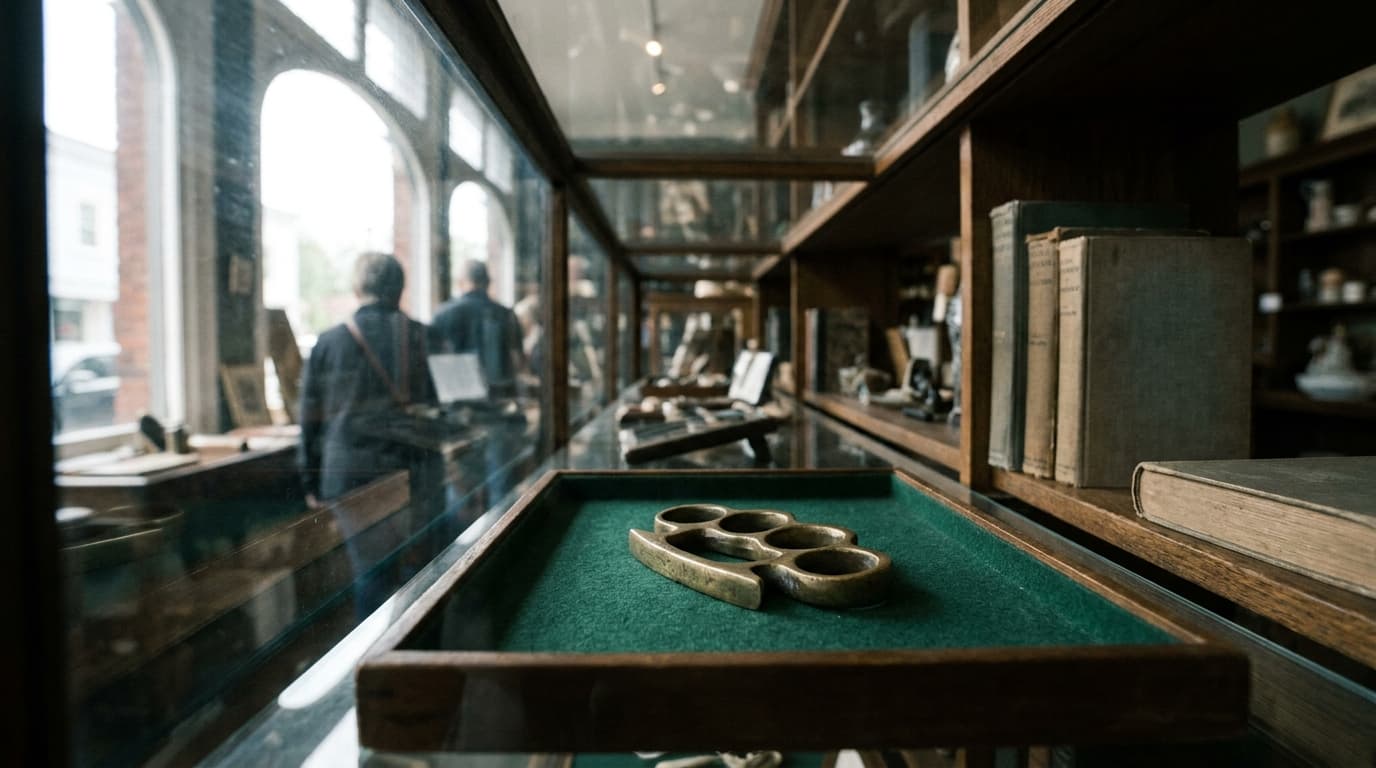
Utah's weapons chapter, Title 76 Chapter 11 of the Utah Code, does not mention brass knuckles, metal knuckles or any other kind of knuckles. Whether Utah law reaches a set of knuckles depends on whether they are a "dangerous weapon" under Utah Code 76-11-101(3), a functional test for any object "that in the manner of its use or intended use is capable of causing death or serious bodily injury," and then on who has them, where and why.
That label matters in specific situations: possession by a minor (a class B misdemeanor for a first offense), possession or purchase by a restricted person (a third degree felony for Category I, a class A misdemeanor for Category II), carrying on school or daycare premises (a class B misdemeanor), possessing one in an airport secure area or taking one into a correctional facility or other secure area, threatening with one in a fight or quarrel, carrying while under the influence, possessing with intent to commit a crime, and a one-year increase to the minimum sentence when a dangerous weapon is used in a felony. For other states, see our guide to brass knuckles laws by state.
Information last verified on 2026-10-08. This article has not been reviewed by a licensed lawyer.
Jurisdiction scope: This article covers Utah state law in Title 76 Chapter 11 of the Utah Code (Weapons), in particular 76-11-101, 76-11-205, 76-11-205.5, 76-11-206, 76-11-207, 76-11-208, 76-11-211, 76-11-214, 76-11-217, 76-11-218, 76-11-305, 76-11-306, 76-11-307 and 76-11-308; the title-wide definition in 76-1-101.5; the sentencing provisions in 76-3-203, 76-3-203.2, 76-3-203.8, 76-3-204 and 76-3-301; the secure area and correctional facility statutes 76-8-311.1, 76-8-311.2 and 76-8-311.4; the criminal gang statute 76-9-804; and the preemption statute 53-5a-102. It does not cover the exceptions to the restricted person categories in 76-11-304, court rules on weapons, Utah court decisions, city or county ordinances, school district or college policies, federal law or federal property, or the law of other states.
Does Utah law name brass knuckles?
No. Title 76 Chapter 11, the weapons chapter that took effect in its current numbering on May 7, 2025, does not mention knuckles. Instead, the chapter's offenses turn on the term "dangerous weapon," which it defines this way:
"(3) (a) 'Dangerous weapon' means: (i) a firearm; or (ii) an object that in the manner of its use or intended use is capable of causing death or serious bodily injury. (b) The following factors are used in determining whether any object, other than a firearm, is a dangerous weapon: (i) the location and circumstances in which the object was used or possessed; (ii) the primary purpose for which the object was made; (iii) the character of the wound, if any, produced by the object's unlawful use; (iv) the manner in which the object was unlawfully used; (v) whether the manner in which the object is used or possessed constitutes a potential imminent threat to public safety; and (vi) the lawful purposes for which the object may be used. (c) 'Dangerous weapon' does not include an explosive, chemical, or incendiary device as defined by Section 76-15-210." Utah Code 76-11-101(3)
The definition applies "as used in this chapter." Whether a particular set of knuckles is a dangerous weapon is a fact question answered by those six factors, and the statute does not answer it for knuckles as a category. This article does not discuss any Utah court decision applying the factors to knuckles. The factor test also means plastic, wooden or other knuckles are judged the same way as metal ones: by purpose, use and circumstances, not by material.
Title 76 also has a second, title-wide definition in 76-1-101.5(7):
"(7) 'Dangerous weapon' means: (a) any item capable of causing death or serious bodily injury; or (b) a facsimile or representation of the item, if: (i) the actor's use or apparent intended use of the item leads the victim to reasonably believe the item is likely to cause death or serious bodily injury; or (ii) the actor represents to the victim verbally or in any other manner that the actor is in control of such an item." Utah Code 76-1-101.5(7)
Which definition governs depends on the section being applied.
Older sources may cite Utah's former weapons numbers. On May 7, 2025, Utah moved its weapons statutes from 76-10-5xx to Title 76 Chapter 11; for example, the restricted person rules were formerly in 76-10-503 and the school rule in 76-10-505.5.
Owning and carrying knuckles
The main Chapter 11 offenses that reach knuckles are discussed below, and none of them makes owning or carrying knuckles an offense by itself for an adult who is not a restricted person. Each depends on who has the knuckles (a minor or a restricted person), where they are (a school, daycare, airport secure area or secure facility), the person's conduct (threatening or fighting), condition (under the influence) or intent (to commit a crime).
Unlawfully drawing or exhibiting a dangerous weapon in an angry and threatening manner, or unlawfully using one in a fight or quarrel, in the presence of two or more individuals is a class A misdemeanor under 76-11-207(2)-(3). The section does not apply to a person who, reasonably believing it necessary under the self-defense statute (76-2-402) to prevent another's use of unlawful force, threatens the use of a dangerous weapon or draws or exhibits one. The same statute makes the point directly for ordinary possession:
"(5) For purposes of this section, the following conduct by an actor does not constitute drawing or exhibiting a dangerous weapon in an angry and threatening manner as described in Subsection (2): (a) possession of a dangerous weapon, whether visible or concealed, without additional threatening behavior ..." Utah Code 76-11-207(5)
That subsection defines what the threatening offense in 76-11-207(2) does not cover. It is not a general permission, and the other offenses below still apply.
Intent to commit a crime
"(2) An actor commits possession of a dangerous weapon with criminal intent if the actor possesses a dangerous weapon with the intent to use the dangerous weapon to commit a criminal offense. (3) A violation of Subsection (2) is a class A misdemeanor." Utah Code 76-11-208
Carrying while under the influence
"(2) An actor commits carrying a dangerous weapon while under the influence of alcohol or drugs if the actor: (a) carries a dangerous weapon that is readily accessible by the actor for immediate use; and (b) is under the influence of: ... (3) A violation of Subsection (2) is a class B misdemeanor." Utah Code 76-11-217
Both elements are required: the weapon must be readily accessible for immediate use, and the person must be under the influence as the section defines. The section has its own exceptions; check its text.
Minors
"(2) An actor commits possession of a dangerous weapon by a minor if the actor: (a) is a minor; and (b) possesses a dangerous weapon. (3) (a) Except as provided in Subsection (3)(b), a violation of Subsection (2) is: (i) a class B misdemeanor for a first offense; and (ii) a class A misdemeanor for each subsequent offense. ... (5) For an actor who is 14 years old or older but younger than 18 years old, this section does not apply if the actor: (a) possesses a dangerous weapon; (b) has permission from the actor's parent or guardian to possess the dangerous weapon; and (c) does not use the dangerous weapon in the commission of a crime." Utah Code 76-11-211
The felony tier in subsection (3)(b) is for certain firearms, not knuckles. For a 14 to 17 year old, all three conditions in subsection (5) must be met for the exception to apply. Rules for children under 14 are set out in the section and are not covered here.
A parent or legal guardian who knows the minor child is possessing a dangerous weapon in violation of 76-11-211 and fails to make reasonable efforts to remove it from the minor's possession commits a class B misdemeanor (76-11-214).
Restricted persons, including some people with felony convictions
Utah sorts people barred from weapons into two groups, Category I and Category II restricted persons (76-11-302 and 76-11-303). Category I includes, among others, people convicted of a violent felony and people on probation or parole for a felony; Category II is a broader list. The restricted person offenses reach any dangerous weapon, not only firearms:
"(2) An actor commits category I restricted person participating in prohibited dangerous weapon conduct if the actor: (a) is a category I restricted person; and (b) intentionally or knowingly: ... (ii) purchases, transfers, uses, carries, or otherwise possesses a dangerous weapon. (3) (a) A violation of Subsection (2) is a third degree felony if the dangerous weapon is not a firearm." Utah Code 76-11-305
For a Category II restricted person, the parallel offense in 76-11-306 provides: "(3) (a) A violation of Subsection (2) is a class A misdemeanor if the dangerous weapon is not a firearm."
Because these offenses cover simply possessing a dangerous weapon, a restricted person can commit one with knuckles kept at home, if the knuckles are a dangerous weapon under the factor test. Section 76-11-304 sets out exceptions and limits to the categories; check it, or ask a lawyer, before relying on any general statement about your own status.
Selling, transferring or otherwise providing a dangerous weapon that is not a firearm to someone known to be a Category I restricted person is a third degree felony when the seller knew the recipient intended to use it for an unlawful purpose (76-11-307). The same conduct toward a known Category II restricted person is a class A misdemeanor (76-11-308).
A separate statute, 76-9-804, applies to certain people with criminal gang convictions; a violation of its subsection (2) is a class A misdemeanor.
Schools and colleges
Elementary and secondary schools. Utah's school premises offense, 76-11-205, covers carrying a dangerous weapon on or about school premises:
"(3) (a) A violation of Subsection (2) is a class B misdemeanor if the dangerous weapon carried by the actor is not a firearm. ... (4) This section does not apply if: ... (h) the actor is carrying the dangerous weapon in a vehicle lawfully under the actor's control, not including a vehicle owned by the school or used by the school to transport students." Utah Code 76-11-205(3)(a), (4)(h)
The statute defines "on or about school premises" as inside a public or private elementary or secondary school, or on the grounds of a private elementary or secondary school, and the person must know or reasonably believe they are on or about school premises. Subsection (4) lists other exceptions as well, including a person 21 or older with a concealed carry permit who carries the weapon concealed, and carrying at the person's own residence or on the person's own real property. The vehicle exception does not cover a school bus or any other vehicle the school owns or uses to transport students.
A separate sentencing provision, 76-3-203.2, raises the degree of an offense against the individual (Chapter 5) or a robbery committed while using or threatening to use a dangerous weapon on or about school premises, which for that section includes elementary and secondary schools and colleges and their grounds, the area within 1,000 feet of them, and a preschool or child care facility and its grounds. A class B misdemeanor becomes a class A misdemeanor, a class A misdemeanor becomes a third degree felony, and so on up the scale.
Colleges and universities. Utah HB 84 (2026), which took effect on May 6, 2026, amended the higher education offense in 76-11-205.5 by "renaming the offense to 'Openly carrying a dangerous weapon at an institution of higher education.'" As the new name indicates, the offense is directed at open carry: intentionally carrying a dangerous weapon on or about the premises of an institution of higher education so that it is visible to the ordinary observation of a reasonable person, while knowing or reasonably believing that one is on those premises. It is a class C misdemeanor, punishable by up to 90 days in jail (76-3-204) and a $750 fine (76-3-301). Exceptions include open carry at the person's own residence or on the person's own real property, and in a vehicle lawfully under the person's control that the school does not own or use to transport students.
Daycare and child care. Carrying a dangerous weapon that is not a firearm on or about the premises of a preschool or child care center (the building, or only the rooms used for the daycare when it occupies part of a building) is a class B misdemeanor under 76-11-206 when the person has reasonable cause to believe they are there. Exceptions include holders of a concealed carry permit (including provisional and temporary permits), carrying at the person's own residence or on the person's own real property, carrying approved by the responsible daycare administrator, and a vehicle lawfully under the person's control that the daycare does not own or use to transport enrolled minors.
Jails, prisons and secure facilities
The State Tax Commission and correctional, law enforcement and mental health facilities may establish secure areas and prohibit or control dangerous weapons in them by rule (76-8-311.1). That section also applies to higher education secure hearing rooms and to secure areas the Judicial Council establishes under 78A-2-203. A secure area must post notice at each entrance and provide secure weapons storage.
Knowingly or intentionally transporting a dangerous weapon into a correctional facility, a State Tax Commission secure area, a secure area in a law enforcement or mental health facility, or a higher education secure area is a third degree felony under 76-8-311.2. It is a defense that the person acted in conformity with the facility's rule or policy.
Transporting a dangerous weapon to or within a correctional facility, or into a secure area of a mental health facility, with intent to provide or sell it to an offender or detainee, or providing or selling one to an offender at a correctional facility or a detainee at a mental health facility secure area, is covered by 76-8-311.4, which provides that "Except as provided in Subsection (4), a violation of Subsection (2) is a second degree felony." A second degree felony carries 1 to 15 years (76-3-203(2)) and a fine of up to $10,000 (76-3-301).
Airports
Intentionally or knowingly possessing a dangerous weapon within the secure area of an airport, the area beyond where the public generally buys tickets and checks and retrieves luggage, is a class A misdemeanor under 76-11-218, including for a person with a concealed firearm permit. Doing so recklessly or with criminal negligence is an infraction; on a first offense the person may receive a written warning and may not receive a citation or any other punishment.
Using knuckles in a felony: the sentence enhancement
"(2) If the trier of fact finds beyond a reasonable doubt that a dangerous weapon was used in the commission or furtherance of a felony, the court: (a) (i) shall increase by one year the minimum term of the sentence applicable by law; and (ii) if the minimum term applicable by law is zero, shall set the minimum term as one year; and (b) may increase by five years the maximum sentence applicable by law in the case of a felony of the second or third degree." Utah Code 76-3-203.8(2)
The one-year increase to the minimum is mandatory once the finding is made; the five-year increase to the maximum is discretionary and applies only to second and third degree felonies. The enhancement depends on use, not mere possession. It uses the broader title-wide definition in 76-1-101.5 (any item capable of causing death or serious bodily injury), not the Chapter 11 factor test.
Utah penalties at a glance
| Conduct | Statute | Classification | Maximum penalty |
|---|---|---|---|
| Category I restricted person purchasing, transferring, using, carrying or possessing a dangerous weapon that is not a firearm | 76-11-305 | Third degree felony | 5 years; $5,000 |
| Category II restricted person, same conduct with a weapon that is not a firearm | 76-11-306 | Class A misdemeanor | 364 days; $2,500 |
| Possessing a dangerous weapon with intent to use it to commit a criminal offense | 76-11-208 | Class A misdemeanor | 364 days; $2,500 |
| Minor possessing a dangerous weapon, first offense | 76-11-211 | Class B misdemeanor | 6 months; $1,000 |
| Minor possessing a dangerous weapon, each subsequent offense | 76-11-211 | Class A misdemeanor | 364 days; $2,500 |
| Carrying a dangerous weapon that is not a firearm on school premises | 76-11-205 | Class B misdemeanor | 6 months; $1,000 |
| Carrying a readily accessible dangerous weapon while under the influence | 76-11-217 | Class B misdemeanor | 6 months; $1,000 |
| Transporting a dangerous weapon to or within a correctional facility intending to provide or sell it to an offender, or providing one to an offender | 76-8-311.4 | Second degree felony | 1 to 15 years; $10,000 |
| Knowingly or intentionally transporting a dangerous weapon into a correctional facility or a listed secure area | 76-8-311.2 | Third degree felony | 5 years; $5,000 |
| Intentionally or knowingly possessing a dangerous weapon in an airport secure area | 76-11-218 | Class A misdemeanor | 364 days; $2,500 |
| Recklessly or negligently possessing a dangerous weapon in an airport secure area | 76-11-218 | Infraction | $750; a first offense may draw only a written warning |
| Unlawfully drawing or exhibiting a dangerous weapon in an angry and threatening manner, or using one in a fight or quarrel, in the presence of two or more people | 76-11-207 | Class A misdemeanor | 364 days; $2,500 |
| Carrying a dangerous weapon that is not a firearm on daycare premises | 76-11-206 | Class B misdemeanor | 6 months; $1,000 |
| Openly carrying a dangerous weapon at an institution of higher education | 76-11-205.5 | Class C misdemeanor | 90 days; $750 |
| Parent or guardian failing to make reasonable efforts to remove a dangerous weapon a minor child possesses unlawfully | 76-11-214 | Class B misdemeanor | 6 months; $1,000 |
| Providing a dangerous weapon that is not a firearm to a known Category I restricted person, knowing of an intended unlawful use | 76-11-307 | Third degree felony | 5 years; $5,000 |
| Same, to a known Category II restricted person | 76-11-308 | Class A misdemeanor | 364 days; $2,500 |
| Using a dangerous weapon in the commission or furtherance of a felony | 76-3-203.8 | Sentence enhancement | Minimum term plus 1 year; maximum may rise 5 years |
Jail terms come from 76-3-204 (364 days for a class A misdemeanor, six months for class B, 90 days for class C) and 76-3-203 (1 to 15 years for a second degree felony and up to five years for a third degree felony, unless the statute provides otherwise); fines from 76-3-301(1). Each row applies to knuckles only if they are a dangerous weapon under the definition that section uses; the 76-3-203.8 enhancement uses the broader title-wide definition in 76-1-101.5.
City and county rules
Utah's preemption statute, 53-5a-102, is written for firearms. The Legislature "occupies the whole field of state regulation of firearms," and "Authority to regulate firearms, ammunition, and firearm accessories is reserved to the state." The same section also provides that "This part and Title 76, Chapter 11, Weapons, are uniformly applicable throughout the state and in all the political subdivisions of the state." Whether that uniformity language bars a city or county from regulating non-firearm weapons such as knuckles is not settled by the text. Check your city or county code, and call your local police department's non-emergency line if a rule is unclear.
Knives and self-defense in Utah
The same dangerous weapon definition drives Utah's knife rules; see our guide to Utah knife laws. When the law allows force at all is covered in Utah self-defense laws.
Related pages
This article provides general legal information about Utah state law, not legal advice. Weapons laws change and local rules vary. For advice about a specific situation, contact a lawyer licensed in Utah or your local law enforcement agency.
Last updated: 2026-10-08.
Frequently Asked Questions
Are brass knuckles legal in Utah?
Utah Code Title 76 Chapter 11 does not name knuckles. They are regulated only if they are a dangerous weapon under the factor test in 76-11-101(3), and then the rules for minors, restricted persons, school and daycare premises, airport and other secure areas, threatening, intoxication and criminal intent apply.
Can I carry brass knuckles concealed in Utah?
The Chapter 11 offenses that reach knuckles depend on who carries them, where, and why, not on concealment alone. Under 76-11-207(5), possessing a dangerous weapon, visible or concealed, without additional threatening behavior is not drawing or exhibiting it in an angry and threatening manner; actually drawing or exhibiting one in an angry and threatening manner in front of two or more people is a class A misdemeanor.
Can a felon own brass knuckles in Utah?
If the person is a restricted person and the knuckles are a dangerous weapon, possessing them is a third degree felony for Category I (76-11-305) or a class A misdemeanor for Category II (76-11-306). Whether a particular conviction makes someone a restricted person depends on 76-11-302 through 76-11-304.
Can a minor have brass knuckles in Utah?
A minor who possesses a dangerous weapon commits a class B misdemeanor for a first offense under 76-11-211. The section does not apply to a 14 to 17 year old who has a parent or guardian's permission and does not use the weapon in a crime.
Can I bring brass knuckles to a school in Utah?
Carrying a dangerous weapon that is not a firearm on school premises is a class B misdemeanor under 76-11-205. Exceptions include a dangerous weapon in a vehicle lawfully under the person's control, but not a vehicle the school owns or uses to transport students, and a person 21 or older with a concealed carry permit who carries it concealed.
What was Utah's old brass knuckles statute number?
Utah's current weapons chapter does not name knuckles. On May 7, 2025, Utah moved its weapons statutes from 76-10-5xx to Title 76 Chapter 11; the restricted person rules, for example, were formerly in 76-10-503.
Updates
Independently fact-checked against the cited primary sources
The Law Behind This Article
This article rests on the statutory provisions below, held in our own legal record and retrieved from the official source. Tap a section to read the operative text.
Utah Code, Title 76: Criminal Offenses
§ 76-11-101Definitions.In forcecited in 4 of our articles
As used in this chapter: (1) (a) "Antique firearm" means: (i) any firearm, including any firearm with a matchlock, flintlock, percussion cap, or similar type of ignition system, manufactured in or before 1898; (ii) a firearm that is a replica of any firearm described in this Subsection (1)(a), if the replica: (A) is not designed or redesigned for using rimfire or conventional centerfire fixed ammunition; or (B) uses rimfire or centerfire fixed ammunition that is no longer manufactured in the United States and is not readily available in ordinary channels of commercial trade; or (iii) (A) that is a muzzle loading rifle, shotgun, or pistol; and (B) is designed to use black powder, or a black powder substitute, and cannot use fixed ammunition. (b) "Antique firearm" does not include: (i) a weapon that incorporates a firearm frame or receiver; (ii) a firearm that is converted into a muzzle loading weapon; or (iii) a muzzle loading weapon that can be readily converted to fire fixed ammunition by replacing the: (A) barrel; (B) bolt; (C) breechblock; or (D) any combination of Subsection (1)(b)(iii)(A), (B), or (C).
Official text (excerpt) · last checked 2026-07-29 · Read the full text in our law library · Verify at le.utah.gov
Cited in 1 court opinions in our collectionLatest citing opinion in our collection: 2026
Opinions citing this section in our collection:
- State v. Perez (Court of Appeals of Utah 2026, 2026 UT App 57)“…rcumstances in which the object was used or possessed.” See Utah Code § 76-11-101(3)(b)(i). Had factor 1 been included in…”
Identified automatically from the court opinions citing this section — not a ranking of which case controls.
Also relied on in: Utah Knife Laws (2026): Carry, Schools, Preemption, Pepper Spray and Stun Gun Laws by State (2026), Utah Pepper Spray and Stun Gun Laws (2026)
§ 76-11-305Category I restricted person participating in prohibited dangerous weapon conduct.In forcecited in 3 of our articles
(1) Terms defined in Sections 76-1-101.5, 76-11-101, and 76-11-301 apply to this section. (2) An actor commits category I restricted person participating in prohibited dangerous weapon conduct if the actor: (a) is a category I restricted person; and (b) intentionally or knowingly: (i) agrees, consents, offers, or arranges to: (A) purchase a dangerous weapon; (B) transfer a dangerous weapon; (C) use a dangerous weapon; or (D) carry or otherwise possess a dangerous weapon; or (ii) purchases, transfers, uses, carries, or otherwise possesses a dangerous weapon. (3) (a) A violation of Subsection (2) is a third degree felony if the dangerous weapon is not a firearm. (b) A violation of Subsection (2) is a second degree felony if the dangerous weapon is a firearm. (4) For purposes of this section, using a dangerous weapon includes using an antique firearm for an activity regulated under Title 23A, Wildlife Resources Act.
Official text (excerpt) · last checked 2026-09-24 · Read the full text in our law library · Verify at le.utah.gov
Cited in 1 court opinions in our collectionLatest citing opinion in our collection: 2026
Opinions citing this section in our collection:
- State v. Perez (Court of Appeals of Utah 2026, 2026 UT App 57)“…rwise possess “a dangerous weapon” that “is not a firearm.” Utah Code § 76-11-305(2)(a), (2)(b)(ii), (3)(a). 3 A dangerou…”
Identified automatically from the court opinions citing this section — not a ranking of which case controls.
§ 76-11-211Possession of a dangerous weapon by a minor.In forcecited in 3 of our articles
(1) (a) As used in this section, "responsible adult" means an individual: (i) who is 18 years old or older; and (ii) who may lawfully possess a dangerous weapon. (b) Terms defined in Sections 76-1-101.5, 76-11-101, and 76-11-201 apply to this section. (2) An actor commits possession of a dangerous weapon by a minor if the actor: (a) is a minor; and (b) possesses a dangerous weapon. (3) (a) Except as provided in Subsection (3)(b), a violation of Subsection (2) is: (i) a class B misdemeanor for a first offense; and (ii) a class A misdemeanor for each subsequent offense. (b) A violation of Subsection (2) is a third degree felony if the dangerous weapon is: (i) a handgun; (ii) a short barreled rifle; (iii) a short barreled shotgun; (iv) a fully automatic weapon; or (v) a machinegun firearm attachment.
Official text (excerpt) · last checked 2026-07-29 · Read the full text in our law library · Verify at le.utah.gov
§ 76-11-205Carrying a dangerous weapon at an elementary school or secondary school.In forcecited in 3 of our articles
(1) (a) As used in this section, "on or about school premises" means: (i) in a public or private elementary school or secondary school; or (ii) on the grounds of a private elementary school or secondary school. (b) Terms defined in Sections 76-1-101.5, 76-11-101, and 76-11-201 apply to this section. (2) An actor commits carrying a dangerous weapon at an elementary school or secondary school if the actor: (a) is not an individual listed in Subsection (4); (b) carries a dangerous weapon on or about school premises; and (c) knows or reasonably believes that the actor is on or about school premises at the time the actor carries the dangerous weapon. (3) (a) A violation of Subsection (2) is a class B misdemeanor if the dangerous weapon carried by the actor is not a firearm. (b) A violation of Subsection (2) is a class A misdemeanor if the dangerous weapon carried by the actor is a firearm.
Official text (excerpt) · last checked 2026-07-29 · Read the full text in our law library · Verify at le.utah.gov
Search our full record of US law — 2.1 million sections, every state + federal →
Sources and References
- Utah Code Title 76 Chapter 11 Weapons (76-11-101 definitions; 76-11-205, 76-11-207, 76-11-208, 76-11-211, 76-11-217, 76-11-305, 76-11-306)(le.utah.gov).gov
- Utah Code Title 76 (76-1-101.5; 76-3-203, 76-3-203.8, 76-3-204, 76-3-301; 76-8-311.1, 76-8-311.4; 76-9-804)(le.utah.gov).gov
- Utah Code Title 76 Chapter 11 Part 2, General Weapons Violations(le.utah.gov).gov
- Utah HB 84 (2026), Dangerous Weapon Amendments, enrolled(le.utah.gov).gov
- Utah Code 53-5a-102 (firearm preemption)(le.utah.gov).gov
- Utah Code 76-8-311.2 (prohibited dangerous weapon in a secure area)(le.utah.gov).gov
- Utah Code 76-8-311.1 (establishment of secure areas)(le.utah.gov).gov
- Utah Code 76-11-218 (dangerous weapon in an airport secure area)(le.utah.gov).gov
- Utah Code 76-11-206 (dangerous weapon at a daycare)(le.utah.gov).gov
- Utah Code 76-11-205.5 (openly carrying at an institution of higher education)(le.utah.gov).gov
- Utah Code 76-3-203.2 (dangerous weapon offenses on or about school premises)(le.utah.gov).gov