
Utah
Utah Knife Laws (2026): Carry, Schools, Preemption
Independently fact-checked against primary sources (last audited September 18, 2026). · 20 primary sources cited on this page. How we verify our legal content
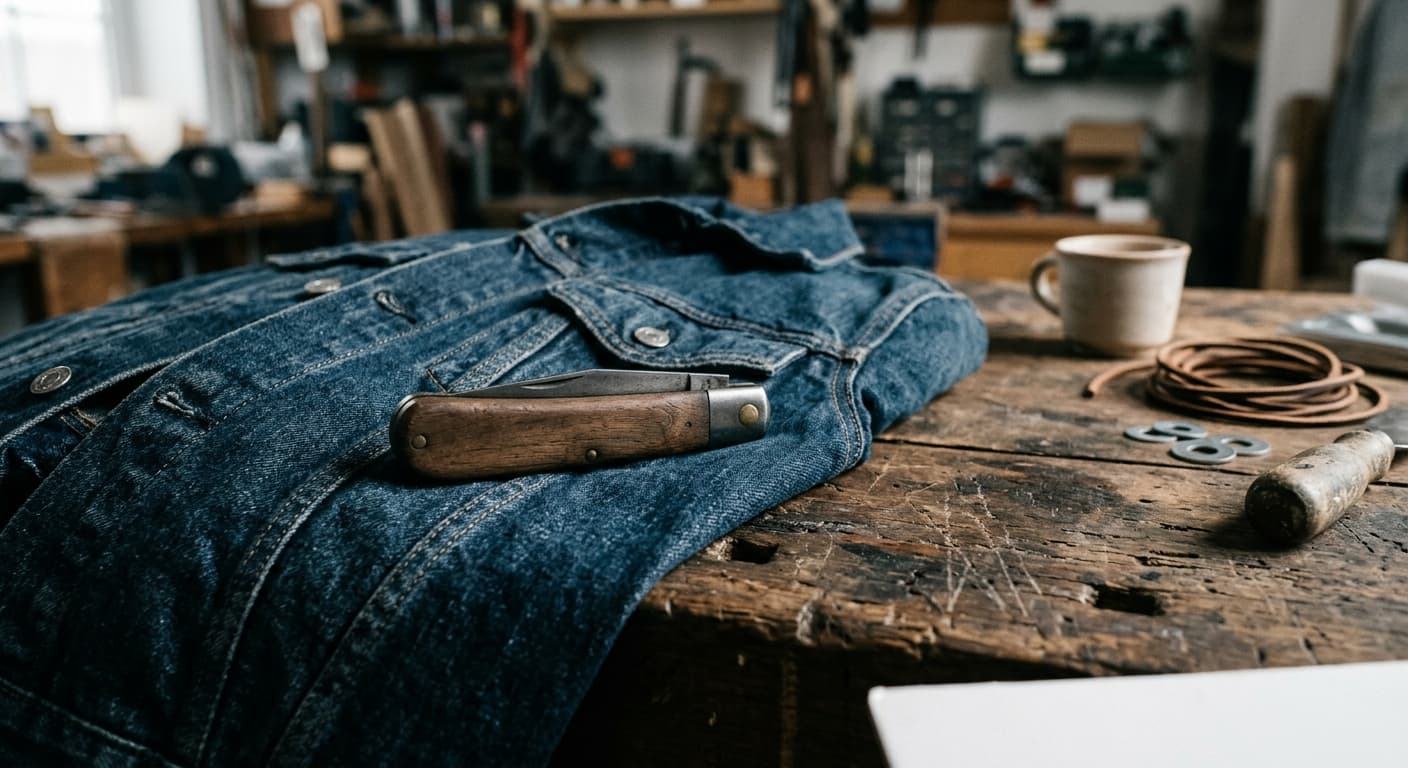
Utah has no general statute restricting open or concealed carry of an ordinary knife by an adult, and no statewide blade-length limit. Most of Utah's knife-related offenses are location-specific, such as schools and airports, or status-specific, such as carrying while a minor, while intoxicated, or while legally barred from possessing weapons, but several further offenses reach a knife anywhere in the state regardless of location, and every one of them turns on a functional, litigated definition of "dangerous weapon" rather than on a knife being named by type.
Jurisdiction scope: This page covers Utah state law only, principally Utah Code §§ 76-1-101.5, 76-11-101, 76-11-201, 76-11-205, 76-11-205.5, 76-11-206, 76-11-207, 76-11-208, 76-11-211, 76-11-214, 76-11-216, 76-11-217, 76-11-218, 76-11-302, 76-11-305, 76-11-306, 76-11-307, 76-11-308, 17-60-502, 10-8-47.5, and 17B-1-103. It does not cover Utah's firearm-specific carry-permit statutes in Title 53 in detail, since those govern firearms rather than knives.
Is it legal to carry a knife in Utah?
Yes, for an adult with no disqualifying status, in most settings. Utah has no general statewide statute restricting the open or concealed carry of an ordinary knife. The state's weapons offenses in Title 76, Chapter 11 are built around the term "dangerous weapon." Title 76's general definitions section, § 76-1-101.5, opens "Unless otherwise provided, as used in this title," and Chapter 11 does otherwise provide: every offense on this page recites that "Terms defined in Sections 76-1-101.5, 76-11-101, and 76-11-201 apply to this section," and § 76-11-101(3) is the controlling weapons-chapter definition. It defines "dangerous weapon" as a firearm or "an object that in the manner of its use or intended use is capable of causing death or serious bodily injury," and supplies a six-factor test for a non-firearm object: the location and circumstances of its use or possession, the primary purpose for which it was made, the character of any wound produced, the manner of its unlawful use, whether it posed a potential imminent threat to public safety, and its lawful uses. Whether an ordinary knife qualifies is therefore a fact question resolved case by case, not a threshold that is automatically met. Most of the offenses that can reach a knife are tied to a specific location, such as a school or airport, or a specific status, such as being a minor, being intoxicated, or being a restricted person; two further offenses, described below, reach a knife anywhere in the state with no location or status element at all.
Schools, daycare, and higher education
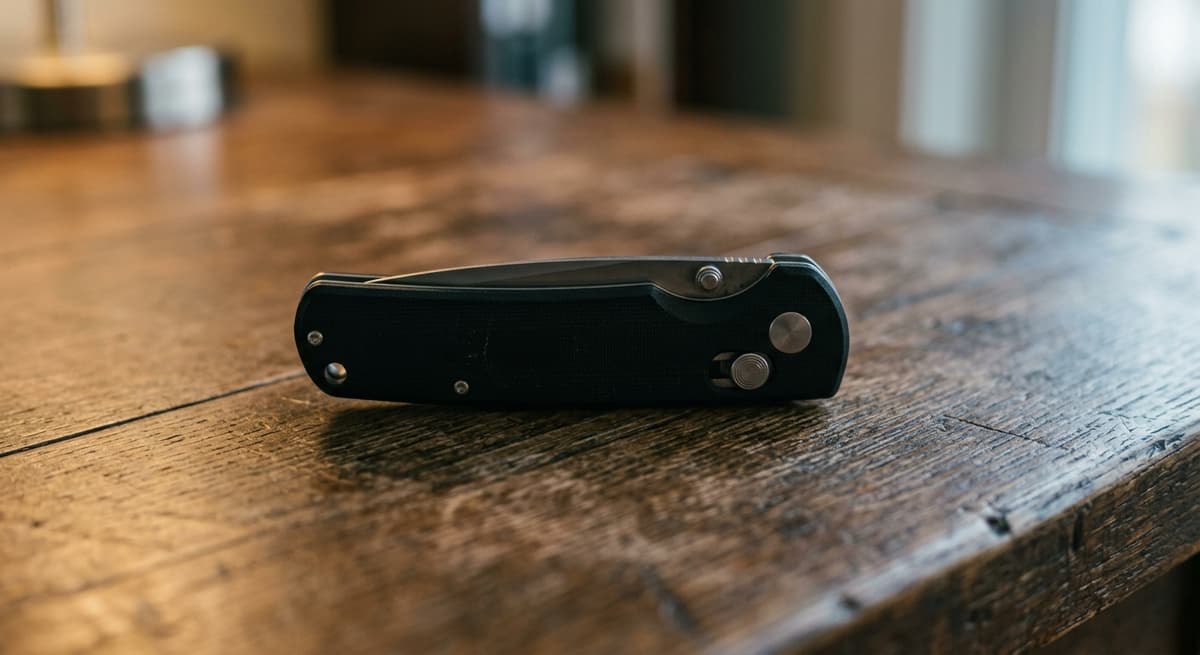
Section 76-11-205 makes it an offense to carry a dangerous weapon on or about the premises of a public or private elementary or secondary school, or on the grounds of a private one, whether the weapon is carried openly or concealed. A violation is a class B misdemeanor if the weapon is not a firearm, which covers a knife, or a class A misdemeanor if it is a firearm. Subsection (4) lists several exemptions, including an individual with a concealed carry permit who is 21 or older carrying the weapon concealed, an actor on their own residence or real property, possession approved by the school administrator, and a weapon carried in a vehicle lawfully under the actor's control other than a school vehicle. The concealed-permit exemption's "unless" clause does not withdraw the exemption while the permit holder is responding to an active threat; it does the opposite, lifting the concealed-manner requirement itself so the same exemption still applies if the weapon becomes visible while the person is lawfully responding to an active threat under §§ 76-2-402, 76-2-405, or 76-2-407.
Institutions of higher education are treated differently. Section 76-11-205.5 restricts only openly carrying a dangerous weapon at a college or university, defined as carrying it visible to ordinary observation, and makes a violation a class C misdemeanor, subject to similar exemptions. Because this section reaches only open carry, concealed carry of a knife on a Utah higher-education campus is not restricted by this particular statute.
Section 76-11-206 imposes the same structure at a daycare, defined as a preschool or child care center: carrying a dangerous weapon on or about daycare premises, open or concealed, is a class B misdemeanor for a non-firearm and a class A misdemeanor for a firearm, with exemptions that include any concealed carry permit holder (not limited to age 21, unlike the school exemption) and an actor on their own property.
General offenses that reach a knife anywhere in the state
Unlike the location- and status-based rules elsewhere on this page, several offenses in Chapter 11 have no location element and apply to any adult anywhere in Utah. Two are carry/possession offenses. Section 76-11-207(2) makes it an offense to threaten with or use a dangerous weapon in a fight or quarrel: "An actor commits threatening with or using a dangerous weapon in a fight or quarrel if the actor, in the presence of two or more individuals: (a) unlawfully draws or exhibits a dangerous weapon in an angry and threatening manner; or (b) unlawfully uses a dangerous weapon in a fight or quarrel." A violation is a class A misdemeanor. The statute includes a safe harbor at subsection (5)(a): "possession of a dangerous weapon, whether visible or concealed, without additional threatening behavior" does not violate the section, so ordinary open or concealed carry of a knife, without more, is not itself the offense.
Section 76-11-208(2) separately makes it an offense to possess a dangerous weapon "with the intent to use the dangerous weapon to commit a criminal offense," also a class A misdemeanor. Neither of these two sections is tied to a school, an airport, a minor, or intoxication; both apply the same § 76-11-101(3) dangerous-weapon definition described above to an ordinary knife carried anywhere in the state, if the fact-specific elements of drawing it threateningly in a fight or possessing it with criminal intent are met.
A separate, smaller group of statewide offenses reaches the sale side of a knife transaction rather than carrying one. Section 76-11-216(2) makes it an offense to knowingly solicit, persuade, encourage, or entice a sale, transfer, or provision of a dangerous weapon known to be unlawful, or to knowingly provide materially false information to deceive someone about the lawfulness of such a transaction; a violation is a class A misdemeanor for a non-firearm dangerous weapon under subsection (3)(a). Sections 76-11-307 and 76-11-308 separately make it an offense to sell, transfer, or otherwise provide a dangerous weapon to someone the seller knows is a category I or category II restricted person, respectively (the restricted-person categories are described below); for a non-firearm, § 76-11-307(3)(b) is a third-degree felony and § 76-11-308(3)(b) is a class A misdemeanor, but only if the seller also knew the recipient intended to use the weapon unlawfully. None of these three sale-related offenses is tied to a location either.
Airports and other statewide restrictions
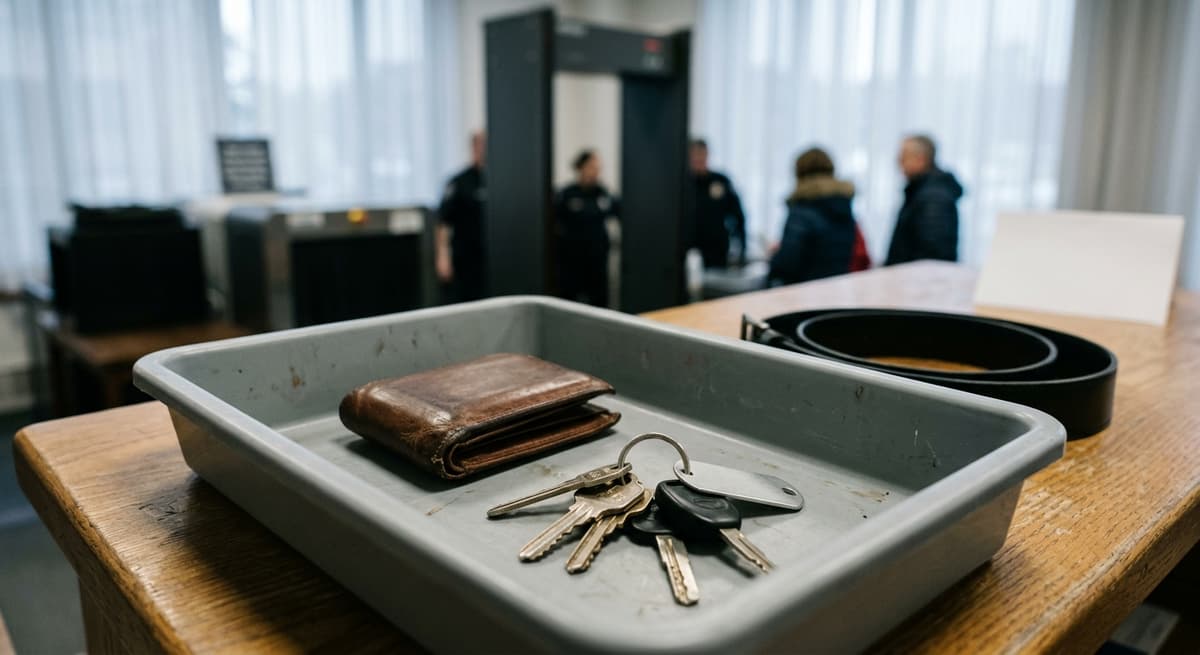
Section 76-11-218 makes it an offense to possess a dangerous weapon within the secure area of an airport, established under subsection (5), even for a concealed firearm permit holder. Intentional or knowing possession is a class A misdemeanor; reckless or criminally negligent possession is an infraction, and a first infraction offense may draw only a written warning under subsection (6). The airport authority, county, or municipality regulating the airport may not charge a different offense, assess a civil penalty, or enact its own regulation covering this conduct.
Two further restrictions apply statewide rather than to a single location. Section 76-11-211 makes a minor's possession of a dangerous weapon a class B misdemeanor for a first offense and a class A misdemeanor for each subsequent offense, escalating to a third-degree felony only when the weapon is a handgun, short-barreled rifle or shotgun, fully automatic weapon, or machinegun attachment; because a knife is not on that felony-tier list, a minor's knife possession stays at the misdemeanor tier. Subsections (4) and (5) exempt a minor who possesses a dangerous weapon with parental or guardian permission, subject to additional conditions for a minor under 14. A separate statute reaches the parent or guardian's own inaction: § 76-11-214(2) makes it an offense for a parent or guardian who knows a minor is in possession of a dangerous weapon in violation of § 76-11-211 and fails to make reasonable efforts to remove it from the minor's possession, a class B misdemeanor under subsection (3). Separately, § 76-11-217 makes it a class B misdemeanor to carry a dangerous weapon that is readily accessible for immediate use while under the influence of alcohol (measured by blood or breath concentration) or a controlled substance, with an exemption for an actor in their own residence or a residence where they have consent. Two further exemptions are not interchangeable: subsection (4)(c) exempts lawful use of a substance under Utah's medical cannabis program with no additional condition, while subsection (4)(d)(iii)'s safe-handling condition, that the actor is not a danger to anyone and is capable of safely handling a dangerous weapon, applies only to a lawfully prescribed controlled substance, not to medical cannabis.
Restricted persons: the most serious knife exposure in Utah law
Utah Code Chapter 11, Part 3 bars certain people from possessing any dangerous weapon at all, including a knife, and this is the highest-stakes knife rule in the state. Section 76-11-305(2) makes it an offense for a category I restricted person who intentionally or knowingly "purchases, transfers, uses, carries, or otherwise possesses a dangerous weapon," and subsection (3)(a) sets the penalty: "A violation of Subsection (2) is a third degree felony if the dangerous weapon is not a firearm." Category I restricted person status is defined in § 76-11-302, and a qualifying violent-felony conviction is only the first of six independent grounds: being on probation or parole for any felony (not only a violent one), being on parole from secure care, a 10-year window after a juvenile adjudication for an offense that would have been a violent felony if committed by an adult, being unlawfully present in the United States, and being on probation for a conviction of simple possession of a Schedule I or II controlled substance, a controlled substance analog, or a substance listed in § 58-37-109. A reader whose only prior conviction is a non-violent felony, but who is still on probation or parole for it, is still a category I restricted person under this section, and the same third-degree-felony knife rule reaches them.
Section 76-11-306 applies the same structure to a category II restricted person, a broader category that includes people with certain drug-related convictions or subject to specified protective orders, among other grounds. A category II restricted person's possession of a non-firearm dangerous weapon is a class A misdemeanor under subsection (3)(a); possession of a firearm is a third-degree felony. Both sections carry an affirmative defense for a person who already lawfully possessed the weapon before becoming restricted and transfers it within a set window, and a narrow exception for archery equipment used for lawful hunting or target shooting. Neither section requires any particular location: a restricted person's ordinary pocket knife, carried anywhere in Utah, is enough.
Statewide preemption at every level of local government
Utah reserves knife regulation to the state at three tiers of local government, but the three statutes are not identically worded. Section 17-60-502(2) provides that "the authority to regulate a knife is reserved to the state except where the Legislature specifically delegates responsibility to a county," and subsection (3)(a) bars a county from enacting or enforcing an ordinance or regulation pertaining to a knife unless specifically authorized by the Legislature or, subject to subsection (3)(b), by a county ordinance carrying a criminal penalty no more restrictive, and no greater in penalty, than the state's own. Section 10-8-47.5 applies word-for-word identical language to a municipality, substituting only "municipality" for "county."
Section 17B-1-103(7), governing special districts, is shorter and does not track the county/municipal text. Subsection (b) reserves the authority to regulate a knife to the state "except where the Legislature specifically delegates responsibility to a special district," and subsection (c) provides: "Unless specifically authorized by the Legislature by statute, a special district may not adopt or enforce a regulation or rule pertaining to a knife." There is no criminal-penalty carve-out comparable to the county and municipal statutes' subsection (3)(b), because a special district issues regulations and rules rather than criminal ordinances with their own penalty scale. Together, the three statutes mean no Utah city, county, or special district may adopt a knife ordinance of its own, though the county and municipal statutes leave room for a narrow, no-more-restrictive local criminal ordinance that the special-district statute does not.
Federal law: what it does and does not reach
Federal law does not ban an individual from owning or carrying a switchblade. The Federal Switchblade Act, 15 U.S.C. §§ 1241 to 1245, restricts interstate commerce in switchblade knives and, in 15 U.S.C. § 1245, makes it a federal offense to knowingly possess, manufacture, sell, or import a ballistic knife in or affecting interstate commerce or within federal territorial jurisdiction; the operative offense sections, §§ 1242 and 1243, do not apply to certain knives and people, listed as exemptions in 15 U.S.C. § 1244. A 2009 amendment, § 1244(5), exempts a knife with a spring, detent, or other closure-bias mechanism that requires hand, wrist, or arm exertion on the blade itself to overcome the bias and assist opening, the carve-out that keeps modern assisted-opening folding knives legal in interstate commerce. A separate exemption, § 1244(4), covers a person with only one arm possessing or carrying a switchblade with a blade three inches or less.
Disclaimer: This article provides general legal information about Utah knife law as of September 2026. It is not legal advice. Consult a lawyer licensed in Utah for advice about a specific situation.
For a state-by-state comparison, see knife laws by state. Utah's self-defense statutes are covered separately on the Utah self-defense laws page.
Statutes cited reflect their in-force version as of 2026-09-18. Last updated: 2026-09-18.
Frequently Asked Questions
Does Utah have a blade-length limit for knives?
No. Utah Code § 76-11-101(3), the definition every weapons offense in Chapter 11 incorporates, defines 'dangerous weapon' functionally, by a six-factor test tied to how an object is used or intended to be used, with no length threshold, and no Utah statute sets a blade-length limit for general carry.
Can you carry a knife concealed at a Utah college?
Yes, as far as § 76-11-205.5 is concerned. That statute restricts only openly carrying a dangerous weapon at an institution of higher education; it does not reach concealed carry, unlike the separate K-12 school statute, § 76-11-205, which restricts both open and concealed carry.
Can Utah cities or counties pass their own knife ordinances?
Generally no. Utah Code §§ 17-60-502 (counties), 10-8-47.5 (municipalities), and 17B-1-103(7) (special districts) each reserve knife regulation to the state, barring a local ordinance unless the Legislature specifically delegates that authority; the county and municipal statutes additionally allow a narrow local criminal ordinance no more restrictive than state law, an allowance the special-district statute does not contain.
Is it a felony for a minor to carry a knife in Utah?
No. Under § 76-11-211, a minor's possession of a dangerous weapon is a class B misdemeanor for a first offense and a class A misdemeanor for later offenses; the statute escalates to a third-degree felony only for a handgun, short-barreled rifle or shotgun, fully automatic weapon, or machinegun attachment, not for a knife. A separate statute, § 76-11-214, makes it a class B misdemeanor for a parent or legal guardian who knows the minor is in non-exempt possession of a dangerous weapon and fails to make reasonable efforts to remove it.
Can a felon carry a knife in Utah?
Generally no, if the prior conviction makes the person a category I or category II restricted person under Utah Code Chapter 11, Part 3. Category I restricted person status, defined in § 76-11-302, is not limited to a violent felony conviction; it also covers anyone currently on probation or parole for any felony, among other grounds. Section 76-11-305 makes a category I restricted person's possession of a non-firearm dangerous weapon, including an ordinary knife, a third-degree felony; § 76-11-306 makes the same conduct a class A misdemeanor for a category II restricted person. Neither offense requires a specific location.
Updates
Independently fact-checked against the cited primary sources
Sources and References
- Utah Code § 76-1-101.5 - General title definitions ('unless otherwise provided')(le.utah.gov).gov
- Utah Code § 76-11-101 - Weapons-chapter definitions (controlling 'dangerous weapon' definition)(le.utah.gov).gov
- Utah Code § 76-11-205 - Carrying a dangerous weapon at an elementary school or secondary school(le.utah.gov).gov
- Utah Code § 76-11-205.5 - Openly carrying a dangerous weapon at an institution of higher education(le.utah.gov).gov
- Utah Code § 76-11-206 - Carrying a dangerous weapon at a daycare(le.utah.gov).gov
- Utah Code § 76-11-207 - Threatening with or using a dangerous weapon in a fight or quarrel(le.utah.gov).gov
- Utah Code § 76-11-208 - Possession of a dangerous weapon with criminal intent(le.utah.gov).gov
- Utah Code § 76-11-211 - Possession of a dangerous weapon by a minor(le.utah.gov).gov
- Utah Code § 76-11-214 - Parent or guardian knowing a minor is in possession of a dangerous weapon(le.utah.gov).gov
- Utah Code § 76-11-216 - Prohibited conduct in the sale of a dangerous weapon(le.utah.gov).gov
- Utah Code § 76-11-217 - Carrying a dangerous weapon while under the influence of alcohol or drugs(le.utah.gov).gov
- Utah Code § 76-11-218 - Possession of a dangerous weapon in an airport secure area(le.utah.gov).gov
- Utah Code § 76-11-302 - Category I restricted person established(le.utah.gov).gov
- Utah Code § 76-11-305 - Category I restricted person participating in prohibited dangerous weapon conduct(le.utah.gov).gov
- Utah Code § 76-11-306 - Category II restricted person participating in prohibited dangerous weapon conduct(le.utah.gov).gov
- Utah Code § 76-11-307 - Selling a dangerous weapon to a category I restricted person(le.utah.gov).gov
- Utah Code § 76-11-308 - Selling a dangerous weapon to a category II restricted person(le.utah.gov).gov
- Utah Code § 17-60-502 - Knives regulated by state (counties)(le.utah.gov).gov
- Utah Code § 10-8-47.5 - Knives regulated by state (municipalities)(le.utah.gov).gov
- Utah Code § 17B-1-103 - Special district status and powers (knife regulation, subsection 7)(le.utah.gov).gov
- 15 U.S.C. §§ 1241-1245 - Federal Switchblade Act, interstate commerce and ballistic-knife scope(law.cornell.edu)
- 15 U.S.C. § 1244 - exceptions, including the 2009 assisted-opening carve-out and the one-arm exception(law.cornell.edu)