
Utah
Utah Pepper Spray and Stun Gun Laws (2026)
Independently fact-checked against primary sources (last audited September 23, 2026). · 19 primary sources cited on this page. How we verify our legal content
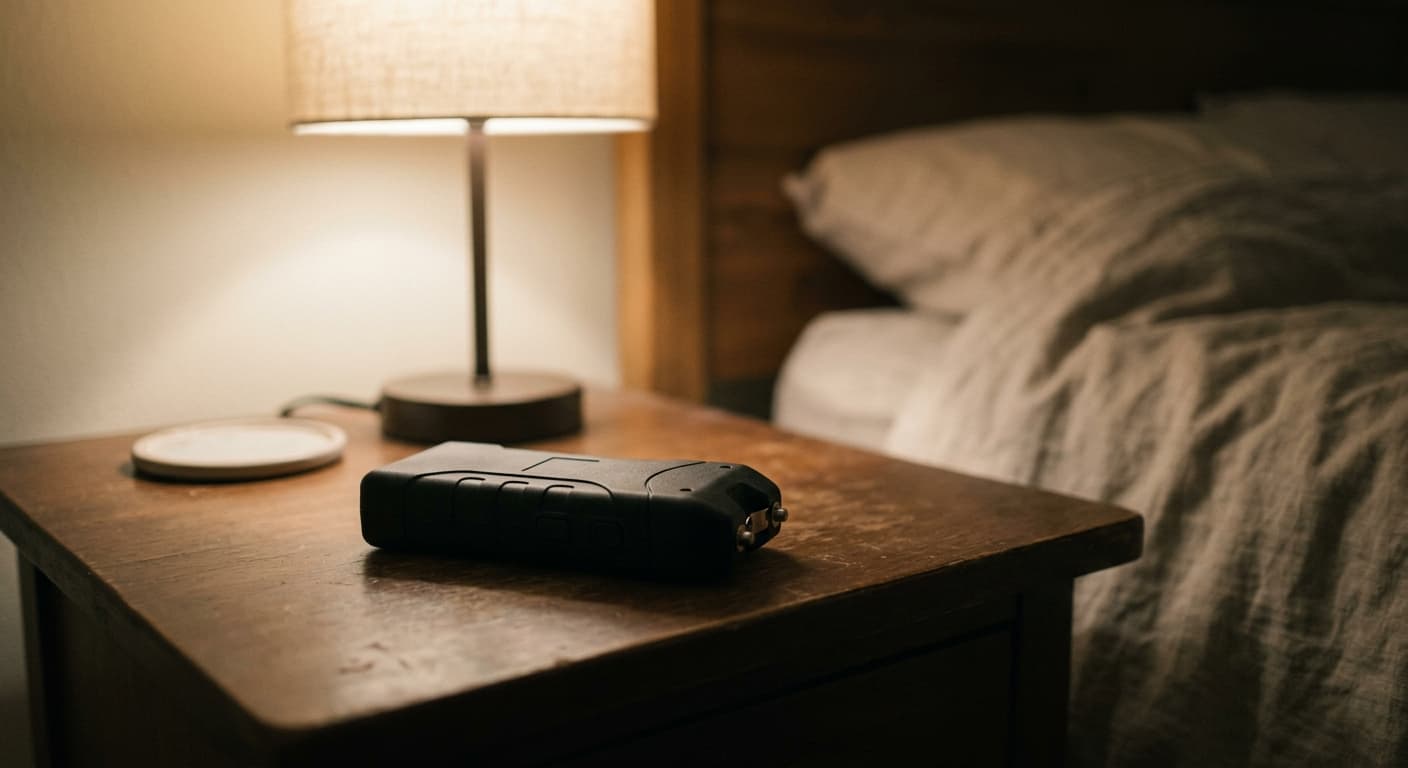
Utah has no standalone pepper-spray or stun-gun statute. Both devices are addressed, if at all, through the same general "dangerous weapon" definition that runs through Title 76, Chapter 11 of the Utah Criminal Code. A firearm is automatically a "dangerous weapon." Anything else, including a canister of pepper spray or a stun gun, is a "dangerous weapon" only if a fact-specific, six-factor test shows it is "capable of causing death or serious bodily injury" in the manner it was used or possessed. That means Utah does not give either device the kind of flat, written-out exemption that a state with a narrow "prohibited weapons" list gives; instead, whether carrying pepper spray or a stun gun triggers an offense in Utah depends on the same circumstantial test that applies to nearly any object other than a gun, across a wider set of offenses than ordinary carry alone, including a minor's possession, restricted-place carry, and restricted-person status.
Jurisdiction scope: This page covers Utah state law only, principally Utah Code §§ 76-11-101, 76-11-201, 76-11-205, 76-11-205.5, 76-11-206, 76-11-207, 76-11-208, 76-11-211, 76-11-214, 76-11-216, 76-11-217, 76-11-218, 76-11-305, 76-11-306, 76-15-210, and 53-5a-102. It does not cover Utah's concealed-carry permit statutes in detail or every municipal ordinance.
Is pepper spray legal in Utah?
No Utah statute requires a permit for an adult to carry pepper spray, and the reason is more nuanced than a flat exemption: whether it is lawful in a given instance depends on a fact-specific test, not a categorical rule, and the answer changes for a minor. Utah Code § 76-11-101(3)(a) defines "dangerous weapon" as either a firearm, or "an object that in the manner of its use or intended use is capable of causing death or serious bodily injury." Subsection (3)(b) lists six factors used to decide whether a non-firearm object meets that standard: the location and circumstances in which it was used or possessed, the primary purpose for which it was made, the character of any wound its unlawful use produced, the manner of its unlawful use, whether the manner of its use or possession poses a potential imminent threat to public safety, and the lawful purposes for which it may be used. No Utah appellate case applying these six factors to a pepper-spray canister is cited on this page, so it states the test rather than forecasting its outcome for ordinary self-defense carry.
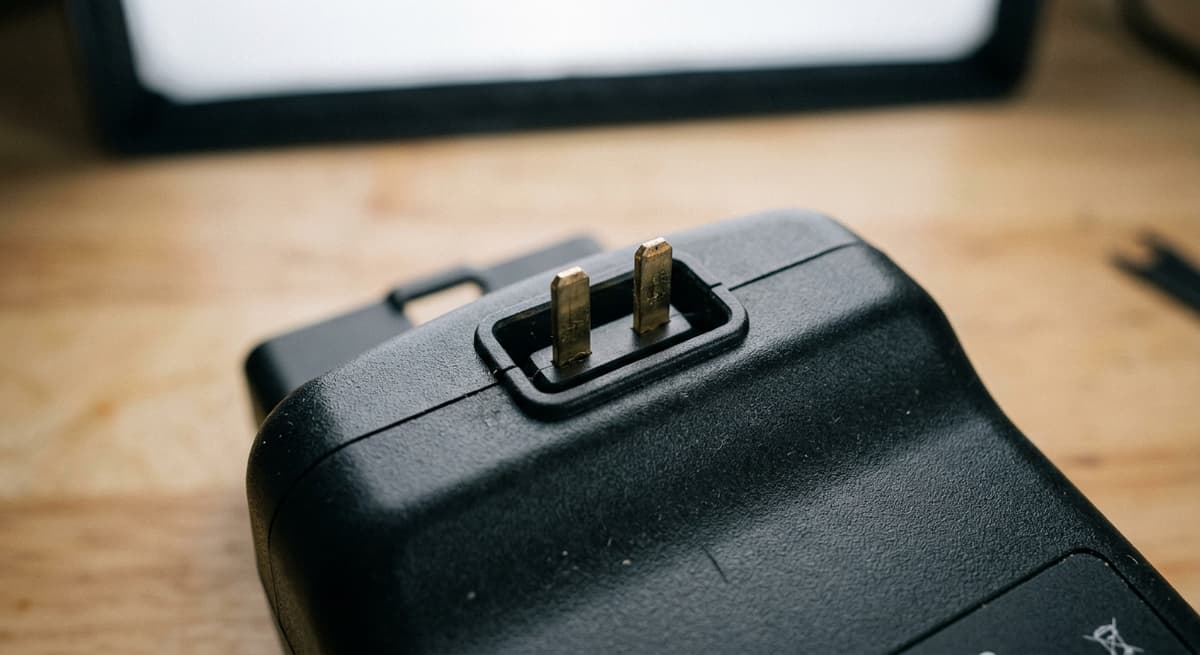
It is worth correcting a plausible but wrong reading of the statute: subsection (3)(c) says "dangerous weapon" does not include "an explosive, chemical, or incendiary device as defined by Section 76-15-210," which sounds at first like it could exempt a chemical spray by name. It does not. Section 76-15-210 defines "explosive, chemical, or incendiary device" as dynamite and other high explosives, blasting agents, "any other chemical mixture intended to explode with fire or force," explosive bombs and grenades, and incendiary bombs and fire bombs, expressly excluding only ammunition and reloading or muzzleloading components. A personal-defense pepper-spray canister is not within that definition; it is not an explosive, and it is not intended to "explode with fire or force." So the (3)(c) carve-out is not the reason pepper spray is generally lawful for an adult to carry in Utah. The actual reason is that ordinary carry and use for self-defense is evaluated under the same six-factor "dangerous weapon" test as any other non-firearm object, not that the statute names and exempts pepper spray specifically. That distinction matters because it means Utah's answer is fact-dependent rather than categorical, and it means the same test governs a minor's possession under § 76-11-211, covered below, where the consequence of the device qualifying as a "dangerous weapon" is a criminal offense rather than an open question.
Are stun guns legal in Utah?
The same framework applies, with the same fact-dependent answer. A stun gun is not a "firearm" under § 76-11-101(4), which is defined as a pistol, revolver, shotgun, rifle, or other device that expels a projectile by an explosive action, so it is a "dangerous weapon" only if the same six factors show it is capable of causing death or serious bodily injury in the manner used or possessed. No Utah statute separately licenses or sets a stand-alone age floor for civilian possession of a stun gun outside the dangerous-weapon framework described above and the minors' statute covered next. Utah law does not give stun guns a flat categorical exemption the way some states' prohibited-weapons lists do by specifically listing and excluding the device, and this page does not predict how a Utah court would apply the six factors to a stun gun specifically.
Minors
Utah Code § 76-11-211 makes a minor's possession of a "dangerous weapon" its own offense, and because pepper spray or a stun gun can be a "dangerous weapon" under the six-factor test above, this is the statute that actually sets an age-related rule for either device in Utah. Subsection (2): "An actor commits possession of a dangerous weapon by a minor if the actor: (a) is a minor; and (b) possesses a dangerous weapon." Subsection (3)(a): absent an exception, the offense "is: (i) a class B misdemeanor for a first offense; and (ii) a class A misdemeanor for each subsequent offense" (a higher, firearm-specific felony tier applies under (3)(b) for a handgun or certain other firearms, not relevant to pepper spray or a stun gun). A minor under 14 is exempt under subsection (4) if the minor has parental or guardian permission, is accompanied by a parent, guardian, or other responsible adult while possessing the device, and does not use it in a crime. A minor 14 or older but under 18 is exempt under subsection (5) with parental or guardian permission alone, again without using the device in a crime. "Minor" is defined at § 76-11-101(6) as an individual under 18.

A parent or guardian who gives that permission has their own exposure if the conditions are not met. Utah Code § 76-11-214 makes it a class B misdemeanor for an actor who knows a minor is in possession of a dangerous weapon in violation of § 76-11-211, and where the minor is the actor's biological or adopted child or the actor is the minor's legal guardian, to fail to make reasonable efforts to remove the dangerous weapon from the minor's possession. A parent who is aware a teenager is carrying pepper spray or a stun gun outside the § 76-11-211 exceptions, and does nothing about it, risks this offense separately from whatever the minor faces.
Restricted places
Utah criminalizes carrying a "dangerous weapon," not a specifically enumerated list of items, at several kinds of locations, which means the same six-factor test determines whether carrying pepper spray or a stun gun at one of these places is covered, rather than a flat yes-or-no rule naming the device.
- Elementary and secondary schools. Utah Code § 76-11-205 makes it a class B misdemeanor (a class A misdemeanor if the weapon is a firearm) to carry a "dangerous weapon" "on or about school premises," subject to exceptions for concealed-carry permit holders 21 or older, people on their own property, activity approved by the school administrator, and a few other listed circumstances. That phrase is itself defined narrower than it sounds: subsection (1)(a) limits it to "(i) in a public or private elementary school or secondary school; or (ii) on the grounds of a private elementary school or secondary school." The grounds of a public school, as opposed to inside the building itself, are not within the definition.
- Institutions of higher education. Utah Code § 76-11-205.5 separately restricts openly carrying a "dangerous weapon" at an institution of higher education, using the same dangerous-weapon definition; a violation is a class C misdemeanor. The section's history line reads "Amended by Chapter 171, 2026 General Session," so the restriction predates that act rather than beginning with it; the currently effective version took effect May 6, 2026. Exceptions include carrying the weapon at the actor's own residence or on the actor's real property, and carrying it in a vehicle lawfully under the actor's control (other than a school-owned or school-transport vehicle).
- Daycares. Utah Code § 76-11-206 imposes the same class B misdemeanor structure for carrying a "dangerous weapon" on or about daycare premises, with a similar set of exceptions including concealed-carry permit holders and administrator approval.
- Airport secure areas. Utah Code § 76-11-218 separately restricts possessing a "dangerous weapon" in an airport secure area, and it applies to an actor "including an actor with a concealed firearm permit issued under Title 53, Chapter 5a, Part 3." A knowing or intentional violation is a class A misdemeanor; a reckless or criminally negligent violation is, subject to subsection (6), an infraction, and subsection (6) gives a first-time offender a break: a first violation of the reckless/negligent branch may draw only a written warning, with no citation or other punishment, while a second or subsequent violation may draw a written warning or a citation.
Beyond restricted places, Utah's dangerous-weapon definition also drives several other Part 2 offenses that do not depend on location: § 76-11-207 makes it a class A misdemeanor for an actor, in the presence of two or more individuals, to either (a) unlawfully draw or exhibit a dangerous weapon in an angry and threatening manner, or (b) unlawfully use one in a fight or quarrel, subject to a self-defense exception, and is likely the offense an ordinary pepper-spray or stun-gun carrier is most likely to actually face. The same section tells that carrier what is not the offense: subsection (5) provides that possessing a dangerous weapon, visible or concealed, without additional threatening behavior, is not drawing or exhibiting it in an angry and threatening manner, and neither is informing another person that the actor has the weapon, if done to prevent what the actor reasonably perceives as a possible unlawful use of force against them and the actor is not otherwise engaged in unlawful activity. § 76-11-208 addresses possession of a dangerous weapon with criminal intent; § 76-11-216 addresses prohibited conduct in the sale of a dangerous weapon; and § 76-11-217 makes it a class B misdemeanor to carry a dangerous weapon "readily accessible by the actor for immediate use" while under the influence of alcohol or drugs. Part 3 adds §§ 76-11-307 and 76-11-308, which address selling a dangerous weapon to a restricted person.
Federal law: what it does and does not reach
No federal statute regulates a civilian's purchase or possession of pepper spray or a stun gun. Federal law matters in three places.

Federal buildings. Under 18 U.S.C. § 930(a), whoever knowingly possesses or causes to be present "a firearm or other dangerous weapon in a Federal facility (other than a Federal court facility)" faces a fine, imprisonment of up to 1 year, or both. Subsection (e) sets up to 2 years for a federal court facility, and subsection (b) up to 5 years where the weapon is intended to be used in a crime. Section 930(g)(2) defines the term:
The term "dangerous weapon" means a weapon, device, instrument, material, or substance, animate or inanimate, that is used for, or is readily capable of, causing death or serious bodily injury, except that such term does not include a pocket knife with a blade of less than 2½ inches in length.
The definition names neither device. Whether a particular spray or stun gun is "readily capable of" causing serious bodily injury is a question of fact the statute does not answer. Subsection (d)(3) exempts "the lawful carrying of firearms or other dangerous weapons in a Federal facility incident to hunting or other lawful purposes," and subsection (h) requires notice of the ban to be posted at each public entrance. A "Federal facility" is "a building or part thereof owned or leased by the Federal Government, where Federal employees are regularly present for the purpose of performing their official duties."
Air travel. The Transportation Security Administration's screening rules, which are agency policy rather than statute, bar both devices from carry-on bags. One 4 fl. oz. (118 ml) container of mace or pepper spray is permitted in checked baggage if it has a safety mechanism to prevent accidental discharge, and sprays containing more than 2 percent by mass of tear gas (CS or CN) are prohibited in checked baggage. Tasers, stun guns and other electro-shock weapons may travel in checked baggage only if transported so the device cannot discharge accidentally. Airlines may set stricter rules.
National parks. National Park Service regulations prohibit possessing, carrying or using a "weapon" in a park area except as the regulations provide (36 CFR 2.4(b)(1)). 36 CFR 1.4 defines "weapon" to include an "irritant gas device" and any "weapon the possession of which is prohibited under the laws of the State in which the park area or portion thereof is located."
Restricted persons
Utah Code §§ 76-11-305 and 76-11-306 make it an offense for a Category I or Category II restricted person, categories that include certain felons and other disqualified individuals, to engage in "dangerous weapon" conduct, again defined by § 76-11-101(3)'s general definition rather than a device-specific list. The conduct reached is broader than possession alone: § 76-11-305(2)(b) covers a restricted person who intentionally or knowingly "agrees, consents, offers, or arranges to" purchase, transfer, use, or carry or otherwise possess a dangerous weapon, or who actually purchases, transfers, uses, carries, or otherwise possesses one. Subsection (5) provides an affirmative defense, but only to a prosecution for transferring a dangerous weapon under subsection (2), and only if all five of its conditions are met: the weapon was possessed by the actor or under the actor's custody or control before becoming a restricted person; it was not used in or possessed during the commission of a crime or subject to disposition under Title 77, Chapter 11a, Part 4; it is not being held as evidence by a court or law enforcement agency; it was transferred to someone not legally prohibited from possessing it; and, unless the court orders a different time, it was transferred within 10 days after the actor became a restricted person. The defense does not excuse possessing, using, or carrying the weapon after becoming restricted, only a transfer that meets all five conditions. Subsection (3): "A violation of Subsection (2) is a third degree felony if the dangerous weapon is not a firearm," and a second degree felony if it is a firearm. Because a pepper-spray canister or a stun gun that meets the six-factor "dangerous weapon" test would fall into the non-firearm tier, a restricted person's covered conduct with either device carries felony exposure, not a lesser or unstated penalty.
Does Utah preempt local pepper spray or stun gun ordinances?
Not entirely, and the answer is not a flat "no." Utah Code § 53-5a-102(1) declares that "the Legislature occupies the whole field of state regulation of firearms," and § 53-5a-102(2) separately bars a local or state governmental entity from prohibiting an individual from owning, possessing, purchasing, selling, transferring, transporting, or keeping a firearm, ammunition, or a firearm accessory at the individual's residence, property, business, or in a vehicle they are lawfully in, or from requiring a permit or license to do so. § 53-5a-102(5) adds a broader bar: "Unless specifically authorized by the Legislature by statute, a local or state governmental entity may not enact, establish, or enforce a directive pertaining to firearms, ammunition, or firearm accessories that in any way inhibits or restricts the possession, ownership, purchase, sale, transfer, transport, or use of firearms, ammunition, or firearm accessories on either public or private property." All of (1), (2), and (5) are scoped to firearms, ammunition, and firearm accessories and do not mention pepper spray or stun guns. But § 53-5a-102(3) separately provides: "This part and Title 76, Chapter 11, Weapons, are uniformly applicable throughout the state and in all the political subdivisions of the state." Title 76, Chapter 11 is the same chapter, discussed throughout this page, that governs both devices through the dangerous-weapon definition and the offenses built on it, so that chapter itself is made uniform statewide rather than left open to local variation, even though the firearm-specific prohibitions in (1), (2), (4), and (5) do not name pepper spray or stun guns. Subsection (7) adds that a violation of the section is subject to the Firearm Preemption Enforcement Act, Title 78B, Chapter 6, Part 23.
Disclaimer: This article provides general legal information about Utah's pepper spray and stun gun laws as of September 2026. It is not legal advice. Consult a lawyer licensed in Utah for advice about a specific situation.
For a state-by-state comparison, see pepper spray and stun gun laws by state. Utah's self-defense statutes are covered separately on the Utah self-defense laws page.
Statutes cited reflect their in-force version as of 2026-09-18. Last updated: 2026-09-18.
Frequently Asked Questions
Is pepper spray legal to carry in Utah?
No permit is required for an adult. Utah has no dedicated pepper-spray statute; instead, a pepper-spray canister is only a 'dangerous weapon' under Utah Code 76-11-101(3) if a six-factor, fact-specific test shows it is capable of causing death or serious bodily injury in the manner used or possessed. No cited Utah case applies that test to a pepper-spray canister, so this page does not predict the outcome for ordinary self-defense carry. A minor's possession is separately governed by 76-11-211.
Do you need a permit for a stun gun in Utah?
No. Utah has no stun-gun-specific licensing statute. A stun gun is not a firearm under Utah Code 76-11-101(4), so like pepper spray, it is a 'dangerous weapon' only if the same six-factor test is met.
Can a minor possess pepper spray or a stun gun in Utah?
If the device qualifies as a 'dangerous weapon' under the six-factor test, Utah Code 76-11-211 makes a minor's possession a class B misdemeanor for a first offense (class A for later offenses), unless a parent or guardian gave permission and, for a minor under 14, the minor was accompanied by a parent, guardian, or other responsible adult. A parent or legal guardian who knows their child possesses one in violation of 76-11-211 and fails to make reasonable efforts to remove it commits a separate class B misdemeanor under 76-11-214.
Does Utah's exclusion for explosive or chemical devices cover pepper spray?
No. Utah Code 76-11-101(3)(c) excludes an 'explosive, chemical, or incendiary device as defined by Section 76-15-210' from the dangerous-weapon definition, but that cross-referenced definition covers industrial explosives, blasting agents, and incendiary bombs, not a personal-defense pepper-spray canister. Pepper spray's general legality in Utah comes from the separate six-factor dangerous-weapon test, not from this carve-out.
Does Utah preempt local ordinances on pepper spray or stun guns?
Not entirely. Utah Code 53-5a-102(1), (2), and (5) preempt local firearm regulation specifically and do not mention pepper spray or stun guns, but 53-5a-102(3) separately makes Title 76, Chapter 11 (Weapons), the chapter that governs both devices, 'uniformly applicable throughout the state and in all the political subdivisions of the state.'
Updates
Independently fact-checked against the cited primary sources
Sources and References
- Utah Code 76-11-101 - Definitions (dangerous weapon: firearm or six-factor fact-specific test; explosive/chemical/incendiary device exclusion)(le.utah.gov).gov
- Utah Code 76-15-210 - Unlawful conduct involving an explosive, chemical, or incendiary device (defines the term cross-referenced by 76-11-101(3)(c))(le.utah.gov).gov
- Utah Code 76-11-201 - Definitions, General Weapons Violations part(le.utah.gov).gov
- Utah Code 76-11-205 - Carrying a dangerous weapon at an elementary school or secondary school(le.utah.gov).gov
- Utah Code 76-11-205.5 - Openly carrying a dangerous weapon at an institution of higher education(le.utah.gov).gov
- Utah Code 76-11-206 - Carrying a dangerous weapon at a daycare(le.utah.gov).gov
- Utah Code 76-11-207 - Threatening with or using a dangerous weapon in a fight or quarrel(le.utah.gov).gov
- Utah Code 76-11-208 - Possession of a dangerous weapon with criminal intent(le.utah.gov).gov
- Utah Code 76-11-211 - Possession of a dangerous weapon by a minor(le.utah.gov).gov
- Utah Code 76-11-214 - Parent or guardian knowing a minor is in possession of a dangerous weapon(le.utah.gov).gov
- Utah Code 76-11-216 - Prohibited conduct in the sale of a dangerous weapon(le.utah.gov).gov
- Utah Code 76-11-217 - Carrying a dangerous weapon while under the influence of alcohol or drugs(le.utah.gov).gov
- Utah Code 76-11-218 - Possession of a dangerous weapon in an airport secure area (penalty; applies to permit holders)(le.utah.gov).gov
- Utah Code 76-11-305 - Category I restricted person participating in prohibited dangerous weapon conduct (conduct verbs; penalty; 10-day defense)(le.utah.gov).gov
- Utah Code 53-5a-102 - Uniform firearm laws (firearm-specific state preemption; does not mention pepper spray or stun guns)(le.utah.gov).gov
- 18 U.S.C. 930 - Possession of firearms and dangerous weapons in Federal facilities(law.cornell.edu)
- Transportation Security Administration - What Can I Bring? Pepper Spray(tsa.gov).gov
- Transportation Security Administration - What Can I Bring? Stun Guns/Shocking Devices(tsa.gov).gov
- 36 CFR 1.4 - National Park Service definitions (weapon)(ecfr.gov).gov
- 36 CFR 2.4 - Weapons, traps and nets(ecfr.gov).gov