Open Container Laws by State (2026): Passengers, Exemptions, Penalties
Independently fact-checked against primary sources (last audited September 17, 2026). · 37 primary sources cited on this page. How we verify our legal content
Federal law does not make open containers illegal by itself. Instead, 23 U.S.C. 154 conditions a slice of each state's highway funding on having a compliant open-container law, so all 50 states and DC regulate it, but the details, who it covers, what counts as a "passenger area," which vehicles are exempt, and the penalty, vary by state. As of September 2026, twelve states fall short of the federal standard and have funds reserved and, in the proportions the state elects, released for eligible highway-safety spending or transferred to the Section 402 program as a result.
Jurisdiction scope: This article covers vehicle open-container law in all 50 US states and the District of Columbia, and the federal framework under 23 U.S.C. 154 that ties state open-container law to federal highway funding. It does not address boat or marine open-container rules, pedestrian public-drinking ordinances, or open-container law outside the United States.
What federal law requires of a state open container law
A federal open-container law doesn't exist in the sense of a nationwide ban. Instead, 23 U.S.C. 154(a) requires a state to enact and enforce a law that meets a specific federal standard, or lose a share of its highway funding. The statute's own definition covers "the possession of any open alcoholic beverage container, or the consumption of any alcoholic beverage, in the passenger area of any motor vehicle," including possession or consumption by the driver.
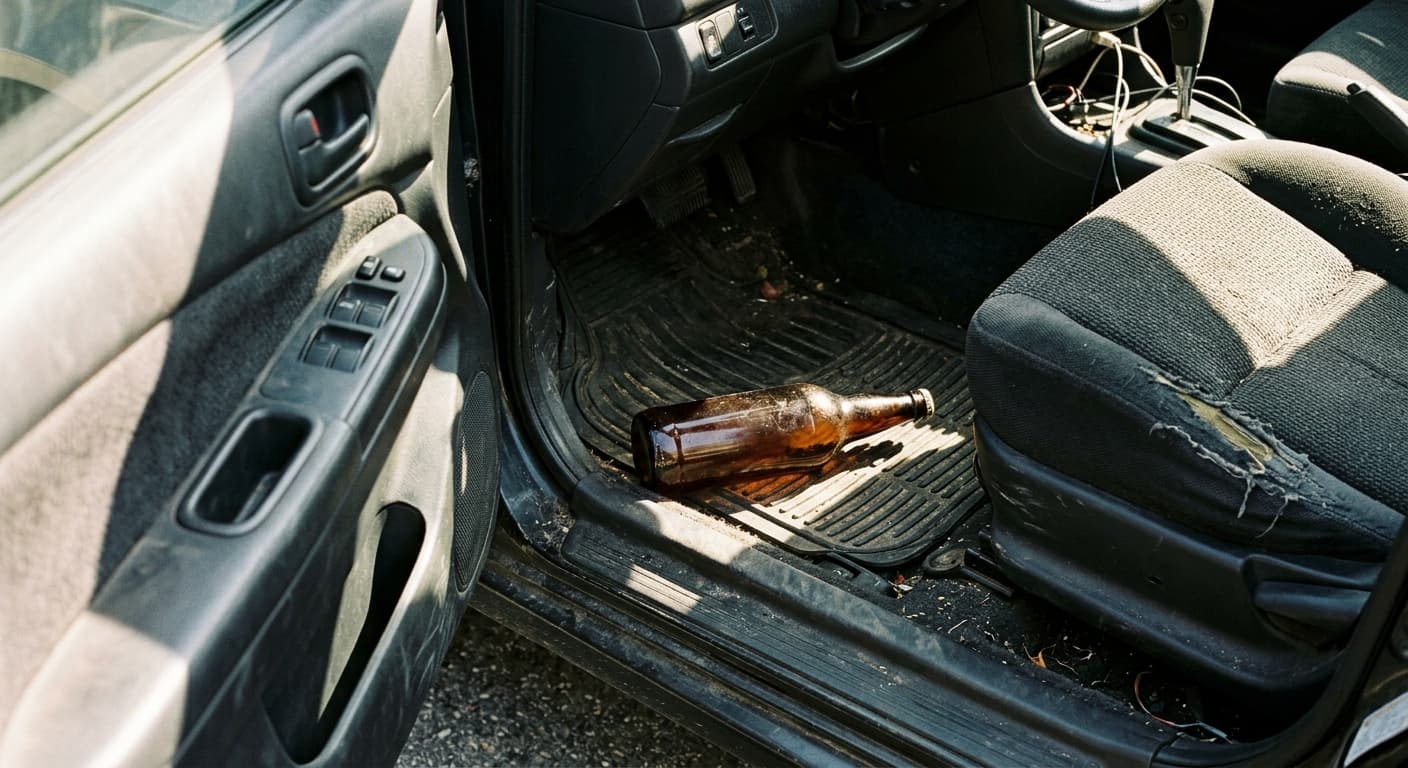
An "open alcoholic beverage container" under this definition means any bottle, can, or other receptacle containing alcohol that is open, has a broken seal, or whose contents have been partially removed.
23 CFR 1270.4, the regulation implementing the statute, spells out six elements a compliant state law must have. It must ban both possession of an open container and consumption of any alcoholic beverage, in the passenger area, covering all occupants (driver and passengers, not just the driver), on a public highway or its right-of-way, with primary enforcement (meaning police can stop a vehicle for this violation alone, not only as a secondary charge attached to another stop).
That regulation also authorizes two specific exceptions a state may build into an otherwise-compliant law without losing conformance:
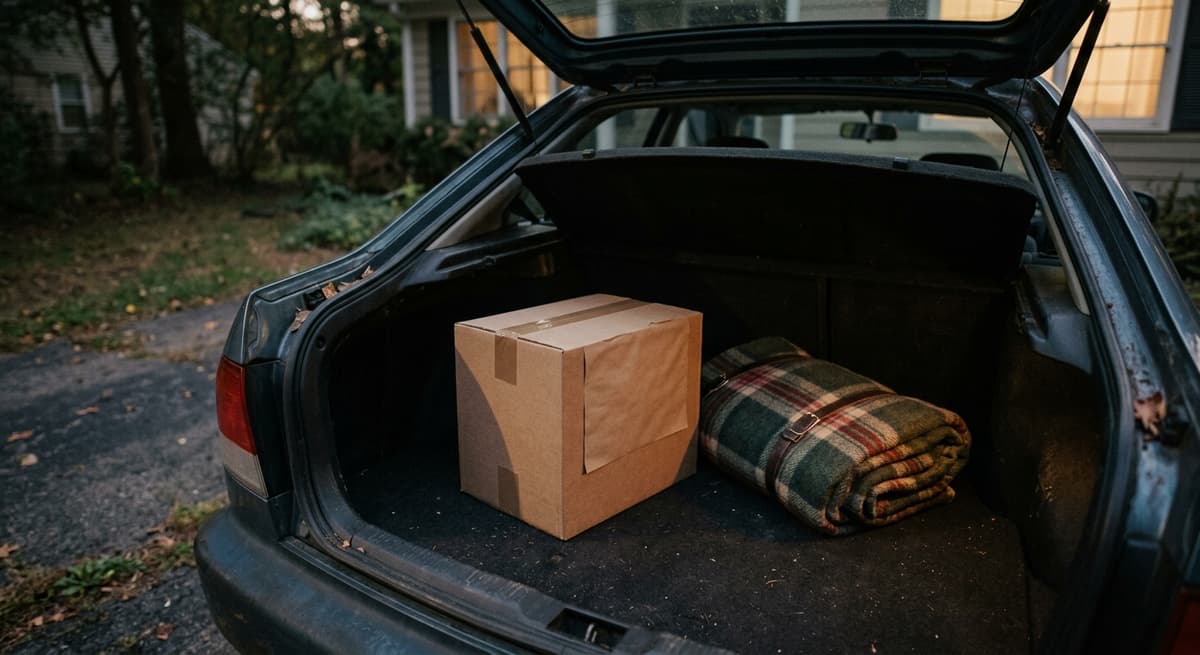
- A container stored in a locked container, such as a locked glove compartment, or in an area not normally occupied by the driver or passengers and not easily accessible to them, such as a trunk, or the area behind the last upright seat in a vehicle with no trunk.
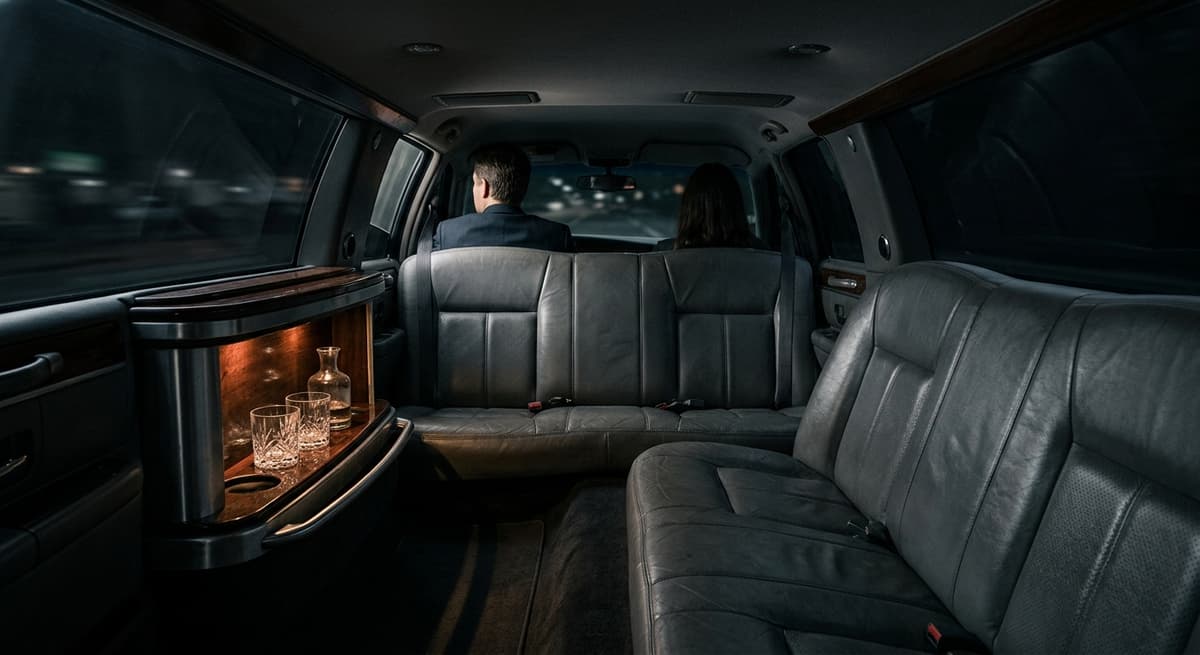
- Restricting the prohibition to the driver only in a vehicle designed, maintained, or used primarily to transport people for compensation, such as a bus, limousine, or taxi (so a paying passenger may drink), or in the living quarters of a house coach or house trailer (a motorhome or RV). The second exception covers both for-hire vehicles and RV living quarters.
The 2.5 percent funding penalty
If FHWA determines a state has not enacted, or is not enforcing, a law that meets these elements, and the Secretary made the same determination for that state for the prior fiscal year, it reserves an amount equal to 2.5 percent of that state's apportionment under two federal-aid highway programs, the National Highway Performance Program (23 U.S.C. 104(b)(1)) and the Surface Transportation Block Grant Program (23 U.S.C. 104(b)(2)). Under 23 U.S.C. 154(c)(2)(A)(ii), a state failing the standard for the first time isn't reserved against yet, it takes a second consecutive year of non-conformance to trigger the reservation. The reservation happens every October 1, and the state has 30 days to tell FHWA how to split the reserved amount between the two programs.
The reserved money isn't simply lost. Per the state's election, it is either released for eligible Highway Safety Improvement Program activities under 23 U.S.C. 148, or transferred to the state's Section 402 Highway Safety Program to fund alcohol and drug-impaired driving countermeasures.
The FY2026 non-conforming list
As of FHWA Notice N4510.905 (the FY2026 apportionment notice, dated October 1, 2025), twelve states have not enacted or are not enforcing a law that complies with 23 CFR 1270.4: Alaska, Connecticut, Delaware, Hawaii, Louisiana, Maine, Mississippi, Missouri, Ohio, Tennessee, Virginia, and Wyoming. Each has 2.5 percent of its NHPP and STBG apportionments reserved for the fiscal year.
Non-conformance and "no law at all" are not the same thing, and FHWA's notice itself states no reasons for any listed state, so everything in this paragraph past the bare fact of a state's inclusion is this page's own reading of the text, not FHWA's determination. For six of these states, the most visible candidate is on the face of the text: Alaska, Connecticut, Delaware, Missouri, Tennessee, and Virginia each ban only driver conduct, with no possession offense that reaches a passenger. Maine's statute reaches more conduct than those six but fewer defendants: it makes the operator liable if the operator or a passenger drinks or possesses an open container in the passenger area, but only the operator can be charged, so on this page's reading a passenger is never individually reached the way 23 CFR 1270.4(b)(4)'s "all occupants" element appears to require. That is an inference, not a confirmed reason. This research could not locate a statewide vehicle open-container statute for Mississippi at all, and the state's official Lexis-hosted code portal could not be searched to confirm the negative, so treat that one as unconfirmed rather than resolved. For the remaining three, Hawaii, Louisiana, and Wyoming, the statutory text reviewed appears to meet the core federal elements on its face (Wyoming's in-motion-only scope is a plausible exception, discussed below), and this research did not resolve the specific conformance gap. Ohio bans possession only, without a separate drinking ban, which looks like a facial gap against the federal standard's consumption element, but by this page's own table thirteen other states (Alabama, Arkansas, Illinois, Iowa, Kansas, Kentucky, Massachusetts, Michigan, Montana, New Hampshire, Oklahoma, South Carolina, and Texas) are drafted the same possession-only way and are NOT on the non-conforming list, so a possession-only structure cannot by itself be what disqualifies a state's law. Ohio's specific reason for FHWA's listing is unconfirmed, not the possession-only structure alone. It may be an enforcement-level or definitional technicality rather than a visible gap in the statute itself; treat every reason in this paragraph as this page's inference, not an assumed or confirmed FHWA determination.
Open container laws by state: complete comparison
The table below covers all 50 states and DC. "Who it covers" shows whether the law reaches only the driver or both driver and passengers. "Notable exemption" highlights one distinctive carve-out, not the complete list, click through to a state's page for the full exemption set, penalty citation, and sourcing notes. "FHWA-conforming" reflects the FY2026 list above, not a state-by-state federal certification of every detail.
| State | Who it covers | Passenger rule | Notable exemption | Penalty | FHWA-conforming (FY2026) |
|---|---|---|---|---|---|
| Alabama | Driver + passengers | Possession banned for every occupant; no separate drinking ban in this section. | For-hire vehicle passenger with CDL driver | Class C misdemeanor, fine up to $25; not a moving violation | Yes |
| Alaska | Driver only | Driver-only offense (driving with a container present); a passenger's own possession alone is not itself a violation. | Container in the trunk | Infraction; fine not confirmed | No (FY2026 list) |
| Arizona | Driver + passengers | Possession and drinking both banned for every occupant. | Bus, limousine, taxi, or TNC-service passenger | Class 2 misdemeanor | Yes |
| Arkansas | Driver + passengers | Possession banned for every occupant; no separate drinking ban in this section. | Trunk/cargo area | Class C misdemeanor; fine not specified | Yes |
| California | Driver + passengers | Possession and drinking both banned for every occupant. | Passenger (not the driver) in a licensed bus, taxi, limo-for-hire or pedicab, or in housecar/camper living quarters (§23229) | Infraction; fine set by statewide bail schedule | Yes |
| Colorado | Driver + passengers | Possession and drinking both banned for every occupant. | Passenger (not driver/front-seat passenger) in a for-hire vehicle | Class A traffic infraction; $50 fine + $16 surcharge | Yes |
| Connecticut | Driver only | Driver-only: bans driver drinking while operating. No possession offense exists for anyone. | None (no possession offense exists) | Class C misdemeanor; up to $500 and up to 3 months (C.G.S. 53a-36(3), 53a-42(3)) | No (FY2026 list) |
| Delaware | Driver only | Driver-only: bans driver drinking observed by an officer. No possession offense exists for anyone. | None (no possession offense exists) | Fine only: $25-$200 first offense, $50-$400 for a subsequent offense within 1 year | No (FY2026 list) |
| District of Columbia | Driver + passengers | Possession and drinking both banned for every occupant. | Private-residence structure overhang (porch/terrace/bay window) with owner permission | Misdemeanor; fine or up to 60 days, or both | Yes |
| Florida | Driver + passengers | Possession and drinking both banned for every occupant. | For-hire passenger (CDL passenger-endorsed driver, under a transportation contract) | Noncriminal traffic violation (moving for driver, non-moving for passenger) | Yes |
| Georgia | Driver + passengers | Possession and drinking both banned for every occupant. | A resealed to-go mixed drink or partial wine bottle (§3-5-4/§3-6-4) is not legally "open" | Fine up to $200 | Yes |
| Hawaii | Driver + passengers | Possession and drinking both banned for every occupant. | For-hire vehicle with a driver/passenger barrier (passengers must stay behind it) | Driver: up to $2,000 or 30 days, or both. Passenger: petty misdemeanor | No (FY2026 list) |
| Idaho | Driver + passengers | Possession and drinking both banned for every occupant. | Unsealed container in an enclosed trunk, or behind the last upright seat in a trunkless vehicle (§23-505(1)) | Misdemeanor for the person in physical control; infraction for others | Yes |
| Illinois | Driver + passengers | Possession banned for every occupant; drinking not separately addressed in the text reviewed. | Passengers (not driver) in a limousine in ordinary use | No flat fine; escalating license suspension on repeat/under-21 violations | Yes |
| Indiana | Driver + passengers | Possession banned for every occupant (9-30-15-3); the operator's own drinking is a separate, higher-grade Class B infraction under 9-30-15-4. | A non-operator passenger in a for-hire vehicle or a house coach/trailer's living quarters | Possession: Class C infraction; not a moving violation, no license points. Operator drinking: Class B infraction (higher grade). | Yes |
| Iowa | Driver + passengers | Possession banned for every occupant; no separate drinking ban in this section. | Unsealed receptacle transported in the trunk, or behind the last upright seat in a trunkless vehicle | Simple misdemeanor (scheduled fine); under-21 also faces underage-possession charge | Yes |
| Kansas | Driver + passengers | Possession banned for every occupant; no separate drinking ban in this section. | Original unopened sealed package with closure intact | Misdemeanor, fine up to $200 or 6 months; mandatory 1-year license suspension on repeat offense (within 5 years) | Yes |
| Kentucky | Driver + passengers | Possession banned for every occupant; no separate drinking ban in this section. | Passenger (strictly, not the driver) in a for-hire vehicle (bus/taxi/limousine) or recreational vehicle/motor home/motor coach | Fine only, $35-$100 | Yes |
| Louisiana | Driver + passengers | Possession and drinking both banned for every occupant. | Mardi Gras parade-float passengers/krewe members (one of 9 exemptions, the broadest list in the dataset) | Fine up to $100 plus costs; not taken into custody | No (FY2026 list) |
| Maine | Driver only | Operator-only offense: the operator is liable if the operator or a passenger drinks or possesses an open container in the passenger area; a passenger cannot be cited under this section for their own container. | (trunkless vehicle) possession behind the last upright seat or in an area not normally occupied (possession only, not consumption) | Civil violation, not a misdemeanor; fine $25-$500, or license suspension, or both (29-A M.R.S. 103) | No (FY2026 list) |
| Maryland | Driver + passengers | Possession banned for every occupant (Crim. Law 10-125(a)); the drinking ban in 10-125(b) expressly does not apply to the driver, whose own drinking is banned separately by Transp. 21-903(c). | Motor vehicle designed/maintained/used primarily for compensated transportation (bus, taxicab, limousine) | Not a moving/traffic violation; exact fine not confirmed | Yes |
| Massachusetts | Driver + passengers | Possession banned for every occupant; drinking not separately addressed in the text reviewed. | Passengers (not drivers) in vehicles designed/maintained for commercial passenger transportation | Fine $100-$500 | Yes |
| Michigan | Driver + passengers | Possession banned for every occupant; drinking not separately addressed in the text reviewed. | (trunkless vehicle) locked glove compartment or behind the rearmost upright seat | Misdemeanor; court may add community service and screening | Yes |
| Minnesota | Driver + passengers | Possession and drinking both banned for every occupant. | Passengers in common/commercial-carrier buses | Misdemeanor; up to 90 days and/or $1,000 (Minn. Stat. 609.02, subd. 3) | Yes |
| Mississippi | Unclear (see notes) | No statewide vehicle open-container statute was located in this research; the official Lexis-hosted code portal could not be searched to confirm none exists. | None found (no located statute to exempt from) | Not applicable; no statewide offense located | No (FY2026 list) |
| Missouri | Driver only | Driver-only: bans driver drinking while the vehicle is moving. No possession offense exists for anyone. | None found | Infraction; not reflected on driving record | No (FY2026 list) |
| Montana | Driver + passengers | Possession banned for every occupant; no separate drinking ban in this section. | Immediate passenger possession in buses, taxis, or limousines operated for compensation | Not criminal; fine up to $100, no driving-record effect | Yes |
| Nebraska | Driver + passengers | Possession and drinking both banned for every occupant. | Charter/special-party bus or limo passengers, if the driver stays sober with no alcohol in reach | The statute sets no penalty amount | Yes |
| Nevada | Driver + passengers | Possession and drinking both banned for every occupant. | Commercial passenger transportation vehicles | Misdemeanor; heightened penalties in work/pedestrian/school zones | Yes |
| New Hampshire | Driver + passengers | Possession banned for every occupant; drinking not separately addressed in the text reviewed. | Chartered bus, taxi, or limousine passengers (the driver stays covered) | $150 fine; license suspension 60 days to 1 year | Yes |
| New Jersey | Driver + passengers | Possession banned for every occupant (39:4-51b); consumption by the operator or any passenger is separately banned by 39:4-51a, with the same penalties. | Passenger of a charter or special bus | $200 first offense; $250 or 10 days community service, subsequent | Yes |
| New Mexico | Driver + passengers | Drinking banned for every occupant; possession banned only when the container is on a person (subsection B); a separate duty requires the registered owner to keep any other open container out of the vehicle (subsection C). | Passenger only in a for-hire bus/taxi/limousine licensed under the Motor Carrier Act | Misdemeanor on 2nd+ violation; first-offense fine not specified in the statute | Yes |
| New York | Driver + passengers | Possession and drinking both banned for every occupant. | Passengers (not the operator) in a 'passenger vehicle' (10+ seats, used to carry passengers for hire, under DOT/USDOT certificate/permit) | Traffic infraction; up to $150 or 15 days first offense (VTL 1800(b)(1)) | Yes |
| North Carolina | Driver + passengers | Possession and drinking both banned for every occupant. | For-hire, motor home, and house-trailer passengers (occupant-tier only) | Driver offense: Class 3/2 misdemeanor. Occupant-possession: infraction only | Yes |
| North Dakota | Driver + passengers | Drinking banned for every occupant; possession banned when the container is on a person, in a private vehicle; the owner or driver must otherwise keep any open container out of the vehicle. | House-car living quarters behind a solid partition (consumption still barred while in motion) | Flat $50 fee; recorded only if you were the driver | Yes |
| Ohio | Driver + passengers | Possession banned for every occupant; no separate drinking ban in this section. | Long list incl. farmers markets, motorsports facilities, outdoor refreshment areas, and resealed restaurant wine kept out of reach | Minor misdemeanor; fine up to $150 (R.C. 4301.99(A), 2929.28(A)(2)(a)(v)) | No (FY2026 list) |
| Oklahoma | Driver + passengers | Possession banned for every occupant; no separate drinking ban in this section. | Rear trunk/compartment inaccessible while moving; state also bars any city/county from regulating bus or limousine consumption | Misdemeanor plus a mandatory $250 trauma-care fee | Yes |
| Oregon | Driver + passengers | Drinking banned for every occupant ((1)(a)); possession banned when the container is on a person ((1)(b)); the registered owner or driver must otherwise keep any open container out of the vehicle ((1)(c)). | Container in the trunk, or (no trunk) an area not normally occupied by driver/passengers, exempts the owner/driver's (1)(c) keeping duty only, not drinking or on-person possession | Class B traffic violation | Yes |
| Pennsylvania | Driver + passengers | Possession and drinking both banned for every occupant. | Passenger (not operator) in the passenger area of a for-hire vehicle (buses, taxis, limousines named expressly) | Summary offense; $25 fine under 75 Pa.C.S. 6502(a) (Title 18's summary-offense fines do not apply to the Vehicle Code, per 6502(c)) | Yes |
| Rhode Island | Unclear (see notes) | Framed around the operator; whether a passenger's own possession is independently a violation is unresolved in the text. | Operator of a RENTED limousine or bus, exempt only if neither the operator nor any passenger under 21 possesses an unsealed container | Civil/tribunal violation: up to $200 fine or license suspension up to 6 months, or both, first offense; up to $500 fine or suspension up to 1 year, or both, subsequent | Yes |
| South Carolina | Driver + passengers | Possession banned for every occupant; no separate drinking ban in this section. | Beer/wine: trunk or luggage compartment | Misdemeanor; fine up to $100 or 30 days | Yes |
| South Dakota | Driver + passengers | Possession and drinking both banned for every occupant. | Unbroken original-package seal | Class 2 misdemeanor; exact fine not confirmed | Yes |
| Tennessee | Driver only | Driver-only by statutory definition; a passenger's own container is defined out of the offense (a city/county may extend it locally). | Container in a passenger's own possession (not the driver's) | Class C misdemeanor, fine only | No (FY2026 list) |
| Texas | Driver + passengers | Possession banned for every occupant; no separate drinking ban in this section. | Locked glove compartment or similar locked storage container | Class C misdemeanor, fine only, no jail | Yes |
| Utah | Driver + passengers | Possession and drinking both banned for every occupant of a motor vehicle; the drinking ban also reaches the operator of a golf cart, motor-assisted scooter, or electric-assisted bicycle, but the passenger drinking ban does not extend to those. | Passenger in a motorboat is separately exempt; broad vehicle-type scope also covers golf carts and e-bikes | Class C misdemeanor; exact fine not confirmed | Yes |
| Vermont | Driver + passengers | Possession and drinking both banned for every occupant (operator under 23 V.S.A. 1134, passengers under 1134a). | Passenger (not the operator) in a for-hire vehicle, or in a motor home or trailer coach's living quarters (1134a(d)); possession only, alcohol only. Also excludes a locked glove compartment and, in a trunkless vehicle, the area behind the last seat. | Civil penalty: up to $500 for operator drinking; up to $25 for possession by either the operator or a passenger, or for passenger drinking | Yes |
| Virginia | Driver only | Driver-only: bans driver drinking; used only as a rebuttable presumption of consumption, not a possession offense. | None (no possession offense exists) | Class 4 misdemeanor; fine up to $250, no jail (Va. Code 18.2-11) | No (FY2026 list) |
| Washington | Driver + passengers | Possession and drinking both banned for every occupant. | A public conveyance commercially chartered for group use (also: motor home or camper living quarters, for-hire passengers) | Traffic infraction (civil), penalty set by court rule | Yes |
| West Virginia | Driver + passengers | Possession and drinking both banned for every occupant. | Passengers in vehicles designed for transportation-for-hire (buses, taxicabs, limousines) | Misdemeanor; fine $50-$100 | Yes |
| Wisconsin | Driver + passengers | Drinking banned for everyone; possession banned when the container is on a person; the owner or driver must keep any open container in the trunk (a glove/utility compartment does not qualify). | Passengers in a chauffeured limousine or motor bus, subject to local ordinance conditions | Forfeiture (civil); commercial drivers face a heightened schedule | Yes |
| Wyoming | Driver + passengers | Possession and drinking both banned for every occupant. | RV cabinet/compartment, but only if inaccessible to driver AND passengers while moving | Misdemeanor, escalating: up to $200 (1st, or a later conviction more than 1 year after the first); $300/30 days (2nd within 1 year); $500/6 months (3rd+ within 1 year) | No (FY2026 list) |
A pattern worth naming: most states ban both possession and drinking, for driver and passengers alike. But a real minority, Connecticut, Delaware, Missouri, and Virginia, ban only the driver's own drinking and have no possession offense at all, for anyone. This research could not confirm whether Mississippi has a statewide open-container statute at all; its official code portal could not be searched. None of the first four states requires a designated driver's passengers to keep their containers closed, at least not under state law; some cities may go further, as discussed below.
Can passengers legally drink while the driver stays sober?
In most states, no. The majority ban possession of an open container by any occupant, driver or passenger, so a sober designated driver does not make passenger drinking legal. The exceptions cluster into a few distinct patterns worth knowing precisely, because the mechanism differs state to state.
Connecticut, Delaware, Missouri, and Virginia ban only the driver's own consumption while operating the vehicle. None of the four has a possession offense reaching anyone, driver or passenger, so a passenger's open container is not, by itself, illegal under state law in any of them. Delaware's version is narrower still: the driver-consumption offense only applies when the drinking happens in the presence or view of a police officer. Virginia goes a step further in the other direction for the driver: an open container found in the vehicle can be used as a rebuttable presumption that the driver had been drinking, which is evidence toward Virginia's separate offense, not an independent open-container charge.
Alaska frames its law as a driving offense, not a possession offense: a person may not drive with an open container in the passenger compartment. Because the offense attaches to the act of driving, a passenger who is not driving does not commit this offense merely by holding an open container.
Tennessee defines its offense to exclude a passenger's own container from the start: the law affirmatively states a container is "in the possession of the driver" only when it is not in the possession of any passenger. That means Tennessee's state law, by its own text, does not reach passenger drinking, though a city or county may extend the ban to passengers by local ordinance or resolution (see the local-option section below).
Rhode Island is a genuinely ambiguous case rather than a confirmed exception. Its statute is framed around the vehicle's operator ("no person shall operate a motor vehicle... with any unsealed alcoholic beverage container within the passenger section"), which is a structurally different, and less clear, mechanism than the "any occupant" framing most states use. Whether a passenger's own possession, standing alone, is independently a violation under Rhode Island law is an open question in the statute's own text, not something this research resolved.
Maine is the inverse of every state above, not an eighth example of the same pattern. 29-A M.R.S. 2112-A(2) puts the operator in violation if the operator OR a passenger drinks or possesses an open container in the passenger area, so a passenger's own drinking or open container is unlawful conduct in Maine, but the statute charges only the operator for it. A Maine passenger drinking freely is not "legal" the way it is in the six states above; the operator simply bears the citation for it instead of the passenger.
Do not read any of this as "these states let passengers drink freely." Open containers still commonly serve as evidence supporting a separate DUI stop or investigation (see the penalties section below), and city or county ordinances can be more restrictive than the state floor.
Does the law apply to RVs, limousines, party buses, or rideshare?
Federal guidance under 23 CFR 1270.4 lets a compliant state law build in two specific exemptions without losing conformance: the living quarters of a house coach or house trailer (an RV or motorhome), and a passenger, never the driver, in a vehicle designed, maintained, or used primarily to transport people for compensation, such as a bus, limousine, or taxi. Nearly every state in this dataset uses a version of one or both exemptions, but the exact conditions differ enough that it's worth checking the specific state.
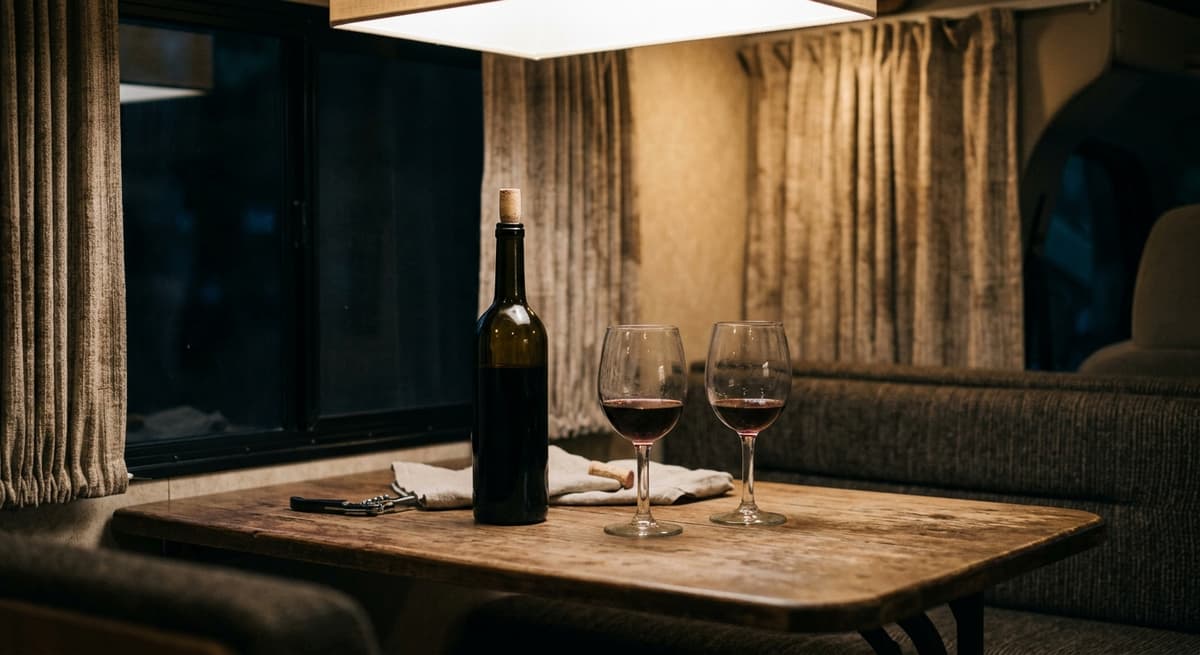
Most states that exempt a for-hire vehicle's passengers still hold the driver to the ordinary rule. Wyoming, for example, exempts a passenger in a for-hire vehicle's passenger area but keeps the driver barred within their own "zone of control." Oklahoma goes the furthest in the other direction on the local-regulation side: state law expressly forbids any city, town, or county from regulating alcohol consumption in buses or limousines at all, a broader preemption than most states.
Rhode Island's for-hire exemption is narrower than most peer states: it only applies to the operator of a rented limousine or bus, and only if neither the operator nor any passenger under 21 possesses an unsealed container. A privately owned limousine used the same way would not qualify.
Rideshare services (Uber, Lyft, and similar) are rarely addressed by name in a state statute; Arizona's reference to a "transportation network company (TNC)" vehicle is the exception among the states reviewed in this research. The "for-hire vehicle" or "vehicle used primarily for compensated transportation" language in most other states predates rideshare, and those states differ on whether that language, written for taxis and limousines, extends to a rideshare vehicle. Treat that as an open legal question in every state except Arizona, rather than an assumption of coverage in either direction.
Motorhome and RV living quarters are commonly exempt for a passenger, but the driver almost always remains covered even inside an otherwise-exempt vehicle. North Dakota's version requires a solid partition, door, or curtain separating the living quarters from the driving compartment, and even then, consumption is still not authorized while the vehicle is in motion.
What about a locked glove compartment, trunk, or resealed wine?
Federal guidance under 23 CFR 1270.4 allows a state to exempt a container stored in a locked container, such as a locked glove compartment, or in an area not normally occupied by the driver or passengers and not easily accessible to them, typically the trunk, or the area behind the last upright seat in a vehicle with no trunk. Nearly every state builds in some version of this, but states genuinely disagree about whether an unlocked glove compartment counts as part of the regulated "passenger area."
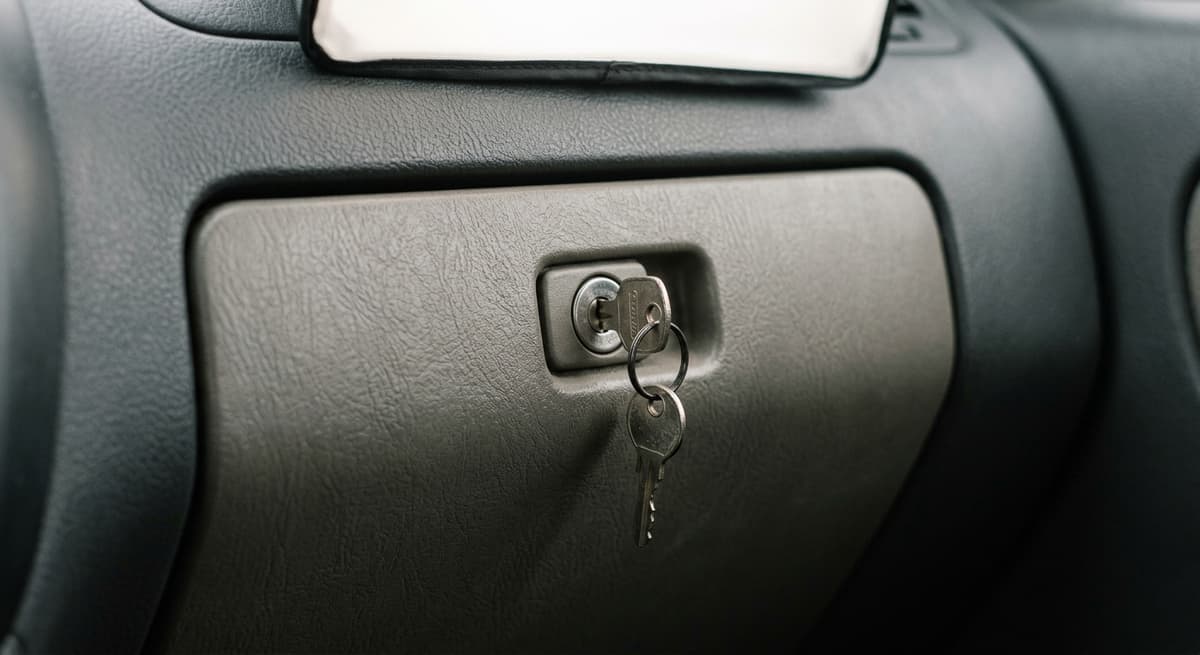
Iowa's law expressly includes the glove compartment within the passenger area, an unusual and counterintuitive rule compared to several neighboring states. Kentucky and Louisiana take the opposite approach: their definitions include the glove compartment generally, but carve out a locked glove compartment as an exempt storage location, the same distinction 23 CFR 1270.4 authorizes. North Dakota and Oregon, by contrast, don't list a locked glove compartment as its own exemption at all; only the trunk, or an area not normally occupied by driver or passengers, appears to qualify in those two states.
Resealed restaurant wine, sometimes called a "doggy bag" bottle, is a separate state liquor-law mechanism, not part of federal open-container law. Massachusetts and New York both exclude a properly resealed restaurant wine bottle from their "open container" definition, though Massachusetts still bars transporting even a resealed bottle in the passenger area itself, and New York separately requires the resealed bottle to be kept in the trunk, or behind the last upright seat if there's no trunk. In both states, the resealed-wine exception and the locked-storage exception work together rather than independently. Ohio has one of the longest resealed-wine and location-based exemption lists in this dataset, including farmers markets, motorsports facilities, and designated outdoor refreshment areas, alongside its resealed-restaurant-wine carve-out.
Louisiana's drive-through daiquiri shops are a common source of confusion, but the confusion cuts the other way: the state does have a written statutory carve-out for them. La. R.S. 32:300(B)(3)(b) excludes a frozen alcoholic beverage from the definition of "open alcoholic beverage container" unless the lid has been removed, a straw protrudes through it, or its contents have been partially removed. A daiquiri sold sealed that way is not legally "open" under the statute's own terms, a named, written exception rather than a side effect of the general sealed-container definition that governs an unopened can or bottle elsewhere.
Which states let cities and counties set their own rules?
Local-option rules run in both directions, and there's no single pattern to generalize across states.
Colorado and Florida let a city or county adopt an ordinance that is more restrictive than the state floor, never less. (North Carolina has a similar local-option allowance, but only for pedestrian "social district" to-go cups; its vehicle open-container statute itself has no local-ordinance delegation.) Louisiana preempts local ordinances generally, for a uniform statewide rule, but carves back a real local-variation allowance for a subdivision with a population over 50,000, which may enact its own non-conflicting ordinance, including setting fines above the state amount. Ohio lets a municipality or township opt out of the state's default commercial-quadricycle passenger exemption by its own ordinance.
Tennessee's state law is driver-only, but subsection (c) lets a city (by ordinance) or county (by resolution) voluntarily extend the ban to passengers. This research did not confirm whether any specific major Tennessee city has done so; check local ordinances if you're relying on the passenger question there.
Wyoming runs the mirror image of Tennessee's structure. Its state open-container statute does not apply at all inside any incorporated municipality that has adopted its own competing open-container ordinance; the state law only governs outside incorporated municipalities, or inside ones that haven't adopted a competing rule of their own. Combined with Wyoming's plain-text limitation to a vehicle that "is in motion" (a parked vehicle isn't reached by the statute's own wording), local ordinances in Wyoming can matter more than the state statute for a given stop.
This is a genuinely state-specific mechanic. Don't assume a rule you've read about in one state, more restrictive local ordinances allowed, local ordinances preempted, local opt-outs, applies the same way anywhere else.
Penalties, and how an open container interacts with a DUI stop
Penalties in this dataset span a wide range. At the lighter end, Colorado's is a $50 fine plus a $16 surcharge (a class A traffic infraction), and North Dakota's is a flat $50 fee that isn't recorded against your driving record unless you were the driver. Montana's is a non-criminal violation capped at $100 that doesn't affect insurance rates. At the heavier end, Hawaii's driver consumption or possession offense carries a fine up to $2,000 or up to 30 days in jail, or both, and Wyoming's penalty escalates by prior-conviction count within a year, up to $500 or six months for a third or subsequent violation.
Several states attach a licence consequence on top of, or instead of, the base fine, sometimes on a first offense and sometimes only on a repeat. Rhode Island pairs its fine with a possible license suspension on a FIRST offense already, up to 6 months, and up to 1 year on a subsequent one; either can stand in for the fine or come with it. Kansas imposes a mandatory one-year license suspension on a second or subsequent violation within five years (a restricted-license order in lieu of suspension is itself capped at one year). New Mexico escalates to a misdemeanor on a second or subsequent violation and revokes the driver's license for 3 months on a second violation, 1 year on a third or later one.
An open container citation is a different offense from a DUI charge, and doesn't by itself require a DUI arrest. But at least one state treats it as directly relevant evidence in a DUI stop rather than as an unrelated offense: Virginia's open container creates a rebuttable presumption that the driver had been drinking, evidence supporting Virginia's separate driving-under-the-influence-of-alcohol offense, not a standalone DUI charge on its own. That doesn't make an open container itself a DUI, but it does mean an open-container stop can lead directly into a broader DUI investigation, in Virginia and, as a practical matter of officer discretion, in most other states too.
An officer who stops a vehicle for an open container may also be checking for related equipment violations. Window tint that's too dark and a windshield-mounted traffic camera ticket history are both separate legal topics from open-container law, but they're common companions in a traffic stop and worth understanding on their own.
Disclaimer: This article provides general legal information about open container laws in the United States as of September 2026. It is not legal advice. Open-container statutes, exemptions, and penalties change, verify the current text of your state's law before relying on it, and consult a lawyer licensed in your state for advice about a specific situation.
Statutes cited reflect their in-force version as of 2026-09-16. Last updated: 2026-09-16.
Frequently Asked Questions
What is considered an open container?
Under the federal definition in 23 U.S.C. 154(a), an open alcoholic beverage container is any bottle, can, or other receptacle containing alcohol that is open, has a broken seal, or whose contents have been partially removed. Most states use a close variant of this definition in their own statute; check the table above for your state's specific rule.
Is it illegal to have an empty alcohol container in your car?
Generally no, under the federal definition and most state versions of it, the offense turns on a container that still contains alcohol and is open, unsealed, or partially emptied. An empty can or bottle typically doesn't meet that definition. This wasn't independently confirmed for every state in this research, so if it matters to your situation, check your specific state's page.
Can you have an open container in a parked car?
It depends on the state. Most states' laws cover a vehicle on a public highway or its right-of-way regardless of whether it's moving, and some, like North Dakota and Florida, explicitly extend to a vehicle that is parked or stopped in a covered area. A minority of states read differently: Wyoming's and Oklahoma's alcohol-possession clauses are worded to reach only a vehicle that is in motion, on their plain text. Michigan is a hybrid: its ban reaches a parked vehicle on a highway, but off-highway, in a parking lot or other place open to the public, only a moving vehicle is covered. Check the table above and your state's own page for the specific wording.
Does the open container law apply to boats?
This research reviewed motor vehicle statutes only, not state marine or boating codes, so boat-specific rules are outside this page's scope. 23 U.S.C. 154 itself covers only a motor vehicle on a highway, and most state open-container statutes are written the same way. Utah is a documented exception among the states reviewed here: its statute names a passenger in a motorboat as a separate exemption, which implies Utah's law otherwise reaches boats in some form. Check your state's boating regulations directly for a definitive answer.
Do city entertainment districts (to-go cups) create an exception for cars?
No state's vehicle open-container statute reviewed in this research carves out an exception for a designated entertainment or social district. Where those districts exist, such as Alabama's municipal entertainment-district statutes or North Carolina's social-district provisions, they allow a pedestrian to carry an open to-go cup on foot within a defined outdoor area; none of them extends that allowance to a vehicle. A car's open-container rule is unaffected by standing inside or driving through one of these districts.
What happens if my state has no open container law?
This research could not locate a statewide vehicle open-container statute for Mississippi, and the state's official Lexis-hosted code portal could not be searched to confirm none exists; only Mississippi's DUI and impaired-driving law was confirmed to address alcohol behind the wheel there. That doesn't make drinking and driving legal, and it doesn't confirm an open container is never its own offense in Mississippi either, it means this research could not verify the answer one way or the other. It's also part of the reason FHWA lists Mississippi as non-conforming for FY2026 and has reserved a share of its federal highway funding as a result.
Updates
Independently fact-checked against the cited primary sources
Sources and References
- 23 U.S.C. 154, Open Container Requirements(law.cornell.edu)
- 23 CFR 1270.4, Compliance criteria(law.cornell.edu)
- FHWA Notice N4510.905, Apportionment of Federal-Aid Highway Program Funds for Fiscal Year 2026(highways.dot.gov).gov
- Conn. Gen. Stat. § 53a-213 (Connecticut)(cga.ct.gov).gov
- 21 Del. C. § 4177J (Delaware)(delcode.delaware.gov).gov
- Mo. Rev. Stat. § 577.017 (Missouri)(revisor.mo.gov).gov
- Va. Code Ann. § 18.2-323.1 (Virginia)(law.lis.virginia.gov).gov
- AS 28.35.029 (Alaska)(akleg.gov).gov
- Tenn. Code Ann. § 55-10-416 (Tennessee)(capitol.tn.gov).gov
- R.I. Gen. Laws § 31-22-21.1 (Rhode Island)(webserver.rilegislature.gov).gov
- Wyo. Stat. Ann. § 31-5-235 (Wyoming)(wyoleg.gov).gov
- 21 Okla. Stat. § 1220 (Oklahoma)(oklegislature.gov).gov
- Iowa Code §§ 321.284 and 321.284A (Iowa)(legis.iowa.gov).gov
- KRS § 189.530(2) (Kentucky)(apps.legislature.ky.gov).gov
- La. R.S. § 32:300 (Louisiana)(legis.la.gov).gov
- N.D.C.C. § 39-08-18 (North Dakota)(ndlegis.gov).gov
- ORS 811.170 (Oregon)(oregonlegislature.gov).gov
- Mass. Gen. Laws ch. 90, § 24I (Massachusetts)(malegislature.gov).gov
- N.Y. Vehicle & Traffic Law § 1227 (New York)(legislation.nysenate.gov).gov
- R.C. § 4301.62 (Ohio)(codes.ohio.gov).gov
- C.R.S. § 42-4-1305 (Colorado)(olls.info)
- Fla. Stat. § 316.1936 (Florida)(leg.state.fl.us).gov
- N.C.G.S. § 20-138.7 (North Carolina)(ncleg.gov).gov
- Mont. Code Ann. § 61-8-1026 (Montana)(mca.legmt.gov).gov
- Haw. Rev. Stat. § 291-3.1 (Hawaii)(capitol.hawaii.gov).gov
- Haw. Rev. Stat. §§ 291-3.2 to 291-3.4 (Hawaii)(capitol.hawaii.gov).gov
- 29-A M.R.S. § 2112-A (Maine)(legislature.maine.gov).gov
- Mississippi Code (official Lexis-hosted portal, not independently searchable this research)(sos.ms.gov).gov
- 23 V.S.A. §§ 1134 and 1134a (Vermont)(legislature.vermont.gov).gov
- K.S.A. § 8-1599 (Kansas)(ksrevisor.gov).gov
- NMSA 1978, § 66-8-138 (New Mexico)(nmonesource.com)
- Utah Code § 41-6a-526 (Utah)(le.utah.gov).gov
- Ala. Code § 32-5A-330 (Alabama)(alison.legislature.state.al.us).gov
- Md. Code Ann., Criminal Law § 10-125 - Alcoholic beverages in motor vehicles(mgaleg.maryland.gov).gov
- Md. Code Ann., Transportation Article § 21-903 - Driver's separate ban on consuming alcohol in the passenger area(mgaleg.maryland.gov).gov
- Ind. Code § 9-30-15-3 (open container prohibition, exemptions, and Class C infraction penalty)(iga.in.gov).gov
- Ind. Code § 9-30-15-4 (operator consumption of an alcoholic beverage while operating, Class B infraction)(iga.in.gov).gov
- N.J.S.A. 39:4-51b - Possession of open alcoholic beverage container in motor vehicle(lis.njleg.state.nj.us)
- N.J.S.A. 39:4-51a - Consuming alcoholic beverage or cannabis item while operating a motor vehicle(lis.njleg.state.nj.us)
- 75 Pa.C.S. § 6502 - Summary offenses (default $25 Vehicle Code summary-offense fine; Title 18 fine/imprisonment provisions inapplicable)(palegis.us)
- R.C. § 4301.99(A) (Ohio) - Penalties; confirms Section 4301.62 violation is a minor misdemeanor(codes.ohio.gov).gov
- R.C. § 2929.28(A)(2)(a)(v) (Ohio) - Maximum minor misdemeanor fine ($150)(codes.ohio.gov).gov
- Minn. Stat. § 609.02, subd. 3 (Minnesota) - Misdemeanor defined (90-day/$1,000 statutory maximum)(revisor.mn.gov).gov
- Cal. Veh. Code § 23229 (California) - Exemption for passengers of licensed buses, taxicabs, limousines, and pedicabs, and housecar/camper living quarters(leginfo.legislature.ca.gov).gov
- 23 CFR § 1270.6 - State deadline to notify FHWA how it will split withheld/transferred funds(law.cornell.edu)