
Illinois
Illinois Open Container Law (2026): Rules and Penalties
Independently fact-checked against primary sources (last audited September 17, 2026). · 2 primary sources cited on this page. How we verify our legal content
As of September 2026, Illinois law bars the driver and every passenger of a motor vehicle from transporting, carrying, or possessing an open alcoholic beverage container unless it is in its original sealed package, under 625 ILCS 5/11-502.
Jurisdiction scope: This article addresses Illinois's statewide open container law for motor vehicles under 625 ILCS 5/11-502 and the federal framework in 23 U.S.C. § 154. It does not address Illinois's DUI statute, local ordinances that may parallel the state offense for license-suspension purposes, or watercraft rules.
What Illinois's Open Container Law Prohibits
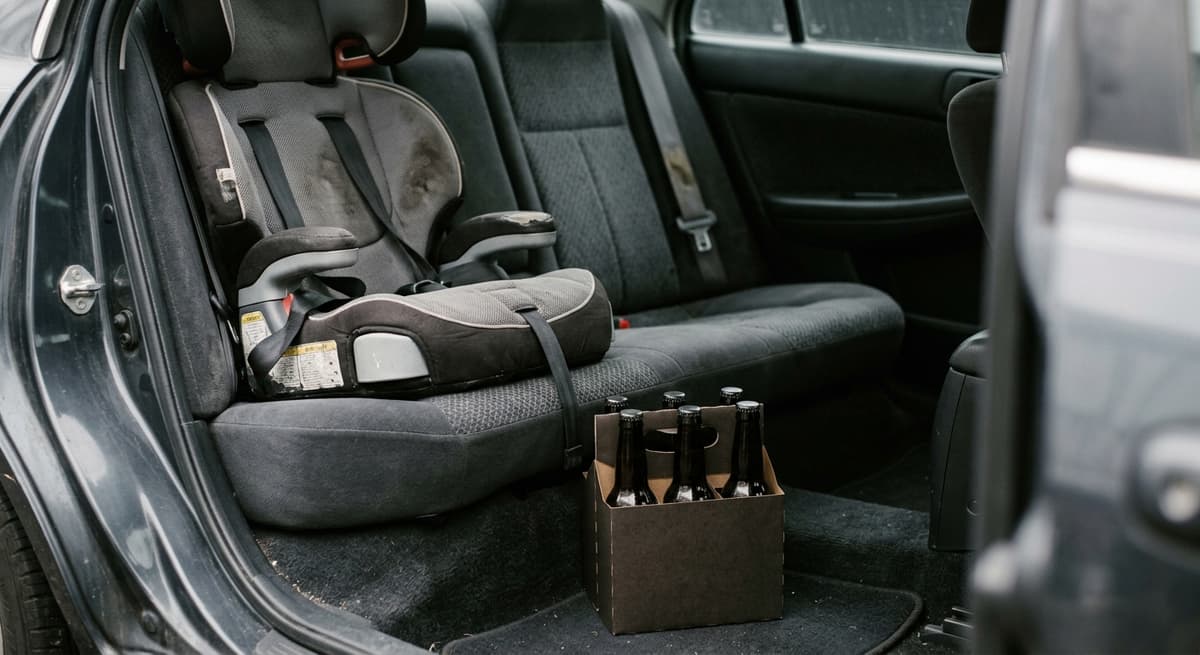
Illinois's open container statute, 625 ILCS 5/11-502(a) and (b), makes it unlawful for a driver or a passenger to transport, carry, possess, or have any alcoholic liquor within the passenger area of a motor vehicle upon a highway, except in the original container with the seal unbroken. In practice, this means any bottle, can, or other container that has been opened, has a broken seal, or has had its contents partially removed cannot be in the passenger area at all, for the driver or for any passenger, unless one of the exemptions below applies.
The Vehicle-Type Exemptions, and Why They Don't Fully Cover the Driver
Illinois exempts passengers, but not the driver, from the possession ban in three settings:
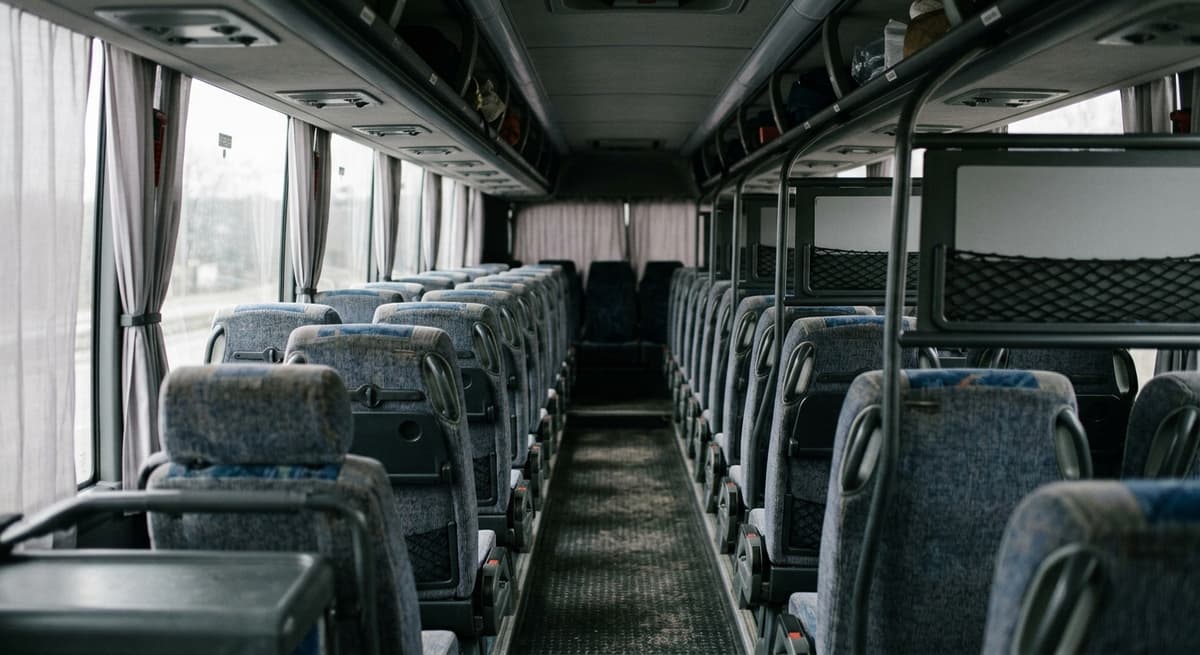
- A limousine in ordinary use. The statute defines a limousine as a first-division motor vehicle with the passenger compartment enclosed by a partition or dividing window, used in the for-hire transportation of passengers, and operated by an individual holding the appropriate class of Illinois driver's license. A vehicle without that partition, such as a party bus or a stretch SUV, does not qualify as a limousine under this exemption; it is exempt only if it separately qualifies as a chartered bus in ordinary use.
- A chartered bus in ordinary use.
- A motor home or mini motor home.
The real wrinkle in Illinois's law is what happens to the driver inside one of these otherwise-exempt vehicles. Subsection (c) separately and specifically bars the driver from consuming alcohol, or having liquor in the driver's own area, even inside a limousine, bus, or motor home that is otherwise exempt for its passengers; any evidence of alcohol consumption by the driver is prima facie evidence that the driver failed to obey the section. In other words, the vehicle-type exemption covers the passengers' possession of open containers, but it does not extend to the driver's own consumption or to alcohol kept within the driver's reach. A reader should not assume that "exempt vehicle" means the driver is free to drink; the driver's-area restriction still applies.
Illinois also exempts resealed growlers, crowlers, and restaurant wine bottles that meet the conditions of the Liquor Control Act (625 ILCS 5/11-502 cross-referencing 235 ILCS 5/6-6.5 and 6-33), which allow a partially consumed container to be resealed and transported home from a licensed premises under specific labeling and packaging requirements.
What the Law Does (and Doesn't Clearly) Say About Drinking
Illinois's possession ban is broad and well documented: no unsealed container, driver or passenger. The statute's consumption-specific language, however, is narrower in the text reviewed for this article. The clearest standalone consumption rule found is the driver's-area carve-back described above, which bars the driver from drinking or keeping liquor accessible even in an exempt vehicle. A separate, general ban on drinking by a non-exempt-vehicle occupant, beyond what the possession ban already accomplishes by prohibiting an unsealed container from being in the vehicle at all, was not independently confirmed within the section as reviewed. This article does not assert that Illinois has a broader standalone drinking ban than what is stated here; readers should not treat the absence of an unsealed container as the only thing standing between them and a lawful drink in the vehicle.
Penalties: License Suspension, Not Just a Fine
Illinois does not classify a violation of 625 ILCS 5/11-502 with a simple named offense level or a flat dollar fine within 11-502 itself; a default classification and fine for Vehicle Code violations that name none may exist elsewhere in the Illinois Vehicle Code's penalty provisions, but that default was not independently confirmed for this article. Instead, the statute's own penalty subsections point toward a driving-privilege consequence, and it is narrower than "a violation": subsection (e) suspends the driving privileges only of a driver convicted of violating subsection (a) for a second or subsequent time within one year of a similar conviction, and subsection (f) suspends the driving privileges only of a driver who was under 21 at the time of the offense and who is convicted of violating subsection (a) of this Section or a similar provision of a local ordinance; age alone is not the trigger. A driver's first violation, and any violation by a passenger, is not a suspension trigger under this section. The statute's penalty language also references "a similar provision of a local ordinance," suggesting a local ordinance covering the same conduct can trigger the same suspension consequence, even though the underlying prohibition on possession is itself a matter of state law.
How Illinois's Law Fits the Federal Rule
Federal law, 23 U.S.C. § 154, conditions a portion of each state's highway funding on maintaining an open container law that meets minimum federal standards under 23 CFR § 1270.4: a ban on both possession and consumption, covering the driver and all passengers, on public highways, with primary enforcement, while still permitting the trunk, locked-container, for-hire vehicle, and motorhome exemptions described above. A state without a compliant law has 2.5 percent of certain federal highway funds reserved rather than released for ordinary use.
FHWA's FY2026 apportionment notice (Notice N4510.905, dated October 1, 2025) lists 12 states as non-conforming: Alaska, Connecticut, Delaware, Hawaii, Louisiana, Maine, Mississippi, Missouri, Ohio, Tennessee, Virginia, and Wyoming. Illinois is not one of them. That absence from the list means Illinois's law was not flagged as non-conforming in the FY2026 notice; it is not the same thing as an independent, per-state federal certification of every detail of the statute.
Disclaimer: This article provides general legal information about open container laws in the United States as of September 2026. It is not legal advice. Open container statutes, exemptions, and penalties change; verify the current text of your state's law before relying on it, and consult a lawyer licensed in your state for advice about a specific situation.
For the federal framework and how every state compares, see the open container laws by state hub. Related reading: Illinois DUI laws and Illinois window tint laws.
Statutes cited reflect their in-force version as of 2026-09-16. Last updated: 2026-09-16.
Frequently Asked Questions
What counts as an open container in Illinois?
Any alcohol container that is not in its original sealed package, meaning it has been opened, has a broken seal, or has had its contents partially removed, counts as an open container under 625 ILCS 5/11-502.
Can a passenger drink alcohol in a car in Illinois?
Illinois's clearest confirmed rule bars any unsealed container from being in the passenger area at all, driver or passenger, with narrow exemptions for limousines meeting the statutory definition, chartered buses, and motor homes. A separate standalone drinking ban beyond that possession rule was not confirmed in the section reviewed.
Is there an exception for limousine or party bus passengers in Illinois?
For a limousine, yes, but only if the vehicle meets the statutory definition: a first-division vehicle with the passenger compartment enclosed by a partition, used for for-hire transportation and driven by a properly licensed operator. A party bus or stretch SUV without that partition is not a limousine under the exemption; it would need to qualify as a chartered bus in ordinary use instead. Where the exemption applies, passengers may possess an open container, but the driver may not consume alcohol or keep liquor in the driver's own area even in that vehicle.
What happens if you're caught with an open container in Illinois?
Illinois's statute does not set a flat named offense or fine within 11-502 itself. Instead, a driver's second or subsequent violation within one year of a similar conviction, or a violation by a driver under 21, can trigger a driving-privilege suspension. A driver's first violation and any passenger's violation do not trigger suspension under this section.
Updates
Independently fact-checked against the cited primary sources
Sources and References
- 625 ILCS 5/11-502 (open container prohibition, exemptions, and penalty, Illinois Vehicle Code)(ilga.gov).gov
- 23 U.S.C. § 154(a), federal open container law requirements for state highway funding(law.cornell.edu)
- 23 CFR § 1270.4, federal compliance criteria and permitted state exemptions(law.cornell.edu)
- FHWA Notice N4510.905, FY2026 Apportionment of Federal-Aid Highway Program Funds (non-conforming state list, dated 2025-10-01)(highways.dot.gov).gov