
North Carolina
North Carolina Open Container Law (2026): N.C.G.S. 20-138.7
Independently fact-checked against primary sources (last audited September 17, 2026). · 2 primary sources cited on this page. How we verify our legal content

North Carolina actually has two separate open container offenses layered into one statute, and both apply only to a vehicle on a highway or the right-of-way of a highway. North Carolina's statutory definition of "highway," in G.S. 20-4.01(13), reaches some privately owned ways when any part of them is open to public vehicular travel as a matter of right, but Section 20-138.7 does not use the broader "public vehicular area" term that a separate North Carolina statute (G.S. 20-138.1, driving while impaired) uses, so an ordinary private lot or driveway that is not open to public travel generally falls outside it. A driver-only misdemeanor requires the driver to have both consumed alcohol (or have alcohol remaining in the driver's body) and had an unsealed container in the passenger area, while a second, broader rule makes it an infraction for any occupant, driver or passenger, to simply possess or consume alcohol in the passenger area, regardless of whether the driver did anything wrong. Both live in N.C.G.S. Section 20-138.7, and as of September 2026, the operative text was confirmed against the state's own official code site.
Jurisdiction scope: This article covers North Carolina's state open container law, N.C.G.S. Section 20-138.7, and its two-tier possession and consumption rules for drivers and passengers. It does not cover North Carolina DUI/DWI law or the state's separate pedestrian open-container social-district ordinances. For DUI, see North Carolina DUI laws.
The Two-Tier Structure of North Carolina's Law
Most states write a single open container rule that reaches everyone in the vehicle the same way. North Carolina splits its statute into two distinct offenses, and mixing them up is the most common way to misstate this law.
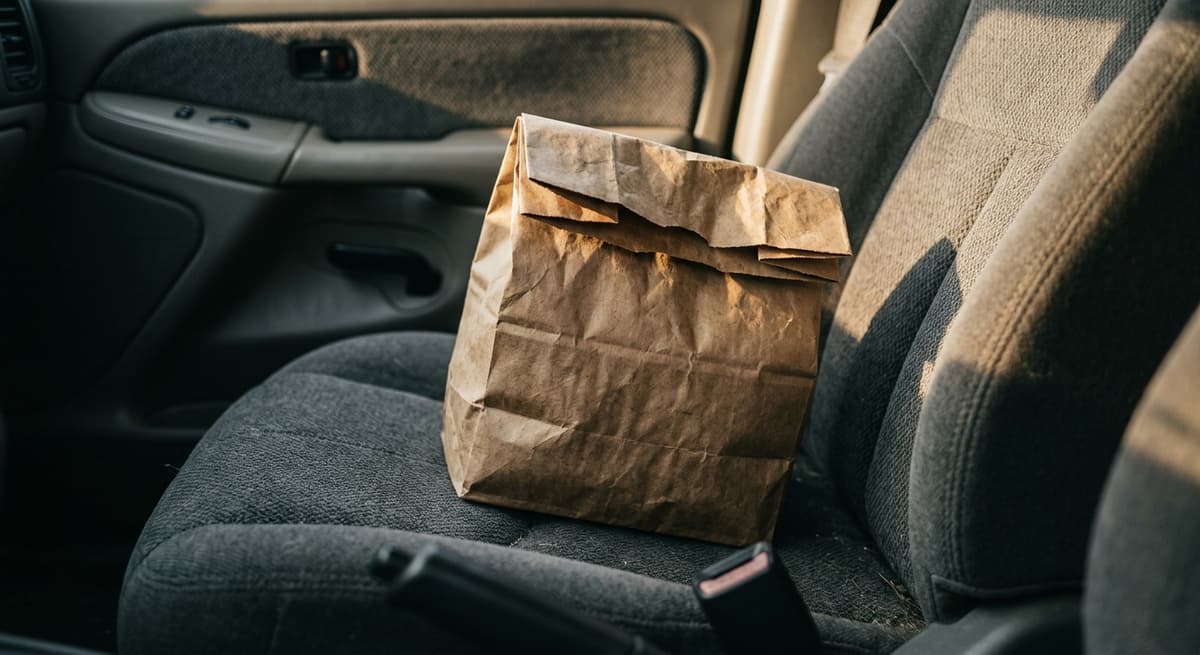
Tier One: The Driver's Consumption Offense, Subsection (a)
Subsection (a) targets the driver only, and it applies while the vehicle is on a highway or the right-of-way of a highway. It requires two things to be true at once: there must be an unsealed alcoholic beverage container in the vehicle's passenger area, and the driver must be consuming alcohol or have alcohol remaining in the driver's body. Neither element alone is enough. A driver who has been drinking but has no open container in the car isn't guilty under this subsection, and a driver who has an open container in the car but hasn't consumed alcohol and has none remaining in the body isn't guilty under it either. Both elements have to be present together.
Tier Two: The Any-Occupant Possession Infraction, Subsection (a1)
Subsection (a1) is a separate, broader rule, and it too applies only while the vehicle is on a highway or the right-of-way of a highway. It makes it an infraction for any occupant, driver or passenger, to possess or consume an open container of alcohol in the passenger area. This offense doesn't depend on what the driver did. A passenger who has an open beer, or is drinking one, can be cited under (a1) even if the driver hasn't had a drop and even if the driver's own conduct never triggers subsection (a). When it is the driver who violates (a1), that violation is treated as a lesser-included offense of subsection (a).
The practical effect: a sober driver can still have a passenger cited for an open container, and a driver who has been drinking without an open container present isn't reachable under this statute at all. Both tiers are limited to a highway or its right-of-way, as G.S. 20-4.01(13) defines "highway" (a definition that can include a privately owned way when it is open to public vehicular travel as a matter of right). Because Section 20-138.7 omits the broader "public vehicular area" term that G.S. 20-138.1 uses, an ordinary private lot or driveway not open to public travel generally sits outside either tier.
What Counts as the "Passenger Area"
North Carolina defines the passenger area to include the area designed to seat the driver and passengers, plus any area within the reach of a seated driver or passenger, including the glove compartment. It excludes the trunk. In a station wagon, hatchback, or similar vehicle without a separate trunk compartment, it also excludes the area behind the last upright seat.
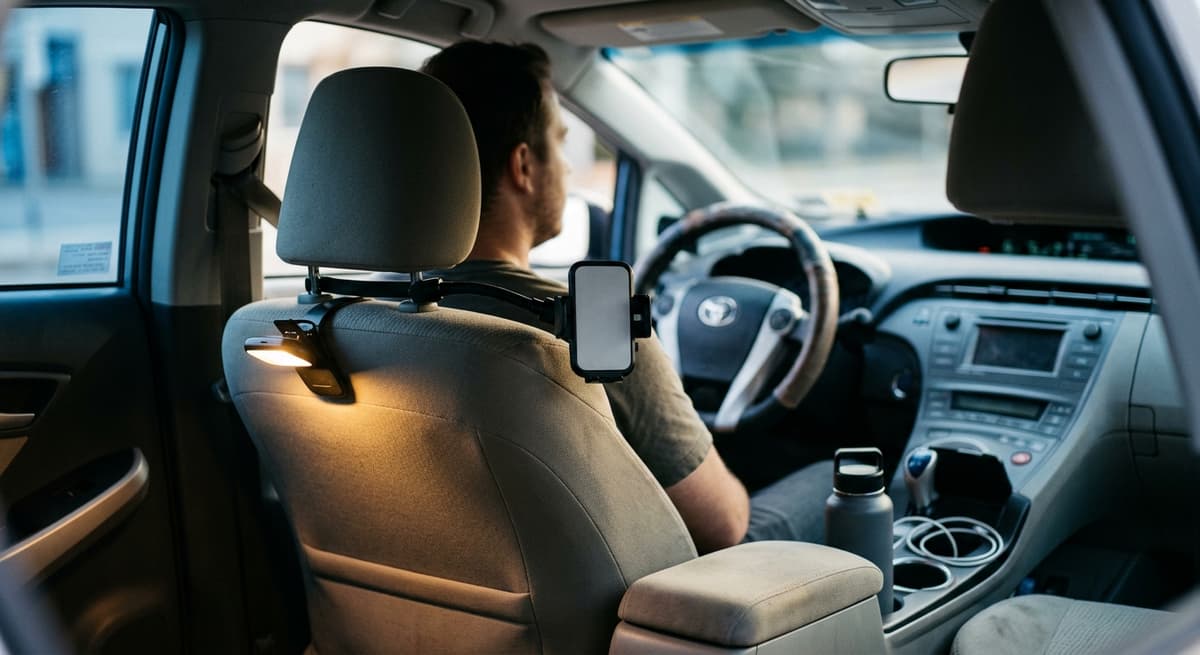
Exemptions
The exemptions in Section 20-138.7 apply only to the (a1) any-occupant infraction, not to the driver's (a) offense:

- A passenger, but not the driver, riding in a vehicle designed, maintained, or used primarily for the transportation of persons for compensation, such as a bus, limousine, or taxi.
- The living quarters of a motor home or house car, as defined by G.S. 20-4.01(27)k. This does not exempt the rest of the vehicle, including the cab.
- A house trailer.
Because these exemptions are written into (a1) specifically, they don't excuse a driver who meets both elements of subsection (a).
Penalties
The two tiers carry different consequences. A first violation of the driver's offense under subsection (a) is a Class 3 misdemeanor; a subsequent violation is a Class 2 misdemeanor. A conviction under (a) is also treated as an alcohol-related offense subject to North Carolina's implied-consent provisions, is considered a moving violation, and can lead to license revocation, for which a limited driving privilege may be available under G.S. 20-179.3. The any-occupant possession offense under subsection (a1) is an infraction only, not a criminal conviction, and is not considered a moving violation.
Federal Compliance
Federal law, 23 U.S.C. Section 154, conditions a share of a state's highway funding on an open container law that bans both possession and consumption, covers the whole passenger area, reaches every occupant, and is primarily enforced (23 CFR 1270.4). A state that falls short has 2.5 percent of certain federal highway apportionments reserved each October 1 and redirected to highway safety programs. North Carolina's two-tier statute, taken together, reaches both the driver-consumption scenario and any-occupant possession, and North Carolina is not on FHWA's current FY2026 list of non-conforming states (Notice N4510.905, dated October 1, 2025).
Disclaimer: This article provides general information about open container law in North Carolina as of September 2026. It is not legal advice and does not create an attorney-client relationship. Verify the current statutory language before relying on a specific claim, and consult a lawyer licensed in North Carolina for advice about a specific situation.
Related reading: open container laws by state, North Carolina DUI laws, and North Carolina window tint laws.
Statutes cited reflect their in-force version as of 2026-09-16. Last updated: 2026-09-16.
Frequently Asked Questions
Can a passenger be cited for an open container in North Carolina even if the driver hasn't been drinking?
Yes, while the vehicle is on a highway or its right-of-way. Subsection (a1) makes it an infraction for any occupant, including a passenger, to possess or consume an open container in the passenger area, regardless of the driver's own conduct.
What's the difference between North Carolina's two open container offenses?
Both apply only on a highway or the right-of-way of a highway. Subsection (a) is a driver-only misdemeanor requiring both an unsealed container in the passenger area and that the driver is consuming alcohol or has alcohol remaining in the driver's body. Subsection (a1) is a separate any-occupant infraction for simply possessing or drinking in the passenger area, independent of the driver's conduct.
Is an open container in the glove compartment or trunk illegal in North Carolina?
The glove compartment counts as part of the passenger area, so an open container there is not exempt. The trunk is excluded, as is the area behind the last upright seat in a vehicle without a trunk.
Are bus or limousine passengers exempt from North Carolina's open container law?
A passenger, but not the driver, riding in a vehicle designed, maintained, or used primarily to transport people for compensation, such as a bus, limousine, or taxi, is exempt from the any-occupant infraction under subsection (a1).
Updates
Independently fact-checked against the cited primary sources
Sources and References
- N.C.G.S. Section 20-138.7 - Transporting an open container of alcoholic beverage(ncleg.gov).gov
- 23 U.S.C. Section 154 - Open container requirements(law.cornell.edu)
- FHWA Notice N4510.905 - FY2026 Apportionment of Federal-Aid Highway Program Funds (open container non-conforming states list)(highways.dot.gov).gov