
North Carolina
North Carolina Court Records: How to Search, What's Public, and Expunction
Independently fact-checked against primary sources (last audited August 10, 2026). · 2 primary sources cited on this page. How we verify our legal content

This article covers how to search North Carolina court records using the state's eCourts Portal, what categories of records are public versus restricted under North Carolina law, and how North Carolina's expunction process works. It does not cover other states; for those, see the Court Records by State hub.
Information last verified on 2026-08-10. This article has not yet been reviewed by a licensed lawyer.
How to Search North Carolina Court Records
North Carolina's Administrative Office of the Courts runs a single statewide search tool, the eCourts Portal, hosted at portal-nc.tylertech.cloud on Tyler Technologies' cloud infrastructure. The rollout moved county by county over several years; the state's remaining 13 counties went live on October 13, 2025, which brought eCourts to all 100 North Carolina counties, according to reporting at the time. Before that date, a search of the Portal alone would not have reached every pending case in the state.
The Portal's public landing page lists four functions: Smart Search, described as the tool to search for court records and case information; Search Hearings, for upcoming hearing dates; Make Payments, for probation, parole, and some criminal-infraction fines; and NC Judgment Search, described as an index of judgments kept in accordance with N.C.G.S. 7A-109(b)(6). That last function is worth knowing about on its own. It is not the same search as Smart Search, and it exists specifically because North Carolina law requires the clerk of every county to maintain a judgment index that the public can search.
One practical detail worth planning around: Tyler's hosting forces a CAPTCHA challenge every ten minutes, for anonymous public users, registered users, and attorneys with elevated access alike. A long research session on the Portal means solving that challenge repeatedly. Attorneys who need elevated access, which shows additional record detail tied to their bar credentials, apply using form AOC-A-264 through the Clerk of Court in the relevant county.
The eCourts Portal is free to use and does not require registration for basic public searches. Like every state portal covered in this cluster, treat it as a research tool rather than the certified record itself; for a copy that carries legal weight, you still need the Clerk of Court.
What's Public and What's Restricted
North Carolina's starting position is openness. N.C.G.S. 7A-109(a) gives the public a right to inspect court records, and the state's Public Records Act (N.C.G.S. Chapter 132) is written to be construed in favor of access, with North Carolina courts describing the closure of presumptively open records as something that should be exceedingly rare and requiring specific findings before a judge seals anything.
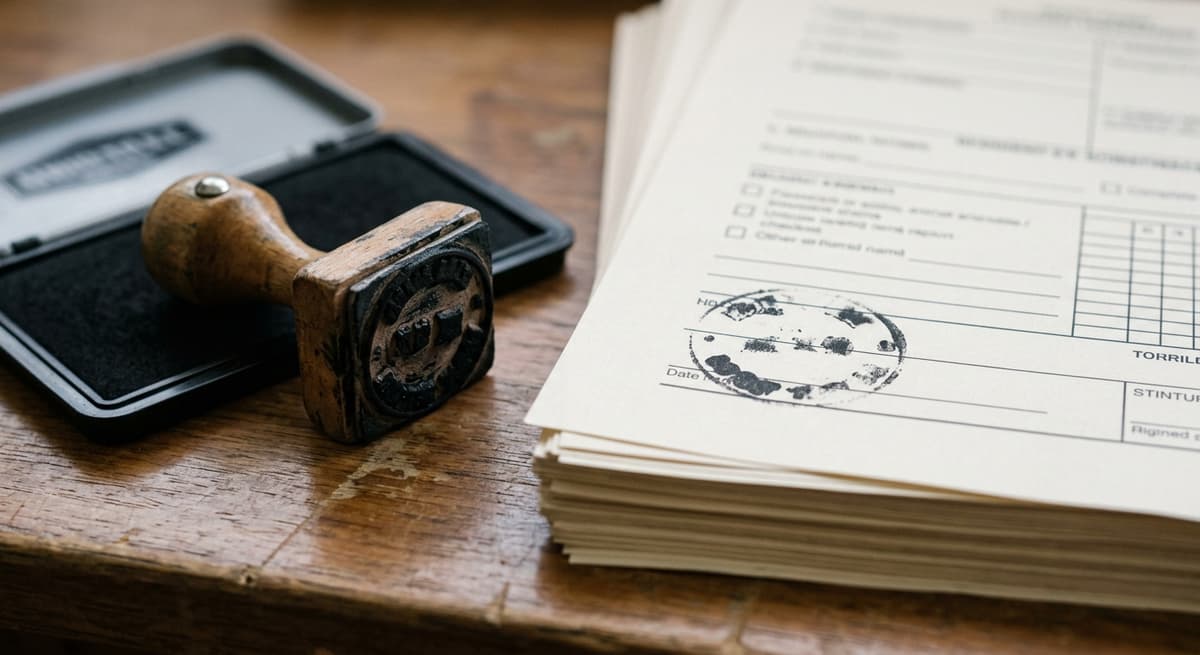
That presumption has statutory exceptions carved out for specific record types, not blanket categories left to a clerk's discretion:
- Juvenile proceedings. Records of juvenile delinquency and abuse, neglect, and dependency matters are excluded from the general Public Records Act (N.C.G.S. 7B-2901), and delinquency hearings themselves may be closed by the court for good cause (N.C.G.S. 7B-2402). Law enforcement records tied to juvenile cases are separately withheld from public inspection under N.C.G.S. 7B-3001(b).
- Adoptions. Judicial adoption hearings are held in closed court under N.C.G.S. 48-2-203.
- Presentence reports. The written presentence report prepared for sentencing, and the record of any oral presentence report, are not public records under N.C.G.S. 15A-1333.
- Wills deposited with the clerk during the testator's lifetime. Under N.C.G.S. 31-11, a living testator may deposit an original paper will with the clerk of superior court for safekeeping. While the will sits in that depository, its contents are closed to everyone except the testator and the testator's authorized agent or attorney until the testator dies. Once the clerk receives proof of death, the clerk may open the will to any person interested in the estate, and the will stays in the depository until it is offered for probate. This provision reaches only wills placed in the clerk's depository, not wills generally.
- Sealed matters generally. A court can seal a record where a compelling interest, such as a fair trial or witness safety, outweighs the presumption of access, but that requires the judge to make specific findings a reviewing court could check.
Discovery materials exchanged between parties in a criminal case, governed by N.C.G.S. 15A-901 through 15A-910, are limited to the parties in the case rather than published to the general public through the Portal.
Expunction: North Carolina's Term for Clearing a Record
North Carolina does not use the word expungement in its own statutes. The governing law is North Carolina General Statutes Chapter 15A, Article 5, titled Expunction of Records, and that is the term that shows up in North Carolina court filings, clerk's-office guidance, and the state's own criminal-history reporting.
Since December 1, 2021, North Carolina has automatically expunged certain dismissed charges and not-guilty verdicts without the person having to file a petition, a mechanism that came out of the 2020 Second Chance Act (S.B. 562). That automatic process was suspended in August 2022 after the volume overwhelmed the court system, and Session Law 2024-35 rebuilt it. Under the current version of G.S. 15A-146(a4), an eligible case is expunged by operation of law not less than 180 days and not more than 210 days after the date of final disposition, not immediately on dismissal or acquittal as the mechanism worked when it first launched. Convictions are a different track: clearing a conviction generally requires a petition under G.S. 15A-145.5, and that provision is narrower. It reaches only offenses the statute labels nonviolent, a category it defines by exclusion: Class A through G felonies and Class A1 misdemeanors are out, as is any offense with assault as an essential element, anything carrying a sex-offender-registration requirement, and any felony in which a commercial motor vehicle was used. Impaired-driving offenses, as defined in G.S. 20-4.01(24a), are separately barred. There is no blanket exclusion for ordinary traffic offenses, and the statute actually discounts prior traffic offenses when it counts a petitioner's other convictions.
This article covers the concept, not the eligibility rules for your specific charge. For the full eligibility tests, waiting periods, and petition process, see North Carolina Expungement Laws.
Certified Copies and Practical Search Tips
The eCourts Portal supports both name search and case-number search through Smart Search. Name searches carry the same risk they do everywhere: a common name can return several people, and a search returning nothing for a common name is not proof a case does not exist, it may mean the spelling, middle name, or date range did not match. Cross-check with a case number where you have one.

For a certified copy of a court record, the Portal is not the source. Contact the Clerk of Court in the county where the case was filed. Clerk's-office contact information and county-specific guidance are linked from the Portal itself and from nccourts.gov.
Using This Information the Right Way
A North Carolina court record search is appropriate for looking up your own case, checking the status of a matter you are a party to, or verifying a public filing. It is not a substitute for a background check performed under the Fair Credit Reporting Act. If you are screening someone for employment, tenancy, or credit, a name-only search on a public portal is not FCRA-compliant on its own, and using a people-search or public-records aggregator site for that purpose carries real legal risk; the FTC's 2023 settlement with TruthFinder and Instant Checkmate, which paid $5.8 million over marketing public-records reports for tenant and employee screening without FCRA compliance, is the clearest warning on that point. Treat a Portal search as a personal-use tool, not a screening product.
Related reading: Court Records by State, How to Look Up Court Records, Are Court Records Public?, North Carolina Background Check Laws, North Carolina Warrant Search, and North Carolina Public Records Laws for records held by executive-branch agencies rather than the courts.
Disclaimer
This article provides general legal information about North Carolina court records, not legal advice, and does not create an attorney-client relationship. Portal names, coverage, and fee information reflect their published status as of the verification date above and can change without notice. For advice about a specific case, expunction eligibility, or a specific record, consult a lawyer licensed in North Carolina.

Last updated: 2026-08-10. Portal facts and fees reflect their published status as of August 2026.
Frequently Asked Questions
Is the North Carolina eCourts Portal free to use?
Yes. Basic public searches through Smart Search, Search Hearings, and NC Judgment Search do not require payment or registration. Attorneys can apply for elevated access through their county Clerk of Court using form AOC-A-264.
Does the eCourts Portal cover every North Carolina county?
It reached all 100 counties as of October 13, 2025, when the final 13 counties went live, according to news coverage of the rollout at the time. Before that date, coverage was still expanding county by county.
Why does the Portal keep asking me to solve a CAPTCHA?
Tyler Technologies, which hosts the Portal, forces a CAPTCHA challenge every ten minutes for every access tier, including anonymous public users. This is a platform-level anti-scraping measure, not something specific to your search.
What is North Carolina expunction and how is it different from sealing?
Expunction is North Carolina's statutory term, under Chapter 15A Article 5, for removing a record from public access. Some dismissed charges and not-guilty verdicts are expunged automatically by operation of law, currently 180 to 210 days after final disposition under G.S. 15A-146(a4), not immediately; clearing a conviction generally requires a petition under specific eligibility rules covered on the North Carolina expungement page.
Can I use an eCourts Portal search to screen a job applicant or tenant?
Not on its own. A name search on a public portal is not a Fair Credit Reporting Act compliant background check. Screening for employment or housing generally requires going through a consumer reporting agency that follows FCRA procedures, including notice and dispute rights for the applicant.
Updates
Corrected two statutory descriptions: wills deposited with the clerk under G.S. 31-11 become open to interested persons when the testator dies rather than at probate, and the G.S. 15A-145.5 expunction petition excludes impaired-driving offenses and commercial-vehicle felonies rather than motor-vehicle offenses generally.
Independently fact-checked against the cited primary sources
The Law Behind This Article
This article rests on the statutory provisions below, held in our own legal record and retrieved from the official source. Tap a section to read the operative text.
North Carolina General Statutes, Chapter 7A: Judicial Department.
§ 7A-109Record-keeping proceduresIn force
(a) Each clerk shall maintain such records, files, dockets and indexes as are prescribed by rules of the Director of the Administrative Office of the Courts. Except as prohibited by law, these records shall be open to the inspection of the public during regular office hours, and shall include civil actions, special proceedings, estates, criminal actions, juvenile actions, minutes of the court, judgments, liens, lis pendens, and all other records required by law to be maintained.
Official text (excerpt) · last checked 2026-07-29 · Read the full text in our law library · Verify at ncleg.gov
North Carolina General Statutes, Chapter 15A: Criminal Procedure Act.
§ 15A-146Expunction of records when charges are dismissed or there are findings of not guiltyIn forcecited in 2 of our articles
(a) Dismissal of Single Charge. - If any person is charged with a crime, either a misdemeanor or a felony, or was charged with an infraction under G.S. 18B-302(i) prior to December 1, 1999, and the charge is dismissed, that person or the district attorney may petition the court of the county where the charge was brought for an order to expunge from all official records any entries relating to that person's apprehension or trial. Upon a finding that the sole charge was dismissed, the court shall order the expunction. (a1) Multiple Dismissals. - If a person is charged with multiple offenses and any charges are dismissed, then that person or the district attorney may petition to have each of the dismissed charges expunged. If the court finds that all of the charges were dismissed, the court shall order the expunction. If the court finds that any charge resulted in a conviction on the day of the dismissal or had not yet reached final disposition, the court may order the expunction of any charge that was dismissed. (a2) Finding of Not Guilty. - If any person is charged with one or more crimes, either a misdemeanor or a felony, or an infraction under G.S.
Official text (excerpt) · last checked 2026-07-29 · Read the full text in our law library · Verify at ncleg.gov
Cited in 13 court opinions in our collectionLatest citing opinion in our collection: 2023
Opinions citing this section in our collection:
- In Re Robinson (Court of Appeals of North Carolina 2005, 172 N.C. App. 272)“…ge any expunged entries concerning apprehension or trial. N.C. Gen. Stat. § 15A-146(a) (2003). “G.S. § 16A-146 authorizes t…”
- In re Expungement for Kearney (Court of Appeals of North Carolina 2005, 174 N.C. App. 213)“…5 March 1994 order since it was not in full compliance with N.C. Gen.Stat. § 15A-146 (2003). The letter explained that altho…”
- State v. Swann (Court of Appeals of North Carolina 2009, 197 N.C. App. 221)“…idence obtained incident to the earlier charges pursuant to N.C. Gen. Stat. § 15A-146. The motion to suppress was hear…”
Identified automatically from the court opinions citing this section — not a ranking of which case controls.
Also relied on in: North Carolina Expungement Laws: Expunction Guide (2026)
§ 15A-145.5Expunction of certain misdemeanors and felonies; no age limitationIn forcecited in 3 of our articles
(a) For purposes of this section, the term "nonviolent misdemeanor" or "nonviolent felony" means any misdemeanor or felony except the following: (1) A Class A through G felony or a Class A1 misdemeanor. (2) An offense that includes assault as an essential element of the offense. (3) An offense requiring registration pursuant to Article 27A of Chapter 14 of the General Statutes, whether or not the person is currently required to register. (4) Any of the following sex-related or stalking offenses: G.S. 14-27.25(b), 14-27.30(b), 14-190.7, 14-190.8, 14-190.9, 14-202, 14-208.11A, 14-208.18, former 14-277.3, 14-277.3A, and 14-321.1. (5) Any felony offense in Chapter 90 of the General Statutes that involves methamphetamines, heroin, or possession with intent to sell or deliver or sell and deliver cocaine. (6) An offense under G.S. 14-12.12(b), 14-12.13, or 14-12.14, or any offense for which G.S. 14-3(c) was applied. (7) An offense under G.S. 14-401.16. (7a) An offense under G.S. 14-54(a1). (8) Any felony offense in which a commercial motor vehicle was used in the commission of the offense. (8a) Repealed by Session Laws 2021-118, s.
Official text (excerpt) · last checked 2026-07-29 · Read the full text in our law library · Verify at ncleg.gov
Cited in 7 court opinions in our collectionLatest citing opinion in our collection: 2020
In the courts (editorial summary, independently checked):State v. J.C. (2019) held the State has no statutory right to appeal an order granting expunction under G.S. 15A-145.5, treating the petition as part of the criminal case. State v. Neira (2020) held felonious speeding to elude arrest falls outside the statutory definition of an offense involving impaired driving in (a)(8a).
Opinions citing this section in our collection:
- State v. J.C. (Supreme Court of North Carolina 2019, 372 N.C. 203)✓After a 1987 indecent liberties conviction was expunged, the State appealed as of right; the court held an expunction petition under section 15A-145.5 is part of a criminal proceeding, so section 15A-1445 controls and gives the State no appeal, leaving certiorari.
- Cnty. of Onslow v. J.C. (Court of Appeals of North Carolina 2017, 256 N.C. App. 199)✓The State appealed an order expunging a 1987 guilty plea; the court dismissed for lack of jurisdiction, holding an expunction under section 15A-145.5 is part of a criminal proceeding and that section 15A-1445 gives the State no right to appeal such an order.
- State v. Neira (Court of Appeals of North Carolina 2020)✓Neira's felony fleeing to elude conviction arose from the same incident as his DWI; the court held that offense is not one involving impaired driving under the statutory definition, so section 15A-145.5(a)(8a) did not bar expunction, and remanded for discretion.
Identified automatically from the court opinions citing this section — not a ranking of which case controls.
Also relied on in: North Carolina Background Check Laws (2026 Guide)
Search our full record of US law — 2.1 million sections, every state + federal →
Sources and References
- eCourts Portal (portal-nc.tylertech.cloud) - Smart Search, Search Hearings, NC Judgment Search, CAPTCHA notice(portal-nc.tylertech.cloud)
- eCourts reaches all 100 counties, October 13, 2025(theassemblync.com)
- Reporters Committee for Freedom of the Press, Open Courts Compendium: North Carolina(rcfp.org)
- Reporters Committee for Freedom of the Press, Open Government Guide: North Carolina (court records vs. Public Records Act)(rcfp.org)
- N.C.G.S. Section 15A-145.5, expunction of certain misdemeanors and felonies(ncleg.gov).gov
- N.C.G.S. Section 15A-146, expunction of records when charges are dismissed or there are findings of not guilty(ncleg.gov).gov
- N.C.G.S. Section 31-11, depositories in offices of clerks of superior court where living persons may file wills(ncleg.gov)