
Florida
Florida Open Container Law (2026): Fla. Stat. § 316.1936
Independently fact-checked against primary sources (last audited September 17, 2026). · 2 primary sources cited on this page. How we verify our legal content

Florida bans both possessing an open alcoholic-beverage container and drinking one in a vehicle, for the driver and every passenger, under Fla. Stat. § 316.1936. As of September 2026, the rule reaches a vehicle even when it's stopped or parked on a Florida road, and a handful of specific exemptions, for passengers in for-hire vehicles and motor homes, and for sealed carry-out drinks, narrow who it actually applies to.
Information last verified on 2026-09-16. This article has not yet been reviewed by a licensed lawyer.
Jurisdiction scope: This page covers open container law in the state of Florida under Fla. Stat. § 316.1936, current as of September 2026. It does not cover Florida's separate DUI statutes or boating-under-the-influence rules.
What Florida's Open Container Law Prohibits
Fla. Stat. § 316.1936 prohibits two separate things in a motor vehicle: possessing an open container of an alcoholic beverage, and drinking an alcoholic beverage. Both apply to the driver and to every passenger. Subsection (2)(a) states it this way: "It is unlawful and punishable as provided in this section for any person to possess an open container of an alcoholic beverage or consume an alcoholic beverage while operating a vehicle in the state or while a passenger in or on a vehicle being operated in the state." Florida's statute doesn't rely on a single defined term like "passenger area" to draw the line on what counts as covered space; instead, possession is attributed based on physical control and where the container is located relative to the person, which is a different mechanism than the trunk-versus-passenger-compartment framing used in many other states. Subsection (3) gives that rule a lawful-storage answer: an open container is considered to be in the operator's possession only if it is not in a passenger's possession and is not located in a locked glove compartment, locked trunk, or other locked nonpassenger area of the vehicle; subsection (4) attributes a container to a passenger instead when it's in that passenger's physical control.
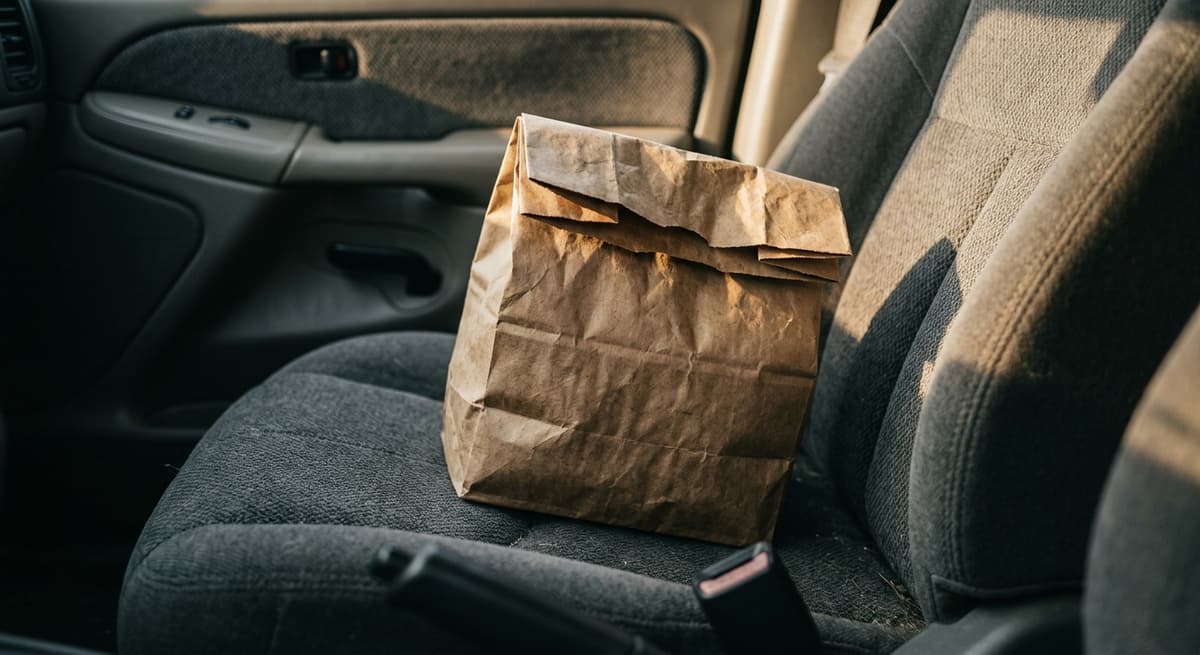
Subsection (2)(b) adds a rule worth calling out specifically: it covers anyone seated in a vehicle that is parked or stopped within the road, as Florida law defines that term, not just a vehicle that's actively being driven. That closes an obvious loophole, pulling over or parking to drink doesn't take a vehicle outside the statute's reach. The same subsection then grants a general exemption, unconditioned by CDL endorsement or vehicle length: "passengers in vehicles designed, maintained, and used primarily for the transportation of persons for compensation and in motor homes are exempt."
Exemptions to Florida's Open Container Law
Florida's law provides exemptions through two routes. Subsection (2)(b) grants a general, unconditioned exemption for passengers riding in a vehicle "designed, maintained, and used primarily for the transportation of persons for compensation" or in a motor home, with no CDL requirement and no vehicle-length condition. Subsection (5) then layers on narrower, conditioned exemptions:
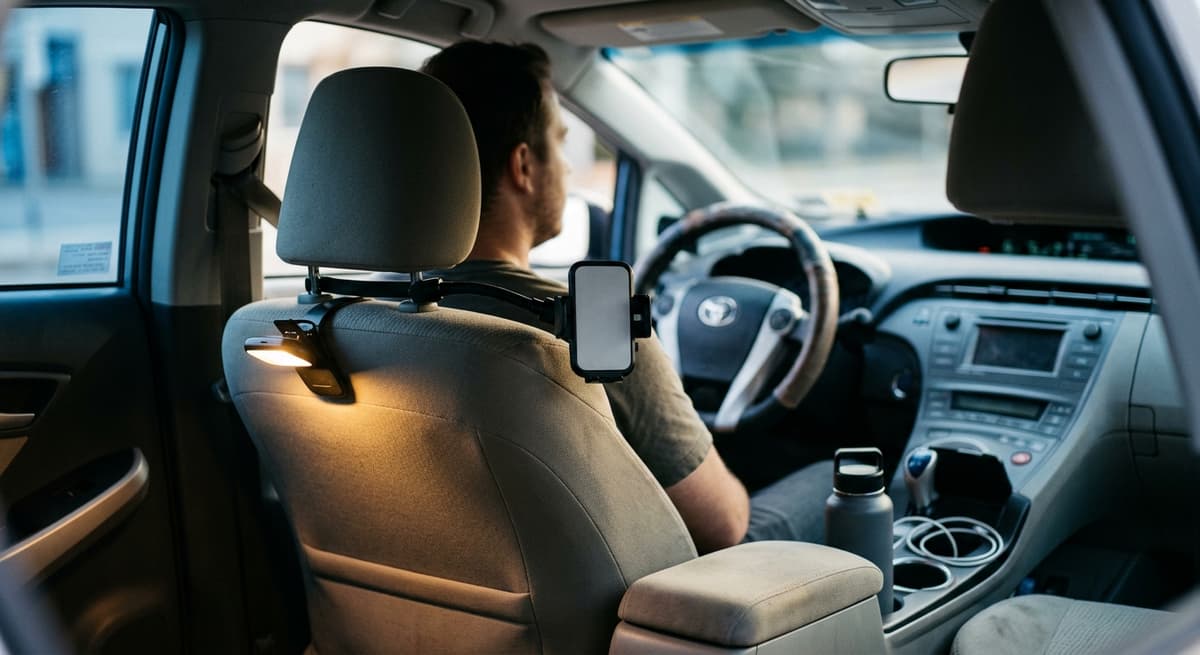
- A passenger riding for hire, where the vehicle's driver holds a commercial driver's license with a passenger endorsement, under a transportation contract.
- A bus passenger, again where the driver holds a CDL with a passenger endorsement.
- A passenger in a self-contained motor home that is more than 21 feet long.
Subsection (9) separately exempts a sealed alcoholic beverage transported under Florida's separate restaurant and wine carry-out statutes (Fla. Stat. §§ 564.09, 561.20(2)(a)4., and 565.045(1)), since a properly sealed container isn't an "open" one under the law in the first place.
None of these exemptions apply to the driver's own possession or consumption; they're written around specific passenger and transport situations.
Local Ordinances Can Be Stricter
Subsection (7) of § 316.1936 expressly authorizes a Florida county or municipality to adopt its own ordinance imposing restrictions more stringent than the state's. In practice, that means a specific city or county could ban something the state statute doesn't reach, such as a broader definition of covered locations, but it cannot loosen the state's floor. Readers in a specific Florida city or county should check for a local ordinance in addition to the state statute.

Penalty for an Open Container Violation in Florida
Florida treats a driver's violation and a passenger's violation differently. Subsection (6) states: "Any operator of a vehicle who violates this section is guilty of a noncriminal moving traffic violation, punishable as provided in chapter 318. A passenger of a vehicle who violates this section is guilty of a nonmoving traffic violation, punishable as provided in chapter 318." (The statute labels only the driver's violation "noncriminal"; the passenger's is a nonmoving traffic violation.) Both are civil infractions rather than criminal misdemeanors, and the actual fine amount is set by chapter 318's civil-penalty schedule rather than written into § 316.1936 itself. That specific dollar figure was not independently confirmed for this page, so it is not stated here; check Florida's current civil-penalty schedule or the Florida Highway Safety and Motor Vehicles website for the exact amount before relying on a number.
How Florida's Law Fits the Federal Open Container Rule
Federal law, 23 U.S.C. § 154, requires a state's open container law to ban both possession and consumption, cover the driver and every passenger, apply to the vehicle's passenger area on a public highway or its right-of-way, and be primarily enforced (23 CFR 1270.4), or the state risks having 2.5 percent of two federal highway-funding apportionments reserved each October 1 and redirected to highway-safety spending. Florida is not on FHWA's current FY2026 list of 12 non-conforming states (Notice N4510.905, dated October 1, 2025), meaning Fla. Stat. § 316.1936 is being treated as meeting that federal standard.
Disclaimer: This article provides general information about open container law in Florida as of September 2026. It is not legal advice and does not create an attorney-client relationship. Statutes, local ordinances, and civil-penalty amounts change; verify the current text of Fla. Stat. § 316.1936 and chapter 318 before relying on this information, and consult a lawyer licensed in Florida for advice about a specific situation.
Related Articles
Statutes cited reflect their in-force version as of 2026-09-16. Last updated: 2026-09-16.
Frequently Asked Questions
Is it illegal to have an open container in a parked car in Florida?
Yes. Fla. Stat. section 316.1936(2)(b) covers a vehicle that is parked or stopped within the statutorily defined road, not just one being actively driven.
Can passengers drink alcohol in a car in Florida?
No, with narrow exceptions. Florida's law bans possession and consumption for the driver and every passenger, except for a for-hire or bus passenger riding with a CDL passenger-endorsed driver, or a passenger in a self-contained motor home over 21 feet.
Are taxi and limo passengers exempt from Florida's open container law?
Yes, through two routes. Subsection (2)(b) grants an unconditioned exemption to passengers in a vehicle designed, maintained, and used primarily to transport people for compensation, with no CDL requirement. Subsection (5) separately exempts a passenger riding for hire under a transportation contract with a CDL passenger-endorsed driver, and a bus passenger under the same driver-license condition.
Can a Florida city or county have stricter open container rules than the state?
Yes. Fla. Stat. section 316.1936(7) lets a county or municipality adopt an ordinance that is more restrictive than the state law, though not less restrictive.
What is the fine for an open container violation in Florida?
The violation is a noncriminal moving traffic violation for the driver and a nonmoving traffic violation for a passenger. The specific dollar amount is set by chapter 318's civil-penalty schedule and was not independently confirmed for this page.
Updates
Independently fact-checked against the cited primary sources
Sources and References
- Fla. Stat. § 316.1936 (possessing or drinking an open container in a vehicle; exemptions; local ordinance authority)(leg.state.fl.us).gov
- FHWA Notice N4510.905, FY2026 Apportionment of Federal-Aid Highway Program Funds (open container non-conforming states list)(highways.dot.gov).gov
- 23 U.S.C. § 154 (federal open container requirements)(law.cornell.edu)
- 23 CFR 1270.4 (federal compliance criteria: possession and consumption ban, passenger area, all occupants, primary enforcement)(law.cornell.edu)