
Hawaii
Hawaii Open Container Law (2026): HRS §§ 291-3.1 to 291-3.4
Independently fact-checked against primary sources (last audited September 17, 2026). · 2 primary sources cited on this page. How we verify our legal content

Hawaii spreads its open container rule across four adjoining statutes rather than one: a driver-specific ban, a separate passenger-specific ban, a vehicle-wide storage rule that reaches further than a defined "passenger area," and a narrow for-hire exception. As of September 2026, together they prohibit both possessing and drinking an open alcoholic-beverage container in a vehicle or moped upon any public street, road, or highway, for the driver and every passenger, with one counterintuitive twist: the glove compartment does not count as a safe place to store an open container.
Information last verified on 2026-09-16. This article has not yet been reviewed by a licensed lawyer.
Jurisdiction scope: This page covers open container law in the state of Hawaii under Haw. Rev. Stat. §§ 291-3.1 through 291-3.4, current as of September 2026. It does not cover Hawaii's separate OVUII (operating a vehicle under the influence of an intoxicant) statutes.
Hawaii's Four-Section Open Container Structure
Most states write their open container rule into a single statute. Hawaii instead splits it across four adjoining sections of chapter 291, each covering a different piece of the same overall problem and each limited to a vehicle or moped upon any public street, road, or highway: HRS § 291-3.1 addresses the driver, § 291-3.2 addresses passengers, § 291-3.3 addresses how an open container may be stored anywhere in the vehicle, and § 291-3.4 sets a narrow exception for for-hire vehicles. Together, they cover both possession and consumption for everyone in the vehicle, which is what federal law requires, but understanding any single piece of Hawaii's rule requires reading it alongside the other three.
The Driver's Rule: HRS § 291-3.1
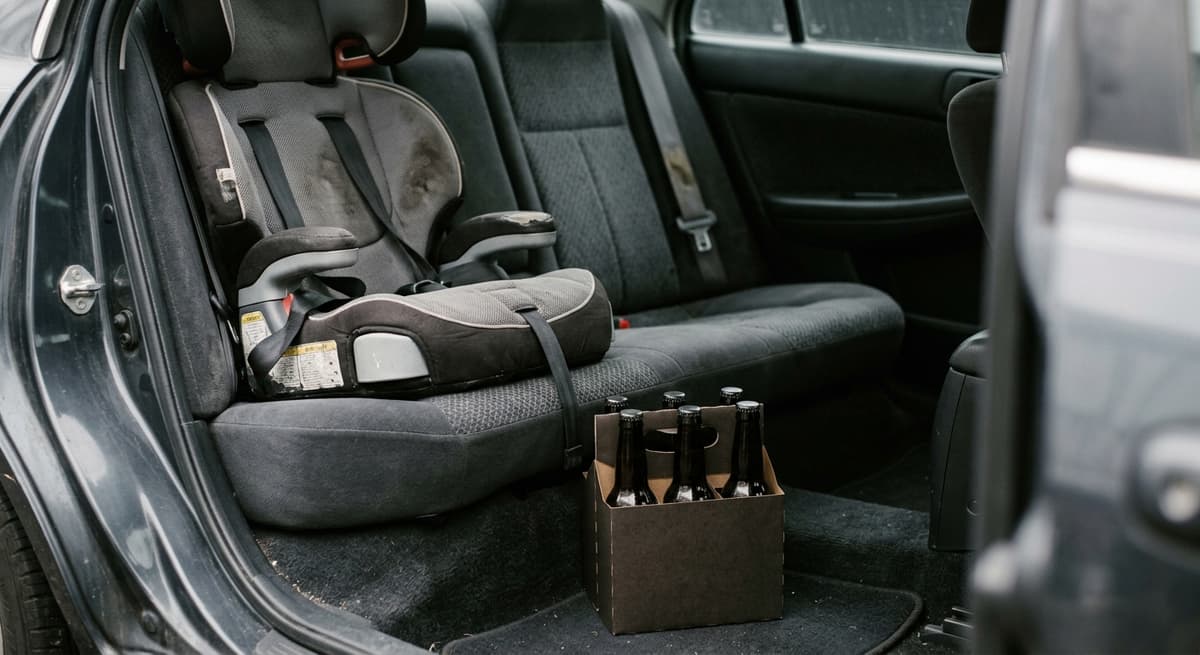
Section 291-3.1 bans a driver from possessing an open container of alcohol or consuming an alcoholic beverage while operating a vehicle or moped upon any public street, road, or highway. A violation carries a fine of up to $2,000, up to 30 days of imprisonment, or both, making it the most serious of Hawaii's open-container penalties.
The Passenger's Rule: HRS § 291-3.2
Section 291-3.2 imposes the same core ban, applicable to a vehicle or moped upon any public street, road, or highway, possessing an open container or consuming alcohol, on a passenger rather than the driver. Unlike the driver's version, a passenger's violation is classified as a petty misdemeanor rather than carrying the driver-specific fine-and-jail structure.
The Vehicle-Wide Storage Rule: HRS § 291-3.3
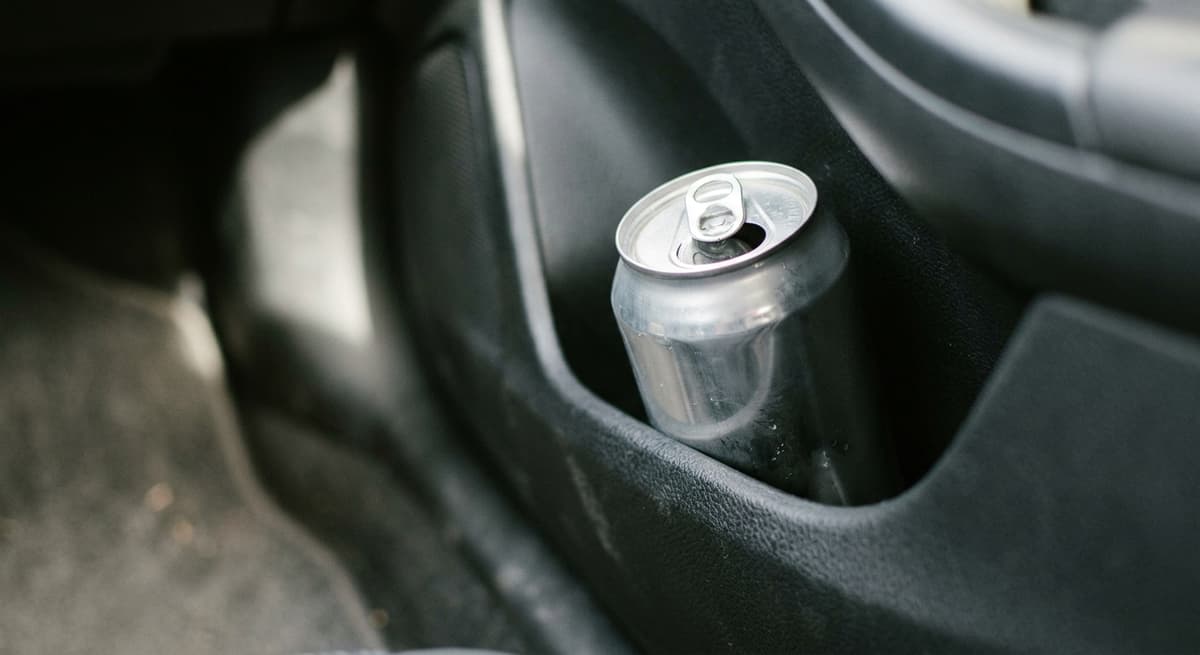
Section 291-3.3 does something most states' laws don't: it separately regulates where an opened container may be stored in the vehicle at all, independent of whether anyone is actively possessing or drinking from it, upon any public street, road, or highway or at any scenic lookout. The safe-storage location is the trunk, or in a vehicle without a trunk, an area not normally occupied by the driver or passengers. Critically, the glove compartment or any other utility compartment is explicitly NOT a safe harbor under this section, a real trap for a driver or passenger who assumes that closing an open container inside the glove box is enough to comply with Hawaii law. The same section separately bans consuming intoxicating liquor at any scenic lookout at all, a distinct rule worth knowing before stopping at one of Hawaii's roadside overlooks. Violating the storage rule is a lesser violation, distinct from the driver's and passenger's own possession or consumption offenses.
Subsection (c) excepts only subsection (a), not the whole storage rule, for "a recreational or other vehicle not having a separate trunk compartment." The qualifier governs the whole phrase: a recreational vehicle that does have a separate trunk compartment is not excepted, and subsection (b)'s scenic-lookout consumption ban still applies regardless of vehicle type.
The For-Hire Vehicle Exception: HRS § 291-3.4
Section 291-3.4 provides Hawaii's one real vehicle-type exception, and it's a narrow one. It applies to a for-hire vehicle holding a Public Utilities Commission certificate of public convenience and necessity with a "1-7 passenger classification," a PUC certificate class, not a count of passengers actually riding, and only exempts passengers riding behind a physical barrier separating them from the driver. The exception reaches only sections 291-3.2 (the passenger's rule) and 291-3.3 (the storage rule); it never applies to section 291-3.1, so the driver is never excepted by it. A for-hire vehicle without that barrier, or a passenger riding in front of it, does not get the benefit of this exception.
Penalties for a Hawaii Open Container Violation
Hawaii's penalty structure tracks its four-section approach rather than setting one uniform penalty:
- Driver possession or consumption (§ 291-3.1): a fine of up to $2,000, up to 30 days imprisonment, or both.
- Passenger possession or consumption (§ 291-3.2): a petty misdemeanor.
- Improper storage of an open container (§ 291-3.3): a violation.
Why Is Hawaii on the Federal Non-Conforming List?
Federal law, 23 U.S.C. § 154, requires a state's open container law to ban both possession and consumption, cover the driver and every passenger, apply to the vehicle's passenger area on a public highway or its right-of-way, and be primarily enforced (23 CFR 1270.4). On its face, Hawaii's four-section structure appears to check each of those boxes: it bans both possession and consumption, for both the driver and passengers.
Despite that, Hawaii is one of 12 states on FHWA's current FY2026 non-conforming list (Notice N4510.905, dated October 1, 2025), alongside Alaska, Connecticut, Delaware, Louisiana, Maine, Mississippi, Missouri, Ohio, Tennessee, Virginia, and Wyoming. Being on that list means FHWA reserves 2.5 percent of two of Hawaii's federal highway-funding apportionments each year and redirects them to highway-safety spending unless the state comes into compliance. What this research could not resolve is why: the specific conformance gap for Hawaii was not identified in the statute's text, and it may reflect an enforcement-level issue, such as how consistently the rule is applied, or a technical mismatch with a federal definition, rather than something visible on the face of §§ 291-3.1 through 291-3.4. This page does not guess at a specific reason, and readers researching Hawaii's federal compliance status further should look to FHWA's own determination materials rather than assuming a textual explanation exists.
Disclaimer: This article provides general information about open container law in Hawaii as of September 2026. It is not legal advice and does not create an attorney-client relationship. Statutes and their penalties change; verify the current text of Haw. Rev. Stat. §§ 291-3.1 through 291-3.4 before relying on this information, and consult a lawyer licensed in Hawaii for advice about a specific situation.
Related Articles
Statutes cited reflect their in-force version as of 2026-09-16. Last updated: 2026-09-16.
Frequently Asked Questions
Is it illegal to store an open container in the glove compartment in Hawaii?
Yes. Hawaii's storage rule (HRS section 291-3.3) explicitly excludes the glove or utility compartment as a safe location. Only the trunk, or in a trunkless vehicle an area not normally occupied, qualifies.
What's the difference between Hawaii's driver and passenger open container laws?
They're separate statutes with separate penalties. A driver's possession or consumption (HRS section 291-3.1) can bring a fine up to $2,000, up to 30 days in jail, or both. A passenger's possession or consumption (HRS section 291-3.2) is a petty misdemeanor.
Are taxi or limo passengers exempt from Hawaii's open container law?
Only in a narrow case: a PUC-certificated for-hire vehicle with a 1-7 passenger classification (the PUC's certificate class, not a headcount), where the exempt passenger rides behind a physical barrier separating them from the driver. The exception applies only to the passenger's and storage rules (HRS sections 291-3.2 and 291-3.3); it never exempts the driver under section 291-3.1.
Why is Hawaii on the federal government's list of non-conforming open container states?
Hawaii is on FHWA's FY2026 non-conforming list even though its statutes appear, on their face, to ban both possession and consumption for the driver and passengers. The specific reason for the gap was not confirmed in this research; it may be an enforcement-level or federal-definitional issue rather than a visible defect in the statutory text.
What's the penalty for a Hawaii open container violation?
It depends which section applies. A driver's violation can bring a fine up to $2,000, up to 30 days imprisonment, or both. A passenger's violation is a petty misdemeanor. Improperly storing an open container anywhere in the vehicle is a lesser violation.
Updates
Independently fact-checked against the cited primary sources
Sources and References
- Haw. Rev. Stat. §§ 291-3.1 to 291-3.4 (driver possession/consumption ban, passenger possession/consumption ban, vehicle-wide storage rule, for-hire exception)(capitol.hawaii.gov).gov
- FHWA Notice N4510.905, FY2026 Apportionment of Federal-Aid Highway Program Funds (Hawaii listed among 12 open-container non-conforming states)(highways.dot.gov).gov
- 23 U.S.C. § 154 (federal open container requirements)(law.cornell.edu)
- 23 CFR 1270.4 (federal compliance criteria: possession and consumption ban, passenger area, all occupants, primary enforcement)(law.cornell.edu)