Virginia Traffic Camera Ticket Laws: Why the Same Statute Has Two Different Outcomes
Independently fact-checked against primary sources (last audited August 12, 2026). · 2 primary sources cited on this page. How we verify our legal content
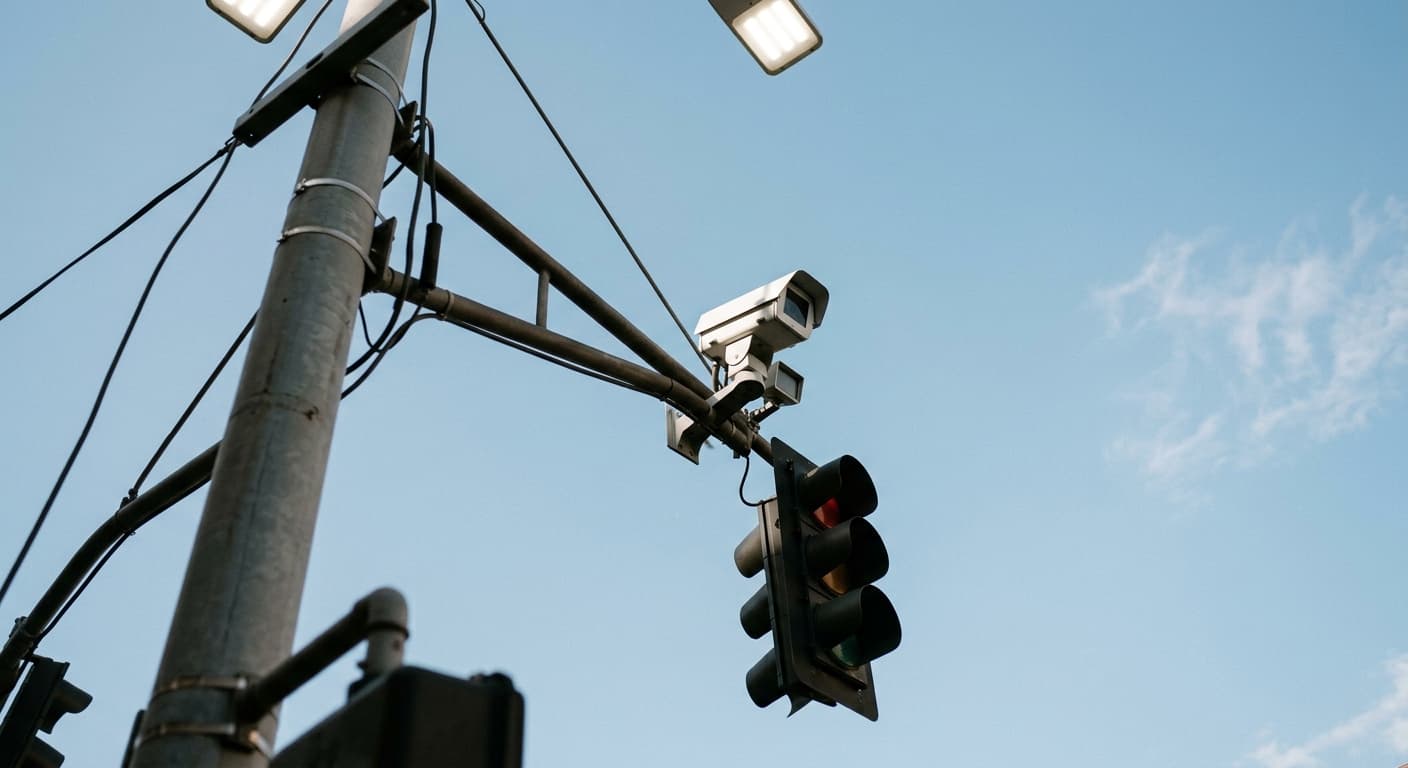
Virginia authorizes both red light and speed cameras, and it authorized a lot more of the speed side in 2026 than most Virginia drivers realize. The overwhelming majority of Virginia camera tickets are mailed civil penalties with no points and no insurance impact. But the same statute that says that also carries an exception most coverage skips entirely: when a law-enforcement officer personally issues the summons at the time of the violation using the camera device, the resulting conviction is treated like any other, on your record and visible to your insurer. Getting the two tracks straight matters.
Virginia's Two Camera Programs: Red Light and Speed
Virginia runs red light and speed camera enforcement under two separate statutes. Red light cameras are authorized under Va. Code 15.2-968.1: any county, city, or town may adopt an ordinance authorizing them, capped at one intersection per 10,000 residents, or, for localities in Planning District 8 (the Northern Virginia region), up to 10 intersections or the per-capita number, whichever is greater. The civil penalty is capped at $50, with no added court costs.
Speed and other device types run under Va. Code 46.2-882.1, which is considerably broader. It authorizes photo speed monitoring in highway work zones when workers are present, school crossing zones, «high-risk intersection segments» (open statewide to any law-enforcement agency that certifies a qualifying fatality), «safety red zones» (pedestrian-priority corridors at or under 45 mph, available to Planning District 8 localities by ordinance), and, with federal authorization, on National Park highways in Planning District 8. The trigger for a speed violation is 10 or more miles per hour over the posted limit. The same statute has been expanded to cover pedestrian-crossing and stop-sign violation monitoring systems as well, with a $100 civil penalty cap.
The Rule Most Readers Get Wrong: Mailed vs. Officer-Issued
Virginia's speed-camera statute contains language that is easy to skim past and important to catch. The default outcome, spelled out directly in 46.2-882.1, is that «imposition of a penalty pursuant to this section by mailing a summons shall not be deemed a conviction as an operator and shall not be made part of the operating record of the person upon whom such liability is imposed, nor shall it be used for insurance purposes.» That is the standard, no-points, no-record, no-insurance outcome that owner-liability camera programs are known for.
But the very next clause changes the outcome entirely for a specific scenario: «if a law-enforcement officer uses a photo speed monitoring device to record a vehicle speed violation and personally issues a summons at the time of the violation, the conviction that results shall be made a part of such driver's driving record and used for insurance purposes.» In other words, the camera itself is not what determines whether you get points. What determines it is whether an officer was there in person, watched the violation happen, and handed you (or issued) the summons on the spot, versus the far more common scenario where the device operates unattended and a notice arrives by mail weeks later. If your camera ticket arrived in the mail, you almost certainly fall under the no-points rule. If an officer stopped you and issued the citation using the device's reading, you are in the exception.
Who's Liable, and How to Point to the Actual Driver
Both of Virginia's civil-penalty programs work off a rebuttable presumption that the vehicle's owner, lessee, or renter was the one driving at the time of the violation. What it takes to rebut that presumption depends on which program sent the notice, and the difference is easy to get wrong.
Under the speed-camera statute, 46.2-882.1(E), the owner must either file an affidavit by regular mail with the clerk of the general district court or testify in open court under oath that he was not the operator, and in either case provide the name and address of the person who was operating the vehicle. Identifying the actual driver is part of the statutory requirement there.
Under the red-light statute, 15.2-968.1(D), it is not. That presumption is rebutted by an affidavit filed by regular mail with the clerk, or by sworn testimony in open court, stating only that the owner was not the operator at the time of the alleged violation. The statute does not ask you to name anyone else.
Either presumption can also be rebutted with a certified copy of a police report showing the vehicle had been reported stolen before the violation occurred.
What Happens If You Don't Pay
Virginia's speed-camera law builds in a real consequence for ignoring a mailed summons, and it is verified directly in the statute's text. After you fail to appear in response to a SECOND mailed summons, the court notifies the Commissioner of the DMV, who then refuses to issue or renew your vehicle registration or license plates until the outstanding penalty and fees are paid. For out-of-state owners who default after that second summons, the statute makes them eligible for the state's ordinary legal collections activities. This is a genuinely enforceable escalation path, not a toothless notice, and it is one more reason not to treat a mailed Virginia camera summons as optional just because the first one carries no points.
2026's Wave of Changes
Virginia's General Assembly touched its speed-camera statute more heavily in 2026 than in any prior year covered by this research: nine separate chapters (963, 964, 965, 967, 968, 969, 970, 986, and 1033) amended 46.2-882.1 in some way, and Virginia's red-light statute, 15.2-968.1, was separately amended by two of those same chapters (963 and 965). The most substantively confirmed of the group is chapter 964 (HB 1220), which added a new section, Va. Code 46.2-882.2. That section does not govern where cameras may be placed. It creates a remedy for drivers: a person against whom a locality or law-enforcement agency carries out a camera enforcement action in willful disregard of applicable law is entitled to compensatory damages, capped at the civil penalty assessed in the underlying case, and to an order remanding the matter to the locality with a direction to enforce lawfully going forward, and may be awarded reasonable attorney fees and court costs. If the locality then fails to comply with that order, a court may cut it off from the camera revenue it collects beyond what its own program costs, redirecting those funds to the Virginia Highway Safety Improvement Program.
One change worth knowing if you drive near a newly installed camera: any speed monitoring device placed after July 1, 2026 must issue mail-only warnings, with no penalty, for its first 30 days of operation. The 2026 legislation also expanded pedestrian-crossing and stop-sign monitoring systems into school crossing zones, work zones, and high-risk corridors, paired with a required public-awareness program. A separate set of technical changes, covering who is authorized to swear violation certificates and speed-display-sign requirements, is written to take effect on a later date, July 1, 2027. What each of the other individual 2026 chapters changed beyond HB 1220 was not independently confirmed section by section for this article; treat the overall direction (expansion, a new damages remedy against noncompliant localities, warning periods) as confirmed, and verify any specific chapter's exact text before relying on it for a legal filing.
High-Risk Intersection Segments: Virginia's Newest Camera Category
A 2024 addition to Virginia's speed-camera law created a category worth reading closely, because the name suggests far more reach than the definition allows. A «high-risk intersection segment» is a highway, or a portion of one, located not more than 1,000 feet from the limits of school property, that is part of or adjacent to an intersection containing a marked crosswalk, and that is identified as one in which a traffic fatality has occurred since January 1, 2014. All three conditions must be true of the same stretch of road. A school 900 feet away is not enough by itself, and neither is a fatal crash at an intersection with no school nearby.
The category is also not a Northern Virginia program. Any state or local law-enforcement agency may place and operate a photo speed monitoring device at a high-risk intersection segment located within its locality, anywhere in the Commonwealth, provided the agency certifies that a traffic fatality has occurred in that segment since January 1, 2014. No local ordinance is needed. The Planning District 8 limit that often gets attached to this part of the statute belongs to a different category: «safety red zones,» which only a Planning District 8 locality may authorize, and only by ordinance.
Where Virginia Fits Among the Three Camera-Enforcement Models
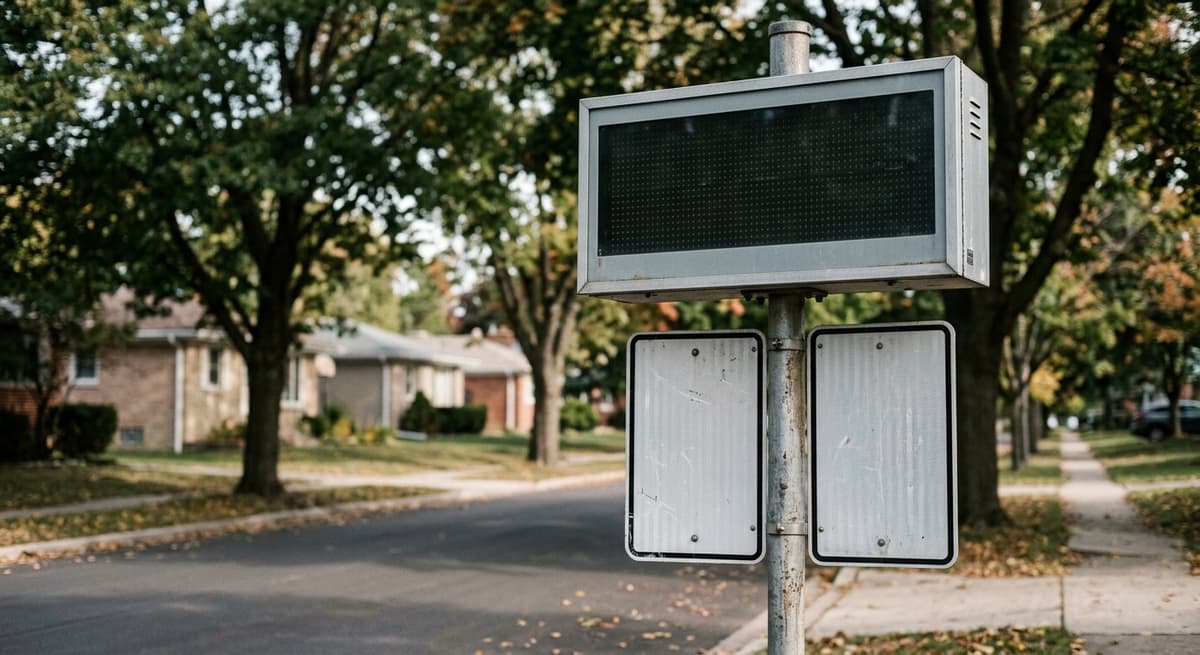
Across the country, camera-ticket laws generally sort into one of two patterns: a civil penalty against the vehicle's owner with no points and no insurance impact, or a real moving violation prosecuted against the driver, with the usual point and insurance consequences that follow any conviction. Virginia is genuinely both, depending on how the citation is issued. The mailed-notice track, which covers the overwhelming majority of Virginia camera enforcement, sorts into the first pattern. The officer-issued-at-the-scene exception sorts into the second. Most states pick one model and stick to it; Virginia runs both tracks off the same statute, which is exactly why it's worth reading your notice closely to see which one applies to you.
What to Do If You Get a Virginia Camera Ticket
Start by reading the notice to see whether it was mailed to you or handed to you by an officer at the time of the violation; that distinction determines which set of consequences applies. If it was mailed and you were not the one driving, gather the documentation Virginia's law allows: a written affidavit stating that you were not the operator, which for a speed, pedestrian-crossing, or stop-sign camera must also give the actual driver's name and address, or a certified police report if the vehicle was reported stolen before the violation. If you intend to pay, do so, or respond, before the deadline on the notice, since a second missed mailed summons is what triggers the registration hold described above. This overview explains how Virginia's process works; it is not a substitute for reviewing the specific notice you received or, for a contested or unusual situation, talking to a Virginia traffic attorney.
Information last verified on 2026-08-12. This article has not yet been reviewed by a licensed lawyer.
Related Resources
- Traffic Camera Ticket Laws by State
- Do You Have to Pay a Camera Ticket?
- How to Fight a Camera Ticket
- Virginia Speed Camera Law: High-Risk Intersections (SB 336)
- Virginia Bodycam Laws
- DUI Laws by State
Last updated: 2026-08-12.
More Virginia Laws
Frequently Asked Questions
Do Virginia camera tickets put points on your license?
Usually not. A mailed camera summons is not treated as a conviction and does not go on your driving record or affect insurance. The exception is when a law-enforcement officer personally issues the summons at the time of the violation using the device; that conviction does go on your record and is used for insurance purposes.
What happens if I don't pay a Virginia camera ticket?
If you fail to appear on a second mailed summons, the court notifies the DMV, which will refuse to issue or renew your vehicle registration or plates until the penalty and fees are paid. Out-of-state owners who default after a second summons become eligible for ordinary legal collections.
How much is a Virginia camera ticket?
Red light camera penalties are capped at $50 with no added court costs. Speed and other device-type penalties under 46.2-882.1 are capped at $100.
What are «high-risk intersection segments» in Virginia?
A speed-camera category added in 2024, and a narrow one. The definition requires all three conditions at once: the road must be within 1,000 feet of school property, part of or adjacent to an intersection containing a marked crosswalk, and identified as one where a traffic fatality has occurred since January 1, 2014. Any state or local law-enforcement agency in Virginia may use one after certifying that fatality, with no ordinance required and no Planning District 8 limit.
Can I contest a Virginia camera ticket by naming the actual driver?
Yes, though what the affidavit must say depends on the program. For a speed, pedestrian-crossing, or stop-sign camera under 46.2-882.1, the mailed affidavit or sworn testimony must state that you were not the operator and give the name and address of the person who was. For a red-light camera under 15.2-968.1, it only has to state that you were not the operator; naming the driver is not required. Either program also accepts a certified police report showing the vehicle was reported stolen before the violation.
Did Virginia change its camera laws in 2026?
Yes, substantially. Nine separate 2026 legislative chapters amended Virginia's speed-camera statute, including a new section giving drivers a damages claim against a locality that enforces camera penalties in willful disregard of the law, and a required 30-day warning-only period for any camera installed after July 1, 2026.
Updates
Corrected what Virginia’s new Code section 46.2-882.2 actually does (a damages remedy against localities, not camera placement rules), tightened the definition of a high-risk intersection segment to the conjunctive test the statute sets, clarified that this camera category is available statewide rather than only in Planning District 8, and separated the red-light and speed-camera rules for rebutting the owner-liability presumption.
Independently fact-checked against the cited primary sources
The Law Behind This Article
This article rests on the statutory provisions below, held in our own legal record and retrieved from the official source. Tap a section to read the operative text.
Code of Virginia, Title 46.2: Motor Vehicles
§ 46.2-882.1Use of photo speed monitoring devices, pedestrian crossing violation monitoring systems, and stop sign violation monitoring systems in highway work zones, school crossing zones, high-risk intersection segments, safety red zones, and National Park highways; civil penaltyIn forcecited in 2 of our articles
A. For the purposes of this section: "High-risk intersection segment" means any highway or portion thereof located not more than 1,000 feet from the limits of the property of a school that is part of or adjacent to an intersection containing a marked crosswalk that is identified in the manner provided in this section as one in which a traffic fatality has occurred since January 1, 2014. "Highway work zone" has the same meaning ascribed to it in § 46.2-878.1. "National Park highway" means any highway within Planning District 8 that is located on property where the Commonwealth has transferred such property to the federal government subject to concurrent jurisdiction pursuant to Chapter 4 (§ 1-400 et seq.) of Title 1 or Chapter 494 of the Acts of Assembly of 1926 and such highway is maintained by the National Park Service. "Photo speed monitoring device" means equipment that uses radar or LIDAR-based speed detection and produces one or more photographs, microphotographs, videotapes, or other recorded images of vehicles.
Official text (excerpt) · last checked 2026-09-16 · Read the full text in our law library · Verify at law.lis.virginia.gov
Cited in 3 court opinions in our collectionLatest citing opinion in our collection: 2025
Opinions citing this section in our collection:
- Boger (District Court, W.D. Virginia 2025)“…ege claims against the City and Altumint for violations of Va. Code § 46.2-882.1, common-law negligence, and civil consp…”
- Boger v. City of Harrisonburg, Virginia (District Court, W.D. Virginia 2025)“…lege claims against the City and Altumint for violations of Va. Code § 46.2-882.1, common-law negligence, and civil cons…”
Identified automatically from the court opinions citing this section — not a ranking of which case controls.
Also relied on in: Virginia Expands Speed Cameras to High-Risk Intersections Under a 2024 Law Now in Force
Code of Virginia, Title 15.2: Counties, Cities and Towns
§ 15.2-968.1(For contingent effective date, see Acts 2023, c. 738, cl. 2) Use of photo-monitoring systems to enforce traffic light signalsIn force
A. The governing body of any county, city, or town may provide by ordinance for the establishment of a traffic signal enforcement program imposing monetary liability on the operator of a motor vehicle for failure to comply with traffic light signals in such locality in accordance with the provisions of this section. Each such locality may install and operate traffic light signal photo-monitoring systems at no more than one intersection for every 10,000 residents within each county, city, or town at any one time, provided, however, that within planning District 8, each such locality may install and operate traffic light signal photo-monitoring systems at no more than 10 intersections, or at no more than one intersection for every 10,000 residents within each county, city, or town, whichever is greater, at any one time. B. The operator of a vehicle shall be liable for a monetary penalty imposed pursuant to this section if such vehicle is found, as evidenced by information obtained from a traffic light signal violation monitoring system, to have failed to comply with a traffic light signal within such locality. C.
Official text (excerpt) · last checked 2026-07-29 · Read the full text in our law library · Verify at law.lis.virginia.gov
Search our full record of US law — 2.1 million sections, every state + federal →
Sources and References
- Va. Code 46.2-882.1, Photo speed monitoring devices(law.lis.virginia.gov).gov
- Va. Code 15.2-968.1, Traffic light signal violation monitoring systems(law.lis.virginia.gov).gov
- Va. Code 46.2-882.2, Damages for an enforcement action undertaken by a locality with willful disregard for applicable law(law.lis.virginia.gov)