
Arizona
Leyes de Atropello y Fuga en Arizona: Penas y Que Hacer
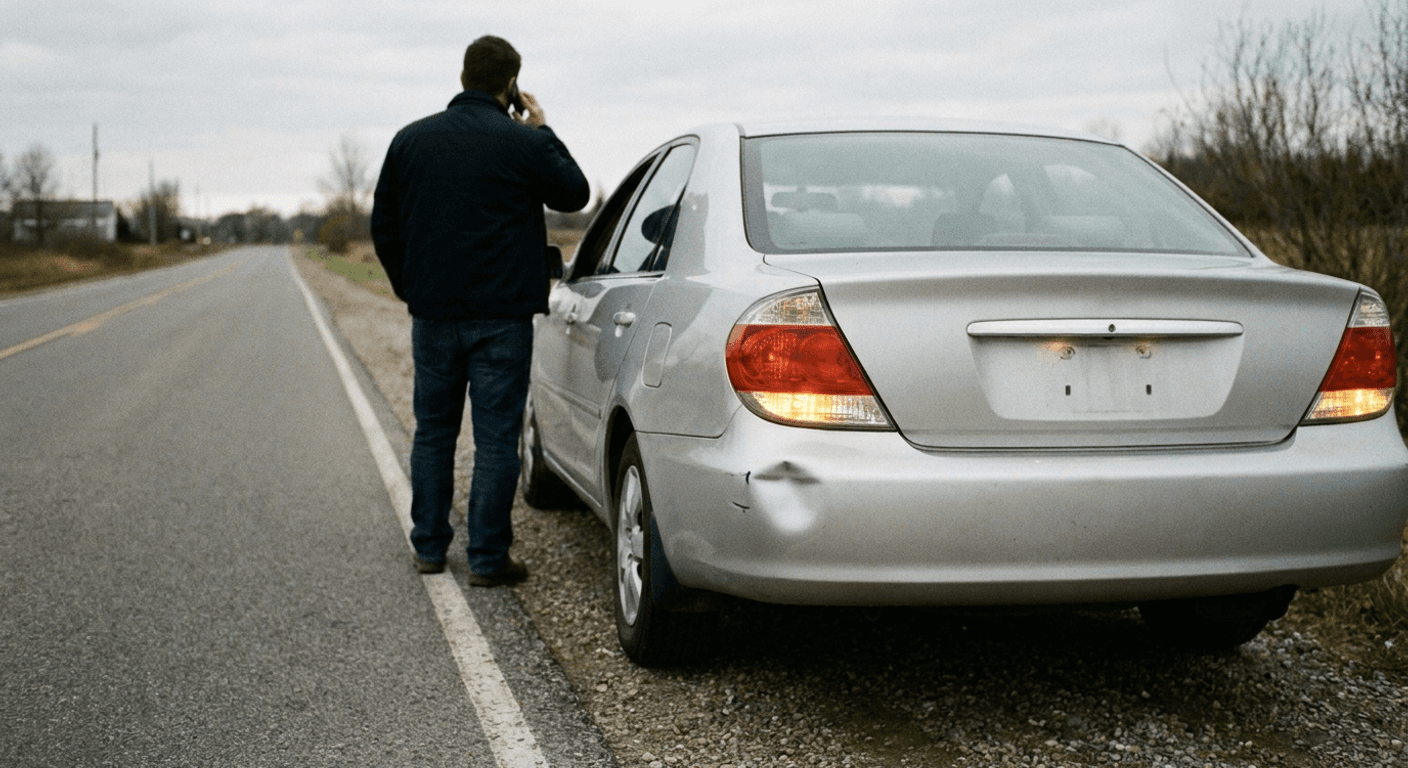
Arizona clasifica el darse a la fuga tras un accidente como delito menor o delito grave, según el daño causado. Los incidentes con solo daños materiales conllevan un delito menor Clase 1 bajo A.R.S. 28-662, mientras que los accidentes con lesiones o muerte generan cargos de delito grave bajo A.R.S. 28-661, que van de Clase 5 a Clase 2.
¿Herido en un atropello y fuga? Si el conductor que lo choco huyó o no tenía seguro, su propia cobertura de motorista sin seguro o con seguro insuficiente (UM/UIM) puede pagar su reclamo por lesiones. Calcule cuanto podría valer con nuestra Calculadora Gratuita de Indemnización por Accidente de Auto en Arizona.
Última verificación: marzo de 2026. Este artículo refleja el Título 28 de los Estatutos Revisados de Arizona vigente y decisiones judiciales recientes.
¿Qué Es un Atropello y Fuga en Arizona?
Arizona no usa la frase "hit and run" en sus estatutos. En cambio, la ley se refiere a "darse a la fuga tras un accidente" o "no detenerse". Los estatutos correspondientes se encuentran en los Estatutos Revisados de Arizona (ARS), Título 28, Capítulo 3, Artículo 3.
Cinco estatutos rigen las infracciones de atropello y fuga en Arizona:
- ARS 28-661 cubre accidentes con muerte o lesión física.
- ARS 28-662 cubre accidentes con solo daños al vehículo.
- ARS 28-663 impone deberes de intercambiar información y prestar auxilio después de un accidente con lesión, muerte, o daño a un vehículo ocupado.
- ARS 28-664 cubre chocar un vehículo sin vigilancia.
- ARS 28-665 cubre chocar accesorios de la carretera o propiedad al costado del camino.
Cada estatuto conlleva penas diferentes según la gravedad del accidente y el nivel de culpa del conductor.
ARS 28-661: Darse a la Fuga Tras un Accidente con Lesión o Muerte
ARS 28-661 es el estatuto de atropello y fuga más grave de Arizona. Exige que cualquier conductor involucrado en un accidente con lesiones o muerte se detenga de inmediato en el lugar de los hechos o lo más cerca posible. El conductor debe permanecer allí hasta cumplir con todos los requisitos de ARS 28-663.

Este estatuto aplica a accidentes tanto en propiedad publica como privada.
Niveles de Pena Bajo ARS 28-661
La clasificación depende tanto de la gravedad del daño como de si el conductor causó el accidente:
| Escenario | Clasificación | Rango de Prisión (Primera Infracción) |
|---|---|---|
| Lesión (no grave), el conductor no causó el accidente | Delito grave Clase 5 | 6 meses a 2.5 años |
| Muerte o lesión grave, el conductor no causó el accidente | Delito grave Clase 3 | 2 a 8.75 años |
| Muerte o lesión grave, el conductor causó el accidente | Delito grave Clase 2 | 3 a 12.5 años |
"Lesión física grave" bajo la ley de Arizona significa una lesión que crea un riesgo razonable de muerte, causa desfiguración grave y permanente, o resulta en la perdida o deterioro prolongado de cualquier órgano o extremidad del cuerpo.
Revocación de Licencia Bajo ARS 28-661
Una condena bajo ARS 28-661 desencadena la revocación obligatoria de la licencia:
- Lesión distinta a muerte o lesión grave (delito grave Clase 5): licencia revocada por 3 años.
- Lesión grave: licencia revocada por 5 años (sin contar el tiempo en prisión).
- Muerte: licencia revocada por 10 años (sin contar el tiempo en prisión).
- Solo para la revocación por muerte, el conductor puede solicitar un privilegio restringido de conducir después de 5 años del periodo de revocación (sin contar el tiempo en prisión). El departamento puede otorgarlo si el conductor no ha sido condenado por ningún delito relacionado con operar un vehículo motorizado mientras el privilegio de conducir estaba revocado y ha pagado la restitución completa ordenada por el tribunal.
Si el tribunal determina que el alcohol o las drogas fueron un factor contribuyente en el accidente, debe ordenar que la persona complete un programa de evaluación de drogas o alcohol.
ARS 28-662: Darse a la Fuga Tras un Accidente con Daños Materiales
Cuando un accidente solo resulta en daños a un vehículo con ocupantes y no hay lesiones, se aplica ARS 28-662. Los conductores deben detenerse de inmediato y permanecer en el lugar hasta cumplir con los requisitos de intercambio de información de ARS 28-663.
Penas por Atropello y Fuga con Daños Materiales
- Clasificación: delito menor Clase 1
- Tiempo en cárcel: hasta 6 meses
- Multa: hasta $2,500
- Suspensión de licencia: el tribunal puede ordenar una suspensión de 1 año
- Penas adicionales: restitución, servicio comunitario, libertad condicional
El estatuto también incluye disposiciones para vehículos completamente autónomos y vehículos eléctricos vecinales sin ocupantes (NOEV). Si el vehículo opera sin conductor humano, los requisitos se cumplen cuando el vehículo se detiene en o cerca del lugar de los hechos y permanece allí hasta que se cumplan todas las obligaciones de información.
ARS 28-663: Deber de Intercambiar Información y Prestar Auxilio
Sin importar la culpa, ARS 28-663 exige que el conductor de un vehículo involucrado en un accidente que resulte en lesión o muerte de una persona, o en daño a un vehículo conducido u ocupado por una persona:
- Proporcione su nombre, dirección y número de registro del vehículo a la otra parte.
- Muestre su licencia de conducir si se lo solicitan.
- Preste asistencia razonable a cualquier persona herida, incluyendo coordinar el traslado a un centro médico si parece necesario el tratamiento o si se lo solicitan.
No Prestar Auxilio
No proporcionar asistencia razonable a una persona herida es un delito grave Clase 6 separado bajo ARS 28-663(A)(3). Este cargo puede presentarse además de cualquier otro cargo de atropello y fuga. Un delito grave Clase 6 en primera infracción conlleva un rango de sentencia de 4 meses a 2 años de prisión.
ARS 28-664: Chocar un Vehículo Sin Vigilancia
Si usted choca un vehículo estacionado o sin vigilancia, ARS 28-664 exige que localice y notifique al dueño o deje una nota escrita en un lugar visible del vehículo. La nota debe incluir el nombre y la dirección del conductor y del dueño del vehículo que causó el daño.
- Clasificación: delito menor Clase 1
- Tiempo en cárcel: hasta 6 meses
- Multa: hasta $2,500
ARS 28-665: Chocar Accesorios de la Carretera
Si usted choca un guardarraíl, una señal de tráfico, un poste de servicios públicos u otra propiedad legalmente ubicada en o junto a una carretera, ARS 28-665 exige que tome medidas razonables para localizar y notificar al dueño de la propiedad.
- Clasificación: delito menor Clase 1
- Tiempo en cárcel: hasta 6 meses
- Multa: hasta $2,500
Tabla Resumen Completa de Penas
| Infracción | Estatuto | Clasificación | Cárcel/Prisión Máxima | Multa Máxima |
|---|---|---|---|---|
| Daños materiales (vehículo con ocupantes) | ARS 28-662 | Delito menor Clase 1 | 6 meses | $2,500 |
| Chocar vehículo sin vigilancia | ARS 28-664 | Delito menor Clase 1 | 6 meses | $2,500 |
| Chocar accesorio de carretera | ARS 28-665 | Delito menor Clase 1 | 6 meses | $2,500 |
| No prestar auxilio | ARS 28-663 | Delito grave Clase 6 | 2 años | $150,000 |
| Lesión menor, sin culpa | ARS 28-661 | Delito grave Clase 5 | 2.5 años | $150,000 |
| Lesión grave/muerte, sin culpa | ARS 28-661 | Delito grave Clase 3 | 8.75 años | $150,000 |
| Lesión grave/muerte, con culpa | ARS 28-661 | Delito grave Clase 2 | 12.5 años | $150,000 |
Nota: los rangos de prisión indicados son los máximos agravados para infractores primerizos bajo ARS 13-702.
DUI con Atropello y Fuga en Arizona
Si un conductor esta intoxicado al momento del accidente, se pueden presentar cargos adicionales además de la infracción de atropello y fuga. Los cargos adicionales comunes incluyen:
- DUI agravado (ARS 28-1383)
- Homicidio culposo (ARS 13-1103) si la víctima muere
- Asesinato en segundo grado (ARS 13-1104) si el conductor actuó con indiferencia extrema hacia la vida humana
- Poner en peligro (ARS 13-1201)
- Asalto agravado (ARS 13-1204)
Un atropello y fuga con DUI que involucra una muerte puede resultar en décadas de prisión combinadas entre varios cargos. Los tribunales de Arizona tratan estos casos con particular severidad, especialmente cuando el conductor huyó para evitar la detección de intoxicación.
Requisitos de Reporte
ARS 28-666: Notificación Inmediata
La ley de Arizona exige que el conductor de un vehículo involucrado en un accidente que resulte en lesión o muerte de una persona dé aviso del accidente "de inmediato por el medio de comunicación más rápido". Esta notificación puede ser oral o escrita y se dirige al departamento de policía local, la oficina del sheriff del condado o la patrulla de carreteras.
ARS 28-667: Reporte Escrito del Accidente
Cuando un accidente resulta en lesión corporal, muerte o daños materiales superiores a $2,000, un oficial de policía debe completar un reporte escrito dentro de las 24 horas de finalizar la investigación. También se requiere un reporte cada vez que se emite una citación en el lugar de los hechos, sin importar el monto del daño.
Plazo de Prescripción
El plazo de prescripción de Arizona para cargos de atropello y fuga varía según la clasificación:
- Delitos menores (solo daños materiales): 1 año desde la fecha de la infracción bajo ARS 13-107.
- Delitos graves (Clase 2 a Clase 6): 7 años desde la fecha de la infracción.
- Cargos relacionados con homicidio: sin límite de tiempo.
El plazo de prescripción no corre durante ningún periodo en el que el acusado no pueda ser razonablemente localizado dentro del estado.
Implicaciones del Seguro para Víctimas de Atropello y Fuga
La ley de Arizona exige que todos los conductores tengan seguro de responsabilidad civil, pero no exige cobertura de motorista sin seguro (UM). Sin embargo, todas las aseguradoras que operan en Arizona deben ofrecer cobertura UM.

Si usted es víctima de un atropello y fuga y nunca se identifica al conductor culpable, las aseguradoras tratan el reclamo de la misma manera que un reclamo de motorista sin seguro. Esto significa:
- Si usted compró cobertura UM, su propia póliza paga sus lesiones y daños hasta los límites de su cobertura.
- Si no compró cobertura UM, puede tener opciones limitadas de recuperación.
- Los requisitos mínimos de responsabilidad civil de Arizona son $25,000 por persona y $50,000 por accidente por lesión corporal, más $15,000 por daños materiales.
Bajo ARS 12-555, usted debe notificar por escrito a su aseguradora su intención de presentar un reclamo UM dentro de 3 años desde la fecha del accidente.
Como Determina Arizona la Culpa
Arizona sigue la regla de negligencia comparativa pura. Esto significa que:
- Un jurado calcula el porcentaje de culpa de cada parte.
- Sus daños se reducen según su parte de responsabilidad.
- Usted puede recuperar daños aunque haya tenido parte de la culpa.
Ejemplo: si usted es 30% responsable de un accidente y tiene $50,000 en daños, puede recuperar $35,000.
Esta regla es importante en los casos de atropello y fuga porque darse a la fuga no convierte automáticamente al conductor en 100% culpable de la colisión en si. La culpa por la colisión y la responsabilidad penal por darse a la fuga son cuestiones legales separadas.
Qué Hacer Después de un Accidente en Arizona
Si Usted Es el Conductor
- Deténgase de inmediato en el lugar de los hechos o lo más cerca posible con seguridad.
- Llame al 911 si alguien resulta herido o si los daños materiales superan los $2,000.
- Proporcione su nombre, dirección y registro del vehículo a la otra parte.
- Muestre su licencia de conducir si se lo solicitan.
- Preste asistencia razonable a cualquier persona herida.
- Espere a que llegue la policía y complete un reporte.
- Contacte a su compañía de seguros lo antes posible.
- Hable con un abogado antes de hacer declaraciones detalladas más allá de la información requerida.
Si Usted Es la Víctima
- Documente la escena: fecha, hora, ubicación, clima y condiciones de tráfico.
- Fotografie el vehículo que huye si es posible, enfocándose en la placa.
- Anote la marca, modelo, color y cualquier rasgo distintivo del vehículo.
- Recopile información de contacto de testigos.
- Llame al 911 de inmediato.
- Busque atención médica, aunque las lesiones parezcan leves.
- Presente un reclamo UM con su compañía de seguros si corresponde.
- Consulte a un abogado para entender sus opciones de recuperación.
Importante: no admita culpa en el lugar de los hechos. Arizona es un estado de culpa comparativa pura, y sus declaraciones pueden reducir su recuperación. Evite frases como "no vi el otro vehículo" o "fue mi culpa".
Defensas Legales para Cargos de Atropello y Fuga
Temor por la Seguridad Personal
Si usted tuvo un temor razonable de asalto, violencia, ira al volante o robo en el lugar de los hechos, esto puede justificar que se haya ido. Aun así debe reportar el accidente a la policía tan pronto como sea posible.
Falta de Conocimiento
Si genuinamente no se dio cuenta de que golpeo a una persona o vehículo, esto puede servir como defensa. Los investigadores examinarán los daños del vehículo, las grabaciones de vigilancia y otra evidencia para evaluar esta afirmación.
Circunstancias de Emergencia
Si usted dejo el lugar de los hechos para buscar asistencia médica de emergencia para usted o un pasajero, y reporto el accidente con prontitud, esto puede atenuar los cargos.
¿Se Puede Resolver un Caso de Atropello y Fuga Fuera de los Tribunales?
Bajo ARS 13-3981, Arizona permite el arreglo de ciertas infracciones de delito menor. Si la parte perjudicada reconoce satisfacción antes del juicio, el tribunal puede desestimar el proceso una vez pagados los costos.
Limitaciones de este enfoque:
- Solo aplica a infracciones de delito menor (no a delitos graves)
- Solo aplica cuando la parte perjudicada tiene un remedio civil disponible por la infracción
- No aplica a infracciones cometidas por o contra un oficial de justicia en el ejercicio de sus funciones, infracciones cometidas de forma tumultuaria, ni infracciones cometidas con la intención de cometer un delito grave
- Las infracciones de delito menor de asalto, amenazas, intimidación y violencia doméstica solo pueden arreglarse por recomendación del fiscal
- La parte perjudicada debe comparecer antes del juicio y reconocer haber recibido satisfacción
Casos Notables de Atropello y Fuga en Arizona
Caso de Lisa Mancuso (2024)
En febrero de 2024, Lisa Mancuso, de 43 años, corria por el acotamiento de la 7th Avenue y Cloud Road cuando fue atropellada por una camioneta pickup. El conductor huyó del lugar. El sospechoso fue identificado como el hijo de un teniente de la policía de Phoenix. Más tarde se declaro culpable de los cargos en abril de 2025, lo que demuestra que las conexiones con la policía no protegen a los acusados de ser procesados.
Caso de Tristan Loper (2025)
En diciembre de 2025, Tristan Loper, de 29 años, fue arrestado semanas después de un mortal atropello y fuga en la I-10 en el oeste de Phoenix. Los investigadores usaron sistemas de vigilancia de la carretera y análisis de escombros del vehículo para identificar al sospechoso, lo que ilustra como las técnicas forenses modernas dificultan cada vez más evadir la detección.
Estadísticas de Choques en Arizona
Las carreteras de Arizona presentan desafíos importantes de seguridad, particularmente para los peatones:
- Más de 122,000 choques ocurrieron en todo el estado en 2023, con cifras que siguen en aumento.
- 263 peatones murieron en accidentes de auto en 2024, representando cerca del 21% de todas las muertes por tránsito.
- Aproximadamente el 40% de los choques con peatones fueron fatales.
- 2024 marco un máximo de cinco años en choques con peatones y ciclistas según ADOT.
- Más de 1,200 muertes por tránsito ocurrieron en todo el estado en años recientes.
Phoenix ha respondido al aumento de muertes de peatones actualizando las ordenanzas sobre cruces peatonales y aumentando la aplicación de la ley en zonas de alto riesgo.
Más Leyes de Arizona
- Leyes de Grabación de Reuniones con IA de Arizona
- Leyes de Pensión Alimenticia de Arizona
- Leyes de Empleo a Voluntad de Arizona
- Leyes de Accidentes de Auto de Arizona
- Leyes de Asientos de Auto para Niños de Arizona
- Leyes de Custodia de Menores de Arizona
- Leyes de Manutención Infantil de Arizona
- Leyes de Matrimonio de Hecho de Arizona
- Leyes de Privacidad de Datos de Arizona
- Leyes sobre Deepfakes de Arizona
- Leyes de Divorcio de Arizona
- Leyes sobre Mordeduras de Perro de Arizona
- Leyes de Emancipación de Arizona
- Leyes de Eliminación de Antecedentes de Arizona
- Leyes de Propietario-Inquilino de Arizona
- Leyes del Limón de Arizona
Preguntas frecuentes
¿Es el atropello y fuga un delito grave en Arizona?
Depende del resultado. Si solo ocurrieron daños materiales, darse a la fuga es un delito menor Clase 1 bajo ARS 28-662. Si alguien resultó herido o murió, se convierte en delito grave bajo ARS 28-661, que va desde un delito grave Clase 5 (lesión menor) hasta un delito grave Clase 2 (conductor culpable que causa la muerte o lesión grave).
¿Qué pasa si choco un auto estacionado en Arizona?
Bajo ARS 28-664, usted debe localizar y notificar al dueño o dejar una nota escrita con su nombre y dirección en un lugar visible del vehículo. No hacerlo es un delito menor Clase 1, sancionado con hasta 6 meses de cárcel y una multa de $2,500.
¿Cuánto tiempo tiene Arizona para presentar cargos por atropello y fuga?
Para el atropello y fuga como delito menor (solo daños materiales), los fiscales tienen 1 año. Para el atropello y fuga como delito grave (lesión o muerte), los fiscales tienen 7 años. Si el cargo involucra homicidio, no hay límite de tiempo. El plazo se pausa si el sospechoso no puede ser razonablemente localizado dentro de Arizona.
¿Perdere mi licencia por un atropello y fuga en Arizona?
Para solo daños materiales (ARS 28-662), el tribunal puede suspender su licencia por 1 año. Para accidentes con una lesión distinta a muerte o lesión grave (ARS 28-661), su licencia se revoca por 3 años. Para accidentes con lesión grave, se revoca por 5 años. Para accidentes fatales, el periodo de revocación es de 10 años. El tiempo en prisión no cuenta para el periodo de revocación.
¿El seguro cubre los accidentes de atropello y fuga en Arizona?
Si usted es víctima, su cobertura de motorista sin seguro (UM) aplica cuando no se puede identificar al conductor culpable. Arizona no exige la cobertura UM, pero todas las aseguradoras deben ofrecerla. Sin cobertura UM, sus opciones de recuperación financiera pueden ser limitadas. Usted tiene 3 años para presentar un reclamo UM bajo ARS 12-555.
Actualizaciones
Se corrigio la clasificacion penal por chocar un vehiculo sin vigilancia o un accesorio de la carretera (ambos son delitos menores Clase 1 con hasta 6 meses de carcel y $2,500 de multa), se agrego la revocacion de licencia de 3 anos para condenas sin lesion grave ni muerte, y se ajustaron las reglas de privilegio restringido, evaluacion de drogas, el aviso de accidente y el arreglo de infracciones menores para reflejar el texto vigente de los estatutos de Arizona.
La ley detrás de este artículo
Este artículo se apoya en las disposiciones legales a continuación, conservadas en nuestro propio registro jurídico y obtenidas de la fuente oficial. Toque una sección para leer el texto vigente.
Arizona Revised Statutes, Title 28 (Transportation), Chapter 3 (TRAFFIC AND VEHICLE REGULATION), Article 4 (Accidents)
§ 28-661Accidents involving death or physical injuries; autonomous vehicles; neighborhood occupantless electric vehicles; failure to stop; violation; classification; driver license revocation; restricted privilege to drive; alcohol or other drug screeningVigente
A. The driver of a vehicle involved in an accident on public or private property resulting in injury to or death of a person shall: 1. Immediately stop the vehicle at the scene of the accident or as close to the accident scene as possible but shall immediately return to the accident scene. 2. Remain at the scene of the accident until the driver has fulfilled the requirements of section 28-663. B. If the vehicle described in subsection A of this section is a fully autonomous vehicle operating without a human driver or a neighborhood occupantless electric vehicle, the requirements of this section are satisfied if the fully autonomous vehicle or neighborhood occupantless electric vehicle stops at the scene of the accident or as close to the accident scene as possible and remains stopped at that location until the requirements of section 28-663 have been satisfied. C. A driver who is involved in an accident resulting in death or serious physical injury as defined in section 13-105 and who fails to stop or to comply with the requirements of section 28-663 is guilty of a class 3 felony, except that if a driver caused the accident the driver is guilty of a class 2 felony. D.
Texto oficial (extracto) · verificado el 2026-09-23 · Lea el texto completo en nuestra biblioteca legal · Verifique en azleg.gov
Citada en 35 resoluciones judiciales de nuestra colecciónResolución más reciente que la cita en nuestra colección: 2026
Resoluciones que citan esta sección en nuestra colección:
- State v. Tinajero (Court of Appeals of Arizona 1997, 188 Ariz. 350)“…s his argument on his construction of the relevant statute, A.R.S. section 28-661, which at the time of the offense state…”
- State v. Powers (Arizona Supreme Court 2001, 200 Ariz. 363)“…asked to decide whether the number of accident scenes under A.R.S. § 28-661 is defined by the number of victims aff…”
- State v. Phillips (Arizona Supreme Court 1987, 152 Ariz. 533)“…cident involving death or personal injuries, a violation of A.R.S. § 28-661. The plea agreement provided: “Restitut…”
Identificado automáticamente a partir de las opiniones judiciales que citan esta sección; no es un ranking de qué caso prevalece.
§ 28-662Accidents involving damage to vehicle; failure to stop; autonomous vehicles; neighborhood occupantless electric vehicles; violation; classification; driver license suspension; alcohol or other drug screeningVigentecitada en 2 de nuestros artículos
A. The driver of a vehicle involved in an accident on public or private property resulting only in damage to a vehicle that is driven or attended by a person shall: 1. Immediately stop the vehicle at the scene of the accident or as close to the accident scene as possible but shall immediately return to the accident scene. 2. Remain at the scene of the accident until the driver has fulfilled the requirements of section 28-663. 3. Make the stop without obstructing traffic more than is necessary. B. If the first vehicle described in subsection A of this section is a fully autonomous vehicle operating without a human driver or a neighborhood occupantless electric vehicle, the requirements of this section are satisfied if the fully autonomous vehicle or neighborhood occupantless electric vehicle: 1. Immediately stops at the scene of the accident or as close to the accident scene as possible. 2. Remains stopped at or as close as possible to the scene until the requirements of section 28-663 have been satisfied. 3. Makes the stop without obstructing traffic more than necessary. C. A person failing to stop or comply with this section is guilty of a class 1 misdemeanor. D.
Texto oficial (extracto) · verificado el 2026-08-04 · Lea el texto completo en nuestra biblioteca legal · Verifique en azleg.gov
Citada en 4 resoluciones judiciales de nuestra colecciónResolución más reciente que la cita en nuestra colección: 2024
Resoluciones que citan esta sección en nuestra colección:
- State v. Porras (Court of Appeals of Arizona 1980, 125 Ariz. 490)“…ant’s position that when A.R.S. § 28-661 is contrasted with A.R.S. § 28-662, 1 dealing with “an accide…”
- State v. Robertson (Court of Appeals of Arizona 2024)“…f the Avalanche and therefore committed the crime violating A.R.S. § 28-662(A). “Reasonable suspicion can be based…”
- State v. Nelson (Court of Appeals of Arizona 2016)“…rime of leaving the scene of a damage accident. Pursuant to A.R.S. § 28-662 (Supp. 2015), if after a vehicular acci…”
Identificado automáticamente a partir de las opiniones judiciales que citan esta sección; no es un ranking de qué caso prevalece.
§ 28-663Duty to give information and assistance; autonomous vehicles; neighborhood occupantless electric vehicles; violation; classification; alcohol or other drug screeningVigentecitada en 2 de nuestros artículos
A. The driver of a vehicle involved in an accident on public or private property resulting in injury to or death of a person or damage to a vehicle that is driven or attended by a person shall: 1. Give the driver's name and address and the registration number of the vehicle the driver is driving. 2. On request, exhibit the person's driver license to the person struck or the driver or occupants of or person attending a vehicle collided with. 3. Render reasonable assistance to a person injured in the accident, including making arrangements for the carrying of the person to a physician, surgeon or hospital for medical or surgical treatment if it is apparent that treatment is necessary or if the carrying is requested by the injured person. B. If the first vehicle described in subsection A of this section is a fully autonomous vehicle operating without a human driver or a neighborhood occupantless electric vehicle, the requirements of this section are satisfied if both: 1.
Texto oficial (extracto) · verificado el 2026-08-04 · Lea el texto completo en nuestra biblioteca legal · Verifique en azleg.gov
Citada en 15 resoluciones judiciales de nuestra colecciónResolución más reciente que la cita en nuestra colección: 2024
Resoluciones que citan esta sección en nuestra colección:
- State v. Tinajero (Court of Appeals of Arizona 1997, 188 Ariz. 350)“…hose injured and to otherwise comply with the provisions of A.R.S. § 28-663. Defendant’s duty was to remain at the…”
- State v. Milligan (Arizona Supreme Court 1960, 87 Ariz. 165)“…was charged, defendant did not fulfill the requirements of A.R.S. § 28-663 in that he did not give his name, addre…”
- Quinn v. Cardenas (Court of Appeals of Arizona 2023, 256 Ariz. 77)“…erson certain information including their name and address. A.R.S. § 28-663(A). Failure to do so can be a misdemean…”
Identificado automáticamente a partir de las opiniones judiciales que citan esta sección; no es un ranking de qué caso prevalece.
§ 28-664Duty on striking unattended vehicle; autonomous vehicles; neighborhood occupantless electric vehicles; violation; classificationVigente
A. The driver of a vehicle that collides with a vehicle that is unattended on public or private property shall immediately: 1. Stop. 2. Either: (a) Locate and notify the operator or owner of the vehicle of the name and address of the driver and owner of the vehicle striking the unattended vehicle. (b) In a conspicuous place in the vehicle struck, leave a written notice giving the name and address of the driver and of the owner of the vehicle doing the striking. B. If the first vehicle described in subsection A of this section is a fully autonomous vehicle operating without a human driver or a neighborhood occupantless electric vehicle, the requirements of this section are satisfied if the fully autonomous vehicle or neighborhood occupantless electric vehicle immediately stops and the vehicle owner or a person on behalf of the vehicle owner provides the notice prescribed in subsection A, paragraph 2 of this section. C. A person who violates this section is guilty of a class 1 misdemeanor.
Texto oficial (extracto) · verificado el 2026-08-04 · Lea el texto completo en nuestra biblioteca legal · Verifique en azleg.gov
Citada en 3 resoluciones judiciales de nuestra colecciónResolución más reciente que la cita en nuestra colección: 2004
Resoluciones que citan esta sección en nuestra colección:
- David G. v. Pollard Ex Rel. County of Pima (Arizona Supreme Court 2004, 207 Ariz. 308)“…minal acts under Title 28. A.R.S. §§ 28-664(B), -693(B). Thus, becau…”
- Pinto v. Superior Court (Court of Appeals of Arizona 1978, 119 Ariz. 612)“…along with leaving the scene of an accident in violation of A.R.S. Sec. 28-664 and driving a vehicle without a driver'…”
- State v. Seats (Court of Appeals of Arizona 1981, 131 Ariz. 102)“…s of reckless driving and leaving the scene of an accident. A.R.S. §§ 28-664 and 28-693(A). He was adjudged guilty o…”
Identificado automáticamente a partir de las opiniones judiciales que citan esta sección; no es un ranking de qué caso prevalece.
§ 28-665Striking fixtures on a highway; autonomous vehicles; neighborhood occupantless electric vehicles; violation; classificationVigente
A. The driver of a vehicle involved in an accident resulting only in damage to fixtures or other property legally on or adjacent to a highway shall: 1. Take reasonable steps to locate and notify the owner or person in charge of the property of: (a) The fact of the accident. (b) The driver's name and address. (c) The registration number of the vehicle the driver is driving. 2. On request, exhibit the driver's driver license. B. If the vehicle described in subsection A of this section is a fully autonomous vehicle operating without a human driver or a neighborhood occupantless electric vehicle, the requirements of this section are satisfied if the vehicle owner or a person on behalf of the vehicle owner takes reasonable steps to notify the owner or person in charge of the property of all of the following: 1. The fact of the accident. 2. The vehicle owner's name and address. 3. The vehicle's registration number. C. A person who violates this section is guilty of a class 1 misdemeanor.
Texto oficial (extracto) · verificado el 2026-08-04 · Lea el texto completo en nuestra biblioteca legal · Verifique en azleg.gov
Citada en 1 resoluciones judiciales de nuestra colecciónResolución más reciente que la cita en nuestra colección: 1984
Resoluciones que citan esta sección en nuestra colección:
- Litak v. Scott (Arizona Supreme Court 1984, 138 Ariz. 599)“…accident and driving under the influence of alcohol (DWI), A.R.S. §§ 28-665 and 28-692(A). She filed a motion to su…”
Identificado automáticamente a partir de las opiniones judiciales que citan esta sección; no es un ranking de qué caso prevalece.
§ 28-666Notice of vehicle accident; autonomous vehicles; neighborhood occupantless electric vehiclesVigentecitada en 2 de nuestros artículos
A. The driver of a vehicle involved in an accident resulting in injury to or death of a person shall give notice of the accident immediately by the quickest means of communication, whether oral or written, to either: 1. The local police department if the accident occurs within a municipality. 2. The office of the county sheriff. 3. The nearest office of the highway patrol. B. If the vehicle described in subsection A of this section is a fully autonomous vehicle operating without a human driver or a neighborhood occupantless electric vehicle, the notice described in this section may be provided by the vehicle owner or a person on behalf of the vehicle owner.
Texto oficial (extracto) · verificado el 2026-08-04 · Lea el texto completo en nuestra biblioteca legal · Verifique en azleg.gov
Citada en 1 resoluciones judiciales de nuestra colecciónResolución más reciente que la cita en nuestra colección: 1994
Resoluciones que citan esta sección en nuestra colección:
- Washington v. Superior Court (Court of Appeals of Arizona 1994, 180 Ariz. 91)“…motion to withdraw. In that response, the state quoted from A.R.S. § 28-666, which requires a driver in an injury-c…”
Identificado automáticamente a partir de las opiniones judiciales que citan esta sección; no es un ranking de qué caso prevalece.
§ 28-667Written accident report; definitionVigentecitada en 3 de nuestros artículos
A. A law enforcement officer or public employee who, in the regular course of duty, investigates a motor vehicle accident resulting in bodily injury, death or damage to the property of any person in excess of $2,000 or the issuance of a citation shall complete a written report of the accident as follows: 1. Either at the time of and at the scene of the accident or after the accident by interviewing participants or witnesses. 2. Within twenty-four hours after completing the investigation. B. Every law enforcement officer or public employee who, in the regular course of duty, investigates a motor vehicle accident that results in damage to the property of any person in an amount of $2,000 or less, but that does not result in the issuance of a citation or bodily injury or death, shall complete a portion of the written report of the accident. The portion of the written report shall: 1. Be completed either at the time of and at the scene of the accident or after the accident by interviewing participants or witnesses. 2. Be completed within twenty-four hours after completing the investigation. 3.
Texto oficial (extracto) · verificado el 2026-09-02 · Lea el texto completo en nuestra biblioteca legal · Verifique en azleg.gov
Citada en 7 resoluciones judiciales de nuestra colecciónResolución más reciente que la cita en nuestra colección: 1996
En los tribunales (resumen editorial, verificado de forma independiente):Decisiones de Arizona citan la Sección 28-667 al admitir informes policiales de accidentes como prueba. State v. Stone (1969) confirmó la admisión de un informe de accidente de la patrulla de caminos como registro público, y Killingsworth v. Nottingham (1972) sostuvo que ese informe era admisible conforme a la ley como estaba redactada entonces.
Resoluciones que citan esta sección en nuestra colección:
- State v. Richcreek (Court of Appeals of Arizona 1996, 186 Ariz. 459)“…ion relevant to the accident he was investigating and cites A.R.S. §§ 28-667 and 28-1401.01 to support the stop. Fir…”
- Chase v. State Farm Mutual Automobile Insurance (Court of Appeals of Arizona 1982, 131 Ariz. 461)“…ff the public highways as required by chapter 6, article 4, A.R.S. § 28-667. The SRA also comes into play up…”
- State v. Stone (Arizona Supreme Court 1969, 104 Ariz. 339)✓Un conductor atribuyó su choque a una línea central obsoleta que seguía visible donde una carretera vieja se unía a una nueva; el tribunal sostuvo que el informe de accidente de los patrulleros era admisible como registro público hecho bajo un deber legal, citando la sección 28-667(C).
Identificado automáticamente a partir de las opiniones judiciales que citan esta sección; no es un ranking de qué caso prevalece.
Arizona Revised Statutes, Title 13 (Criminal Code), Chapter 1 (GENERAL PROVISIONS)
§ 13-107Time limitationsVigentecitada en 2 de nuestros artículos
A. A prosecution for any homicide, any conspiracy to commit homicide that results in the death of a person, any offense that is listed in chapter 14 or 35.1 of this title and that is a class 2 felony, any violent sexual assault pursuant to section 13-1423, any violation of section 13-2308.01, 13-2308.03 or 13-3212, any misuse of public monies or a felony involving falsification of public records or any attempt to commit an offense listed in this subsection may be commenced at any time. B. Except as otherwise provided in this section and sections 28-672, 28-1381 and 28-1382, prosecutions for other offenses must be commenced within the following periods after actual discovery by the state or the political subdivision having jurisdiction of the offense or discovery by the state or the political subdivision that should have occurred with the exercise of reasonable diligence, whichever first occurs: 1. For a class 2 through a class 6 felony, seven years. 2. For a misdemeanor, one year. 3. For a petty offense, six months. C. For the purposes of subsection B of this section, a prosecution is commenced when an indictment, information or complaint is filed. D.
Texto oficial (extracto) · verificado el 2026-08-04 · Lea el texto completo en nuestra biblioteca legal · Verifique en azleg.gov
Citada en 45 resoluciones judiciales de nuestra colecciónResolución más reciente que la cita en nuestra colección: 2025
Resoluciones que citan esta sección en nuestra colección:
- State v. Jackson (Court of Appeals of Arizona 2004, 208 Ariz. 56)“…hich the trial court based its ruling is *59 A.R.S. § 13-107(B). That statute provides that “prosecu…”
- Taylor v. Cruikshank (Court of Appeals of Arizona 2006, 214 Ariz. 40)“…to dismiss the indictment, arguing the limitation period in A.R.S. § 13-107(B) had expired and the state there…”
- State v. Aguilar (Court of Appeals of Arizona 2008, 218 Ariz. 25)“…t cases, this court has addressed the meaning and effect of A.R.S. § 13-107, the statute of limitations that applie…”
Identificado automáticamente a partir de las opiniones judiciales que citan esta sección; no es un ranking de qué caso prevalece.
Arizona Revised Statutes, Title 13 (Criminal Code), Chapter 7 (SENTENCING AND IMPRISONMENT)
§ 13-702First time felony offenders; sentencing; definitionVigentecitada en 12 de nuestros artículos
A. Unless a specific sentence is otherwise provided, the term of imprisonment for a first felony offense shall be the presumptive sentence determined pursuant to subsection D of this section. Except for those felonies involving a dangerous offense or if a specific sentence is otherwise provided, the court may increase or reduce the presumptive sentence within the ranges set by subsection D of this section. Any reduction or increase shall be based on the aggravating and mitigating circumstances listed in section 13-701, subsections D and E and shall be within the ranges prescribed in subsection D of this section. B.
Texto oficial (extracto) · verificado el 2026-08-04 · Lea el texto completo en nuestra biblioteca legal · Verifique en azleg.gov
Citada en 446 resoluciones judiciales de nuestra colecciónResolución más reciente que la cita en nuestra colección: 2026
Resoluciones que citan esta sección en nuestra colección:
- State v. Shattuck (Arizona Supreme Court 1984, 140 Ariz. 582)“…ly under the authority of the language in what is currently A.R.S. § 13-702(D)(11) [formerly A.R.S. 13-702(D)(9)] —…”
- State v. Henderson (Arizona Supreme Court 2005, 210 Ariz. 561)“…t fit within the list of statutory aggravators codified in A.R.S. § 13-702.C: infliction or thr…”
- State v. Walton (Arizona Supreme Court 1989, 159 Ariz. 571)“…he Arizona death penalty statute. Under the provisions of A.R.S. § 13-702(D), which applies to noncapital sentenc…”
Identificado automáticamente a partir de las opiniones judiciales que citan esta sección; no es un ranking de qué caso prevalece.
Arizona Revised Statutes, Title 20 (Insurance), Chapter 2 (TRANSACTION OF INSURANCE BUSINESS), Article 2 (Kinds of Insurance; Reinsurance; Limits of Risk)
§ 20-259.01Motor vehicle liability policy; uninsured optional; underinsured optional; subrogation; medical payments liens; definitionsVigentecitada en 3 de nuestros artículos
A. Every insurer writing automobile liability or motor vehicle liability policies shall make available to the named insured thereunder and by written notice offer the named insured and at the request of the named insured shall include within the policy uninsured motorist coverage that extends to and covers all persons insured under the policy, in limits not less than the liability limits for bodily injury or death contained within the policy. The offer of limits to a named insured or applicant shall be made on a form approved by the director. An insurance producer that uses such a form in offering uninsured motorist coverage satisfies the insurance producer's standard of care in offering and explaining the nature and applicability of uninsured motorist coverage. The policy declarations page must be sent to the named insured, constitutes the final expression of the named insured's decision to purchase or reject uninsured motorist coverage and is valid for, extends to and covers all persons insured under the policy.
Texto oficial (extracto) · verificado el 2026-08-04 · Lea el texto completo en nuestra biblioteca legal · Verifique en azleg.gov
Citada en 230 resoluciones judiciales de nuestra colecciónResolución más reciente que la cita en nuestra colección: 2026
Resoluciones que citan esta sección en nuestra colección:
- Calvert v. Farmers Ins. Co. of Arizona (Arizona Supreme Court 1985, 144 Ariz. 291)“…ists Act (hereafter referred to as the “Act” or “Statute”), A.R.S. § 20-259.01. We granted review in this case to sett…”
- State Farm Mutual Automobile Insurance v. Wilson (Arizona Supreme Court 1989, 162 Ariz. 251)“…use both UM and UIM insurance are creatures of statute (see A.R.S. § 20-259.01), we turn first to consider whether the…”
- Lowing v. Allstate Insurance (Arizona Supreme Court 1993, 176 Ariz. 101)“…ninsured" within the meaning of the Uninsured Motorist Act, A.R.S. § 20-259.01, and thus whether an insurance policy t…”
Identificado automáticamente a partir de las opiniones judiciales que citan esta sección; no es un ranking de qué caso prevalece.
Arizona Revised Statutes, Title 12 (Courts and Civil Proceedings), Chapter 5 (LIMITATIONS OF ACTIONS), Article 3 (Personal Actions)
§ 12-555Uninsured and underinsured motorist coverage; claims; time limitsVigente
A. An insurer is not liable for uninsured motorist coverage benefits unless the person making the claim gives written notice to the insurer of the person's intent to pursue the claim against the uninsured motorist portion of a motor vehicle policy within three years after the date of the accident that caused the bodily injury, except that a person may make an uninsured motorist claim within three years after the earliest of the following: 1. The date the person knew that the tortfeasor was uninsured. 2. The date the person knows or should have known that coverage was denied by the tortfeasor's insurer. 3. The date the person knows or should have known of the insolvency of the tortfeasor's insurer. B.
Texto oficial (extracto) · verificado el 2026-08-04 · Lea el texto completo en nuestra biblioteca legal · Verifique en azleg.gov
Citada en 4 resoluciones judiciales de nuestra colecciónResolución más reciente que la cita en nuestra colección: 2025
Resoluciones que citan esta sección en nuestra colección:
- State Farm v. Frank (Court of Appeals of Arizona 2024)“…leged that any claim for UIM coverage was time-barred under A.R.S. § 12-555(C)(2) because Frank had “failed to requ…”
- Wallace v. Moffatt (Court of Appeals of Arizona 2014)“…en Wallace’s claims accrued, for count 1, the court applied A.R.S. § 12-555(B) and found Wallace’s “May 2011 discov…”
- Creasman v. Farmers Casualty Insurance Company (District Court, D. Arizona 2023)“…28 5 A.R.S. § 12-555(B) sets forth the circumstances for whe…”
Identificado automáticamente a partir de las opiniones judiciales que citan esta sección; no es un ranking de qué caso prevalece.
Arizona Revised Statutes, Title 13 (Criminal Code), Chapter 38 (MISCELLANEOUS), Article 13 (Trials)
§ 13-3981Compromise of misdemeanors and petty offenses; domestic violence; effect of order of dismissal; exceptions and limitationsVigente
A. When a defendant is accused of a misdemeanor or petty offense for which the person injured by the act constituting the offense has a remedy by a civil action, the offense may be compromised as provided in this section, except: 1. When the offense is committed by or upon any officer of justice while in the execution of the duties of his office. 2. When the offense is committed riotously. 3. When the offense is committed with intent to commit a felony. B. If a defendant is accused of an act involving assault, threatening or intimidating or a misdemeanor offense of domestic violence as defined in section 13-3601, the offense shall not be compromised except on recommendation of the prosecuting attorney. C. If the party injured appears before the court in which the action is pending at any time before trial, and acknowledges that he has received satisfaction for the injury, the court may, on payment of the costs incurred, order the prosecution dismissed, and the defendant discharged. The reasons for the order shall be set forth and entered of record on the minutes and the order shall be a bar to another prosecution for the same offense. D.
Texto oficial (extracto) · verificado el 2026-08-04 · Lea el texto completo en nuestra biblioteca legal · Verifique en azleg.gov
Citada en 9 resoluciones judiciales de nuestra colecciónResolución más reciente que la cita en nuestra colección: 2015
Resoluciones que citan esta sección en nuestra colección:
- State v. Larson (Court of Appeals of Arizona 1988, 159 Ariz. 14)“…accepted a misdemeanor compromise of the matter pursuant to A.R.S. § 13-3981, over the state’s objection, and dismis…”
- State v. Superior Court (Arizona Supreme Court 1981, 130 Ariz. 256)“…10:15 on the morning of September 24, 1980.” Pursuant to A.R.S. § 13-3981, the misdemeanor compromise statute, Li…”
- Norgord v. State Ex Rel. Berning (Court of Appeals of Arizona 2001, 201 Ariz. 228)“…to victims’ rights because it may not be compromised under A.R.S. § 13-3981. State ex rel. Baumert v. Superi…”
Identificado automáticamente a partir de las opiniones judiciales que citan esta sección; no es un ranking de qué caso prevalece.
Fuentes y referencias
- ARS 28-661: Accidentes con Muerte o Lesiones Físicas(azleg.gov).gov
- ARS 28-662: Accidentes con Daños al Vehículo(azleg.gov).gov
- ARS 28-663: Deber de Dar Información y Asistencia(azleg.gov).gov
- ARS 28-664: Deber al Chocar un Vehículo Sin Vigilancia(azleg.gov).gov
- ARS 28-665: Chocar Accesorios en una Carretera(azleg.gov).gov
- ARS 28-666: Notificación de Accidente de Vehículo(azleg.gov).gov
- ARS 28-667: Reporte Escrito del Accidente(azleg.gov).gov
- ARS 13-107: Limitaciones de Tiempo (Plazo de Prescripción)(azleg.gov).gov
- ARS 13-702: Infractores Primerizos de Delito Grave; Sentencia(azleg.gov).gov
- ARS 13-3981: Arreglo de Infracciones de Delito Menor(azleg.gov).gov
- ARS 12-555: Cobertura de Motorista Sin Seguro y Con Seguro Insuficiente; Reclamos; Plazos(azleg.gov).gov
- ARS 20-259.01: Póliza de Responsabilidad de Vehículo Motorizado; Cobertura de Motorista Sin Seguro(azleg.gov).gov
Referencia pagada a abogados. RecordingLaw puede recibir compensación cuando usted usa un enlace de ayuda legal. RecordingLaw no es un bufete de abogados. Enviar una solicitud no garantiza que un abogado acepte su caso y no crea una relación abogado-cliente.