Neighbor Security Camera Laws: Your Privacy Rights
Independently fact-checked against primary sources (last audited October 7, 2026). · Reviewed by the RecordingLaw editorial team. · Law checked current as of August 16, 2026. · 6 primary sources cited on this page. How we verify our legal content
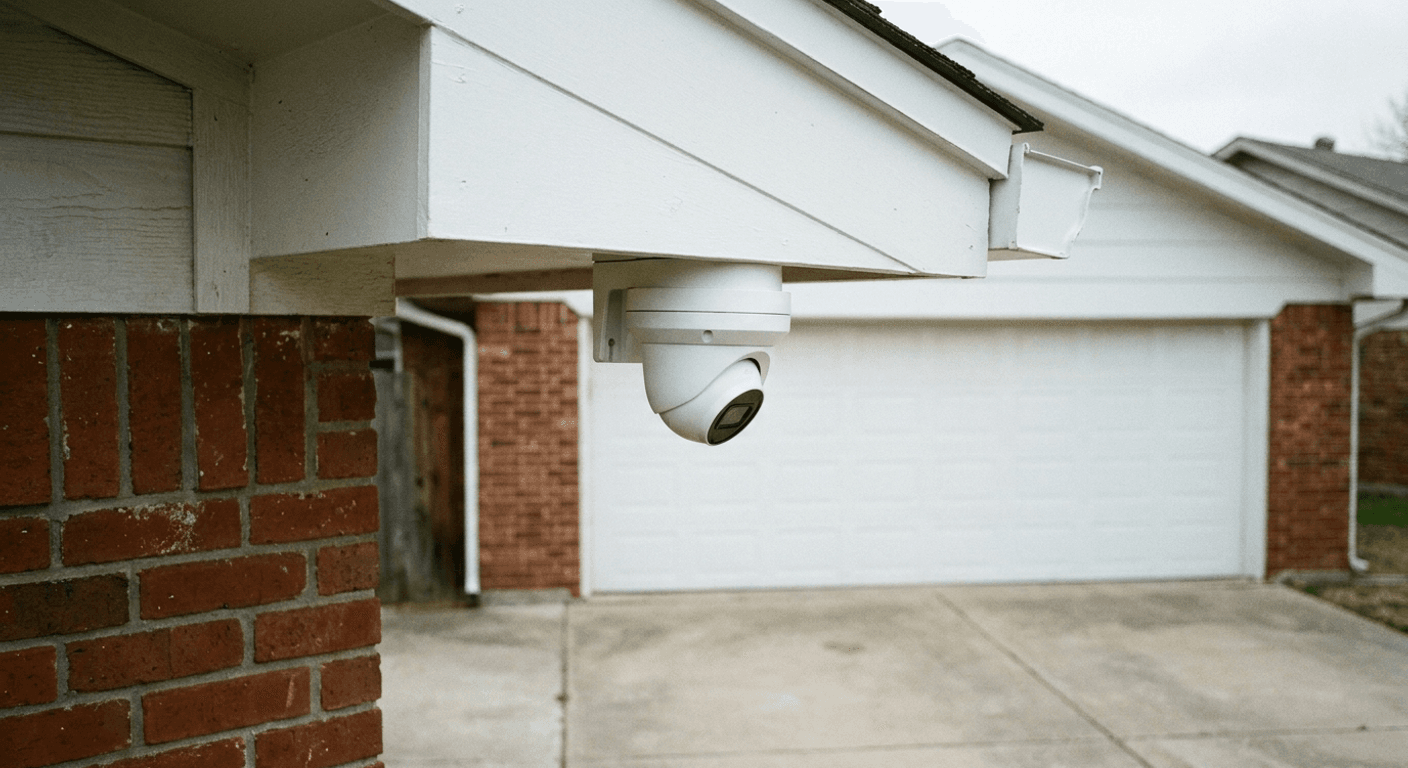
Usually, yes. A neighbor can generally point a video-only security camera at parts of your property that anyone could see from their own land or from the street. None of the laws discussed on this page bans that by itself.
Those laws target narrower conduct: recording your private conversations, secretly recording someone undressing or in a bedroom or bathroom, filming your backyard from next door to harass, annoy, alarm, or threaten you, or offensively using a device to capture private or family activity that could not otherwise be captured without trespassing. The details differ by state, and a fence or property line alone does not decide whether a particular setup is lawful. Local ordinances, HOA rules, and leases can add their own limits.
Information last verified on September 11, 2026. This article has not been reviewed by a licensed lawyer.
Jurisdiction scope: This article explains the federal audio framework and selected statutes in New York, California, Florida, and Washington. It does not provide a nationwide survey of tort law, local ordinances, HOA rules, leases, or camera-placement limits. Start with the surveillance camera laws by state for the jurisdiction that applies.
Can a Neighbor Legally Point a Camera at My Property?
For silent video of areas in plain view, the answer is usually yes. The harder question is what a particular camera actually captures, and that depends on the device and the state.
The device you can see is only the starting point. Its mount may suggest a direction, but it does not reveal the recorded frame, privacy masking, zoom, motion zones, storage settings, or whether a microphone is enabled. Before treating the camera's position as proof, separate what you observed from what you inferred.
Write down where the device is mounted, the direction it appears to face, and which part of your home or property concerns you. Note whether the device is fixed or can pan and tilt. If you can hear announcements or see a model number without entering anyone else's property, record that fact. A product manual may help identify capabilities, but capability is not proof that a feature is active or that particular material was recorded.
The governing jurisdiction then determines which facts matter. The federal statute discussed below concerns interception of covered communications. New York and Florida use detailed statutory elements for specific visual conduct. California defines particular physical and constructive invasions. Washington addresses private conversations. None of those provisions supplies a universal answer based only on which side of a boundary holds the camera.
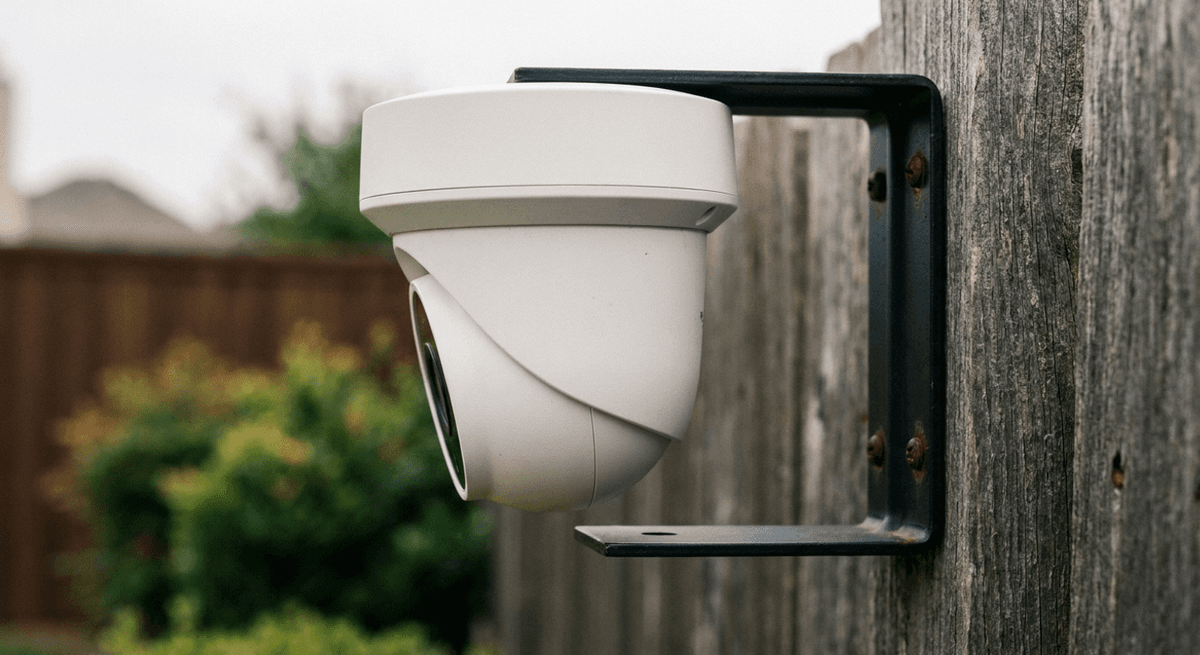
Use precise language when documenting the concern. “Mounted on the west fence and angled toward the second-floor windows” records an observation. “Records inside the bedroom all day” states a conclusion that may require more evidence. That distinction helps a neighbor, property manager, HOA, local agency, or lawyer understand what still needs to be established.
Video, Audio, and Private-Area Rules Are Different
Video, audio, and narrowly defined private-area recording can trigger different statutes. A device may collect silent images, sound, or both, and a legal analysis must follow the actual feature and conduct rather than the product label.
Federal law defines an oral communication partly through the speaker's exhibited expectation that the communication is not subject to interception, defines interception, and prohibits intentional interception. For an ordinary private actor, it also provides an exception when the person is a party to the communication or one party gave prior consent, unless the interception is for the purpose of committing a criminal or tortious act. These provisions require a communication, acquisition, intent, coverage, consent, purpose, and any other applicable exception to be assessed; they do not automatically regulate silent neighborhood video. See 18 U.S.C. §§ 2510(2), 2510(4), 2511(1)(a), and 2511(2)(d).
Washington provides a useful state example. RCW 9.73.030(1)(b) generally requires the consent of all persons engaged before a private conversation is recorded or transmitted by a device, subject to the statute and chapter. Subsection (2) permits one-party recording for listed situations, including certain emergency, threat, anonymous, repeated, inconvenient-hour, hostage, and barricaded-person communications. When all-person consent is required, subsection (3) says an announcement made in a reasonably effective manner can establish consent if the announcement is also recorded. Other subsections address news gathering and custodial interrogation. Whether an outdoor conversation is private remains fact-sensitive. See RCW 9.73.030(1)(b), (2)-(5).
New York Penal Law 250.45 covers specified surreptitious viewing, broadcasting, or recording under several alternatives, including conduct involving sexual or intimate parts and listed rooms such as a bedroom, changing room, fitting room, restroom, toilet, or bathroom under the provision's particular elements. It is not a general ban on recording a clothed person in a fenced yard. See N.Y. Penal Law § 250.45(1)-(5).
Florida's 2026 digital-voyeurism statute likewise requires its own elements. Section 810.145 covers specified secret viewing, broadcasting, or recording of a person dressing, undressing, privately exposing the body, or viewing under or through clothing, together with lack of knowledge and consent, the required place and time, and a listed purpose where the relevant subsection requires one. The statute exempts, among other things, a security system with conspicuous written notice and a device installed so its presence is clearly and immediately obvious. Those are exceptions to section 810.145 only; they do not decide compliance with another statute, a lease, an HOA rule, or a local ordinance. See Fla. Stat. § 810.145(1)(f), (2), and (5)(b)-(c) (2026).
| Issue | Authority used here | What must stay in the analysis |
|---|---|---|
| Federal audio interception | 18 U.S.C. §§ 2510, 2511 | Covered communication, interception, intent, consent, purpose, and applicable exceptions |
| Washington conversation recording | RCW 9.73.030 | A private conversation, consent of all persons, and statutory exceptions or announcement method |
| New York unlawful surveillance | Penal Law § 250.45 | The exact alternative, activity, location, purpose, knowledge, and consent elements that apply |
| Florida digital voyeurism | Fla. Stat. § 810.145 | Defined conduct, privacy setting, knowledge and consent, purpose when required, and statute-specific exceptions |
Examples of State-Specific Privacy Claims
New York and California show why a broad phrase such as “invasion of privacy” is not enough. Each statute requires a claimant to establish a detailed set of facts, and neither statute creates a nationwide camera-angle rule.
New York Civil Rights Law 52-a gives an owner or tenant of residential real property a damages action against a person who installs or affixes a video-imaging device on property adjoining that residential real property for the purpose of videotaping or taking moving digital images of recreational activities occurring in the statutorily defined backyard, without the owner’s or tenant’s written consent, and with intent to harass, annoy, or alarm another person or to threaten another person or property. “Backyard” means the part of the parcel beyond the rear footprint of the residential dwelling, extending to the side and rear parcel boundaries beyond that footprint. The statute does not apply to law-enforcement personnel performing authorized duties. Omitting adjoining property, the videotaping or moving-image purpose, recreation, written consent, or intent changes the claim. See N.Y. Civ. Rights Law § 52-a(1)-(2).
California Civil Code 1708.8 uses separate routes. Under subsection (a), a person is liable for physical invasion of privacy when the person knowingly enters land or airspace above another person’s land without permission, or otherwise commits a trespass, in order to capture a visual image, sound recording, or other physical impression of the plaintiff engaging in a private, personal, or familial activity, and the invasion occurs in a manner offensive to a reasonable person. Under subsection (b), a person is liable for constructive invasion of privacy when the person attempts to capture that activity in a manner offensive to a reasonable person through the use of any device, regardless of whether there is a physical trespass, if the image, recording, or impression could not have been achieved without a trespass unless the device was used. The statute also contains definitions, remedies tied to proximately caused damages, and an investigation or surveillance qualification. See Cal. Civ. Code § 1708.8(a)-(b), (d), (g), and (l).
These statutes illustrate different questions. New York section 52-a focuses on an adjoining-property device, defined backyard recreation, lack of written consent, and specified intent. California section 1708.8 focuses on the manner of physical or constructive invasion, protected activity, offensively unreasonable conduct, and, for constructive invasion, use of a device where the capture could not have been achieved without trespass unless the device was used. A fact that matters under one provision may not satisfy the other.
A Property Line or Fence Is Not a Complete Legal Test
No sourced nationwide minimum camera distance appears in the approved research for this page. A property line may matter to New York's adjoining-property requirement or California's physical-trespass route, but neither statute says that a camera becomes lawful or unlawful at a universal number of feet.
A fence is evidence about the physical setting, not a complete legal conclusion. Under New York section 52-a, the questions still include whether the claimant is an owner or tenant of residential real property, whether a device was installed or affixed on adjoining property for the stated videotaping or moving-image purpose, whether the activity was recreational and occurred in the defined backyard, whether written consent existed, and whether the installer had the specified intent. Under California section 1708.8, the route may require trespass or, for constructive invasion, an attempt through the use of a device to achieve a capture that could not have been achieved without trespass unless the device was used, together with the remaining statutory elements.
Florida also demonstrates why visibility cannot be generalized. A clearly and immediately obvious device or a qualifying posted security system may fall within section 810.145's exceptions, but that conclusion is confined to that Florida provision. Visibility does not answer federal audio law, another state's statute, or a private lease or HOA requirement.
If the concern is a view over a fence, document the fence height, camera height, apparent direction, windows or activity areas in line with the device, and any objective indication of zoom or movement. Avoid moving, covering, damaging, or accessing the device. Those actions can create a separate dispute and may destroy useful evidence of the original setup.
Apartment Doors, Backyards, and Windows
Location labels help route the issue, but they do not determine the outcome. The same camera may implicate different rules depending on who installed it, who controls the space, whether sound is captured, what activity appears in frame, and which jurisdiction applies.
| Setting | Facts to identify | Useful next guide |
|---|---|---|
| Apartment hallway or door | Installer, lease terms, common-area control, other doors in frame, audio setting | Landlord security camera laws or Ring doorbell laws |
| HOA community | Governing documents, architectural rules, common areas, enforcement history | HOA security camera rules |
| Backyard | State, adjoining-property relationship, activity captured, consent, purpose, device capabilities | Surveillance camera laws by state |
| Window | Room and activity visible, angle, zoom, audio, knowledge and consent, applicable statutory elements | When recording someone may be illegal |
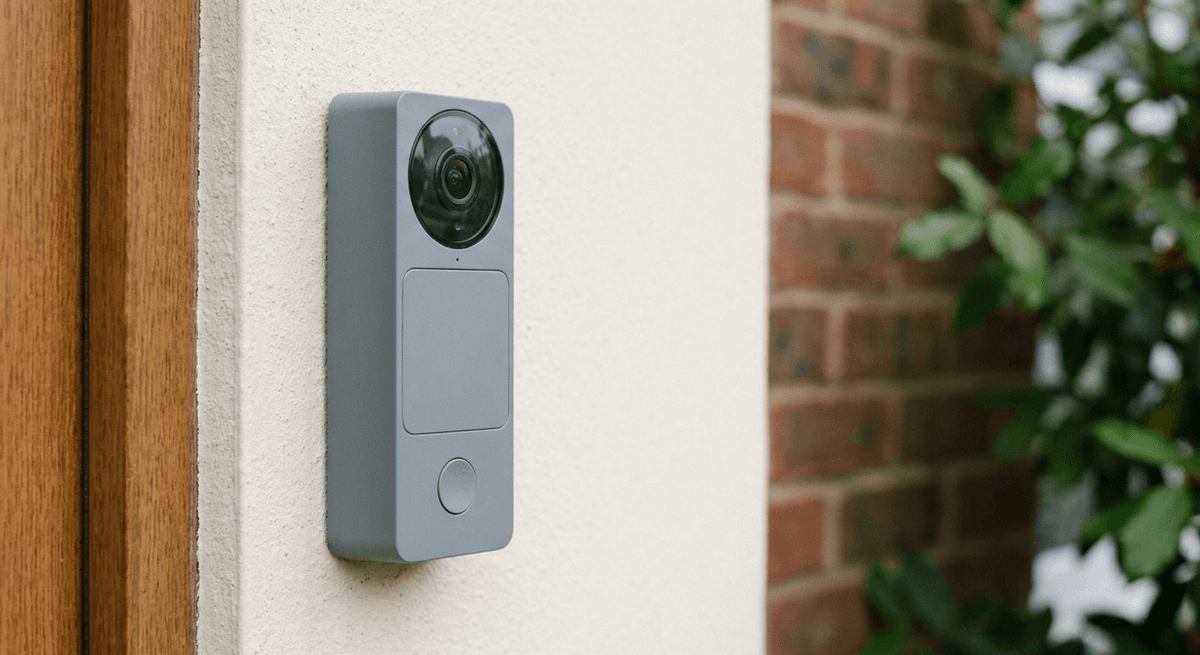
| Doorbell facing a street or another home | Recorded frame, motion zone, audio, announcements, retention, installer | Ring doorbell laws |
An apartment dispute may also involve a landlord, condominium association, building manager, or lease term. A backyard dispute in New York may call for section 52-a's exact elements. A window concern involving dressing, undressing, intimate exposure, or a listed private room may require close review of New York Penal Law 250.45 or Florida section 810.145. A microphone issue in Washington requires the private-conversation and consent analysis in RCW 9.73.030, including its exceptions.
Document the Setup and Check Local Rules
Start with a dated, factual record of what you can lawfully observe. Photograph the device and apparent angle from your own property or another place where you are allowed to be. Save relevant written communications. Note dates, times, audible announcements, visible repositioning, and the activity or room you believe may be captured. Keep original files and avoid editing the only copy.
A neutral request can clarify or resolve the problem. Ask whether audio is enabled, whether privacy masking can exclude a window or activity area, and whether the camera can be angled differently. Frame the request around a concrete concern rather than accusing the other person of a crime before the facts are known.
Then identify the rules that actually govern the property. Check the relevant state guide, municipal code, lease, condominium declaration, or HOA documents. A local nonemergency police line, housing office, property manager, or association may explain its process, but it cannot guarantee that a statute applies. A lawyer licensed in the state can assess the evidence against the full elements and current remedies.
Do not trespass, interfere with the camera, or attempt to access another person's account or network. Preserve the setup and the communications around it so the appropriate decision-maker can evaluate what happened.
Neighbor-camera disputes depend on device capabilities, location, activity, intent, consent and state or local law. These examples do not determine whether a particular camera is lawful and are general legal information, not legal advice.
Last updated: September 11, 2026. Statutes cited reflect their in-force versions as of September 11, 2026.
Frequently Asked Questions
Can my neighbor point a security camera at my yard?
The camera's position alone does not decide legality. In New York, for example, Civil Rights Law 52-a requires an owner or tenant, a device installed or affixed on adjoining property for the purpose of videotaping or taking moving digital images of recreational activity in the defined backyard, no written consent, and specified intent; other jurisdictions use different rules.
Can a neighbor's camera record audio?
Audio requires a separate analysis. Federal law addresses intentional interception of covered oral communications and a private-party consent exception, while Washington RCW 9.73.030 generally requires all persons' consent for a private conversation subject to statutory exceptions.
Does a fence make a neighbor's camera illegal?
No nationwide rule in the approved research makes a fence conclusive. A fence may be relevant evidence, but New York section 52-a and California section 1708.8 still require all of their separate statutory elements.
What if a camera points toward my window?
Document the apparent angle, room, activity, audio capability, and any objective evidence of what is captured. New York Penal Law 250.45 and Florida section 810.145 cover specified private-area conduct under detailed elements, rather than every camera that faces a window.
Are visible security cameras exempt under Florida law?
Florida section 810.145(5) exempts a video-surveillance device whose presence is clearly and immediately obvious and certain posted security systems. Those exceptions apply only to section 810.145 and do not resolve other laws or private rules.
What should I document before making a complaint?
Record the mount, apparent direction, dates, movement, audible announcements, relevant communications, and the specific room or activity of concern from a place where you may lawfully be. Separate observed facts from assumptions about the recorded frame or microphone setting.
Updates
Independently fact-checked against the cited primary sources
Independently fact-checked against the cited primary sources
Rewritten to distinguish video, audio, and private-area rules; added exact New York, California, Florida, and Washington statutory limits and practical fact-checking steps.
Corrected the Florida entry: section 810.145 is now titled digital voyeurism, its elements require secretly recording someone dressing or undressing for an enumerated purpose, and the statute expressly exempts posted and plainly visible security cameras.
Independently fact-checked against the cited primary sources; governing law re-checked for recent changes
Governing law re-checked for recent changes
Governing law re-checked for recent changes
Reviewed and approved by an editor
The Law Behind This Article
This article rests on the statutory provisions below, held in our own legal record and retrieved from the official source. Tap a section to read the operative text.
New York Civil Rights Law
§ 52-aPrivate right of action for unwarranted video imaging of residential premisesIn forcecited in 2 of our articles
Private right of action for unwarranted video imaging of residential premises. 1. Any owner or tenant of residential real property shall have a private right of action for damages against any person who installs or affixes a video imaging device on property adjoining such residential real property for the purpose of video taping or taking moving digital images of the recreational activities which occur in the backyard of the residential real property without the written consent thereto of such owner and/or tenant with intent to harass, annoy or alarm another person, or with intent to threaten the person or property of another person. The provisions of this section shall not apply to any law enforcement personnel engaged in the conduct of their authorized duties. 2. For the purposes of this section, "backyard" shall mean that portion of the parcel on which residential real property is located which extends beyond the rear footprint of the residential dwelling situated thereon, and to the side and rear boundaries of such parcel extending beyond the rear footprint of such residential dwelling.
Official text (excerpt) · last checked 2026-07-29 · Read the full text in our law library · Verify at legislation.nysenate.gov
Cited in 3 court opinions in our collectionLatest citing opinion in our collection: 2025
Opinions citing this section in our collection:
- Cangemi v. Yeager (Appellate Division of the Supreme Court of the State of New York 2020, 128 N.Y.S.3d 708)“…commenced this action asserting, inter alia, a claim under Civil Rights Law § 52-a and claims of trespass and private nuis…”
- Kosek v. Engel (Appellate Division of the Supreme Court of the State of New York 2025, 2025 NY Slip Op 04889)“…against the defendants to recover damages for violation of Civil Rights Law § 52-a and private nuisance, and to permanentl…”
- Meadows v. Eckert (Appellate Division of the Supreme Court of the State of New York 2023, 194 N.Y.S.3d 387)“…granted in part plaintiff's fifth cause of action, based on Civil Rights Law § 52-a, by directing defendant to adjust the p…”
Identified automatically from the court opinions citing this section — not a ranking of which case controls.
Also relied on in: New York Surveillance Camera Laws (2026 Guide)
California Civil Code
§ 1708.8In forcecited in 9 of our articles
(a) A person is liable for physical invasion of privacy when the person knowingly enters onto the land or into the airspace above the land of another person without permission or otherwise commits a trespass in order to capture any type of visual image, sound recording, or other physical impression of the plaintiff engaging in a private, personal, or familial activity and the invasion occurs in a manner that is offensive to a reasonable person. (b) A person is liable for constructive invasion of privacy when the person attempts to capture, in a manner that is offensive to a reasonable person, any type of visual image, sound recording, or other physical impression of the plaintiff engaging in a private, personal, or familial activity, through the use of any device, regardless of whether there is a physical trespass, if this image, sound recording, or other physical impression could not have been achieved without a trespass unless the device was used. (c) An assault or false imprisonment committed with the intent to capture any type of visual image, sound recording, or other physical impression of the plaintiff is subject to subdivisions (d), (e), and (h).
Official text (excerpt) · last checked 2026-08-31 · Read the full text in our law library · Verify at leginfo.legislature.ca.gov
Cited in 17 court opinions in our collectionLatest citing opinion in our collection: 2026
In the courts (editorial summary, independently checked):Richardson-Tunnell v. Schools Insurance Program for Employees (2007) held Section 1708.8 creates no exception to Government Code 821.6 immunity for a public entity's investigatory surveillance. Simmons v. Bauer Media Group USA, LLC (2020) let a 1708.8(b) claim over a hidden tracker past an anti-SLAPP motion without reaching its elements.
Opinions citing this section in our collection:
- Hernandez v. Hillsides, Inc. (California Supreme Court 2009, 47 Cal. 4th 272)“…provisions is on the “intent to capture” a “visual image” (Civ. Code, § 1708.8, subd. (a)), or on the “attempt” to do…”
- Richardson-Tunnell v. Schools Insurance Program for Employees (California Court of Appeal 2007, 69 Cal. Rptr. 3d 176)✓Workers' compensation investigators secretly videotaped an injured teacher at her wedding and honeymoon; the court held Civil Code section 1708.8 creates no exception to the investigatory immunity of Government Code section 821.6, so her claim against the public entities failed.
- Raef v. Appellate Division of the Superior Court (California Court of Appeal 2015, 240 Cal. App. 4th 1112)“…Erwin Chemerinsky explained in relation to another statute (Civ. Code, § 1708.8, which, too, forms part of what is popu…”
Identified automatically from the court opinions citing this section — not a ranking of which case controls.
Also relied on in: California Security Camera and Surveillance Laws: Rules for Home and Business (2026), California Video Recording Laws: Filming, Surveillance, and Consent (2026), California Voyeurism and Hidden Camera Laws: Penalties and Protections (2026)
New York Penal Law
§ 250.45Unlawful surveillance in the second degreeIn forcecited in 19 of our articles
Unlawful surveillance in the second degree. A person is guilty of unlawful surveillance in the second degree when: 1. For his or her own, or another person's amusement, entertainment, or profit, or for the purpose of degrading or abusing a person, he or she intentionally uses or installs, or permits the utilization or installation of an imaging device to surreptitiously view, broadcast or record a person dressing or undressing or the sexual or other intimate parts of such person at a place and time when such person has a reasonable expectation of privacy, without such person's knowledge or consent; or 2. For his or her own, or another person's sexual arousal or sexual gratification, he or she intentionally uses or installs, or permits the utilization or installation of an imaging device to surreptitiously view, broadcast or record a person dressing or undressing or the sexual or other intimate parts of such person at a place and time when such person has a reasonable expectation of privacy, without such person's knowledge or consent; or 3.
Official text (excerpt) · last checked 2026-08-31 · Read the full text in our law library · Verify at legislation.nysenate.gov
Cited in 51 court opinions in our collectionLatest citing opinion in our collection: 2025
In the courts (editorial summary, independently checked):People v. Piznarski (2013) held Penal Law 250.45 reaches a participant who secretly records consensual sex, that the victim kept a reasonable expectation of privacy, and that the one-party consent rule for eavesdropping does not apply. People v. Evans (2006) applied section 250.45(3) to a camera hidden in a bedroom.
Opinions citing this section in our collection:
- People v. Evans (Appellate Division of the Supreme Court of the State of New York 2006, 27 A.D.3d 905)✓A man placed a video camera in his girlfriend's 12-year-old daughter's bedroom and recorded her undressing, then pleaded guilty under Section 250.45(3); the court affirmed, holding the plea needed no express admission of no legitimate purpose given the statutory presumption.
- People v. Lema (Appellate Division of the Supreme Court of the State of New York 2017, 152 A.D.3d 440)✓A man used a phone camera to record under women's skirts on a subway train, but dark lighting produced no image of intimate parts; the court affirmed, holding Section 250.45(4) is satisfied when a device is used for the purpose of making such a recording.
- People v. Piznarski (Appellate Division of the Supreme Court of the State of New York 2013, 113 A.D.3d 166)✓A student secretly recorded sex with two women using a camera left in view on his bedroom desk; the court affirmed under Section 250.45, holding the statute reaches a participant who records a consensual encounter and that a visible camera can still be used surreptitiously.
Identified automatically from the court opinions citing this section — not a ranking of which case controls.
Also relied on in: New York Dashcam Laws: Legality, Mounting Rules, and Evidence Use, New York Landlord-Tenant Recording Laws: Rights for Renters and Property Owners, New York Medical Recording Laws: Patient Rights and Healthcare Privacy
Florida Statutes
§ 810.145Digital voyeurism.In forcecited in 17 of our articles
(1) As used in this section, the term:(a) “Broadcast” means electronically transmitting a visual image or visual recording with the intent that it be viewed by another person. (b) “Family or household member” has the same meaning as in s. 741.28. (c) “Imaging device” means any mechanical, digital, or electronic viewing device; still camera; camcorder; motion picture camera; or any other instrument, equipment, or format capable of recording, storing, or transmitting visual images of another person. (d) “Position of authority or trust” means a position occupied by a person 18 years of age or older who is a relative, caregiver, coach, employer, or other person who, by reason of his or her relationship with the victim, is able to exercise undue influence over him or her or exploit his or her trust. (e) “Privately exposing the body” means exposing a sexual organ.
Official text (excerpt) · last checked 2026-08-31 · Read the full text in our law library · Verify at leg.state.fl.us
Cited in 3 court opinions in our collectionLatest citing opinion in our collection: 2024
In the courts (editorial summary, independently checked):Kenneth Isaac Parkerson v. State of Florida (2015) rejected a facial overbreadth challenge to section 810.145, holding the video voyeurism statute regulates conduct, not pure speech. Clemen v. Surterra Holdings, Inc. (2024) drew on its privacy definition and exemption for clearly visible cameras when dismissing an intrusion claim.
Opinions citing this section in our collection:
- Kenneth Isaac Parkerson v. State of Florida (District Court of Appeal of Florida 2015, 163 So. 3d 683)✓A man caught watching people inside their homes, once carrying a camera, argued Florida's video voyeurism statute was facially overbroad because it could reach journalists and investigators; the court held section 810.145 is not overbroad and affirmed his convictions.
- Clemen v. Surterra Holdings, Inc. (District Court, M.D. Florida 2024)✓A worker sued over cameras aimed at a workplace changing area; dismissing her intrusion on seclusion claim, the court drew on section 810.145's privacy definition and its exclusion for obvious cameras, and found no authority making an alleged violation outrageous per se.
- Keith Taig v. City of Vero Beach (Court of Appeals for the Eleventh Circuit 2023)✓A spa customer recorded by covert police cameras installed under a court order argued Florida statutes including section 810.145 gave officers clear notice of customers' privacy rights; the court held those state statutes do not clearly establish a federal constitutional right.
Identified automatically from the court opinions citing this section — not a ranking of which case controls.
Also relied on in: Is It Illegal to Video Record Someone Without Their Consent? (2026), Florida Smart Glasses Recording Laws (2026), Florida Employee Monitoring Laws: Employer Rules (2026)
Texas Penal Code
§ 21.15INVASIVE VISUAL RECORDINGIn forcecited in 17 of our articles
(a) In this section: (1) "Female breast" means any portion of the female breast below the top of the areola. (2) "Intimate area" means the naked or clothed genitals, pubic area, anus, buttocks, or female breast of a person. (3) "Changing room" means a room or portioned area provided for or primarily used for the changing of clothing and includes dressing rooms, locker rooms, and swimwear changing areas. (3-a) "Place in which a person has a reasonable expectation of privacy" means a place in which a reasonable person would believe that the person could disrobe in privacy, without being concerned that the act of undressing would be photographed or visually recorded by another or that a visual image of the person undressing would be broadcasted or transmitted by another. The term includes a bathroom, bedroom, and changing room. (4) "Promote" has the meaning assigned by Section 43.21.
Official text (excerpt) · last checked 2026-08-31 · Read the full text in our law library · Verify at statutes.capitol.texas.gov
Cited in 44 court opinions in our collectionLatest citing opinion in our collection: 2025
In the courts (editorial summary, independently checked):The Court of Criminal Appeals struck down the 2007 improper photography provision at Penal Code 21.15(b)(1), and Ex parte Shay (2016) set aside a conviction under it. The Legislature re-enacted the section in 2015, and Ex Parte Kamilah a Hamilton (2020) held the current subsection (b)(1) survives strict scrutiny and is not overbroad.
Opinions citing this section in our collection:
- Ex Parte Nyabwa (Texas Court of Appeals, 14th District (Houston) 2011, 366 S.W.3d 719)✓Charged with improper photography, Nyabwa attacked section 21.15(b)(1) by pretrial habeas; the court of appeals held the 2007 subsection regulated the photographer's intent rather than speech and was neither overbroad nor vague. Ex parte Thompson struck it down in 2014.
- Ex parte Shay (Court of Criminal Appeals of Texas 2016, 507 S.W.3d 731)✓Shay pleaded guilty under section 21.15(b)(1) before Ex parte Thompson struck that subsection down; the Court of Criminal Appeals held his favorable plea bargain did not estop habeas relief, set aside the conviction, and remanded to dismiss the indictment.
- Ex Parte Kamilah a Hamilton (Texas Court of Appeals, 14th District (Houston) 2020)✓Indicted under the 2015 version of section 21.15(b)(1) for broadcasting an image of a complainant's intimate area, Hamilton claimed facial overbreadth; the court held the rewritten subsection survives strict scrutiny, is not overbroad, and affirmed denial of relief.
Identified automatically from the court opinions citing this section — not a ranking of which case controls.
Also relied on in: Texas Landlord-Tenant Recording Laws: Cameras, Privacy, and Rights, Texas Laws on Recording in Public: Rights, Limits, and Exceptions, Texas School Recording Laws: Classrooms, Cameras, and Student Privacy
Michigan Compiled Laws
§ 750.539dInstallation, placement, or use of device for observing, recording, transmitting, photographing or eavesdropping in private placeIn forcecited in 32 of our articles
(1) Except as otherwise provided in this section, a person shall not do either of the following: (a) Install, place, or use in any private place, without the consent of the person or persons entitled to privacy in that place, any device for observing, recording, transmitting, photographing, or eavesdropping upon the sounds or events in that place. (b) Distribute, disseminate, or transmit for access by any other person a recording, photograph, or visual image the person knows or has reason to know was obtained in violation of this section. (2) This section does not prohibit security monitoring in a residence if conducted by or at the direction of the owner or principal occupant of that residence unless conducted for a lewd or lascivious purpose. (3) A person who violates or attempts to violate this section is guilty of a crime as follows: (a) For a violation or attempted violation of subsection (1)(a): (i) Except as provided in subparagraph (ii), the person is guilty of a felony punishable by imprisonment for not more than 2 years or a fine of not more than $2,000.00, or both.
Official text (excerpt) · last checked 2026-08-31 · Read the full text in our law library · Verify at legislature.mi.gov
Cited in 24 court opinions in our collectionLatest citing opinion in our collection: 2026
In the courts (editorial summary, independently checked):Lewis v. LeGrow held a bedroom in a private home is a "private place" under MCL 750.539d and that consenting to sex does not consent to being secretly videotaped there, sustaining civil awards. People v. Wilkens affirmed convictions including one under the section for a camera hidden in a shower used by tenants.
Opinions citing this section in our collection:
- Lewis v. LeGrow (Michigan Court of Appeals 2003, 258 Mich. App. 175)✓A man hid a video camera in his own bedroom and taped three women having sex with him; the court held the bedroom was a private place under 539d and that consenting to sex did not mean consenting to be taped, so the jury verdicts against him stood.
- People v. Wilkens (Michigan Court of Appeals 2005, 267 Mich. App. 728)“…ne count of eavesdropping through installation of a camera, MCL 750.539d. [1] The trial court sentenced defenda…”
- People v. Waltonen (Michigan Court of Appeals 2007, 272 Mich. App. 678)“…drug house, MCL 333.7405(l)(d); one count of eavesdropping, MCL 750.539d; and four counts of engaging the servic…”
Identified automatically from the court opinions citing this section — not a ranking of which case controls.
Also relied on in: Michigan Smart Glasses Recording Laws (2026), Michigan Audio Recording Laws: Consent Rules, Statutes, and Penalties (2026), Michigan Recording Laws (2026): Consent Rules and Participant Exception
Revised Code of Washington
§ 9.73.030Intercepting, recording, or divulging private communication—Consent required—Exceptions.In forcecited in 46 of our articles
(1) Except as otherwise provided in this chapter, it shall be unlawful for any individual, partnership, corporation, association, or the state of Washington, its agencies, and political subdivisions to intercept, or record any: (a) Private communication transmitted by telephone, telegraph, radio, or other device between two or more individuals between points within or without the state by any device electronic or otherwise designed to record and/or transmit said communication regardless how such device is powered or actuated, without first obtaining the consent of all the participants in the communication; (b) Private conversation, by any device electronic or otherwise designed to record or transmit such conversation regardless how the device is powered or actuated without first obtaining the consent of all the persons engaged in the conversation.
Official text (excerpt) · last checked 2026-09-24 · Read the full text in our law library · Verify at app.leg.wa.gov
Cited in 221 court opinions in our collectionLatest citing opinion in our collection: 2026
In the courts (editorial summary, independently checked):Washington courts have policed what counts as a private communication under Sec. 9.73.030: State v. Gunwall (1986) concluded a pen register intercept comes within a private communication transmitted by telephone, while State v. Riley (1993) held a line trap that reveals only the calling number does not record one.
Opinions citing this section in our collection:
- State v. Salinas (Washington Supreme Court 1992, 119 Wash. 2d 192)“…alties for divulging a telegram or opening a sealed letter. RCW 9.73.030-.070, making it unlawful to intercept,…”
- State v. Gunwall (Washington Supreme Court 1986, 106 Wash. 2d 54)✓Everett police pulled a suspected cocaine dealer's toll records and put a pen register on her line without valid legal process; the court held a pen register intercept is a private communication transmitted by telephone, installable only under the eavesdropping statutes.
- State v. Brown (Washington Supreme Court 1997, 132 Wash. 2d 529)✓Palm Springs officers secretly recorded a Washington murder suspect's statements after his arrest; the court treated RCW 9.73.090, not 9.73.030, as the provision reaching recordings of arrested persons, and held the Privacy Act did not require suppressing that recording.
Identified automatically from the court opinions citing this section — not a ranking of which case controls.
Also relied on in: US Recording Laws by State (2026): All 50 States Explained, Washington Recording Laws (2026): All-Party Consent Rules, Federal Wiretap Act and ECPA: The Complete Guide (2026)
California Penal Code
§ 632In forcecited in 55 of our articles
(a) A person who, intentionally and without the consent of all parties to a confidential communication, uses an electronic amplifying or recording device to eavesdrop upon or record the confidential communication, whether the communication is carried on among the parties in the presence of one another or by means of a telegraph, telephone, or other device, except a radio, shall be punished by a fine not exceeding two thousand five hundred dollars ($2,500) per violation, or imprisonment in a county jail not exceeding one year, or in the state prison, or by both that fine and imprisonment. If the person has previously been convicted of a violation of this section or Section 631, 632.5, 632.6, 632.7, or 636, the person shall be punished by a fine not exceeding ten thousand dollars ($10,000) per violation, by imprisonment in a county jail not exceeding one year, or in the state prison, or by both that fine and imprisonment.
Official text (excerpt) · last checked 2026-09-23 · Read the full text in our law library · Verify at leginfo.legislature.ca.gov
Cited in 267 court opinions in our collectionLatest citing opinion in our collection: 2026
In the courts (editorial summary, independently checked):Kimmel v. Goland (1990) held the section 47(2) litigation privilege does not bar a damages claim under Section 632 for recording confidential conversations without consent. Lieberman v. KCOP Television, Inc. (2003) held a Section 632 violation is complete the moment the recording is made, whether or not it is disclosed.
Opinions citing this section in our collection:
- Rubin v. Green (California Supreme Court 1993, 4 Cal. 4th 1187)“…f telephone conversations with defendants, an offense under Penal Code section 632. We noted that defendants alleged that…”
- Kimmel v. Goland (California Supreme Court 1990, 51 Cal. 3d 202)✓Mobilehome owners secretly taped phone calls with park management in anticipation of suing; the court held the section 47(2) litigation privilege did not bar the cross-complaint for damages under Penal Code section 632, since the injury came from recording, not publication.
- Shulman v. Group W Productions, Inc. (California Supreme Court 1998, 74 Cal. Rptr. 2d 843)✓A TV producer put a wireless microphone on the flight nurse treating a crash victim. No section 632 claim was before the court, but it called section 632 and the intrusion tort laws of general applicability and said the press may not eavesdrop in violation of section 632.
Identified automatically from the court opinions citing this section — not a ranking of which case controls.
Also relied on in: California Recording Laws (2026): All-Party Consent Rules, Can an Employer Record Conversations Without Consent? (2026), Is Plaud HIPAA Compliant? Kind Of. Here's What to Know (2026)
United States Code Title 18
§ 2510DefinitionsIn forcecited in 137 of our articles
As used in this chapter— “wire communication” means any aural transfer made in whole or in part through the use of facilities for the transmission of communications by the aid of wire, cable, or other like connection between the point of origin and the point of reception (including the use of such connection in a switching station) furnished or operated by any person engaged in providing or operating such facilities for the transmission of interstate or foreign communications or communications affecting interstate or foreign commerce; “oral communication” means any oral communication uttered by a person exhibiting an expectation that such communication is not subject to interception under circumstances justifying such expectation, but such term does not include any electronic communication; “State” means any State of the United States, the District of Columbia, the Commonwealth of Puerto Rico, and any territory or possession of the United States; “intercept” means the aural or other acquisition of the contents of any wire, electronic, or oral communication through the use of any electronic, mechanical, or other device.1 So in original. The period probably should be a semicolon.
Official text (excerpt) · last checked 2026-07-28 · Read the full text in our law library · Verify at uscode.house.gov
Cited in 2,382 court opinions in our collectionLatest citing opinion in our collection: 2026
In the courts (editorial summary, independently checked):United States v. New York Telephone Co. (1977) held that pen registers fall outside Title III because they do not acquire the contents of a communication as Section 2510(4) and (8) define interception. Forsyth v. Barr (1994) applied the same definitions, treating the defendant officers as law enforcement officers under Section 2510(7).
Opinions citing this section in our collection:
- Forsyth v. Barr (Court of Appeals for the Fifth Circuit 1994, 19 F.3d 1527)✓Neighbors tapped an informant's home line and the overheard charges reached Dallas internal affairs; the Fifth Circuit saw no evidence the police defendants intercepted anything and held they were 2510(7) law enforcement officers, so 2517(1) and (2) allowed their use of it.
- Nixon v. Administrator of General Services (Supreme Court of the United States 1977, 433 U.S. 425)“…of the Omnibus Crime Control and Safe Streets Act of 1968, 18 U. S. C. §§ 2510 et seq. 408 F. Supp., at 363 . We…”
- Gannett Co. v. DePasquale (Supreme Court of the United States 1979, 443 U.S. 368)“…of the Omnibus Crime Control and Safe Streets Act of 1968, 18 U. S. C. § 2510 et seq., be preserved prior to the d…”
Identified automatically from the court opinions citing this section — not a ranking of which case controls.
Also relied on in: Surveillance Camera Laws by State (2026 Guide), Georgia Recording Laws (2026): One-Party Audio, All-Party Video, District of Columbia Recording Laws (2026): One-Party Consent Rules
§ 2511Interception and disclosure of wire, oral, or electronic communications prohibitedIn forcecited in 441 of our articles
Except as otherwise specifically provided in this chapter any person who— intentionally intercepts, endeavors to intercept, or procures any other person to intercept or endeavor to intercept, any wire, oral, or electronic communication; intentionally uses, endeavors to use, or procures any other person to use or endeavor to use any electronic, mechanical, or other device to intercept any oral communication when— such device is affixed to, or otherwise transmits a signal through, a wire, cable, or other like connection used in wire communication; or such device transmits communications by radio, or interferes with the transmission of such communication; or such person knows, or has reason to know, that such device or any component thereof has been sent through the mail or transported in interstate or foreign commerce; or such use or endeavor to use (A) takes place on the premises of any business or other commercial establishment the operations of which affect interstate or foreign commerce; or (B) obtains or is for the purpose of obtaining information relating to the operations of any business or other commercial establishment the operations of which affect interstate or foreign…
Official text (excerpt) · last checked 2026-09-17 · Read the full text in our law library · Verify at uscode.house.gov
Cited in 2,045 court opinions in our collectionLatest citing opinion in our collection: 2026
In the courts (editorial summary, independently checked):Griggs-Ryan v. Smith (1990) applied the Section 2511(2)(d) prior-consent exception, treating a tenant repeatedly told that all incoming calls were taped as having impliedly consented. United States v. United States District Court (1972) read the then-current Section 2511(3) as conferring no presidential surveillance power.
Opinions citing this section in our collection:
- Mitchell v. Forsyth (Supreme Court of the United States 1985, 472 U.S. 511)✓The Attorney General authorized a warrantless 1970 national security wiretap that caught the plaintiff's calls; the Court held the since-repealed Section 2511(3) disclaimer left the tap lawful under Title III, and that Mitchell had qualified immunity.
- United States v. United States District Court for the Eastern District of Michigan (Supreme Court of the United States 1972, 407 U.S. 297)✓The Attorney General approved warrantless wiretaps on members of a domestic group accused of bombing a CIA office; the Court read Section 2511(3) as a congressional disclaimer conferring no surveillance power, then held the Fourth Amendment required prior judicial approval.
- Forsyth v. Barr (Court of Appeals for the Fifth Circuit 1994, 19 F.3d 1527)✓Dallas police used, in an internal affairs probe of an officer, calls private parties allegedly intercepted illegally; assuming that was unlawful, the Fifth Circuit held Section 2517(1) and (2) allowed the disclosure and use, defeating the Section 2511(1)(c) and (d) claims.
Identified automatically from the court opinions citing this section — not a ranking of which case controls.
Also relied on in: Connecticut Recording Laws (2026): Hybrid Consent Rules Explained, Oregon Recording Laws (2026): Hybrid One-Party and All-Party Rules, Hawaii Recording Laws (2026): Hybrid Consent State Rules
Search our full record of US law — 2.1 million sections, every state + federal →
Sources and References
- 18 U.S.C. §§ 2510 and 2511 - Federal interception definitions, prohibition, and private-party consent exception(uscode.house.gov).gov
- New York Civil Rights Law § 52-a - Private right of action for specified backyard video imaging(nysenate.gov).gov
- California Civil Code § 1708.8 - Physical and constructive invasion of privacy(leginfo.legislature.ca.gov).gov
- New York Penal Law § 250.45 - Unlawful surveillance in the second degree(nysenate.gov).gov
- Florida Statutes § 810.145 (2026) - Digital voyeurism(flsenate.gov).gov
- Washington RCW § 9.73.030 - Intercepting or recording private communications and conversations(app.leg.wa.gov).gov