Small Claims Court by State: Limits, Fees and Appeals (2026)
Independently fact-checked against primary sources (last audited October 7, 2026). · 22 primary sources cited on this page. How we verify our legal content
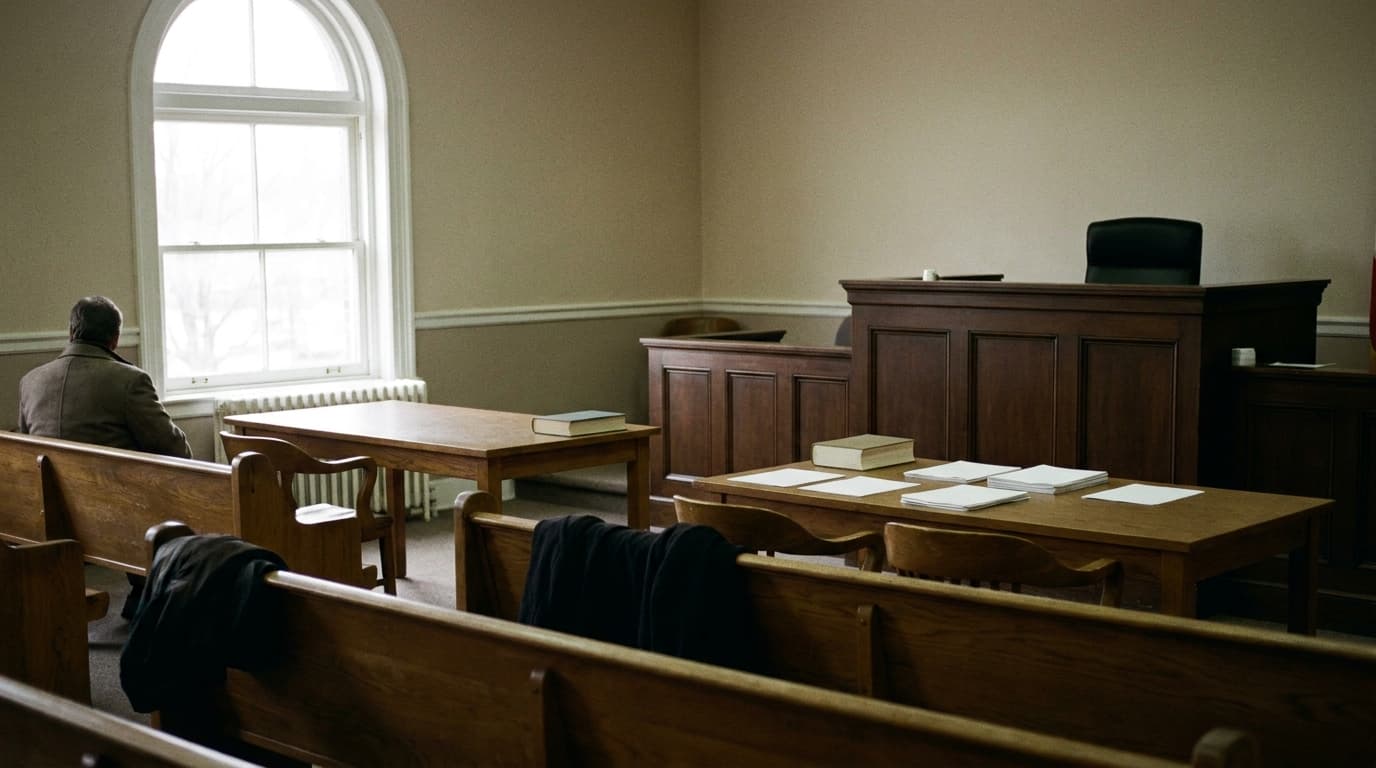
Small claims court is a simplified way to sue for a modest amount of money without the cost and formality of a regular lawsuit. Every state and the District of Columbia has one in some form, but the dollar limit varies widely: from $2,500 in Kentucky to $25,000 in Delaware's Justice of the Peace Court and Tennessee's General Sessions Courts.
Most states set the limit between $5,000 and $10,000. Among courts that run a dedicated small claims procedure, the highest limits are $20,000, in Minnesota, Texas and Utah. Fees, lawyer rules and appeal rights differ just as much, so the comparison table below gives a one-line answer for each state and links to a full guide for that state.
Information last verified on 2026-10-07. This article has not been reviewed by a licensed lawyer.
Jurisdiction scope: This hub compares small claims procedures in the 50 states and the District of Columbia, drawn from our state guides, and covers the federal laws that touch a small claims case: suing the federal government (28 U.S.C. 1346(b), 2401(b), 2675), the Servicemembers Civil Relief Act default-judgment rule (50 U.S.C. 3931), the FDCPA venue rule (15 U.S.C. 1692i), federal limits on garnishment and protected benefits, and the bankruptcy automatic stay (11 U.S.C. 362). It does not cover evictions, regular civil cases, or small claims outside the United States.
Small claims limits by state
The table gives the general dollar limit, the base filing fee, whether lawyers can take part, and who can appeal and where. Cells are short on purpose; fees often vary by county or court, and each state guide has the statute, the exceptions and the detail.
| State | Dollar limit | Filing fee | Lawyers | Appeal |
|---|---|---|---|---|
| Alabama | $6,000 | $35 to $198 | Optional; required for assignees | Either side, 14 days, new trial in circuit court |
| Alaska | $10,000 | $50 or $100 | Allowed; required for assignees | Either side, 30 days, superior court |
| Arizona | $5,000 | $30 base filing fee | Only if both sides agree in writing | None (transfer to civil division to keep one) |
| Arkansas | $5,000 | Varies by court (typically $30 to $65) | Not allowed | Either side, 30 days, new trial in circuit court |
| California | $12,500 (individuals); $6,250 (businesses) | $30, $50 or $75 ($100 for frequent filers) | Not at the hearing | Defendant only (plaintiff on a counterclaim), 30 days, new hearing |
| Colorado | $7,500 | $31 or $55 | Generally not allowed | Either side, 14 days, district court, on the record |
| Connecticut | $5,000 ($15,000 home improvement; deposit double damages may exceed) | $95 | Allowed, not required | None (transfer by answer date to keep one) |
| Delaware | $25,000 (Justice of the Peace Court) | $35 to $45 (debt claims) | Not needed for individuals | Either side, 15 days, new trial in Common Pleas |
| District of Columbia | $10,000 | $5, $10 or $45 | Required for corporate and partnership plaintiffs | Two steps, very short deadlines |
| Florida | $8,000 | Varies by county | Allowed, not required | 30 days, district court of appeal (no new trial) |
| Georgia | $15,000 ($25,000 from Jan. 1, 2027) | $22 deposit cap plus other charges | Not required | Either side (not from a default), 30 days, new trial |
| Hawaii | $5,000 (no cap on security deposit cases) | $35 | Allowed, except security deposit cases | None |
| Idaho | $15,000 | $69 | Not at trial | Either side (not after default), 30 days, new trial before another magistrate |
| Illinois | $10,000 | Varies by county | Allowed; required for corporations suing or counterclaiming | 30 days |
| Indiana | $10,000 | $35 plus $10 service per defendant | Allowed; required for assigned claims | 30 days, Court of Appeals |
| Iowa | $6,500 | $115 | Allowed, not required | Any party, 20 days, decided on the record |
| Kansas | $10,000 | $35 or $55 plus surcharges | Not before judgment unless the other side has one | Any party, 14 days, new trial |
| Kentucky | $2,500 | $38 plus other required fees | Allowed, not required | Either side, 10 days, record review |
| Louisiana | $5,000 | $35 per defendant (city court); up to $130 plus $20 per added defendant (justice of the peace) | Not required | None in city court (unless removed); new trial within 15 days from a justice of the peace |
| Maine | $10,000 | $70 | Allowed, not required | 30 days, Superior Court (plaintiff on law only) |
| Maryland | $5,000 | $44 | Allowed, not required | Either side, 30 days, new trial in circuit court |
| Massachusetts | $7,000 (no cap on motor vehicle property damage; $15,000 for cities and towns) | $40 to $150 | Allowed; court may limit | Defendant only (not after default), 10 days, bond required |
| Michigan | $7,000 | $30, $50 or $70 | Not allowed (unless removed to regular civil court) | None from a district judge (7 days from a magistrate) |
| Minnesota | $20,000 ($4,000 consumer credit) | $65 plus county law library fee | Allowed, not required | Removal for new trial after a contested trial, 21 days (24 if mailed) |
| Mississippi | $3,500 (justice court) | $25 | Allowed | Either side, new trial (deadline unsettled) |
| Missouri | $5,000 | Varies by circuit | Not required | Either side, 10 days, new trial |
| Montana | $7,000 | $30 | Not unless every party has one | 10 days, district court, law only |
| Nebraska | $7,500 | $58 | Not at the hearing | Any party, 30 days, decided on the record |
| Nevada | $10,000 | Varies by court | Allowed (each side pays its own) | Either side, 7 days, district court, on the record |
| New Hampshire | $10,000 | See New Hampshire guide | Not required | 30 days, Supreme Court, law only |
| New Jersey | $5,000 | $35 plus $10 mail service per defendant | Allowed, not required | Either side, 45 days, Appellate Division |
| New Mexico | $10,000 (magistrate court) | $77 in courts checked | Allowed (most corporations and LLCs need one) | 15 days, new trial in district court |
| New York | $3,000 to $10,000, by court | $10 to $20 | Allowed, not required | Narrow grounds only, 30 days (35 if mailed); none from a default or voluntary arbitration |
| North Carolina | $10,000 | $96 | Not required | 10 days, new trial in district court |
| North Dakota | $15,000 | $20 | Allowed | None (defendant can remove first) |
| Ohio | $6,000 | Varies by court | Allowed, not required | Objections in 14 days, then 30 days to appeal |
| Oklahoma | $10,000 | $45 up to $5,000; higher above | Allowed | 30 days, Supreme Court (no new trial) |
| Oregon | $10,000 (claims of $750 or less generally must use small claims) | $57 or $102 | Only with the judge's consent | None in circuit court (justice court: defendant, 30 days) |
| Pennsylvania | $12,000 | $68.50 to $171 base, plus county charges | Optional | Either side, 30 days, new trial in Common Pleas |
| Rhode Island | $5,000 | In transition; confirm with clerk | Not required for individuals; corporations generally need one | Defendant only (plaintiff on a counterclaim), 2 business days, new trial in Superior Court |
| South Carolina | $7,500 (magistrates court) | $80 | Allowed, not required | Either side, 30 days, circuit court |
| South Dakota | $12,000 | $24.84 to $42.84 | Allowed, not required | None (defendant can remove first) |
| Tennessee | $25,000 (General Sessions Court) | Varies by county | Not required for individuals | Any party, 10 days, new trial in circuit court |
| Texas | $20,000 | $54 plus service | Allowed, not required | Either side (over $250), 21 days, bond, new trial in county court |
| Utah | $20,000 ($25,000 from Jan. 1, 2030) | $60, $100 or $185 | Allowed, not required | Either side, 28 days, new trial in district court |
| Vermont | $10,000 ($5,000 consumer credit or medical debt) | $65 or $90 | Allowed, not required | Either side, 30 days, decided on the record |
| Virginia | $5,000 | $36 plus $12 service (total varies by court) | Generally not allowed | Either side, 10 days, new trial in circuit court |
| Washington | $10,000 (individuals); $5,000 (others) | $35 or $50 | Only with the judge's consent | 30 days, superior court, bond required; none under $250 or by a party who claimed under $1,000 |
| West Virginia | $20,000 (magistrate court) | $50 to $70 | Allowed, not required | Either side, 20 days, circuit court, bond required |
| Wisconsin | $10,000 ($5,000 tort); $15,000 from Jan. 1, 2027 | $94.50 ($98 Milwaukee County); $124 ($131.50) from Nov. 1, 2026 | Allowed, not required | Commissioner: demand a judge trial; judge: Court of Appeals |
| Wyoming | $6,000 | $10 plus service | Allowed, not required | Either side, 30 days, law only |
Scheduled changes. Georgia's limit rises to $25,000 for cases filed on or after January 1, 2027 (House Bill 999 of 2026). Wisconsin's general limit rises to $15,000 for cases filed on or after January 1, 2027 (2025 Wisconsin Act 105), its tort limit stays at $5,000, and its filing fee total rises to $124 on November 1, 2026. Utah's limit is scheduled to rise to $25,000 on January 1, 2030 (Utah Code 78A-8-102). Rhode Island's filing fee is in transition through January 1, 2027, and South Carolina's Act No. 155 of 2026 raises several magistrates court fees on January 1, 2027.
Recent changes. Idaho's limit rose from $5,000 to $15,000 on July 1, 2026, and Maine's from $6,000 to $10,000 on January 1, 2026. Iowa's filing fee rose from $95 to $115 on July 1, 2026, and Kentucky's filing fee is $38 as of the same date. Older guides that show the previous figures are out of date.
Bills that are not law. Proposals to raise the limit in Massachusetts (H.1860, sent to a study order on March 26, 2026), New York, South Carolina, Tennessee (HB 982 / SB 572), Mississippi and Louisiana's justice of the peace courts have not become law, so the limits in the table still apply.
How a small claims case works
The steps are similar everywhere, even though the deadlines, forms and fees are set state by state. Your state's guide gives the specific rules for each step.
1. Ask for payment first
Most disputes start with a written demand: a letter saying what you are owed, why, and by when you expect payment. In Wyoming, it is a legal requirement; you must have demanded payment and been refused before you file, and the small claims affidavit asks you to say so (W.S. 1-21-202(a)). Elsewhere, a demand letter is still useful evidence that you tried to resolve the dispute.
2. Check that your claim fits
Confirm three things before you file. Your claim must be within your state's dollar limit, it must be the kind of claim small claims court can hear, and it must be filed within the statute of limitations for that kind of claim. Our statute of limitations guide and calculator cover the filing deadlines.
Some claims are excluded outright. Rhode Island small claims does not cover personal injury, negligence or property damage claims, for example, and Michigan bars fraud (with narrow exceptions), libel, slander and other intentional torts. Many states also limit small claims to money, so a court cannot order someone to do something.
3. File in the right court
Venue rules decide which county or court hears the case, usually where the defendant lives or does business or where the dispute arose. Getting it wrong can cost you: Nebraska's Judicial Branch warns that a case filed in the wrong county is dismissed and the filing fee is lost. Most states have a fee waiver for people who cannot afford the filing fee; your state guide names the form.
4. Serve the defendant
The defendant must get formal notice of the case. How that happens varies. In New York, New Hampshire, South Dakota and Wyoming, the court or clerk arranges service, often by mail. In many states, including California, Colorado, New Mexico, South Carolina, Texas and Washington, you cannot serve the papers yourself; a sheriff, process server or another adult must. In Connecticut and Maine, you serve the defendant first and then file with the court.
5. The defendant responds
Some states require a written answer by a deadline (20 days after service in Alaska, Arizona, New Mexico and Rhode Island, 14 days in Texas, generally 30 days in Georgia and South Carolina). In Oregon, the defendant has 30 days after service to pay or demand a hearing. In others, including Maine, New Jersey, Nevada and Wyoming, the defendant does not file an answer but must come to the hearing. A defendant who does neither risks a default judgment.
6. The hearing
Small claims hearings are usually short and informal, before a judge, magistrate or commissioner. Many states relax the rules of evidence: Ohio's Rules of Evidence do not apply in small claims (Evid.R. 101(C)(8)), and Missouri and Wyoming hearings are informal. Others do not: the full rules of evidence apply in Tennessee general sessions court and New Mexico magistrate court, so a written statement from someone who does not testify may not be accepted. Bring your contract, receipts, photos, estimates and any witnesses.
7. Judgment and appeal
The judge decides, often the same day or by mail. If you lose, check the appeal deadline immediately; in several states it is 10 days or less, and in Rhode Island a losing defendant has only two days. A default judgment is usually challenged by a motion to set it aside rather than an appeal.
8. Collecting the money
A judgment is a court order that you are owed money, not the money itself. Courts generally do not collect for you. Collection tools usually include wage garnishment, bank levies, liens on property and a debtor examination, and judgments earn interest and expire unless renewed, on a timetable set by each state. Our debt collection guides cover state exemptions.
How states differ
The table shows the headline numbers. These are the differences that most often change a reader's plan.
A separate court, or a docket of a general court
Only some states have a court actually called small claims court. In many, small claims is a division or docket of a general trial court: the district court in Alabama, Alaska and Iowa, the county court in Florida, the circuit court in Illinois and Wisconsin. Other states send these cases to a court with a broader civil role. Delaware uses the Justice of the Peace Court, Tennessee the General Sessions Court, Texas the precinct justice court, Mississippi the justice court, Pennsylvania its magisterial district judges and the Philadelphia Municipal Court, and Georgia, South Carolina, New Mexico and West Virginia their magistrate courts.
That matters because a court with a higher civil limit can carry more formal rules. West Virginia's magistrate court, for example, requires a written answer, applies the regular rules of evidence and allows a jury.
More than one limit in a state
Some states set different limits by who is suing or what the claim is about. California allows individuals up to $12,500 but businesses only $6,250, and Washington allows individuals $10,000 and other plaintiffs $5,000. Minnesota's $20,000 limit drops to $4,000 for a seller or lender suing over a consumer credit transaction, and Vermont's $10,000 limit drops to $5,000 for consumer credit or medical debt. Wisconsin's limit is $10,000 for most claims but $5,000 for personal injury and other tort claims.
New York sets the limit by court: $10,000 in New York City Civil Court, $5,000 in City Courts outside the city and the Nassau and western Suffolk District Courts, and $3,000 in Town and Village Justice Courts. A few claim types have no cap at all: residential security deposit disputes in Hawaii, and motor vehicle property damage and a city or town's claim for unpaid personal property taxes in Massachusetts, where other city and town claims can reach $15,000. Connecticut allows up to $15,000 for certain home improvement and new home construction disputes, and a tenant's security deposit award there can exceed $5,000.
Lawyers
Most states allow lawyers but do not require them. A few keep them out. California bars lawyers from representing parties at the hearing, though they can advise you. Michigan bars lawyers from small claims, Idaho bars them from the trial and related motions, and in Arkansas a case moves to the regular civil docket if the judge finds a party is represented. Nebraska bars lawyers at the hearing, and Colorado and Virginia generally bar them.
Other states use a consent rule. In Arizona, lawyers take part only if both sides agree in writing; in Oregon and Washington, only with the judge's consent. In Kansas, no one may have a lawyer before judgment unless the other side has one, and in Montana lawyers are barred unless every party has one.
Business representation
Most states let a business appear through an owner, officer or employee instead of a lawyer, among them Texas, Georgia, Minnesota, Pennsylvania, Virginia and Oklahoma (since November 1, 2024). There are exceptions. A corporation suing as plaintiff must use a lawyer in Illinois, and a corporation or partnership that sues in the District of Columbia must appear through a D.C. Bar lawyer. In Rhode Island, a corporation, LLC or LLP needs a lawyer to defend, and generally to sue unless it is a close corporation with under $1,000,000 in assets. In Tennessee, plan on a licensed lawyer if a corporation or LLC is suing, defending or appealing.
Debt buyers and collection agencies
Many states keep assigned claims out of small claims. Assignees such as debt buyers cannot file in states including Arizona, Arkansas, Colorado, Kansas, Kentucky, Michigan, Missouri, Nebraska, New York, North Dakota, Ohio, Oklahoma, Utah and Washington, and collection agencies are also barred in Arkansas, Kentucky, Michigan and Oklahoma. In Alabama, Alaska and Indiana, an assigned claim must be presented by a lawyer. Arkansas and Kentucky also keep out lenders suing in the course of their lending business.
Who can appeal
This is where states differ most. Arizona, Connecticut, Hawaii, North Dakota and South Dakota allow no appeal from a small claims judgment. Oregon allows none from its circuit court small claims departments, though in a justice court the defendant may appeal within 30 days. Michigan allows none from a district judge, and Louisiana none from a city court small claims division unless the case was moved to the regular docket in time. In Arizona, Connecticut, North Dakota and South Dakota, the way to keep appeal rights is to move the case out of small claims in time: in Arizona, at least ten days before the hearing; in Connecticut, by the answer date; in North Dakota, a defendant removes the case to district court within 20 days; in South Dakota, a defendant (or a plaintiff facing a counterclaim) petitions to remove at least five days before the appearance date.
In other states, the plaintiff gives up appeal rights by choosing small claims. Only the defendant can appeal in California, Massachusetts and Rhode Island, where the plaintiff waives appeal by filing, though in California and Rhode Island a plaintiff may appeal a ruling on the defendant's counterclaim. Where an appeal is allowed, it may be a brand-new trial (Alabama, Maryland, Pennsylvania, Texas, Virginia), a review of the record without new evidence (Colorado, Iowa, Kentucky, Nebraska, Nevada, Vermont), or a review limited to questions of law (Montana, New Hampshire, Wyoming).
Splitting a claim and waiving the excess
If you are owed more than the limit, you generally cannot split one claim into smaller cases to fit; Arizona, Colorado, Minnesota, Nevada, New York, Oregon, Rhode Island and Vermont say so expressly. Many states let you file for the limit and give up the rest, but that waiver is permanent. In Alaska, Indiana, Kansas, Louisiana, Maine, Michigan, Minnesota, Missouri, New Jersey and Vermont, the amount over the limit is gone for good once you choose small claims. Delaware works the same way: you can limit a larger claim to $25,000, but you give up the excess. If the amount over the limit is significant, talk to a lawyer before cutting your claim down.
Limits on how often you can file
Several states cap repeat filers. California allows no more than two claims over $2,500 anywhere in the state per calendar year. Colorado allows two claims a month and eighteen a year, Kansas twenty a year in the same court, Kentucky twenty-five a year, Missouri bars anyone who has already filed more than twelve other claims that year, Montana allows ten, Michigan five a week in a district court district, and Nebraska two a week and ten a year.
The federal layer
Small claims is a state-court procedure. Every court in the table is a state court or, for the District of Columbia, the Superior Court. A handful of federal laws still shape what you can file, how a default judgment is entered and what you can collect.
Suing the federal government
You cannot take a tort claim against the United States to a state small claims court. Federal district courts have exclusive jurisdiction of civil actions for money damages against the United States for injury, loss of property, personal injury or death caused by the negligent or wrongful act of a federal employee acting within the scope of employment (28 U.S.C. 1346(b)(1)). That is the Federal Tort Claims Act.
Before you can sue, you must present the claim to the federal agency involved and have it finally denied in writing, or wait six months without a final decision, which you may then treat as a denial (28 U.S.C. 2675(a)). The claim is forever barred unless it is presented in writing within two years after it accrues, and, after a denial sent by certified or registered mail, suit must begin within six months (28 U.S.C. 2401(b)). The federal claim form is Standard Form 95 (Claim for Damage, Injury, or Death), published by the General Services Administration. Your lawsuit generally cannot ask for more than you claimed with the agency, with narrow exceptions such as newly discovered evidence (28 U.S.C. 2675(b)).
Suing the federal employee personally in small claims usually does not work either. The FTCA remedy against the United States is exclusive of any other civil action for money damages against the employee (28 U.S.C. 2679(b)(1)). If the Attorney General certifies that the employee was acting within the scope of employment, a state-court case is removed to federal district court and the United States is substituted as the defendant (28 U.S.C. 2679(d)(2)).
Non-tort money claims against the United States, such as claims founded on a federal contract, statute or regulation, go to the U.S. Court of Federal Claims, or to a federal district court when the claim is $10,000 or less (28 U.S.C. 1346(a)(2)). The Court of Federal Claims hears money claims against the federal government; it is not a small claims court.
Default judgments and servicemembers
If the defendant does not show up, federal law adds a step before the court can enter judgment. Under the Servicemembers Civil Relief Act, the court must require the plaintiff to file an affidavit stating whether the defendant is in military service, with facts supporting it, or stating that the plaintiff cannot determine it (50 U.S.C. 3931(b)(1)).
If the defendant is in military service, the court may not enter a judgment until it appoints an attorney to represent the defendant. In some circumstances the court must also grant a stay of at least 90 days (50 U.S.C. 3931(b)(2), (d)).
When a debt collector sues you
A debt collector suing a consumer on a debt must sue only in the judicial district where the consumer signed the contract or where the consumer lives when the case begins; a suit to enforce an interest in real property goes where the property is (15 U.S.C. 1692i). The Federal Trade Commission advises responding by the date in the court papers and not ignoring the lawsuit. It also says a debt collector may not sue on a debt that is past the statute of limitations, and that if you are sued on one you should tell the judge the statute of limitations has run out.
Federal limits on collecting a judgment
Federal law caps wage garnishment for ordinary debts. For any workweek, the amount garnished may not exceed the lesser of 25 percent of disposable earnings or the amount by which disposable earnings exceed thirty times the federal minimum hourly wage (15 U.S.C. 1673(a)). That cap does not apply to support orders, Chapter 13 bankruptcy orders or state and federal tax debts (15 U.S.C. 1673(b)). Our guide to stopping wage garnishment covers the process.
Some federal benefits are off limits to a judgment creditor. Social Security benefits are not subject to execution, levy, attachment, garnishment or other legal process (42 U.S.C. 407(a)), and VA benefits are exempt from creditors' claims before or after the beneficiary receives them (38 U.S.C. 5301(a)(1)). The FTC notes these protections have exceptions for delinquent taxes, child or spousal support and student loans.
Those benefits keep some protection once they reach a bank account. Under the Treasury rule at 31 CFR part 212, a bank that receives a garnishment order must protect a "protected amount." That amount is the lesser of the federal benefit payments posted to the account during a two-month lookback period or the account balance (31 CFR 212.2).
Bankruptcy stops the case
A bankruptcy filing operates as an automatic stay. It stops the continuation of pending lawsuits against the debtor and the enforcement of judgments obtained before the bankruptcy (11 U.S.C. 362(a)(1)-(2)). If the defendant files for bankruptcy, your small claims case and any collection generally stop. The federal courts note that some actions are not stayed and that the stay may be short in some situations.
Small claims outside the United States
For other countries, see our guides to small claims in Canada and small claims court in the United Kingdom.
Related
- Statute of limitations in the United States
- Statute of limitations calculator
- Debt collection laws
- How to stop wage garnishment
- Landlord-tenant laws
- Unpaid wages and final paycheck laws
Disclaimer: This article provides general legal information about small claims procedures in the 50 US states and the District of Columbia, as described in our state guides, and about the federal statutes cited above, verified on 2026-10-07. It is not legal advice and does not create an attorney-client relationship. Limits, fees and deadlines change; confirm them with your court before you file. For help with your situation, contact your court's self-help center, a legal aid office, or a lawyer licensed in your state.
Last updated: 2026-10-07.
Frequently Asked Questions
What is the small claims limit in my state?
It depends on the state, from $2,500 in Kentucky up to $25,000 in Delaware's Justice of the Peace Court and Tennessee's General Sessions Courts. Find your state in the table above and open its guide for the court, the statute and any limit that applies to businesses or certain claims.
Which state has the highest small claims limit?
Delaware and Tennessee hear civil claims up to $25,000 in courts that handle what other states call small claims, though neither has a court named small claims court. Among dedicated small claims procedures, Minnesota, Texas and Utah top out at $20,000, and Georgia's magistrate court rises to $25,000 for cases filed on or after January 1, 2027.
Which state has the lowest small claims limit?
Kentucky, at $2,500 not counting interest and costs (KRS 24A.230). New York's Town and Village Justice Courts are also low at $3,000, and Mississippi's justice courts stop at $3,500.
Can I sue for more than the limit in small claims court?
Generally no. In many states, including Alaska, Indiana, Kansas, Maine, Michigan, Missouri and New Jersey, you can file only by giving up the amount over the limit, and you cannot sue for the rest later. States including Arizona, Colorado, Minnesota, New York and Oregon also bar splitting one claim into several cases.
Can I have a lawyer in small claims court?
In most states, yes, but you do not need one. Several states keep lawyers out, including California and Nebraska at the hearing, Idaho at trial, and Michigan and Arkansas in small claims. Arizona, Oregon and Washington allow them only with the other side's or the judge's consent. Check your state's guide.
Can a business sue in small claims court?
Usually yes, often through an officer or employee instead of a lawyer. Some states set a lower limit for businesses (California $6,250, Washington $5,000), and some require a corporate plaintiff to use a lawyer, including Illinois, the District of Columbia and Rhode Island (unless it is a close corporation with under $1,000,000 in assets). In New York, corporations and partnerships cannot file an ordinary small claim and use the separate commercial claims part instead.
Can I appeal a small claims decision?
It depends on the state. Many allow either side to appeal for a new trial within a short deadline, often 10 to 30 days, but Arizona, Connecticut, Hawaii, North Dakota and South Dakota allow no appeal, Oregon allows none in circuit court, Michigan none from a district judge and Louisiana none in city court unless the case was moved out in time, and in California, Massachusetts and Rhode Island only the defendant can appeal (a plaintiff may appeal a ruling on a counterclaim in California and Rhode Island).
What happens if the defendant doesn't pay the judgment?
The court generally does not collect for you. You use your state's collection tools, such as wage garnishment, bank levies, liens or a debtor examination, and federal law limits ordinary wage garnishment and protects Social Security and VA benefits (15 U.S.C. 1673; 42 U.S.C. 407; 38 U.S.C. 5301).
Can I sue the federal government in small claims court?
Not for a tort claim. Federal district courts have exclusive jurisdiction over money claims against the United States for an employee's negligent or wrongful act (28 U.S.C. 1346(b)(1)), and you must first present the claim to the agency within two years (28 U.S.C. 2675(a), 2401(b)).
Can a debt collector sue me in small claims court?
It depends on the state. Assignees such as debt buyers cannot use small claims in states including Arizona, Arkansas, Colorado, Kansas, Kentucky, Michigan, Missouri, Nebraska, New York, North Dakota, Ohio, Oklahoma, Utah and Washington. Where a debt collector does sue, federal law requires it to sue where you signed the contract or where you live (15 U.S.C. 1692i(a)(2)).
Updates
Independently fact-checked against the cited primary sources
State-by-state comparison
Each state guide below is paired with the governing statute our editors adjudicated for it, held in our own legal record and verified against the official source.
Each statute shown is the same adjudicated anchor its state guide renders, independently verified against primary sources. A dash means not yet adjudicated in our record — never that no law exists.
The Law Behind This Article
This article rests on the statutory provisions below, held in our own legal record and retrieved from the official source. Tap a section to read the operative text.
United States Code Title 15
§ 1692iLegal actions by debt collectorsIn force
Any debt collector who brings any legal action on a debt against any consumer shall— in the case of an action to enforce an interest in real property securing the consumer’s obligation, bring such action only in a judicial district or similar legal entity in which such real property is located; or in the case of an action not described in paragraph (1), bring such action only in the judicial district or similar legal entity— in which such consumer signed the contract sued upon; or in which such consumer resides at the commencement of the action. Nothing in this subchapter shall be construed to authorize the bringing of legal actions by debt collectors.
Official text (excerpt) · last checked 2026-07-28 · Read the full text in our law library · Verify at uscode.house.gov
§ 1673Restriction on garnishmentIn forcecited in 13 of our articles
Except as provided in subsection (b) and in section 1675 of this title, the maximum part of the aggregate disposable earnings of an individual for any workweek which is subjected to garnishment may not exceed 25 per centum of his disposable earnings for that week, or the amount by which his disposable earnings for that week exceed thirty times the Federal minimum hourly wage prescribed by section 206(a)(1) of title 29 in effect at the time the earnings are payable, whichever is less. In the case of earnings for any pay period other than a week, the Secretary of Labor shall by regulation prescribe a multiple of the Federal minimum hourly wage equivalent in effect to that set forth in paragraph (2). The restrictions of subsection (a) do not apply in the case of any order for the support of any person issued by a court of competent jurisdiction or in accordance with an administrative procedure, which is established by State law, which affords substantial due process, and which is subject to judicial review. any order of any court of the United States having jurisdiction over cases under chapter 13 of title 11. any debt due for any State or Federal tax.
Official text (excerpt) · last checked 2026-09-16 · Read the full text in our law library · Verify at uscode.house.gov
Cited in 450 court opinions in our collectionLatest citing opinion in our collection: 2026
In the courts (editorial summary, independently checked):Courts have read the section 1673 garnishment cap narrowly. Kokoszka v. Belford (1974) held that "disposable earnings" reaches periodic compensation and not an income tax refund, so the cap did not keep a refund out of the bankruptcy estate. Jordan v. Chase Manhattan Bank (2015) held section 1673 creates no private right of action.
Opinions citing this section in our collection:
- Hisquierdo v. Hisquierdo (Supreme Court of the United States 1979, 439 U.S. 572)“…and amended § 303 of the Consumer Credit Protection Act, 15 U. S. C. § 1673 (b), to pre-empt state law by limiting…”
- Kokoszka v. Belford (Supreme Court of the United States 1974, 417 U.S. 642)✓A bankrupt argued the 25 percent garnishment cap exempted 75 percent of his $250.90 income tax refund from the trustee; the Supreme Court held Section 1673's limit covers periodic compensation, not a tax refund, so the whole refund passed to the estate.
- Jordan v. Chase Manhattan Bank (District Court, S.D. New York 2015, 91 F. Supp. 3d 491)✓After a Florida garnishment froze a disabled borrower's bank account holding disability benefits, she sued under Section 1673; the court held the section creates no private right of action and is enforced by the Secretary of Labor, and dismissed the claim.
Identified automatically from the court opinions citing this section — not a ranking of which case controls.
Also relied on in: Bankruptcy in South Dakota (2026): Exemptions & Means Test, Debt Collection Laws by State: Garnishment, SOL, and Repossession Rules, Alaska Debt Collection Laws: Wage Garnishment, Statute of Limitations, and Repossession
United States Code Title 42
§ 407Assignment of benefitsIn forcecited in 4 of our articles
The right of any person to any future payment under this subchapter shall not be transferable or assignable, at law or in equity, and none of the moneys paid or payable or rights existing under this subchapter shall be subject to execution, levy, attachment, garnishment, or other legal process, or to the operation of any bankruptcy or insolvency law. No other provision of law, enacted before, on, or after April 20, 1983, may be construed to limit, supersede, or otherwise modify the provisions of this section except to the extent that it does so by express reference to this section. Nothing in this section shall be construed to prohibit withholding taxes from any benefit under this subchapter, if such withholding is done pursuant to a request made in accordance with section 3402(p)(1) of the Internal Revenue Code of 1986 by the person entitled to such benefit or such person’s representative payee.
Official text (excerpt) · last checked 2026-09-02 · Read the full text in our law library · Verify at uscode.house.gov
Cited in 1,007 court opinions in our collectionLatest citing opinion in our collection: 2026
In the courts (editorial summary, independently checked):Federal courts have read section 407 against its own exceptions. Sykes v. Bank of America (2013) held SSI benefits are not attachable under the section 659(a) child-support exception because they are not remuneration for employment. Lee v. Schweiker (1984) held section 407 shields beneficiaries from creditors, not SSA in bankruptcy.
Opinions citing this section in our collection:
- Sykes v. Bank of America (Court of Appeals for the Second Circuit 2013, 723 F.3d 399)✓A child support agency restrained an SSI recipient's bank account; the Second Circuit held SSI benefits are not remuneration for employment, so Section 659(a) does not authorize the levy, and it revived his Section 407(a) claim, leaving the merits open.
- Ali v. Federal Bureau of Prisons (Supreme Court of the United States 2008, 552 U.S. 214)“…NS Opinion of the Court process” in 42 U. S. C. §407(a). Applying ejusdem generis, we conclu…”
- Lee v. Schweiker (Court of Appeals for the Third Circuit 1984, 739 F.2d 870)✓The SSA kept deducting a $746.50 overpayment from a retiree's monthly benefits after she filed Chapter 13; the Third Circuit held Section 407 protects recipients from creditors and gives the SSA no shield against the Bankruptcy Code's limits.
Identified automatically from the court opinions citing this section — not a ranking of which case controls.
Also relied on in: Can Social Security Be Garnished? What Section 407 Actually Protects, Hawaii Debt Collection Laws: The Bracket Garnishment Formula, 6-Year Debt Limit, and Repossession
United States Code Title 38
§ 5301Nonassignability and exempt status of benefitsIn forcecited in 6 of our articles
Payments of benefits due or to become due under any law administered by the Secretary shall not be assignable except to the extent specifically authorized by law, and such payments made to, or on account of, a beneficiary shall be exempt from taxation, shall be exempt from the claim of creditors, and shall not be liable to attachment, levy, or seizure by or under any legal or equitable process whatever, either before or after receipt by the beneficiary. The preceding sentence shall not apply to claims of the United States arising under such laws nor shall the exemption therein contained as to taxation extend to any property purchased in part or wholly out of such payments. The provisions of this section shall not be construed to prohibit the assignment of insurance otherwise authorized under chapter 19 of this title, or of servicemen’s indemnity.
Official text (excerpt) · last checked 2026-07-28 · Read the full text in our law library · Verify at uscode.house.gov
Cited in 221 court opinions in our collectionLatest citing opinion in our collection: 2026
Opinions citing this section in our collection:
- Higgins v. Beyer (Court of Appeals for the Third Circuit 2002, 293 F.3d 683)“…VA disability benefits check is not attachable pursuant to 38 U.S.C. S 5301. On June 2, 1998, ADTC Assistant Superi…”
- Alfred Crawford Daniel Carrasco Jerry Parker v. Russell S. Gould William Mayer, (Two Cases) (Court of Appeals for the Ninth Circuit 1995, 56 F.3d 1162)“…hat the nonassignment statute governing Veterans benefits, 38 U.S.C. § 5301 (a), preempts the process of deducting…”
- United States v. Griffith (Court of Appeals for the Tenth Circuit 2009, 584 F.3d 1004)“…reme Court and lower courts have done so with reference to 38 U.S.C. § 5301 and its predecessor statutes, which ex…”
Identified automatically from the court opinions citing this section — not a ranking of which case controls.
Also relied on in: 80% VA Disability Rating (2026): Monthly Pay and Benefits, VA Disability Benefits (2026): Ratings, Pay Rates, and How Claims Work, 100% VA Disability Pay 2026: $3,938.58 a Month + Full Benefits List
United States Code Title 28
§ 1961InterestIn force
Interest shall be allowed on any money judgment in a civil case recovered in a district court. Execution therefor may be levied by the marshal, in any case where, by the law of the State in which such court is held, execution may be levied for interest on judgments recovered in the courts of the State. Such interest shall be calculated from the date of the entry of the judgment, at a rate equal to the weekly average 1-year constant maturity Treasury yield, as published by the Board of Governors of the Federal Reserve System, for the calendar week preceding.1 So in original. The period probably should not appear. the date of the judgment. The Director of the Administrative Office of the United States Courts shall distribute notice of that rate and any changes in it to all Federal judges. Interest shall be computed daily to the date of payment except as provided in section 2516(b) of this title and section 1304(b) of title 31, and shall be compounded annually. This section shall not apply in any judgment of any court with respect to any internal revenue tax case.
Official text (excerpt) · last checked 2026-07-28 · Read the full text in our law library · Verify at uscode.house.gov
§ 2675Disposition by federal agency as prerequisite; evidenceIn forcecited in 2 of our articles
An action shall not be instituted upon a claim against the United States for money damages for injury or loss of property or personal injury or death caused by the negligent or wrongful act or omission of any employee of the Government while acting within the scope of his office or employment, unless the claimant shall have first presented the claim to the appropriate Federal agency and his claim shall have been finally denied by the agency in writing and sent by certified or registered mail. The failure of an agency to make final disposition of a claim within six months after it is filed shall, at the option of the claimant any time thereafter, be deemed a final denial of the claim for purposes of this section. The provisions of this subsection shall not apply to such claims as may be asserted under the Federal Rules of Civil Procedure by third party complaint, cross-claim, or counterclaim.
Official text (excerpt) · last checked 2026-07-28 · Read the full text in our law library · Verify at uscode.house.gov
Cited in 4,503 court opinions in our collectionLatest citing opinion in our collection: 2026
Opinions citing this section in our collection:
- United States v. Kubrick (Supreme Court of the United States 1979, 444 U.S. 111)“…despite the administrative finding of fault. [4] Title 28 U. S. C. § 2675 (a) in pertinent part provides: "An…”
- William Hohri v. United States (Court of Appeals for the D.C. Circuit 1986, 782 F.2d 227)“…CA bars their claims. 67 Under 28 U.S.C. Sec. 2675 (a) a plaintiff must file his claim wit…”
- Doe v. McMillan (Supreme Court of the United States 1973, 412 U.S. 306)“…ted States for failure to exhaust administrative remedies. 28 U. S. C. § 2675 (a). That ruling is not challenged her…”
Identified automatically from the court opinions citing this section — not a ranking of which case controls.
Also relied on in: Court Dismisses Baraka Defamation Claims Under Westfall Act
§ 2401Time for commencing action against United StatesIn force
Except as provided by chapter 71 of title 41, every civil action commenced against the United States shall be barred unless the complaint is filed within six years after the right of action first accrues. The action of any person under legal disability or beyond the seas at the time the claim accrues may be commenced within three years after the disability ceases. A tort claim against the United States shall be forever barred unless it is presented in writing to the appropriate Federal agency within two years after such claim accrues or unless action is begun within six months after the date of mailing, by certified or registered mail, of notice of final denial of the claim by the agency to which it was presented.
Official text (excerpt) · last checked 2026-07-28 · Read the full text in our law library · Verify at uscode.house.gov
§ 1346United States as defendantIn force
The district courts shall have original jurisdiction, concurrent with the United States Court of Federal Claims, of: Any civil action against the United States for the recovery of any internal-revenue tax alleged to have been erroneously or illegally assessed or collected, or any penalty claimed to have been collected without authority or any sum alleged to have been excessive or in any manner wrongfully collected under the internal-revenue laws; Any other civil action or claim against the United States, not exceeding $10,000 in amount, founded either upon the Constitution, or any Act of Congress, or any regulation of an executive department, or upon any express or implied contract with the United States, or for liquidated or unliquidated damages in cases not sounding in tort, except that the district courts shall not have jurisdiction of any civil action or claim against the United States founded upon any express or implied contract with the United States or for liquidated or unliquidated damages in cases not sounding in tort which are subject to sections 7104(b)(1) and 7107(a)(1) of title 41.
Official text (excerpt) · last checked 2026-07-28 · Read the full text in our law library · Verify at uscode.house.gov
§ 2679Exclusiveness of remedyIn forcecited in 2 of our articles
The authority of any federal agency to sue and be sued in its own name shall not be construed to authorize suits against such federal agency on claims which are cognizable under section 1346(b) of this title, and the remedies provided by this title in such cases shall be exclusive. The remedy against the United States provided by sections 1346(b) and 2672 of this title for injury or loss of property, or personal injury or death arising or resulting from the negligent or wrongful act or omission of any employee of the Government while acting within the scope of his office or employment is exclusive of any other civil action or proceeding for money damages by reason of the same subject matter against the employee whose act or omission gave rise to the claim or against the estate of such employee. Any other civil action or proceeding for money damages arising out of or relating to the same subject matter against the employee or the employee’s estate is precluded without regard to when the act or omission occurred.
Official text (excerpt) · last checked 2026-07-28 · Read the full text in our law library · Verify at uscode.house.gov
Cited in 3,326 court opinions in our collectionLatest citing opinion in our collection: 2026
Opinions citing this section in our collection:
- Federal Deposit Insurance v. Meyer (Supreme Court of the United States 1994, 510 U.S. 471)“…r all “claims which are cognizable under section 1346(b),” 28 U. S. C. § 2679 (a), the Court of Appeals decided that…”
- Hernandez v. Mesa (Supreme Court of the United States 2020, 589 U.S. 93)“…oyees Liability Reform and Tort Compensation Act of 1988, 28 U.S.C. § 2679 . That Act makes the Federal Tort Clai…”
- Jackson v. Kotter (Court of Appeals for the Seventh Circuit 2008, 541 F.3d 688)“…under the Federal Tort Claims Act (FTCA), see 28 U.S.C. § 2679 , and constitutional claims pursuant to…”
Identified automatically from the court opinions citing this section — not a ranking of which case controls.
United States Code Title 50
§ 3931Protection of servicemembers against default judgmentsIn force
This section applies to any civil action or proceeding, including any child custody proceeding, in which the defendant does not make an appearance. In any action or proceeding covered by this section, the court, before entering judgment for the plaintiff, shall require the plaintiff to file with the court an affidavit— stating whether or not the defendant is in military service and showing necessary facts to support the affidavit; or if the plaintiff is unable to determine whether or not the defendant is in military service, stating that the plaintiff is unable to determine whether or not the defendant is in military service. If in an action covered by this section it appears that the defendant is in military service, the court may not enter a judgment until after the court appoints an attorney to represent the defendant. If an attorney appointed under this section to represent a servicemember cannot locate the servicemember, actions by the attorney in the case shall not waive any defense of the servicemember or otherwise bind the servicemember.
Official text (excerpt) · last checked 2026-07-28 · Read the full text in our law library · Verify at uscode.house.gov
United States Code Title 11
§ 362Automatic stayIn forcecited in 54 of our articles
Except as provided in subsection (b) of this section, a petition filed under section 301, 302, or 303 of this title, or an application filed under section 5(a)(3) of the Securities Investor Protection Act of 1970, operates as a stay, applicable to all entities, of— the commencement or continuation, including the issuance or employment of process, of a judicial, administrative, or other action or proceeding against the debtor that was or could have been commenced before the commencement of the case under this title, or to recover a claim against the debtor that arose before the commencement of the case under this title; the enforcement, against the debtor or against property of the estate, of a judgment obtained before the commencement of the case under this title; any act to obtain possession of property of the estate or of property from the estate or to exercise control over property of the estate; any act to create, perfect, or enforce any lien against property of the estate; any act to create, perfect, or enforce against property of the debtor any lien to the extent that such lien secures a claim that arose before the commencement of the case under this title; any act to…
Official text (excerpt) · last checked 2026-09-16 · Read the full text in our law library · Verify at uscode.house.gov
Cited in 19,606 court opinions in our collectionLatest citing opinion in our collection: 2026
In the courts (editorial summary, independently checked):United Sav. Assn. of Tex. v. Timbers of Inwood Forest Associates, Ltd. (1988) held that an undersecured creditor gets no interest as adequate protection under 362(d)(1) for delay caused by the stay. NLRB v. Bildisco & Bildisco (1984) applied 362(a) in requiring claims be pursued through bankruptcy administration, not suit.
Opinions citing this section in our collection:
- Clinton v. Jones (Supreme Court of the United States 1997, 520 U.S. 681)“…ublic interests. Brief for Petitioner 34-36. See, e. g., 11 U. S. C. § 362 (litigation against debtor stayed upon…”
- United Sav. Assn. of Tex. v. Timbers of Inwood Forest Associates, Ltd. (Supreme Court of the United States 1988, 484 U.S. 365)✓An undersecured lender on a Houston apartment project sought monthly payments as the price of continuing the § 362(a) automatic stay; the Court held that 'adequate protection' under § 362(d)(1) does not entitle it to interest for the delay in foreclosing on its collateral.
- Pennzoil Co. v. Texaco Inc. (Supreme Court of the United States 1987, 481 U.S. 1)“…if it were forced to file for bankruptcy under Chapter 11. 11 U. S. C. §362 . Texaco, or its successor in interest,…”
Identified automatically from the court opinions citing this section — not a ranking of which case controls.
Also relied on in: Bankruptcy in Alaska (2026): Exemptions & Means Test, Bankruptcy in Arizona (2026): Exemptions & Means Test, Bankruptcy in Alabama (2026): Exemptions & Means Test
Code of Federal Regulations Title 31
§ 212.2Scope.In force
This part applies to: (a) Entities. All financial institutions, as defined in § 212.3. (b) Funds. Federal benefit payments protected from garnishment pursuant to the following authorities: (1) SSA benefit payments protected under 42 U.S.C. 407 and 42 U.S.C. 1383(d)(1); (2) VA benefit payments protected under 38 U.S.C. 5301(a); (3) RRB benefit payments protected under 45 U.S.C. 231m(a) and 45 U.S.C. 352(e); and (4) OPM benefit payments protected under 5 U.S.C. 8346 and 5 U.S.C. 8470.
Official text (excerpt) · last checked 2026-07-28 · Read the full text in our law library · Verify at ecfr.gov
§ 212.3Definitions.In forcecited in 5 of our articles
For the purposes of this part, the following definitions apply. Account means an account, including a master account or sub account, at a financial institution and to which an electronic payment may be directly routed. Account holder means a natural person against whom a garnishment order is issued and whose name appears in a financial institution's records as the direct or beneficial owner of an account. Account review means the process of examining deposits in an account to determine if a benefit agency has deposited a benefit payment into the account during the lookback period. Benefit agency means the Social Security Administration (SSA), the Department of Veterans Affairs (VA), the Office of Personnel Management (OPM), or the Railroad Retirement Board (RRB). Benefit payment means a Federal benefit payment referred to in § 212.2(b) paid by direct deposit to an account with the character “XX” encoded in positions 54 and 55 of the Company Entry Description field and the number “2” encoded in the Originator Status Code field of the Batch Header Record of the direct deposit entry.
Official text (excerpt) · last checked 2026-07-28 · Read the full text in our law library · Verify at ecfr.gov
Cited in 6 court opinions in our collectionLatest citing opinion in our collection: 2025
Opinions citing this section in our collection:
- Roger Hawes v. William Stephens (Court of Appeals for the Fifth Circuit 2020, 964 F.3d 412)“…Federal or State law to engage in the business of banking.” 31 C.F.R. § 212.3. TDCJ possesses no such charter.…”
- Collect Access LLC v. Hernandez (In Re Hernandez) (United States Bankruptcy Appellate Panel for the Ninth Circuit 2012, 483 B.R. 713)“…exempt funds. [See 31 CFR 24 § 212.1 et seq.; see also 31 CFR § 212.3 (definitions)].” Hon. 25 Alan M. Ahar…”
- Gates v. MCT Group, Inc. (District Court, S.D. California 2015, 93 F. Supp. 3d 1182)“…eral financial regulations from levy or garnishment. See 31 C.F.R. § 212.3 and § 212.5(b) and (c). Because no pay…”
Identified automatically from the court opinions citing this section — not a ranking of which case controls.
Also relied on in: Arkansas Debt Collection Laws: Wage Garnishment, Statute of Limitations, and Repossession, California Debt Collection Laws: Wage Garnishment, Statute of Limitations, and Repossession
§ 212.6Rules and procedures to protect benefits.In forcecited in 3 of our articles
The following provisions apply if an account review shows that a benefit agency deposited a benefit payment into an account during the lookback period. (a) Protected amount. The financial institution shall immediately calculate and establish the protected amount for an account. The financial institution shall ensure that the account holder has full and customary access to the protected amount, which the financial institution shall not freeze in response to the garnishment order. An account holder shall have no requirement to assert any right of garnishment exemption prior to accessing the protected amount in the account. (b) Separate protected amounts. The financial institution shall calculate and establish the protected amount separately for each account in the name of an account holder, consistent with the requirements in § 212.5(f) to conduct distinct account reviews. (c) No challenge of protection. A protected amount calculated and established by a financial institution pursuant to this section shall be conclusively considered to be exempt from garnishment under law. (d) Funds in excess of the protected amount.
Official text (excerpt) · last checked 2026-07-28 · Read the full text in our law library · Verify at ecfr.gov
Cited in 4 court opinions in our collectionLatest citing opinion in our collection: 2026
Opinions citing this section in our collection:
- Huffman v. Jpmorgan Chase Bank, N.A. (Court of Appeals for the Ninth Circuit 2026)“…2 under federal law. See 31 C.F.R. § 212.6(c) (“A protected amount calculated and…”
- Deal v. First & Farmers National Bank, Inc. (Court of Appeals of Kentucky 2017, 518 S.W.3d 159)“…count holder has full and customary access to those funds. 31 C.F.R. § 212.6 . These funds are to be “conclusively c…”
- Matter of O'Sullivan v. Schebilski (Appellate Division of the Supreme Court of the State of New York 2016, 138 A.D.3d 1170)“…it by other legal process (see 20 CFR 416.533, 416.534 [a]; 31 CFR 212.6). The Second Circuit has provided three…”
Identified automatically from the court opinions citing this section — not a ranking of which case controls.
Search our full record of US law — 2.1 million sections, every state + federal →
Sources and References
- 28 U.S.C. 1346, United States as defendant (govinfo)(www.govinfo.gov).gov
- 28 U.S.C. 2675, Disposition by federal agency as prerequisite (govinfo)(www.govinfo.gov).gov
- 28 U.S.C. 2401, Time for commencing action against United States (govinfo)(www.govinfo.gov).gov
- GSA, Standard Form 95: Claim for Damage, Injury, or Death(www.gsa.gov).gov
- 28 U.S.C. 2679, Exclusiveness of remedy (govinfo)(www.govinfo.gov).gov
- U.S. Court of Federal Claims, Frequently Asked Questions(www.uscfc.uscourts.gov).gov
- 50 U.S.C. 3931, Protection of servicemembers against default judgments (govinfo)(www.govinfo.gov).gov
- 15 U.S.C. 1692i, Legal actions by debt collectors (govinfo)(www.govinfo.gov).gov
- Federal Trade Commission, Debt Collection FAQs(consumer.ftc.gov).gov
- 15 U.S.C. 1673, Restriction on garnishment (govinfo)(www.govinfo.gov).gov
- 42 U.S.C. 407, Assignment of benefits (govinfo)(www.govinfo.gov).gov
- 38 U.S.C. 5301, Nonassignability and exempt status of benefits (govinfo)(www.govinfo.gov).gov
- 31 CFR Part 212, Garnishment of accounts containing federal benefit payments (eCFR)(www.ecfr.gov).gov
- 11 U.S.C. 362, Automatic stay (govinfo)(www.govinfo.gov).gov
- U.S. Courts, Chapter 7 Bankruptcy Basics(www.uscourts.gov).gov
- N.D. Cent. Code ch. 27-08.1, small claims court (waiver of appeal, removal)(ndlegis.gov).gov
- MCL 600.8412, small claims waiver of counsel, jury and appeal (Michigan Legislature)(www.legislature.mi.gov).gov
- RCW 12.40.120, small claims appeal limits (Washington State Legislature)(app.leg.wa.gov).gov
- RCW 12.36.010, appeals from district court (Washington State Legislature)(app.leg.wa.gov).gov
- K.S.A. 61-2703, small claims definition excluding assigned claims (Kansas Revisor of Statutes)(www.ksrevisor.gov).gov
- R.I. Gen. Laws 10-16-4, entry fee and plaintiff waiver of appeal(webserver.rilegislature.gov).gov
- Rhode Island District Court Rules of Small Claims Procedure(www.courts.ri.gov).gov