
Illinois
Illinois Small Claims Court: $10,000 Limit, Fees and How to File
Independently fact-checked against primary sources (last audited October 7, 2026). · 27 primary sources cited on this page. How we verify our legal content

In Illinois, a small claim is a lawsuit for money of up to $10,000, not counting interest and costs. Illinois Supreme Court Rule 281 defines it as "a civil action based on either tort or contract for money not in excess of $10,000, exclusive of interest and costs," and the limit has been $10,000 since January 1, 2006.
Illinois has no separate small claims court. Small claims are a type of case in the circuit court of each county, run under Supreme Court Rules 281 to 289. This guide follows an Illinois small claims case from filing to collecting; for other states, see our guide to small claims court by state.
Information last verified on 2026-10-06. This article has not been reviewed by a licensed lawyer.
Jurisdiction scope: This article covers small claims in Illinois circuit courts under Illinois Supreme Court Rules 281 to 289, with related provisions of the Code of Civil Procedure (735 ILCS 5) on fee waivers, post-judgment motions, interest and enforcement. It does not cover evictions, foreclosures, family cases, civil cases over $10,000, or small claims in other states.
Illinois small claims limit: $10,000
Rule 281 sets one limit for everyone: $10,000, exclusive of interest and costs. The claim must be a civil action based on tort (such as property damage from a car accident) or contract (such as an unpaid invoice or loan).
The limit has risen over time. According to the committee comments to Rule 281, it was $2,500 in 1981 and $5,000 until 2005, and a December 6, 2005 order raised it to $10,000 effective January 1, 2006. If a website still quotes $2,500 or $5,000, it is out of date. Rule 281 was last amended September 29, 2021, effective January 1, 2022, when tax-collection cases were removed from small claims.
What you can sue for, and what you cannot
Small claims are for money only. The Illinois courts' self-help materials explain that the judge cannot order a person to do or stop doing something, or to return property.
Typical claims include a security deposit a landlord kept, an unpaid final paycheck, a loan a friend never repaid, or a car repair that went wrong. For the underlying rules, see Illinois landlord-tenant laws and Illinois final paycheck laws.
The court's "Getting Started" guide lists cases that cannot use the small claims forms: "Criminal cases, evictions, foreclosures, family cases, injunctions, civil cases seeking more than $10,000, and all cases asking for something other than money."
Every claim also has a deadline. Check the Illinois statute of limitations for your type of claim, or estimate it with our statute of limitations calculator.
Who can file, and do you need a lawyer?
The Illinois courts' self-help guide says: "Any person 18 years or older may file a Small Claims Complaint with or without a lawyer. People under 18 must have a lawyer."
Businesses are treated differently depending on their side of the case:
| Party | Lawyer required? | Source |
|---|---|---|
| Individual, 18 or older | No | Illinois courts self-help guide |
| Person under 18 | Yes | Illinois courts self-help guide |
| Corporation as plaintiff, assignee, subrogee or counterclaimant | Yes | Ill. S. Ct. R. 282(b) |
| Corporation as defendant (claim within the limit) | No; may appear through an officer, director, manager, department manager or supervisor | Ill. S. Ct. R. 282(b) |
Rule 282(b) puts it directly: "No corporation may appear as claimant, assignee, subrogee or counterclaimant in a small claims proceeding, unless represented by counsel." For this rule, "officer" means the president, vice-president, registered agent or another person vested with managing the corporation's affairs. Rule 282(b) restricts only corporations, so a sole proprietor, who sues and is sued as an individual, can appear without a lawyer.
Where to file
The self-help guide says: "Generally, you must file in the county where the Defendant lives or where the events of the case happened," such as where an accident occurred or a contract was signed. A business can be sued in any county where it does business or has an office. Filing in the wrong county can lead to dismissal or a transfer.
In Cook County, small claims are heard in the Municipal Division districts and the suburban districts of the circuit court.
Naming a business. If you are suing an unincorporated business, sue the owner "d/b/a" (doing business as) the business name. An incorporated business must be sued under its exact legal name and served through its registered agent, which you can look up in the Secretary of State's business database.
Try to settle first. No demand letter is required by anything we reviewed, but the self-help guide suggests: "Try contacting the other person or business to solve the problem out of court."
Filing fees and fee waivers
There is no single statewide filing fee. The court's guide says only "There is a fee to file," and the amount depends on the county. Ask your circuit clerk for the current schedule.
As one example, the Cook County Clerk's civil division fee schedule (form CCG-0603, dated May 21, 2026) lists $287.00 for claims up to $2,500 and $379.00 for claims over $2,500 up to $15,000. That band runs above $10,000 because the same schedule covers larger civil cases; small claims stop at $10,000 under Rule 281. Confirm the amount with the Cook County Clerk before you file.
Other costs set by the Supreme Court Rules:
- Service by the clerk. For service by certified mail, the plaintiff pays the clerk "a fee of $2, plus the cost of mailing" for each defendant (Rule 284(a)). Sheriff and special process server fees are set locally.
- Jury demand. Rule 285 lists a jury fee of $12.50, or $25 for a jury of 12, but the Clerks of Courts Act lets clerks charge a jury fee of up to $212.50, paid by the party demanding the jury when the demand is filed (705 ILCS 105/27.1b(e)). Ask the clerk for the current amount.
Fee waiver. If you cannot afford the fees, you can ask the court to let you file for free or at a reduced cost by filing the Application for Waiver of Court Fees, a Supreme Court approved form. Under 735 ILCS 5/5-105, a person can qualify as indigent by receiving certain means-based public benefits (such as SSI, TANF or SNAP), by having income at or below 125% of the federal poverty level, or through the court's discretion in cases of hardship. Sheriffs in Illinois must honor a fee-waiver order for service fees. Income above 125% but not over 200% of the poverty level can get a partial waiver of 75%, 50% or 25% of fees, unless non-exempt assets show you can pay more (735 ILCS 5/5-105(b)(2)). Public Act 104-598, effective January 1, 2027, only updates the name of one benefits program in this section and does not change these criteria.
Filing and serving the complaint
You file a Small Claims Complaint and a Small Claims Summons, using the statewide approved small claims forms. The court's 2020 guide says e-filing is required unless you are a self-represented prisoner, have a disability, or qualify for an exemption certificate (for example, no internet at home or limited English). Ask the clerk whether that is still the rule in your county.
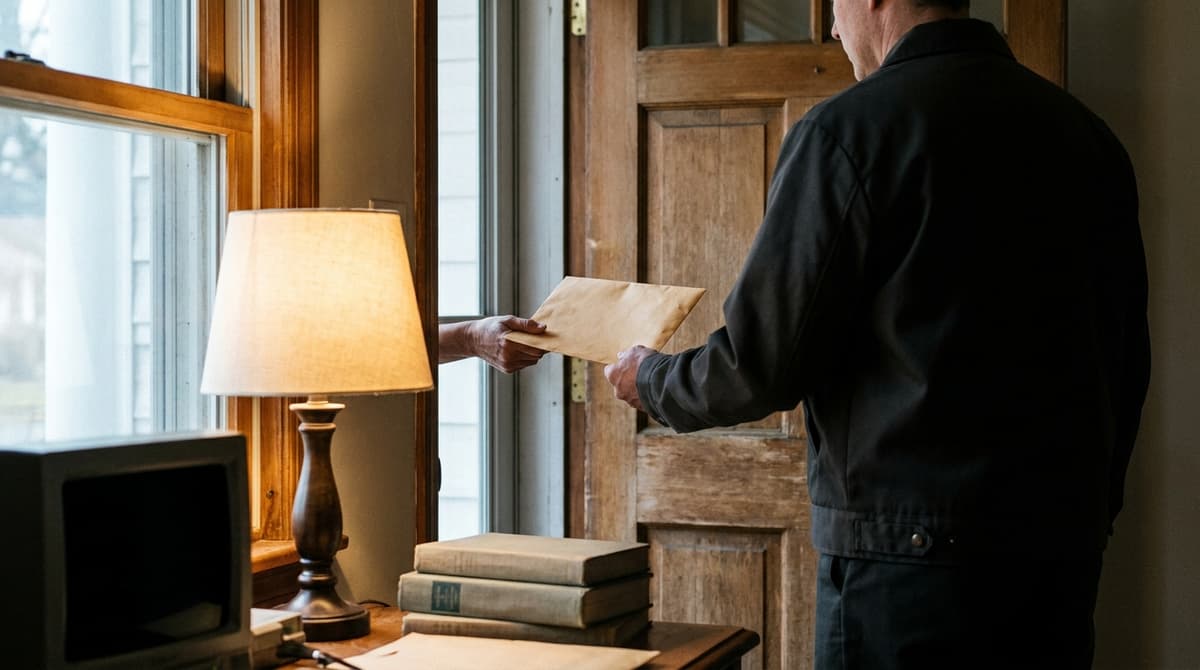
Rule 284 and the court's guide describe three ways to serve the defendant:
- By the circuit clerk, using certified or registered mail, restricted delivery, return receipt requested. This works only for defendants in Illinois unless a local rule says otherwise.
- By the sheriff of the county where the defendant lives.
- By a special process server the court appoints on your motion.
Timing matters. The summons sets an appearance date 40 to 61 days after it is issued (Rule 283), and the case is tried that day unless the court orders otherwise (Rule 286(a)). Under Rule 284(c), "If the receipt shows delivery at least 21 days before the day for appearance, the receipt shall constitute proof of service." The self-help guide warns that clerk mail can fail if the defendant will not sign for the green card. If service fails, find out why, file another Small Claims Summons marked "Alias Summons," and try again.
If you are the defendant
Under Rule 286(a), "If the defendant appears, he need not file an answer unless ordered to do so by the court." The plaintiff's allegations are treated as denied, and you can present any defense at the hearing. You must appear at the time and place on the summons unless the Notice to Defendant says otherwise.
- Jury. Small claims are tried by a judge unless the plaintiff demands a jury when filing or the defendant demands one no later than the date required to appear. The jury is 6 people unless a party asks for 12 (Rule 285).
- Discovery and motions. Depositions, interrogatories and other discovery are not allowed without the court's permission, and motions are limited to those allowed by 735 ILCS 5/2-619 and 2-1001 unless the court grants leave (Rule 287).
- No appearance fee. Since January 1, 2026, the clerk may not charge a defendant a fee for filing an appearance in a small claims case (705 ILCS 105/27.1b, as amended by Public Act 104-120).
- Counterclaims. A defendant who files a counterclaim pays the same filing fee as if it had brought a separate case for that relief, less any appearance fee already paid (705 ILCS 105/27.1b(c)). Ask the clerk how and when to file it. A corporation cannot file a counterclaim without a lawyer (Rule 282(b)).
If you are an individual and the plaintiff asks for a judgment because you did not appear, federal law requires the plaintiff to file an affidavit on whether you are in military service before the court enters it (50 U.S.C. § 3931).
The hearing
A judge hears the case unless a jury was demanded. Under Rule 286(b), the court may hold an informal hearing on its own motion or at either party's request: "At the informal hearing all relevant evidence shall be admissible and the court may relax the rules of procedure and the rules of evidence." The judge can also question witnesses.
Relaxed rules do not mean written statements will do. The self-help guide says: "You cannot use a written statement from the witness instead of having them come in person." Other tips from the court's guide:
- Arrive about 30 minutes early.
- Bring a photo ID and copies of your documents.
- Ask the clerk whether you can appear remotely.
Reconsideration and appeals
The self-help guide sums it up: "you have 30 days to file a Motion for the judge to reconsider the ruling or file an appeal to a higher court."
- Post-judgment motion. In a case without a jury, a motion for rehearing, retrial, modification or vacating the judgment must be filed within 30 days after the judgment is entered (735 ILCS 5/2-1203).
- Notice of appeal. Rule 303(a)(1) says: "The notice of appeal must be filed with the clerk of the circuit court within 30 days after the entry of the final judgment appealed from." If you filed a timely post-judgment motion, the 30 days run from the order deciding the last such motion.
Either party can appeal. Rules 281 to 289 contain no separate appeal rule for small claims, so the general civil appeal rules apply. We did not verify appeal fees or bond requirements; ask the circuit clerk.
Missed the hearing? Vacating a default
If a judgment was entered because you missed court, act quickly. Under 735 ILCS 5/2-1301(e), the court may set aside a default before final judgment, and it "may on motion filed within 30 days after entry thereof set aside any final order or judgment upon any terms and conditions that shall be reasonable." After 30 days, the remaining route is a petition for relief from judgment under 735 ILCS 5/2-1401, which must be filed within 2 years after the judgment and is harder to win; talk to a legal aid office or a lawyer promptly.
Collecting your judgment
Winning a judgment does not guarantee payment. If the defendant does not pay, you use the court's collection procedures.

- Payment plans. Under Rule 288, the court may order the judgment paid by a certain date or in installments, and stay enforcement while the debtor complies. Installments cannot stretch beyond 3 years.
- Citation to discover assets. A citation proceeding (735 ILCS 5/2-1402) requires the debtor to come to court and answer questions about income and property. The court's self-help materials point to the Small Claims Citation forms.
- Wage deduction. Illinois allows a wage deduction order against a debtor's paycheck, limited to the lesser of 15% of gross weekly pay or the amount by which weekly disposable earnings exceed 45 times the federal or Illinois minimum hourly wage, whichever is greater (735 ILCS 5/12-803). That is stricter than the federal cap, which is the lesser of 25% of disposable earnings or the amount by which weekly disposable earnings exceed 30 times the federal minimum wage (15 U.S.C. § 1673(a)). For more on Illinois collection rules, see Illinois debt collection laws or try the wage garnishment calculator.
- Serving collection papers. For judgments of $10,000 or less, collection process may be served by the clerk by mail (Rule 289).
Interest. Under 735 ILCS 5/2-1303, "judgments recovered in any court shall draw interest at the rate of 9% per annum from the date of the judgment until satisfied." The rate is 6% when the debtor is a unit of local government, a school district or another governmental entity. A consumer debt judgment of $25,000 or less against an individual, meaning a debt for personal, family or household purposes, draws 5% instead (735 ILCS 5/2-1303(b)).
How long a judgment lasts. Under 735 ILCS 5/12-108, "no judgment shall be enforced after the expiration of 7 years from the time the same is rendered, except upon the revival of the same by a proceeding provided by Section 2-1601." A petition to revive must be filed no later than 20 years after the judgment (735 ILCS 5/13-218). Different rules apply to consumer debt judgments against individuals: one entered from January 1, 2020 through December 31, 2025 must be revived within 10 years, and one entered on or after January 1, 2026 cannot be revived but can be enforced for 15 years (735 ILCS 5/2-1602(a-10), as amended by Public Act 104-120). When a bank account is frozen to collect a consumer debt judgment entered on or after January 1, 2020, the debtor can receive up to $1,000 from the account right away as an automatic exemption, but that right ends on the return date, and the court can order unspent money turned over if the debtor does not appear then to claim exemptions (735 ILCS 5/12-1001.1).
What is protected. Illinois exempts certain personal property from collection (735 ILCS 5/12-1001); see Illinois debt collection laws for the details. Federal benefits are protected too: Social Security benefits are not subject to "execution, levy, attachment, garnishment, or other legal process" (42 U.S.C. § 407(a)), and VA benefits are exempt from creditors' claims (38 U.S.C. § 5301(a)(1)).
Official forms and self-help
- Illinois approved small claims forms: complaint, summons, letter to sheriff, small claims order and fee waiver.
- How to File and Serve a Small Claims Complaint and Summons (Illinois courts self-help guide).
- Getting Started: Small Claims Complaint.
- Illinois Supreme Court Rules, Article II (Rules 281 to 289).
- Cook County Clerk civil division filing fees (CCG-0603).
Related
- Small claims court by state
- Illinois statute of limitations
- Illinois debt collection laws
- Illinois landlord-tenant laws
- Missouri small claims court
- Indiana small claims court
Disclaimer: This article provides general legal information about small claims in Illinois circuit courts under Illinois Supreme Court Rules 281 to 289 and the Illinois Code of Civil Procedure, verified on 2026-10-06. It is not legal advice and does not create an attorney-client relationship. For help with your situation, contact your circuit clerk or the court's self-help center, a legal aid office, or a lawyer licensed in Illinois.
Last updated: 2026-10-06.
Frequently Asked Questions
What is the small claims limit in Illinois?
$10,000, not counting interest and costs, for a civil action based on tort or contract (Illinois Supreme Court Rule 281). The limit has been $10,000 since January 1, 2006.
Can I sue for more than $10,000 in small claims in Illinois?
No. The court's guide says civil cases seeking more than $10,000 cannot use the small claims forms; they are filed as regular civil cases in the circuit court.
How much does it cost to file small claims in Illinois?
It depends on the county. Cook County's May 21, 2026 schedule lists $287 for claims up to $2,500 and $379 for larger claims, and you can ask to file for free or at reduced cost with the Application for Waiver of Court Fees.
Can a business represent itself in small claims in Illinois?
A corporation suing as the plaintiff needs a lawyer under Rule 282(b). A corporation being sued can appear through an officer, director, manager, department manager or supervisor.
Do I need to file an answer if I am sued in Illinois small claims?
No, unless the court orders one (Rule 286(a)). You must still appear at the time and place on the summons, and you can present any defense at the hearing.
Can my witness send a written statement instead of coming to court?
No. The Illinois courts' self-help guide says you cannot use a written statement from a witness instead of having the witness come in person.
How long do I have to appeal a small claims judgment in Illinois?
30 days after the final judgment, by filing a notice of appeal with the circuit clerk (Rule 303(a)(1)). You can instead ask the judge to reconsider within 30 days (735 ILCS 5/2-1203).
How long is an Illinois small claims judgment good for?
Most judgments can be enforced for 7 years and then must be revived (735 ILCS 5/12-108), and a revival petition must be filed within 20 years (735 ILCS 5/13-218). Consumer debt judgments against individuals follow different time limits under 735 ILCS 5/2-1602(a-10). Most judgments earn 9% interest a year, or 5% for a consumer debt judgment of $25,000 or less against an individual (735 ILCS 5/2-1303).
Updates
Independently fact-checked against the cited primary sources
The Law Behind This Article
This article rests on the statutory provisions below, held in our own legal record and retrieved from the official source. Tap a section to read the operative text.
Illinois Compiled Statutes Chapter 735, Act 5 (Code of Civil Procedure)
§ 2-1303Interest on judgmentIn force
(a) Except as provided in subsection (b), judgments recovered in any court shall draw interest at the rate of 9% per annum from the date of the judgment until satisfied or 6% per annum when the judgment debtor is a unit of local government, as defined in Section 1 of Article VII of the Constitution, a school district, a community college district, or any other governmental entity. When judgment is entered upon any award, report or verdict, interest shall be computed at the above rate, from the time when made or rendered to the time of entering judgment upon the same, and included in the judgment. Interest shall be computed and charged only on the unsatisfied portion of the judgment as it exists from time to time. The judgment debtor may by tender of payment of judgment, costs and interest accrued to the date of tender, stop the further accrual of interest on such judgment notwithstanding the prosecution of an appeal, or other steps to reverse, vacate or modify the judgment.
Official text (excerpt) · last checked 2026-07-29 · Read the full text in our law library · Verify at ilga.gov
§ 12-108Limitation on enforcementIn force
(a) Except as herein provided, no judgment shall be enforced after the expiration of 7 years from the time the same is rendered, except upon the revival of the same by a proceeding provided by Section 2-1601 of this Act; but real estate, levied upon within the 7 years, may be sold to enforce the judgment at any time within one year after the expiration of the 7 years. A judgment recovered in an action for damages for an injury described in Section 13-214.1 may be enforced at any time. Child support judgments, including those arising by operation of law, may be enforced at any time. Consumer debt judgments may be revived or enforced in accordance with subsection (a-10) of Section 2-1602.
Official text (excerpt) · last checked 2026-07-29 · Read the full text in our law library · Verify at ilga.gov
§ 2-1203Motions after judgment in non-jury casesIn force
(a) In all cases tried without a jury, any party may, within 30 days after the entry of the judgment or within any further time the court may allow within the 30 days or any extensions thereof, file a motion for a rehearing, or a retrial, or modification of the judgment or to vacate the judgment or for other relief. (b) Except as provided in subsection (a) of Section 413 of the Illinois Marriage and Dissolution of Marriage Act, a motion filed in apt time stays enforcement of the judgment except that a judgment granting injunctive or declaratory relief shall be stayed only by a court order that follows a separate application that sets forth just cause for staying the enforcement.
Official text (excerpt) · last checked 2026-07-29 · Read the full text in our law library · Verify at ilga.gov
§ 2-1301Judgments - Default - ConfessionIn force
(a) The court shall determine the rights of the parties and grant to any party any affirmative relief to which the party may be entitled on the pleadings and proofs. Judgments shall be in the form required by the nature of the case and by the recovery or relief awarded. More than one judgment may be rendered in the same cause. If relief is granted against a party who upon satisfying the same in whole or in part will be entitled by operation of law to be reimbursed by another party to the action, the court may determine the rights of the parties as between themselves, and may thereafter upon motion and notice in the cause, and upon a showing that satisfaction has been made, render a final judgment against the other party accordingly. (b) A determination in favor of the plaintiff on an issue as to the truth or validity of any defense in abatement shall be that the defendant answer or otherwise plead. (c) Except as otherwise limited by this subsection (c), any person for a debt bona fide due may confess judgment by himself or herself or attorney duly authorized, without process.
Official text (excerpt) · last checked 2026-07-29 · Read the full text in our law library · Verify at ilga.gov
§ 2-1402Citations to discover assetsIn force
(a) A judgment creditor, or his or her successor in interest when that interest is made to appear of record, is entitled to prosecute citations to discover assets for the purposes of examining the judgment debtor or any other person to discover assets or income of the debtor not exempt from the enforcement of the judgment, a deduction order or garnishment, and of compelling the application of non-exempt assets or income discovered toward the payment of the amount due under the judgment. A citation proceeding shall be commenced by the service of a citation issued by the clerk. The procedure for conducting citation proceedings shall be prescribed by rules.
Official text (excerpt) · last checked 2026-07-29 · Read the full text in our law library · Verify at ilga.gov
Search our full record of US law — 2.1 million sections, every state + federal →
Sources and References
- Illinois Supreme Court Rule 281 (definition of small claims)(www.illinoiscourts.gov).gov
- Illinois Supreme Court Rules, Article II index(www.illinoiscourts.gov).gov
- Illinois Courts, Getting Started: Small Claims Complaint(courts.illinois.gov).gov
- Illinois Supreme Court Rule 282 (corporations in small claims)(www.illinoiscourts.gov).gov
- Illinois Courts, How to File and Serve a Small Claims Complaint and Summons(www.illinoiscourts.gov).gov
- Cook County Clerk of the Circuit Court, Civil Division Filing Fees (CCG-0603)(services.cookcountyclerkofcourt.org).gov
- Illinois Supreme Court Rule 284 (service by mail)(www.illinoiscourts.gov).gov
- Illinois Supreme Court Rule 285 (jury demand)(www.illinoiscourts.gov).gov
- 735 ILCS 5/5-105 (waiver of court fees)(www.ilga.gov).gov
- Illinois Courts, Approved Small Claims Forms(www.illinoiscourts.gov).gov
- Illinois Supreme Court Rule 286 (appearance, answer and informal hearing)(www.illinoiscourts.gov).gov
- 50 U.S.C. § 3931, Servicemembers Civil Relief Act, protection against default judgments(www.govinfo.gov).gov
- Illinois Supreme Court Rule 303 (notice of appeal)(www.illinoiscourts.gov).gov
- 735 ILCS 5/2-1301 (default judgments and setting them aside)(www.ilga.gov).gov
- 735 ILCS 5/2-1303 (interest on judgments)(www.ilga.gov).gov
- 15 U.S.C. § 1673, Restriction on garnishment(www.govinfo.gov).gov
- 735 ILCS 5/12-108 (limitation on enforcement of judgments)(www.ilga.gov).gov
- 42 U.S.C. § 407, Social Security benefits protected from legal process(www.govinfo.gov).gov
- 38 U.S.C. § 5301, exempt status of VA benefits(www.govinfo.gov).gov
- 735 ILCS 5/12-803 (wages subject to collection)(www.ilga.gov).gov
- 705 ILCS 105/27.1b (circuit court clerk fees)(www.ilga.gov).gov
- 735 ILCS 5/2-1602 (revival of judgment)(www.ilga.gov).gov
- 735 ILCS 5/12-1001.1 (automatic exemption)(www.ilga.gov).gov
- 735 ILCS 5/2-1401 (relief from judgments)(www.ilga.gov).gov
- Illinois Public Act 104-120 (effective January 1, 2026)(www.ilga.gov).gov
- Illinois Public Act 104-598 (effective January 1, 2027)(www.ilga.gov).gov
- Illinois Supreme Court Rule 283 (summons in small claims)(www.illinoiscourts.gov).gov