Oregon Traffic Camera Tickets: Real Points, Real Consequences
Independently fact-checked against primary sources (last audited August 12, 2026). · 6 primary sources cited on this page. How we verify our legal content

Oregon treats a red light or speed camera ticket as a real traffic citation, not a watered-down civil fine. If a camera in Portland, Beaverton, or a highway work zone catches you running a red light or speeding, the ticket carries the same penalties and the same consequences as if an officer had pulled you over. That puts Oregon in a small minority of states where the popular idea that camera tickets "don't really count" is flatly wrong.
How Oregon's Camera Ticket Laws Work
Oregon's photo enforcement framework sits entirely in ORS chapter 810. Photo red light cameras are authorized by ORS 810.434, which lets any city operate cameras that photograph drivers who disobey a traffic control device or exceed the speed limit by 11 miles per hour or more. Citations from those cameras issue under ORS 810.436 for running the light and under ORS 810.437 for speeding. Photo radar is a separate program, authorized by ORS 810.438, with its citations issued under ORS 810.444. Both are opt-in programs: a city decides on its own whether to install cameras, and it pays for the program itself. There is no statewide list of approved cities in the current statute; the older version of the law that named specific cities has been replaced by general authorization language. The statutory source notes show the citation sections amended by 2022 c.64, the photo radar operating section by 2023 c.33, and the photo radar citation section (ORS 810.444) by 2024 c.82.
Counties are not part of this authorization. A separate work-zone provision, ORS 810.441 and 810.442, lets the Oregon Department of Transportation, a city already authorized to operate photo radar, or the Oregon State Police use photo radar in active work zones on a state highway, but only where workers are physically present or the roadway configuration has been temporarily altered for construction, with the unit operated by a uniformed officer out of a marked police vehicle and a speed display required within 150 feet.
Why an Oregon Camera Ticket Is a Real Ticket, Not a Civil Fine
This is the fact that separates Oregon from most of the country. In most states with camera enforcement, the ticket goes to the registered owner as a civil penalty that is explicitly not a conviction and does not touch the driving record. Oregon does the opposite. ORS 810.436(8) states it directly: «the penalties for and all consequences of a violation of ORS 811.265 initiated by the use of a camera installed as provided in this section and ORS 810.434 are the same as for a violation initiated by any other means.»
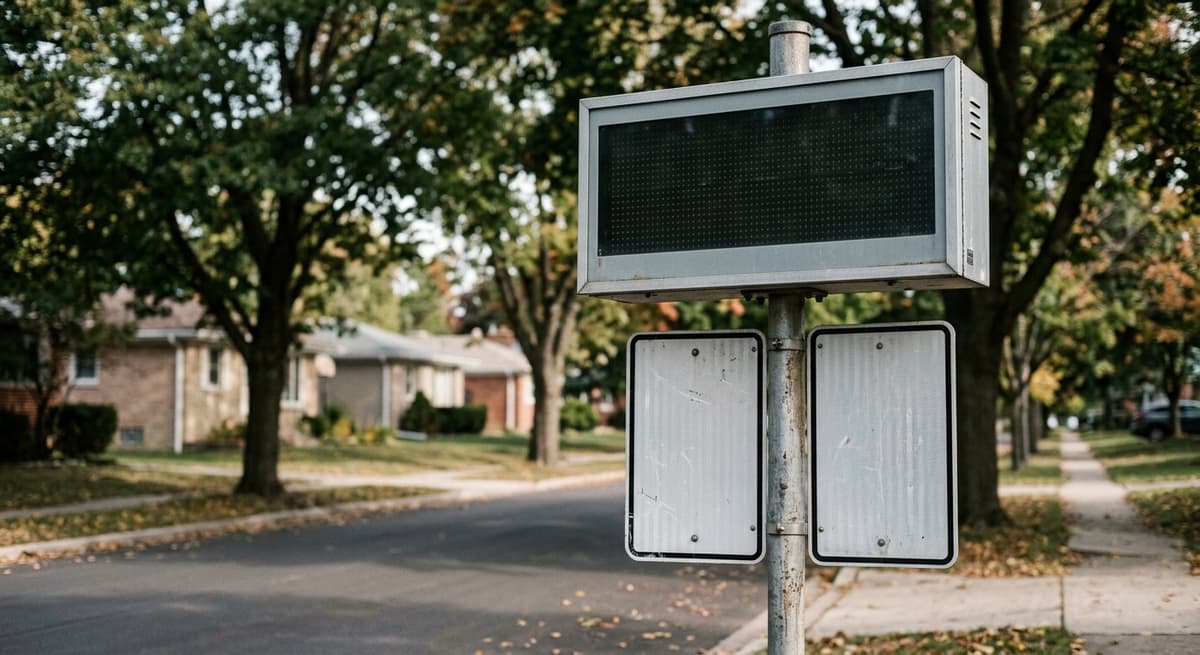
In practice, that means a photo-enforced red light or speeding violation in Oregon is prosecuted like any other traffic citation, and a conviction goes on your driving record the same way an officer-issued ticket would. Oregon does not run a numeric point-deduction system the way some states do, but convictions and preventable accidents feed the Department of Transportation's Adult Driver Improvement Program (ORS 809.480; OAR 735-072-0027). Under that program, three convictions or preventable accidents within 24 months trigger a 30-day driving restriction, and five within 24 months trigger a 30-day suspension; a 30-day suspension is the maximum consequence under the Adult program, with no escalation beyond that. (A separate, harsher track, the Provisional Driver Improvement Program under OAR 735-072-0023, applies only to drivers age 14 to 17: two offenses trigger a 90-day restriction and three or more trigger a 6-month suspension, but that program does not apply to the adult, registered-owner camera tickets this page covers.) A camera-issued conviction counts toward the Adult program's totals exactly like a conviction from a traffic stop, and insurers treat it as an ordinary moving violation on your record.
This makes Oregon, along with Arizona and California's red light program, one of the clearest examples nationally of a state where "it's just a camera ticket" is dangerous advice.
Where and How Cameras Can Be Used
Photo radar has real geographic limits. It can only be used in residential areas, school zones, or areas where the city has made a documented traffic-safety finding, and it is barred on controlled-access highways such as freeways (ORS 810.438(2)). Where photo radar is used, a "Traffic Laws Photo Enforced" sign must be posted 100 to 400 yards ahead of the photo radar unit (ORS 810.438(2)(d)).
Citations from a city's photo red light cameras must be mailed to the registered owner within 10 business days of the alleged violation, whether the citation is for running the light (ORS 810.436(1)(d)) or for speeding (ORS 810.437(1)(c)). Work-zone photo radar citations carry a tighter six-business-day window (ORS 810.442(1)(a)(D)). The ordinary photo radar sections, ORS 810.438 and 810.444, set no mailing deadline at all, so on a photo radar ticket the 30-day window to respond is the deadline that matters. Beyond those deadlines and the signage rule, the exact operating hours, funding source, and hardware for any given camera come from the individual city's program, not the statute itself.
If You're the Registered Owner But Weren't Driving
Oregon's citation goes to the registered owner under a rebuttable presumption that the owner was driving, but that presumption can be overcome. Within 30 days of the notice, an owner can submit a Certificate of Innocence, a sworn statement that they were not the driver, along with a photocopy of their driver's license, to have the citation dismissed. A business, government agency, or rental company can instead file a sworn statement identifying the employee, renter, or lessee who actually had the vehicle. On a photo red light or work-zone camera citation that instrument is called a certificate of nonliability (ORS 810.436(7)(b), 810.437(6)(b), 810.442(3)(b)); on a photo radar citation it is an affidavit of nonliability (ORS 810.444(3)(b)). This is the mechanism that shifts liability from the vehicle's owner to the actual driver.
What Happens If You Don't Pay or Respond
Because an Oregon camera ticket is processed as an ordinary traffic citation rather than a special administrative civil penalty, ignoring it does not carry the milder consequences that apply in states with an owner-liability civil model. It moves through the regular circuit or municipal court process for a traffic citation, which can include a default judgment or a failure-to-appear consequence if you never respond, the same as any other Oregon traffic ticket. The exact current sanctions for failing to appear on a traffic violation are set by Oregon's general violations statutes rather than by anything specific to camera tickets, so treat a camera citation with the same seriousness you would give a ticket from an officer, not as a bill you can set aside.

School Bus Stop-Arm Cameras Are a Separate Law
This page covers red light and speed enforcement cameras only. School bus stop-arm cameras, where a district or vendor uses them, operate under separate legal authority and are not addressed here.
Information last verified on 2026-08-12. This article has not yet been reviewed by a licensed lawyer.

Related Resources
- Traffic Camera Ticket Laws by State
- Do You Have to Pay a Camera Ticket?
- How to Fight a Camera Ticket
- Can You Get a Speeding Ticket Without Being Pulled Over?
- Automated License Plate Reader Laws
- Oregon Police Bodycam Laws
Last updated: 2026-08-12.
More Oregon Laws
Frequently Asked Questions
Does an Oregon camera ticket go on my driving record?
Yes. Unlike most states, Oregon treats photo red light and photo radar violations as real driver-liability violations under ORS 810.436(8), so a conviction carries the same consequences as an officer-issued ticket, including a mark on your driving record.
Can I ignore an Oregon camera ticket like people say you can in other states?
No. That advice applies, narrowly, to a small number of other states' pre-service administrative notices. In Oregon, a photo enforcement citation is processed through the regular traffic court system, and ignoring it can lead to a default judgment or failure-to-appear consequences like any other traffic ticket.
What if I wasn't driving my car when an Oregon traffic camera caught the violation?
You can submit a Certificate of Innocence within 30 days, a sworn statement that you were not driving, along with a copy of your license. Businesses and rental companies can instead file a certificate of nonliability, or an affidavit of nonliability on a photo radar citation, naming the actual driver.
Are traffic cameras used statewide in Oregon?
Cameras are authorized statewide by statute, but each city decides for itself whether to run a program, funds it, and chooses where to place cameras. Counties cannot run their own photo enforcement programs outside the separate work-zone authority.
Can Oregon use speed cameras on freeways?
No. Photo radar is limited to residential areas, school zones, and areas with a documented city safety finding, and it is expressly barred on controlled-access highways.
Will an Oregon camera ticket raise my insurance?
It can. Because the violation is prosecuted like an ordinary traffic citation and can go on your driving record, insurers can treat a camera-ticket conviction the same as any other moving violation conviction.
What is the Adult Driver Improvement Program and how does a camera ticket affect it?
It's Oregon DMV's escalating sanction program for repeat violations and preventable accidents. Three qualifying events in 24 months trigger a 30-day driving restriction, and five trigger a 30-day suspension, which is the maximum consequence under the Adult program. A camera-ticket conviction counts toward these totals the same as any other conviction. A harsher 90-day-restriction/6-month-suspension track exists only for drivers age 14 to 17 under a separate Provisional program, not for adult camera-ticket recipients.
Updates
Corrected which Oregon statutes authorize photo red light cameras versus photo radar, clarified that the 10-business-day mailing deadline applies to photo red light citations rather than photo radar, distinguished the certificate of nonliability from the photo radar affidavit of nonliability, updated the amendment history through 2024, and corrected who may operate photo radar in a highway work zone.
Independently fact-checked against the cited primary sources
The Law Behind This Article
This article rests on the statutory provisions below, held in our own legal record and retrieved from the official source. Tap a section to read the operative text.
Oregon Revised Statutes, Chapter 810: Road Authorities; Courts; Police; Other Enforcement Officials
§ 810.436Citations based on photo red light; response to citationIn force
(1) Notwithstanding any other provision of law, if a city chooses to operate a camera that complies with this section and ORS 810.434, a citation for violation of ORS 811.265 may be issued on the basis of photographs from a camera taken without the presence of a police officer if the following conditions are met: (a) Signs are posted, so far as is practicable, on all major routes entering the jurisdiction indicating that compliance with traffic control devices is enforced through cameras. (b) For each traffic control device at which a camera is installed, signs indicating that a camera may be in operation at the device are posted before the device at a location near the device. (c) If the traffic control device is a traffic light, the yellow light shows for at least the length of time recommended by the standard set by the Institute of Transportation Engineers. (d) The citation is mailed to the registered owner of the vehicle, or to the driver if identifiable, within 10 business days of the alleged violation. (e) The registered owner is given 30 days from the date the citation is mailed to respond to the citation.
Official text (excerpt) · last checked 2026-09-16 · Read the full text in our law library · Verify at oregonlegislature.gov
Cited in 1 court opinions in our collectionLatest citing opinion in our collection: 2023
Opinions citing this section in our collection:
- State v. Coy (Court of Appeals of Oregon 2023, 328 Or. App. 216)“…was issued the citation based on a photo red light camera, ORS 810.436, contends that the trial court erred in…”
Identified automatically from the court opinions citing this section — not a ranking of which case controls.
§ 810.437Citations for speeding based on photo red light; response to citationIn force
(1) Notwithstanding any other provision of law, if a city chooses to operate cameras that comply with this section and ORS 810.434, a citation for speeding may be issued on the basis of photographs from a camera and other technology, including but not limited to sensors, that measure the speed of a vehicle without the presence of a police officer if the following conditions are met: (a) Signs are posted, so far as is practicable, on all major routes entering the jurisdiction indicating that compliance with traffic laws is enforced through cameras and other technology. (b) For each traffic control device at which a camera is installed, signs indicating that a camera system may be in operation at the traffic control device are posted before the device at a location near the device. (c) The citation is mailed to the registered owner of the vehicle, or to the driver if identifiable, within 10 business days of the alleged violation. (d) The registered owner is given 30 days from the date the citation is delivered to respond to the citation.
Official text (excerpt) · last checked 2026-07-29 · Read the full text in our law library · Verify at oregonlegislature.gov
§ 810.442Citations based on photo radar in highway work zones; response to citationIn force
(1) Notwithstanding any other provision of law, when a jurisdiction or the Oregon State Police uses photo radar in a highway work zone: (a) A citation for speeding may be issued on the basis of photo radar if the following conditions are met: (A) The photo radar unit is operated by a uniformed police officer. (B) The photo radar unit is operated out of a marked police vehicle. (C) An indication of the actual speed of the vehicle is displayed within 150 feet of the location of the photo radar unit. (D) The citation is mailed to the registered owner of the vehicle within six business days of the alleged violation. (E) The registered owner is given 30 days from the date the citation is mailed to respond to the citation.
Official text (excerpt) · last checked 2026-07-29 · Read the full text in our law library · Verify at oregonlegislature.gov
Cited in 1 court opinions in our collectionLatest citing opinion in our collection: 2016
Opinions citing this section in our collection:
- State v. Dickas (Court of Appeals of Oregon 2016, 283 Or. App. 59)“…ghway work zone in the City of Portland. See ORS 810.441; ORS 810.442. 1 On appeal, defendant asserts that t…”
Identified automatically from the court opinions citing this section — not a ranking of which case controls.
§ 810.444Citations based on photo radar; response to citationIn force
(1) Notwithstanding any other provision of law, in a city operating a photo radar system under ORS 810.438: (a) A citation for speeding may be issued on the basis of photo radar if: (A) A sign that provides drivers with information about the driver’s current rate of speed is posted between 100 and 400 yards before the location of each photo radar unit; (B) A police officer or a duly authorized traffic enforcement agent has reviewed the photographic evidence of the conduct; and (C) A police officer signs and issues the citation, except that a citation issued by the City of Portland may be signed and issued by a duly authorized traffic enforcement agent or a police officer. (b) A rebuttable presumption exists that the registered owner of the vehicle was the driver of the vehicle when the citation is issued and delivered as provided in subsection (2) of this section. (c) An individual issued a citation under this subsection may respond to the citation by submitting a certificate of innocence under subsection (3)(a) of this section or may make any other response allowed by law.
Official text (excerpt) · last checked 2026-07-29 · Read the full text in our law library · Verify at oregonlegislature.gov
Search our full record of US law — 2.1 million sections, every state + federal →
Sources and References
- ORS 810.436, Photo red light photo radar; installation of camera; certificate of nonliability (owner-driver consequences clause, subsection 8)(oregonlegislature.gov).gov
- ORS 810.437, Photo radar for speeding(oregonlegislature.gov).gov
- ORS 810.438, Operation of photo radar; zones; signage(oregonlegislature.gov).gov
- ORS 810.442, Photo radar in work zones(oregonlegislature.gov).gov
- ORS 810.444, Response to notice of citation; certificate of innocence(oregonlegislature.gov).gov
- Oregon DMV, Suspension/Revocation Guide (Adult Driver Improvement Program escalation, form 7484)(oregon.gov).gov