Colorado Traffic Camera Tickets: The Most Protective Nonpayment Rules in the Country
Independently fact-checked against primary sources (last audited August 12, 2026). · 2 primary sources cited on this page. How we verify our legal content
Colorado's camera-ticket law reads like it was written to answer the worst fears people have about these programs. No points. No DMV record. No booting your car over an unpaid ticket. No collections action unless you were personally served. If you're going to get a civil camera ticket anywhere in this cluster, Colorado is one of the more forgiving places for it to happen, though forgiving does not mean consequence-free. A 2026 rewrite, SB 26-152, took effect on August 12, 2026 and changed the penalty structure and the owner-liability rules, so older write-ups of this statute are now out of date.
What Colorado's Camera Law Actually Covers
CRS 42-4-110.5 lets the state, counties, cities and counties, and municipalities use "automated vehicle identification systems" for speed, traffic signals and signs, moving violations in a school zone or along a safe route to school, the overtaking of a stopped school bus, bus lanes, and bicycle lanes. It is a genuinely statewide framework rather than a patchwork of city-by-city local acts, which sets Colorado apart from states like Alabama or Connecticut. The definition expressly excludes automated license plate reader systems, so ALPR cameras are not governed by this section.
Where Speed Cameras Are Allowed to Operate
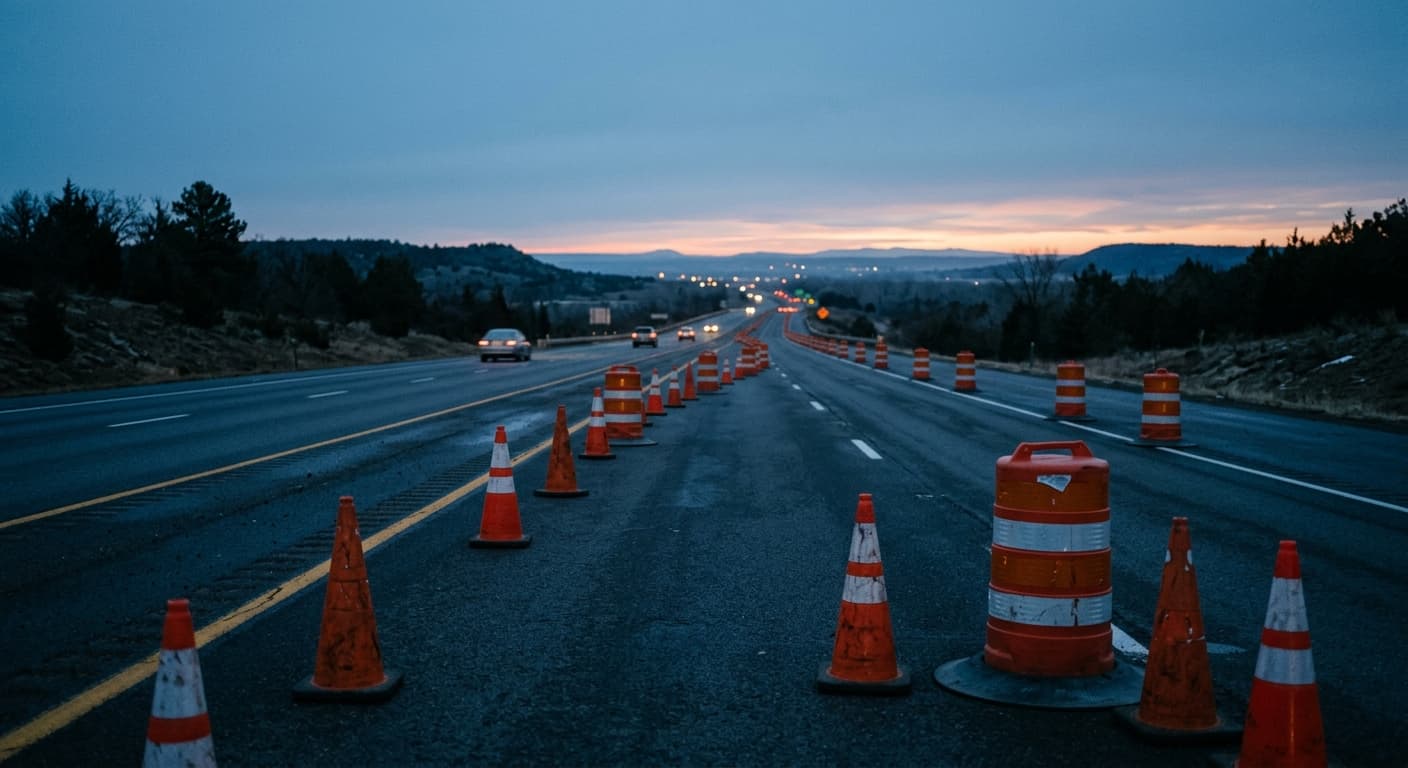
The law limits where a speed camera can actually be used: school zones, residential neighborhoods posted at 35 mph or under, designated maintenance, repair, or construction zones, streets bordering municipal parks, or a formally designated "automated vehicle identification corridor." A corridor requires an ordinance or a resolution of the governing body, quantitative data showing incidents of crashes, speeding, or reckless driving on that street within the past five years (community complaints may supplement that data, not replace it), coordination with the Colorado Department of Transportation and notice to the Colorado State Patrol, and permanent signage before the corridor and before each camera inside it.
Those location limits do not reach every camera. Red light cameras, school bus stop-arm cameras, and a moving violation along a safe route to school are all exempt from them. The safe-route-to-school category arrived in 2026 with HB 26-1318, the Liam Stewart School Zone Act, which also added a statutory definition of a safe route to school. Counties and municipalities are barred from operating cameras on interstates, while the state itself may use a camera system on any portion of a state highway, including an interstate, an authority that goes beyond what counties and municipalities have.
Red light camera signage must run 200 to 500 feet in advance, and speed camera signage must be posted at least 300 feet before the enforcement area. Before a jurisdiction turns on a new camera system that is not replacing an existing one, it must announce the system on its website and on its social media accounts, if it has any, for at least 30 days; post a sign announcing the coming system at each install location for at least 30 days, in lettering at least four inches high for capital letters; and issue only warnings for the first 30 days, in writing. A mobile system that is simply relocated within the same designated corridor is exempt from those steps. A jurisdiction operating a corridor must also publish an annual report on its website disclosing citations issued and revenue generated.
There is no longer a speed ceiling that pushes a violation out of the camera system. Until August 12, 2026, subsection (1.5) excluded violations of 25 mph or more over the limit from automated enforcement; SB 26-152 repealed that subsection and set a penalty for those violations instead, capped at one hundred twenty dollars. A separate Colorado State Patrol and CDOT work-zone camera program that once sat in subsection (1.7) was repealed earlier, by SB24-195 in 2024.
One 2026 addition works in a driver's favor. If a variable speed limit is in effect, or a speed limit has been temporarily lowered because of hazardous weather or other traffic conditions, a camera citation may issue only if the speed exceeded the regular maximum posted limit for that location, not the lowered one. The exception is a temporary maintenance, repair, or construction zone designated under CRS 42-4-614, where the lowered limit is camera-enforceable.
Colorado's No-Points, No-Record Rule
The core protection is direct: "The department has no authority to assess any points against a license... upon entry of a conviction or judgment for a violation... detected through the use of an automated vehicle identification system. The department shall not keep any record of such violation."
Penalties are tiered rather than flat. Outside a school or work zone, a speeding violation of less than 6 mph over the limit draws a warning and no penalty; a first violation of at least 6 but less than 10 mph over must draw a warning with no penalty; a repeat violation in that 6-to-10 band, or any violation of at least 10 but less than 25 mph over, is capped at forty dollars; and 25 mph or more over is capped at one hundred twenty dollars. A red light violation is capped at seventy-five dollars. Those figures step up on January 1, 2035, to fifty dollars, one hundred fifty dollars, and ninety-five dollars respectively.
Inside a school zone (CRS 42-4-615) or a designated maintenance, repair, or construction zone (CRS 42-4-614) the math changes three ways. A violation of less than 6 mph over, warning-only elsewhere, can carry up to forty dollars. A first violation of 6 to under 10 mph over, also warning-only elsewhere, can carry up to forty dollars through 2034 and fifty dollars after that. And the forty dollar cap on the ordinary speeding tier is doubled. The doubling rule reaches only that ordinary tier, not the 25-mph-and-over tier, which stays at one hundred twenty dollars. The red light cap behaves differently again: in those zones subsection (4.5)(a) does not apply at all, so confirm the charged amount for a work-zone or school-zone red light ticket with the issuing court.
What Happens If You Don't Pay: Colorado's Protective Rules
Colorado's nonpayment framework is the most protective in this batch of eight states, and every piece of it traces to the statute's own text. A notice of violation goes out by first-class mail within 30 days for an in-state registration, or 60 days for an out-of-state one, and the recipient gets at least 45 days to respond. From there, the process moves to a civil penalty assessment notice, then a final order of liability, which can be appealed de novo to a county or municipal court (including a defense that the mailed notice was never actually delivered).
Two protections stand out. First, Colorado law bars immobilizing (booting) a vehicle for unpaid camera penalties, full stop. Second, a jurisdiction "shall not initiate or pursue a collection action... unless the registered owner is personally served the notice of violation or the final order of liability." A mailed-only notice that was never personally served cannot be turned into a collections case. The statute does not contain a registration-hold mechanism either, unlike states such as Florida, Washington, or Delaware.
Owner vs. Driver
Colorado's camera penalty attaches to the vehicle's registered owner, and since August 12, 2026 the statute spells out the only ways off the hook. The registered owner is responsible for the civil penalty unless the owner establishes one of four things: that the vehicle was sold, leased, or transferred before the date and time of the violation, shown by a bill of sale or similar documentation; that the vehicle or its license plate was stolen before the violation, shown by a copy of the police report; that law enforcement issued a separate traffic citation to the owner or driver for the same violation; or, through a representative of the estate or a family member, that the registered owner had died before the violation.
The mechanism is an affidavit that includes the civil penalty number and reaches the agency that issued the notice within thirty days after the date the notice of violation was issued. An owner whose leased vehicle was registered in the lessee's name at the time of the violation does not have to submit one. If the affidavit and its supporting documentation are sufficient, the agency must dismiss the notice of violation and provide proof of the dismissal. Submitting a false affidavit is a class 2 misdemeanor traffic offense.
The older version of this statute barred a jurisdiction from requiring the owner to name the driver and instead let the owner submit evidence that the owner personally was not driving. SB 26-152 replaced that scheme wholesale, and it did not carry the bar on requiring driver identification forward. The four exceptions above are the route now, and none of them is a general "someone else was driving" defense: being able to prove you personally were not behind the wheel no longer gets the penalty dismissed.
SB24-195 (2024) and SB 26-152 (2026): What Actually Changed
Two amendments did most of the work on the current text, and both are worth reading in the enrolled act rather than through a secondary summary.
SB24-195, effective June 5, 2024, repealed former subsection (1.7), the narrow Colorado State Patrol and CDOT work-zone camera program described above, along with old subsection (6). It added subsection (2.5), giving the state itself authority to run camera systems on any portion of a state highway rather than only interstates. It added the corridor prerequisites now sitting at (2)(g)(I.3) through (I.7), the rental and leasing company liability provision at (2)(a)(X), and subsection (8), which directs revenue collected by the state from camera penalties to the state highway fund for road safety projects. That revenue provision reaches state-collected revenue only; it does not dictate what a county or municipality does with its own camera revenue.
SB 26-152 became law on June 2, 2026 and took effect on August 12, 2026, applying to conduct occurring on or after that date. It is the bigger rewrite. It repealed subsection (1.5), which had kept 25-mph-and-over violations out of automated enforcement, and replaced the flat fine structure with the tiers described above. It replaced the owner-liability subsection (2)(h) with the four-exception affidavit scheme. It rewrote the new-system notice requirements in (2)(e), added the variable-speed-limit protection at (2)(i), excluded automated license plate reader systems from the definition, and made corridor reporting expressly annual. HB 26-1318, the Liam Stewart School Zone Act, took effect the same day and brought moving violations along a designated safe route to school inside the statute.
How to Contest a Colorado Camera Ticket
A civil penalty assessment notice escalates into a final order of liability, and that final order is appealable de novo to the county or municipal court with jurisdiction, meaning the court hears the matter fresh rather than simply reviewing the agency's decision. A defense that the mailed notice was never actually delivered is available at that stage. If one of the four ownership exceptions applies, the faster route is the affidavit described above, which runs on its own thirty-day clock from the issuance date of the notice of violation rather than the longer hearing deadline. Because Colorado's process is built around mailed notices with defined response windows (at least 45 days to respond to the initial notice), missing a deadline through simple oversight is a real risk; keeping the mailing address on file with the DMV current is the simplest way to avoid an unanswered notice turning into a default final order.

Rental Cars and Out-of-State Plates
A rental or leasing company does not escape a Colorado camera citation by pointing at the renter. The statute provides that a registered owner engaged in the business of leasing or renting motor vehicles remains liable for payment of the civil penalty even if that owner was not driving, and "may obtain payment from the lessor or renter of the motor vehicle" and forward it to the issuing jurisdiction. For out-of-state plates, Colorado's camera programs identify registered owners through routine DMV record lookups, a use federal privacy law permits for government agencies performing official functions, so an out-of-state registration does not exempt a driver from the program's reach, though Colorado's personal-service requirement for collections (described above) still applies regardless of where the vehicle is registered.
How Colorado Compares to Most States
Colorado's combination of protections, no points, no record, no booting, and no collections without personal service, makes it one of the most reader-protective states in this entire cluster. That said, "protective" describes the collections and license-consequence side of the law, not the underlying obligation to pay: a validly issued Colorado camera fine is still a real debt once a final order of liability is entered, and the statute's restraint on how aggressively that debt can be pursued is not the same thing as the fine being optional.
School Bus Stop-Arm Cameras Are Part of the Same Colorado Statute
Colorado's school-bus stop-arm camera program is not a separate legal track. It lives in subsection (4.6) of CRS 42-4-110.5 itself, added by HB 25-1230 effective May 24, 2025, and the statute's definition of an automated vehicle identification system was amended at the same time to include stop-arm systems. With the approval of a school district's board of education, the state, a county, a city and county, the district itself, or a municipality may mount a camera system on school buses to detect a driver overtaking a stopped bus with actuated visual signal lights, in violation of CRS 42-4-1903 (1)(a).
The penalty is far steeper than the speed and red light tiers: a maximum civil penalty of three hundred dollars including surcharges and fees, rising to three hundred seventy-five dollars on January 1, 2035. Where the photograph carries an electronic indicator that the bus's signal lights were actuated, there is a rebuttable presumption that the lights were on and operational and that the bus had stopped to receive or discharge school children. The advance-signage rules in subsection (2)(d) do not apply to stop-arm systems, and neither do the location limits in subsection (2)(g).

Information last verified on 2026-09-22. This article explains how the civil and legal process works in each state; it is not legal advice, and how a specific citation plays out depends on the facts of that case.
Related Resources
- Traffic Camera Ticket Laws by State
- Do You Have to Pay a Camera Ticket?
- How to Fight a Camera Ticket
- Can You Get a Speeding Ticket Without Being Pulled Over?
Last updated: 2026-09-22.
More Colorado Laws
Frequently Asked Questions
Will a Colorado camera ticket put points on my license?
No. Colorado law explicitly bars the state from assessing points or keeping any driving record for a camera-detected violation.
Can Colorado boot my car over an unpaid camera ticket?
No. Colorado law explicitly bars immobilizing a vehicle to enforce an unpaid camera penalty.
Can a Colorado camera ticket go to collections?
Only if you were personally served the notice of violation or the final order of liability. A jurisdiction cannot pursue collections based on a mailed-only notice.
How much is a Colorado speed camera ticket?
It depends on how far over the limit you were. Outside a school or work zone, less than 6 mph over draws a warning, a first violation of 6 to under 10 mph over draws a warning, a repeat in that band or any violation of 10 to under 25 mph over is capped at forty dollars, and 25 mph or more over is capped at one hundred twenty dollars. A red light violation is capped at seventy-five dollars. In a school zone or a designated work zone the ordinary speeding maximum is doubled, a forty dollar penalty can attach even to a violation that would be warning-only elsewhere, and the red light cap does not apply at all, so check the charged amount with the issuing court.
Where can Colorado use speed cameras?
Only in school zones, residential streets posted 35 mph or under, designated maintenance, repair, or construction zones, streets bordering municipal parks, or a formally designated corridor backed by crash or speeding data from the past five years. Those location limits do not apply to red light cameras, school bus stop-arm cameras, or a moving violation along a designated safe route to school. Counties and municipalities cannot use cameras on interstates; only the state can.
Do I have to tell Colorado who was driving my car?
The statute no longer answers that question either way. The old provision barring a jurisdiction from requiring a registered owner to identify the driver was replaced effective August 12, 2026, and nothing took its place. What matters now is that the registered owner pays unless the owner establishes one of four statutory exceptions: the vehicle was sold, leased, or transferred before the violation, the vehicle or plate was stolen, law enforcement issued a separate citation for the same violation, or the owner had died before the violation. You establish an exception by affidavit filed within thirty days after the notice of violation is issued, and a false affidavit is a class 2 misdemeanor traffic offense. Simply showing that someone else was driving is not one of the exceptions.
Can a Colorado camera ticket me for a temporarily lowered speed limit?
Generally no. If a variable speed limit is in effect or a limit is temporarily lowered for hazardous weather or traffic conditions, a camera citation may issue only if your speed exceeded the regular posted maximum for that location. The exception is a designated maintenance, repair, or construction zone, where the lowered limit is camera-enforceable.
Updates
Updated for SB 26-152 and HB 26-1318, both effective August 12, 2026: camera speeding penalties are now tiered and a violation of 25 mph or more over is no longer excluded from camera enforcement, the school-zone and work-zone rule doubles the speeding maximum rather than removing the cap, registered-owner liability now turns on four statutory exceptions claimed by affidavit within thirty days, and school bus stop-arm cameras are part of this same statute rather than a separate law.
Independently fact-checked against the cited primary sources
The Law Behind This Article
This article rests on the statutory provisions below, held in our own legal record and retrieved from the official source. Tap a section to read the operative text.
Colorado Revised Statutes, Title 42: Vehicles and Traffic
§ 42-4-110.5Automated vehicle identification systems - school buses - exceptions to liability - penalty - contracting - limits on use of photographs and video - rules - legislative declaration - definitionsIn forcecited in 3 of our articles
(1) The general assembly hereby finds and declares that the enforcement of traffic laws through the use of automated vehicle identification systems under this section is a matter of statewide concern and is an area in which uniform state standards are necessary. (1.1) As used in this section, unless the context otherwise requires: (a) (I) Automated vehicle identification system means a system whereby: (A) A machine is used to automatically detect a violation of a traffic regulation and simultaneously record a photograph of the vehicle and the license plate of the vehicle; and (B) A notice of violation or civil penalty assessment notice may be issued to the registered owner of the motor vehicle. (II) Automated vehicle identification system includes a system used to detect a violation of part 11 of this article 4 or a local speed ordinance; a system used to detect violations of traffic restrictions imposed by traffic signals or traffic signs; a system used to detect the overtaking of a stopped school bus with actuated visual signal lights in violation of section 42-4-1903 (1)(a); and a system used to detect violations of bus lane or bicycle lane restrictions.
Official text (excerpt) · last checked 2026-09-14 · Read the full text in our law library · Verify at olls.info
Also relied on in: Do You Have to Pay a Camera Ticket? What Happens If You Don't, How to Fight a Camera Ticket: Real Defenses by State
Search our full record of US law — 2.1 million sections, every state + federal →
Sources and References
- SB23-200 (2023), enrolled act rewriting CRS 42-4-110.5(leg.colorado.gov).gov
- SB24-195 (2024), enrolled act amending CRS 42-4-110.5 (repeals (1.7) and (6); adds (2.5), (1.1), (2)(a)(X), (2)(g)(I.3)-(I.7), and (8))(leg.colorado.gov).gov
- Colorado Revised Statutes 2026, Title 42, CRS 42-4-110.5 (automated vehicle identification systems), Office of Legislative Legal Services(olls.info)
- SB26-152 (2026), Changes Automated Vehicle Identification System Usage, became law June 2, 2026, effective August 12, 2026(leg.colorado.gov)
- HB26-1318 (2026), Traffic Safety Near Schools (Liam Stewart School Zone Act), signed May 29, 2026, effective August 12, 2026(leg.colorado.gov)
- HB25-1230 (2025), Changes Violation Driver Overtaking School Bus, signed May 24, 2025, adding CRS 42-4-110.5 (4.6) on school bus stop-arm cameras(leg.colorado.gov)