
Michigan
Michigan Small Claims Court: $7,000 Limit, Fees and How to File
Independently fact-checked against primary sources (last audited October 7, 2026). · 30 primary sources cited on this page. How we verify our legal content

In Michigan, you can sue for up to $7,000 in small claims. The small claims division of the district court hears these cases, and MCL 600.8401 sets the cap: "Beginning January 1, 2024, $7,000.00."
The limit is the same for every plaintiff and every kind of claim the division can hear. Michigan's small claims rules are unusual in two ways you should know before you file: lawyers generally cannot take part, and by staying in small claims both sides give up the right to appeal a judge's decision. This guide walks through a case from filing to collection; for other states, see our guide to small claims court by state.
Information last verified on 2026-10-07. This article has not been reviewed by a licensed lawyer.
Jurisdiction scope: This article covers the small claims division of Michigan district courts under Chapter 84 of the Revised Judicature Act (MCL 600.8401 to 600.8427) and Michigan Court Rules 4.301 to 4.306. It does not cover landlord-tenant possession cases, the district court's general civil division except where a small claims case is removed there, circuit court cases, or small claims in other states.
Michigan small claims limit: $7,000
The cap has risen in steps. MCL 600.8401 sets the limit at $7,000 beginning January 1, 2024, and the Legislature's online code, complete through Public Act 103 of 2026, shows no later increase. The court's own overview form (DC 84info, revised June 2026) agrees: "The court cannot order more than $7,000 through a judgment, even if the claim is worth more."
| Period | Limit |
|---|---|
| From January 1, 2024 (current) | $7,000 |
| January 1, 2021 to December 31, 2023 | $6,500 |
| January 1, 2018 to December 31, 2020 | $6,000 |
| January 1, 2015 to December 31, 2017 | $5,500 |
| September 1, 2012 to December 31, 2014 | $5,000 |
If you see $6,500 or a lower figure on another website, it is out of date.
Claims worth more than $7,000. You can still file in small claims, but you give up the rest. Under MCR 4.302(D), your claim must state that "by commencing the action the plaintiff waives any claim to the excess over the statutory limitation," and a judgment bars a later lawsuit for the excess. If your loss is well over $7,000, weigh that trade before you file, or file a regular civil case instead; ask the clerk which court hears a claim your size.
How often you can file. MCL 600.8407(2) limits a person to 5 small claims per week in a district court district (20 per week for a county, city, village or township).
Every claim also has a filing deadline. Check the Michigan statute of limitations for your type of claim, or estimate it with our statute of limitations calculator.
What you can sue for
Small claims is for money only. DC 84info explains: "Claims are limited to money only. You can't ask the court to return property or order someone to do or stop doing something."
Some claims cannot be brought at all. Under MCL 600.8424, "Actions of fraud and actions of libel, slander, assault, battery, or other intentional torts shall not be instituted in the small claims division." The fraud bar has exceptions for claims under MCL 600.2952 and fraud claims under the Michigan Consumer Protection Act, and the bar does not apply to actions under MCL 324.73109.
Common money disputes fit well, such as unpaid loans, bad repairs, unpaid invoices and property damage. If a landlord kept your security deposit, read the deposit rules in Michigan landlord-tenant laws before you file.
Suing a government. Under MCL 600.8424, the state, its political subdivisions and other government agencies cannot be a party in small claims, with the exceptions that follow. Counties, cities, villages, townships and school districts can sue and be sued there, but not on a claim they are immune from.
Claims against the federal government are different. If a federal employee's negligence damaged your property or injured you, federal district courts have exclusive jurisdiction over that claim (28 U.S.C. § 1346(b)(1)), and you must first present it in writing to the federal agency (28 U.S.C. § 2675(a)), generally within two years (28 U.S.C. § 2401(b)).
Who can file
- Individuals. You file for yourself, or a guardian, conservator or next friend (an adult representing a minor) files for you (MCR 4.302(B); DC 84info).
- Businesses. A business claim must be filed through an affidavit signed by a proprietor, partner or full-time salaried employee with knowledge of the facts; for a corporation, a full-time salaried employee (MCL 600.8407(3)).
- Not assignees. "A claim shall not be filed or prosecuted in the small claims division by an assignee of a claim or by a third party beneficiary under a third party beneficiary contract" (MCL 600.8407(1)). That keeps debt buyers out of small claims.
- Business names. You can sue a defendant in any business name it uses publicly (MCL 600.8426).
Where to file
DC 84info tells you to file "with the district court in the county where the claim happened or in the county where the defendant is established, resides, or is employed." MCL 600.8415 sets the detailed rule, which works by district rather than county in some district court districts and has special rules for suits against cities, villages, townships, counties and school districts. If you are unsure, ask the clerk of the district court you plan to use.
Filing fees
The court's DC 84info lists what you pay at filing. These amounts are $5 higher than the fees written in MCL 600.8420(1), so budget for the DC 84info figures.
| Amount claimed | Fee at filing (DC 84info) | Statutory fee (MCL 600.8420(1)) |
|---|---|---|
| Up to $600 | $30 | $25 |
| More than $600, up to $1,750 | $50 | $45 |
| More than $1,750, up to $7,000 | $70 | $65 |
Service by the clerk's certified mail costs the prevailing postal rate for each defendant (MCL 600.8420). A writ of execution, attachment or garnishment, or a judgment debtor discovery subpoena, costs $15 to issue (MCL 600.8420).
If you win, you get your costs back as part of the judgment. MCL 600.8421 provides that "The prevailing party in any action in the small claims division is entitled to costs of the action and also the costs of execution upon a judgment rendered therein."
Fee waiver. DC 84info says: "If you cannot afford the fee, you may file a Fee Waiver Request (Form MC 20) with the Small Claims Affidavit." Under MCL 600.8371(6), the judge waives or suspends fees for a person who receives public assistance or is found indigent.
Lawyers are not allowed (unless the case is removed)
Michigan keeps lawyers out of small claims. MCL 600.8408(1) provides that "An attorney at law, except on the attorney's own behalf, a collection agency or agent or employee of a collection agency, or a person other than the plaintiff and defendant, except as is otherwise provided in this chapter, shall not take part in the filing, prosecution, or defense of litigation in the small claims division."
Businesses and local governments appear through their own people (MCL 600.8408):
- A sole proprietorship, partnership or corporation may be represented by an officer or employee with direct and personal knowledge of the facts in dispute. If that person is gone or medically unavailable, a supervisor, proprietor, partner, officer or director may appear instead.
- A county, city, village, township or school district may be represented by an elected or appointed officer or employee with personal knowledge, authorized by its governing body.
If you want a lawyer, either side can move the case out of small claims to the district court's general civil division (see below). Under MCL 600.8412, staying in small claims waives the right to a lawyer, a jury, any recovery above $7,000 and an appeal (apart from the narrow magistrate exception below).
If you need an interpreter or a disability accommodation, DC 84info directs you to contact the court's ADA coordinator.
Starting the case and serving the defendant
You start a case with the Small Claims Affidavit (form DC 84), filed with the district court. The court then sends the defendant a notice of the claim and a hearing date.
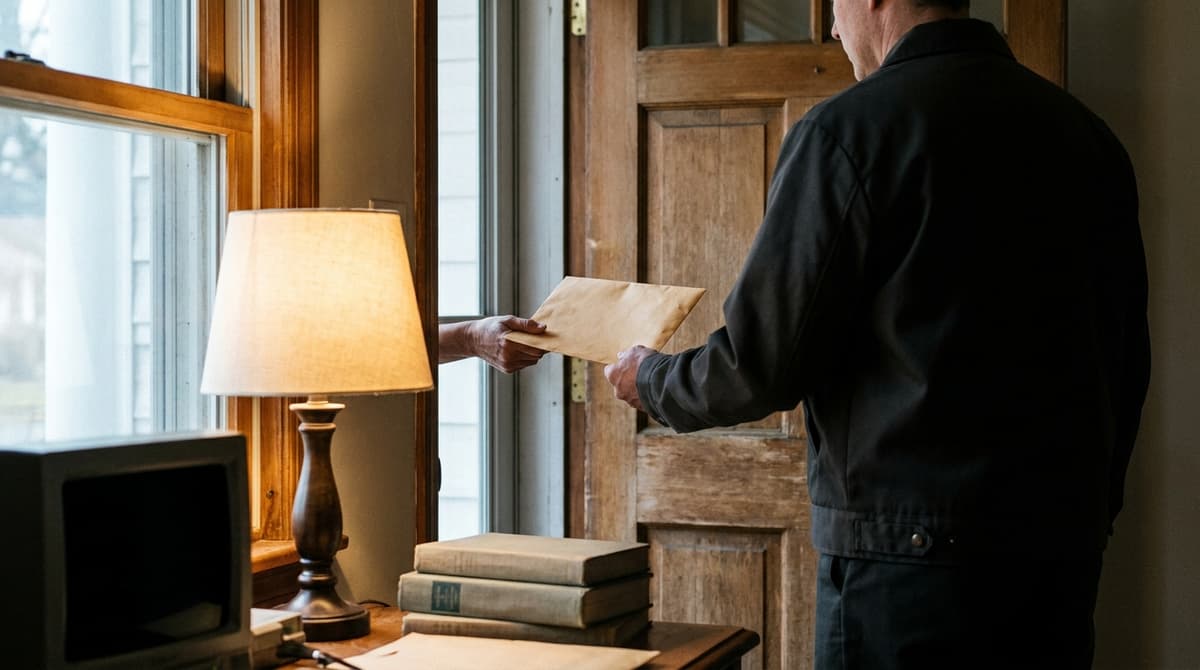
How the defendant is served. The clerk mails the affidavit and notice by certified mail, return receipt requested, deliverable to the addressee only. Personal service is also allowed, and if neither works the court can order another method (MCL 600.8405; MCR 4.303). For a corporation or partnership, an agent may sign for the certified mail.
Timing. The hearing (appearance) date must be 15 to 45 days after the notice date (MCL 600.8406(1)). If the defendant is not served at least 7 days before that date, you can ask the clerk for a new notice with a new date 15 to 30 days after it is issued. Unless the defendant was personally served or signed for the mail at least 7 days before the hearing, the court cannot enter judgment, unless the defendant shows up and does not ask for a continuance.
If you are the defendant
You do not have to file a written answer. Come to the hearing with your papers and witnesses. If you owe the money and have no defense, you can still appear and ask to pay in installments (MCL 600.8410).
If you do not show up. The court can enter a default judgment if the claim is for a fixed amount, or decide an uncertain amount on the plaintiff's evidence alone (MCR 4.304(B)(1)). The notice warns that judgment can be entered up to the limit plus costs. Before a default judgment, federal law also requires the plaintiff to file an affidavit stating whether you are in military service (50 U.S.C. § 3931(b)(1)).
Counterclaims. If you file a verified answer raising a counterclaim, the court may continue the hearing on request (MCL 600.8422). If your own claim is more than the small claims limit, you can sue in a court that can hear it and file an affidavit with the small claims clerk; the small claims case is then transferred and tried with yours, for a $1 transmittal fee (MCL 600.8423).
Removing the case. Before the trial, either side can remove the case to the general civil division, in writing on form DC 86 or orally before the hearing starts (MCR 4.306). There is no fee for the removal, order or mailing. After removal the defendant must answer within 14 days of the order, and lawyers, juries and appeals are available. A party who later increases the claim pays the difference in filing fees (MCL 600.8425(2)).
Sued by a debt collector? Collection agencies cannot take part in small claims (MCL 600.8408(1)), and assignees cannot file there (MCL 600.8407(1)). In any court, federal law requires a debt collector suing a consumer to sue only where the consumer signed the contract or lives when the case is filed (15 U.S.C. § 1692i(a)(2)). As the FTC puts it, "respond and don't ignore the lawsuit."
The hearing
Small claims hearings are informal. Under MCL 600.8411, witnesses are sworn, but the hearing is not bound by the rules of practice, procedure, pleading or evidence, except for privileged communications. "There shall be no jury nor shall a verbatim record of such proceedings be made."
- Who decides. A district judge, or an attorney-magistrate authorized by the chief judge (MCL 600.8427). Either party can demand a judge instead of a magistrate before trial (MCL 600.8408(4)).
- When. The court sits at least once every 30 days at each location (MCL 600.8416), and evening and Saturday hours may be made available on written request when you show the need (MCL 600.8404(2)). The court may allow videoconferencing (MCR 4.304(A)).
- If the plaintiff does not show up, the claim may be dismissed for want of prosecution (MCR 4.304(B)(2)).
Bring everything that proves your claim: the contract, receipts, invoices, estimates, photos, texts and emails, and any witnesses who saw what happened.
Appeals: usually none
If a district judge decides your case, there is no appeal; staying in small claims waives the right to appeal (MCL 600.8412; MCR 4.305).
There is one exception. If an attorney-magistrate decided the case, either party can appeal to a district judge of the small claims division, who hears the case fresh. Under MCL 600.8427, "Appeal shall be taken within 7 days after the entry of the decision of the magistrate. Further appeal from the judgment of the district court judge shall not be available to either party." There is no fee for that appeal (MCR 4.401(D)).
Setting aside a judgment. A small claims judgment may be modified or vacated in the same manner as judgments in other civil actions (MCR 4.305(B)). If a default judgment was entered because you missed the hearing, file a motion to set it aside quickly. Unless the motion is based on lack of jurisdiction, you must show good cause and file a verified statement of facts showing a meritorious defense (MCR 2.603(D)(1)). If you were personally served, the motion must be filed within 21 days after the default judgment, unless you rely on the general relief-from-judgment rule (MCR 2.603(D)(2), (3)). That rule, MCR 2.612(C), allows relief for reasons such as mistake, inadvertence, surprise or excusable neglect, but the motion must be made within a reasonable time and, for those reasons, within one year after the judgment.
Collecting your judgment
Winning a judgment does not guarantee payment, and the court does not collect for you. Michigan builds a payment step into the judgment itself:

- Payment order. The judge orders payment in a lump sum or in installments, and collection is stayed while the defendant keeps up with the order (MCL 600.8410).
- 30-day rule. If the defendant was absent or does not pay immediately, the defendant must, within 30 days, either pay in full or give you a written disclosure of their employer and bank accounts (MCL 600.8410).
- Garnishment waiting period. A writ of garnishment cannot issue until 21 days after the judgment is entered (MCR 4.305(C)). There is no attachment or garnishment before judgment (MCL 600.8409(1)).
The court's guide to collecting a small claims judgment (DC 85info, revised June 2026) lists the forms:
| Collection step | Form |
|---|---|
| Judgment debtor examination (subpoena with affidavit) | MC 11 |
| Periodic garnishment | MC 12 |
| Nonperiodic garnishment | MC 13 |
| Garnishee disclosure | MC 14 |
| Seizure of property | MC 19 |
| Garnishment of a Michigan income tax refund | MC 52 |
Each writ or debtor-discovery subpoena carries the $15 issuance fee, and garnishments also involve disclosure and service fees listed on the forms. For ordinary debts, federal law caps wage garnishment at the lesser of 25% of weekly disposable earnings or the amount above 30 times the federal minimum hourly wage (15 U.S.C. § 1673(a)); try our wage garnishment calculator.
Some income and property are protected. Social Security benefits are not subject to "execution, levy, attachment, garnishment, or other legal process" (42 U.S.C. § 407(a)), and VA benefits are exempt from creditors' claims (38 U.S.C. § 5301(a)(1)). Michigan's own exemptions are in MCL 600.6023; see Michigan debt collection laws for how they work and for help if you are the one being garnished.
Interest. Michigan judgment interest is calculated at 6-month intervals from the date the complaint was filed, at 1% plus the average 5-year Treasury note auction rate certified by the state treasurer for the six months before each July 1 and January 1, compounded annually (MCL 600.6013(8)). The treasurer certified 3.959% for July 1, 2026, so the rate for the six-month period beginning July 1, 2026 is 4.959%; a new rate is certified for January 1, 2027. If the judgment is on a written instrument evidencing a debt with a specified interest rate, that rate applies instead, up to 13% a year (MCL 600.6013(7)).
How long a judgment lasts. MCL 600.5809(3) gives different renewal periods to judgments of a court of record and judgments of a court not of record, and it states that a district court judgment entered since May 25, 1973 is a judgment of a court of record "except a judgment entered in the small claims division of the district court." Because the statute leaves small claims judgments out of the court-of-record category, the 6-year period for judgments of a court not of record applies: an action founded on the judgment must be brought within 6 years after it is rendered, and within that period you can bring an action on the judgment for a new judgment, which is subject to the same rule (MCL 600.5809(3)). Do not let an unpaid judgment approach the 6-year mark; ask the clerk about renewing it well before then.
When you are paid. File a Certificate of Satisfied Judgment (MC 17), plus a Garnishment Release (MC 50) if you garnished. A debtor who has paid can also move for an Order of Satisfaction (MC 326).
Forms and official help
- Small Claims Overview, DC 84info (revised June 2026): limits, fees, venue and the forms you need (DC 84 affidavit, DC 86 removal demand, MC 20 fee waiver).
- Collecting a Small Claims Judgment, DC 85info (revised June 2026): garnishment, debtor examinations and satisfaction forms.
- MCL 600.8401 and the rest of Chapter 84 on the Michigan Legislature's website.
- Michigan Court Rules, Chapter 4, including MCR 4.301 to 4.306.
Related
- Small claims court by state
- Michigan statute of limitations
- Michigan debt collection laws
- Michigan landlord-tenant laws
- Ohio small claims court
- Wisconsin small claims court
Disclaimer: This article provides general legal information about the small claims division of Michigan district courts under MCL 600.8401 to 600.8427 and Michigan Court Rules 4.301 to 4.306, verified on 2026-10-07. It is not legal advice and does not create an attorney-client relationship. For help with your situation, contact your district court clerk, a legal aid office, or a lawyer licensed in Michigan.
Last updated: 2026-10-07.
Frequently Asked Questions
What is the small claims limit in Michigan?
$7,000, in effect since January 1, 2024 under MCL 600.8401. The court's DC 84info overview, revised June 2026, states the same limit.
Can I sue for more than $7,000 in small claims in Michigan?
No. You can file a larger claim in small claims, but under MCR 4.302(D) you waive the excess over $7,000 and a judgment bars a later suit for it. To recover more, file a regular civil case.
How much does it cost to file small claims in Michigan?
DC 84info lists $30 for claims up to $600, $50 for claims over $600 up to $1,750, and $70 for claims over $1,750. If you cannot afford it, file a Fee Waiver Request (Form MC 20) with your affidavit.
Can a lawyer represent me in Michigan small claims court?
No. MCL 600.8408(1) bars attorneys from small claims except on their own behalf. If you want a lawyer, either party can remove the case to the district court's general civil division before trial.
Can I appeal a Michigan small claims decision?
Not if a district judge decided it; staying in small claims waives the right to appeal (MCL 600.8412). If an attorney-magistrate decided it, either party can appeal to a district judge within 7 days, and that judge's decision is final (MCL 600.8427).
Does the defendant have to file an answer in Michigan small claims?
No written answer is required; the defendant comes to the hearing with papers and witnesses. A defendant who does not appear risks a default judgment (MCR 4.304(B)(1)).
Can a debt collector sue me in Michigan small claims court?
Not as a collection agency or as an assignee of the debt. MCL 600.8408(1) bars collection agencies from small claims, and MCL 600.8407(1) bars claims filed by an assignee.
When can I garnish wages after a Michigan small claims judgment?
A writ of garnishment cannot issue until 21 days after the judgment is entered (MCR 4.305(C)). Federal law also caps wage garnishment for ordinary debts (15 U.S.C. § 1673(a)).
How long is a Michigan small claims judgment good for?
6 years. MCL 600.5809(3) leaves small claims division judgments out of the court-of-record category, so the 6-year period for judgments of a court not of record applies, and an action on the judgment for a new judgment can be brought within that period.
Updates
Independently fact-checked against the cited primary sources
The Law Behind This Article
This article rests on the statutory provisions below, held in our own legal record and retrieved from the official source. Tap a section to read the operative text.
Michigan Compiled Laws
§ 600.8401Small claims division; creation; judge; jurisdictionIn forcecited in 2 of our articles
A small claims division is created in each district as a division of the district court. A judge of the district court shall sit as judge of the small claims division. The jurisdiction of the small claims division shall be confined to cases for the recovery of money in which the amount claimed does not exceed the following: (a) Beginning September 1, 2012, $5,000.00. (b) Beginning January 1, 2015, $5,500.00. (c) Beginning January 1, 2018, $6,000.00. (d) Beginning January 1, 2021, $6,500.00 (e) Beginning January 1, 2024, $7,000.00.
Official text (excerpt) · last checked 2026-07-30 · Read the full text in our law library · Verify at legislature.mi.gov
Also relied on in: Michigan Scam and Fraud Laws: Where to Report, Your Right to Sue (2026)
§ 600.8420Fees; dispositionIn force
(1) A fee of the following amount, as applicable, shall be charged and collected for the filing of the affidavit for the commencement of any action: (a) $25.00, if the amount in controversy does not exceed $600.00. (b) $45.00, if the amount in controversy exceeds $600.00 but does not exceed $1,750.00. (c) $65.00, if the amount in controversy exceeds $1,750.00. (2) A fee in an amount equal to the prevailing postal rate for the service provided shall be charged and collected for each defendant to whom a copy of the affidavit is mailed by the clerk. A fee of $15.00 shall be charged and collected for the issuance of a writ of execution, attachment, or garnishment and for the issuance of a judgment debtor discovery subpoena. Except as otherwise provided in this chapter, a fee or charge shall not be collected by an officer for any service rendered under this chapter or for the taking of affidavits for use in connection with any action commenced under this chapter.
Official text (excerpt) · last checked 2026-07-30 · Read the full text in our law library · Verify at legislature.mi.gov
§ 600.8408Parties; representation; request for trial before district court judge; removal; waiverIn force
(1) An attorney at law, except on the attorney's own behalf, a collection agency or agent or employee of a collection agency, or a person other than the plaintiff and defendant, except as is otherwise provided in this chapter, shall not take part in the filing, prosecution, or defense of litigation in the small claims division. (2) A sole proprietorship, partnership, or corporation as plaintiff or defendant may be represented by an officer or employee who has direct and personal knowledge of facts in dispute. If the officer or employee who has direct and personal knowledge of facts in dispute is no longer employed by the defendant or plaintiff or is medically unavailable, the representation may be made by that person's supervisor, or by the sole proprietor, a partner, or an officer or a member of the board of directors of a corporation. (3) A county, city, village, township, or local or intermediate school district as plaintiff or defendant may be represented only by an elected or appointed officer or an employee who has direct and personal knowledge of the facts in dispute.
Official text (excerpt) · last checked 2026-07-30 · Read the full text in our law library · Verify at legislature.mi.gov
§ 600.8427Conduct of small claims hearing by district court judge or magistrate; appealIn force
A small claims hearing may be conducted either by a district court judge or by a district court magistrate who is an attorney licensed to practice in this state and who is authorized to do so by the chief judge of the district court district as provided in section 8514. If the hearing is conducted by a district court magistrate, an appeal de novo as of right may be taken by either party to the small claims division of the district court. Appeal shall be taken within 7 days after the entry of the decision of the magistrate. Further appeal from the judgment of the district court judge shall not be available to either party.
Official text (excerpt) · last checked 2026-07-30 · Read the full text in our law library · Verify at legislature.mi.gov
§ 600.8412Waiver of rightsIn force
Unless a party removes a small claims action to the district court pursuant to section 8408(4), all parties to an action in the small claims division shall be considered to have waived the right to counsel, the right to trial by jury, the right to recover more than the applicable jurisdictional amount as prescribed by section 8401, and any right of appeal, except that if the action is heard before a district court magistrate pursuant to section 8427, the parties have a right to an appeal to the small claims division of the district court as provided by section 8427. The affidavit prescribed in section 8402 shall contain a statement that the plaintiff understands that he or she has waived these rights.
Official text (excerpt) · last checked 2026-07-30 · Read the full text in our law library · Verify at legislature.mi.gov
§ 600.8415Venue of actionsIn force
(1) Except as provided in subsections (3) and (4), in districts of the first class actions in the small claims division shall be filed in the county in which the cause of action arose or in the county in which the defendant is established or resides or is employed. If there is more than 1 defendant, actions shall be filed in the county in which any defendant is established or resides or is employed. (2) Except as provided in subsections (3) and (4), in districts of the second or third class actions in the small claims division shall be filed in the district in which the cause of action arose or in the district in which the defendant is established or resides or is employed. If there is more than 1 defendant, actions shall be filed in the district in which any defendant is established or resides or is employed. (3) In districts of the first class actions in the small claims division against a city, village, or township shall be filed in the county in which the city, village, or township is located. In districts of the first class actions in the small claims division against a county shall be filed in that county.
Official text (excerpt) · last checked 2026-07-30 · Read the full text in our law library · Verify at legislature.mi.gov
§ 600.8405Service; manner; proofIn force
Except as otherwise provided in this section, service of the affidavit and notice to appear and answer shall be made upon the defendant by certified mail, return receipt requested and deliverable to the addressee only, by personal service, or upon a showing that service of process cannot reasonably be made as provided by this section, the court may, by order, permit service of process to be made in any other manner reasonably calculated to give the defendant actual notice of the proceedings and an opportunity to be heard. Where service by certified mail is made, it shall be made by the clerk and the receipt of mailing together with the return card signed by the defendant shall constitute proof of service.
Official text (excerpt) · last checked 2026-07-30 · Read the full text in our law library · Verify at legislature.mi.gov
§ 600.8410Settlement; payment of judgment; execution, attachment, or garnishment; warning; examination of assets; payment of judgment in full; copy of judgmentIn force
(1) Before or at the hearing the parties may make a settlement upon those terms as they may agree. The settlement shall be in writing and signed by both parties. Upon filing of the settlement with the court, the judge shall review the settlement and may enter it as the judgment of the court or may require that a full hearing take place. (2) The judge shall order that a judgment in the small claims division shall be satisfied by payment to the clerk or the plaintiff either in a lump sum or in installments in amounts and at times as the judge considers just and reasonable under the circumstances. The judge shall also provide for a stay of further proceedings to collect the judgment while the defendant is in compliance with the order of the court. (3) For good cause shown, the judge may reinstate an installment payment judgment previously not performed or the judge may alter the amount of installment payments and the time of payment of the judgment and shall authorize execution, attachment, or garnishment to issue where it appears that the defendant has not paid according to the terms of the judgment.
Official text (excerpt) · last checked 2026-07-30 · Read the full text in our law library · Verify at legislature.mi.gov
§ 600.8407Filing of claim in small claims division; restrictionsIn force
(1) A claim shall not be filed or prosecuted in the small claims division by an assignee of a claim or by a third party beneficiary under a third party beneficiary contract. (2) Within a district court district a person shall not file more than the following number of claims in the small claims division in 1 week: (a) Except as provided in subdivision (b), a person shall not file more than 5 claims. (b) A person shall not file more than 20 claims on behalf of a county, city, village, or township. (3) A person shall not file a claim on behalf of a sole proprietorship or a partnership unless that person is the proprietor, a partner in the plaintiff partnership, or a full-time salaried employee of the plaintiff having knowledge of the facts surrounding the complaint. A person shall not file a claim on behalf of a corporation unless that person is a full-time, salaried employee having knowledge of the facts surrounding the complaint.
Official text (excerpt) · last checked 2026-07-30 · Read the full text in our law library · Verify at legislature.mi.gov
§ 600.8424Actions for fraud, libel, slander, assault, battery, or other intentional torts; governmental agency as partyIn force
(1) Actions of fraud and actions of libel, slander, assault, battery, or other intentional torts shall not be instituted in the small claims division. This subsection does not apply to either of the following: (a) An action for fraud under section 2952 or under the Michigan consumer protection act, 1976 PA 331, MCL 445.901 to 445.922. (b) An action under section 73109 of the natural resources and environmental protection act, 1994 PA 451, MCL 324.73109. (2) Except as provided in subsection (3), the state, a political subdivision of the state, or any other governmental agency shall not be a party to an action in the small claims division. (3) A county, city, village, township, or local or intermediate school district may file an action in the small claims division. An action may be filed in the small claims division against a county, city, village, township, or local or intermediate school district, but a party may not assert a claim with respect to which the county, city, village, township, or local or intermediate school district has immunity.
Official text (excerpt) · last checked 2026-07-30 · Read the full text in our law library · Verify at legislature.mi.gov
§ 600.5809Action to enforce noncontractual money obligations; limitationsIn forcecited in 3 of our articles
(1) A person shall not bring or maintain an action to enforce a noncontractual money obligation unless, after the claim first accrued to the person or to someone through whom he or she claims, the person commences the action within the applicable period of time prescribed by this section. (2) The period of limitations is 2 years for an action for the recovery of a penalty or forfeiture based on a penal statute brought in the name of the people of this state. (3) Except as provided in subsection (4), the period of limitations is 10 years for an action founded upon a judgment or decree rendered in a court of record of this state, or in a court of record of the United States or of another state of the United States, from the time of the rendition of the judgment or decree. The period of limitations is 6 years for an action founded upon a judgment or decree rendered in a court not of record of this state, or of another state, from the time of the rendition of the judgment or decree. A judgment entered in the district court of this state before May 25, 1973, is a judgment of a court not of record.
Official text (excerpt) · last checked 2026-07-30 · Read the full text in our law library · Verify at legislature.mi.gov
Cited in 66 court opinions in our collectionLatest citing opinion in our collection: 2026
Opinions citing this section in our collection:
- Stockdale v. Jamison (Michigan Supreme Court 1982, 416 Mich. 217)“…ondly, my brother's opinion fails to consider the effect of MCL 600.5809(3); MSA 27A.5809(3), which provides tha…”
- People v. Monaco (Michigan Supreme Court 2006, 474 Mich. 48)“…5(1), is subject to the ten-year period of limitations in MCL 600.5809(4) or the six-year “catch-all” period…”
- Peabody v. DiMeglio (Michigan Court of Appeals 2014, 306 Mich. App. 397)“…carry a 10-year statutory period of limitations pursuant to MCL 600.5809, which provides in pertinent part, (1…”
Identified automatically from the court opinions citing this section — not a ranking of which case controls.
Also relied on in: Michigan Statute of Limitations: Filing Deadlines by Case Type
§ 600.6013Interest on money judgmentIn force
(1) Interest is allowed on a money judgment recovered in a civil action, as provided in this section. However, for complaints filed on or after October 1, 1986, interest is not allowed on future damages from the date of filing the complaint to the date of entry of the judgment. As used in this subsection, "future damages" means that term as defined in section 6301. (2) For complaints filed before June 1, 1980, in an action involving other than a written instrument having a rate of interest exceeding 6% per year, the interest on the judgment is calculated from the date of filing the complaint to June 1, 1980, at the rate of 6% per year and on and after June 1, 1980, to the date of satisfaction of the judgment at the rate of 12% per year compounded annually. (3) For a complaint filed before June 1, 1980, in an action involving a written instrument having a rate of interest exceeding 6% per year, the interest on the judgment is calculated from the date of filing the complaint to the date of satisfaction of the judgment at the rate specified in the instrument if the rate was legal at the time the instrument was executed.
Official text (excerpt) · last checked 2026-07-30 · Read the full text in our law library · Verify at legislature.mi.gov
Search our full record of US law — 2.1 million sections, every state + federal →
Sources and References
- MCL 600.8401, small claims division and jurisdictional limit (Michigan Legislature)(www.legislature.mi.gov).gov
- Michigan courts, Small Claims Overview (DC 84info, SCAO approved, revised 6/26)(www.courts.michigan.gov).gov
- Michigan Court Rules, Chapter 4 (MCR 4.301-4.306, 4.401)(www.courts.michigan.gov).gov
- MCL 600.8407, assignees, business affidavits and filing frequency (Michigan Legislature)(www.legislature.mi.gov).gov
- MCL 600.8424, excluded actions and government parties (Michigan Legislature)(www.legislature.mi.gov).gov
- 28 U.S.C. § 1346, United States as defendant(www.govinfo.gov).gov
- 28 U.S.C. § 2675, disposition by federal agency as prerequisite(www.govinfo.gov).gov
- 28 U.S.C. § 2401, time for commencing action against United States(www.govinfo.gov).gov
- MCL 600.8426, suing a defendant in a business name (Michigan Legislature)(www.legislature.mi.gov).gov
- MCL 600.8415, venue (Michigan Legislature)(www.legislature.mi.gov).gov
- MCL 600.8420, small claims fees (Michigan Legislature)(www.legislature.mi.gov).gov
- MCL 600.8421, costs to the prevailing party (Michigan Legislature)(www.legislature.mi.gov).gov
- MCL 600.8371, district court fees and fee waiver (Michigan Legislature)(www.legislature.mi.gov).gov
- MCL 600.8408, attorneys and representation (Michigan Legislature)(www.legislature.mi.gov).gov
- MCL 600.8406, hearing date and re-notice (Michigan Legislature)(www.legislature.mi.gov).gov
- 50 U.S.C. § 3931, Servicemembers Civil Relief Act, protection against default judgments(www.govinfo.gov).gov
- 15 U.S.C. § 1692i, legal actions by debt collectors(www.govinfo.gov).gov
- Federal Trade Commission, Debt Collection FAQs(consumer.ftc.gov).gov
- MCL 600.8411, informal hearing, no jury, no verbatim record (Michigan Legislature)(www.legislature.mi.gov).gov
- MCL 600.8427, attorney-magistrates and appeal (Michigan Legislature)(www.legislature.mi.gov).gov
- Michigan courts, Collecting a Small Claims Judgment (DC 85info, revised 6/26)(www.courts.michigan.gov).gov
- 15 U.S.C. § 1673, restriction on garnishment(www.govinfo.gov).gov
- 42 U.S.C. § 407, Social Security benefits protected from legal process(www.govinfo.gov).gov
- 38 U.S.C. § 5301, exempt status of VA benefits(www.govinfo.gov).gov
- Michigan Court Rules, Chapter 2 (MCR 2.603 default, 2.612 relief from judgment)(www.courts.michigan.gov).gov
- MCL 600.5809, limitations on actions founded on judgments (Michigan Legislature)(www.legislature.mi.gov).gov
- MCL 600.6013, interest on money judgments (Michigan Legislature)(www.legislature.mi.gov).gov
- Michigan Department of Treasury, Interest Rates for Money Judgments (certification of July 9, 2026)(www.michigan.gov).gov
- MCL 600.8404, evening and Saturday hours (Michigan Legislature)(www.legislature.mi.gov).gov
- MCL 600.8416, small claims sittings (Michigan Legislature)(www.legislature.mi.gov).gov