
South Carolina
South Carolina Small Claims Court: $7,500 Limit, Fees, How to File
Independently fact-checked against primary sources (last audited October 7, 2026). · 29 primary sources cited on this page. How we verify our legal content
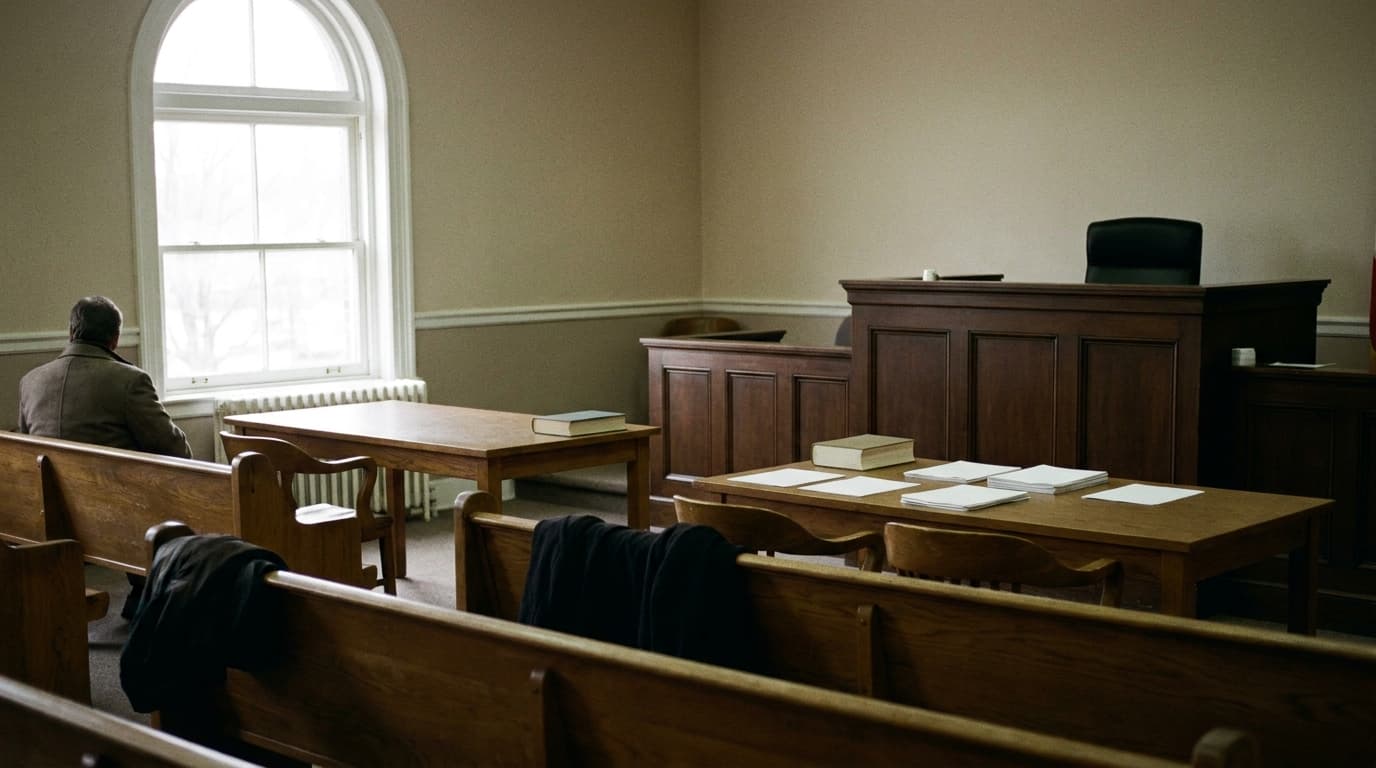
In South Carolina, you can sue for up to $7,500 in what most people call small claims court. The state has no separate small claims court: civil cases up to $7,500 are heard in the magistrates court in each county, under S.C. Code 22-3-10 and the South Carolina Rules of Magistrates Court.
The $7,500 ceiling is the same for individuals and businesses. Several bills in the 2025-2026 legislative session would raise it, but none has become law. This guide walks through a magistrates court civil case in the order you will live it, from filing to collecting. For other states, see our guide to small claims court by state.
Information last verified on 2026-10-07. This article has not been reviewed by a licensed lawyer.
Jurisdiction scope: This article covers civil cases in South Carolina magistrates courts under S.C. Code Title 22, Chapter 3, and the South Carolina Rules of Magistrates Court. It does not cover landlord-tenant eviction procedure, circuit court (Court of Common Pleas) cases except appeals from a magistrate, criminal matters, or small claims in other states.
South Carolina small claims limit: $7,500
S.C. Code 22-3-10 gives magistrates civil jurisdiction in a list of case types, each capped at the same amount. For contract claims, the statute covers "actions arising on contracts for the recovery of money only, if the sum claimed does not exceed seven thousand five hundred dollars." The same $7,500 ceiling applies to claims for injury to a person or property, penalties, bonds, attachment, fraud in the sale of personal property, and recovery of personal property.
| Case type | Limit | Source |
|---|---|---|
| Contract claims for money, injury to person or property, and the other listed civil actions | $7,500 | S.C. Code 22-3-10(1), (2) |
| Individual or business plaintiff | $7,500 (no separate business limit) | S.C. Code 22-3-10 |
| Counterclaims | $7,500, except in landlord-tenant cases | S.C. Code 22-3-10; Rule 9 |
| Landlord-tenant matters and possession of land under Title 27, Chapters 33 to 41 | No dollar cap on possession | S.C. Code 22-3-10(10), (12) |
Court costs the winner recovers do not count toward the $7,500 (Rule 17(a), SCRMC). Under Rule 5(a), a plaintiff may combine all of the claims the plaintiff has against one defendant in a single case.
The rules we reviewed do not say that a plaintiff can split a larger claim into several magistrates court cases, and they do not set out a plaintiff's option to waive the amount over $7,500. If your loss is larger than $7,500, ask the clerk or a lawyer before filing, because the only waiver rule in the Rules applies to counterclaims (see below).
Make sure you file within the deadline for your type of claim; see the South Carolina statute of limitations guide.
Cases a magistrate cannot hear
Under S.C. Code 22-3-20, a magistrate has no authority over civil actions where the State is a party (apart from a narrow penalty exception) or where "the title to real property shall come in question," except earnest-money interpleader actions under Article 11 of the chapter.
Bills to raise the limit (not law)
As of October 7, 2026, the limit is still $7,500. These bills would raise it, and none has been enacted:
| Bill | Proposed limit | Status on the Statehouse bill page |
|---|---|---|
| H.3050 | $25,500 | Introduced January 14, 2025; referred to House Judiciary; no later action |
| S.251 | $15,000 | Introduced January 21, 2025; referred to Senate Judiciary; no later action |
| H.4668 | $15,000 | Introduced January 13, 2026; referred to House Judiciary; no later action |
| H.3530 | Higher limit (amount in the amended text not confirmed) | Reported favorably with amendment February 5, 2026; recommitted to House Judiciary March 25, 2026 |
If you see a website saying South Carolina's limit is $15,000 or $25,000, it is describing a proposal, not the law.
Filing fees
South Carolina uses a statewide magistrates court civil fee schedule (Attachment K). For a summons and complaint, it lists a total of $80: a $45 filing fee, a $10 service fee and a $25 assessment under S.C. Code 22-3-340. The fee is the same for every claim up to $7,500.
Fees change on January 1, 2027. Act No. 155 of 2026 (H.4813), signed by the Governor on May 15, 2026, states: "This act takes effect on January 1, 2027." It raises the summons and complaint filing fee from $45 to $65, the 22-3-340 assessment on a summons and complaint from $25 to $40, the charge when a magistrate serves a summons to $20, and the execution fee from $10 to $20. We did not find an updated official fee schedule showing the new total, so check with the magistrates court before you file in 2027.
| Other fees | Amount | Source |
|---|---|---|
| Witness subpoena prepared and served by the court | $8, plus a witness fee of $25 per day and mileage | Attachment K; Rule 23(e) |
| Jury panel summons | $5, taxed to the losing party | S.C. Code 8-21-1060(2) |
| Appeal filing fee, clerk of circuit court | $150 | Court FAQ |
| Transcript of record for appeal | $10 | S.C. Code 8-21-1010(A)(8) |
| Filing (enrolling) the magistrate judgment with the circuit court clerk | $35 (the court FAQ still lists $10; the statute controls) | S.C. Code 8-21-310(C)(5) |
| Issuing an execution, or renewing one | $10 now, $20 from January 1, 2027 | S.C. Code 8-21-1010(A)(7); Act No. 155 |
Fee waiver. If you cannot afford the fees, Rule 5(c) lets you file a Motion for Leave to Proceed In Forma Pauperis with your proposed complaint and an affidavit of inability to pay. If it is granted, "the plaintiff may proceed without further application and file the complaint in the court without payment of filing fees." The court's FAQ notes that other court costs may still apply.
Lawyers and business representation
You may hire a lawyer, but you do not need one. When a party has no lawyer, the judge questions the parties and witnesses (Rule 13), and court staff can help you prepare your papers.
A business does not need a lawyer either. Under Rule 21, "A business, as defined by S.C. Code Ann. 33-1-103, may be represented in a civil magistrates court proceeding by a non-lawyer officer, agent, or employee," including one who is paid for it, as long as the representative has written authorization from the president, chairperson, general partner, owner or chief executive.
Before you file: settlement and pretrial conferences
Nothing in the sources we reviewed requires a demand letter or mediation before you sue. Rule 15(b) does direct the court to confer with the parties before trial when a conference might simplify the issues or lead to a settlement.
Where to file
Rule 4 says: "A civil action may be filed in any magistrates court in the county in which at least one defendant resides or where the most substantial part of the cause of action arose." You may sue a domestic corporation where it has its principal place of business. If the defendant lives outside South Carolina and is sued under the long-arm statute (S.C. Code 36-2-803), you may file in the county where you live or where the claim arose.
Forms are in Rule 24 of the magistrates court rules, including Form 2 (complaint), Form 4 (answer), Form 6 (counterclaim) and Form 21 (notice of appeal).
Serving the defendant
Under Rule 6(c), the summons and complaint may be served by a sheriff, a deputy, a magistrate's constable, or anyone 18 or older who is not a party to the case or a lawyer in it. Service can also be made by personal delivery, by leaving the papers at the defendant's home with a resident of suitable age, by a qualifying commercial delivery service (Rule 6(d)(7)), or by certified mail.

Certified mail must be return receipt requested and restricted to the addressee (Rule 6(d)(6)). Service is effective on the delivery date, but Rule 6(d)(6) adds: "Service pursuant to this paragraph shall not be the basis for the entry of a default judgment unless the record contains a return receipt showing the acceptance by the defendant." If the letter is refused or not delivered, use another method. According to the court FAQ, service by publication is possible only after other methods fail and only by court order. If the defendant is not served within 120 days of filing, the magistrate may dismiss the case without prejudice (Rule 6(k)).
If you are sued: answering and counterclaims
A defendant must answer in writing, or orally with the answer reduced to writing, within 30 days. Rule 7 states: "A defendant shall file an answer and any appropriate counterclaims with the court within thirty (30) days from the first day after the date of service." The defendant does not have to serve the answer on the plaintiff; the court delivers it.
A counterclaim arising from the same transaction is filed within the same 30 days (Rule 9(a)). If a counterclaim is larger than $7,500, the defendant has two choices under Rule 9(b) and S.C. Code 22-3-30: waive the excess, or let the whole case transfer to circuit court. Waiving is permanent. Rule 9(b) says: "If the defendant elects to waive a portion of the counterclaim, a separate action for the remainder of the claim may not be maintained."
Default judgment. If the defendant does not answer, or answers but does not appear at trial, the court may enter a default judgment (Rule 11(a)). A claim for a set dollar amount can be decided on the papers; for other claims, the plaintiff must serve an itemized account with an affidavit along with the summons, or prove damages at a hearing. At a default hearing, the defendant may only cross-examine and object (Rule 10(b)). Before a default judgment, federal law also requires the plaintiff to file an affidavit stating whether the defendant is in military service (50 U.S.C. 3931).
If the plaintiff does not show up for trial, the case is dismissed, and if there is a counterclaim, the defendant can get a default judgment on it (Rule 11).
Jury trials
Either side can ask for a jury. The written request must be made at least five working days before the original trial date (Rule 13(c)), and the $5 jury summons fee is charged to the losing party.
The trial
Rule 13 says: "Trials should be conducted in an informal manner and the South Carolina Rules of Evidence shall apply but shall be relaxed in the interest of justice." Testimony is under oath. Bring your contract, receipts, photos, texts and estimates, and anyone who saw what happened.
The court can issue subpoenas for witnesses (Rules 13(e) and 23), but a subpoena cannot require a witness to appear outside the county where the witness lives. Each witness is paid $25 per day. Rule 14 generally allows one continuance, except in unusual circumstances.
We did not find an official figure for how long it takes to get a trial date; ask the magistrates court where you file.
Motion for a new trial
Under Rule 19(b), a party may file a written motion for a new trial within 10 days after notice of the judgment (5 days in landlord-tenant cases). The court's FAQ says five days; the Rule text says 10, and the Rule controls. If the motion is denied, you have 30 days from the denial to appeal.
Appealing a magistrates court judgment
Either party may appeal to the circuit court of the county where the judgment was entered (S.C. Code 18-7-10). A circuit judge hears the appeal without a jury.

The deadline is 30 days. It runs from the day the judgment is announced at trial if both parties are present, and otherwise from delivery of written notice of the judgment. Rule 18 says: "Within thirty (30) days after delivery of written notice of judgment to the parties or their attorneys, a party wishing to appeal shall serve on the respondent and file a notice of appeal." You file the notice with the magistrate and with the circuit court. If you were not personally served and did not appear, the 30 days run from when you get personal notice of the judgment (S.C. Code 18-7-20).
The clerk of circuit court charges a $150 filing fee, according to the court FAQ, and you may ask to appeal in forma pauperis. An appeal stops collection only if the losing party posts a bond with surety for the judgment and costs (S.C. Code 18-7-10).
Setting aside a default judgment
For good cause, the court may set aside a default or a default judgment (Rules 11(e) and 12). Rule 12(b) also allows relief for mistake, inadvertence, surprise, excusable neglect, newly discovered evidence, fraud, or a void judgment. The motion must be made within a reasonable time and, for the first three grounds, "not more than one year after the judgment, order, or proceeding was entered or taken."
A default entered after certified-mail service is set aside if the return receipt was signed by someone who was not authorized to sign for the defendant (Rule 6(d)(6)).
Collecting a South Carolina magistrates court judgment
Winning a judgment does not guarantee you will be paid, and the court does not collect for you. Here is what the sources we reviewed confirm:
- Waiting for the appeal period. Property cannot be sold under an execution until the time to appeal has run, or while an appeal is pending (S.C. Code 22-3-310). According to the court FAQ, the magistrate may order payment in installments, and a missed installment makes the whole balance due.
- Writ of execution. You can request a writ of execution (Rule 17(c)). According to the court FAQ, it is signed by the clerk of circuit court and served by the sheriff. An execution may issue within three years after the judgment, and it can be renewed for a fee (S.C. Code 22-3-310; 8-21-1010).
- Judgment lien on real estate. Filing the judgment or a transcript with the clerk of circuit court makes it a circuit court judgment entered on the abstract of judgments (S.C. Code 22-3-300). A judgment lien on real estate lasts 10 years from the judgment date (S.C. Code 15-35-810).
- Interest. Judgments earn interest at the prime rate published in the first edition of the Wall Street Journal for the calendar year plus four percentage points, compounded annually, and the South Carolina Supreme Court issues an order by January 15 each year confirming the rate (S.C. Code 34-31-20(B)). For January 15, 2026 through January 14, 2027, the Supreme Court set the rate at 10.75%, compounded annually (order of January 7, 2026).
- Debtor examination. If an execution is returned unsatisfied in whole or in part, you can ask a circuit judge to order the debtor to appear and answer about their property (S.C. Code 15-39-310). In these supplementary proceedings the judge cannot order the debtor's earnings for personal services applied to the judgment (S.C. Code 15-39-410).
- Recording payment. Rule 17(d) says: "Upon payment in full, the judgment creditor shall file a statement of collection with the magistrates court," and with the circuit clerk if the judgment was filed there.
We did not verify how wage garnishment or bank levies work for magistrates court judgments, or the total life of a judgment beyond the 10-year lien. Property exempt from levy is listed in S.C. Code 15-41-30; for how those protections work, see South Carolina debt collection laws. Federal law also protects Social Security benefits (42 U.S.C. 407(a)) and VA benefits (38 U.S.C. 5301(a)(1)) from garnishment and levy.
Security deposit and other common disputes
Many magistrates court cases involve a kept security deposit, a contractor who did not finish, or an unpaid loan. For deposit rules, see South Carolina landlord-tenant laws. Landlord-tenant possession cases are also heard by magistrates, with no dollar cap on possession (S.C. Code 22-3-10(10)).
Official resources
- Court FAQ in Magistrates Courts (South Carolina Judicial Branch)
- South Carolina Rules of Magistrates Court
- Rule 24 forms (complaint, answer, counterclaim, notice of appeal)
- S.C. Code Title 22, Chapter 3 (magistrates' civil jurisdiction)
Related
- Small claims court by state
- South Carolina statute of limitations
- South Carolina debt collection laws
- South Carolina landlord-tenant laws
- North Carolina small claims court
- Georgia small claims court
Disclaimer: This article provides general legal information about civil cases in South Carolina magistrates courts under S.C. Code Title 22, Chapter 3, and the South Carolina Rules of Magistrates Court, verified on 2026-10-07. It is not legal advice and does not create an attorney-client relationship. For help with your situation, contact your county magistrates court, a legal aid office, or a lawyer licensed in South Carolina.
Last updated: 2026-10-07.
Frequently Asked Questions
What is the small claims limit in South Carolina?
$7,500. Magistrates courts hear civil cases where the amount claimed does not exceed $7,500 (S.C. Code 22-3-10).
Is South Carolina raising the small claims limit to $15,000?
Not yet. S.251 and H.4668 would raise it to $15,000 and H.3050 to $25,500, but as of October 7, 2026 none had been enacted, and H.3530 was recommitted to committee on March 25, 2026.
How much does it cost to file small claims in South Carolina?
The statewide magistrates court fee schedule lists $80 for a summons and complaint: a $45 filing fee, a $10 service fee and a $25 assessment. Act No. 155 of 2026 raises the filing fee to $65 and the assessment to $40 on January 1, 2027.
Can a business sue in South Carolina magistrates court without a lawyer?
Yes. Rule 21 lets a business be represented by a non-lawyer officer, agent or employee who has written authorization from the president, chairperson, general partner, owner or chief executive.
How long does a defendant have to answer in South Carolina magistrates court?
30 days from the first day after the date of service (Rule 7). The answer can be written or oral, and the court delivers it to the plaintiff.
Can I get a jury trial in South Carolina small claims?
Yes. Make a written request at least five working days before the original trial date (Rule 13(c)); the $5 jury summons fee is charged to the losing party.
How long do I have to appeal a magistrates court judgment in South Carolina?
30 days after the judgment is announced at trial in the parties' presence, or otherwise 30 days after delivery of written notice of the judgment (Rule 18; S.C. Code 18-7-10). A defendant who was not personally served and did not appear has 30 days after personal notice of the judgment (S.C. Code 18-7-20). The appeal goes to the circuit court of the county.
How long do I have to ask for a new trial in South Carolina magistrates court?
Rule 19(b) allows 10 days after notice of the judgment, or 5 days in landlord-tenant cases. The court FAQ says five days, but the Rule text controls.
How long does a South Carolina magistrates court judgment last?
An execution may issue within three years after the judgment (S.C. Code 22-3-310). If you file the judgment with the clerk of circuit court, the lien on the debtor's real estate lasts 10 years from the judgment date (S.C. Code 15-35-810).
Updates
Independently fact-checked against the cited primary sources
The Law Behind This Article
This article rests on the statutory provisions below, held in our own legal record and retrieved from the official source. Tap a section to read the operative text.
South Carolina Code of Laws, Title 22: MAGISTRATES AND CONSTABLES
§ 22-3-10Concurrent civil jurisdictionIn forcecited in 2 of our articles
Magistrates have concurrent civil jurisdiction in the following cases: (1) in actions arising on contracts for the recovery of money only, if the sum claimed does not exceed seven thousand five hundred dollars; (2) in actions for damages for injury to rights pertaining to the person or personal or real property, if the damages claimed do not exceed seven thousand five hundred dollars; (3) in actions for a penalty, fine, or forfeiture, when the amount claimed or forfeited does not exceed seven thousand five hundred dollars; (4) in actions commenced by attachment of property, as provided by statute, if the debt or damages claimed do not exceed seven thousand five hundred dollars; (5) in actions upon a bond conditioned for the payment of money, not exceeding seven thousand five hundred dollars, though the penalty exceeds that sum, the judgment to be given for the sum actually due, and when the payments are to be made by installments an action may be brought for each installment as it becomes due; (6) in any action upon a surety bond taken by them, when the penalty or amount claimed does not exceed seven thousand five hundred dollars; (7) in any action upon a judgment rendered…
Official text (excerpt) · last checked 2026-07-29 · Read the full text in our law library · Verify at scstatehouse.gov
Also relied on in: South Carolina Scam and Fraud Laws: Where to Report, How to Sue
§ 22-3-30Counterclaim, transfer to court of common pleasIn force
When a counterclaim is filed which if successful would exceed the magistrates' civil jurisdictional amount as provided in Section 22-3-10, then the initial claim and counterclaim must be transferred to the docket of the common pleas court for that judicial circuit.
Official text (excerpt) · last checked 2026-07-29 · Read the full text in our law library · Verify at scstatehouse.gov
§ 22-3-310Judgments; executions; effect of appealIn force
Execution may be issued on a judgment heretofore or hereafter rendered in a magistrates court at any time within three years after the rendition thereof and shall be returnable sixty days from its date. But no sale shall be made under any such execution until after the time for appeal has expired, nor pending such appeal, and in cases for the claim and delivery of personal property when bond for the property claimed has been properly given by either party, the status of such property shall not be changed until after the expiration of the time for appealing has expired or until such appeal has terminated.
Official text (excerpt) · last checked 2026-07-29 · Read the full text in our law library · Verify at scstatehouse.gov
§ 22-3-340Assessments on filingsIn force
An assessment equal to twenty-five dollars is imposed on all summons and complaint filings in magistrates court and an assessment equal to ten dollars is imposed on all other civil filings in magistrates court, except for restraining orders. The fees must be collected by the magistrates court and forwarded monthly to the county treasurer and remitted in turn by the county treasurer to the State Treasurer for allocation to the judicial department.
Official text (excerpt) · last checked 2026-07-29 · Read the full text in our law library · Verify at scstatehouse.gov
South Carolina Code of Laws, Title 18: APPEALS
§ 18-7-20When and how appeal shall be takenIn force
The appellant, within thirty days after written notice of judgment has been given him or his attorney by the magistrate, recorder, or judge of the municipal court, except when the judgment is announced at the trial in the presence of the appellant or his attorney then no written notice is necessary, shall serve a notice of appeal, stating the grounds upon which the appeal is founded. If the judgment is rendered upon process not personally served and the defendant did not appear, he has thirty days after personal notice of the judgment to serve the notice of appeal provided for in this section.
Official text (excerpt) · last checked 2026-07-29 · Read the full text in our law library · Verify at scstatehouse.gov
§ 18-7-10Appeals from inferior courts; supersedeasIn force
When a judgment is rendered by a magistrates court, by the governing body of a county or by any other inferior court or jurisdiction, save the probate court, the appeal shall be to the circuit court of the county wherein the judgment was rendered and shall amount to a supersedeas if the party against whom judgment is rendered shall execute a good and sufficient bond with surety to pay the amount of the judgment and costs in the event that he fail to sustain such appeal. And in all cases in which such bond with surety shall be filed no executions shall issue until the termination of such appeal. Provided, that in any county in which a county court exists, appeals in such cases, except those from the probate courts and those that exceed the jurisdictional amounts of the respective county courts, shall be to the county court of the county.
Official text (excerpt) · last checked 2026-07-29 · Read the full text in our law library · Verify at scstatehouse.gov
South Carolina Code of Laws, Title 8: PUBLIC OFFICERS AND EMPLOYEES
§ 8-21-1010Schedule of fees and costs to be collected by magistratesIn force
(A) Except as otherwise expressly provided, the following fees and costs must be collected by the magistrates and deposited in the general fund of the county: (1) for taking civil recognizance, with or without sureties, five dollars; (2) for granting an order for civil special bail, with or without sureties, five dollars; (3) for receiving and filing bond in claim and delivery, attachment, five dollars; if justification of sureties required, an additional five dollars; (4) for administering and certifying oaths or documents in writing, two dollars; (5) for issuing any prerogative writ, five dollars; (6) in all civil actions, for issuing a summons and a copy for defendant, and for giving judgment with or without a hearing, forty-five dollars; (7) for issuing execution and renewal thereof, ten dollars; (8) for making up, certifying, and forwarding a transcript of record and judgment in a case for purpose of appeal, ten dollars; (9) for proceedings by a landlord or lessor against a tenant or lessee, including notices to quit, eviction orders, or recovery of rents, twenty dollars; (10) for proceedings on a coroner's inquest, as prescribed by law, ten dollars, if inquest is…
Official text (excerpt) · last checked 2026-07-29 · Read the full text in our law library · Verify at scstatehouse.gov
South Carolina Code of Laws, Title 34: BANKING, FINANCIAL INSTITUTIONS AND MONEY
§ 34-31-20Legal rate of interestIn force
(A) In all cases of accounts stated and in all cases wherein any sum or sums of money shall be ascertained and, being due, shall draw interest according to law, the legal interest shall be at the rate of eight and three-fourths percent per annum. (B) A money decree or judgment of a court enrolled or entered must draw interest according to law. The legal rate of interest is equal to the prime rate as listed in the first edition of the Wall Street Journal published for each calendar year for which the damages are awarded, plus four percentage points, compounded annually. The South Carolina Supreme Court shall issue an order by January 15 of each year confirming the annual prime rate. This section applies to all judgments entered on or after July 1, 2005. For judgments entered between July 1, 2005, and January 14, 2006, the legal rate of interest shall be the first prime rate as published in the first edition of the Wall Street Journal after January 1, 2005, plus four percentage points.
Official text (excerpt) · last checked 2026-07-29 · Read the full text in our law library · Verify at scstatehouse.gov
South Carolina Code of Laws, Title 15: CIVIL REMEDIES AND PROCEDURES
§ 15-35-810Judgments lien on real estate continue for ten yearsIn force
Final judgments and decrees entered in any court of record in this State subsequent to November 25, 1873, or in any circuit or district court of the United States within this State or of any other Federal court the final judgments and decrees of which, by act of Congress, shall be declared to create a lien, shall constitute a lien upon the real estate of the judgment debtor situate in any county in this State in which the judgment or transcript thereof is entered upon the book of abstracts of judgments and duly indexed, the lien to begin from the time of such entry on the book of abstracts and indices and to continue for a period of ten years from the date of such final judgment or decree.
Official text (excerpt) · last checked 2026-07-29 · Read the full text in our law library · Verify at scstatehouse.gov
Search our full record of US law — 2.1 million sections, every state + federal →
Sources and References
- S.C. Code Title 22, Chapter 3, magistrates' civil jurisdiction (South Carolina Legislature)(www.scstatehouse.gov).gov
- Rule 5, SC Rules of Magistrates Court, commencement and in forma pauperis (SC Judicial Branch)(www.sccourts.org).gov
- H.3050, 2025-2026 session (South Carolina Legislature)(www.scstatehouse.gov).gov
- S.251, 2025-2026 session (South Carolina Legislature)(www.scstatehouse.gov).gov
- H.4668, 2025-2026 session (South Carolina Legislature)(www.scstatehouse.gov).gov
- H.3530, 2025-2026 session (South Carolina Legislature)(www.scstatehouse.gov).gov
- Magistrates court civil fee schedule, Attachment K (Lexington County copy)(www.lex-co.sc.gov).gov
- H.4813, Act No. 155 of 2026, magistrate court fees (South Carolina Legislature)(www.scstatehouse.gov).gov
- Rule 23, SC Rules of Magistrates Court, subpoenas and witness fees (SC Judicial Branch)(www.sccourts.org).gov
- S.C. Code Title 8, Chapter 21, court fees (South Carolina Legislature)(www.scstatehouse.gov).gov
- Court FAQ in Magistrates Courts (SC Judicial Branch)(www.sccourts.org).gov
- Rule 13, SC Rules of Magistrates Court, trials (SC Judicial Branch)(www.sccourts.org).gov
- Rule 21, SC Rules of Magistrates Court, business representation (SC Judicial Branch)(www.sccourts.org).gov
- Rule 15, SC Rules of Magistrates Court, pretrial conference (SC Judicial Branch)(www.sccourts.org).gov
- Rule 4, SC Rules of Magistrates Court, venue (SC Judicial Branch)(www.sccourts.org).gov
- Rule 24, SC Rules of Magistrates Court, forms (SC Judicial Branch)(www.sccourts.org).gov
- Rule 6, SC Rules of Magistrates Court, service (SC Judicial Branch)(www.sccourts.org).gov
- Rule 7, SC Rules of Magistrates Court, answer and defaults (SC Judicial Branch)(www.sccourts.org).gov
- Rule 9, SC Rules of Magistrates Court, counterclaims (SC Judicial Branch)(www.sccourts.org).gov
- 50 U.S.C. 3931, protection of servicemembers against default judgments (GovInfo)(www.govinfo.gov).gov
- Rule 18, SC Rules of Magistrates Court, appeals (SC Judicial Branch)(www.sccourts.org).gov
- Rule 12, SC Rules of Magistrates Court, relief from judgment (SC Judicial Branch)(www.sccourts.org).gov
- 42 U.S.C. 407, Social Security benefits protected from legal process (GovInfo)(www.govinfo.gov).gov
- 38 U.S.C. 5301, VA benefits protected from creditors (GovInfo)(www.govinfo.gov).gov
- South Carolina Rules of Magistrates Court index (SC Judicial Branch)(www.sccourts.org).gov
- South Carolina Supreme Court order on the 2026 interest rate on money decrees and judgments (January 7, 2026)(www.sccourts.org).gov
- S.C. Code Title 18, Chapter 7, appeals from magistrates (South Carolina Legislature)(www.scstatehouse.gov).gov
- S.C. Code Title 15, Chapter 39, supplementary proceedings (South Carolina Legislature)(www.scstatehouse.gov).gov
- Rule 11, SCRMC, default judgment (South Carolina Judicial Branch)(www.sccourts.org).gov