
North Carolina
North Carolina Small Claims Court: $10,000 Limit and How to File
Independently fact-checked against primary sources (last audited October 7, 2026). · 8 primary sources cited on this page. How we verify our legal content

In North Carolina, you can sue for up to $10,000 in small claims court. Under G.S. 7A-210, as the UNC School of Government's 2026 small claims guide for magistrates puts it, a small claims action is a civil action in which "the amount in controversy does not exceed $10,000."
Small claims cases are heard by a magistrate, and the limit is the same whether you are an individual or a business. This guide covers what we could verify about a North Carolina small claims case, from limits to appeal costs and collection; for other states, see our guide to small claims court by state.
Information last verified on 2026-10-07. This article has not been reviewed by a licensed lawyer.
Jurisdiction scope: This article covers small claim actions heard by magistrates under Article 19 of Chapter 7A of the North Carolina General Statutes (G.S. 7A-210 and following). It does not cover summary ejectment (eviction) cases in detail, regular district court or superior court civil cases, or small claims in other states. North Carolina's official legislature and court websites blocked our access, so we read the statutes in the 2025 General Statutes as published by Justia and the UNC School of Government's 2026 guide, and we say plainly where we could not confirm a detail.
North Carolina small claims limit: $10,000
The cap is $10,000, set by G.S. 7A-210. We did not find any 2025 or 2026 bill changing it, but if you are reading this well after the verification date, check the current statute before you file. Older websites that list a lower figure are out of date.
If your claim is over $10,000. The sources we could verify do not say how North Carolina treats splitting one claim into several cases or giving up the amount over $10,000 to stay in small claims. Ask the clerk before you try either, and assume that any amount you leave out of the case may be gone for good. A larger claim has to be filed as a regular civil case; ask the clerk which court hears it.
Every claim also has a filing deadline. Check the North Carolina statute of limitations for your type of claim, or use our statute of limitations calculator.
What you can sue for
Small claims is the place for ordinary money disputes: unpaid loans, bad repairs, unpaid invoices, property damage and similar claims up to $10,000. If a landlord kept your security deposit, read the deposit rules in North Carolina landlord-tenant laws before you file, so your claim matches what the law requires of the landlord.
The School of Government's 2026 guide also describes writs of possession for personal property, which means a small claims judgment can order the return of specific property, not only money. Ask the clerk if that is what you need.
We could not confirm against official text, for this page, the rules for minors, for debt buyers and collection agencies suing on assigned accounts, or for claims against a North Carolina government body. Ask the clerk if any of those apply.
Claims against the federal government are different. If a federal employee's negligence damaged your property or injured you, federal district courts have exclusive jurisdiction over that claim (28 U.S.C. § 1346(b)(1)), and you must first present it in writing to the federal agency (28 U.S.C. § 2675(a)), generally within two years (28 U.S.C. § 2401(b)). That is not a small claims case.
Do you need a lawyer?
No. The School of Government's 2026 guide states that "corporations and other business entities are not required to obtain legal representation," citing G.S. 7A-222(c). The guide reads this as letting a business appear through an agent, such as an officer or employee, and individuals can present their own cases. The statute itself provides that a party in a small claim action "shall not be required to obtain legal representation" (G.S. 7A-222(c)). You can still hire a lawyer if you want one.
Filing your case and paying the fees
You start a case by filing a complaint marked "Small Claim" with the clerk of superior court in the county where the defendant, or one of the defendants, lives (G.S. 7A-213). A defendant who thinks the county is wrong must object before the trial date, or the objection is waived (G.S. 7A-221).
Under G.S. 7A-305(a), a case assigned to a magistrate carries an $80 General Court of Justice fee, a $12 courtroom facilities fee and a $4 court technology fee, $96 in all. Having the sheriff serve the summons costs $30 for each defendant served (G.S. 7A-311(a)(1)). Confirm the current total with the clerk before you file, because we could not open the Judicial Branch's court-costs page.
If you cannot afford court costs, ask the clerk how to file as an indigent. We could not confirm the current form and rules for that request against official text.
The case is heard by a magistrate. The School of Government's guide is written for magistrates and explains the procedure they follow; it is a useful read if you want to know how the hearing will run.
Serving the defendant and the hearing
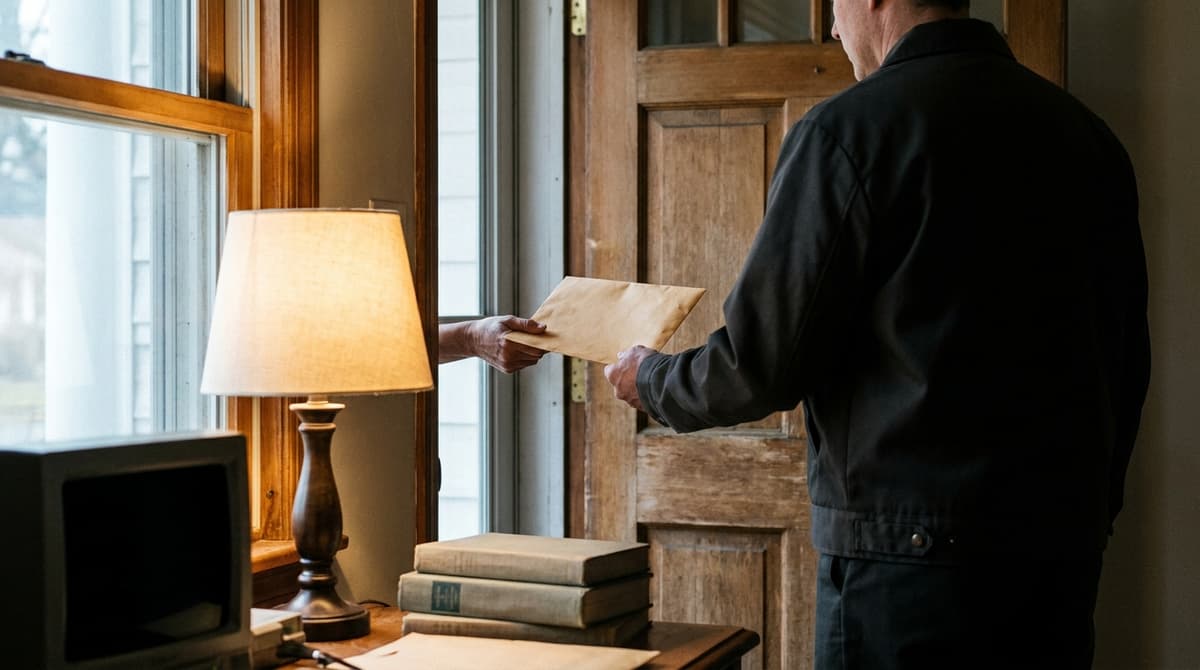
The defendant has to be served with your complaint before the case can go forward. The defendant can be served by handing the summons and complaint to them or leaving copies at their home with a resident of suitable age and discretion, by registered or certified mail, signature confirmation or a designated delivery service, or by the defendant accepting service in writing (G.S. 7A-217); the School of Government notes that most small claims cases are served by the sheriff's office. The trial is set no later than 30 days after the case starts, and except in summary ejectment cases, if it is set less than five days after service the magistrate must postpone it (G.S. 7A-214). The magistrate decides the case without a jury, and the rules of evidence for civil trials apply (G.S. 7A-222(a)).
Bring everything that proves your claim: the contract or agreement, receipts, invoices, estimates, photos, texts and emails, and any witnesses who saw what happened.
If you are the defendant
Read the summons for your trial date and go. As the Federal Trade Commission puts it, "respond and don't ignore the lawsuit."
A counterclaim in small claims cannot push the case over $10,000 (G.S. 7A-219). If you think the case was filed in the wrong county, object before the trial date or the objection is waived (G.S. 7A-221).
Sued by a debt collector? Federal law requires a debt collector suing a consumer to sue only where the consumer signed the contract or lives when the case is filed (15 U.S.C. § 1692i(a)(2)). The FTC also advises that if you are sued on a debt that is past its statute of limitations, you should "tell the judge that the statute of limitations has run out."
Military service. Before a court enters judgment for a plaintiff against a defendant who has not appeared, federal law requires the plaintiff to file an affidavit stating whether the defendant is in military service (50 U.S.C. § 3931(b)(1)).
Appealing a small claims judgment
A party who loses before the magistrate can appeal to district court. Paying the appeal costs on time is part of the appeal, not an afterthought.

| Step | What is required | Source |
|---|---|---|
| Give notice of appeal | Orally in court, or written notice filed with the clerk within 10 days after the judgment and served on all parties | G.S. 7A-228(a), (b) |
| Pay appeal costs | $150 court costs to the clerk | School of Government 2026 handout |
| Deadline to pay | Within 20 days after the judgment (10 days in summary ejectment cases) | G.S. 7A-228(b), as summarized in the handout |
| If you do not pay on time | The appeal is dismissed automatically | G.S. 7A-228(b), as summarized in the handout |
| Notice of appeal form | AOC-CVM-303 | School of Government 2026 guide |
Giving notice comes first. You can announce your appeal orally in court when the magistrate rules; otherwise you must file a written notice of appeal (form AOC-CVM-303) with the clerk of superior court within 10 days after the judgment and serve a copy on the other parties (G.S. 7A-228(a), (b)). Then pay the costs within the 20-day (or 10-day) deadline. If you want a jury in district court, demand one before the time to perfect your appeal runs out, or the right is waived (G.S. 7A-228(b)).
An appeal does not always go straight to a judge. The School of Government's guide notes, "In some cases, the matter may be assigned first to an arbitrator."
If a judgment was entered against you because you missed the hearing, you can ask the court to set it aside with a motion under Rule 60(b) of the Rules of Civil Procedure; depending on your county, a magistrate (for Rule 60(b)(1) motions, if the chief district judge allows it) or a district court judge hears it (G.S. 7A-228(a)). Do not wait: the 10-day appeal deadline keeps running while you decide, and we could not confirm the Rule 60 time limit against official text.
Collecting your judgment
Winning a judgment does not guarantee payment, and the court does not collect for you. If the defendant does not pay, you can pay to have an execution issued, the court order the sheriff uses to collect a judgment.
- Execution costs. The School of Government's 2026 handout says: "You will have to pay $55 to have an execution issued--$25 for the court and $30 for the sheriff." Those costs are added to the judgment.
- Return of property. If your judgment is for specific personal property, a writ of possession costs the same, $25 for the court plus $30 for the sheriff.
- Exemptions. North Carolina has a separate step for the debtor's exempt property; the School of Government guide names court forms AOC-CV-406 and AOC-CV-415 for it. Ask the clerk what you must serve and when you may request the execution.
Federal law protects some income from collection. Social Security benefits are not subject to "execution, levy, attachment, garnishment, or other legal process" (42 U.S.C. § 407(a)), and VA benefits are exempt from creditors' claims (38 U.S.C. § 5301(a)(1)). For North Carolina's own exemptions and how wage garnishment works there, see North Carolina debt collection laws.
A North Carolina money judgment generally bears interest at the legal rate of 8 percent a year until it is paid (G.S. 24-1, 24-5). In a contract case, the contract rate applies after judgment if the contract says so, but on consumer credit the rate is the lower of the legal rate or the contract rate (G.S. 24-5(a)). The court's handout says a judgment is good for 10 years and that, before the 10 years end, you may bring another lawsuit to extend it an additional 10 years; the statute allows that action on a judgment only once (G.S. 1-47(1)). A money judgment also becomes a lien on land the defendant owns, according to the same handout.
Official help
- UNC School of Government: Magistrates' Procedure in Small Claims Cases (2026), including the court handout on what happens after small claims court.
- G.S. 7A-228, small claims appeals (2025 General Statutes).
- Your county clerk's office, which can give you the current filing fee, service fee and forms.
Related
- Small claims court by state
- North Carolina statute of limitations
- North Carolina debt collection laws
- North Carolina landlord-tenant laws
- Virginia small claims court
- Georgia small claims court
Disclaimer: This article provides general legal information about North Carolina small claim actions under G.S. Chapter 7A, Article 19, verified on 2026-10-07. It is not legal advice and does not create an attorney-client relationship. For help with your situation, contact the clerk of court in your county, a legal aid office, or a lawyer licensed in North Carolina.
Last updated: 2026-10-07.
Frequently Asked Questions
What is the small claims limit in North Carolina?
$10,000. Under G.S. 7A-210, a small claims action is one where the amount in controversy does not exceed $10,000.
Can I sue for more than $10,000 in small claims in North Carolina?
No. A claim over $10,000 is outside small claims and has to be filed as a regular civil case; ask the clerk which court hears it before you consider cutting your claim down to fit.
Can a business sue in North Carolina small claims court without a lawyer?
Yes. The UNC School of Government's 2026 guide, citing G.S. 7A-222(c), says corporations and other business entities are not required to obtain legal representation.
How much does it cost to appeal a small claims judgment in North Carolina?
First give notice: announce the appeal in court or file written notice with the clerk within 10 days after the judgment (G.S. 7A-228(a)). The School of Government's 2026 handout says you must pay $150 in court costs to the clerk, and under G.S. 7A-228(b) the costs are due within 20 days after the judgment (10 days in summary ejectment), or the appeal is dismissed.
How much does it cost to collect a small claims judgment in North Carolina?
Having an execution issued costs $55, $25 for the court and $30 for the sheriff, according to the School of Government's 2026 handout, and those costs are added to the judgment.
Who hears a North Carolina small claims case?
A magistrate. If a party appeals, the case goes to district court, and the School of Government's guide notes that it may be assigned to an arbitrator first.
How much does it cost to file small claims in North Carolina?
$96 in court costs under G.S. 7A-305(a) ($80 General Court of Justice fee, $12 facilities fee and $4 technology fee), plus $30 per defendant if the sheriff serves the summons (G.S. 7A-311). Confirm the current total with the clerk.
Does a North Carolina judgment earn interest, and how long does it last?
Generally yes, at the 8 percent legal rate (G.S. 24-1, 24-5), or a contract rate after judgment if the contract provides one. The court's handout says a judgment is good for 10 years and can be extended once by a new lawsuit filed before then (G.S. 1-47(1)).
Updates
Independently fact-checked against the cited primary sources
The Law Behind This Article
This article rests on the statutory provisions below, held in our own legal record and retrieved from the official source. Tap a section to read the operative text.
North Carolina General Statutes, Chapter 7A: Judicial Department.
§ 7A-210Small claim action definedIn forcecited in 2 of our articles
For purposes of this Article a small claim action is a civil action wherein: (1) The amount in controversy, computed in accordance with G.S. 7A-243, does not exceed ten thousand dollars ($10,000); and (2) The only principal relief prayed is monetary, or the recovery of specific personal property, or summary ejectment, or any combination of the foregoing in properly joined claims; and (3) The plaintiff has requested assignment to a magistrate in the manner provided in this Article. The seeking of the ancillary remedy of claim and delivery or an order from the clerk of superior court for the relinquishment of property subject to a lien pursuant to G.S 44A-4(a) does not prevent an action otherwise qualifying as a small claim under this Article from so qualifying. (1965, c. 310, s. 1; 1973, c. 1267, s. 1; 1979, c. 144, s. 1; 1981, c. 555, s. 1; 1985, c. 329; c. 655, s. 1; 1989, c. 311, s. 1; 1993, c. 107, s. 1; c. 553, s. 73(a); 1999-411, s. 1; 2004-128, s. 1; 2013-159, s. 1.)
Official text (excerpt) · last checked 2026-07-29 · Read the full text in our law library · Verify at ncleg.gov
Also relied on in: North Carolina Scam and Fraud Laws: Where to Report, How to Sue
§ 7A-228New trial before magistrate; appeal for trial de novo; how appeal perfected; oral notice; dismissalIn forcecited in 2 of our articles
(a) The chief district court judge may authorize magistrates to hear motions to set aside an order or judgment pursuant to G.S. 1A-1, Rule 60(b)(1) and order a new trial before a magistrate. The exercise of the authority of the chief district court judge in allowing magistrates to hear Rule 60(b)(1) motions shall not be construed to limit the authority of the district court to hear motions pursuant to Rule 60(b)(1) through (6) of the Rules of Civil Procedure for relief from a judgment or order entered by a magistrate and, if granted, to order a new trial before a magistrate. After final disposition before the magistrate, the sole remedy for an aggrieved party is appeal for trial de novo before a district court judge or a jury. Notice of appeal may be given orally in open court upon announcement or after a judgment is rendered. If not announced in open court, written notice of appeal must be filed in the office of the clerk of superior court within 10 days after a judgment is rendered. The appeal must be perfected in the manner set out in subsection (b).
Official text (excerpt) · last checked 2026-07-29 · Read the full text in our law library · Verify at ncleg.gov
Cited in 23 court opinions in our collectionLatest citing opinion in our collection: 2025
Opinions citing this section in our collection:
- First Union National Bank v. Richards (Court of Appeals of North Carolina 1988, 90 N.C. App. 650)“…rial de novo in the district court pursuant to G.S. 7A-228(a). If plaintiff had failed to appear a…”
- Chandak v. Electronic Interconnect Corp. (Court of Appeals of North Carolina 2001, 144 N.C. App. 258)“…urt for a trial de novo. G.S. § 7A-224 (1999); G.S. § 7A-228 (1999). The statutes create a sc…”
- Jones v. Ratley (Court of Appeals of North Carolina 2005, 168 N.C. App. 126)“…2d 25, 29 (2001) (citing N.C. Gen.Stat. § 7A-224 (1999); N.C. Gen.Stat. § 7A-228 (1999)). In explaining "the nature of t…”
Identified automatically from the court opinions citing this section — not a ranking of which case controls.
Also relied on in: North Carolina Squatters Rights and Adverse Possession Laws (2026)
§ 7A-222General trial practice and procedureIn force
(a) Trial of a small claim action before a magistrate is without a jury. The rules of evidence applicable in the trial of civil actions generally are observed. At the conclusion of plaintiff's evidence the magistrate may render judgment of dismissal if plaintiff has failed to establish a prima facie case. If a judgment of dismissal is not rendered the defendant may introduce evidence. At the conclusion of all the evidence the magistrate may render judgment or may in his discretion reserve judgment for a period not in excess of 10 days, except as provided in subsection (b) of this section. (b) In a small claim action for summary ejectment, the magistrate shall render judgment on the same day on which the conclusion of all the evidence and submission of legal authorities occurs, unless the parties concur on an extension of additional time for entering the judgment and except for more complex summary ejectment cases, in which event the magistrate shall render judgment within five business days of the hearing.
Official text (excerpt) · last checked 2026-07-29 · Read the full text in our law library · Verify at ncleg.gov
§ 7A-305Costs in civil actionsIn force
(a) In every civil action in the superior or district court, except for actions brought under Chapter 50B of the General Statutes, shall be assessed: (1) For the use of the courtroom and related judicial facilities, the sum of twelve dollars ($12.00) in cases heard before a magistrate, and the sum of sixteen dollars ($16.00) in district and superior court, to be remitted to the county in which the judgment is rendered, except that in all cases in which the judgment is rendered in facilities provided by a municipality, the facilities fee shall be paid to the municipality. Funds derived from the facilities fees shall be used in the same manner, for the same purposes, and subject to the same restrictions, as facilities fees assessed in criminal actions. (1a) For the upgrade, maintenance, and operation of the judicial and county courthouse telecommunications and data connectivity, the sum of four dollars ($4.00), to be credited to the Court Information Technology Fund.
Official text (excerpt) · last checked 2026-07-29 · Read the full text in our law library · Verify at ncleg.gov
§ 7A-213Procedure for commencement of action; request for and notice of assignmentIn force
The plaintiff files his complaint in a small claim action in the office of the clerk of superior court of the county wherein the defendant, or one of the defendants resides. The designation "Small Claim" on the face of the complaint is a request for assignment. If, pursuant to order or rule, the action is assigned to a magistrate, the clerk issues a magistrate summons substantially in the form prescribed in this Article as soon as practicable after the assignment is made. The issuance of a magistrate summons commences the action. After service of the magistrate summons on the defendant, the clerk gives written notice of the assignment to the plaintiff. The notice of assignment identifies the action, designates the magistrate to whom assignment is made, and specifies the time, date and place of trial. By any convenient means the clerk notifies the magistrate of the assignment and the setting.
Official text (excerpt) · last checked 2026-07-29 · Read the full text in our law library · Verify at ncleg.gov
§ 7A-217Methods of subjecting person of defendant to jurisdictionIn force
When by order or rule a small claim action is assigned to a magistrate, the court may obtain jurisdiction over the person of the defendant by the following methods: (1) By delivering a copy of the summons and of the complaint to the defendant or by leaving copies thereof at the defendant's dwelling house or usual place of abode with some person of suitable age and discretion then residing therein. When the defendant is under any legal disability, the defendant may be subjected to personal jurisdiction only by personal service of process in the manner provided by G.S. 1A-1, Rule 4(j)(2). (2) When the defendant is not under any legal disability, the defendant may be served by registered or certified mail, signature confirmation, or designated delivery service as provided in G.S. 1A-1, Rule 4(j). Proof of service is as provided in G.S. 1A-1, Rule 4(j2). (3) When the defendant is under no legal disability, the defendant may be subjected to the jurisdiction of the court over the person of the defendant by written acceptance of service or by voluntary appearance. (4) In summary ejectment cases only, service as provided in G.S. 42-29 is also authorized.
Official text (excerpt) · last checked 2026-07-29 · Read the full text in our law library · Verify at ncleg.gov
§ 7A-219Certain counterclaims; cross claims; third-party claims not permissibleIn force
No counterclaim, cross claim or third-party claim which would make the amount in controversy exceed the jurisdictional amount established by G.S. 7A-210(1) is permissible in a small claim action assigned to a magistrate. No determination of fact or law in an assigned small claim action estops a party thereto in any subsequent action which, except for this section, might have been asserted under the Code of Civil Procedure as a counterclaim in the small claim action. Notwithstanding G.S. 1A-1, Rule 13, failure by a defendant to file a counterclaim in a small claims action assigned to a magistrate, or failure by a defendant to appeal a judgment in a small claims action to district court, shall not bar such claims in a separate action. (1965, c. 310, s. 1; 1973, c. 1267, s. 2; 1979, c. 144, s. 2; 1981, c. 555, s. 2; 1985, c. 329; 1989, c. 311, s. 2; 1993, c. 553, s. 73(b); 2005-423, s. 9.)
Official text (excerpt) · last checked 2026-07-29 · Read the full text in our law library · Verify at ncleg.gov
§ 7A-225Lien and execution of judgmentIn force
From the time of docketing, the judgment rendered by a magistrate in a small claim action constitutes a lien and is subject to execution in the manner provided in Chapter 1, Article 28, of the General Statutes.
Official text (excerpt) · last checked 2026-07-29 · Read the full text in our law library · Verify at ncleg.gov
North Carolina General Statutes, Chapter 1: Civil Procedure.
§ 1-234Where and how docketed; lienIn force
Upon the entry of a judgment under G.S. 1A-1, Rule 58, affecting the title of real property, or directing in whole or in part the payment of money, the clerk of superior court shall index and record the judgment on the judgment docket of the court of the county where the judgment was entered. The judgment may be docketed on the judgment docket of the court of any other county upon the filing with the clerk thereof of a transcript of the original docket. The judgment lien is effective as against third parties from and after the indexing of the judgment as provided in G.S. 1-233. The judgment is a lien on the real property in the county where the same is docketed of every person against whom any such judgment is rendered, and which he has at the time of the docketing thereof in the county in which such real property is situated, or which he acquires at any time thereafter, for 10 years from the date of the entry of the judgment under G.S. 1A-1, Rule 58, in the county where the judgment was originally entered.
Official text (excerpt) · last checked 2026-07-29 · Read the full text in our law library · Verify at ncleg.gov
North Carolina General Statutes, Chapter 1C: Enforcement of Judgments: Chapter 1C.
§ 1C-1601What property exempt; waiver; exceptionsIn forcecited in 3 of our articles
(a) Exempt property. - Each individual, resident of this State, who is a debtor is entitled to retain free of the enforcement of the claims of creditors: (1) The debtor's aggregate interest, not to exceed thirty-five thousand dollars ($35,000) in value, in real property or personal property that the debtor or a dependent of the debtor uses as a residence, in a cooperative that owns property that the debtor or a dependent of the debtor uses as a residence, or in a burial plot for the debtor or a dependent of the debtor; however, an unmarried debtor who is 65 years of age or older is entitled to retain an aggregate interest in the property not to exceed sixty thousand dollars ($60,000) in value so long as the property was previously owned by the debtor as a tenant by the entireties or as a joint tenant with rights of survivorship and the former co-owner of the property is deceased. (2) The debtor's aggregate interest in any property, not to exceed five thousand dollars ($5,000) in value of any unused exemption amount to which the debtor is entitled under subdivision (1) of this subsection.
Official text (excerpt) · last checked 2026-09-06 · Read the full text in our law library · Verify at ncleg.gov
Cited in 69 court opinions in our collectionLatest citing opinion in our collection: 2026
Opinions citing this section in our collection:
- Kinlaw v. Harris (Supreme Court of North Carolina 2010, 364 N.C. 528)“…ment. We conclude that the trial court properly applied N.C.G.S. § 1C-1601(a)(9) and acted within its broad equita…”
- Haarhuis v. Cheek (Court of Appeals of North Carolina 2018, 261 N.C. App. 358)“…from enforcement of certain claims by creditors pursuant to N.C. Gen. Stat. § 1C-1601(a)(8) (2017). As discussed supra, howev…”
- Susi v. Aubin (Court of Appeals of North Carolina 2005, 173 N.C. App. 608)“…stock in Bluebird. Relying upon the "wildcard" exemption of N.C. Gen.Stat. § 1C-1601(a)(2) (2003), allowing exemption of "an…”
Identified automatically from the court opinions citing this section — not a ranking of which case controls.
Also relied on in: Bankruptcy in North Carolina (2026): Exemptions & Means Test, North Carolina Debt Collection Laws: No Wage Garnishment Procedure, and the Piercers That Reach Anyway
North Carolina General Statutes, Chapter 24: Interest.
§ 24-5Interest on judgmentsIn forcecited in 2 of our articles
(a) Actions on Contracts. - In an action for breach of contract, except an action on a penal bond, the amount awarded on the contract bears interest from the date of breach. The fact finder in an action for breach of contract shall distinguish the principal from the interest in the award, and the judgment shall provide that the principal amount bears interest until the judgment is satisfied. If the parties have agreed in the contract that the contract rate shall apply after judgment, then interest on an award in a contract action shall be at the contract rate after judgment; otherwise it shall be at the legal rate. On awards in actions on contracts pursuant to which credit was extended for personal, family, household, or agricultural purposes, however, interest shall be at the lower of the legal rate or the contract rate. For purposes of this section, "after judgment" means after the date of entry of judgment under G.S. 1A-1, Rule 58. (a1) Actions on Penal Bonds. - In an action on a penal bond, the amount of the judgment, except the costs, shall bear interest at the legal rate from the date of entry of judgment under G.S. 1A-1, Rule 58, until the judgment is satisfied.
Official text (excerpt) · last checked 2026-07-29 · Read the full text in our law library · Verify at ncleg.gov
Cited in 173 court opinions in our collectionLatest citing opinion in our collection: 2026
Opinions citing this section in our collection:
- Rose v. Vulcan Materials Company (Supreme Court of North Carolina 1973, 282 N.C. 643)“…nguish the principal from the sum allowed as interest. ...” G.S. 24-5. In Bond v. Cotton Mills,…”
- Brown v. Flowe (Supreme Court of North Carolina 1998, 349 N.C. 520)“…ensatory damages in the amount of $250,000. Pursuant to N.C.G.S. § 24-5(b), the trial court applied prejudgment…”
- Sproles v. Greene (Supreme Court of North Carolina 1991, 329 N.C. 603)“…als concluded that “[p]rejudgment interest, provided for by G.S. 24-5, is a ‘cost’ within the meaning of an i…”
Identified automatically from the court opinions citing this section — not a ranking of which case controls.
Also relied on in: North Carolina Age Verification Law: The PAVE Act Explained
Search our full record of US law — 2.1 million sections, every state + federal →
Sources and References
- UNC School of Government, Magistrates' Procedure in Small Claims Cases (2026), including the court handout on what happens after small claims court(www.sog.unc.edu)
- 28 U.S.C. § 1346, United States as defendant(www.govinfo.gov).gov
- 28 U.S.C. § 2675, disposition by federal agency as prerequisite(www.govinfo.gov).gov
- 28 U.S.C. § 2401, time for commencing action against United States(www.govinfo.gov).gov
- Federal Trade Commission, Debt Collection FAQs(consumer.ftc.gov).gov
- 15 U.S.C. § 1692i, legal actions by debt collectors(www.govinfo.gov).gov
- 50 U.S.C. § 3931, Servicemembers Civil Relief Act, protection against default judgments(www.govinfo.gov).gov
- 42 U.S.C. § 407, Social Security benefits protected from legal process(www.govinfo.gov).gov
- 38 U.S.C. § 5301, exempt status of VA benefits(www.govinfo.gov).gov
- G.S. 7A-211, small claim actions assignable to magistrates (2025 General Statutes)(law.justia.com)
- G.S. 7A-213, commencement of action (2025 General Statutes)(law.justia.com)
- G.S. 7A-214, time within which trial is set (2025 General Statutes)(law.justia.com)
- G.S. 7A-217, service on the defendant (2025 General Statutes)(law.justia.com)
- G.S. 7A-219, counterclaims limited to the jurisdictional amount (2025 General Statutes)(law.justia.com)
- G.S. 7A-221, objections to venue and personal jurisdiction (2025 General Statutes)(law.justia.com)
- G.S. 7A-222, trial practice; no lawyer required (2025 General Statutes)(law.justia.com)
- G.S. 7A-228, new trial before magistrate; appeal (2025 General Statutes)(law.justia.com)
- G.S. 7A-305, costs in civil actions (2025 General Statutes)(law.justia.com)
- G.S. 7A-311, uniform civil process fees (2025 General Statutes)(law.justia.com)
- G.S. 24-1, legal rate of interest (2025 General Statutes)(law.justia.com)
- G.S. 24-5, interest on judgments (2025 General Statutes)(law.justia.com)
- G.S. 1-47, ten-year limitation on actions on judgments (2025 General Statutes)(law.justia.com)