
Minnesota
Minnesota Small Claims Court: $20,000 Limit, Fees and How to File
Independently fact-checked against primary sources (last audited October 7, 2026). · 27 primary sources cited on this page. How we verify our legal content
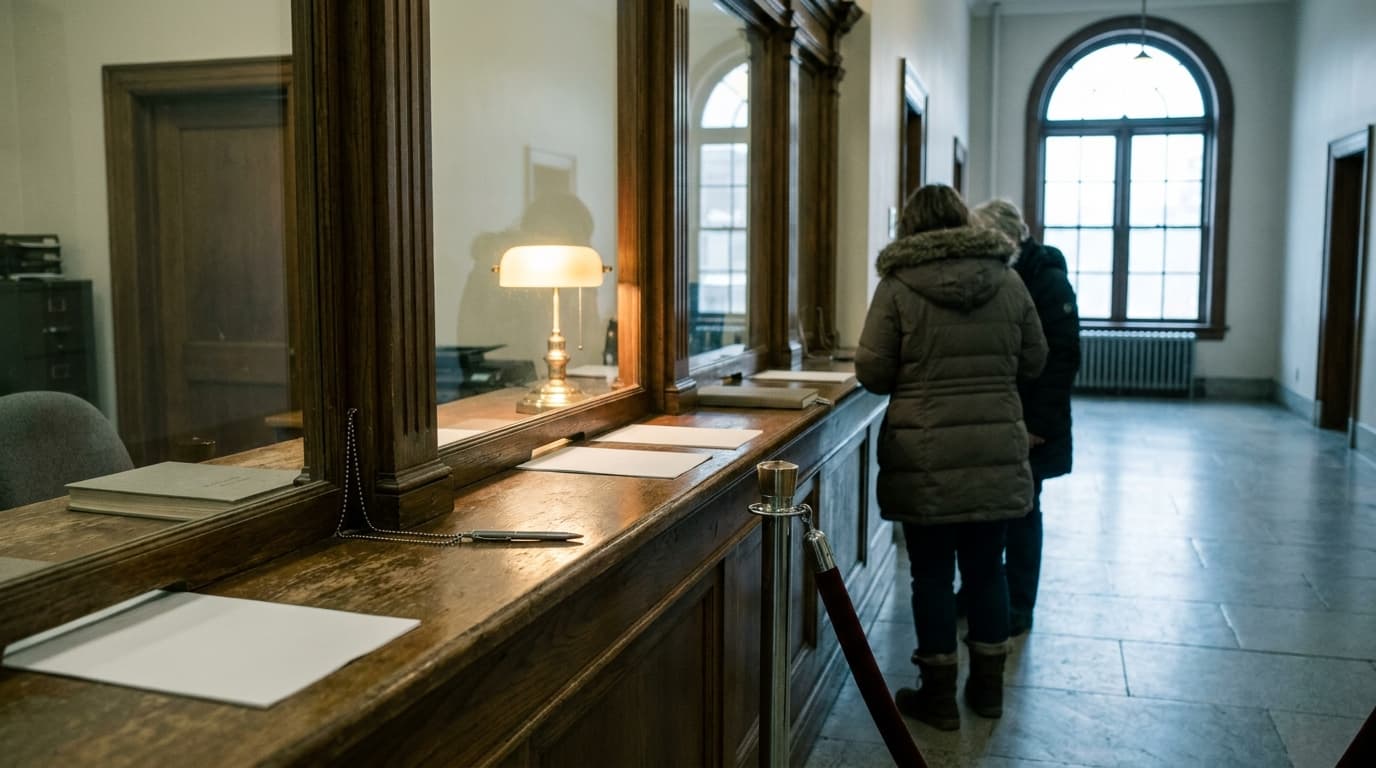
In Minnesota, you can sue for up to $20,000 in conciliation court, which is what Minnesota calls small claims court. The cap drops to $4,000 when a seller or lender sues over a consumer credit transaction, and both limits come from Minn. Stat. § 491A.01, subd. 3a.
The $20,000 figure is recent. A 2024 session law (Laws 2024, chapter 123, article 15, section 6) struck the old $15,000 limit and replaced it with $20,000, so older guides that say $15,000 are out of date. This guide walks through a Minnesota conciliation court case in the order you will live it, from filing to collecting. For other states, see our guide to small claims court by state.
Information last verified on 2026-10-06. This article has not been reviewed by a licensed lawyer.
Jurisdiction scope: This article covers conciliation court in Minnesota under Minn. Stat. chapter 491A and the conciliation court rules in Part 500 of the Minnesota General Rules of Practice (Rules 501 to 525), as amended effective July 1, 2026. It does not cover eviction cases, regular civil cases in district court, or small claims in other states.
What is conciliation court in Minnesota?
Conciliation court is a division of the district court. Minn. Stat. § 491A.01, subd. 1 says: "The district court in each county shall establish a conciliation court division with the jurisdiction and powers set forth in this chapter."
District court judges, judicial officers or referees hear the cases (Minn. Gen. R. Prac. 504(a)). There is no jury, and the hearing is not recorded (Minn. Stat. § 491A.02, subd. 1).
Minnesota small claims limit: $20,000
| Type of claim | Limit | Source |
|---|---|---|
| Most money claims | $20,000 | Minn. Stat. § 491A.01, subd. 3a(a)(1) |
| Return of personal property (ownership or possession) | Property worth up to $20,000 | Minn. Stat. § 491A.01, subd. 5 |
| Claim involving a consumer credit transaction | $4,000 | Minn. Stat. § 491A.01, subd. 3a(a)(2) |
The statute measures the limit by the money or property that is the subject of the claim, which "does not exceed: (1) $20,000; or (2) $4,000, if the claim involves a consumer credit transaction."
The lower $4,000 cap applies when the person suing is the seller or lender, the buyer is an individual, and the purchase was for personal, family or household use (Minn. Stat. § 491A.01, subd. 3a(b)). A store or lender chasing a consumer debt therefore has a much lower ceiling than a person suing over a deposit, a repair job or a car accident.
If your claim is worth more than $20,000
The Minnesota Judicial Branch says court administration cannot accept a claim over $20,000. You can lower your claim to the limit, but you cannot later ask for the rest in another claim, and you cannot split a claim into several smaller ones if they involve the same circumstances. If your losses are well above $20,000, consider district court instead.
What you can and cannot sue for
Most disputes over money or personal property fit, including damages that grow out of a landlord and tenant relationship. Minn. Stat. § 491A.01, subd. 9 gives conciliation court "jurisdiction to determine an action for damages arising from the landlord and tenant relationship," under chapter 504B or a rental agreement. That covers claims such as a disputed security deposit; our Minnesota landlord-tenant laws guide explains the deposit rules themselves.
The court can also order someone to return personal property worth up to the limit. Once that order is final, the sheriff enforces it without further process (Minn. Stat. § 491A.01, subd. 5).
Minn. Stat. § 491A.01, subd. 4 lists cases conciliation court cannot hear:
- Title to real estate, including boundary-line disputes
- Libel and slander
- Specific performance or injunctions, except an order to return personal property
- Class actions and prejudgment remedies
- Cases under chapters 256, 257, 259, 260, 518, 518A, 518B, 518C, 524 and 525 (family, adoption, juvenile, probate and similar matters), except debts owed to state agencies or political subdivisions
- Evictions
- Medical malpractice
- Matters that belong exclusively to another court or division
A claim also has a clock. The Minnesota statute of limitations guide covers how long you have to file different kinds of claims.
Filing fees
The filing fee set by statute is $65, and both sides pay it. Minn. Stat. § 357.022 says the court administrator "shall charge and collect a filing fee of $65 from every plaintiff and from every defendant when the first paper for that party is filed in any conciliation court action." Minn. Stat. § 491A.02, subd. 3 adds any applicable law library fee on top.
The Minnesota Judicial Branch's District Court Fees page lists the total for each county: the $65 base fee plus that county's law library fee (for example $70 in Hennepin County and $80 in Ramsey County). The court also notes an extra $5 if you file electronically. Under the amended Rule 506, a party never pays the initial filing fee more than once.
If you cannot afford the fee
You can ask to proceed without paying. Rule 506 says: "If any party who is a natural person signs and files with the court administrator an affidavit claiming an inability to pay the applicable fees, no fees are required." If you then win, the fees are paid out of the money you recover.
The rule applies only to a party who is a natural person, so a corporation or LLC cannot use it.
Do you need a lawyer?
No, but you may bring one. A party can be represented by a lawyer admitted in Minnesota, who takes part to the extent the judge finds helpful (Minn. Stat. § 491A.02, subd. 4; Minn. Gen. R. Prac. 512(d)).
A business does not need a lawyer for the hearing. Under Minn. Stat. § 491A.02, subd. 4, "A corporation, partnership, limited liability company, sole proprietorship, or association may be represented in conciliation court by an officer, manager, or partner." It may also appear through an appointed employee or a commercial property manager, and a condominium, cooperative or townhouse association may appear through its agent. The representative's written authority, such as a power of attorney, resolution or bylaw, goes in with the claim or is presented at trial. The state and local governments may be represented by an employee.
One exception: if a corporation wants to remove a case to district court after losing, its demand for removal must be signed by its attorney (Minn. Gen. R. Prac. 521(b)(1)).
Where to file
You file in the conciliation court of the right county. Minn. Stat. § 491A.01, subd. 3a(c) says "the territorial jurisdiction of conciliation court is coextensive with the county in which the court is established," and subdivisions 6 to 11 extend that in specific situations:
- Several defendants: you may file in the county where any one of them lives.
- Rental property: a landlord-tenant damages case goes in the county where the property is located.
- Bounced check: a plaintiff who lives in the county may sue there over a dishonored check issued in that county.
- Student loans, foreign corporations and nonresident defendants: special county rules apply.
In general, the Minnesota Judicial Branch says you file in the county where the defendant lives or has a place of business; for a corporation, you can also file where its business office or branch office is located. Court staff cannot tell you where to file, so if your case does not clearly fit, ask a lawyer or legal aid office.
Serving the defendant
How the summons reaches the defendant depends on the amount you claim (Minn. Gen. R. Prac. 508):

| Claim amount | Who serves | How |
|---|---|---|
| $2,500 or less, defendant in the county (or elsewhere in Minnesota where the law allows statewide service) | Court administrator | First-class mail |
| More than $2,500 | You, the plaintiff | Certified mail, or personal service under the civil rules |
| Defendant outside Minnesota | You, the plaintiff | The administrator sends you the summons to serve |
Watch the deadline. Rule 508 warns: "If the summons is not properly served and proof of service filed within sixty (60) days after issuance of the summons, the action will be dismissed without prejudice." Dismissal without prejudice means you can refile, but you lose time. The Judicial Branch tells plaintiffs to file the affidavit of service within 60 days or before the court date, whichever comes first.
The trial is set at least 28 days after the summons is mailed or served, unless a judge orders otherwise.
If you are the defendant
The rules we reviewed do not require a written answer. The summons tells you to appear at trial and warns that a default judgment may be entered if you do not (Minn. Gen. R. Prac. 508(b)).
You can file a counterclaim. Rule 509 lets a defendant assert one "whether or not arising out of the transaction or occurrence" in the plaintiff's claim, as long as it fits within conciliation court's limits. Since July 1, 2026, you must file it, pay the fee and serve it on the plaintiff by certified mail at least 14 days before trial (the old deadline was 7 days). A late counterclaim is heard only with the judge's permission.
If your related counterclaim is too big for conciliation court, you can file an affidavit at least 14 days before trial stating that a district court action has been or will be started within 28 days. The plaintiff's conciliation case is then taken off the calendar, and it can be reinstated between 28 days and 3 years later (Minn. Gen. R. Prac. 510).
There is no jury in conciliation court. A party who wants a jury gets one only by removing the case to district court after judgment (see appeals below).
The hearing
Minn. Stat. § 491A.02, subd. 1 sets the tone: "The determination of claims in conciliation court must be without jury trial and by a simple and informal procedure. Conciliation court proceedings must not be reported."
The judge or referee hears both sides and any witnesses and looks at exhibits. Some practical points from Minn. Gen. R. Prac. 512:
- Digital exhibits (photos, videos, files) go through the Minnesota Digital Exhibit System and must be shared at least 3 days before trial.
- Subpoenas for witnesses are available on request and payment of a fee.
- Accommodations and interpreters: the summons includes notice of your right to request them.
Because no record is made, the hearing cannot be reviewed on a transcript. A losing party's remedy is a fresh trial in district court.
Defaults and how to undo one
If one side does not show up, the judge can enter a default judgment or dismiss the case. Within 21 days after notice of the judgment is sent, a judge may vacate a default judgment or a dismissal with prejudice without a hearing on a showing of lack of notice, mistake, inadvertence or excusable neglect, and may condition that on paying costs of up to $50 (Minn. Gen. R. Prac. 520). After 21 days, you file a motion with the conciliation court administrator showing you did not get a timely summons or notice, or other good cause, and you must act within a reasonable time.
A plaintiff asking for a default judgment against someone who did not appear also runs into federal law. The Servicemembers Civil Relief Act requires the plaintiff to file an affidavit "stating whether or not the defendant is in military service" before the court enters judgment (50 U.S.C. § 3931(b)(1)).
Appeals: removal to district court
Minnesota does not have a traditional appeal from conciliation court. Instead, after a contested trial, either side can remove the case to district court for a new trial (trial de novo), heard by a judge or, if demanded, a jury (Minn. Gen. R. Prac. 521; Minn. Stat. § 491A.02, subds. 6 to 8).
Removal is not available if you lost by default because you did not appear. In that case you ask the conciliation judge to vacate the judgment under Rule 520 (see Defaults above), and if that request is denied you can seek a limited removal of the denial within 21 days (Minn. Gen. R. Prac. 521(e)).
The deadline is 21 days. Rule 521 says the removing party "must perform all the following actions within 21 days after the date the court administrator transmitted to that party notice of the judgment order":
- Serve a demand for removal on the other side, stating whether you want a court trial or a jury trial.
- File the original demand with proof of service.
- File an affidavit that the removal is made in good faith.
- Pay the removal fee, or apply to proceed without fees under Minn. Stat. § 563.01.
When the notice is mailed, Rule 503.03 adds 3 days, so the period is 24 days for a mailed notice and 21 days for one sent electronically. The notice of judgment states the last day to remove or, after a default, to seek vacation (Minn. Gen. R. Prac. 514); use that date.
Older committee commentary refers to a 20-day period, but the current rule text says 21 days.
The removal fee is "the amount prescribed by law for filing a civil action in district court" (Rule 521(b)(4)). Minn. Stat. § 357.021, subd. 2(1) lists that civil filing fee as $310, and demanding a jury adds $100. The county law library fee is added on top; the Judicial Branch's fee page shows the total for each county.
Removal carries a cost risk. If the party who removed does not prevail in district court, the court orders that party to pay an additional $50 in costs to the other side, which can be waived for hardship if the removing party qualifies for a fee waiver (Minn. Stat. § 491A.02, subd. 7 defines "prevails"). The district court's decision can then be appealed to the Minnesota Court of Appeals like any other civil case.
Collecting a Minnesota conciliation court judgment
Winning does not mean you get paid automatically, and conciliation court does not collect for you. Rule 518 is direct: "The conciliation court may not issue a writ of execution or garnishment summons."

When the judgment becomes collectible. The judgment becomes final and effective 21 days after notice is sent (24 days if the notice is mailed, under Rule 503.03; the notice states the date), unless it has been paid in full, removal has been perfected, the order has been vacated, or the judge orders otherwise (Minn. Gen. R. Prac. 515). A judge may order payment in installments over up to one year; in that case the judgment can be docketed only 21 days after a missed installment.
Moving it to district court. To collect, you get a transcript of the judgment and file it in district court, where it is docketed on an affidavit of identification. From there it is enforced like any district court judgment, including garnishment and execution (Minn. Gen. R. Prac. 518, 519). Our Minnesota debt collection laws guide covers what property and income are protected from collection.
Making the debtor disclose assets. On request, the district court orders the judgment debtor to fill out and mail a form listing assets, liabilities and earnings. A debtor who fails to do so within 10 days may be held in civil contempt (Minn. Stat. § 491A.02, subd. 9).
Liens and how long the judgment lasts. A docketed judgment is a lien on the debtor's real property in that county. The judgment and the lien last ten years after entry (Minn. Stat. § 548.09, subd. 1).
Interest. For judgments of $50,000 or less, Minn. Stat. § 549.09, subd. 1(c)(1) sets simple interest at a rate tied to the one-year Treasury yield, rounded to the nearest 1 percent and never below 4 percent. The state court administrator sets the rate on or before December 20 for the next calendar year; for 2026 it is 4 percent.
Federal protections. Some income cannot be taken no matter what state law says. Social Security benefits are not subject to "execution, levy, attachment, garnishment, or other legal process" (42 U.S.C. § 407(a)), and VA benefits are similarly protected (38 U.S.C. § 5301(a)(1)). Federal law also caps wage garnishment for ordinary debts at the lesser of 25 percent of disposable earnings or the amount above 30 times the federal minimum hourly wage (15 U.S.C. § 1673(a)); our wage garnishment calculator shows how that works.
Suing a debt collector, or being sued by one
If a debt collector sues you over a consumer debt, federal law limits where. Under 15 U.S.C. § 1692i(a)(2), it must sue in the area where you signed the contract or where you live when the case starts. The Federal Trade Commission's advice is to respond by the date in the court papers and not ignore the lawsuit. In Minnesota, remember the separate $4,000 cap on consumer credit claims brought by a seller or lender. In a consumer credit case, a plaintiff who has communicated with the defendant by email, text or similar means must also send the hearing details that way and file an affidavit saying so, or risk being denied a default judgment (Minn. Gen. R. Prac. 508(d)(5)).
Claims against the federal government
A claim against a federal agency or a federal employee acting on the job is not a conciliation court case. Federal district courts have exclusive jurisdiction over Federal Tort Claims Act claims for money damages (28 U.S.C. § 1346(b)(1)), and you must first present the claim to the agency in writing within two years (28 U.S.C. § 2401(b)).
Official rules and resources
- Minn. Stat. § 491A.01 (jurisdiction, limits, exclusions and venue) and § 491A.02 (procedure, representation, removal costs)
- Conciliation court rules, Minn. Gen. R. Prac. Part 500, as amended effective July 1, 2026
- Minnesota Judicial Branch conciliation court help topic, with forms and FAQs, and its District Court Fees page for each county's total filing fee
Related
- Small claims court by state
- Minnesota statute of limitations
- Minnesota debt collection laws
- Minnesota landlord-tenant laws
- Wisconsin small claims court
- Iowa small claims court
Disclaimer: This article provides general legal information about Minnesota conciliation court under Minn. Stat. chapter 491A, the Minnesota General Rules of Practice Part 500, and the other Minnesota and federal laws cited above, verified on 2026-10-06. It is not legal advice and does not create an attorney-client relationship. For help with your situation, contact your county court administrator, a legal aid office, or a lawyer licensed in Minnesota.
Last updated: 2026-10-06.
Frequently Asked Questions
What is the small claims limit in Minnesota?
$20,000 in conciliation court, or $4,000 if the claim involves a consumer credit transaction brought by the seller or lender (Minn. Stat. § 491A.01, subd. 3a).
Is the Minnesota small claims limit still $15,000?
No. Laws 2024, chapter 123 struck $15,000 and inserted $20,000 in Minn. Stat. § 491A.01, so guides that list $15,000 are out of date.
How much does it cost to file in conciliation court in Minnesota?
The statute sets a $65 filing fee for each plaintiff and each defendant, plus the county law library fee (Minn. Stat. § 357.022). The Minnesota Judicial Branch fee page lists each county's total, for example $70 in Hennepin County and $80 in Ramsey County, and e-filing adds $5.
Can a lawyer represent me in conciliation court in Minnesota?
Yes. A lawyer admitted in Minnesota may represent a party and takes part as the judge finds helpful, but no lawyer is required (Minn. Stat. § 491A.02, subd. 4).
Can a business sue in Minnesota conciliation court without a lawyer?
Yes. A corporation, partnership, LLC, sole proprietorship or association may appear through an officer, manager, partner or authorized employee with written authority (Minn. Stat. § 491A.02, subd. 4). A corporation needs its attorney to sign a demand for removal.
How long do I have to appeal a conciliation court judgment in Minnesota?
After a contested trial, 21 days after the court administrator sends notice of the judgment, plus 3 days if the notice was mailed; the notice states the last day. Within that time you serve and file a demand for removal, a good-faith affidavit and the removal fee, and district court holds a new trial (Minn. Gen. R. Prac. 521, 503.03, 514). If you lost by default because you did not appear, you cannot remove; you ask the judge to vacate the judgment instead (Rule 520).
Can I evict a tenant in Minnesota conciliation court?
No. Evictions are excluded (Minn. Stat. § 491A.01, subd. 4), but conciliation court can hear damages claims arising from the landlord and tenant relationship, such as a security deposit dispute (subd. 9).
What if I missed my conciliation court hearing in Minnesota?
Within 21 days after notice is sent, a judge may vacate a default for lack of notice, mistake, inadvertence or excusable neglect. After that, you file a motion showing good cause within a reasonable time (Minn. Gen. R. Prac. 520).
Can conciliation court garnish wages in Minnesota?
No. The conciliation court may not issue a writ of execution or garnishment summons. You file a transcript of the judgment in district court and enforce it there (Minn. Gen. R. Prac. 518).
How long is a Minnesota conciliation court judgment good for?
Once docketed in district court, the judgment and its lien on real property in that county last ten years after entry (Minn. Stat. § 548.09, subd. 1).
Updates
Independently fact-checked against the cited primary sources
The Law Behind This Article
This article rests on the statutory provisions below, held in our own legal record and retrieved from the official source. Tap a section to read the operative text.
Minnesota Statutes, Chapter 491A: CONCILIATION COURT
§ 491A.01ESTABLISHMENT; POWERS; JURISDICTIONIn forcecited in 4 of our articles
Subdivision 1. Establishment. The district court in each county shall establish a conciliation court division with the jurisdiction and powers set forth in this chapter. Subd. 2. Powers; issuance of process. The conciliation court has all powers, and may issue process as necessary or proper to carry out the purposes of this chapter. No writ of execution or garnishment summons may be issued out of conciliation court. Subd. 3. [Expired, 2012 c 283 s 1] Subd. 3a. Jurisdiction; general. (a) Except as provided in subdivisions 4 and 5, the conciliation court has jurisdiction to hear, conciliate, try, and determine civil claims if the amount of money or property that is the subject matter of the claim does not exceed: (1) $20,000; or (2) $4,000, if the claim involves a consumer credit transaction.
Official text (excerpt) · last checked 2026-07-29 · Read the full text in our law library · Verify at revisor.mn.gov
Cited in 6 court opinions in our collectionLatest citing opinion in our collection: 2018
Opinions citing this section in our collection:
- Hanson v. Woolston (Court of Appeals of Minnesota 2005, 701 N.W.2d 257)“…claims involving consumer-credit transactions under $4,000. Minn.Stat. § 491A.01, subd. 3(a) (2004). Its territorial jur…”
- Roehrdanz v. Brill (Supreme Court of Minnesota 2004, 682 N.W.2d 626)“…ersy, may be heard in a less formal forum. See Minn.Stat. § 491A.01, subd. 1 (2002) (“The district court in…”
- Cohen v. Little Six, Inc. (Court of Appeals of Minnesota 1996, 543 N.W.2d 376)“…Minnesota small claims or conciliation court system. See Minn.Stat. §§ 491A.01-.03 (1994) (establishing conciliation c…”
Identified automatically from the court opinions citing this section — not a ranking of which case controls.
Also relied on in: Minnesota Defamation Laws: Libel & Slander (2026), Minnesota Landlord-Tenant Laws (2026): Deposits, Notice, and Tenant Rights, Minnesota Scam and Fraud Laws: Where to Report, Your Right to Sue (2026)
§ 491A.02PROCEDUREIn force
Subdivision 1. Procedure; rules; forms. The determination of claims in conciliation court must be without jury trial and by a simple and informal procedure. Conciliation court proceedings must not be reported. By July 1, 1993, the supreme court shall promulgate rules governing pleading, practice, and procedure for conciliation courts, and shall promulgate uniform claim and counterclaim forms. The claim and summons must include a conspicuous notice in at least 10-point bold type regarding the consequences of a failure to appear at a conciliation court hearing. Each conciliation court shall accept a uniform claim or counterclaim that has been properly completed and forwarded to the court together with the entire filing fee, if any. Subd. 2. Assistance to litigants. Under the supervision of the conciliation court judges, the court administrator shall explain to litigants the procedure and functions of the conciliation court and shall on request assist them in filling out all forms and pleading necessary for the presentation of their claims or counterclaims to the court.
Official text (excerpt) · last checked 2026-07-29 · Read the full text in our law library · Verify at revisor.mn.gov
§ 491A.03JUDGES; ADMINISTRATOR; REPORTER; SUPPLIESIn force
Subdivision 1. Judges; referees. The judges of district court may serve as judges of conciliation court. The chief judge of the district may appoint one or more suitable persons to act as referees in conciliation court; the chief judge of the district shall establish qualifications for the office, specify the duties and length of service of referees, and fix their compensation. Subd. 2. Administrator. The court administrator of the district court shall serve as the court administrator of conciliation court. The court administrator shall account for and pay over to the appropriate official all fees received by the court administrator. Subd. 3. Court reporter. Each court reporter appointed by a judge of district court shall, at the request of the judge, assist that judge in performing the judge's duties as conciliation court judge. A court reporter may not take official notes of any trial or proceedings in conciliation court. Subd. 4. Quarters; supplies. The county in which the court is established shall provide suitable quarters for the court.
Official text (excerpt) · last checked 2026-07-29 · Read the full text in our law library · Verify at revisor.mn.gov
Minnesota Statutes, Chapter 357: FEES
§ 357.022CONCILIATION COURT FEEIn force
The court administrator in every county shall charge and collect a filing fee of $65 from every plaintiff and from every defendant when the first paper for that party is filed in any conciliation court action. This section does not apply to conciliation court actions filed by the state. The court administrator shall transmit the fees monthly to the commissioner of management and budget for deposit in the state treasury and credit to the general fund.
Official text (excerpt) · last checked 2026-07-29 · Read the full text in our law library · Verify at revisor.mn.gov
Minnesota Statutes, Chapter 549: COSTS, DISBURSEMENTS
§ 549.09INTEREST ON VERDICTS, AWARDS, AND JUDGMENTSIn force
Subdivision 1. When owed; rate. (a) When a judgment or award is for the recovery of money, including a judgment for the recovery of taxes, interest from the time of the verdict, award, or report until judgment is finally entered shall be computed by the court administrator or arbitrator as provided in paragraph (c) and added to the judgment or award. (b) Except as otherwise provided by contract or allowed by law, preverdict, preaward, or prereport interest on pecuniary damages shall be computed as provided in paragraph (c) from the time of the commencement of the action or a demand for arbitration, or the time of a written notice of claim, whichever occurs first, except as provided herein. The action must be commenced within two years of a written notice of claim for interest to begin to accrue from the time of the notice of claim. If either party serves a written offer of settlement, the other party may serve a written acceptance or a written counteroffer within 30 days. After that time, interest on the judgment or award shall be calculated by the judge or arbitrator in the following manner.
Official text (excerpt) · last checked 2026-07-29 · Read the full text in our law library · Verify at revisor.mn.gov
Minnesota Statutes, Chapter 548: JUDGMENTS
§ 548.09LIEN OF JUDGMENTIn forcecited in 2 of our articles
Subdivision 1. Entry and docketing; survival of judgment. Except as provided in section 548.091, every judgment requiring the payment of money shall be entered by the court administrator when ordered by the court and will be docketed by the court administrator upon the filing of an affidavit as provided in subdivision 2. Upon a transcript of the docket being filed with the court administrator in any other county, the court administrator shall also docket it. From the time of docketing the judgment is a lien, in the amount unpaid, upon all real property in the county then or thereafter owned by the judgment debtor, but it is not a lien upon registered land unless it is also recorded pursuant to sections 508.63 and 508A.63. The judgment survives, and the lien continues, for ten years after its entry. Child support judgments may be renewed pursuant to section 548.091. Subd. 2. Judgment creditor's affidavit.
Official text (excerpt) · last checked 2026-07-29 · Read the full text in our law library · Verify at revisor.mn.gov
Cited in 34 court opinions in our collectionLatest citing opinion in our collection: 2026
Opinions citing this section in our collection:
- Dahlin v. Kroening (Supreme Court of Minnesota 2011, 796 N.W.2d 503)“…survives for a period of ten years after entry of judgment. Minn.Stat. § 548.09, subd. 1 (2010); see also In re Sitarz…”
- Kipp v. Sweno (Supreme Court of Minnesota 2004, 683 N.W.2d 259)“…nt lien beyond property owned by the judgment debtor. See Minn.Stat. § 548.09, subd. (1) (2002); Steele v. Taylor,…”
- In Re the Marriage of Opp (Court of Appeals of Minnesota 1994, 516 N.W.2d 193)“…denial of his motion to vacate the judgment. He argues that Minn.Stat. §§ 548.09 and 548.091 (1992) prevent docketing of…”
Identified automatically from the court opinions citing this section — not a ranking of which case controls.
Also relied on in: Minnesota Statute of Limitations: Filing Deadlines by Case Type
Search our full record of US law — 2.1 million sections, every state + federal →
Sources and References
- Minn. Stat. § 491A.01 (conciliation court jurisdiction, limits, exclusions, venue)(revisor.mn.gov).gov
- Laws of Minnesota 2024, chapter 123 (raising the limit from $15,000 to $20,000)(revisor.mn.gov).gov
- Minn. Gen. R. Prac. 510 and advisory committee comment (2026 amendments)(revisor.mn.gov).gov
- Minn. Stat. § 491A.02 (procedure, representation, removal costs, debtor disclosure)(revisor.mn.gov).gov
- Minn. Stat. § 357.022 (conciliation court filing fee)(revisor.mn.gov).gov
- Minn. Gen. R. Prac. 506 (fees and inability to pay)(revisor.mn.gov).gov
- Minn. Gen. R. Prac. 521 (removal to district court)(revisor.mn.gov).gov
- Minn. Gen. R. Prac. 508 (summons and service)(revisor.mn.gov).gov
- Minn. Gen. R. Prac. 509 (counterclaims)(revisor.mn.gov).gov
- Minn. Gen. R. Prac. 520 (vacating a default)(revisor.mn.gov).gov
- 50 U.S.C. § 3931 (Servicemembers Civil Relief Act, default judgments)(govinfo.gov).gov
- Minn. Gen. R. Prac. 515 (when a judgment becomes final)(revisor.mn.gov).gov
- Minn. Gen. R. Prac. 518 (no execution or garnishment in conciliation court)(revisor.mn.gov).gov
- 42 U.S.C. § 407 (Social Security benefits protected from legal process)(govinfo.gov).gov
- 38 U.S.C. § 5301 (VA benefits protected from creditors)(govinfo.gov).gov
- 15 U.S.C. § 1673 (federal wage garnishment limit)(govinfo.gov).gov
- 15 U.S.C. § 1692i (venue for debt collector lawsuits)(govinfo.gov).gov
- Federal Trade Commission: Debt Collection FAQs(consumer.ftc.gov).gov
- 28 U.S.C. § 1346 (federal district court jurisdiction over FTCA claims)(govinfo.gov).gov
- 28 U.S.C. § 2401 (two-year FTCA presentment deadline)(govinfo.gov).gov
- Minnesota Judicial Branch, Conciliation Court FAQs (claim limit, splitting, where to file, affidavit of service, effective date of judgment)(mncourts.gov).gov
- Minnesota Judicial Branch, District Court Fees (conciliation base fee, removal fees, county law library fees)(mncourts.gov).gov
- Minnesota Judicial Branch, Conciliation Court help topic(mncourts.gov).gov
- Minn. Gen. R. Prac. 503 (3 days added for service by mail)(revisor.mn.gov).gov
- Minn. Gen. R. Prac. 504 (conciliation judges)(revisor.mn.gov).gov
- Minn. Gen. R. Prac. 514 (notice of judgment states the last day to vacate or remove)(revisor.mn.gov).gov
- Minnesota Court Rules, 2026 Interest Rates on State Court Judgments and Arbitration Awards(revisor.mn.gov).gov