
Vermont
Vermont Small Claims Court: $10,000 Limit, Fees and How to File
Independently fact-checked against primary sources (last audited October 7, 2026). · 15 primary sources cited on this page. How we verify our legal content

Vermont's small claims limit is $10,000. Under 12 V.S.A. § 5531(a), small claims is for cases "in which the plaintiff does not claim as debt or damage more than $10,000.00." A lower $5,000 cap applies when the case is to collect consumer credit debt or medical debt (12 V.S.A. § 5531(e)). The $10,000 limit has been in effect since June 5, 2023, when Act 46 of 2023 raised it from $5,000.
Small claims court is part of the Civil Division of the Vermont Superior Court, with one in each county. It decides money claims only, in an informal hearing before a judge sitting alone. This guide walks through a Vermont small claims case in the order you will live it. For other states, see our guide to small claims court by state.
Information last verified on 2026-10-07. This article has not been reviewed by a licensed lawyer.
Jurisdiction scope: This article covers small claims in Vermont under 12 V.S.A. chapter 187, the court fees in 32 V.S.A. § 1431, and the Vermont Judiciary's small claims guide (form 100-00509, January 2025) and web pages. It does not cover evictions, regular civil cases in the Civil Division, or small claims in other states.
Vermont small claims limit: $10,000
The general limit is $10,000 for any plaintiff, including businesses. Act 46 of 2023 (S.33) raised it from $5,000 and took effect on passage, June 5, 2023. Older pages that still say $5,000 are out of date for most claims, but $5,000 is still the cap in one important category.
| Type of claim | Limit | Source |
|---|---|---|
| Most money claims | $10,000 | 12 V.S.A. § 5531(a) |
| Collecting consumer credit debt or medical debt | $5,000 | 12 V.S.A. § 5531(e) |
Section 5531(e) says the small claims court "shall not have jurisdiction over actions for collection of any debt greater than $5,000.00 arising out of: (1) a consumer credit transaction as defined in 15 U.S.C. § 1679a; or (2) medical debt as defined in 18 V.S.A. § 9481."
We found no 2024, 2025 or 2026 law changing these limits.
You cannot split a claim, and waiving the excess is permanent
12 V.S.A. § 5531(b): "Nor may parties split a claim in excess of $10,000.00 into two or more claims under this chapter." The judiciary guide explains the trade-off. You may ask for only $10,000 on a larger claim, but "if you do that you cannot later file another case (either in small claims or in the Civil Division) to collect the other part of the claim." You also cannot file two cases at once for different parts of the same claim.
The guide adds that the judge may award interest and reimbursement of your fees on top of the $10,000. If your loss is well over $10,000, compare small claims with a regular case in the Civil Division before you file.
Filing deadlines
Small claims has no separate filing deadline, but the general statute of limitations still applies. Our Vermont statute of limitations guide covers the time limits for different kinds of claims.
What you can sue for and who can file
- Money only. "Parties may not request claims for relief other than money damages under this chapter" (12 V.S.A. § 5531(b)). Small claims cannot order someone to return property or to do or stop doing something.
- No slander or libel cases (12 V.S.A. § 5531(a)).
- Age. The judiciary says you must be 18 or older to sue. A parent or guardian may sue for a minor or for a person who has a guardian.
- Only for yourself. You cannot sue on someone else's behalf. If there are co-plaintiffs, such as spouses, each must sign the complaint and come to the hearing.
- Businesses may sue in small claims.
Typical cases include an unpaid loan or invoice, property damage, work that was paid for and not done, or a security deposit a landlord kept. For the deposit rules, see our Vermont landlord-tenant laws guide.
Filing fees
The Vermont Judiciary's court fee table lists these small claims fees under 32 V.S.A. § 1431. The page does not show an effective date.
| Item | Fee |
|---|---|
| Filing a claim of $1,000 or less | $65 |
| Filing a claim of $1,001 to $10,000 | $90 |
| Consumer credit or medical debt claim (maximum $5,000) | $65 up to $1,000; $90 from $1,001 to $5,000 |
| Counterclaim of $500 or less | $25 |
| Counterclaim of $501 to $10,000 | $35 |
| Defendant's request for a jury trial | $10 |
| Post-judgment motion | $65 |
| Appeal to the Civil Division | $120 |
Filing an answer is free. If the sheriff has to serve the defendant, you pay the sheriff's fee and can recover it if you win. A subpoena itself is free, but the guide says a witness who is served gets a $30 witness fee plus mileage. The judiciary says: "If you win the case, you can ask to add the filing fee to your judgment."
Fee waiver. Use the Application to Waive Filing Fees and Service Costs (form 600-00228). The court can waive filing and service costs if you receive any public assistance, if your gross income is at or below 150% of the federal poverty guidelines, or if the court finds you cannot pay without using money you need to support yourself and your dependents. If the court denies the waiver, you have 30 days to pay or the case may be dismissed, and you can appeal the denial to the presiding judge within 7 days.
Lawyers and business representation
You do not need a lawyer. 12 V.S.A. § 5536: "Any person, corporation, or other legal entity shall be entitled but not required to be represented by an attorney in small claims court."
The judiciary guide says a spouse or family member may not represent you, even with a power of attorney. We did not confirm which non-lawyers, such as officers or employees, may speak for a business; that is set by the Vermont Rules of Small Claims Procedure, which we did not open. Ask the clerk.
The court arranges interpreters and disability accommodations on request.
Where to file
12 V.S.A. § 5531(d) says venue "shall be governed by section 402 of this title." In practice, the judiciary guide tells you to file in the county where you live or where the defendant lives (or where the defendant has its business). The court can move a case to a county where either party lives.
Start with the Small Claims Complaint (form 100-00257), available on the judiciary's Suing and Being Sued page.
Serving the defendant
Vermont small claims starts with service by mail, which you handle yourself.
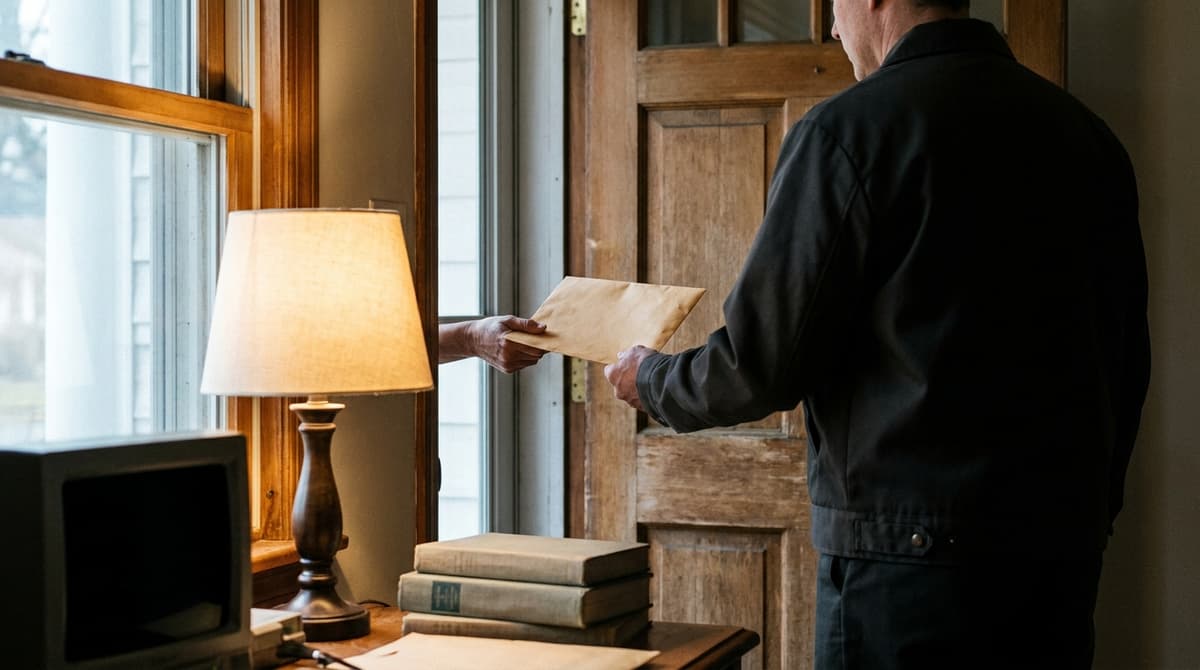
- File and pay. File the complaint and pay the fee. The clerk returns a signed summons.
- Mail within 7 days. The judiciary says "you have seven days to send the defendant these documents by first-class mail": the summons, the complaint with the case number, the Information and Instructions for Defendant (100-00259), a blank Answer (100-00126), and a blank Disclosure of Exempt Income (100-00128).
- File proof. File a Certificate of Service (100-00260) with the court.
- If there is no answer in 30 days. If the defendant does not answer within 30 days of the mailing date, you must have the sheriff serve the papers. The sheriff's return of service is due within 60 days of the mailing date, and the guide says an extension of about 30 days is usually granted on a written request.
- If the sheriff cannot serve. The case may be dismissed.
A corporation is served through an officer, director, general agent or authorized attorney.
We found no requirement to send a demand letter or try mediation before you file.
If you are the defendant
Answer within 30 days. If the papers came by mail, you have 30 days from the date they were mailed (not the date you received them); if a sheriff or constable served you, 30 days from the date of service. There is no filing fee. The judiciary notes that if you do not answer a mailed complaint in time, the plaintiff may have to pay for sheriff service, and you may have to repay that cost if the plaintiff wins. If you do not answer, the plaintiff may ask for a default judgment within 60 days after your answer was due, by affidavit for no more than the amount originally claimed, mailed to you. Before collecting on a default judgment, the plaintiff must have it served on you by a sheriff or constable and file proof.
Counterclaims. You may file a counterclaim, with the counterclaim fee, if it arises out of the same transaction or occurrence as the plaintiff's claim. Under 12 V.S.A. § 5533(c): "The relief requested in the counterclaim may exceed the jurisdictional limit of the small claims court, however the judgment shall not exceed that limit." If you leave a counterclaim out, you can still bring it later in a separate case. A small claims ruling on a counterclaim does not bar a later case on the same claim, but any later judgment is reduced by the small claims limit in effect when you raised the counterclaim.
Jury trial. "A plaintiff beginning a cause under the procedure waives a jury trial" (12 V.S.A. § 5535). A defendant may request a jury before the hearing date by filing a request with an affidavit that questions of fact require a trial, and paying the $10 jury fee. The case is then tried by jury "as in ordinary cases."
Choosing the judge. When the plaintiff claims more than $3,500, "the defendant shall have the right to request a special assignment of a judicial officer," meaning a Superior judge or an appointed member of the bar (12 V.S.A. § 5531(c)). In Essex, Caledonia, Rutland and Bennington Counties, assistant judges hear small claims first.
Military defendants. Under the federal Servicemembers Civil Relief Act, when a defendant does not appear, the court must require the plaintiff to file an affidavit about the defendant's military status before entering judgment (50 U.S.C. § 3931(b)(1)).
Reopening a default. We did not open the small claims rule on setting aside a default judgment. If a default was entered against you, contact the clerk or the court's Access and Resource Center right away.
The hearing
The court mails a hearing notice a few weeks before the trial; no fixed period is set. A presiding judge, an assistant judge or an acting judge (a lawyer appointed to the role) hears the case alone.
The judiciary's page says: "Formal rules of evidence are not always applied at a small claims trial." Testimony is under oath. A few practical points from the judiciary:
- Bring witnesses, not letters. Affidavits and letters are generally not accepted, because the other side cannot cross-examine them.
- Print your photos. The court will not usually look at evidence on your phone.
- Subpoenas are available at no fee. A non-party who is at least 18 serves them, and the witness is paid the witness fee and mileage at service.
- Be on time. A party who is late or absent may lose. To postpone, file a written motion showing a good reason.
Appeals
Either party may appeal. 12 V.S.A. § 5538: "Any party may appeal from a small claims judgment to Superior Court."
| Step | Rule |
|---|---|
| Deadline | Within 30 days of the entry of judgment |
| How | File a Notice of Appeal (form 100-00291) in the Civil Division, send a copy to the other party and file a Certificate of Service |
| Fee | $120, or apply for a waiver with form 600-00228 filed with the notice |
| Who decides | A Superior judge who did not take part in the decision |
| What kind of review | On the record: no new trial and no new evidence |
The statute: "The appeal shall be heard and decided, based on the record made in the small claims procedure. No appeal as of right exists to the Supreme Court." The judge reviews the audio recording of the hearing, the appellant's written statement of errors (form 100-00284 is optional) and the other side's response. There is no hearing unless the judge orders one. The Vermont Supreme Court may allow a further appeal on motion.
Because the appeal is on the record, the small claims hearing is your one chance to present evidence and witnesses.
Collecting a Vermont small claims judgment
Winning a judgment does not guarantee payment, and the court does not collect the money for you.

Timing. The debtor has 30 days from entry of judgment to pay a lump-sum judgment. An installment judgment is overdue when a scheduled payment is 30 or more days late. Post-judgment steps require proof that the judgment was served on the debtor.
Interest. The judiciary guide says "the winner can also collect interest at the rate of 12 percent per year" on small claims judgments, whether by default, agreement or trial.
Financial disclosure hearing. Under 12 V.S.A. § 5537, if the judgment is unpaid after 30 days, the court can order the debtor to come to court and disclose ability to pay, and can order payments. Ignoring that order can lead to civil contempt. To ask for the hearing, file a motion (form 100-00279) with a Certificate of Service (100-00260) and the $65 fee. The debtor completes a Financial Disclosure form (100-00127) and a List of Exemptions (100-00511). The judiciary's web page says you must wait at least 3 months before asking for another disclosure hearing, while its January 2025 guide says one year; ask the clerk which applies.
Other collection tools listed by the judiciary:
- Trustee process against the debtor's earnings (wage attachment),
- Execution on the debtor's property, and
- A judgment lien on real property (12 V.S.A. chapter 113).
How long a judgment lasts. 12 V.S.A. § 2681(b): "Executions on small claims court judgments may be made so long as the judgment remains unsatisfied, but not after eight years from the date of rendition of the judgment." To renew, file a new small claims complaint before the judgment expires, for the judgment amount plus post-judgment costs, fees and interest. The renewal fee is $65 or $90, on the same bands as a new claim.
When the judgment is paid. The creditor must notify the court within 21 days of full payment, using form 100-00290. If the creditor does not, the debtor can ask the court, with no filing fee, to record the judgment as paid; unless the creditor objects in writing within 21 days, the court updates the record.
Exemptions. Some income and property is exempt from collection. Our Vermont debt collection laws guide covers those protections. Federal benefits are protected too: Social Security benefits are not subject to "execution, levy, attachment, garnishment, or other legal process" (42 U.S.C. § 407(a)), and VA benefits are exempt from creditors' claims (38 U.S.C. § 5301(a)(1)).
Claims against the federal government
A claim against a federal agency, or a federal employee acting on the job, is not a Vermont small claims case. The claim must first be presented to the agency, and a lawsuit can follow only after the agency finally denies it in writing (28 U.S.C. § 2675(a)). The written claim is due within two years (28 U.S.C. § 2401(b)), and federal district courts have exclusive jurisdiction over these tort claims (28 U.S.C. § 1346(b)(1)).
Official forms and resources
- Suing and Being Sued: Small Claims (Vermont Judiciary, with the complaint form)
- Small Claims Trials and Appeals
- Collecting a Small Claims Judgment
- A Guide to Small Claims Proceedings in Vermont (form 100-00509, January 2025)
- Court Fees
- Access and Resource Center (802-879-1185; selfhelp@vtcourts.gov)
- 12 V.S.A. chapter 187 (small claims statute)
Related
- Small claims court by state
- Vermont statute of limitations
- Vermont landlord-tenant laws
- Vermont debt collection laws
- New Hampshire small claims court
- New York small claims court
Disclaimer: This article provides general legal information about small claims in Vermont under 12 V.S.A. chapter 187, 32 V.S.A. § 1431, and the other Vermont and federal laws cited above, verified on 2026-10-07. It is not legal advice and does not create an attorney-client relationship. For help with your situation, contact the court's Access and Resource Center, a legal aid office, or a lawyer licensed in Vermont.
Last updated: 2026-10-07.
Frequently Asked Questions
What is the small claims limit in Vermont?
$10,000 under 12 V.S.A. § 5531(a), in effect since June 5, 2023. Cases to collect consumer credit or medical debt are capped at $5,000 (§ 5531(e)).
Can I sue for more than $10,000 in Vermont small claims?
No, and you cannot split a larger claim into several cases (12 V.S.A. § 5531(b)). If you ask for only $10,000, the judiciary guide says you cannot later sue for the rest in any court.
How much does it cost to file small claims in Vermont?
$65 for a claim of $1,000 or less and $90 for a claim from $1,001 to $10,000, under 32 V.S.A. § 1431. You can apply to waive the fee with form 600-00228.
Do I need a lawyer for small claims court in Vermont?
No. 12 V.S.A. § 5536 says any person or business is entitled but not required to have a lawyer. A spouse or family member cannot represent you.
How long do I have to appeal a Vermont small claims judgment?
30 days from entry of judgment, with a $120 fee. The Superior Court decides the appeal on the record without new evidence (12 V.S.A. § 5538).
Can a defendant get a jury trial in Vermont small claims?
Yes. The defendant may file a jury request with an affidavit and a $10 fee before the hearing date; the plaintiff waives a jury by filing (12 V.S.A. § 5535).
What is the interest rate on a Vermont small claims judgment?
The Vermont Judiciary guide says small claims judgments earn interest at 12 percent per year.
How long is a Vermont small claims judgment good for?
Eight years from the date it was rendered (12 V.S.A. § 2681(b)). You can renew it by filing a new small claims complaint before it expires.
Updates
Independently fact-checked against the cited primary sources
The Law Behind This Article
This article rests on the statutory provisions below, held in our own legal record and retrieved from the official source. Tap a section to read the operative text.
Vermont Statutes Annotated, Title 12: Court Procedure, Chapter 187: Small Claims Procedure
§ 5531Rules governing procedureIn forcecited in 4 of our articles
(a) The Supreme Court, pursuant to section 1 of this title, shall make rules under this chapter applicable to such Court providing for a simple, informal, and inexpensive procedure for the determination, according to the rules of substantive law, of actions of a civil nature of which they have jurisdiction, other than actions for slander or libel and in which the plaintiff does not claim as debt or damage more than $10,000.00. Small claims proceedings shall be limited in accord with this chapter and the procedures made available under those rules. The procedure shall not be exclusive but shall be alternative to the formal procedure begun by the filing of a complaint. (b) Parties may not request claims for relief other than money damages under this chapter. Nor may parties split a claim in excess of $10,000.00 into two or more claims under this chapter. (c) In small claims actions where the plaintiff makes a claim for relief greater than $3,500.00, the defendant shall have the right to request a special assignment of a judicial officer. Upon making this request, a Superior judge or a member of the Vermont bar appointed pursuant to 4 V.S.A.
Official text (excerpt) · last checked 2026-08-01 · Read the full text in our law library · Verify at legislature.vermont.gov
Cited in 27 court opinions in our collectionLatest citing opinion in our collection: 2026
Opinions citing this section in our collection:
- Bartley-Cruz v. McLeod (Supreme Court of Vermont 1984, 144 Vt. 263)“…f the informality of the proceedings in small claims court, 12 V.S.A. § 5531(a), and because often the parties are u…”
- Gerrish Corp. v. Dworkin (Supreme Court of Vermont 1984, 145 Vt. 107)“…those made cognizable by the district court . . . .” Title 12 V.S.A. § 5531 (a) states that “[t]he [small claims] p…”
- Cold Springs Farm Development, Inc. v. Ball (Supreme Court of Vermont 1995, 163 Vt. 466)“…s where the amount in controversy is no more than $3500. 1 12 V.S.A. § 5531(a). Our decisions about small claims co…”
Identified automatically from the court opinions citing this section — not a ranking of which case controls.
Also relied on in: Vermont Defamation Laws: Libel, Slander & Suing (2026), Vermont Landlord-Tenant Laws (2026): Deposits, Notice, and Tenant Rights, Vermont Scam and Fraud Laws: Where to Report, Your Right to Sue (2026)
§ 5538AppealsIn force
Any party may appeal from a small claims judgment to Superior Court. The Chief Superior Judge shall assign the appeal to a Superior judge who shall not have participated in any way in the decision being appealed. The appeal shall be heard and decided, based on the record made in the small claims procedure. No appeal as of right exists to the Supreme Court. On motion made to the Supreme Court by a party to the action, the Supreme Court may allow an appeal from the Superior Court. (Added 1983, No. 208 (Adj. Sess.), § 4; amended 1995, No. 181 (Adj. Sess.), § 4, eff. Sept. 1, 1996; 2009, No. 154 (Adj. Sess.), § 84; 2021, No. 147 (Adj. Sess.), § 23, eff. May 31, 2022.)
Official text (excerpt) · last checked 2026-08-01 · Read the full text in our law library · Verify at legislature.vermont.gov
§ 5536RepresentationIn force
Any person, corporation, or other legal entity shall be entitled but not required to be represented by an attorney in small claims court. (Added 1977, No. 161 (Adj. Sess.), § 5.)
Official text (excerpt) · last checked 2026-08-01 · Read the full text in our law library · Verify at legislature.vermont.gov
§ 5533Other procedureIn force
(a) The plaintiff shall supply to the clerk the following information: (1) the plaintiff’s name, residence address, and telephone number; (2) defendant’s name and place of residence, place of business or employment; and (3) the nature and amount of the plaintiff’s claim, giving dates and other relevant information. (b) The clerk shall reduce the information required in subsection (a) of this section to writing in concise, nontechnical form in a docket kept for that purpose, and shall also place it on a form which shall be attached to the summons. (c) The defendant may include with his or her answer a counterclaim stating a claim which arises out of the transaction or occurrence that is the subject matter of the plaintiff’s claim and which does not require for its adjudication the presence of third parties of whom the court cannot acquire jurisdiction. The relief requested in the counterclaim may exceed the jurisdictional limit of the small claims court, however the judgment shall not exceed that limit. Failure to assert a counterclaim does not prevent the defendant from bringing a later action for the same claim.
Official text (excerpt) · last checked 2026-08-01 · Read the full text in our law library · Verify at legislature.vermont.gov
§ 5535Jury trialIn force
A plaintiff beginning a cause under the procedure waives a jury trial. The defendant may have a hearing before the court under the procedure. He or she may, prior to the day upon which he or she is notified to appear, file with the court where the cause is pending a request for a trial by jury and his or her affidavit that there are questions of fact in the cause requiring trial, with specifications thereof, and that such is intended in good faith, together with a jury fee of $10.00 and thereupon at the day set for hearing, trial by jury shall be had as in ordinary cases. (Amended 1975, No. 227 (Adj. Sess.), § 3; 1977, No. 161 (Adj. Sess.), § 4.)
Official text (excerpt) · last checked 2026-08-01 · Read the full text in our law library · Verify at legislature.vermont.gov
§ 5541Composition of court in small claims casesIn force
For the purposes of this chapter, the Superior Court in small claims cases shall consist of the presiding judge sitting alone, an assistant judge sitting alone pursuant to section 5540 of this chapter, or an acting judge assigned pursuant to 4 V.S.A. § 22(b). (Added 1995, No. 181 (Adj. Sess.), § 6, eff. Sept. 1, 1996; amended 2009, No. 154 (Adj. Sess.), § 85.)
Official text (excerpt) · last checked 2026-08-01 · Read the full text in our law library · Verify at legislature.vermont.gov
§ 5540aJurisdiction over small claims; assistant judgesIn force
(a)(1) Subject to the limitations in this section and notwithstanding any provision of law to the contrary, assistant judges of Essex, Caledonia, Rutland, and Bennington Counties sitting alone shall hear and decide small claims actions filed under this chapter with the Essex, Caledonia, Rutland, and Bennington Superior Courts. (2) [Repealed.] (b) With the exception of assistant judges authorized to preside in small claims matters prior to June 16, 2001 who have successfully completed the testing requirements established herein, an assistant judge hearing cases under this section shall have completed at least 100 hours of relevant training and testing and observed 20 hours of small claims hearings in accordance with the protocol for said training and observation, which shall be established by the Court Administrator in consultation with the Association of Assistant Judges.
Official text (excerpt) · last checked 2026-08-01 · Read the full text in our law library · Verify at legislature.vermont.gov
Vermont Statutes Annotated, Title 12: Court Procedure, Chapter 111: Levy of Execution, Subchapter: GENERALLY
§ 2681Executions in Supreme and Superior Courts; timeIn force
(a) The Supreme and Superior Courts may issue executions on final judgments rendered by them, which shall be made returnable within 60 days from the date thereof. Such executions may be issued so long as the judgment remains unsatisfied, but not after eight years from the date of rendition of the judgment, except as provided in subsection (b) of this section. (b) Executions on small claims court judgments may be made so long as the judgment remains unsatisfied, but not after eight years from the date of rendition of the judgment. Actions to renew small claims court judgments shall be brought by filing a complaint in small claims court prior to the expiration of the judgment, and may be made for the amount of the judgment and any postjudgment costs, fees, and interest allowed by law. (Amended 1971, No. 185 (Adj. Sess.), § 65, eff. March 29, 1972; 1979, No. 67, § 5, eff. date, see note set out below; 2007, No. 39, § 6.)
Official text (excerpt) · last checked 2026-08-01 · Read the full text in our law library · Verify at legislature.vermont.gov
Search our full record of US law — 2.1 million sections, every state + federal →
Sources and References
- 12 V.S.A. chapter 187, Small Claims Procedure(legislature.vermont.gov).gov
- Vermont Judiciary, A Guide to Small Claims Proceedings in Vermont (100-00509, 01/2025)(vermontjudiciary.org).gov
- Vermont Judiciary, Suing and Being Sued: Small Claims(vermontjudiciary.org).gov
- Vermont Judiciary, Court Fees(vermontjudiciary.org).gov
- Vermont Judiciary, Application to Waive Filing Fees and Service Costs(vermontjudiciary.org).gov
- Vermont Judiciary, Small Claims Trials and Appeals(vermontjudiciary.org).gov
- 50 U.S.C. § 3931, Protection of servicemembers against default judgments(govinfo.gov).gov
- Vermont Judiciary, Collecting a Small Claims Judgment(vermontjudiciary.org).gov
- 12 V.S.A. § 2681, Executions on judgments(legislature.vermont.gov).gov
- 42 U.S.C. § 407, Social Security benefits protected from legal process(govinfo.gov).gov
- 38 U.S.C. § 5301, VA benefits exempt from creditors(govinfo.gov).gov
- 28 U.S.C. § 2675, Federal tort claims: administrative claim first(govinfo.gov).gov
- 28 U.S.C. § 2401, Two-year deadline for federal tort claims(govinfo.gov).gov
- 28 U.S.C. § 1346, District court jurisdiction over claims against the United States(govinfo.gov).gov
- Vermont Judiciary, Access and Resource Center(vermontjudiciary.org).gov