
Nevada
Nevada Small Claims Court: $10,000 Limit, Fees and How to File
Independently fact-checked against primary sources (last audited October 7, 2026). · 9 primary sources cited on this page. How we verify our legal content
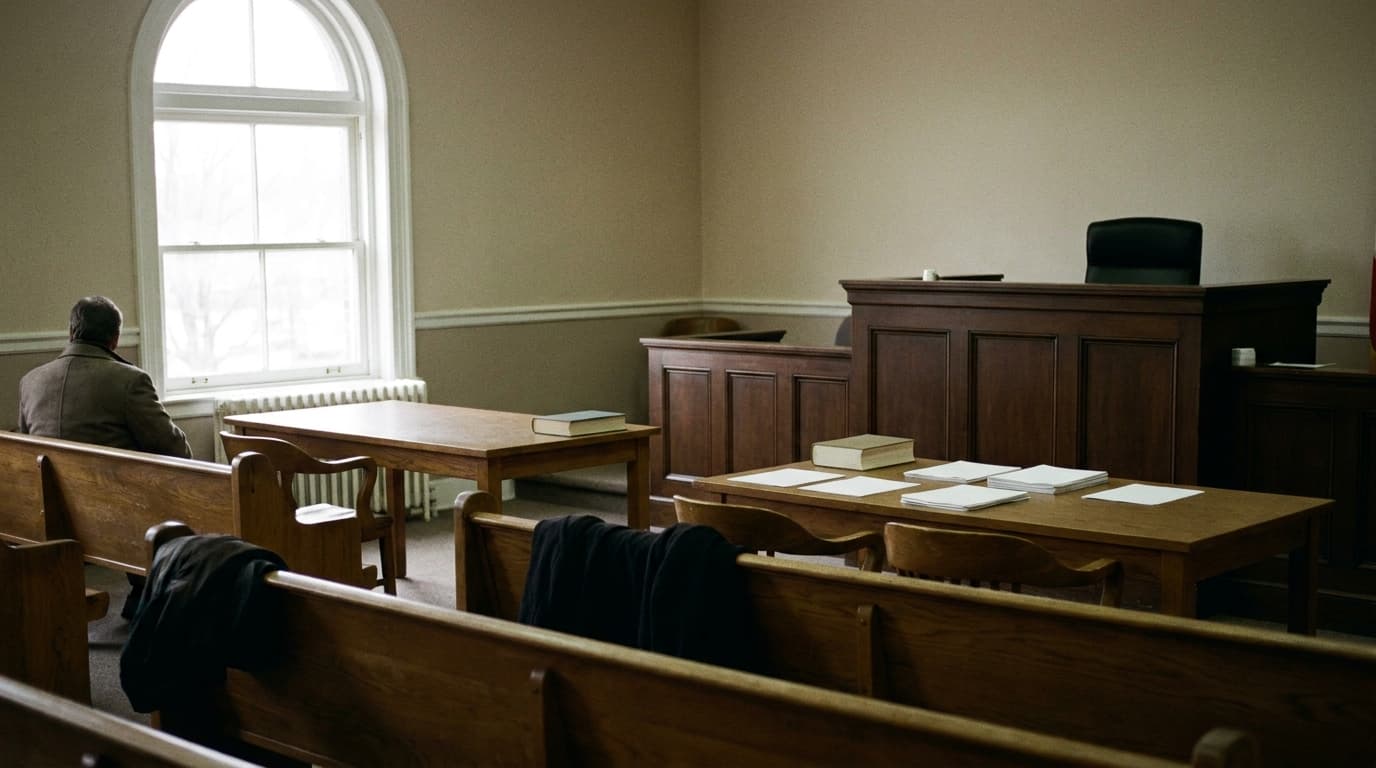
In Nevada, you can sue for up to $10,000 in small claims court. Small claims cases are heard by a justice of the peace in the justice court for the township, and they are limited to claims for money only (NRS 73.010).
Procedures, forms and fees vary from one justice court to another. Clark County alone has eleven justice courts organized by township, including Las Vegas, Henderson and North Las Vegas. Much of the practical detail below comes from the Civil Law Self-Help Center that serves the Clark County courts, so check with your own justice court before you file. For other states, see our guide to small claims court by state.
Information last verified on 2026-10-07. This article has not been reviewed by a licensed lawyer.
Jurisdiction scope: This article covers small claims cases in Nevada justice courts under NRS Chapter 73 and the Justice Court Rules of Civil Procedure (JCRCP). It does not cover regular civil cases in justice or district court, evictions, or small claims in other states.
Nevada small claims limit: $10,000
The Civil Law Self-Help Center states the limit as "up to TEN THOUSAND DOLLARS ($10,000)," and the statute, NRS 73.010(1), allows small claims "for the recovery of money only, where the amount claimed does not exceed $10,000." An award cannot go above $10,000, including any punitive or pain-and-suffering damages.
NRS 73.010, as updated through the 2025 legislative session, still sets the limit at $10,000.
Claims worth more than $10,000. You can still file in small claims, but you give up the rest. The self-help center explains:
you give up ("waive") any amount above $10,000. You cannot split one large claim into two or more smaller claims
To try to recover more, you would need to file a regular civil case instead.
Money only. Small claims cannot order someone to return property or to stop doing something. In the self-help center's words: "Anything other than money (you want the Court to make the other party return property...) ... is not a small claims case."
Your claim must also be filed on time. Deadlines to sue depend on the type of claim; see the Nevada statute of limitations guide.
Where to file
According to the self-help center, you file in the justice court for the township where the defendant lives, does business or is employed (either when the claim arose or when you file). You may also file in the township where the injury happened or where the contract obligation was or is to be performed (NRS 73.010(2)).
Filing fees
Nevada does not have one statewide small claims fee that we could verify; each justice court sets its own. The Clark County justice courts charge by the amount of the claim, according to the Civil Law Self-Help Center:
| Amount claimed | Clark County filing fee |
|---|---|
| $0 to $1,000 | $66 |
| $1,000.01 to $2,500 | $86 |
| $2,500.01 to $5,000 | $106 |
| $5,000.01 to $7,500 | $146 |
| $7,500.01 to $10,000 | $196 |
If you file outside Clark County, ask your justice court for its current fee. Service fees for a constable, sheriff or process server are extra.
Fee waiver. If you cannot afford the fees, you can apply to waive them (in forma pauperis). According to the self-help center, an order waiving fees also waives the appeal filing fee, but not the appeal bond.
Lawyers
Lawyers are allowed, but each side pays its own. The self-help center says "attorneys can represent clients in small claims cases. However, you will be solely responsible for paying your attorney's fees." Attorney fees generally cannot be recovered from the other side (NRS 73.040). On an appeal to the district court, the winner is awarded an attorney fee of no more than $15 (NRS 73.050).
A corporation, partnership, association or other nongovernmental business entity may be represented in small claims by its director, officer or employee (NRS 73.012).
Mediation before trial
Mediation depends on the court. According to the self-help center, Henderson Justice Court requires mediation on the hearing date, Las Vegas Justice Court offers an optional mediator on the trial day, and the Neighborhood Justice Center offers free mediation.
Serving the defendant
After you file, you are responsible for serving the defendant with the complaint and trial date. The self-help center lists a constable, a sheriff or a private process server; anyone else who serves papers must be 18 or older and not a party to the case. If personal service fails, you can ask the court for permission to serve by certified mail. File an affidavit (proof) of service with the court.

Timing matters: "The other party must be served at least fourteen business days before your trial or mediation."
If you are sued
A defendant does not have to file a written response. The self-help center says: "You do not have to file any response to a Small Claims complaint." But you do have to show up. If the defendant does not attend and the plaintiff proves service, the court may enter a default judgment. Before a default judgment, federal law also requires the plaintiff to file an affidavit stating whether the defendant is in military service (50 U.S.C. 3931).
A defendant may file a counterclaim within 21 days after being served, in the same sworn affidavit form as a complaint (JCRCP 88(b)), so do not wait for the trial date to raise one. A counterclaim is also capped at $10,000; any excess is waived and the counterclaim cannot be split (JCRCP 13 and 88, as described by the self-help center).
There is no jury in Nevada small claims. The self-help center cites a 2005 Nevada Supreme Court decision holding that there is no right to a jury trial in small claims.
The hearing
A justice of the peace hears the case, and the self-help center says a hearing usually lasts ten or fifteen minutes. Be ready to tell your story quickly and back it up with documents.
- Bring the original of each exhibit and three copies.
- The court can arrange an interpreter.
- You can ask the court to subpoena witnesses.
- You can ask, by motion, to appear by telephone.
The court sets the trial date when you file, and it must be no more than 90 days out unless the court finds good cause (JCRCP 90(b)).
Appealing a small claims judgment
Both the plaintiff and the defendant can appeal, and the deadline is short. JCRCP 98(b) says: "The filing of a notice of appeal must be done within 7 calendar days from the service of the judgment," and 3 calendar days are added if the judgment was served by mail (JCRCP 6(d)). The Sparks Justice Court's appeal packet describes the deadline the same way. The Clark County self-help center counts the 7 days from the date the decision was filed, so to be safe, count from the earlier date. Older sources that give a 5-day deadline are out of date.

The appeal goes to the district court, which reviews the record. You cannot present new evidence. The district court may set aside, confirm or modify the decision, or order a new trial. According to the Clark County self-help center, there is no further appeal after the district court rules.
Appeal costs vary by court:
| Court | Appeal costs |
|---|---|
| Clark County justice courts (self-help center) | $97 justice court appeal filing fee, plus a $115 cost bond |
| Sparks Justice Court, Washoe County (packet dated October 31, 2024) | $50 notice of appeal and transmittal fee, $115 cost bond, and a $211 district court filing fee |
The appeal bond must be posted when the notice of appeal is filed, and it cannot be waived. A plaintiff who appeals posts $115 ($100 for appeal costs plus $15 toward the other side's attorney fee). A defendant who appeals must also promise to pay the full judgment plus interest if the appeal fails, and the court can require that part as a cash or surety bond (JCRCP 100). Posting the appeal bond does not stop collection; to pause enforcement, the appealing party must ask for a stay with a supersedeas bond.
Setting aside a default judgment
A defendant who missed the hearing can file a motion to set aside the default judgment under JCRCP 60(b) and (c). According to the self-help center, filing the motion does not stop collection that is already underway. The motion must be made within a reasonable time, and for mistake, inadvertence, surprise or excusable neglect, newly discovered evidence, or fraud no more than 6 months after the hearing or after written notice of entry of the judgment is served, whichever is later; the court cannot extend this deadline (JCRCP 60(c)(1)). A defendant who was not personally served and did not appear may also move within 6 months after written notice of entry of the default judgment is served (JCRCP 60(d)(2)).
Collecting a Nevada small claims judgment
Winning a judgment does not guarantee you will be paid, and the court does not collect for you. The decision cannot be enforced until the appeal period has passed. After that, the self-help center describes these tools:
- Writ of execution. File a writ of execution and a notice of execution, which the constable or sheriff carries out. In Clark County, filing a writ of execution costs $25. Some courts allow only one outstanding writ at a time.
- Writ of garnishment. The self-help center lists a writ of garnishment as a collection tool.
- Judgment lien. Record the judgment to create a lien.
- Judgment debtor examination. Ask the court, by motion, to order a judgment debtor examination.
Small claims does not allow attachment or garnishment before judgment (NRS 73.020).
How long a judgment lasts. A Nevada judgment expires six years after entry (NRS 11.190(1)(a)) unless it is renewed by an affidavit filed within 90 days before it expires. The affidavit must be recorded within 3 days if the judgment was recorded, and mailed to the debtor by certified mail within 3 days (NRS 17.214). A judgment lien lasts six years after the judgment is docketed and continues each time the judgment is renewed (NRS 17.150(2)).
Some property and income is protected from collection under NRS 21.090. For how those exemptions and wage garnishment work, see Nevada debt collection laws. Federal law also protects Social Security benefits (42 U.S.C. 407(a)) and VA benefits (38 U.S.C. 5301(a)(1)) from garnishment and levy.
Security deposits and other common disputes
Common small claims cases include a kept security deposit, a contractor who did not finish the work, and an unpaid personal loan. For deposit rules, see Nevada landlord-tenant laws.
Official resources
- Civil Law Self-Help Center, small claims (Clark County)
- Sparks Justice Court small claims appeal packet (Washoe County)
- Nevada Supreme Court Self-Help Center (statewide)
Related
- Small claims court by state
- Nevada statute of limitations
- Nevada debt collection laws
- Nevada landlord-tenant laws
- California small claims court
- Arizona small claims court
Disclaimer: This article provides general legal information about small claims cases in Nevada justice courts under NRS Chapter 73 and the Justice Court Rules of Civil Procedure, verified on 2026-10-07. It is not legal advice and does not create an attorney-client relationship. For help with your situation, contact your justice court, a self-help center, a legal aid office, or a lawyer licensed in Nevada.
Last updated: 2026-10-07.
Frequently Asked Questions
What is the small claims limit in Nevada?
$10,000, for money-only claims (NRS 73.010(1)). An award cannot exceed $10,000, including punitive or pain-and-suffering damages.
Can I sue for more than $10,000 in Nevada small claims?
Only by giving up the amount over $10,000, and you cannot split one claim into several smaller cases, according to the Civil Law Self-Help Center. To seek more, file a regular civil case.
How much does it cost to file small claims in Las Vegas?
Clark County justice courts charge $66 for claims up to $1,000, rising in steps to $196 for claims over $7,500 up to $10,000. Other Nevada courts set their own fees.
Can a lawyer represent me in Nevada small claims court?
Yes, but you pay your own lawyer; attorney fees generally cannot be recovered from the other side (NRS 73.040).
Does a defendant have to file an answer in Nevada small claims?
No written response is required, but the defendant must attend. If the defendant does not attend and the plaintiff proves service, the court may enter a default judgment. A counterclaim may be filed within 21 days after service (JCRCP 88(b)).
Is mediation required in Nevada small claims?
It depends on the court. Henderson Justice Court requires mediation on the hearing date, while Las Vegas Justice Court offers an optional mediator on the trial day.
How long do I have to appeal a Nevada small claims decision?
7 calendar days from service of the judgment, plus 3 calendar days if it was mailed (JCRCP 98, 6(d)). The Clark County self-help center counts from the date the decision was filed, so count from the earlier date to be safe. Both sides can appeal to the district court, which reviews the record without new evidence.
How much does it cost to appeal a Nevada small claims judgment?
In Clark County, a $97 justice court appeal fee plus a $115 cost bond; in Sparks, $50 plus the $115 bond and a $211 district court filing fee. The bond cannot be waived, and a defendant who appeals must also promise to pay the full judgment plus interest if the appeal fails (JCRCP 100(b)).
How long is a Nevada small claims judgment good for?
Six years from entry (NRS 11.190(1)(a)), unless renewed by an affidavit filed within 90 days before it expires and mailed to the debtor by certified mail within 3 days (NRS 17.214). A judgment lien continues each time the judgment is renewed (NRS 17.150(2)).
Updates
Independently fact-checked against the cited primary sources
The Law Behind This Article
This article rests on the statutory provisions below, held in our own legal record and retrieved from the official source. Tap a section to read the operative text.
Nevada Revised Statutes, Chapter 073: SMALL CLAIMS
§ 73.010Jurisdiction of justice of peace for small claims; proper venue for filing action.In forcecited in 3 of our articles
1. A justice of the peace has jurisdiction and may proceed as provided in this chapter and by rules of court in all cases arising in the justice court for the recovery of money only, where the amount claimed does not exceed $10,000. 2. An action brought pursuant to this chapter must be filed in one of the following townships as the proper venue for the action: (a) The township in which the defendant named is a resident, does business or is employed at the time the cause of action arose or at the time the complaint is filed; or (b) In addition to any township described in paragraph (a): (1) In a case involving injury to the person or property, the township where the injury was committed. (2) In a case involving a person who has contracted to perform an obligation at, or relating to, a particular place, the township in which the obligation is or was to be performed. For the purposes of this subparagraph, the township in which the obligation is incurred shall be deemed to be the township in which the obligation is or was to be performed, unless there is a special contract to the contrary.
Official text (excerpt) · last checked 2026-07-29 · Read the full text in our law library · Verify at leg.state.nv.us
Cited in 6 court opinions in our collectionLatest citing opinion in our collection: 2005
Opinions citing this section in our collection:
- Cheung v. Eighth Judicial District Court of Nevada ex rel. County of Clark (Nevada Supreme Court 2005, 121 Nev. 867)“…art. 1, § 3. Id. See JCRCP 88-100. NRS 73.010. Aftercare of Clark County v. Ju…”
- Aftercare of Clark County v. Justice Court of Las Vegas Township Ex Rel. County of Clark (Nevada Supreme Court 2004, 120 Nev. 1)“…on or, in the alternative, writs of mandamus. Pursuant to NRS 73.010, under certain criteria, the justices'…”
- Cheung v. Dist. Ct. (Nevada Supreme Court 2005, 124 P.3d 550)“…es, the Nevada Legislature established, by the enactment of NRS 73.010, the amount for "small claims" civil ac…”
Identified automatically from the court opinions citing this section — not a ranking of which case controls.
Also relied on in: Nevada Landlord-Tenant Laws (2026): Deposits, Notice, and Tenant Rights, Nevada Scam and Fraud Laws: Where to Report, Your Right to Sue (2026)
§ 73.040Attorney’s fee not allowable in actions for small claims; exceptions.In force
Except as provided by NRS 597.860 and 597.870, no attorney’s fees are allowed either party to an action mentioned or covered by this chapter.
Official text (excerpt) · last checked 2026-07-29 · Read the full text in our law library · Verify at leg.state.nv.us
§ 73.020No writ of attachment or garnishment before judgment; execution.In force
No attachment or garnishment may issue before judgment in cases mentioned in this chapter, but execution, including garnishment in aid of execution as provided in NRS 21.120, may issue as in other cases arising in the justice court.
Official text (excerpt) · last checked 2026-07-29 · Read the full text in our law library · Verify at leg.state.nv.us
§ 73.050Attorney’s fee on appeal to district court.In force
The prevailing party on an appeal to the district court shall be awarded an attorney fee by the district court not to exceed the sum of $15.
Official text (excerpt) · last checked 2026-07-29 · Read the full text in our law library · Verify at leg.state.nv.us
§ 73.060Applicability of general law to actions for small claims.In force
The general provisions of law applicable to the proceedings in justice courts not in conflict with this chapter shall apply so as to make the procedure in this chapter complete and effective.
Official text (excerpt) · last checked 2026-07-29 · Read the full text in our law library · Verify at leg.state.nv.us
Nevada Revised Statutes, Chapter 017: JUDGMENTS
§ 17.214Filing and contents of affidavit; recording affidavit; notice to judgment debtor; successive affidavits.In force
1. Except as otherwise provided in NRS 484A.7047, a judgment creditor or a judgment creditor’s successor in interest may renew a judgment which has not been paid by: (a) Filing an affidavit with the clerk of the court where the judgment is entered and docketed, within 90 days before the date the judgment expires by limitation. The affidavit must be titled as an “Affidavit of Renewal of Judgment” and must specify: (1) The names of the parties and the name of the judgment creditor’s successor in interest, if any, and the source and succession of his or her title; (2) If the judgment is recorded, the name of the county and the document number or the number and the page of the book in which it is recorded; (3) The date and the amount of the judgment and the number and page of the docket in which it is entered; (4) Whether there is an outstanding writ of execution for enforcement of the judgment; (5) The date and amount of any payment on the judgment; (6) Whether there are any setoffs or counterclaims in favor of the judgment debtor and the amount or, if a setoff or counterclaim is unsettled or undetermined it will be allowed as payment or credit on the…
Official text (excerpt) · last checked 2026-07-29 · Read the full text in our law library · Verify at leg.state.nv.us
Nevada Revised Statutes, Chapter 099: MONEY OF ACCOUNT AND INTEREST; LEGAL INVESTMENTS
§ 99.040Interest rate when not fixed by express contract for certain types of transactions.In force
1. When there is no express contract in writing fixing a different rate of interest, interest must be allowed at a rate equal to the prime rate at the largest bank in Nevada, as ascertained by the Commissioner of Financial Institutions, on January 1 or July 1, as the case may be, immediately preceding the date of the transaction, plus 2 percent, upon all money from the time it becomes due, in the following cases: (a) Upon contracts, express or implied, other than book accounts. (b) Upon the settlement of book or store accounts from the day on which the balance is ascertained. (c) Upon money received to the use and benefit of another and detained without his or her consent. (d) Upon wages or salary, if it is unpaid when due, after demand therefor has been made. Ê The rate must be adjusted accordingly on each January 1 and July 1 thereafter until the judgment is satisfied. 2. The provisions of this section do not apply to money owed pursuant to chapter 624 of NRS which is governed by the provisions of NRS 624.630.
Official text (excerpt) · last checked 2026-07-29 · Read the full text in our law library · Verify at leg.state.nv.us
Nevada Revised Statutes, Chapter 021: ENFORCEMENT OF JUDGMENTS
§ 21.090Property exempt from execution.In forcecited in 4 of our articles
1. The following property is exempt from execution, except as otherwise specifically provided in this section or required by federal law: (a) Private libraries, works of art, musical instruments and jewelry not to exceed $5,000 in value, belonging to the judgment debtor or a dependent of the judgment debtor, to be selected by the judgment debtor, and all family pictures and keepsakes. (b) Necessary household goods, furnishings, electronics, wearing apparel, other personal effects and yard equipment, not to exceed $12,000 in value, belonging to the judgment debtor or a dependent of the judgment debtor, to be selected by the judgment debtor. (c) Farm trucks, farm stock, farm tools, farm equipment, supplies and seed not to exceed $4,500 in value, belonging to the judgment debtor to be selected by the judgment debtor. (d) Professional libraries, equipment, supplies, and the tools, inventory, instruments and materials used to carry on the trade or business of the judgment debtor for the support of the judgment debtor and his or her family not to exceed $10,000 in value.
Official text (excerpt) · last checked 2026-09-02 · Read the full text in our law library · Verify at leg.state.nv.us
Cited in 76 court opinions in our collectionLatest citing opinion in our collection: 2025
In the courts (editorial summary, independently checked):Christensen v. Pack (2006) held that the NRS 21.090(1)(g) earnings exemption reaches wages already deposited in a bank account and survives commingling, adopting FIFO tracing. Savage v. Pierson (2007) held that a residential lease security deposit is not exempt under the homestead or dwelling provisions.
Opinions citing this section in our collection:
- Christensen v. Pack (Nevada Supreme Court 2006, 122 Nev. 1309)✓Chapter 7 debtors claimed 75 percent of bank funds traceable to wages as exempt; answering certified questions, the court held NRS 21.090(1)(g) exempts the proceeds of any deposits of earnings, keeps them exempt when commingled if traceable, and adopted FIFO tracing.
- Savage v. Pierson (Nevada Supreme Court 2007, 123 Nev. 86)✓A Chapter 7 debtor claimed his residential security deposit as exempt; answering a certified question, the court held a security deposit under a residential lease is not exempt under the homestead exemption of NRS 21.090(1)(l) or the dwelling exemption of NRS 21.090(1)(m).
- PLATTE RIVER INS. CO. v. JACKSON (Nevada Supreme Court 2021, 500 P.3d 1257)✓After a judgment creditor garnished Susan Jackson's wages, she claimed both the earnings exemption and the $10,000 wildcard exemption; the court held NRS 21.090(1)(z) applies to the portion of earnings not already protected by NRS 21.090(1)(g).
Identified automatically from the court opinions citing this section — not a ranking of which case controls.
Also relied on in: Bankruptcy in Nevada (2026): Exemptions & Means Test, Nevada Debt Collection Laws: The Two-Tier Garnishment Cap, Bank Protections, and Repo Rules
Nevada Revised Statutes, Chapter 004: JUSTICE COURTS
§ 4.370Jurisdiction.In force
1. Except as otherwise provided in subsection 2, justice courts have jurisdiction of the following civil actions and proceedings and no others except as otherwise provided by specific statute: (a) In actions arising on contract for the recovery of money only, if the sum claimed, exclusive of interest, does not exceed $15,000. (b) In actions for damages for injury to the person, or for taking, detaining or injuring personal property, or for injury to real property where no issue is raised by the verified answer of the defendant involving the title to or boundaries of the real property, if the damage claimed does not exceed $15,000. (c) Except as otherwise provided in paragraph (l), in actions for a fine, penalty or forfeiture not exceeding $15,000, given by statute or the ordinance of a county, city or town, where no issue is raised by the answer involving the legality of any tax, impost, assessment, toll or municipal fine. (d) In actions upon bonds or undertakings conditioned for the payment of money, if the sum claimed does not exceed $15,000, though the penalty may exceed that sum.
Official text (excerpt) · last checked 2026-07-29 · Read the full text in our law library · Verify at leg.state.nv.us
Search our full record of US law — 2.1 million sections, every state + federal →
Sources and References
- Overview of Small Claims (Civil Law Self-Help Center, Clark County)(www.civillawselfhelpcenter.org)
- Responding to a Small Claims Complaint (Civil Law Self-Help Center)(www.civillawselfhelpcenter.org)
- 50 U.S.C. 3931, protection of servicemembers against default judgments (GovInfo)(www.govinfo.gov).gov
- Your Small Claims Hearing (Civil Law Self-Help Center)(www.civillawselfhelpcenter.org)
- Appealing a Small Claims Judgment (Civil Law Self-Help Center)(www.civillawselfhelpcenter.org)
- How to Appeal, Small Claims Packet (Sparks Justice Court, Washoe County, 10/31/2024)(www.washoecounty.gov).gov
- Setting Aside a Small Claims Default Judgment (Civil Law Self-Help Center)(www.civillawselfhelpcenter.org)
- Collecting a Small Claims Judgment (Civil Law Self-Help Center)(www.civillawselfhelpcenter.org)
- 42 U.S.C. 407, Social Security benefits protected from legal process (GovInfo)(www.govinfo.gov).gov
- 38 U.S.C. 5301, VA benefits protected from creditors (GovInfo)(www.govinfo.gov).gov
- Small Claims (Civil Law Self-Help Center)(www.civillawselfhelpcenter.org)
- Nevada Supreme Court Self-Help Center(selfhelp.nvcourts.gov).gov
- NRS Chapter 73, small claims (Nevada Legislature)(www.leg.state.nv.us).gov
- Nevada Justice Court Rules of Civil Procedure, Rules 6, 60, 88-100 (Nevada Legislature)(www.leg.state.nv.us).gov
- NRS Chapter 17, judgments, liens and renewal (Nevada Legislature)(www.leg.state.nv.us).gov
- NRS 11.190, limitation on actions upon a judgment (Nevada Legislature)(www.leg.state.nv.us).gov