
District of Columbia
D.C. Small Claims Court: $10,000 Limit, Fees and How to File
Independently fact-checked against primary sources (last audited October 7, 2026). · 27 primary sources cited on this page. How we verify our legal content
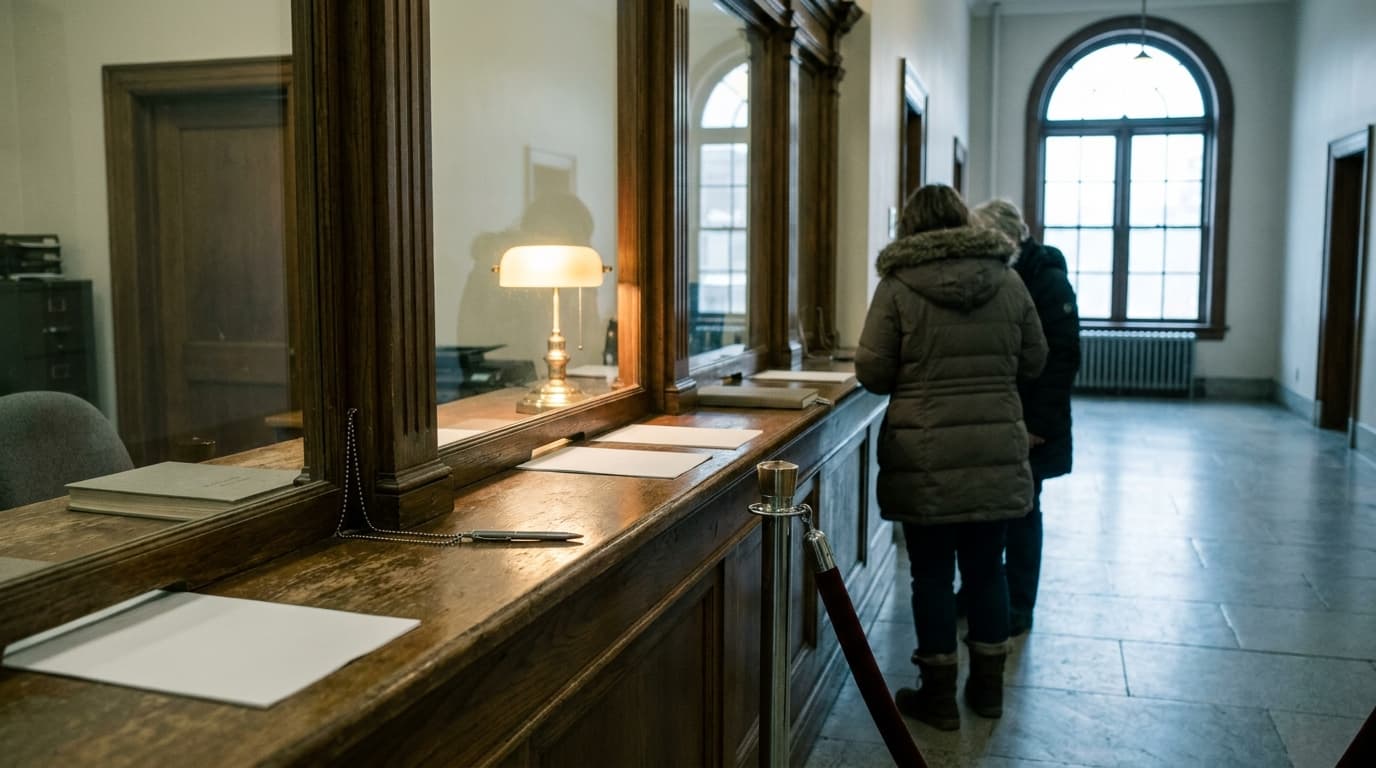
The small claims limit in the District of Columbia is $10,000, not counting interest, attorney fees, protest fees and costs. D.C. Code § 11-1321 gives that jurisdiction to the Small Claims and Conciliation Branch of the Superior Court's Civil Division, and the $10,000 figure applies to cases filed on or after December 14, 2016.
The District has one small claims court for the whole city, so there is no county to choose, and the Branch hears claims for money only. This guide walks through a D.C. small claims case in the order you will live it: the limit, the cost, who needs a lawyer, service, the required settlement effort, the hearing, the very short appeal deadlines and collection. For other states, see our guide to small claims court by state.
Information last verified on 2026-10-07. This article has not been reviewed by a licensed lawyer.
Jurisdiction scope: This article covers the Small Claims and Conciliation Branch of the Superior Court of the District of Columbia under D.C. Code § 11-1321, D.C. Code §§ 16-3901 to 16-3910 and the Superior Court Rules of Procedure for the Small Claims and Conciliation Branch. It does not cover evictions (landlord and tenant cases), regular Civil Actions Branch cases, or small claims in Maryland, Virginia or other states.
D.C. small claims limit: $10,000
D.C. Code § 11-1321 gives the Branch jurisdiction over actions for the recovery of money "if the amount in controversy does not exceed $10,000, exclusive of interest, attorney fees, protest fees, and costs." The court's small claims page says it in plain words: "Relief can only be for money and in an amount of $10,000 or less."
What that means in practice:
- One cap for everyone. There is no separate, lower limit for individuals or for businesses.
- Extras sit on top. Interest, attorney fees, protest fees and court costs do not count toward the $10,000. The court page says you may include court costs, attorney's fees and interest as part of your request.
- Money only. The Branch cannot order someone to do or stop doing something. Requests for that kind of relief belong in the Civil Actions Branch.
- No real property cases. Under § 11-1321, "an action which affects an interest in real property may not be brought in the Branch." If a defense or counterclaim involving real property comes up, the case is certified to the Civil Division.
- When it took effect. The $10,000 limit applies to cases filed on or after December 14, 2016 (Pub. L. 114-257). Some older printed materials show a lower figure; the current statute controls.
The live D.C. Code shows no change to the $10,000 limit in 2025 or 2026. We did not search the D.C. Council's legislation system directly for pending bills, so confirm the limit with the clerk if you are filing after a session that might have changed it.
Claims over $10,000
A claim above $10,000 belongs in the Civil Actions Branch. We could not find any D.C. statute or small claims rule on splitting one claim into several cases, or on whether you can waive the amount over $10,000 to stay in small claims and what happens to the money you waive. Ask the clerk or a lawyer before you give up any part of a larger claim.
We found no rule limiting how many small claims cases one person or business can file in a year.
Every claim also has a filing deadline. Our D.C. statute of limitations guide explains how long you have for different kinds of claims.
Who can file
Typical D.C. small claims cases include an unpaid loan or invoice, property damage, a contractor who took a deposit and did not finish, or a landlord who kept a security deposit. For the deposit rules themselves, see our D.C. landlord-tenant laws guide.
- Age. The court's Small Claims Handbook (January 2017) says: "You must be 18 years old to file a case." A minor or a person who is not legally competent sues through a representative or next friend.
- Businesses. A corporation or partnership can sue, but only through a lawyer (see below).
- Collection and subrogation claims. We found no rule barring collection agencies or insurers from filing, but as businesses they must use a lawyer, and these cases get a longer service window (see "Serving the defendant").
Suing the District of Columbia
You can name the District as a defendant, but extra steps apply. Under D.C. Code § 16-3902(h), the hearing in a case against the District is set "not less than 30 days from the date of the filing of the action," and a copy of the claim goes to the Corporation Counsel within 15 days. Small Claims Rule 4(h) requires service on the Mayor and the Attorney General. For a claim for unliquidated damages to a person or property (for example, a car damaged by a District vehicle), you must give the Mayor written notice of the approximate time, place, cause and circumstances within six months of the injury or damage, or the suit cannot go forward (D.C. Code § 12-309). A written report by the Metropolitan Police Department, made in the regular course of duty, counts as notice. A report by another police agency (such as the U.S. Park Police) is not named in the statute, so send your own written notice to the Mayor.
Filing fees
The filing fee depends on the amount you claim. These figures come from the Superior Court's civil filing fees page.
| Amount claimed | Filing fee |
|---|---|
| Up to $500 | $5 |
| $500.01 to $2,500 | $10 |
| $2,500.01 to $10,000 | $45 |
Other small claims fees on the same schedule:
| Item | Fee |
|---|---|
| Service by the clerk, certified mail | $6.75 |
| Certified mail, restricted delivery | $11.90 |
| Registered mail | $15.50 |
| Registered mail, restricted delivery | $20.65 |
| Counterclaim or crossclaim | $10 (no fee for a set-off) |
| Jury demand | $75 |
| Motion | $10 |
| Alias notice (a new notice after failed service) | $5 |
| Appointment of a special process server | $5 |
| Oral examination of a debtor | $10 |
| Writ of attachment (wages or bank account) | $10 |
| Writ of fieri facias (seizure of property) | $10 |
| Certified copy | $5 |
| Motion to reinstate | $25 |
| Application for allowance of appeal | $10 |
Under D.C. Code § 16-3902(d), the actual cost of service by the marshal or by mail can be taxed as costs against the losing party, but the cost of a private process server cannot.
Fee waiver. Under D.C. Code § 16-3903, a judge "may waive the prepayment of costs or the payment of costs accruing during the action upon the sworn statement of the plaintiff or upon other satisfactory evidence of his inability to pay the costs." The court page says to file a Fee Waiver Application at the same time as your claim. Small Claims Rule 14(b) adds that a party who is able to pay but fails to pay accrued costs can be barred from filing new cases.
Do you need a lawyer?
Individuals can represent themselves, and lawyers are allowed. For businesses, it depends on which side they are on.
A business that sues must have a lawyer. Small Claims Rule 9 says: "No corporation or partnership may appear as a plaintiff in this branch except through a member in good standing of the District of Columbia Bar." The court page puts it simply: "a business that files a claim in the Small Claims Branch must have a lawyer."
A business that is sued can send an officer or employee. A corporation or partnership defendant may appear through an officer, director or employee who files a declaration, under penalty of perjury, that the person has authority to bind the organization in settlement or at trial. That option is not available if the organization files a crossclaim or counterclaim. A business also needs a lawyer if it appeals: a corporation's application for allowance of appeal must be signed by counsel (Court of Appeals Rule 6(a)(3)), and the Small Claims Rule 9 commentary says a lawyer is required if the case is appealed or certified to the Civil Division.
Otherwise, only members of the D.C. Bar may appear for someone else, except to ask for a continuance. Law students admitted under Civil Rule 101(e) may also appear.
Attorney's fees. Under Small Claims Rule 18, attorney's fees are not awarded unless the plaintiff's attorney meets that rule's certification requirements, and an award is capped at 15% of the recovery absent exceptional circumstances.
Where to file
There is one court for the whole District, so there is no county venue to work out. The Small Claims and Conciliation Branch is in Court Building B, 510 4th Street NW, Room 120, Washington, DC 20001, phone (202) 879-1120. The court page says that since September 6, 2025, Saturday services are offered only at the Moultrie Courthouse, 500 Indiana Avenue NW. The court also takes electronic filings through eFileDC.
The real question is whether the defendant can be sued in D.C. at all. The Small Claims Handbook explains that a defendant can be sued in the Superior Court if, for example, the defendant lives or does business in the District, is based or has a regular place of business there, made a business contract there, caused harm in the District, owns real property there or insures a risk there (D.C. Code §§ 13-422 and 13-423, as summarized in the handbook).
Serving the defendant
The plaintiff is responsible for serving the defendant. Under Small Claims Rule 4 and D.C. Code § 16-3902(a), service can be made by:

- A competent adult who is at least 18 and not a party to the case.
- The clerk, by registered or certified mail with return receipt, for the types of defendants the rule allows.
- The U.S. Marshal, if authorized.
You can try these methods at the same time or one after another. If the defendant refuses a certified letter, service can still be valid when the clerk also sends notice by ordinary mail (Rule 4(c)(3)).
Deadlines. The hearing is set 5 to 30 days after filing (D.C. Code § 16-3902(g)). Proof of service must reach the clerk at least 7 days before the first court date, or you may ask for a new date (Rule 4(k)). Under Rule 4(m), proof of service must be filed within 60 days of filing the claim, or 90 days for liquidated-debt collection cases and subrogation claims. You can ask for more time before the deadline runs, for good cause; otherwise the case is dismissed without prejudice. A separate proof of service is required for each defendant.
If service fails, you can ask the clerk for an alias notice ($5) and try again.
A settlement effort comes first
D.C. builds settlement into every case. Under D.C. Code § 16-3906(a), before trial "the judge shall make an earnest effort to settle the controversy by conciliation." The 2017 handbook says that when both parties are present, cases are scheduled for mediation before trial, and the mediation is confidential.
We found no general requirement to send a demand letter before filing. One exception: before suing a healthcare provider for medical malpractice, you must notify the provider at least 90 days before you file (D.C. Code § 16-2802). Asking for payment in writing first is still a sensible way to show the court you tried to resolve the dispute.
If you are the defendant
No written answer is required unless you want to assert a set-off or a counterclaim. Small Claims Rule 5 says: "No party is required to file an answer, plea, or defense in writing, except to assert a set-off or counterclaim." You do need to come to court on the date in the notice.
Counterclaims are not capped at $10,000. Under D.C. Code § 16-3904, if your counterclaim is above the Branch limit but within the Superior Court's jurisdiction, "the action shall nevertheless remain in the Branch and be tried therein in its entirety." A counterclaim costs $10; a set-off has no fee.
Jury trial. Either party may demand a jury. The demand must be in writing, served on the other parties at or before the first hearing (the court may allow more time for good cause), and costs $75 (Small Claims Rule 6(a)), and a defendant who demands a jury must file a verified answer. The case then moves to the Civil Division before an Associate Judge.
If someone does not show up. If the defendant was properly served and the plaintiff files the required military-status form, the court can enter a default judgment (Rule 12(b)). If the plaintiff does not show up, the court can dismiss the case, let the defendant proceed, or continue the case (Rule 12(c)).
Military defendants. Federal law adds a step before any default. Under the Servicemembers Civil Relief Act, when a defendant does not appear, the court must require the plaintiff to file an affidavit stating whether the defendant is in military service before entering judgment (50 U.S.C. § 3931(b)(1)).
Setting aside a default. The fee schedule lists $10 for a motion and $25 for a motion to reinstate. To set aside a default judgment, file a motion to vacate it with the Small Claims clerk. Under Superior Court Civil Rule 60(b) and (c), which apply through Small Claims Rule 2, a judgment can be set aside for mistake, inadvertence, surprise or excusable neglect if you move within a reasonable time and no later than one year after the judgment. Move right away, because delay counts against you.
The hearing
A Magistrate Judge usually hears small claims cases; sometimes an Associate Judge does. Conciliation or mediation comes first, and if the case does not settle, it goes to trial.
The hearing is informal. Parties and witnesses are sworn. Under D.C. Code § 16-3906(b) and Small Claims Rule 12(e), the judge "is not bound by the provisions or rules of practice, procedure, pleading, or evidence, except the provisions relating to privileged communications." Bring your contract, receipts, photos, texts, estimates and any witnesses.
The court's small claims information sheet asks whether a party needs an interpreter, so say so when you file if you do.
Appeals: two steps and very short deadlines
D.C. small claims appeals work differently from most states, and the deadlines are far shorter than many people expect. Either party can seek review.
Step 1: Judicial review of a Magistrate Judge's ruling. If a Magistrate Judge decided your case, you first file a motion for judicial review before a designated Superior Court judge. Superior Court Civil Rule 73(b)(4)(A), which applies through Small Claims Rule 2, says the motion must be filed within 14 days after entry of the judgment. Older court materials give a shorter period (the 2017 handbook says 10 business days and the Court of Appeals guide says 10 days), but the guide itself says the court's rules control. Filing within the shorter period is still the safest course. If you miss the deadline through excusable neglect, the reviewing judge can extend it by up to 21 days (Rule 73(b)(8)).
Step 2: Application for allowance of appeal. After judicial review, or directly if an Associate Judge heard your case, the next step is an application for allowance of appeal to the District of Columbia Court of Appeals (Historic Courthouse, 430 E Street NW). D.C. Code § 17-307(b) says the application "shall, in each case, be filed in the District of Columbia Court of Appeals within three days from the date of judgment." That is three days, not 30. Under Court of Appeals Rule 6(a)(2), an order signed outside the parties' presence is not considered entered until the fifth day after the clerk dockets the notice of it. Under Court of Appeals Rule 26(a)(2), weekends and legal holidays inside the period are not counted, so the three days work like business days. The court cannot extend this deadline (Rule 26(b)), and the application counts as filed only when the Court of Appeals clerk receives it (Rule 6(a)(2)).
The application fee is $10, and the Court of Appeals guide says another $40 is due if the application is granted. The same guide says these applications are rarely granted; if the court denies one, the decision stands, though you can ask for reconsideration within 7 days of the denial (Court of Appeals Rule 6(f)).
Collecting a D.C. small claims judgment
Winning a judgment does not guarantee payment, and the court does not collect the money for you. Under Superior Court Civil Rule 62(a), which applies in small claims through Small Claims Rule 2, collection is automatically put on hold for 30 days after the judgment is entered unless the court orders otherwise. (The court's 2017 handbook still says ten business days.) The court may also stay execution and order the debtor to pay in installments (D.C. Code § 16-3907).

Collection tools available through the Small Claims clerk include:
- Writ of attachment on wages or a bank account ($10). Only one wage attachment can run at a time.
- Oral examination ($10): a subpoena requiring the debtor to come to court and answer questions about income and assets. For judgments on wage claims, an oral examination is available on motion (D.C. Code § 16-3908); for unpaid wages generally, see our D.C. final paycheck laws guide.
- Writ of fieri facias ($10): the U.S. Marshal can seize the debtor's property, including a "till tap" on a business's cash register.
- Real property lien. Record a true test copy of the judgment with the Recorder of Deeds.
- Debtors in other states. A triple certificate lets you take the judgment to another state.
Interest. D.C. post-judgment interest is set at 70% of the IRS underpayment rate, rounded (D.C. Code § 28-3302(c)). The court's interest schedule, revised October 1, 2026, shows 5% per year from January 1, 2025 to the present. Judgments against the District are capped at 4% (§ 28-3302(b)), and on a contract claim, a rate stated in the contract governs.
How long a judgment lasts. Under D.C. Code § 15-101, a judgment that is filed and recorded with the Recorder of Deeds "is enforceable, by execution issued thereon, for the period of twelve years only," counted from when execution might first issue or from the last order reviving it, not counting time collection was stayed. Once the 12 years run out, it cannot be revived, so a creditor who needs more time must have it revived before then.
When the debt is paid. Under the handbook, the creditor signs a certified copy of the judgment ($5) on payment and files it with the Small Claims Clerk, who dockets the judgment as paid and satisfied.
Exemptions. Some wages and property are protected from collection. The court posts a Notice to Debtor on exemptions, and a debtor can file a motion claiming an exemption ($10). Our D.C. debt collection laws guide covers those protections. Federal benefits are protected too: Social Security benefits are not subject to "execution, levy, attachment, garnishment, or other legal process" (42 U.S.C. § 407(a)), and VA benefits are exempt from creditors' claims (38 U.S.C. § 5301(a)(1)).
Claims against the federal government
A claim against a federal agency, or against a federal employee acting on the job, is not a D.C. small claims case, even though many agencies are headquartered in the District. The claim must first be presented to the agency, and a lawsuit can follow only after the agency finally denies it in writing (28 U.S.C. § 2675(a)). The written claim is due within two years (28 U.S.C. § 2401(b)), and federal district courts have exclusive jurisdiction over these tort claims (28 U.S.C. § 1346(b)(1)).
Official forms and resources
- Small Claims Branch page (D.C. Superior Court)
- Small Claims Handbook (January 2017; some details may be out of date)
- Small Claims Rules (Superior Court Rules of Procedure for the Small Claims and Conciliation Branch)
- Civil filing fees
- Small claims information sheet
- eFileDC (electronic filing)
- Representing yourself in a small claims appeal (D.C. Court of Appeals)
- Judgment interest rate schedule
Related
- Small claims court by state
- D.C. statute of limitations
- D.C. landlord-tenant laws
- D.C. debt collection laws
- Maryland small claims court
- Virginia small claims court
Disclaimer: This article provides general legal information about small claims in the District of Columbia under D.C. Code § 11-1321, D.C. Code §§ 16-3901 to 16-3910, the Superior Court small claims rules, and the other D.C. and federal laws cited above, verified on 2026-10-07. It is not legal advice and does not create an attorney-client relationship. For help with your situation, contact the Superior Court's Small Claims Branch, a legal aid office, or a lawyer licensed in the District of Columbia.
Last updated: 2026-10-07.
Frequently Asked Questions
What is the small claims limit in D.C.?
$10,000, not counting interest, attorney fees, protest fees and costs, under D.C. Code § 11-1321. The limit applies to cases filed on or after December 14, 2016.
Can I sue for more than $10,000 in D.C. small claims?
No. A larger claim belongs in the Civil Actions Branch. We found no D.C. rule on waiving the excess to stay in small claims, so ask the clerk or a lawyer before giving up any part of a larger claim.
How much does it cost to file small claims in D.C.?
$5 for claims up to $500, $10 for claims over $500 up to $2,500, and $45 for claims over $2,500 up to $10,000, per the Superior Court's civil filing fees page. Service by the clerk by certified mail adds $6.75.
Does a business need a lawyer in D.C. small claims?
A corporation or partnership that files a claim must appear through a member of the D.C. Bar (Small Claims Rule 9). A business that is sued may appear through an authorized officer, director or employee who files a declaration of authority.
Do I have to file an answer in D.C. small claims court?
No written answer is required unless you want to assert a set-off or counterclaim (Small Claims Rule 5). You still need to appear on the court date in the notice.
Can I get a jury trial in D.C. small claims?
Yes. Either party may demand a jury in writing at or before the first hearing, or later if the court allows it for good cause; the fee is $75 and the case moves to the Civil Division. A defendant who demands a jury must file a verified answer.
How long do I have to appeal a D.C. small claims judgment?
A Magistrate Judge's ruling first goes to judicial review, due within 14 days under Civil Rule 73 (older court materials give a shorter 10-day period). An application for allowance of appeal to the D.C. Court of Appeals is due within three days of judgment (D.C. Code § 17-307(b)).
What is the interest rate on a D.C. small claims judgment?
The court's interest schedule, revised October 1, 2026, shows 5% per year from January 1, 2025 to the present. The rate is tied to 70% of the IRS underpayment rate under D.C. Code § 28-3302(c), and a contract rate governs contract claims.
How long is a D.C. small claims judgment good for?
A judgment filed and recorded with the Recorder of Deeds is enforceable by execution for 12 years under D.C. Code § 15-101, counted from when execution could first issue or from the last order reviving it. It cannot be revived after the 12 years run out.
Updates
Independently fact-checked against the cited primary sources
The Law Behind This Article
This article rests on the statutory provisions below, held in our own legal record and retrieved from the official source. Tap a section to read the operative text.
Code of the District of Columbia, Title 11: Organization and Jurisdiction of the Courts. - Chapter 13: Small Claims and Conciliation Branch of the Superior Court. - Subchapter II: Jurisdiction and Procedures.
§ 11-1321Exclusive jurisdiction of small claims.In forcecited in 2 of our articles
The Small Claims and Conciliation Branch has exclusive jurisdiction of any action within the jurisdiction of the Superior Court which is only for the recovery of money, if the amount in controversy does not exceed $10,000, exclusive of interest, attorney fees, protest fees, and costs. An action which affects an interest in real property may not be brought in the Branch. If a counterclaim, cross claim, or any other claim or any defense, affecting an interest in real property, is made in an action brought in the Branch, the action shall be certified to the Civil Division.
Official text (excerpt) · last checked 2026-07-30 · Read the full text in our law library · Verify at github.com
Also relied on in: D.C. Scam and Fraud Laws: Where to Report, Your Right to Sue (2026)
§ 11-1322Arbitration and conciliation.In force
In order to effect the speedy settlement of controversies, and with the consent of the parties thereto, the Small Claims and Conciliation Branch may settle cases, irrespective of the amount involved, by the methods of arbitration and conciliation. A judge sitting in the Branch may act as a referee or arbitrator, either alone or in conjunction with other persons, as provided by rule of the court. A judge, officer, or employee of the Superior Court may not accept any fee or compensation in addition to that person’s salary for services performed pursuant to this section.
Official text (excerpt) · last checked 2026-07-30 · Read the full text in our law library · Verify at github.com
Code of the District of Columbia, Title 16: Particular Actions, Proceedings and Matters. - Chapter 39: Small Claims and Conciliation Procedure in Superior Court.
§ 16-3902Commencement of action; form of statement; preparation by clerk; notice and service; costs; default; memorandum to plaintiff.In force
(a) Actions shall be commenced in the Small Claims and Conciliation Branch by the filing of a statement of claim, in concise form and free of technicalities. The plaintiff or his agent shall verify the statement of claim by oath or affirmation in the form herein provided, or its equivalent, and shall affix his signature thereto. The clerk of the Branch shall, at the request of an individual, prepare the statement of claim and other papers required to be filed in an action in the Branch, but his services are not available to a corporation, partnership, or association, in the preparation of the statements or other papers. A copy of the statement of claim and verification shall be made a part of the notice to be served upon the defendant named therein. The mode of service shall be by the United States marshal, as provided by law, or by registered mail or by certified mail with return receipt, or by a person not a party to or otherwise interested in the action especially authorized by the Clerk of the Small Claims and Conciliation Branch or appointed by the judge for that purpose.
Official text (excerpt) · last checked 2026-07-30 · Read the full text in our law library · Verify at github.com
§ 16-3903Fees and costs; waiver.In force
Fees for processing actions in the Small Claims Branch shall be set as the court prescribes. The judge sitting in the Branch may waive the prepayment of costs or the payment of costs accruing during the action upon the sworn statement of the plaintiff or upon other satisfactory evidence of his inability to pay the costs. When costs are so waived the notation to be made on the records of the Branch shall be “Prepayment of costs waived,” or “Costs waived.” The term “pauper” or “in forma pauperis” may not be employed in the Branch. If a party fails to pay accrued costs, though able to do so, the judge may deny him the right to file a new case in the Branch while the costs remain unpaid, and likewise deny him the right to proceed further in any case pending in the Branch.
Official text (excerpt) · last checked 2026-07-30 · Read the full text in our law library · Verify at github.com
§ 16-3904Set-off or counterclaim; pleading; retention of jurisdiction.In force
If the defendant in an action pursuant to this chapter, asserts a set-off or counterclaim, the judge may require a formal plea of set-off to be filed, or may waive the requirement. If the plaintiff requires time to prepare his defense against the counterclaim or set-off, the judge may continue the case for that purpose. When the set-off or counterclaim is for more than the jurisdictional limit of the Small Claims and Conciliation Branch, as provided by section 11-1321 , but within the jurisdiction of the Superior Court, the action shall nevertheless remain in the Branch and be tried therein in its entirety.
Official text (excerpt) · last checked 2026-07-30 · Read the full text in our law library · Verify at github.com
§ 16-3905Jury trial; demand; assignment to regular branch.In force
In a case filed or pending in the Small Claims and Conciliation Branch in which a party entitled to a trial by jury files a demand therefor, the case shall be assigned to and tried in the regular branch of the civil division of the Court under the procedure provided for jury trials.
Official text (excerpt) · last checked 2026-07-30 · Read the full text in our law library · Verify at github.com
§ 16-3906Pre-trial settlement; trial; procedure; default; dismissal or nonsuit; other disposition.In force
(a) On the return day specified by subsection (g) of section 16-3902, or at such later time as the judge sets, the trial shall be had. Immediately prior to the trial of a case pursuant to this chapter, the judge shall make an earnest effort to settle the controversy by conciliation. If he fails to induce the parties to settle their differences without a trial, he shall proceed with the hearing on the merits pursuant to subsection (b) of this section. (b) The parties and witnesses shall be sworn. The judge shall conduct the trial in such manner as to do substantial justice between the parties according to the rules of substantive law, and is not bound by the statutory provisions or rules of practice, procedure, pleading, or evidence, except provisions relating to privileged communications. (c) If the defendant fails to appear, judgment shall be entered for the plaintiff by default as provided by section 16-3902(f), or under rules of court, or on ex-parte proof.
Official text (excerpt) · last checked 2026-07-30 · Read the full text in our law library · Verify at github.com
§ 16-3907Judgment; stay; installment payments; enforcement.In force
When judgment is to be rendered in an action pursuant to this chapter and the party against whom it is to be entered requests it, the judge shall inquire fully into his earnings and financial status and may stay the entry of judgment, and stay execution, except in cases involving wage claims, and order partial payments in such amounts, over such periods, and upon such terms, as seems just in the circumstances and as will assure a definite and steady reduction of the judgment until it is finally and completely satisfied. Upon a showing that the party has failed to meet an installment payment without just excuse, the stay of execution shall be vacated. When a stay of execution has not been ordered or when a stay of execution has been vacated as provided by this section, the party in whose favor the judgment has been entered may avail himself of all remedies otherwise available in the Superior Court of the District of Columbia for the enforcement of the judgment.
Official text (excerpt) · last checked 2026-07-30 · Read the full text in our law library · Verify at github.com
Code of the District of Columbia, Title 17: Review. - Chapter 3: District of Columbia Court of Appeals.
§ 17-307Time for taking or applying for allowance of appeals.In force
(a) Except as provided by subsection (b) of this section, the time during which an appeal may be taken pursuant to section 11-721 or 11-722 may be fixed by rules of the District of Columbia Court of Appeals. (b) Applications for the allowance of appeals from judgments of the Small Claims and Conciliation Branch of the Superior Court of the District of Columbia, and from judgments in the criminal division of that court where the penalty imposed is less than $50, specified by section 11-721(c), shall, in each case, be filed in the District of Columbia Court of Appeals within three days from the date of judgment.
Official text (excerpt) · last checked 2026-07-30 · Read the full text in our law library · Verify at github.com
Code of the District of Columbia, Title 11: Organization and Jurisdiction of the Courts. - Chapter 7: District of Columbia Court of Appeals. - Subchapter II: Jurisdiction.
§ 11-721Orders and judgments of the Superior Court.In force
(a) The District of Columbia Court of Appeals has jurisdiction of appeals from — (1) all final orders and judgments of the Superior Court of the District of Columbia; (2) interlocutory orders of the Superior Court of the District of Columbia — (A) granting, continuing, modifying, refusing, or dissolving or refusing to dissolve or modify injunctions; (B) appointing receivers, guardians, or conservators or refusing to wind up receiverships, guardianships, or the administration of conservators or to take steps to accomplish the purpose thereof; or (C) changing or affecting the possession of property; and (3) orders or rulings of the Superior Court of the District of Columbia appealed by the United States or the District of Columbia pursuant to section 23-104 or 23-111(d)(2). (b) Except as provided in subsection (c) of this section, a party aggrieved by an order or judgment specified in subsection (a) of this section, may appeal therefrom as of right to the District of Columbia Court of Appeals.
Official text (excerpt) · last checked 2026-07-30 · Read the full text in our law library · Verify at github.com
Code of the District of Columbia, Title 15: Judgments and Executions; Fees and Costs. - Chapter 1: Judgments and Decrees.
§ 15-101Enforceable period of judgments; expiration.In forcecited in 2 of our articles
(a) Except as provided by subsection (b) of this section, every final judgment or final decree for the payment of money rendered in the — (1) United States District Court for the District of Columbia; or (2) Superior Court of the District of Columbia, when filed and recorded in the office of the Recorder of Deeds of the District of Columbia, is enforceable, by execution issued thereon, for the period of twelve years only from the date when an execution might first be issued thereon, or from the date of the last order of revival thereof. The time during which the judgment creditor is stayed from enforcing the judgment, by written agreement filed in the case, or other order, or by the operation of an appeal, may not be computed as a part of the period within which the judgment is enforceable by execution. (b) At the expiration of the twelve-year period provided by subsection (a) of this section, the judgment or decree shall cease to have any operation or effect. Thereafter, except in the case of a proceeding that may be then pending for the enforcement of the judgment or decree, action may not be brought on it, nor may it be revived, and execution may not issue on it.
Official text (excerpt) · last checked 2026-07-30 · Read the full text in our law library · Verify at github.com
Cited in 19 court opinions in our collectionLatest citing opinion in our collection: 2025
Opinions citing this section in our collection:
- Mayo v. Mayo (District of Columbia Court of Appeals 1986, 508 A.2d 114)“…determine whether the twelve-year time period contained in D.C. Code § 15-101 (1981) is a limitation on the jurisdic…”
- Massey v. Massey (District of Columbia Court of Appeals 2019, 210 A.3d 148)“…on, or from the date of the last order of revival thereof.” D.C. Code § 15-101(a) (2012 Repl.). 2 After the expirat…”
- Czajka v. Holt Graphics Arts, Inc. (District of Columbia Court of Appeals 2024)“…e enforcement of judgments rendered by the Superior Court. D.C. Code § 15-101(a). HGA opposed the motion to dismiss,…”
Identified automatically from the court opinions citing this section — not a ranking of which case controls.
Also relied on in: District Of Columbia Statute of Limitations: Filing Deadlines by Case Type
Code of the District of Columbia, Title 28: Commercial Instruments and Transactions. - Chapter 33: Interest and Usury.
§ 28-3302Rate of interest not expressed and on judgments.In force
(a) The rate of interest in the District upon the loan or forbearance of money, goods, or things in action in the absence of expressed contract, is 6% per annum. (b) Interest, when authorized by law, on judgments or decrees against the District of Columbia, or its officers, or its employees acting within the scope of their employment, is at the rate of not exceeding 4% per annum. (c) The rate of interest on judgments and decrees, where the judgment or decree is not against the District of Columbia, or its officers, or its employees acting within the scope of their employment or where the rate of interest is not fixed by contract, shall be 70% of the rate of interest set by the Secretary of the Treasury pursuant to section 6621 of the Internal Revenue Code of 1986, approved October 22, 1986 (100 Stat. 2744; 26 U.S.C.
Official text (excerpt) · last checked 2026-07-30 · Read the full text in our law library · Verify at github.com
Search our full record of US law — 2.1 million sections, every state + federal →
Sources and References
- D.C. Code § 11-1321, Small Claims and Conciliation Branch jurisdiction ($10,000 limit)(code.dccouncil.gov).gov
- D.C. Superior Court: Small Claims Branch(dccourts.gov).gov
- D.C. Superior Court: Small Claims Handbook (January 2017)(dccourts.gov).gov
- D.C. Code § 16-3902, Service; costs; hearing dates; claims against the District(code.dccouncil.gov).gov
- Superior Court Rules of Procedure for the Small Claims and Conciliation Branch(dccourts.gov).gov
- D.C. Superior Court: Civil filing fees(dccourts.gov).gov
- D.C. Code § 16-3903, Waiver of costs(code.dccouncil.gov).gov
- D.C. Courts: eFileDC(dccourts.gov).gov
- D.C. Code § 16-3906, Conciliation; informal hearing(code.dccouncil.gov).gov
- D.C. Code § 16-3904, Counterclaims and set-offs(code.dccouncil.gov).gov
- 50 U.S.C. § 3931, Servicemembers Civil Relief Act: protection in default judgments(govinfo.gov).gov
- D.C. Superior Court: Small claims information sheet(dccourts.gov).gov
- Superior Court Civil Rule 73, Magistrate Judges; appeal(dccourts.gov).gov
- D.C. Court of Appeals: Representing yourself in a small claims appeal(dccourts.gov).gov
- D.C. Code § 17-307, Applications for allowance of appeal(code.dccouncil.gov).gov
- D.C. Court of Appeals Rules(dccourts.gov).gov
- D.C. Courts: Historical judgment interest rates(dccourts.gov).gov
- D.C. Code § 15-101, Duration of judgments (12 years)(code.dccouncil.gov).gov
- 42 U.S.C. § 407, Social Security benefits protected from legal process(govinfo.gov).gov
- 38 U.S.C. § 5301, VA benefits exempt from creditors(govinfo.gov).gov
- 28 U.S.C. § 2675, Disposition by federal agency as prerequisite to suit(govinfo.gov).gov
- 28 U.S.C. § 2401, Time for commencing action against the United States(govinfo.gov).gov
- 28 U.S.C. § 1346, United States as defendant(govinfo.gov).gov
- D.C. Superior Court Civil Rule 62, Stay of proceedings to enforce a judgment(www.dccourts.gov).gov
- D.C. Superior Court Civil Rule 60, Relief from a judgment or order(www.dccourts.gov).gov
- D.C. Code § 12-309, Notice to the District of claims for unliquidated damages(code.dccouncil.gov).gov
- D.C. Code § 16-2802, Notice before a medical malpractice action(code.dccouncil.gov).gov