
Colorado
Colorado Small Claims Court: $7,500 Limit, Fees and How to File
Independently fact-checked against primary sources (last audited October 7, 2026). · 14 primary sources cited on this page. How we verify our legal content
In Colorado, you can sue for up to $7,500 in small claims court, not counting interest and costs. C.R.S. 13-6-403(1)(a) sets the limit at an amount that "does not exceed seven thousand five hundred dollars, including such civil penalties as may be provided by law," and the same cap applies to individuals and businesses.
Small claims is a division of the county court, and the county court clerk runs its filings. This guide walks through a Colorado small claims case from filing to collecting; for other states, see our guide to small claims court by state.
Information last verified on 2026-10-07. This article has not been reviewed by a licensed lawyer.
Jurisdiction scope: This article covers Colorado small claims courts under C.R.S. 13-6-403 through 13-6-414 and related sections of Title 13, the Colorado Rules for Small Claims Courts (C.R.C.P. 501 to 521), and the Colorado Judicial Branch's small claims self-help pages and JDF forms. It does not cover evictions, regular county or district court civil cases, or small claims in other states.
Colorado small claims limit: $7,500
The Colorado Judicial Branch puts it this way: "Small claims involve $7,500 or less (not including interest or costs). You may file a small claims case for a larger amount, but you will only be able to collect $7,500 if you win. You cannot divide a claim for more than $7,500 into two or more smaller claims."
That last point matters. If your loss is more than $7,500 and you file in small claims anyway, the amount above the cap is money you cannot recover there. The small claims court has "concurrent original jurisdiction with the county and district courts" (C.R.S. 13-6-403), so a larger claim can be filed as a regular civil case instead.
Filing limits. C.R.S. 13-6-411 says: "No plaintiff may file more than two claims per month, eighteen claims per year, in the small claims court of any county." Each claim carries a certification about this. State-supported colleges and universities are exempt from that count but are capped at 30 claims per month statewide.
What you can sue for
Most Colorado small claims cases are for money. C.R.S. 13-6-403(1)(b) also lets the court hear a few non-money cases, each capped at $7,500 (measured by the amount at issue, the cost to comply, or the value of the property):
- Disputes over assessments, fines or fees owed to a homeowners or unit owners association.
- Enforcement of restrictive covenants on residential property.
- Replevin, which means getting specific property back.
- Specific performance or rescission of a contract.
C.R.S. 13-6-403(2) excludes these cases:
- "Actions involving claims of defamation by libel or slander."
- "Actions of forcible entry, forcible detainer, or unlawful detainer," which means evictions.
- Class actions, prejudgment remedies, and injunctions other than the four case types above.
- Traffic and criminal matters, body executions, and matters excluded from county court jurisdiction by C.R.S. 13-6-105(1).
Who can sue. Any natural person, corporation, partnership, association or organization can file. But "no assignee or other person not a real party to the transaction which is the subject of the action may commence an action therein" (C.R.S. 13-6-407(1)). A court-appointed personal representative, conservator or guardian is the exception. That keeps debt buyers and other assignees out of small claims as plaintiffs.
Suing a government entity. The Judicial Branch's small claims guide warns: "You may be required to file a written notice with the Attorney General or other government representative, prior to filing your case with the Court, pursuant to C.R.S. § 24-10-109."
Every claim has a filing deadline as well. Check the Colorado statute of limitations for your type of claim, or estimate it with our statute of limitations calculator.
How much it costs
The Colorado Judicial Branch's Opening a Case page lists two filing fee bands:
| Amount of your claim | Filing fee |
|---|---|
| $1.00 up to $500.00 | $31 |
| $501.00 up to $7,500.00 | $55 |
| Copies (per page) | $0.25 |
| Transcript of Judgment (for a lien) | $25.00, plus any Clerk and Recorder fee |
If you ask the clerk to serve the defendant by certified mail, "You will have to pay the cost of certified mail when you file." The court does not state a sheriff or process server fee; ask the server.
The defendant's response fee depends on the size of the claim and whether the defendant files a counterclaim (C.R.S. 13-32-101(1)(c)(IV); JDF 250):
| Defendant's response | Fee |
|---|---|
| No counterclaim, claim $500 or less | $26 |
| No counterclaim, claim over $500 | $41 |
| With counterclaim, claim and counterclaim each $500 or less | $31 |
| With counterclaim, either over $500 | $46 |
C.R.S. 13-32-101 lowers each of these small claims filing and response fees by $5 starting July 1, 2027.
Fee waivers. If you cannot afford the fees, file JDF 205 (Motion to File Without Payment and Supporting Financial Affidavit), with JDF 206 (Finding and Order Concerning Payment of Fees). Certain public assistance recipients can use JDF 209 (Notice of Fee Waiver). The Judicial Branch says: "The court will; A) waive the fees B) set up a payment plan or C) have you pay the fees."
Can you have a lawyer?
Generally not. Under C.R.S. 13-6-407, "in the small claims court, an individual shall represent himself or herself." A business or organization appears through its officers, full-time employees or active members. No attorney may appear except for themselves or as the Colorado Supreme Court's rules permit, and if an attorney does appear as permitted, the other side may have a lawyer too.
Under the current summons form (JDF 250), a defendant who wants a lawyer must file a Notice of Representation of Attorney (JDF 256) at least 7 days before the trial date; the plaintiff may then have a lawyer too.
Three other exceptions are worth knowing:
- Security deposits. A property manager may represent the owner in a security deposit case. If your dispute is over a rental deposit, Colorado landlord-tenant laws explains the underlying rules.
- Mediation. Parties can hire a lawyer for mediation.
- Appeals. The right to counsel applies on appeal (C.R.S. 13-6-410).
Where to file
You file in the county court of a county where at least one defendant:
- Lives.
- Is regularly employed.
- Has a business office.
- Attends school, if the defendant is a student.
For a restrictive covenant or security deposit dispute, you may also file in the county where the real property is located (C.R.C.P. 503; Judicial Branch, Opening a Case).
Serving the defendant
"Service must be completed at least 15 calendar days before the trial date," according to the Judicial Branch. You have two options (JDF 250):
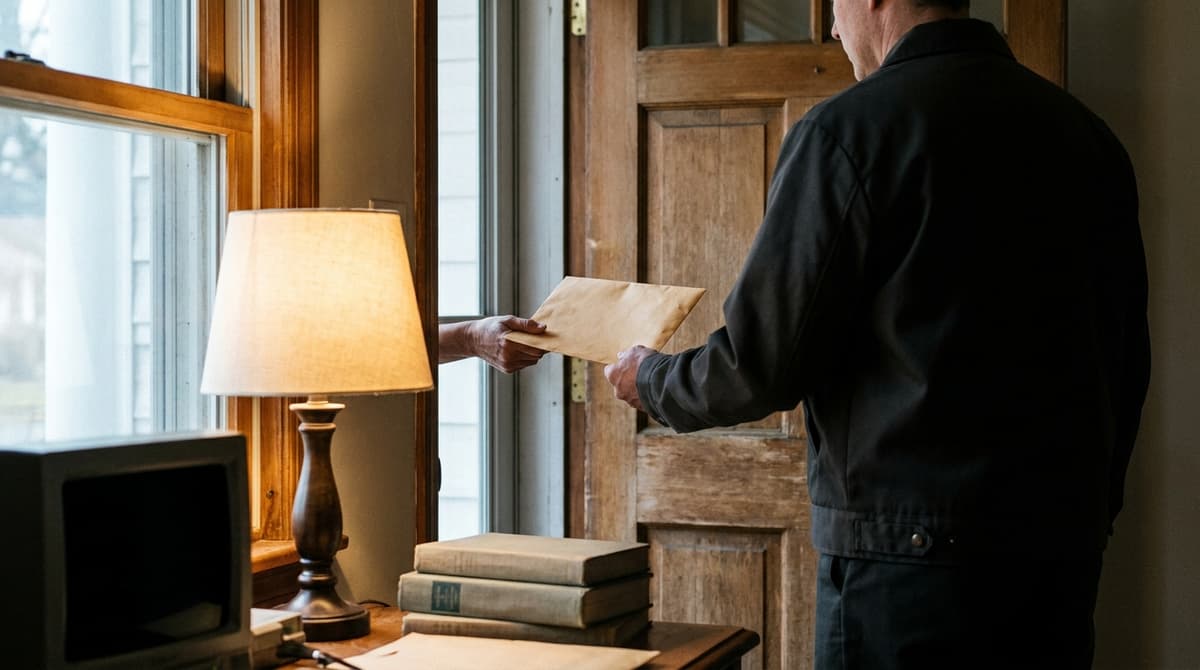
- Personal service. Any adult (18 or older) who is not a party, a sheriff or a process server hands the papers to the defendant and completes the return of service. You cannot serve them yourself.
- Certified mail by the clerk. The Judicial Branch describes this as not the preferred method. If it fails, you need personal service.
To sue a business, serve its registered agent, which you can find through the Colorado Secretary of State. If service is not completed in time, work with the court to reschedule; otherwise the case may be dismissed and you may have to start over.
Mediation
"The court may order your case to mediation, or you can choose mediation to resolve your case without going to trial," the Judicial Branch says. The clerk may tell you mediation is required before trial. The Colorado Office of Dispute Resolution also offers mediation.
If you are the defendant
A written response is optional in Colorado small claims, but you must still attend mediation and the trial. If you file one, it goes on the JDF 250 form with a fee, on or before the trial date. As the Federal Trade Commission warns, "Don't ignore a lawsuit, or you might lose the chance to fight a court order." Before a default judgment, the federal Servicemembers Civil Relief Act requires the plaintiff to file an affidavit stating whether the defendant is in military service (50 U.S.C. § 3931). If the defendant is in the military, the court may enter a default but must appoint an attorney for the defendant before entering judgment (C.R.S. 13-6-407(3)).
Counterclaims. You can file a counterclaim within the $7,500 limit with your response. If your counterclaim is over $7,500, you can keep the case in small claims and limit your recovery to $7,500 (the excess is barred), or file a Notice of Removal (JDF 251) and pay the county or district court filing fee at least 7 days before the trial date to move the case (C.R.S. 13-6-408; JDF 250). If you have a claim against the plaintiff from the same dispute, ask the clerk whether you must raise it in this case.
No jury. C.R.S. 13-6-414 says: "There shall be no right to a trial by jury."
The hearing
The clerk schedules mediation and trial as quickly as possible, but the Judicial Branch warns the process "could take several months in some cases."
A judge or a magistrate hears the case. To have a judge hear it instead of a magistrate, file an Objection to a Magistrate Hearing Case (JDF 259) at least 7 days before the trial date (C.R.S. 13-6-405(4); JDF 250). The trial is informal. C.R.S. 13-6-409 says the judge or magistrate "shall conduct the trial in such manner as to do justice between the parties and shall not be bound by formal rules or statutes of procedure or pleading or the technical rules of evidence."
Witnesses may come voluntarily, or you can compel them with a subpoena (JDF 254). Bring your contract, receipts, estimates, photos, texts and emails.
Appeals
Either side can appeal a Colorado small claims judgment to the district court under the county court appeal rules (C.R.S. 13-6-410; C.R.C.P. 411). The deadline is short. According to the Judicial Branch, you "must give the appeal paperwork to the county court within 14 calendar days of the magistrate or judge making a decision or entering a judgment."
The steps after that:
| Step | Deadline |
|---|---|
| File the notice of appeal (JDF 126) in county court | 14 calendar days after the decision or judgment |
| File a copy in district court | Within 35 days of filing in county court |
| County court prepares the record | Within 42 days |
An appeal requires a bond or fee, and filing it stays the case. We could not confirm the bond amount, so ask the county court clerk.
An appeal is not a new trial. The district court judge reviews the case file and the record of the small claims trial, and no new hearing is held (C.R.S. 13-6-410; Colorado Judicial Branch). Bring all of your evidence and witnesses to the small claims trial.
Missed the hearing? Setting aside a default
The small claims rules allow a motion to set aside a dismissal or default for good cause, using form JDF 253SC. The version of the rule we could review (C.R.C.P. 515(d)) required the motion within a reasonable time and "not more than thirty days after the entry of judgment." We could not confirm that the current rule is unchanged, so file as soon as possible and ask the clerk about the deadline.
Collecting your judgment
Winning a judgment does not guarantee payment, and the court does not collect for you. The Judicial Branch's Collecting a Judgment page describes these tools:

- Interrogatories. Written questions about the debtor's income and assets (JDF 252A or 252B); the debtor has 14 days to answer.
- Garnishment. Federal law caps wage garnishment for ordinary debts at the lesser of 25% of disposable earnings or the amount above 30 times the federal minimum wage per week (15 U.S.C. § 1673(a)); try our wage garnishment calculator.
- A lien on real property. Get a Transcript of Judgment ($25.00) and record it with the county Clerk and Recorder, who may charge an additional fee.
- A debtor examination.
Interest. A judgment earns 8% a year, compounded annually, unless a written contract sets a different rate (C.R.S. 5-12-102(4)); interest on medical debt is capped at 3% a year (C.R.S. 5-12-102(5)).
How long it lasts. "If you were awarded a money judgment in county court, it will expire 6 years from the date of the judgment." You can ask the court to extend it before it expires.
Marking it paid. Once you are paid, file JDF 111 (Satisfaction of Judgment), signed before a notary or the clerk.
Some income is protected. Social Security benefits are not subject to "execution, levy, attachment, garnishment, or other legal process" (42 U.S.C. § 407(a)), and VA benefits are exempt from creditors' claims (38 U.S.C. § 5301(a)(1)). Colorado law protects other property; see Colorado debt collection laws before you plan a garnishment or if you are the one being collected from.
Forms and court help
- Opening a Case (small claims), Colorado Judicial Branch.
- Getting Sued in Small Claims.
- JDF 248, Guide to Small Claims (revised December 14, 2023).
- JDF 250, Notice, Claim and Summons.
- Collecting a Judgment.
- How to start a small claims or county civil appeal.
Related
- Small claims court by state
- Colorado statute of limitations
- Colorado debt collection laws
- Colorado landlord-tenant laws
- Utah small claims court
- Arizona small claims court
Disclaimer: This article provides general legal information about Colorado small claims courts under C.R.S. 13-6-403 through 13-6-414 and the Colorado Rules for Small Claims Courts, verified on 2026-10-07. It is not legal advice and does not create an attorney-client relationship. For help with your situation, contact your county court clerk, the Colorado Judicial Branch's self-help resources, a legal aid office, or a lawyer licensed in Colorado.
Last updated: 2026-10-07.
Frequently Asked Questions
What is the small claims limit in Colorado?
$7,500, not counting interest or costs (C.R.S. 13-6-403(1)(a)). The same limit applies to individuals and businesses.
Can I sue for more than $7,500 in small claims in Colorado?
You can file for more, but according to the Colorado Judicial Branch you can collect only $7,500 if you win, and you cannot divide a larger claim into smaller ones. A larger claim can be filed as a regular county or district court case.
How much does it cost to file small claims in Colorado?
The Colorado Judicial Branch lists $31 for claims of $1.00 up to $500.00 and $55 for claims of $501.00 up to $7,500.00, plus the cost of certified mail if the clerk serves the defendant.
Can a lawyer represent me in small claims in Colorado?
Generally no. C.R.S. 13-6-407 requires individuals to represent themselves, and attorneys may appear only for themselves or as the Supreme Court's rules permit; if one appears as permitted, the other side may also use a lawyer.
How many small claims can I file in Colorado?
No more than two claims per month and eighteen per year in the small claims court of any county (C.R.S. 13-6-411).
How long do I have to appeal a Colorado small claims judgment?
14 calendar days. The Judicial Branch says the appeal paperwork must be given to the county court within 14 calendar days of the decision or judgment, and the appeal goes to district court (C.R.S. 13-6-410).
Is there a jury in Colorado small claims court?
No. C.R.S. 13-6-414 says there shall be no right to a trial by jury, and a judge or magistrate decides the case.
How long is a Colorado small claims judgment good for?
A county court money judgment expires 6 years from the date of the judgment, according to the Judicial Branch, but you can ask the court to extend it before it expires.
Updates
Independently fact-checked against the cited primary sources
The Law Behind This Article
This article rests on the statutory provisions below, held in our own legal record and retrieved from the official source. Tap a section to read the operative text.
Colorado Revised Statutes, Title 13: Courts and Court Procedure
§ 13-6-403Jurisdiction of small claims court - limitationsIn forcecited in 3 of our articles
(1) (a) The small claims court has concurrent original jurisdiction with the county and district courts in all civil actions in which the debt, damage, or value of the personal property claimed by either the plaintiff or the defendant, exclusive of interest and costs, does not exceed seven thousand five hundred dollars, including such civil penalties as may be provided by law. By way of further example, and not limitation, the small claims court has jurisdiction to hear and determine actions in tort and assess damages in tort actions not to exceed seven thousand five hundred dollars. (b) The small claims court division also has concurrent original jurisdiction with the county and district courts in actions where a party seeks: (I) To enforce rights and responsibilities arising under the declaration, bylaws, covenants, or other governing documents of a unit owners' association, as defined in section 38-33.3-103 (3), in relation to disputes arising from assessments, fines, or fees owed to the unit owners' association and for which the amount at issue does not exceed seven thousand five hundred dollars, exclusive of interest and costs.
Official text (excerpt) · last checked 2026-07-29 · Read the full text in our law library · Verify at olls.info
Cited in 1 court opinions in our collectionLatest citing opinion in our collection: 1998
Opinions citing this section in our collection:
- Ortiz v. Costilla County Board of Commissioners (District Court, D. Colorado 1998, 11 F. Supp. 2d 1254)“…original jurisdiction with the county and district courts,” C.R.S. § 13-6-403(1), it shall “have no jurisdiction exce…”
Identified automatically from the court opinions citing this section — not a ranking of which case controls.
Also relied on in: Colorado Scam and Fraud Laws: Where to Report, Right to Sue (2026), Colorado Defamation Laws: Libel & Slander (2026)
§ 13-6-407Parties - representationIn force
(1) Any natural person, corporation, partnership, association, or other organization may commence or defend an action in the small claims court, but no assignee or other person not a real party to the transaction which is the subject of the action may commence an action therein, except as a court-appointed personal representative, conservator, or guardian of the real party in interest. (2) (a) (I) Notwithstanding the provisions of article 93 of this title 13, in the small claims court, an individual shall represent himself or herself; a partnership shall be represented by an active general partner or an authorized full-time employee; a union shall be represented by an authorized active union member or full-time employee; a for-profit corporation shall be represented by one of its full-time officers or full-time employees; an association shall be represented by one of its active members or by a full-time employee of the association; and any other kind of organization or entity shall be represented by one of its active members or full-time employees or, in the case of a nonprofit corporation, a duly elected nonattorney officer or an employee.
Official text (excerpt) · last checked 2026-07-29 · Read the full text in our law library · Verify at olls.info
§ 13-6-410Appeal of a claimIn force
A record shall be made of all small claims court proceedings, and either the plaintiff or the defendant may appeal pursuant to county court rules. Upon appeal, all provisions of law and rules concerning appeals from the county court shall apply, including right to counsel. A tape recording of the trial proceedings shall satisfy any requirements of a transcript for appeal, upon the payment of a nominal fee by the appellant.
Official text (excerpt) · last checked 2026-07-29 · Read the full text in our law library · Verify at olls.info
§ 13-6-411Limitation on number of claims filedIn force
(1) No plaintiff may file more than two claims per month, eighteen claims per year, in the small claims court of any county. Each claim filed in any small claims court shall contain a certification by the plaintiff that the plaintiff has not filed any more than two claims during that month and eighteen claims in that year in the small claims court of that county. (2) The limitation imposed by subsection (1) of this section shall not apply to a state-supported institution of higher education which files claims to recover loans or other outstanding obligations due to such institution; except that no such state-supported institution of higher education shall file more than a total of thirty such claims per month in all small claims courts in Colorado.
Official text (excerpt) · last checked 2026-07-29 · Read the full text in our law library · Verify at olls.info
§ 13-6-408Counterclaims exceeding jurisdiction of small claims court - procedures - sanctions for improper assertionIn force
Counterclaims exceeding the jurisdiction of the small claims court shall be removed to the county or district court of appropriate jurisdiction pursuant to rule of the supreme court. If a county or district court determines that a plaintiff who originally filed a claim in the small claims court is entitled to judgment and also that a counterclaim against the same plaintiff in the small claims action was filed solely to defeat the jurisdiction of the small claims court and was without merit, the county or district court may also award the plaintiff costs, including reasonable attorney fees, incurred in prosecuting the action in the county or district court.
Official text (excerpt) · last checked 2026-07-29 · Read the full text in our law library · Verify at olls.info
§ 13-6-404Clerk of the small claims courtIn force
The clerk of the county court or a deputy designated by said clerk shall act as the clerk of the small claims court. The clerk of the small claims court shall provide such assistance as may be requested by any person regarding the jurisdiction, operations, and procedures of the small claims court; however, the clerk shall not engage in the practice of law. All necessary forms shall be available from the clerk.
Official text (excerpt) · last checked 2026-07-29 · Read the full text in our law library · Verify at olls.info
§ 13-6-409Trial procedureIn force
The judge or magistrate shall conduct the trial in such manner as to do justice between the parties and shall not be bound by formal rules or statutes of procedure or pleading or the technical rules of evidence, except for rules promulgated by the supreme court controlling the conduct of proceedings in the small claims court.
Official text (excerpt) · last checked 2026-07-29 · Read the full text in our law library · Verify at olls.info
§ 13-6-405Magistrate in small claims courtIn force
(1) In the following circumstances, a magistrate may hear and decide claims in a small claims court: (a) In Class A counties, as defined in section 13-6-201, magistrates for small claims may be appointed by the presiding judge. (b) In Class B counties, as defined in section 13-6-201, magistrates for small claims may be appointed, pursuant to section 13-3-105, if approved by the chief justice. (2) A magistrate shall be a qualified attorney-at-law admitted to practice in the state of Colorado or a nonattorney if the nonattorney is serving as a county judge pursuant to section 13-6-203. (3) While acting as a magistrate for small claims, a magistrate shall have the same powers as a judge. (3.5) A magistrate shall have the power to solemnize marriages pursuant to the procedures in section 14-2-109, C.R.S. (4) If any party files a timely written objection, pursuant to rule of the supreme court, with the magistrate conducting the hearing, that party's case shall be rereferred to a judge.
Official text (excerpt) · last checked 2026-07-29 · Read the full text in our law library · Verify at olls.info
Search our full record of US law — 2.1 million sections, every state + federal →
Sources and References
- Colorado Revised Statutes Title 13 (2026), including C.R.S. 13-6-403 to 13-6-414 (small claims)(olls.info).gov
- Colorado Judicial Branch, Opening a Case (small claims)(coloradojudicial.gov).gov
- Colorado Judicial Branch, JDF 248 Guide to Small Claims (revised December 14, 2023)(coloradojudicial.gov).gov
- Colorado Judicial Branch, Collecting a Judgment(coloradojudicial.gov).gov
- Colorado Judicial Branch, Getting Sued in Small Claims(coloradojudicial.gov).gov
- Colorado Supreme Court, Rules for Small Claims Courts amendments (2001 rule change, C.R.C.P. 501 to 521)(coloradojudicial.gov).gov
- Federal Trade Commission, Debt Collection FAQs(consumer.ftc.gov).gov
- 50 U.S.C. 3931, Servicemembers Civil Relief Act default judgment protections(govinfo.gov).gov
- Colorado Judicial Branch, How to Start a Small Claims or County Civil Appeal(coloradojudicial.gov).gov
- 15 U.S.C. 1673, Federal wage garnishment limit(govinfo.gov).gov
- 42 U.S.C. 407, Social Security benefits protected from legal process(govinfo.gov).gov
- 38 U.S.C. 5301, VA benefits exempt from creditors(govinfo.gov).gov
- Colorado Judicial Branch, JDF 250 Notice, Claim and Summons(coloradojudicial.gov).gov
- C.R.S. 5-12-102, Statutory interest (2026 Colorado Revised Statutes, Title 5)(olls.info).gov