
Minnesota
Leyes de Atropello y Fuga en Minnesota: Sanciones y Qué Hacer
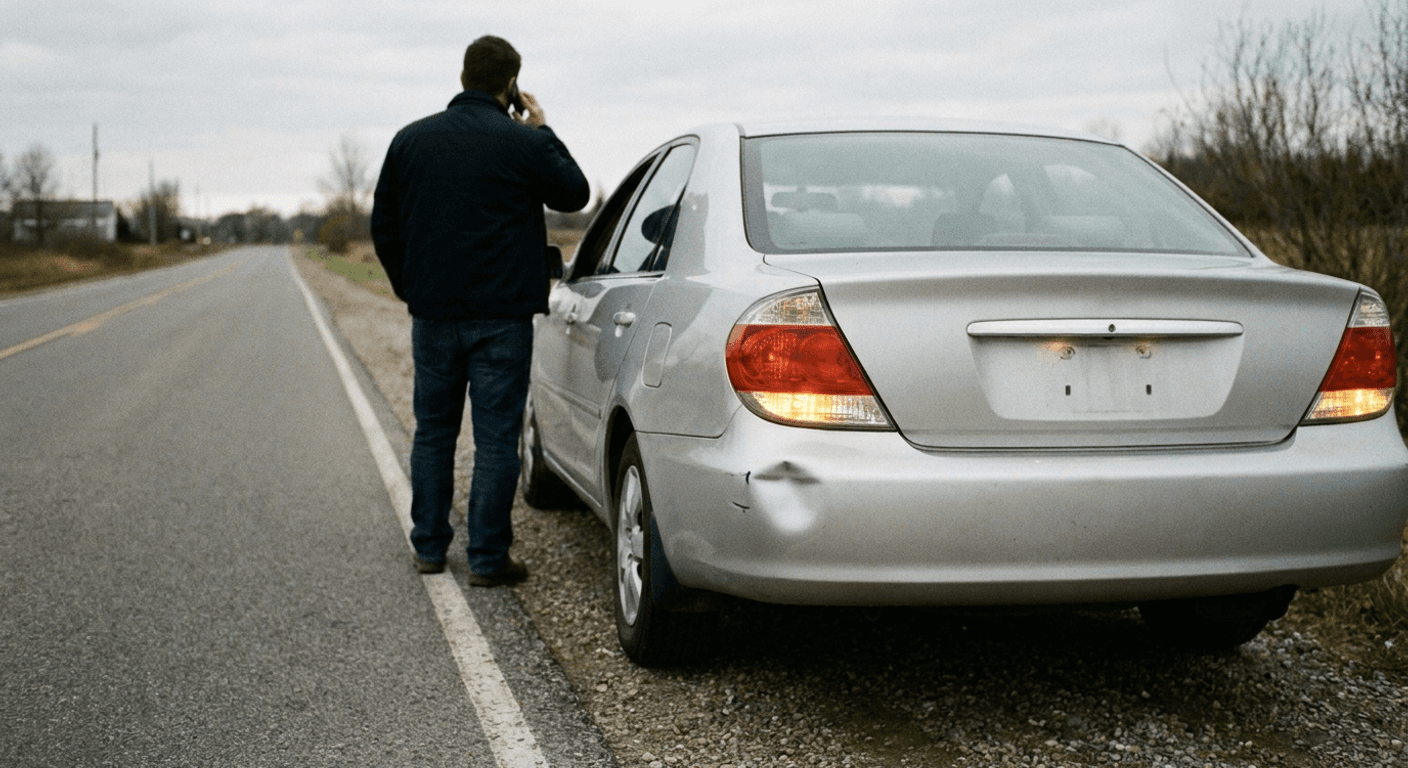
Minnesota clasifica el abandono del lugar de un accidente (atropello y fuga) como delito menor, delito menor agravado o delito grave según la Minn. Stat. 169.09, dependiendo del daño causado. Los daños materiales conllevan hasta 90 días de cárcel; para un conductor que no causó la colisión, una colisión fatal conlleva hasta 3 años de prisión y una multa de $5,000.
¿Resultó herido en un atropello y fuga? Si el conductor que lo golpeó huyó o no tenía seguro, su propia cobertura de automovilista sin seguro o con seguro insuficiente (UM/UIM) puede pagar su reclamo por lesiones. Calcule cuánto podría valer con nuestra Calculadora gratuita de Indemnización por Accidentes de Auto en Minnesota.
Última verificación: marzo de 2026. Esta guía refleja las disposiciones vigentes de la Sección 169.09 de los Estatutos de Minnesota y disposiciones relacionadas. Consulte siempre a un abogado con licencia para obtener asesoría legal específica a su situación.
Resumen Rápido de las Leyes de Atropello y Fuga en Minnesota
Minnesota aborda el abandono del lugar de un accidente en la Sección 169.09 de los Estatutos de Minnesota. La ley exige que todos los conductores involucrados en una colisión se detengan de inmediato, investiguen razonablemente qué golpearon y proporcionen información específica a la otra parte.

Las sanciones van desde un delito menor por daños materiales (hasta 90 días de cárcel) hasta un delito grave por colisiones que resultan en la muerte (hasta 3 años de prisión y una multa de $5,000). Los niveles de delito grave de la Sección 169.09 se aplican únicamente a un conductor que no causó la colisión. Un conductor que causa la colisión y abandona el lugar enfrenta cargos de operación vehicular criminal u homicidio vehicular según la Sección 609.2113 o la Sección 609.2112, que conllevan sanciones considerablemente más severas.
Qué Exige la Ley de Minnesota Después de una Colisión
La Sección 169.09, Subdivisión 1 de los Estatutos de Minnesota establece el deber fundamental para todos los conductores:
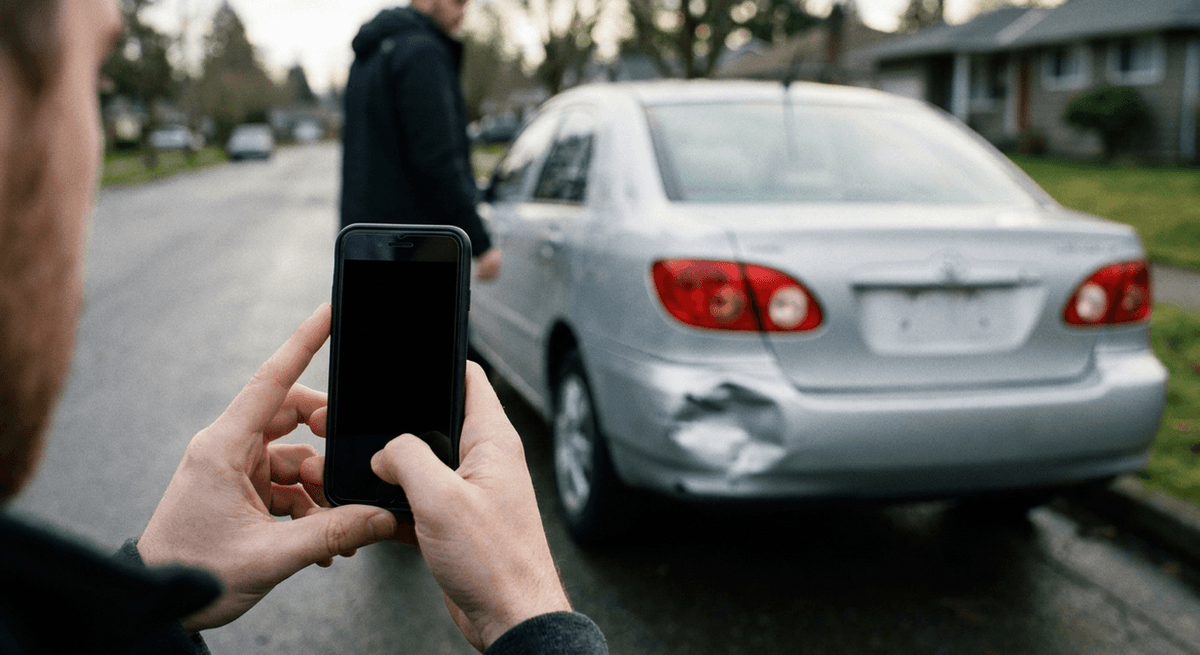
"El conductor de cualquier vehículo motorizado involucrado en una colisión deberá detener el vehículo de inmediato en el lugar de la colisión, o lo más cerca posible de este, e investigar razonablemente qué fue golpeado."
Este deber se aplica a todas las colisiones, ya sea que involucren a otros vehículos, peatones, propiedad u objetos fijos.
Intercambio de Información Requerido
Después de detenerse, debe proporcionar la siguiente información a la otra parte (Subdivisión 2):
- Su nombre completo
- Su fecha de nacimiento
- Su dirección postal o de correo electrónico
- El número de registro de su vehículo
También debe mostrar su licencia de conducir a un oficial de la paz si se lo solicita.
Información del Seguro
Si no proporciona la información de su aseguradora en el lugar, debe hacerlo dentro de las 72 horas posteriores a la colisión.
Deber de Prestar Ayuda
Si alguna persona involucrada en la colisión necesita atención médica, debe brindar asistencia razonable, incluyendo organizar el transporte a un centro médico si es necesario.
Si Golpea un Vehículo Desatendido
Si golpea un vehículo estacionado o desatendido y no puede localizar al propietario, la ley de Minnesota exige que deje una nota escrita en un lugar visible del vehículo. La nota debe contener su nombre, dirección y número de registro del vehículo. También debe reportar el incidente a un oficial de la paz.
Requisitos de Reporte
Según la Subdivisión 7, si una colisión resulta en muerte, lesiones o daños materiales que superen los $1,000, debe reportarla al Departamento de Seguridad Pública de Minnesota dentro de los 10 días siguientes. En el lugar de los hechos, debe notificar a la policía local "por el medio más rápido" si la colisión resulta en lesiones o muerte.
Delitos Menores y Delitos Menores Agravados de Atropello y Fuga
Abandonar el lugar de una colisión es un delito menor en Minnesota cuando el accidente no resulta en lesión corporal ni la muerte. Las colisiones que involucran lesión corporal pasan al rango de delito menor agravado.
Solo Daños Materiales
Si la colisión involucra únicamente daños materiales y usted se retira sin cumplir con sus obligaciones legales, enfrenta:
- Hasta 90 días de cárcel
- Una multa de hasta $1,000
- O ambas cosas
No Dejar Información en un Vehículo Desatendido
Golpear un vehículo estacionado y retirarse sin proporcionar su información de contacto también es un delito menor con las mismas sanciones.
Daños a Estructuras de la Carretera
Si daña barandillas, señales u otras estructuras adyacentes a una carretera y no notifica a la autoridad responsable, enfrenta cargos por delito menor.
Colisión con Lesión Corporal (No Lesión Corporal Grave)
Si abandona el lugar de una colisión que resulta en lesión corporal a otra persona (pero no "lesión corporal grave" ni la muerte), enfrenta sanciones de delito menor agravado según la Subdivisión 14(b), o la Subdivisión 14(a)(3) por lesión corporal sustancial cuando usted no causó la colisión:
- Hasta 364 días de cárcel
- Una multa de hasta $3,000
- O ambas cosas
No Notificar a la Policía sobre Lesiones o Muerte
No notificar a la policía "por el medio más rápido" cuando un accidente involucra lesiones o muerte viola la Subdivisión 6. No es un delito independiente con su propia sanción: se sanciona según los mismos niveles de la Subdivisión 14 que el abandono del lugar, desde hasta 364 días de cárcel y una multa de $3,000 cuando resulta en lesión corporal, hasta las sanciones de delito grave que se describen a continuación cuando resulta en lesión corporal grave o la muerte.
Delitos Graves de Atropello y Fuga
El atropello y fuga se convierte en delito grave en Minnesota cuando la colisión resulta en lesión corporal grave o la muerte.
Lesión Corporal Grave (Subdivisión 14(a)(2))
Si la colisión resulta en "lesión corporal grave" y usted abandona el lugar sin haber causado la colisión, enfrenta:
- Hasta 2 años de prisión
- Una multa de hasta $4,000
- O ambas cosas
Según la Sección 609.02, Subdivisión 8, "lesión corporal grave" significa una lesión corporal que crea una alta probabilidad de muerte, que causa desfiguración permanente grave, o que causa la pérdida o el deterioro permanente o prolongado de la función de cualquier miembro u órgano corporal.
Muerte (Subdivisión 14(a)(1))
Si la colisión resulta en la muerte de cualquier persona y usted abandona el lugar sin haber causado la colisión, enfrenta:
- Hasta 3 años de prisión
- Una multa de hasta $5,000
- O ambas cosas
Una condena por delito grave en Minnesota resulta en la pérdida permanente de su derecho a poseer armas de fuego, entre otras restricciones de derechos civiles.
Operación Vehicular Criminal (Sección 609.2113)
Si causa un accidente y abandona el lugar en violación de la Sección 169.09, puede enfrentar cargos adicionales según el estatuto de Operación Vehicular Criminal de Minnesota. Estos cargos se aplican cuando el conductor que causó la colisión abandona el lugar en violación de la Sección 169.09, Subdivisión 1 o 6. Las sanciones varían según la gravedad:
- Lesión corporal: Hasta 364 días de prisión, multa de $3,000
- Lesión corporal sustancial: Hasta 3 años de prisión, multa de $10,000
- Lesión corporal grave: Hasta 5 años de prisión, multa de $10,000
- Muerte: Hasta 10 años de prisión, multa de $20,000 (homicidio vehicular criminal según la Sección 609.2112)
Dado que los niveles de delito grave por abandonar el lugar de la Subdivisión 14(a) de la Sección 169.09 se aplican únicamente a un conductor que no causó la colisión, un conductor que causó una colisión con lesión corporal grave o muerte es acusado según estos estatutos de operación vehicular criminal y homicidio en su lugar.
Resumen de Sanciones por Atropello y Fuga en Minnesota
| Delito | Clasificación | Encarcelamiento Máximo | Multa Máxima |
|---|---|---|---|
| Daños materiales o vehículo desatendido | Delito menor | 90 días | $1,000 |
| Lesión corporal (no lesión corporal grave) | Delito menor agravado | 364 días | $3,000 |
| No notificar a la policía sobre lesión/muerte | Sancionado según los niveles de lesión/muerte | 364 días a 3 años | $3,000 a $5,000 |
| Lesión corporal grave (el conductor no causó la colisión) | Delito grave | 2 años | $4,000 |
| Muerte (el conductor no causó la colisión) | Delito grave | 3 años | $5,000 |
| Operación vehicular criminal (lesión corporal grave) | Delito grave | 5 años | $10,000 |
| Homicidio vehicular criminal (muerte) | Delito grave | 10 años | $20,000 |
Revocación de Licencia
El tribunal revocará o suspenderá su licencia de conducir al ser condenado por abandonar el lugar de un accidente. El Comisionado de Seguridad Pública también puede suspender su licencia por no presentar deliberadamente un reporte de accidente requerido.
Estadísticas de Accidentes en Minnesota
Según el Departamento de Seguridad Pública de Minnesota y datos de la NHTSA:
Datos de 2024:
- Total de muertes de tráfico: Al menos 479 muertes, un aumento del 12% respecto a 2023
- Accidentes fatales relacionados con la velocidad: Aproximadamente 121 accidentes
- Muertes relacionadas con el alcohol: 102 muertes
- Muertes sin cinturón de seguridad: 99 muertes atribuidas a la falta de uso del cinturón de seguridad
- Muertes por conducción distraída: 27 muertes
- Tasa de uso del cinturón de seguridad: 94.7% (estudio observacional estatal)
- Costo económico de todos los accidentes: $4.66 mil millones
Datos de 2023:
- Total de muertes de tráfico: Aproximadamente 428 muertes
- Tasa de muertes por cada 100,000 habitantes: 7.5 (por debajo del promedio nacional de 12.2)
La iniciativa estatal "Hacia Cero Muertes" (Toward Zero Deaths) busca eliminar las muertes de tráfico prevenibles mediante educación, aplicación de la ley, ingeniería y servicios médicos de emergencia.
Cómo Se Determina la Culpa en Minnesota
Sistema de Seguro Sin Culpa (No-Fault)
Minnesota es un estado de seguro sin culpa (no-fault). Después de un accidente, su propio seguro paga sus gastos médicos y salarios perdidos bajo su cobertura de Protección contra Lesiones Personales (PIP), sin importar quién causó la colisión. La cobertura PIP es obligatoria en Minnesota.
Sin embargo, para accidentes que resultan en lesiones graves o daños significativos, las víctimas pueden salir del sistema sin culpa y presentar reclamos contra el conductor culpable.
Regla de Culpa Comparativa Modificada
Según la Sección 604.01 de los Estatutos de Minnesota, Minnesota sigue una regla de culpa comparativa modificada:
- Solo puede recuperar daños si su parte de culpa no supera el 50%.
- Si es responsable en un 51% o más del accidente, no puede recuperar ninguna compensación.
- Su porcentaje de culpa reduce su compensación de forma proporcional.
Ejemplo: Si sufre $100,000 en daños pero se determina que usted tiene un 30% de culpa, recuperaría $70,000.
Plazo de Prescripción para Reclamos Civiles
- Reclamos por lesiones personales: 2 años desde la fecha de la lesión
- Reclamos por muerte injusta: 3 años desde la fecha de la muerte
- Reclamos por daños materiales: 6 años
Implicaciones en el Seguro de un Atropello y Fuga
Una condena por atropello y fuga en Minnesota genera consecuencias duraderas en el seguro:
- Aumento de primas: Una condena por abandonar el lugar se clasifica como una infracción de tráfico grave y provocará aumentos significativos en las primas.
- Cancelación de la póliza: Su aseguradora puede negarse a renovar su cobertura.
- Cobertura de automovilista sin seguro: Si usted es víctima de un atropello y fuga, su cobertura de automovilista sin seguro (UM) puede ayudar a pagar lesiones y daños que superen sus beneficios de PIP.
- Subrogación: Su aseguradora puede perseguir al conductor que huyó para recuperar los montos pagados en su reclamo.
Minnesota exige que todos los conductores tengan un seguro de auto mínimo, que incluye $30,000 por persona y $60,000 por accidente en responsabilidad por lesiones corporales, $10,000 en responsabilidad por daños materiales, y cobertura PIP.
Defensa Afirmativa: Atención Médica de Emergencia
La ley de Minnesota ofrece una defensa afirmativa específica para los conductores que abandonan el lugar para brindar atención médica de emergencia. Según la Sección 169.09, es una defensa contra el enjuiciamiento si:
- El conductor abandonó el lugar para llevar a una persona con una lesión corporal inmediatamente demostrable a recibir atención médica de emergencia.
- El conductor notificó a las autoridades según lo exige el estatuto tan pronto como fue razonablemente posible después de haber gestionado la atención médica de emergencia.
Esta defensa se aplica a las infracciones de las Subdivisiones 1, 2 y 6 del estatuto.
Otras Posibles Defensas
Dependiendo de las circunstancias, pueden aplicarse estas defensas adicionales:
- Falta de conocimiento: Usted genuinamente no sabía que ocurrió una colisión. Esto es más creíble en situaciones de baja velocidad o contacto menor.
- Temor por su seguridad: Usted creía razonablemente que permanecer en el lugar pondría en peligro su seguridad.
- Identidad equivocada: Usted no era el conductor, o el vehículo fue robado.
- Sin lesión ni daño: La colisión en realidad no resultó en ninguna lesión ni daño material.
- Circunstancias de emergencia: Usted se retiró para buscar atención médica inmediata para sí mismo y reportó a la policía con prontitud.
Qué Hacer Después de una Colisión en Minnesota
Siga estos pasos para cumplir con la ley y proteger sus derechos:
- Deténgase de inmediato en el lugar o lo más cerca posible de forma segura.
- Investigue qué fue golpeado. Este es un requisito específico según la ley de Minnesota.
- Revise si hay heridos y llame al 911 si alguien necesita atención médica.
- Intercambie información con todas las demás partes: nombre, fecha de nacimiento, dirección y número de registro.
- Muestre su licencia de conducir a cualquier oficial de la paz que se la solicite.
- Proporcione la información de su seguro en el lugar o dentro de las 72 horas.
- Brinde asistencia razonable a cualquier persona herida.
- Notifique a la policía de inmediato si alguien resulta herido o muere.
- Presente un reporte escrito ante el Departamento de Seguridad Pública de Minnesota dentro de los 10 días si el accidente involucró muerte, lesiones o daños materiales superiores a $1,000.
- No admita culpa en el lugar. Deje que los investigadores hagan esa determinación.
Más Leyes de Minnesota
- Leyes de Minnesota sobre Grabación de Reuniones con IA
- Leyes de Pensión Alimenticia Conyugal de Minnesota
- Leyes de Empleo a Voluntad de Minnesota
- Leyes de Accidentes de Auto de Minnesota
- Leyes de Asientos de Auto para Niños de Minnesota
- Leyes de Custodia de Menores de Minnesota
- Leyes de Manutención Infantil de Minnesota
- Leyes de Matrimonio de Hecho de Minnesota
- Leyes de Privacidad de Datos de Minnesota
- Leyes sobre Deepfakes de Minnesota
- Leyes de Divorcio de Minnesota
- Leyes de Mordeduras de Perro de Minnesota
- Leyes de Emancipación de Minnesota
- Leyes de Eliminación de Antecedentes de Minnesota
- Leyes de Propietarios e Inquilinos de Minnesota
- Leyes Lemon de Minnesota
Recursos Relacionados
Fuentes Oficiales:
- Estatutos de Minnesota Sección 169.09 (Colisiones)
- Estatutos de Minnesota Sección 609.2113 (Operación Vehicular Criminal)
- Estatutos de Minnesota Sección 609.02 (Definiciones)
- Estatutos de Minnesota Sección 604.01 (Culpa Comparativa)
- Reportes de Seguridad Vial del DPS de Minnesota
Otras Leyes de Minnesota:
- Leyes de Grabación de Minnesota
- Leyes de Asientos de Auto para Niños de Minnesota
- Plazo de Prescripción de Minnesota
- Leyes de Denunciantes de Minnesota
Preguntas frecuentes
¿Cuánto tiempo tengo para reportar un accidente en Minnesota?
Debe reportar los accidentes que resulten en muerte, lesiones o daños materiales superiores a $1,000 al Departamento de Seguridad Pública de Minnesota dentro de los 10 días siguientes. En el lugar de los hechos, debe notificar a la policía local por el medio más rápido si la colisión resulta en lesiones o muerte.
¿Me pueden acusar de atropello y fuga si el accidente no fue mi culpa?
Sí. La ley de Minnesota exige que todos los conductores involucrados en una colisión se detengan y cumplan con sus obligaciones legales, sin importar quién causó el accidente. La culpa es un asunto aparte que determinan más adelante los investigadores, las aseguradoras o los tribunales.
¿Qué pasa si choco el buzón, la cerca u otra propiedad de alguien?
Debe tomar medidas razonables para localizar y notificar al propietario, proporcionar su nombre, dirección y número de placa, y reportar el incidente a la policía. Retirarse sin hacerlo es un delito menor sancionable con hasta 90 días de cárcel y una multa de $1,000.
¿Me suspenderán la licencia por una condena de atropello y fuga?
Sí. Al ser condenado por abandonar el lugar de un accidente, el tribunal revocará o suspenderá sus privilegios de conducir. La duración de la suspensión depende de la gravedad de la infracción y de condenas previas. El Comisionado también puede suspender su licencia por no presentar un reporte de accidente requerido.
¿Cuál es la diferencia entre los cargos por abandonar el lugar y los cargos por operación vehicular criminal?
Los cargos por abandonar el lugar según la Sección 169.09 se aplican a los conductores que huyen de un accidente, pero los niveles de delito grave por lesión corporal grave o muerte se aplican únicamente a un conductor que no causó la colisión. Los cargos por operación vehicular criminal según la Sección 609.2113 y los cargos por homicidio vehicular criminal según la Sección 609.2112 se aplican cuando el conductor que causó el accidente abandona el lugar. Conllevan sanciones mucho más severas, incluyendo hasta 10 años de prisión y una multa de $20,000 en casos que involucran la muerte.
Actualizaciones
Se corrigieron los niveles de sanción por abandonar el lugar de un accidente en Minnesota: las citas de subdivisión, el nivel de delito menor agravado por lesión corporal (364 días), el límite de "no haber causado la colisión" en los niveles de delito grave, y la multa de $20,000 por homicidio vehicular criminal.
La ley detrás de este artículo
Este artículo se apoya en las disposiciones legales a continuación, conservadas en nuestro propio registro jurídico y obtenidas de la fuente oficial. Toque una sección para leer el texto vigente.
Minnesota Statutes, Chapter 169: TRAFFIC REGULATIONS
§ 169.09COLLISIONSVigentecitada en 3 de nuestros artículos
Subdivision 1. Driver to stop for collision; injury or death. The driver of any motor vehicle involved in a collision shall immediately stop the vehicle at the scene of the collision, or as close to the scene as possible, and reasonably investigate what was struck. If the driver knows or has reason to know the collision resulted in injury to or death of another, the driver in every event shall remain at the scene of the collision until the driver has fulfilled the requirements of this section as to the giving of information. The stop must be made without unnecessarily obstructing traffic. Subd. 2. Driver to stop for collision; attended vehicle. The driver of any motor vehicle involved in a collision shall immediately stop the motor vehicle at the scene of the collision, or as close to the collision as possible, and reasonably investigate what was struck. If the driver knows or has reason to know the collision involves damage to a vehicle driven or attended by another, the driver in every event shall remain at the scene of the collision until the driver has fulfilled the requirements of this section as to the giving of information.
Texto oficial (extracto) · verificado el 2026-09-24 · Lea el texto completo en nuestra biblioteca legal · Verifique en revisor.mn.gov
Citada en 44 resoluciones judiciales de nuestra colecciónResolución más reciente que la cita en nuestra colección: 2026
Resoluciones que citan esta sección en nuestra colección:
- State v. Storvick (Supreme Court of Minnesota 1988, 428 N.W.2d 55)“…offense of leaving the scene of a personal injury accident, Minn.Stat. § 169.09, subds. 1 and 14(a) (1986), and gave hi…”
- State v. Al-Naseer (Supreme Court of Minnesota 2007, 734 N.W.2d 679)“…accident involving an unattended vehicle. See Minn.Stat. § 169.09, subd. 4 (2006). We conclude that the m…”
- Meyer v. Nwokedi (Supreme Court of Minnesota 2010, 777 N.W.2d 218)“…ich caps vicarious liability for rental-vehicle owners, and Minn.Stat. § 169.09, subd. 5a (2008), which, in relevant pa…”
Identificado automáticamente a partir de las opiniones judiciales que citan esta sección; no es un ranking de qué caso prevalece.
Minnesota Statutes, Chapter 609: CRIMINAL CODE
§ 609.2113CRIMINAL VEHICULAR OPERATION; BODILY HARMVigente
Subdivision 1. Great bodily harm. A person is guilty of criminal vehicular operation resulting in great bodily harm and may be sentenced to imprisonment for not more than five years or to payment of a fine of not more than $10,000, or both, if the person causes great bodily harm to another not constituting attempted murder or assault as a result of operating a motor vehicle: (1) in a grossly negligent manner; (2) in a negligent manner while under the influence of: (i) alcohol; (ii) a controlled substance; (iii) cannabis flower, a cannabis product, a lower-potency hemp edible, a hemp-derived consumer product, artificially derived cannabinoids, or tetrahydrocannabinols; or (iv) any combination of those elements; (3) while having an alcohol concentration of 0.08 or more; (4) while having an alcohol concentration of 0.08 or more, as measured within two hours of the time of driving; (5) in a negligent manner while under the influence of an intoxicating substance and the person knows or has reason to know that the substance has the capacity to cause impairment; (6) in a negligent manner while any amount of a controlled substance listed in Schedule I or II, or its metabolite, other than…
Texto oficial (extracto) · verificado el 2026-07-29 · Lea el texto completo en nuestra biblioteca legal · Verifique en revisor.mn.gov
Citada en 11 resoluciones judiciales de nuestra colecciónResolución más reciente que la cita en nuestra colección: 2024
Resoluciones que citan esta sección en nuestra colección:
- State of Minnesota v. Debra Lee Fawcett (Supreme Court of Minnesota 2016, 884 N.W.2d 380)“…ature renumbered section 609.21, subd. 1 (2012), to include Minn.Stat. § 609.2113, subd. 2(2). Act of Apr. 30, 2014, ch.…”
- State of Minnesota v. Samantha Dana Schroeder (Court of Appeals of Minnesota 2024)“…pleaded guilty to criminal vehicular operation pursuant to Minn. Stat. § 609.2113,…”
- State of Minnesota, Respondent/Cross-Appellant v. Bonnie Ann Lindquist, Appellant/Cross-Respondent. (Supreme Court of Minnesota 2015, 869 N.W.2d 863)“…2014, ch. 180, § 9, 2014 Minn. Laws 281, 288 (codified at Minn. Stat. § 609.2113 (2014)).…”
Identificado automáticamente a partir de las opiniones judiciales que citan esta sección; no es un ranking de qué caso prevalece.
§ 609.02DEFINITIONSVigentecitada en 10 de nuestros artículos
Subdivision 1. Crime. "Crime" means conduct which is prohibited by statute and for which the actor may be sentenced to imprisonment, with or without a fine. Subd. 2. Felony. "Felony" means a crime for which a sentence of imprisonment for one year or more may be imposed. Subd. 2a. [Repealed, 1999 c 194 s 11] Subd. 3. Misdemeanor. "Misdemeanor" means a crime for which a sentence of not more than 90 days or a fine of not more than $1,000, or both, may be imposed. Subd. 4. Gross misdemeanor. "Gross misdemeanor" means any crime which is not a felony or misdemeanor. The maximum fine which may be imposed for a gross misdemeanor is $3,000. Subd. 4a. Petty misdemeanor. "Petty misdemeanor" means a petty offense which is prohibited by statute, which does not constitute a crime and for which a sentence of a fine of not more than $300 may be imposed. Subd. 5. Conviction. "Conviction" means any of the following accepted and recorded by the court: (1) a plea of guilty; or (2) a verdict of guilty by a jury or a finding of guilty by the court. Subd. 6. Dangerous weapon.
Texto oficial (extracto) · verificado el 2026-07-29 · Lea el texto completo en nuestra biblioteca legal · Verifique en revisor.mn.gov
Citada en 539 resoluciones judiciales de nuestra colecciónResolución más reciente que la cita en nuestra colección: 2026
Resoluciones que citan esta sección en nuestra colección:
- State v. Stewart (Court of Appeals of Minnesota 2019, 923 N.W.2d 668)“…he intentionally inflicted great bodily harm upon B.G.D. Minn. Stat. §§ 609.02 , subd. 10(2), .221, subd. 1 (2014). S…”
- State v. Fleck (Supreme Court of Minnesota 2012, 810 N.W.2d 303)“…itted two forms of assault to the jurors: (1) assault-fear, Minn.Stat. § 609.02, subd. 10(1) (2010) (prohibiting an act…”
- State v. Vance (Supreme Court of Minnesota 2007, 734 N.W.2d 650)“…iction of or attempt to inflict bodily harm upon another. Minn.Stat. § 609.02, subd. 10 (2004). 4 The statute furthe…”
Identificado automáticamente a partir de las opiniones judiciales que citan esta sección; no es un ranking de qué caso prevalece.
§ 609.2112CRIMINAL VEHICULAR HOMICIDEVigente
Subdivision 1. Criminal vehicular homicide. (a) Except as provided in paragraph (b), a person is guilty of criminal vehicular homicide and may be sentenced to imprisonment for not more than ten years or to payment of a fine of not more than $20,000, or both, if the person causes the death of a human being not constituting murder or manslaughter as a result of operating a motor vehicle: (1) in a grossly negligent manner; (2) in a negligent manner while under the influence of: (i) alcohol; (ii) a controlled substance; (iii) cannabis flower, a cannabis product, a lower-potency hemp edible, a hemp-derived consumer product, artificially derived cannabinoids, or tetrahydrocannabinols; or (iv) any combination of those elements; (3) while having an alcohol concentration of 0.08 or more; (4) while having an alcohol concentration of 0.08 or more, as measured within two hours of the time of driving; (5) in a negligent manner while under the influence of an intoxicating substance and the person knows or has reason to know that the substance has the capacity to cause impairment; (6) in a negligent manner while any amount of a controlled substance listed in Schedule I or II, or its metabolite,…
Texto oficial (extracto) · verificado el 2026-07-29 · Lea el texto completo en nuestra biblioteca legal · Verifique en revisor.mn.gov
Citada en 9 resoluciones judiciales de nuestra colecciónResolución más reciente que la cita en nuestra colección: 2025
Resoluciones que citan esta sección en nuestra colección:
- State of Minnesota, Respondent, vs. Henry Lee Brown, Appellant (Supreme Court of Minnesota 2025)“…criminal vehicular homicide statute for leaving the scene, Minn. Stat. § 609.2112, subd. 1(a)(7) (2024), 1 requires the…”
- State v. Boecker (Supreme Court of Minnesota 2017, 893 N.W.2d 348)“…lty to be imposed based on the level of harm caused. See Minn. Stat. §§ 609.2112 , subd. l(2)-(6); 609.2113 subd. l(2)-(…”
- State v. Hunn (Supreme Court of Minnesota 2018, 911 N.W.2d 816)“…son has violated the criminal vehicular homicide statutes- Minn. Stat. §§ 609.2112 -.2114 (2016) and Minn. Stat. § 609…”
Identificado automáticamente a partir de las opiniones judiciales que citan esta sección; no es un ranking de qué caso prevalece.
Minnesota Statutes, Chapter 604: CIVIL LIABILITY
§ 604.01COMPARATIVE FAULT; EFFECTVigentecitada en 7 de nuestros artículos
Subdivision 1. Scope of application. Contributory fault does not bar recovery in an action by any person or the person's legal representative to recover damages for fault resulting in death, in injury to person or property, or in economic loss, if the contributory fault was not greater than the fault of the person against whom recovery is sought, but any damages allowed must be diminished in proportion to the amount of fault attributable to the person recovering. The court may, and when requested by any party shall, direct the jury to find separate special verdicts determining the amount of damages and the percentage of fault attributable to each party and the court shall then reduce the amount of damages in proportion to the amount of fault attributable to the person recovering. Subd. 1a. Fault. "Fault" includes acts or omissions that are in any measure negligent or reckless toward the person or property of the actor or others, or that subject a person to strict tort liability.
Texto oficial (extracto) · verificado el 2026-09-10 · Lea el texto completo en nuestra biblioteca legal · Verifique en revisor.mn.gov
Citada en 141 resoluciones judiciales de nuestra colecciónResolución más reciente que la cita en nuestra colección: 2025
En los tribunales (resumen editorial, verificado de forma independiente):Los tribunales de Minnesota han delimitado la Sec. 604.01 caso por caso: Florenzano v. Olson (1986) sostuvo que sus principios de responsabilidad comparativa aplican a la tergiversación negligente pero no al fraude intencional, y Lesmeister v. Dilly (1983) leyó la ley como no destinada a aplicarse en general a casos contractuales, aunque no mitigar daños de forma razonable sí es falta imputable.
Resoluciones que citan esta sección en nuestra colección:
- Florenzano v. Olson (Supreme Court of Minnesota 1986, 387 N.W.2d 168)✓Un agente de seguros aconsejó a una pareja que la esposa se retirara por completo del Seguro Social, y ella después perdió beneficios por discapacidad; el tribunal trató el reclamo como declaración falsa negligente y sostuvo que se aplica la responsabilidad comparativa, así que su 62.5 por ciento de culpa impidió la recuperación.
- Lesmeister v. Dilly (Supreme Court of Minnesota 1983, 330 N.W.2d 95)✓El granero prefabricado de un agricultor se entregó tarde y goteaba, echando a perder el maíz almacenado; el tribunal sostuvo que la disputa era contractual, así que no se podía repartir la culpa en esos reclamos, pero trató su omisión irrazonable de mitigar como culpa bajo la ley, reduciendo los daños 42.11 por ciento.
- Moorhead Economic Development Authority v. Anda (Supreme Court of Minnesota 2010, 789 N.W.2d 860)✓Una autoridad municipal expropió la propiedad de Anda, encontró contaminación por aceite combustible y le cobró la limpieza; el tribunal sostuvo que el juzgado erró al negar una instrucción de culpa comparativa, ya que la evidencia sugería que el desarrollador no mitigó de manera razonable, y ordenó un nuevo juicio sobre daños.
Identificado automáticamente a partir de las opiniones judiciales que citan esta sección; no es un ranking de qué caso prevalece.
Fuentes y referencias
- Estatutos de Minnesota Sección 169.09 (Colisiones)(revisor.mn.gov).gov
- Estatutos de Minnesota Sección 609.2113 (Operación Vehicular Criminal)(revisor.mn.gov).gov
- Estatutos de Minnesota Sección 609.02 (Definiciones)(revisor.mn.gov).gov
- Estatutos de Minnesota Sección 604.01 (Culpa Comparativa)(revisor.mn.gov).gov
- Estatutos de Minnesota Sección 609.2112 (Homicidio Vehicular Criminal)(revisor.mn.gov).gov
- Oficina de Seguridad Vial del DPS de Minnesota: Reportes y Datos(dps.mn.gov).gov
- IIHS Datos de Mortalidad 2023: Por Estado(iihs.org)
- Estimaciones de Muertes de Tráfico de la NHTSA 2024(nhtsa.gov).gov
Referencia pagada a abogados. RecordingLaw puede recibir compensación cuando usted usa un enlace de ayuda legal. RecordingLaw no es un bufete de abogados. Enviar una solicitud no garantiza que un abogado acepte su caso y no crea una relación abogado-cliente.