
Washington
Washington AI Meeting Recording Laws (2026)
Independently fact-checked against primary sources (last audited August 16, 2026). · Reviewed by the RecordingLaw editorial team. · Law checked current as of August 16, 2026. · 5 primary sources cited on this page. How we verify our legal content
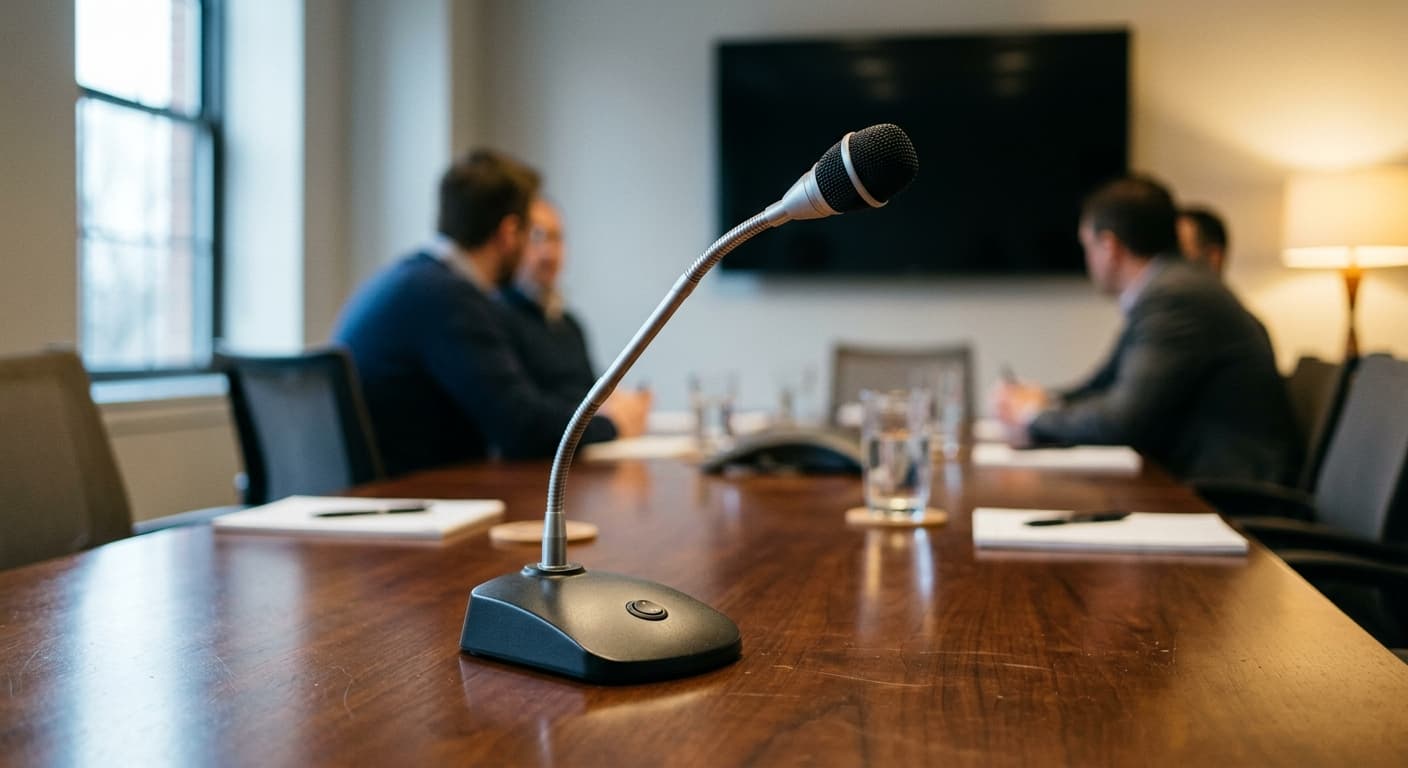
Washington requires all-party consent for AI meeting recorders under RCW 9.73.030. Every participant must be notified before recording begins, and consent is obtained when any party announces recording in a reasonably effective manner. Recordings made without that consent are inadmissible in Washington courts under RCW 9.73.050.
Washington's recording law is among the strictest in the nation, and it creates real problems for AI meeting tools. Under RCW 9.73.030, recording any private communication requires the consent of every participant. Not one party. All of them. That single requirement transforms the legal calculus for tools like Otter.ai, Fireflies.ai, and Zoom AI Companion from a simple activation decision into a compliance challenge that touches every meeting where a Washington participant is present.
The statute does offer one critical mechanism: consent is considered obtained when any party announces "in any reasonably effective manner" that the conversation will be recorded. That phrase carries enormous weight in the AI meeting context. Whether an AI bot's notification banner, chat message, or audio announcement qualifies as "reasonably effective" is the central legal question for every AI recording tool operating in Washington.
And the consequences of getting it wrong are severe. Recordings made without proper consent are not just unlawful; they are inadmissible in any Washington court. That exclusionary rule, codified in RCW 9.73.050, means an illegally recorded conversation cannot be used as evidence in lawsuits, contract disputes, employment proceedings, or criminal cases.
Washington's All-Party Consent Statute: RCW 9.73.030
The Core Prohibition
RCW 9.73.030 prohibits intercepting, recording, or divulging any private communication transmitted by telephone, telegraph, radio, or other device between two or more individuals. The statute also prohibits recording private conversations by any device designed to record or transmit such conversations without first obtaining the consent of all the participants.
The language is broad. It covers telephone calls, electronic communications (including video conferences and VoIP), and in-person conversations. Any device "designed to record or transmit" falls within the statute's reach, which plainly includes AI meeting recording software.
The "Reasonably Effective Manner" Standard
Under RCW 9.73.030(3), consent is deemed obtained whenever one party has announced to all other parties engaged in the communication "in any reasonably effective manner" that the communication is about to be recorded or transmitted.
The statute further requires that if the conversation is to be recorded, the person making the announcement must actually record themselves making it and then allow the recording to proceed. This creates a verifiable record that notification was given before recording began.
For AI meeting tools, the question is whether newer notification methods satisfy this standard: a bot appearing with a visible name, a chat message in the meeting window, a popup notification, or a brief audio announcement. No Washington court has ruled on whether these AI-specific notification mechanisms qualify as "reasonably effective" as of August 2026.

Penalties: Criminal, Civil, and Evidentiary
Criminal Penalties
| Violation | Classification | Maximum Jail | Maximum Fine |
|---|---|---|---|
| Unlawful recording (RCW 9.73.030) | Gross misdemeanor | Up to 364 days | $5,000 |
RCW 9.73.080 classifies a violation of RCW 9.73.030 as a gross misdemeanor, but it sets no punishment itself. Because RCW 9.73.080 sits in Title 9 rather than Title 9A, the maximum penalty is supplied by RCW 9.92.020, the gap-filler for a gross misdemeanor whose punishment no statute prescribes: up to 364 days in jail, a fine of up to $5,000, or both. A separate, much narrower gross misdemeanor under RCW 9.73.080(2) applies to anyone who knowingly alters, erases, or wrongfully discloses a law-enforcement dash-cam or body-cam audio recording made under RCW 9.73.090(1)(c). That provision governs police vehicle-camera recordings; it does not create separate liability for altering or erasing an AI meeting recording or other private recording.
Civil Damages Under RCW 9.73.060
Any person injured by a violation may recover either actual damages (including mental pain and suffering) or liquidated damages at the rate of $100 per day of violation up to $1,000, plus reasonable attorney fees and costs of litigation.
The Exclusionary Rule: RCW 9.73.050
Any information obtained in violation of RCW 9.73.030 is inadmissible in any civil or criminal case in all Washington courts. There are only two narrow exceptions: when the person whose rights were violated gives permission to use the recording in a damages action, and in criminal cases involving national security.
This means a recording made without all-party consent cannot be used as evidence in employment disputes, contract disagreements, divorce proceedings, personal injury litigation, or criminal prosecutions. The recording is legally worthless as evidence, and its existence may trigger criminal and civil liability.
AI Meeting Tools and Washington's All-Party Consent Requirement
The Central Compliance Challenge
Washington's all-party consent requirement creates the highest compliance burden in the country for AI meeting tools. Unlike one-party consent states, where a single participant's activation satisfies the law, Washington requires that every participant be informed and consent before recording begins.
Does the AI bot's appearance in the participant list constitute notice? Tools like Otter.ai and Fireflies.ai join meetings as named participants. The bot's presence is visible to all attendees. But visibility is not the same as consent. Washington's "reasonably effective manner" standard requires an announcement, not merely a presence.
Does a chat message satisfy the standard? Whether a chat message qualifies depends on whether participants are likely to see it, understand it, and have an opportunity to respond. In a large meeting where chat is active, a single notification message could easily be missed.
The Auto-Join Problem Under Washington Law
Auto-join features are particularly dangerous under Washington law. When an AI tool automatically joins meetings based on calendar integration, scenarios arise where: the user is present but does not announce recording; the user is not present and there is no consenting party; or some participants are unaware because they joined late or are audio-only and miss the notification.
The Brewer v. Otter.ai class action raises many of these same issues, alleging that Otter's auto-join features recorded meetings without obtaining consent from participants.

Best Practices for Washington Compliance
Organizations with participants in Washington should adopt rigorous notification practices:
- Verbal announcement at the start of every meeting: State clearly that recording is in progress, identify the tool, and give participants the opportunity to object or leave
- Record the announcement itself: RCW 9.73.030 specifically requires that the announcement be recorded as part of the conversation
- Obtain affirmative consent where possible: Rather than relying on implied consent from continued participation, ask participants to confirm they consent
- Disable auto-join features: Manual activation for each meeting ensures the authorizing user is present and can make the required announcement
- Document the consent process: Keep records of how notification was provided and whether any participant objected
Popular AI Meeting Tools and Washington Compliance
| Tool | How It Records | Washington Compliance Risk |
|---|---|---|
| Otter.ai | Bot joins meeting as participant | HIGH: Bot presence alone may not satisfy "reasonably effective" announcement; auto-join is particularly risky |
| Fireflies.ai | Bot joins meeting; calendar integration | HIGH: Same concerns as Otter.ai; calendar auto-join creates consent gaps |
| Zoom AI Companion | Built into Zoom platform | MODERATE: Host activation triggers visible notification banner; participants see recording indicator |
| Microsoft Copilot | Integrated into Teams | MODERATE: Teams displays recording notification; participants alerted before recording starts |
| Google Gemini in Meet | Native to Google Meet | MODERATE: Notification displayed to participants; consent mechanism is platform-integrated |
| Fathom | Records locally on host device | MODERATE: Local recording reduces third-party interception risk; notification still required |
No tool is automatically compliant in Washington without a clear, affirmative announcement to all participants.

Cross-State Considerations
Washington Participants on Multi-State Calls
When a single Washington-based participant joins a call with participants from one-party consent states, Washington's stricter all-party consent law may govern the entire call. The practical effect is that any meeting with a Washington participant should be treated as requiring all-party consent.
Washington shares borders with Oregon and Idaho. Idaho is a one-party consent state. Oregon is split: ORS 165.540(1)(a) is one-party for telecommunications and radio communications, but ORS 165.540(1)(c) separately bars obtaining any part of a conversation by device unless all participants are specifically informed that their conversation is being obtained, and ORS 165.535(1) defines a conversation to include a communication occurring through a video conferencing program. An in-person, hybrid, or video meeting held in Oregon therefore carries a duty to inform every participant. Cross-border calls between Washington and these states require Washington-level consent from all parties, even though a participant could record a phone call under Oregon or Idaho law alone.
Employer and Workplace Considerations
The Tech Industry Factor
Washington is home to some of the world's largest technology companies, including Microsoft, Amazon, and numerous AI startups. Employers in Washington's tech sector should ensure their internal use of AI meeting tools complies with RCW 9.73.030, including training managers on notification requirements and configuring AI tools to provide adequate notice before recording begins.
Remote Work and Distributed Teams
Washington's all-party consent requirement extends to meetings involving Washington-based remote workers. An employer in Texas must comply with Washington law when a meeting includes a Washington-based remote employee. This creates a practical incentive for employers to adopt all-party consent practices company-wide rather than attempting to track which meetings include Washington participants.
This article provides general legal information about Washington recording laws as they apply to AI meeting tools. Washington's all-party consent requirement imposes significant obligations on anyone using recording technology. Laws and their interpretations can change. Consult an attorney for advice specific to your situation.
More Washington Laws
- Washington Data Privacy Laws
- Washington Deepfake Laws
- Washington Employee Monitoring Laws
- Washington Recording Laws
Frequently Asked Questions
Can I legally use AI meeting recorders in Washington state?
You can, but only with the consent of all participants. Washington is an all-party consent state under RCW 9.73.030. Before recording, you must announce to all participants in a 'reasonably effective manner' that the conversation will be recorded. Simply activating an AI tool without notifying everyone violates the statute. The announcement must also be recorded as part of the conversation.
Are recordings made without consent admissible in Washington courts?
No. Under RCW 9.73.050, any recording obtained in violation of Washington's consent requirements is inadmissible in any civil or criminal case in Washington courts. There are only two narrow exceptions: when the recorded person gives permission to use it in a damages action, or in a criminal case involving national security.
Does an AI bot appearing in the meeting participant list count as consent notification?
This has not been decided by Washington courts as of August 2026. The bot's visible presence may contribute to notification, but RCW 9.73.030 requires an announcement made in a 'reasonably effective manner.' A bot name alone may not constitute an announcement that recording is occurring. The safest approach is to verbally announce recording at the start of the meeting.
What are the penalties for illegally recording in Washington?
Unlawful recording is a gross misdemeanor under RCW 9.73.080. That section sets the classification only; the maximum penalty comes from RCW 9.92.020, which allows up to 364 days in jail, a fine of up to $5,000, or both. Civil damages under RCW 9.73.060 include either actual damages (including mental pain and suffering) or liquidated damages of $100 per day up to $1,000, plus reasonable attorney fees. Beyond penalties, the recording is inadmissible in court.
How does Washington's law affect remote workers in other states?
When a Washington-based participant joins a meeting, Washington's all-party consent requirement may apply to the entire call, regardless of where other participants are located. Employers with remote workers in Washington should adopt company-wide all-party consent practices rather than trying to track which meetings include Washington participants.
Updates
Corrected our description of Oregon's recording rule: every participant must be informed before a video call, as well as an in-person conversation, is recorded.
Corrected the source of Washington’s gross-misdemeanor penalty: RCW 9.73.080 sets the classification, while the 364-day and $5,000 maximums come from RCW 9.92.020, and clarified that Oregon is one-party only for calls while in-person conversations there require informing all participants.
Independently fact-checked against the cited primary sources; governing law re-checked for recent changes
Governing law re-checked for recent changes
Governing law re-checked for recent changes
Verification pass against app.leg.wa.gov primary sources. Corrected the criminal-penalties table: removed a row that cited RCW 9.73.090 for a general "altering/erasing recordings" gross misdemeanor. That penalty is actually set by RCW 9.73.080(2) and applies only to law-enforcement dash-cam/body-cam audio recordings under RCW 9.73.090(1)(c), not to AI meeting recordings or other private recordings. Also corrected the civil-damages description in three places (KeyTakeaways, body text, FAQ): RCW 9.73.060 makes actual damages and liquidated damages alternatives ("or"), not cumulative, on top of attorney fees. All other statute citations, subsection numbers, dollar figures, and the gross-misdemeanor classification under RCW 9.73.030 were verified correct and unchanged.
Reviewed and approved by an editor
The Law Behind This Article
This article rests on the statutory provisions below, held in our own legal record and retrieved from the official source. Tap a section to read the operative text.
Revised Code of Washington
§ 9.73.030Intercepting, recording, or divulging private communication—Consent required—Exceptions.In forcecited in 46 of our articles
(1) Except as otherwise provided in this chapter, it shall be unlawful for any individual, partnership, corporation, association, or the state of Washington, its agencies, and political subdivisions to intercept, or record any: (a) Private communication transmitted by telephone, telegraph, radio, or other device between two or more individuals between points within or without the state by any device electronic or otherwise designed to record and/or transmit said communication regardless how such device is powered or actuated, without first obtaining the consent of all the participants in the communication; (b) Private conversation, by any device electronic or otherwise designed to record or transmit such conversation regardless how the device is powered or actuated without first obtaining the consent of all the persons engaged in the conversation.
Official text (excerpt) · last checked 2026-09-24 · Read the full text in our law library · Verify at app.leg.wa.gov
Cited in 221 court opinions in our collectionLatest citing opinion in our collection: 2026
In the courts (editorial summary, independently checked):Washington courts have policed what counts as a private communication under Sec. 9.73.030: State v. Gunwall (1986) concluded a pen register intercept comes within a private communication transmitted by telephone, while State v. Riley (1993) held a line trap that reveals only the calling number does not record one.
Opinions citing this section in our collection:
- State v. Salinas (Washington Supreme Court 1992, 119 Wash. 2d 192)“…alties for divulging a telegram or opening a sealed letter. RCW 9.73.030-.070, making it unlawful to intercept,…”
- State v. Gunwall (Washington Supreme Court 1986, 106 Wash. 2d 54)✓Everett police pulled a suspected cocaine dealer's toll records and put a pen register on her line without valid legal process; the court held a pen register intercept is a private communication transmitted by telephone, installable only under the eavesdropping statutes.
- State v. Brown (Washington Supreme Court 1997, 132 Wash. 2d 529)✓Palm Springs officers secretly recorded a Washington murder suspect's statements after his arrest; the court treated RCW 9.73.090, not 9.73.030, as the provision reaching recordings of arrested persons, and held the Privacy Act did not require suppressing that recording.
Identified automatically from the court opinions citing this section — not a ranking of which case controls.
Also relied on in: US Recording Laws by State (2026): All 50 States Explained, Washington Recording Laws (2026): All-Party Consent Rules, Federal Wiretap Act and ECPA: The Complete Guide (2026)
§ 9.73.050Admissibility of intercepted communication in evidence.In forcecited in 13 of our articles
Any information obtained in violation of RCW 9.73.030 or pursuant to any order issued under the provisions of RCW 9.73.040 shall be inadmissible in any civil or criminal case in all courts of general or limited jurisdiction in this state, except with the permission of the person whose rights have been violated in an action brought for damages under the provisions of RCW 9.73.030 through 9.73.080, or in a criminal action in which the defendant is charged with a crime, the commission of which would jeopardize national security.
Official text (excerpt) · last checked 2026-07-29 · Read the full text in our law library · Verify at app.leg.wa.gov
Cited in 116 court opinions in our collectionLatest citing opinion in our collection: 2025
Opinions citing this section in our collection:
- State v. Wanrow (Washington Supreme Court 1977, 88 Wash. 2d 221)“…epartment of an emergency telephone call, on the basis that RCW 9.73.050 and RCW 9.73.090 which authorize the re…”
- State v. Rupe (Washington Supreme Court 1984, 101 Wash. 2d 664)“…find that this statement violated the terms of the statute. RCW 9.73.050 provides that information obtained in v…”
- State v. Fjermestad (Washington Supreme Court 1990, 114 Wash. 2d 828)“…At the time RCW 9.73.040 was enacted, the Legislature added RCW 9.73.050 4 which deals with admissibility of *…”
Identified automatically from the court opinions citing this section — not a ranking of which case controls.
Also relied on in: Washington Audio Recording Laws: Two-Party Consent Rules and Penalties (2026), Washington Dashcam Laws: Mounting Rules, Audio Recording, and Evidence (2026), Washington Medical Recording Laws: Recording Doctors, Hospitals, and Telehealth (2026)
§ 9.73.060Violating right of privacy—Civil action—Liability for damages.In forcecited in 14 of our articles
Any person who, directly or by means of a detective agency or any other agent, violates the provisions of this chapter shall be subject to legal action for damages, to be brought by any other person claiming that a violation of this statute has injured his or her business, his or her person, or his or her reputation. A person so injured shall be entitled to actual damages, including mental pain and suffering endured by him or her on account of violation of the provisions of this chapter, or liquidated damages computed at the rate of one hundred dollars a day for each day of violation, not to exceed one thousand dollars, and a reasonable attorney's fee and other costs of litigation.
Official text (excerpt) · last checked 2026-07-29 · Read the full text in our law library · Verify at app.leg.wa.gov
Cited in 36 court opinions in our collectionLatest citing opinion in our collection: 2025
In the courts (editorial summary, independently checked):Washington courts read RCW 9.73.060 as supplying civil damages only for conduct chapter 9.73 prohibits. Kearney v. Kearney (1999) held RCW 9.73.050 creates no civil liability for filing illegally recorded material. Dillon v. Seattle Deposition Reporters, LLC (2014) reversed summary judgment on secretly transcribed calls.
Opinions citing this section in our collection:
- State v. Wanrow (Washington Supreme Court 1977, 88 Wash. 2d 221)“…case under RCW 9.73.050; there is no civil liability under RCW 9.73.060; and, there is no criminal liability un…”
- Kearney v. Kearney (Court of Appeals of Washington 1999, 95 Wash. App. 405)✓A father sued a guardian ad litem, an evaluator and an attorney under RCW 9.73.060 for filing transcripts of calls with his children that his estranged wife taped; the court held the act creates liability only for recording or intercepting, not filing, and affirmed dismissal.
- Dillon v. Seattle Deposition Reporters, LLC (Court of Appeals of Washington 2014, 179 Wash. App. 41)“…act is a gross misdemeanor and is also actionable in tort. RCW 9.73.060, .080. “We engage in a four-pronged ana…”
Identified automatically from the court opinions citing this section — not a ranking of which case controls.
Also relied on in: Washington Landlord-Tenant Recording and Surveillance Laws (2026), Washington Phone Call Recording Laws: Consent Rules and Exceptions (2026), Washington Laws on Recording in Public: What Is Legal and What Is Not (2026)
§ 9.73.080Penalties.In forcecited in 17 of our articles
(1) Except as otherwise provided in this chapter, any person who violates RCW 9.73.030 is guilty of a gross misdemeanor. (2) Any person who knowingly alters, erases, or wrongfully discloses any recording in violation of RCW 9.73.090(1)(c) is guilty of a gross misdemeanor.
Official text (excerpt) · last checked 2026-07-29 · Read the full text in our law library · Verify at app.leg.wa.gov
Cited in 13 court opinions in our collectionLatest citing opinion in our collection: 2023
Opinions citing this section in our collection:
- State v. Wanrow (Washington Supreme Court 1977, 88 Wash. 2d 221)“…9.73.090, which opens with a waiver of RCW 9.73.030 through RCW 9.73.080, [9] i.e., the recording is not unlaw…”
- State v. Williams (Washington Supreme Court 1980, 94 Wash. 2d 531)✓ATF agents recorded a suspect's conversations with an informant and undercover agents with only one party's consent. The court assumed without deciding that the RCW 9.73.080 criminal penalty may not reach federal agents, but held the tapes were still inadmissible in state court.
- State v. Clark (Washington Supreme Court 2007, 916 P.2d 384)“…Violation of RCW 9.73.030 constitutes a gross misdemeanor, RCW 9.73.080, and may also result in civil liability…”
Identified automatically from the court opinions citing this section — not a ranking of which case controls.
Also relied on in: Washington Security Camera Laws: Rules for Home and Business Surveillance (2026), Washington Video Recording Laws: Filming, Surveillance, and Consent Rules (2026), Washington Workplace Recording Laws: Employee Rights and Employer Rules (2026)
§ 9.73.090Certain emergency response personnel exempted from RCW 9.73.030 through 9.73.080—Standards—Court authorizations—Admissibility.In forcecited in 7 of our articles
(1) The provisions of RCW 9.73.030 through 9.73.080 shall not apply to police, fire, emergency medical service, emergency communication center, and poison center personnel in the following instances: (a) Recording incoming telephone calls to police and fire stations, licensed emergency medical service providers, emergency communication centers, and poison centers; (b) Video and/or sound recordings may be made of arrested persons by police officers responsible for making arrests or holding persons in custody before their first appearance in court.
Official text (excerpt) · last checked 2026-07-29 · Read the full text in our law library · Verify at app.leg.wa.gov
Cited in 99 court opinions in our collectionLatest citing opinion in our collection: 2025
Opinions citing this section in our collection:
- State v. Salinas (Washington Supreme Court 1992, 119 Wash. 2d 192)“…all participants in the communication, was passed in 1967. RCW 9.73.090 was enacted in 1970, and allowed police…”
- State v. Brown (Washington Supreme Court 1997, 132 Wash. 2d 529)“…133 Recording of Appellant’s Custodial Statements and RCW 9.73.090 (7) Whether Appellant’s statement…”
- State v. Wanrow (Washington Supreme Court 1977, 88 Wash. 2d 221)“…mergency telephone call, on the basis that RCW 9.73.050 and RCW 9.73.090 which authorize the recording of such a…”
Identified automatically from the court opinions citing this section — not a ranking of which case controls.
Also relied on in: Washington Laws on Recording Police: Your Rights and Legal Limits (2026), Washington School Recording Laws: Students, Teachers, and Campus Rules (2026), Washington Surveillance Camera Laws (2026 Guide)
§ 9.92.020Punishment of gross misdemeanor when not fixed by statute.In forcecited in 7 of our articles
Every person convicted of a gross misdemeanor for which no punishment is prescribed in any statute in force at the time of conviction and sentence, shall be punished by imprisonment in the county jail for a maximum term fixed by the court of up to three hundred sixty-four days, or by a fine in an amount fixed by the court of not more than five thousand dollars, or by both such imprisonment and fine.
Official text (excerpt) · last checked 2026-07-29 · Read the full text in our law library · Verify at app.leg.wa.gov
Cited in 37 court opinions in our collectionLatest citing opinion in our collection: 2023
Opinions citing this section in our collection:
- State v. Lewis (Court of Appeals of Washington 1976, 15 Wash. App. 172)“…eached after an examination of RCW 9.01.020, 4 RCW 9.92.020, 5 and RCW 9.95.010, the c…”
- Robinson v. Peterson (Washington Supreme Court 1976, 87 Wash. 2d 665)“…ls in which the maximum sentence is for a period of 1 year (RCW 9.92.020), most occupancies being of much briefe…”
- Mortell v. State (Court of Appeals of Washington 2003, 118 Wash. App. 846)“…heme. Several provisions comprise this sentencing scheme. RCW 9.92.020 reads, in part, “Every person convicted…”
Identified automatically from the court opinions citing this section — not a ranking of which case controls.
Also relied on in: Washington Smart Glasses Recording Laws (2026), Washington Fireworks Laws (2026): Sale and Discharge Windows
Oregon Revised Statutes, Chapter 165: Offenses Involving Fraud or Deception
§ 165.540Obtaining contents of communicationsIn forcecited in 49 of our articles
(1) Except as otherwise provided in ORS 133.724 or 133.726 or subsections (2) to (8) of this section, a person may not: (a) Obtain or attempt to obtain the whole or any part of a telecommunication or a radio communication to which the person is not a participant, by means of any device, contrivance, machine or apparatus, whether electrical, mechanical, manual or otherwise, unless consent is given by at least one participant. (b) Tamper with the wires, connections, boxes, fuses, circuits, lines or any other equipment or facilities of a telecommunication or radio communication company over which messages are transmitted, with the intent to obtain unlawfully the contents of a telecommunication or radio communication to which the person is not a participant. (c) Obtain or attempt to obtain the whole or any part of a conversation by means of any device, contrivance, machine or apparatus, whether electrical, mechanical, manual or otherwise, if not all participants in the conversation are specifically informed that their conversation is being obtained.
Official text (excerpt) · last checked 2026-09-24 · Read the full text in our law library · Verify at oregonlegislature.gov
Cited in 76 court opinions in our collectionLatest citing opinion in our collection: 2026
In the courts (editorial summary, independently checked):State v. Fleetwood (2000) applied ORS 165.540 to body wire evidence, holding that words spoken into a telephone are a telecommunication under subsection (1)(a) and that the (5)(a)(B) exception fails unless the officer or the officer's agent shares reciprocally in the conversation, so the recordings were inadmissible.
Opinions citing this section in our collection:
- State v. Klein (Oregon Supreme Court 2012, 352 Or. 302)“…eing 3 recorded. Conversations recorded in violation of ORS 165.540 are not admissible in 4 court excep…”
- North Pacific Lumber Co. v. Oliver (Oregon Supreme Court 1979, 286 Or. 639)✓A lumber wholesaler secretly monitored traders' calls; on de novo review the court said the practice may have violated ORS 165.540 but refused to rest unclean hands on it, since the ex-employee's calls were never monitored. The employer's noncompete suit failed on other grounds.
- State v. Fleetwood (Oregon Supreme Court 2000, 331 Or. 511)✓A detective wired an informant and recorded the suspect's side of a phone call and his talks with his mother and a juvenile seller; the court held those interceptions violated ORS 165.540(1)(a) and (1)(c) because the informant was not a participant, and upheld suppression.
Identified automatically from the court opinions citing this section — not a ranking of which case controls.
Also relied on in: Oregon Recording Laws (2026): Hybrid One-Party and All-Party Rules, Oregon Voyeurism and Hidden Camera Laws: Offenses, Penalties, and Protections, Oregon Audio Recording Laws: Split Consent Rules for Conversations and Calls
United States Code Title 18
§ 2511Interception and disclosure of wire, oral, or electronic communications prohibitedIn forcecited in 441 of our articles
Except as otherwise specifically provided in this chapter any person who— intentionally intercepts, endeavors to intercept, or procures any other person to intercept or endeavor to intercept, any wire, oral, or electronic communication; intentionally uses, endeavors to use, or procures any other person to use or endeavor to use any electronic, mechanical, or other device to intercept any oral communication when— such device is affixed to, or otherwise transmits a signal through, a wire, cable, or other like connection used in wire communication; or such device transmits communications by radio, or interferes with the transmission of such communication; or such person knows, or has reason to know, that such device or any component thereof has been sent through the mail or transported in interstate or foreign commerce; or such use or endeavor to use (A) takes place on the premises of any business or other commercial establishment the operations of which affect interstate or foreign commerce; or (B) obtains or is for the purpose of obtaining information relating to the operations of any business or other commercial establishment the operations of which affect interstate or foreign…
Official text (excerpt) · last checked 2026-09-17 · Read the full text in our law library · Verify at uscode.house.gov
Cited in 2,045 court opinions in our collectionLatest citing opinion in our collection: 2026
In the courts (editorial summary, independently checked):Griggs-Ryan v. Smith (1990) applied the Section 2511(2)(d) prior-consent exception, treating a tenant repeatedly told that all incoming calls were taped as having impliedly consented. United States v. United States District Court (1972) read the then-current Section 2511(3) as conferring no presidential surveillance power.
Opinions citing this section in our collection:
- Mitchell v. Forsyth (Supreme Court of the United States 1985, 472 U.S. 511)✓The Attorney General authorized a warrantless 1970 national security wiretap that caught the plaintiff's calls; the Court held the since-repealed Section 2511(3) disclaimer left the tap lawful under Title III, and that Mitchell had qualified immunity.
- United States v. United States District Court for the Eastern District of Michigan (Supreme Court of the United States 1972, 407 U.S. 297)✓The Attorney General approved warrantless wiretaps on members of a domestic group accused of bombing a CIA office; the Court read Section 2511(3) as a congressional disclaimer conferring no surveillance power, then held the Fourth Amendment required prior judicial approval.
- Forsyth v. Barr (Court of Appeals for the Fifth Circuit 1994, 19 F.3d 1527)✓Dallas police used, in an internal affairs probe of an officer, calls private parties allegedly intercepted illegally; assuming that was unlawful, the Fifth Circuit held Section 2517(1) and (2) allowed the disclosure and use, defeating the Section 2511(1)(c) and (d) claims.
Identified automatically from the court opinions citing this section — not a ranking of which case controls.
Also relied on in: Connecticut Recording Laws (2026): Hybrid Consent Rules Explained, Hawaii Recording Laws (2026): Hybrid Consent State Rules, Louisiana Recording Laws (2026): One-Party Consent Rules
Search our full record of US law — 2.1 million sections, every state + federal →
Sources and References
- RCW 9.73.030 - Intercepting, recording, or divulging private communication(app.leg.wa.gov).gov
- RCW 9.73.080 - Penalties(app.leg.wa.gov).gov
- RCW 9.73.050 - Admissibility of intercepted communication in evidence(app.leg.wa.gov).gov
- RCW 9.73.060 - Civil action for damages from privacy violation(app.leg.wa.gov).gov
- Washington My Health My Data Act (Chapter 19.373 RCW)(app.leg.wa.gov).gov
- Ambriz v. Google (N.D. Cal. 2025) - AI capability test ruling(courthousenews.com)
- Brewer v. Otter.ai - AI recording class action analysis(natlawreview.com)
- 18 U.S.C. § 2511 - Federal Wiretap Act(law.cornell.edu)
- RCW 9.92.020 - Punishment of gross misdemeanor when not fixed by statute(app.leg.wa.gov)
- ORS 165.540 - Oregon prohibition on obtaining communications (Chapter 165)(oregonlegislature.gov)